Categories
Culture Crafters

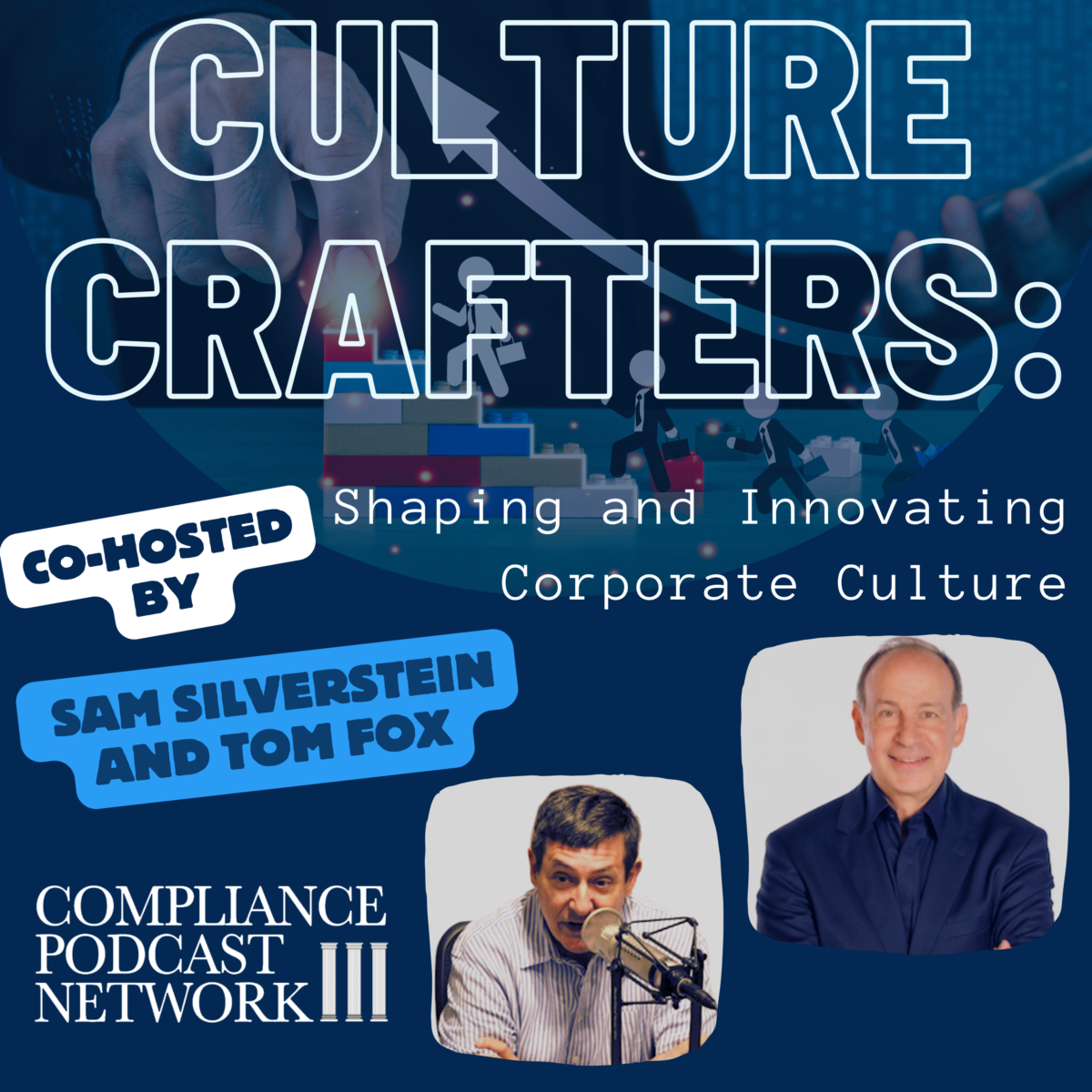
Culture Crafters – What is Culture?

Seeing the regulators catch up to the business world is always interesting. That is what has happened to corporate culture. The Department of Justice is now assessing the corporate culture of any company under investigation. Yet, more than simply complying with this mandate, companies should strive to foster the best culture they can achieve. The reason is deceptively simple: the better the culture, the better the company. However, many business executives and even compliance professionals do not know how to craft a culture that allows your employees and your organization to implement such strategies. How can you unlock the power of a thriving workplace culture?

In this podcast series, Sam Silverstein, the most trusted voice in America on accountability, and Tom Fox, the Voice of Compliance, discuss the ways companies can elevate their culture to new heights. In this episode, they discuss what culture is.

Culture is the organizational DNA that underpins every action and decision, with leaders playing a pivotal role in its creation and sustenance. Tom strongly believes that culture is a top-down approach that commences at the highest echelons and permeates all levels. Fox underscores the power of repeated positive actions in shaping culture and questions how leadership’s cultural focus sets the tone for the rest of the organization.

Similarly, Sam emphasizes that culture reflects what is accepted and repeated within an organization. He advocates for a “culture by design,” a strategic and considered approach that aligns with the organization’s core values and goals. To Silverstein, trust and communication are central to a robust culture, which everyone is aware of and contributes towards maintaining and enhancing.

Key Highlights:

  • Cultivating Trust Through Organizational Leadership
  • Valuing People: The Heart of Leadership
  • Preserving Organizational Culture Through Leadership Succession
  • Cultural Values Upheld Through Individual Responsibility
  • Enhancing Organizational Culture Through Audits

Resources 

Sam Silverstein

Sam Silverstein is on LinkedIn

Sam Silverstein

The Culture Audit™

Tom Fox

Instagram

Facebook

YouTube

Twitter

LinkedIn

Categories
Daily Compliance News

Daily Compliance News: March 26, 2024 – The Neurodiverse Claims Edition

Welcome to the Daily Compliance News. Each day, Tom Fox, the Voice of Compliance, brings you compliance-related stories to start your day. Sit back, enjoy a cup of morning coffee, and listen to the Daily Compliance News. All from the Compliance Podcast Network. Each day, we consider four stories from the business world: compliance, ethics, risk management, leadership, or general interest for the compliance professional.

  • More neurodiverse claims are made in the workplace. (FT)
  • Singapore’s ex-transportation minister faces more charges. (Reuters)
  • Boeing CEO to step down early. (NYT)
  • Hong Kong’s days as an international business center are numbered. (BBC)

Click here for more information on the Ethico ROI Calculator and a free White Paper on the ROI of Compliance.

Categories
Innovation in Compliance

Innovation in Compliance: Matt DeLauro on Enhanced Efforts Against Financial Crimes

Innovation takes many forms, and compliance professionals must be ready for and embrace it.

Today, Tom Fox visited with Matt DeLauro, SEON’s Chief Revenue Officer. Matt discussed the SEON software solution for fraud risk and anti-money laundering.

Matt DeLauro is a financial industry veteran with over two decades of experience specializing in developing and implementing software solutions for various financial entities. With a focus on financial services and fintech, he currently serves as the chief revenue officer at SEON, a company dedicated to fraud prevention and anti-money laundering (AML) technology.

DeLauro’s perspective on AML regulations stems from his deep understanding of the fraud community’s interconnected nature and the increasing importance of AML measures due to factors like international conflicts and national security threats.

He emphasizes the need for real-time detection services and robust compliance controls in the face of evolving threats, highlighting the impact of sanctions and sanctioned individuals on the need for enhanced compliance.

Ultimately, DeLauro views AML as a critical tool in combating financial crimes and preserving the integrity of the global financial system.

Key Highlights:

  • Enhanced Efforts Against Financial Crimes
  • Real-time Fraud Detection in Financial Services
  • Automating SAR Generation with Machine Learning
  • Real-time Fraud Detection through Device Fingerprinting
  • Sub secondary Detection of Fraudulent Transactions in Real-Time

Resources:

Matt DeLauro on LinkedIn 

SEON

Tom Fox

Instagram

Facebook

YouTube

Twitter

LinkedIn

Categories
Everything Compliance - Shout Outs and Rants

Shout Outs and Rants – Episode 131, The Whistleblower Edition

Welcome to the only roundtable podcast in compliance as we celebrate our second century of shows. In this episode, we have the quartet of Jonathan Marks, Matt Kelly, Jonathan Armstrong, and Jay Rosen, with Special Guest Mary Inman, all hosted by Tom Fox. Joining us on this episode of Everything Compliance-Shout Outs and Rants are:

  1. Matt Kelly shouts out to GOP Representative Ken Buck for his resignation from Congress.
  2. Tom Fox shouts out to the Ides of March and the Mooring Theater Company Production of Shakespeare’s play Julius Ceasar, starring Corin and Vanessa Redgrave.
  3. Special Guest Mary Inman shouts out to whistleblower John Barnett and rants about the need for mental health resources to be available to whistleblowers.
  4. Jay Rosen rants about Aaron Rodgers’s potential Vice Presidential candidacy and intones, “You ain’t no Bill Bradley.”
  5. Jonathan Armstrong rants about the disaster management failures of the British Crown around Kate Middleton.
  6. Jonathan Marks shouts out a fast-thinking and fast-acting McDonald’s employee who used CPR to save a customer who had a heart attack.

The members of the Everything Compliance are:

  • Jay Rosen– Jay can be reached at r.rosen@gmail.com
  • Karen Woody – One of the top academic experts on the SEC. Woody can be reached at kwoody@wlu.edu
  • Matt Kelly – Founder and CEO of Radical Compliance. Kelly can be reached at mkelly@radicalcompliance.com
  • Jonathan Armstrong –is our UK colleague, who is an experienced data privacy/data protection lawyer in London.
  • Jonathan Marks can be reached at jtmarks@gmail.com.

The host and producer, ranter (and sometime panelist) of Everything Compliance is Tom Fox the Voice of Compliance. He can be reached at tfox@tfoxlaw.com. Everything Compliance is a part of the Compliance Podcast Network.

Categories
Compliance Tip of the Day

Compliance Tip of the Day: Who to Select as Investigative Counsel

Welcome to “Compliance Tip of the Day,” the podcast where we bring you daily insights and practical advice on navigating the ever-evolving landscape of compliance and regulatory requirements. Whether you’re a seasoned compliance professional or just starting your journey, we aim to provide bite-sized, actionable tips to help you stay on top of your compliance game. Join us as we explore the latest industry trends, share best practices, and demystify complex compliance issues to keep your organization on the right side of the law. Tune in daily for your dose of compliance wisdom, and let’s make compliance a little less daunting, one tip at a time.

In this episode, we look at who you should consider as your investigative counsel for any anti-corruption claim.

For more information on the Ethico ROI Calculator and a free White Paper on the ROI of Compliance, click here.

Categories
Blog

Role of Leadership in Culture and Course Correcting

Many people focus on qualities like decisiveness, communication skills, and strategic thinking when it comes to leadership. While these traits are undoubtedly important, another aspect of leadership often gets overlooked: the role of culture. An organization’s culture can significantly impact its success, and leaders who understand and prioritize this aspect can create a more positive and productive work environment. In this blog post, we will explore the importance of culture in leadership and provide practical tips for harnessing its power.

Why is it important to hire leaders who understand and prioritize the existing culture or improve it if needed? Leaders who understand and prioritize an organization’s existing culture are better equipped to make informed decisions that align with its values and goals. By hiring culturally sensitive leaders, you can ensure they will respect and uphold your organization’s unique traditions and norms. Additionally, leaders in tune with the culture are more likely to inspire employee trust and loyalty, leading to higher engagement and job satisfaction.

To hire leaders who understand and prioritize the existing culture, every organization should consider incorporating questions about cultural fit into their interview process for anyone being reviewed and interviewed. Your organization should seek candidates who demonstrate an awareness of your organization’s values and a willingness to embrace its culture. Additionally, new leaders should be provided with training and resources to help them acclimate to the culture and understand how their actions can impact it.

What happens if something goes wrong, and how should your compliance function address behavior that undermines the organizational culture? The most direct, perhaps significant, method is to address behavior that undermines the organizational culture promptly and directly. The reason is that when left unchecked, negative behavior can erode trust, create conflict, and harm employee morale. Compliance professionals should proactively address behavior that goes against the organization’s values by setting clear expectations, providing feedback, and offering support to help employees correct their course.

When addressing behavior that undermines the organizational culture, you should focus on open communication, active listening, and constructive feedback. It is important to address issues as they arise and involve HR, compliance, or other resources to ensure a fair and respectful resolution. With compliance as the herald of Organizational Justice and Fairness, you can see the compliance angle in all these matters. By addressing negative behavior head-on, your organization can communicate that its culture is non-negotiable and everyone is expected to uphold its values.

A culture audit is one of the key ways to determine if your organization needs to correct its course. Implementing cultural audits in an organization can help leaders gain valuable insights into the culture’s current state and identify areas for improvement. By conducting regular assessments of the culture, leaders can track progress, measure the impact of initiatives, and make data-driven decisions about strengthening and promoting the organization’s values. Cultural audits can also help leaders identify potential risks, such as issues related to diversity and inclusion, and take proactive steps to address them.

The Department of Justice (DOJ) has also recognized culture management as a critical element for compliance. Beginning with the speech by Deputy Attorney General Lisa Monaco in October 2021, she discussed the need for companies to assess, manage, monitor, and improve their corporate culture. This was memorialized in the 2023 Evaluation of Corporate Compliance Programs (2023 ECCP) update. In the 2023 ECCP, the DOJ asks the following questions: how often and how does a company measure a culture of compliance? What are your hiring and incentive structures around compliance? What steps have you taken in response to your measurements of compliance?

All these questions posed by the DOJ lead to the requirement that every company needs to assess its culture because the DOJ will take any enforcement action or review. However, it can be done using the same current compliance processes, as culture is just like any other risk. As a risk, it can be assessed. This is why a culture audit is critical for you to perform to ensure your corporate culture is where it should be. When you have assessed your culture, you can start to put together a management strategy to improve and correct your corporate culture. With your culture strategy in place, you can train your employees and monitor their performance, determining the results. From there, you can improve your culture strategy as needed. But it all starts with a culture audit.

To implement cultural audits in your organization, consider working with an external consultant or HR professional specializing in organizational culture. Develop a comprehensive audit plan that includes surveys, focus groups, interviews, and observations to gather data from various sources. Use the insights gained from the audit to develop a strategic action plan to strengthen the culture, address concerns, and foster a positive work environment for all employees.

In conclusion, the importance of culture in leadership cannot be overstated. Leaders who understand and prioritize an organization’s existing culture can create a more positive and productive work environment, inspire trust and loyalty among employees, and drive success. By hiring culturally sensitive leaders, addressing behavior that undermines the organizational culture, and implementing cultural audits, organizations can strengthen their values, build a strong foundation for growth, and create a workplace where everyone can thrive.


Categories
Riskology

Riskology by Infortal Episode 21: Due Diligence & Geopolitical Risk

As the global economic landscape broadens, companies find themselves navigating complex and challenging terrain that can profoundly affect their operations and financial standing.

On today’s episode of ‘Due Diligence & Geopolitical Risk,’ join Chris Mason and Ian Oxnevad as they discuss the pivotal role ‘Geopolitical Risk Intelligence’ plays in corporate strategy. 

This conversation dives into a thorough examination of local developments, political shifts, and global trends, exploring how they are intricately woven together and impact various business activities. Discussion points also cover an inside look at how this unique form of intelligence works to safeguard against potential threats while accentuating valuable business opportunities.

Stay tuned to learn how to successfully deploy geopolitical risk intelligence, tap into lucrative prospects, and fortify your corporate standing.

On a more pragmatic application level, our speakers share insights on the structured and analytical process behind geopolitical risk intelligence. They delve into the intricacies of understanding international affairs and market dynamics, vetting potential employees and investment opportunities, and avoiding potential legal entanglements and reputational damage.

The episode provides a comprehensive outlook on maintaining a fountainhead of geopolitical analysis, making it possible for corporations to stay prepared for any impending changes in the business landscape.

Resources:

Infortal Worldwide

Email

Dr. Ian Oxnevad on LinkedIn

Chris Mason on LinkedIn

Categories
Corruption, Crime and Compliance

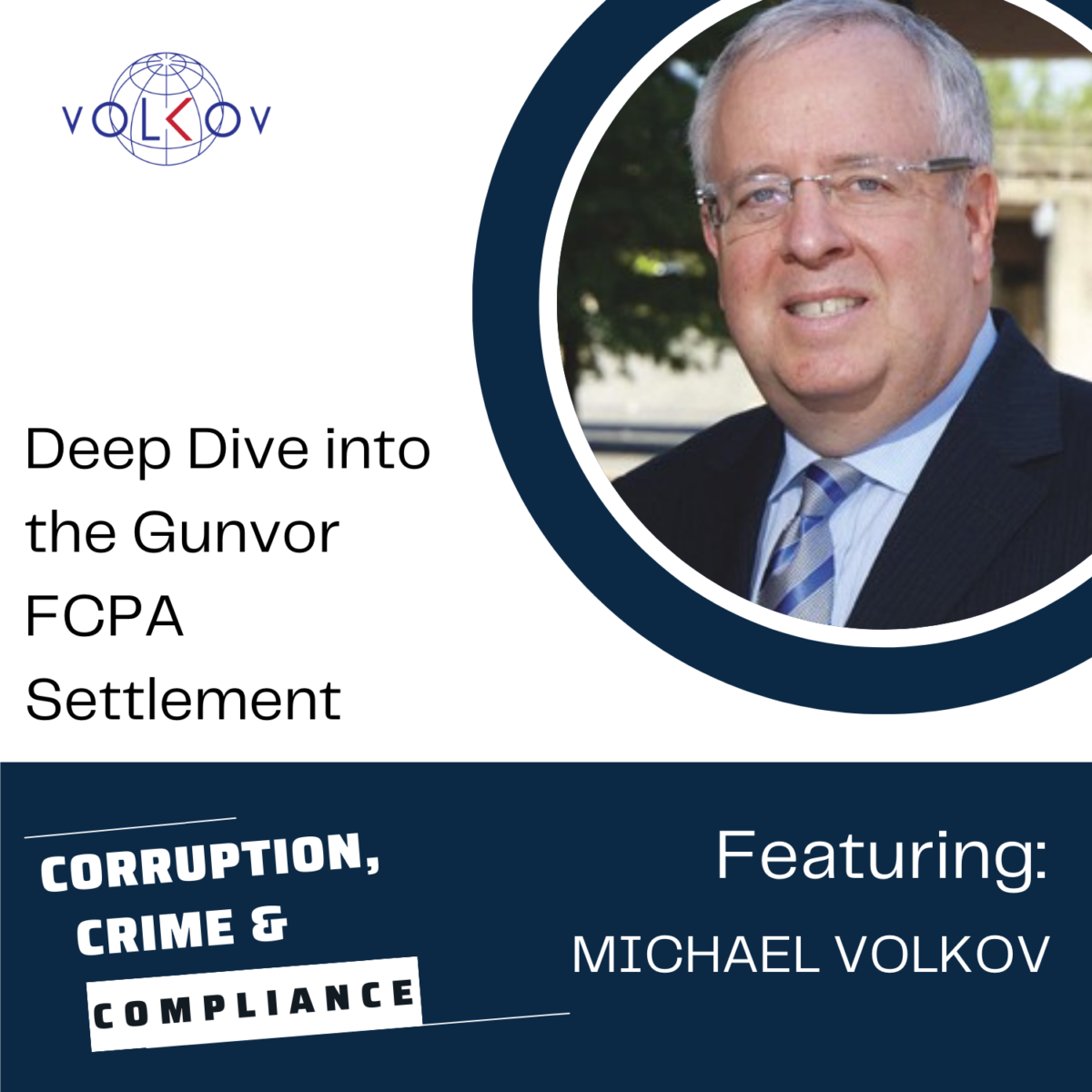
Deep Dive into The Gunvor FCPA Settlement

You have to give the Justice Department credit: after two slow enforcement years, DOJ is starting off 2024 with a relative “bang;” First, DOJ reached a large settlement with SAP in January, and now, DOJ has reached a blockbuster settlement with Gunvor S.A. for $661 million. Gunvor is one of the world’s largest commodities trading companies.

DOJ’s settlement represents a “return” to its long-standing aggressive approach to FCPA enforcement. The DOJ did not permit Gunvor to enter into a deferred or non-prosecution agreement. Instead, the DOJ required Gunvor to plead guilty to one count of FCPA conspiracy. Following the plea agreement, the court sentenced Gunvor to pay a criminal monetary penalty of $374,560,071 and to forfeit $287,138,444 in ill-gotten gains.

The sentence includes credits of up to one-quarter of the criminal fine each for amounts Gunvor pays to resolve investigations by Swiss and Ecuadorean authorities into the same misconduct so long as the payments are made within one year. The Office of the Attorney General of Switzerland simultaneously announced a parallel resolution of its investigation into Gunvor’s misconduct that involved the payment of approximately $98 million by Gunvor to Swiss authorities.

Gunvor’s conduct stretched over nearly a decade and involved systemic bribery payments to officials of the Ecuadorian Ministry of Hydrocarbons and Petroecuador, the Ecuadorian state-owned oil company, in exchange for valuable contracts to acquire oil products.

In total, Gunvor earned more than $384 million in profits from the business it corruptly obtained related to Petroecuador. In this episode, Michael Volkov reviews the Gunvor FCPA settlement.

  • Gunvor’s recent $661 million FCPA settlement with DOJ for bribery in Ecuador signifies a return to aggressive enforcement. The plea agreement and forfeiture highlight the consequences of anti-corruption violations for global companies.
  • Prior individual enforcement actions preceded Gunvor’s corporate resolution, showcasing a pattern in FCPA cases. The company’s cooperation, including document production and internal investigation, played a crucial role in the resolution.
  • Gunvor’s implementation of remedial measures for the for the post-bribery scheme reflects a commitment to compliance. Enhancements to ethics programs and controls demonstrate a proactive approach to mitigating risks and ensuring regulatory compliance.
  • The bribery scheme involving corrupt third parties and shell companies underscores the importance of robust monitoring and due diligence. Gunvor’s delayed response to red flags highlights the need for swift action in high-risk activities.
  • Gunvor’s cooperation with the investigation, including sharing facts and facilitating interviews, showcases a commitment to transparency and accountability. Collaboration with authorities is essential to resolving compliance issues and maintaining credibility.

Resources:

Michael Volkov on LinkedIn | Twitter

The Volkov Law Group

Categories
All Things Investigations

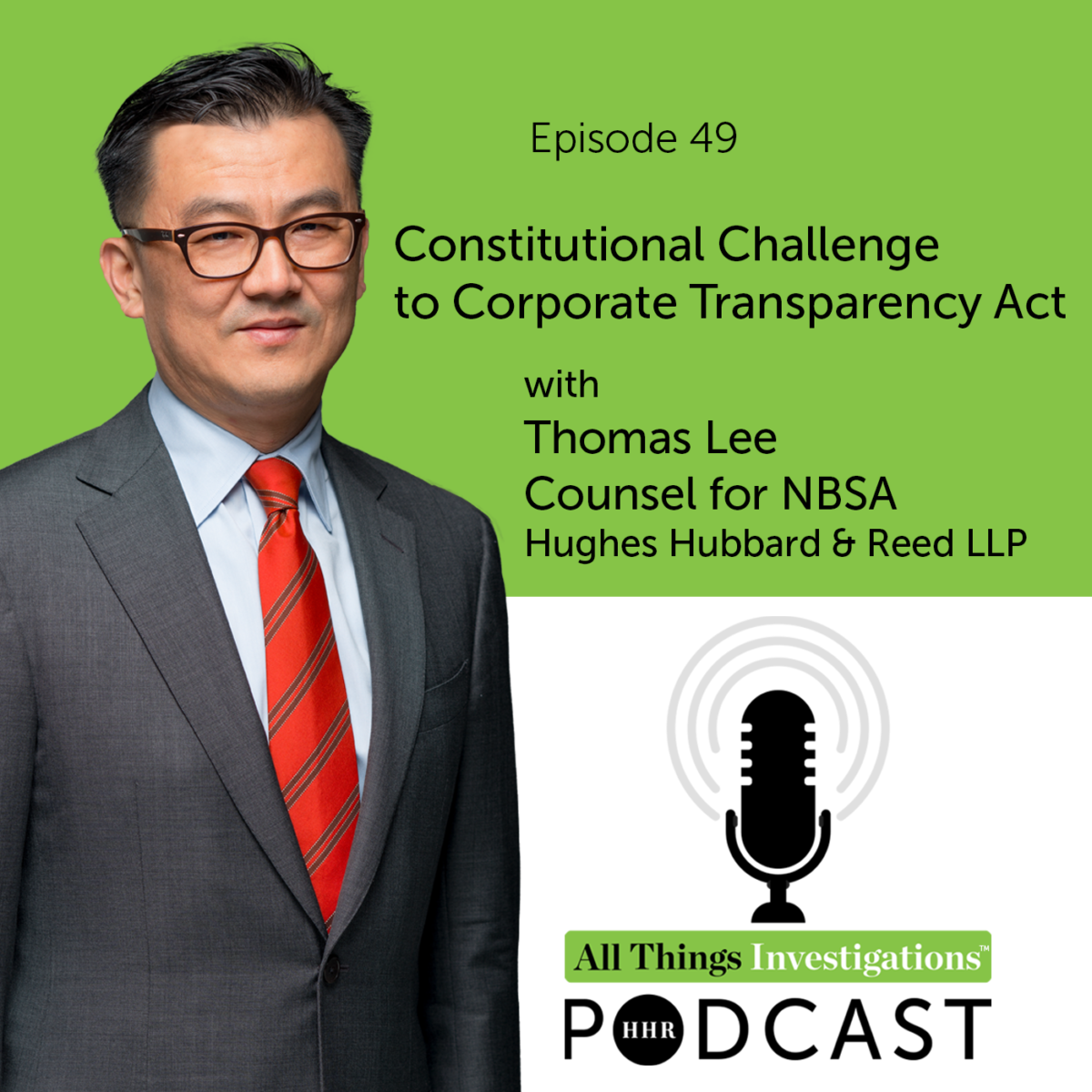
All Things Investigations: Constitutional Challenge to Corporate Transparency Act with Thomas Lee

Welcome to the Hughes Hubbard Anti-Corruption & Internal Investigations Practice Group’s podcast, All Things Investigation.

In this podcast, we’re joined by Hughes Hubbard Special Counsel, Thomas Lee, to discuss the recent decision declaring unconstitutional the Corporate Transparency Act (CTA) in the case of NSBA vs. Yellen.

Thomas Lee specializes in appellate law and constitutional issues. With nearly a decade of tenure at the firm and an impressive 21 years of teaching constitutional law at Fordham Law School, Lee is highly respected in his field. Lee and the Hughes Hubbard team brought the lawsuit on behalf of the National Small Business Association, arguing the CTA was a constitutional overreach as it mandated the reporting of beneficial ownership data to combat money laundering and criminal activities.

The constitutional claims included no Congressional authority for this regulation, privacy concerns, and the lack of a foreign treaty ratified by Congress requiring the law. Drawing from his extensive background in constitutional law, they successfully argued that this federal regulation challenges traditional state regulation of entity formation and exceeds governmental power.

This decision in the National Small Business Association case is a landmark case that has now been appealed to the 11th Circuit Court of Appeals and appears headed to the US Supreme Court.

Key Highlights:

  • Beneficial Ownership Reporting Requirements for Entities
  • Constitutional Challenges in Corporate Transparency Legislation
  • Court Proceedings of the Corporate Transparency Act
  • Efficient Negotiations and Potential Supreme Court Involvement

 Resources:

Hughes Hubbard & Reed website

Thomas Lee

Categories
FCPA Compliance Report

FCPA Compliance Report: Mary Inman on DOJ Whistleblower Bounty Program

Welcome to the award-winning FCPA Compliance Report, the longest running podcast in compliance. In this edition of the FCPA Compliance Report, Tom welcomes back Mary Inman, partner at the newly formed Whistleblower Partners LLP. They talk about the new Department of Justice (DOJ) initiative to pay a bounty to whistleblowers.

Mary Inman is a well-recognized authority in the realm of whistleblowing programs. In this episode, she focuses on DOJ whistleblower program. Her perspective on the program is cautiously optimistic, acknowledging the potential gains in encouraging whistleblowers to disclose information about financial crimes and corruption. However, she has expressed concerns about certain aspects of the program’s design, such as excluding culpable whistleblowers and limiting the type of information that can be provided.

These viewpoints stem from her extensive experience and deep understanding of the complexities involved in implementing effective whistleblower programs. Drawing from her expertise, Inman also emphasizes the need for confidentiality and anonymity for whistleblowers, similar to the SEC program, suggesting that while the DOJ program is a positive step, careful consideration and potential revisions are required to ensure its effectiveness and fairness.

Key Highlights:

  • Financial Crime Whistleblower Reward Initiative
  • Promoting Transparency Through Compliance Officer Resignations
  • Whistleblower Protection for Mental Well-being

Resources:

Mary Inman on LinkedIn

Whistleblower Partner LLP

Tom Fox

Instagram

Facebook

YouTube

Twitter

LinkedIn

For more information on the Ethico ROI Calculator and a free White Paper on the ROI of Compliance, click here.