Categories
Daily Compliance News

April 12, 2023 – The End of FDA Oversight Edition

Welcome to the Daily Compliance News. Each day, Tom Fox, the Voice of Compliance, brings you compliance-related stories to start your day. Sit back, enjoy a cup of morning coffee, and listen to the Daily Compliance News. All from the Compliance Podcast Network. Each day we consider four stories from the business world, compliance, ethics, risk management, leadership, or general interest for the compliance professional.

Stories we are following in today’s edition of Daily Compliance News:

  • Holmes must go to prison. (WSJ)
  • Chinese financial center rocked by corruption allegations. (FT)
  • Texas judge ruling may effectively end FDA oversight. (NYT)
  • Tyson Foods struggles with corporate governance. (WSJ)
Categories
31 Days to More Effective Compliance Programs

One Month to a More Effective Compliance Program for 3rd Parties – Evaluation of Due Diligence With Candice Tal

An important part of the job duties of any compliance practitioner is clearing red flags which might appear for a proposed third-party relationship during the due diligence process. Not only must all red flags be cleared, but there must also be evidence of the decision-making process to show to a regulator if one comes knocking. Around third parties, consider what risks you face in both your sales and supply chain. Suppose there is a key player several tiers down the line which creates or builds a key component or delivers a critical service. In that case, you may want to put more management around that relationship from the compliance perspective.

For anything below tier 2, you may be able to manage your risks by having your direct tier one counterpart take the lead in managing such compliance risks. But make sure that the expectation is communicated to your direct counterparty so that if the government comes knocking, you can show that you did not only contractually obligate your direct counterparty to do so but also provided them the tools and training to do so. Finally, you will need to be able to show that your direct counterpart did so.

Three key takeaways:

  1. There is no set formula for clearing red flags or the evaluation of due diligence.
  2. Know when to say enough has been done.
  3. You must “Document, Document, and Document” your evaluation of any red flags.
Categories
SBR - Authors' Podcast

Jeffrey Hayzlett on The Hero Factor

Welcome to the Sunday Book Review, the Authors Podcast! On this episode, Tom welcomes guest Jeffrey Hayzlett, chairman of the C suite network, as they explore the idea of living a value-based life in their Sunday Book Review-Author’s Edition podcast. Jeffrey discusses his book “The Hero Factor. Jeffrey is also the founder of the Hero Club, an invite-only organization with a value-based ethos.

The podcast delves into how people can live value-based life and how businesses should put their values into practice. Jeffrey and Tom explore how it is okay to check in with these values to keep them in focus. They discuss how, even if there are bad things, lives and businesses operating from a value-based perspective can bring immense benefits.

Tune into Sunday Book Review-Author’s Edition for an exceptional conversation about how to live according to values and make great things happen. This fascinating podcast will surely bring insights, discussion, and knowledge to the forefront. Don’t miss Sunday Book Review-Author’s Edition and get an insightful look into the power of living out your values.

Key Highlights Include

·      Hero Leadership and Setting Values [02:50]

·      The Benefits of Following Your Values and Podcasting [05:43]

·      The Power of Writing and its Impact on Businesses. [08:32]

·      The Value of Membership in the Hero Club [11:25]

Notable Quotes

1.     “They’re running hero businesses. Nobody wakes up every morning as a leader and says; I can’t wait to be a hero, just like real heroes and, you know, in the world and the military and heroic acts. They don’t intend to be heroes. They’re just putting the right place, the right time.”

2.     “They have certain values, and everybody in the organization knows what they are. And as a result, they live those values every day. Walkaway values are what I like to call them. And they have things like diversity and inclusion, and they, you know, they stand for certain things matter what, that principle of it.”

3.     “Most people have heard of servant leadership, but you talk about hero leadership. Yeah. What’s hero leadership? Well, is servant leadership a part of serving others and doing it? But the hero leadership is setting a set of values that you will walk and operate with certain values, whatever those are.”

4.     “Last summer, the Business Roundtable came out with a Statement on the Purpose of a Corporation. They expanded the purpose of a corporation to include stakeholders, not just shareholders. And that was a big shift.”

Categories
Data Driven Compliance

Aron Clymer – Using Data as a Path to Yes

Data Driven Compliance, hosted by Tom Fox, is a podcast featuring an in-depth conversation about the uses of data and data analytics in compliance programs. In this episode, host Tom Fox visits Aron Clymer, Founder and CEO of Data Clymer, who leads a full-stack data engineering firm to empower businesses to unlock the value of their data but discovers the challenge of creating a competitive advantage in the data space.

Aron Clymer spent twenty years working with enterprise software and data in Silicon Valley and corporate America. After building a data team at Salesforce, he became a professional services expert to gain experience with multiple industries. He created Data Clymer, a full-stack data engineering firm, to help businesses extract value from their data. Through data warehousing and business intelligence tools, Aron and his team can give companies access to all the data they need. By democratizing data access, Aron is helping companies create a competitive advantage and trust in their data.

Key Highlights

·      How can companies gain a competitive advantage through data?

·      What is the modern data stack, and what does it involve?

·      How can businesses make the most of their data to ensure trust and accuracy?

 Notable Quotes

1.     “What’s beautiful about a central data warehouse for any organization is it takes all of your data and puts it in a single location – so you can extract the value of all the data you have and create a competitive advantage.”

2.     “You must trust the data before it becomes valuable.”

3.     “It’s worth the effort to think it through and consistently model your data.”

4.     “Any employee in a company should be able to access data very easily.”

5.     “Data is critical for all that – data governance, data cleansing, data integrity.”

 Resources

Aron Clymer on LinkedIn

Data Clymer

 Tom Fox 

Connect with me on the following sites:

Instagram

Facebook

YouTube

Twitter

Categories
Innovation in Compliance

Meeting Your Clients Where They Are with Barrett Mathews

Are you still relying on outdated communication methods to reach your clients and employees? If so, you might be missing out on a huge opportunity to connect and engage with them. In this episode of Innovation in Compliance, Tom Fox speaks with Dr. Barrett Matthews, a media expert who believes in meeting clients where they are and creating authentic content to increase engagement. Barrett offers valuable insights on how businesses can leverage media to expand their reach and connect with their audience.

Dr. Barrett Matthews is a media expert with a diverse background in broadcasting, writing, and production. He has worked with industry legends like Brent Musburger and Terry Bradshaw. He eventually created a business focused on helping others embrace and leverage the power of media. Barrett now works with entrepreneurs and corporations to help them develop an authentic media presence that meets their clients where they are.


Barrett and Tom discuss in this episode:

  • Media has evolved and is more accessible today than ever before. Entrepreneurs and corporations need to embrace media and create content that meets their clients where they are.
  • People consume information through a variety of media forms, so businesses need to create content in multiple formats (e.g., podcasts, books, social media, etc.) to reach a wider audience.
  • Authenticity is key in creating engaging media content. Clients don’t necessarily buy the content itself, but rather the person behind it. Businesses should be open to showing their human side and not strive for perfection.
  • A documentary film can be a powerful way to showcase a business’s authenticity and human side. By delving into why a business does what it does, potential clients can connect with the business on a deeper level.
  • Deliver your content on the platforms where your target audience is present; this is essential for your business to succeed.
  • Ego-based marketing is not effective as it only promotes what makes a business owner comfortable. 
  • Build a strong brand by delivering on the promises you made to your customers, and exceeding their expectations. Your customers will refer your business to others, which can boost your brand recognition.
  • Podcasting is an excellent medium for those who are passionate about something because it’s easier to talk about a topic than to write a book on it.
  • Barrett is involved in two initiatives called iChange Nations and Media Monarch, where he aims to promote civility worldwide and teach grassroots journalism to people in different countries.
  • Barrett has a video training program available on his website about how to use media to gain more clients.


KEY QUOTES

“If you think that you have clients all over the place, you need to meet them where they are. Meaning that if they listen to podcasts, you better have one. If they read books, you better have one, and so forth and so on.” – Dr. Barrett Matthews


“People don’t necessarily buy your content as much as they buy you when it comes to the media you put out.” – Dr. Barrett Matthews


“Marketing is what you say about yourself to people. Your brand is what people say about you.” – Dr. Barrett Matthews


Resources:

Barrett Matthews on LinkedIn | Instagram | Twitter | Facebook  | Media Boss Podcast

Five Ways to Paying Clients

iChange Nations

Categories
Daily Compliance News

April 11, 2023 – The 10,000 Companies Edition

Welcome to the Daily Compliance News. Each day, Tom Fox, the Voice of Compliance, brings you compliance-related stories to start your day. Sit back, enjoy a cup of morning coffee, and listen to the Daily Compliance News. All from the Compliance Podcast Network. Each day we consider four stories from the business world, compliance, ethics, risk management, leadership, or general interest for the compliance professional.

Stories we are following in today’s edition of Daily Compliance News:

  • EU sustainability rules to hit 10K companies. (WSJ)
  • The Travel Act and state corruption. (Valley Central)
  • What’s next for banks? (NYT)
  • Do you use all of your vacation days? (Bloomberg)
Categories
All Things Investigations

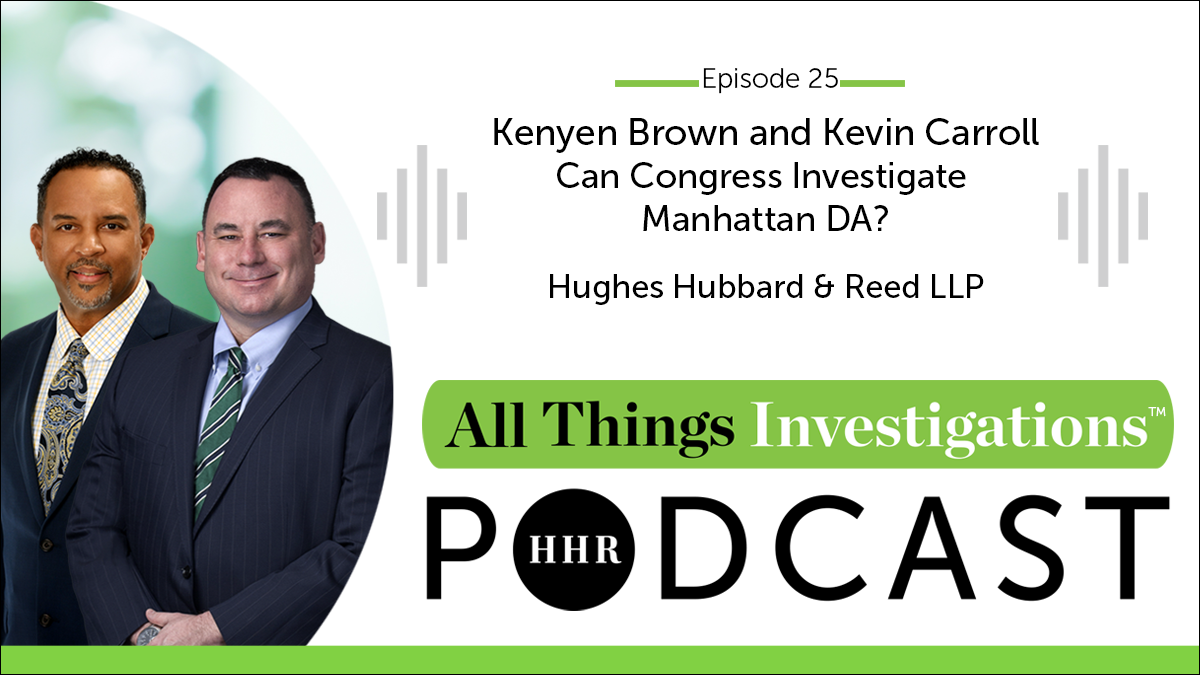
All Things Investigations: Episode 25 – Can Congress Investigate Manhattan DA? with Kevin Carroll and Kenyen Brown

Can Congress investigate a local prosecutor’s ongoing investigation and prosecution? This is the question that has been sparked by the purported potential congressional investigation of Manhattan District Attorney Alvin Bragg. In this episode of All Things Investigations, hosted by Tom Fox, guests Kevin Carroll and Kenyen Brown share their thoughts on the unprecedented matter and discuss the potential constitutional and legal issues that may arise.

Kevin Carroll and Kenyen Brown are partners at Hughes Hubbard & Reed. Kevin is a professor, and former Assistant Attorney General for the U.S. Department of Justice. He has also served as a senior counsel to the House Homeland Security Committee. Kenyen is a former federal prosecutor and currently serves as the President of the National Bar Association.


You’ll hear Tom, Kenyen and Kevin discuss:

  • Congress has never before tried to use its subpoena power or investigative powers to interfere with an ongoing investigation and prosecution by a state or local prosecutor. 
  • There are many potential problems with congressional subpoenas of an ongoing criminal investigation and prosecution by a state or local prosecutor. False accusations, grand jury confidentiality, and potentially ruining a meritorious criminal investigation are just a few examples.
  • The congressional committee’s request for grand jury material is unlikely to be successful and would be very unpopular due to the privacy of individuals and the sacrosanct nature of the grand jury.
  • Members of Congress weighing in on local prosecutions could unduly destroy the separation between the different branches of government and the respective functions of the executive and judicial branches. This could also be a recipe for disaster in terms of creating political investigations that are subject to the whims of different constituencies.
  • Prosecutors’ offices regularly receive false allegations about prominent people, especially politicians, and potential investigations should remain within the confidences of that office or committee. There is potential for people to be slimed by the revelation under oath of false accusations.
  • The Manhattan DA’s office is a first-class operation, staffed by some of the brightest legal minds in the country. They have responded appropriately to the congressional committee’s request by citing relevant law and their area of authority.
  • Public theater is likely driving much of the debate around congressional oversight of the Manhattan DA’s investigation. The Republicans may attempt to use this issue to score political points with their base, even though the legal basis for such oversight is questionable at best.
  • Alvin Bragg, the Manhattan DA, is acting properly by refusing to comply with any congressional subpoenas. He should continue to resist any attempts by Congress to interfere with his ongoing investigations.
  • There may be interesting news in the coming weeks and months regarding this issue, and it is worth keeping an eye on as it unfolds.


KEY QUOTES

“Congress has never before tried to use its subpoena power or investigative powers generally to get in the weeds of an ongoing investigation and now prosecution by a state or local prosecutor.” – Kevin Carroll


“Why should Congress decide how a local prosecutor spends his resources or what the policy is on a local level? I just think that excuse is paper thin.” – Kenyen Brown


“Once you sit back and peel back the layers, I think there are generally problems with that. I think if Congress, led by the Republicans, stops to think about it, that’s probably a path they don’t want to go down. ” – Kenyen Brown


“One thing I think is in Bragg’s favor is that the Manhattan DA’s office is a really first class operation. The brightest of my law school classmates at Fordham Law School went to the Manhattan DA’s office because it offers really unique opportunities for people to get trial experience on sophisticated cases, including sophisticated financial cases, pretty early in their careers.” – Kevin Carroll


Resources:

Hughes Hubbard & Reed website

Kevin Carroll on LinkedIn

Kenyen Brown on LinkedIn

Categories
31 Days to More Effective Compliance Programs

One Month to a More Effective Compliance Program for 3rd Parties – Levels of Due Diligence With Candice Tal

Today, I am joined by Candice Tal, founder of Infortal, to explain the 3 levels of due diligence. Due diligence is generally recognized in Level I, Level II, and Level III. Each level is appropriate for a different level of corruption risk. The key is to develop a mechanism to determine the appropriate level of due diligence and then implement that going forward.

The question becomes how you use the information you obtained in the business justification and the questionnaire to determine an appropriate level of due diligence for the next step in the five-step process of third-party management. A three-step approach of varying levels of due diligence is the appropriate analysis to take going forward.
There are many different approaches to the specifics of due diligence. By laying out some of the approaches, you can craft the relevant portions of your program. The Level I, II, and III trichotomy appear to have the greatest favor and one that you should be able to implement straightforwardly. But the key is to assess your company’s risk and then manage that risk. If you need to perform additional due diligence to answer questions or clear red flags, you should do so. And do not forget to “Document, Document, and Document” all your due diligence.

Three key takeaways:

  1. Level I due diligence should only be used where there is a low risk of corruption.
  2. A Level II due diligence is sufficient in a high-risk jurisdiction if there are no red flags to be cleared.
  3. Level III due diligence is deep dive, boots-on-the-ground investigation.
Categories
Corruption, Crime and Compliance

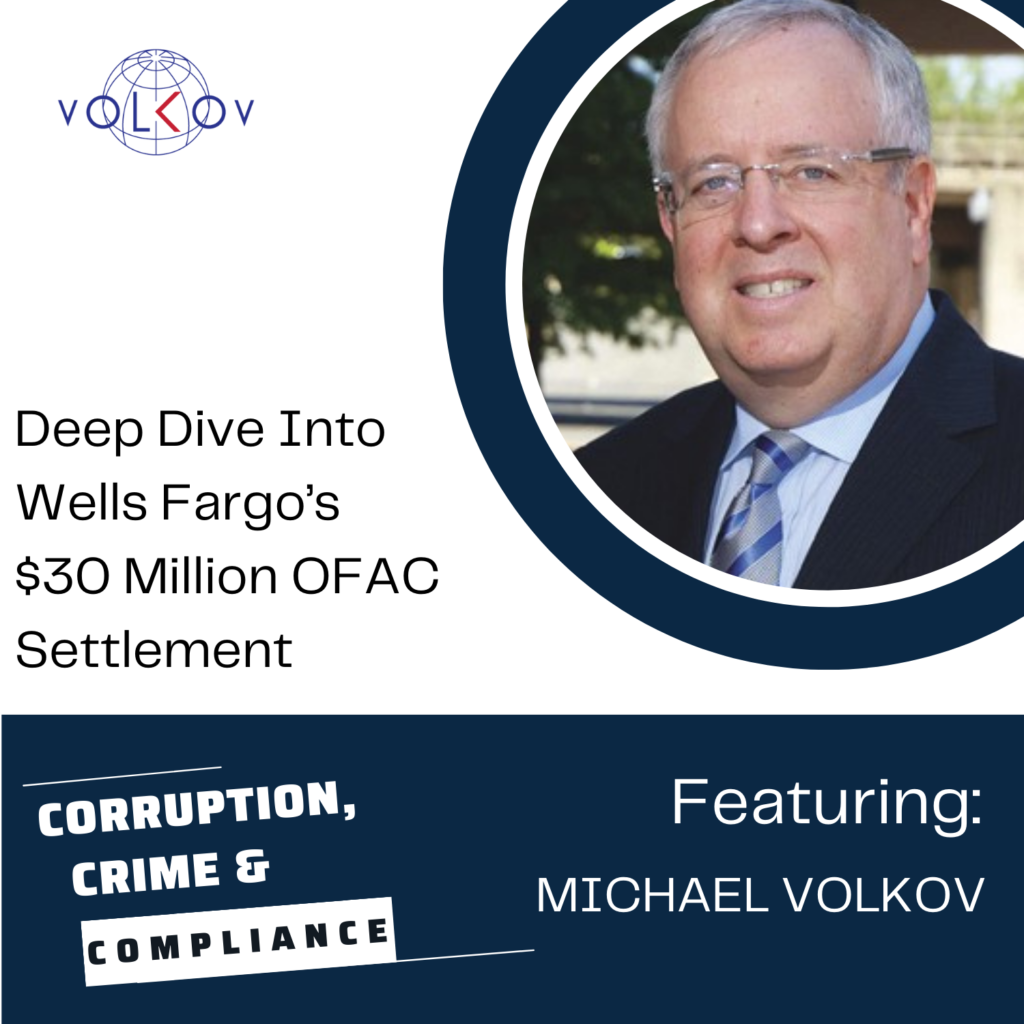
Deep Dive Into Wells Fargo’s $30 Million OFAC Settlement

Wells Fargo has settled with OFAC for $30 million for sanctions violations that occurred during a seven-year period from 2008 to 2015. The violations stemmed from its acquisition of Wachovia Bank, which had a trade relationship with a European bank that conducted transactions involving sanctioned entities and individuals. Despite concerns raised internally, Wells Fargo failed to exercise caution or care in identifying and preventing such transactions. The case serves as a reminder of the importance of corporate culture of ethics and compliance. In this episode of Corruption, Crime, and Compliance, Michael Volkov takes a deeper dive into the issue and outlines the missteps that occurred; he also gives practical advice for companies to avoid the same mistakes. 

You’ll hear him discuss these key ideas in this episode:

  • Wells Fargo has a lengthy record of misconduct and failures to remediate. Its latest enforcement action involves a $30 million settlement with OFAC for sanctions violations that occurred from 2008 to 2015. These violations include three separate OFAC sanctions involving Iran, Sudan, and Syria.
  • Wells Fargo provided the European bank with trade finance software that was customized and used to conduct transactions that involved sanctioned entities and individuals, despite concerns raised internally on several occasions.
  • OFAC found that “Wells Fargo demonstrated reckless disregard for US sanctions requirements …and failed to exercise a minimal degree of caution or care in failing to identify and prevent such transactions for seven years after it acquired Wachovia…”
  • Wells Fargo’s conduct highlights the importance of corporate culture of ethics and compliance.
  • Companies must have proper oversight when pursuing new business opportunities or preserving existing business relationships, and must promptly investigate and address sanctions compliance risks when raised internally, even in non-core business lines.
  • Comprehensive due diligence regarding potential sanctions risks is necessary when one entity acquires another through merger or acquisition.
  • Aside from this part of Wells Fargo’s operations, the overall bank had a strong sanctions compliance program.
  • If Wells Fargo had invested in a culture of compliance, it could have turned around its organization with wholesale change and a real commitment to embedding, monitoring, and remediating its culture as needed.
  • The case serves as a reminder that companies must have a speak-up culture and respond to concerns as they are raised, as well as the importance of corporate culture, ethics, and compliance.


KEY QUOTES:

“If Wells Fargo had reduced its outside legal consulting and professional expenditures by half and took the money to invest and implement a culture of compliance, you can rest assured that Wells Fargo would be able to turn around its organization.” – Michael Volkov


“Moreover, when sanctions compliance risks are raised internally, including concerns arising from smaller, non-core business lines, companies should promptly seek to thoroughly investigate and address those risks.” – Michael Volkov


“Wells Fargo’s conduct here, when exposed and considered, is not just inexplicable, but reminds all of us on the importance of corporate culture of ethics and compliance.” – Michael Volkov


Resources:

Michael Volkov on LinkedIn | Twitter

The Volkov Law Group

Categories
FCPA Compliance Report

Ethics Madness 2023

Welcome to the award-winning FCPA Compliance Report, the longest-running podcast in compliance. This episode was recorded during March Madness, the return of Jason Meyer and Tom For Ethics Madness. In Ethics Madness, dive into the ethical questions surrounding the University of Alabama basketball team and their missteps in handling incidents involving their players. In this exciting podcast, the hosts discuss the possibility of redemption for individuals who have committed past indiscretions and how companies must vet their employees for a better work environment. They also cover topics such as mental health, the importance of diversity, equity, and inclusion in the workplace, and how companies should embrace ESG for a better business process. You’ll also hear insightful interviews with professionals on compliance and ethics education and enjoy fun segments like the Compliance Anthem of the Week. Don’t miss out on this amazing podcast that will inspire and educate compliance and ethics professionals. 

Key Highlights

·      Ethics in Sports: University of Alabama Basketball

·      Can you love art but not artists?

·      Redemption for unethical behavior in sports

·      The Power of Forgiveness & Reputation Management in Sports

·      Mental health in the compliance profession

·      Political Pressure on DEI Programs in the Southern States

·      Fostering DEI in Organizations

·      Core values and politics in universities & ESG betting

·      ESG in Energy Business Processes

·      Ivy League success in March Madness

·      Professional skepticism and NCAA tournament predictions

 Notable Quotes

“Should I feel guilty that I put the tide in my bracket?”

“Even energy companies are doing ESG. Why? Because they see it in their self-interest.”

“Spending more time and more attention now helping organizations with including and engaging with the neurodivergent people in their workforces and trying to involve those workers in ethics compliance, and that’s been fascinating work as well.”

“And to me, Tom, this debate feels like a debate at the core of ethics and compliance because this is an example of some core values.”

Resources

Jason Meyer on LinkedIn

The Eight Mindsets Podcast on Spotify

Tom Fox

Instagram

Facebook

YouTube

Twitter

LinkedIn