In today’s edition of Daily Compliance News:



Welcome to a special five-part blog series, entitled Corporate Case Management in the Era of the DoJ’s Monaco Memo, sponsored by i-Sight Software Solutions (i-Sight). Over this series, Jakub Ficner, Director of Partnership Development, and I consider how the Monaco Doctrine and Monaco Memo have impacted compliance in several key areas. We not only detail the changes wrought by the Monaco Memo but how compliance professionals can respond to these new challenges. In Part 2, we look at the need for active triage in your investigative protocol to allow your organization to meet the strictures of the Monaco Memo.
In the wake of the Monaco Doctrine and attendant Monaco Memo, one of the things that the Department of Justice (DOJ) clearly now expects is even more enhanced cooperation during investigations. But this does not mean the prior version of ‘enhanced’ cooperation where you might throw more bodies at an investigation and it does not mean you have to spend more money or bring additional resources. This type of ‘enhanced’ cooperation means the speed and quality of your investigation. It has emphasized the issue of triage and why triage is so critical in not only a speak up culture, but also in the investigative process.
We began at the beginning; what is triage? Ficner analogized investigative triage as something like triage within a hospital or healthcare environment. It is a quick review of the facts as they are related in front of you and making a determination in terms of the severity, criticality, and next steps for managing the complaint based on the nature of the complaint and the information that you have at the time. Ficner added, “having a triage place or triage process in place really reduces the risk that organizations face of not handling a complaint properly right from the start.”
It is critical to have both your investigative protocol and triage process written out before any report comes in, so you are not trying to create one on the fly. Ficner suggested that your protocol should include such steps as “what you should do when a complaint or allegation is received, based on the nature of the complaint or allegation. Next factor in elements such as the nature of it, the case type, the jurisdiction or region of the complaint, and ultimately the severity of the complaint and using backend rules.” It is also important to have a mechanism in place to “enforce that process, because while having a process is great, but if the DOJ sees that you are not consistently following that process, then it can actually hamper the risk mitigation factors to the organization.”
We turned to the type of report which implicates a senior executive, which makes things “riskier.” It certainly requires steps in place you should take. Ficner noted these include “the notifications that we need to trigger and the people who ultimately need to complete the action items.” It is critical that the rules “be enforced using automation, so it is routed to the appropriate team or individual, and the appropriate notifications are triggered. And those initial assessment steps that we know we need to take each and every time are factored into that process.”
Put another way it is critical to “Document, Document, Document” because ultimately the system your organization has in put in place has to be “auditable and defensible.” This is the core of the i-Sight solution, an “application that enables you to be able to see how a complaint came in, when it came in, who was notified and what steps were followed each and every time. And by having that audit trail in place that shows it went for triage, these are the steps that we take when we receive this type of allegation based on the nature of the allegation, and we see that it was action consistently. Those are things that ultimately our clients are looking for as they’re mitigating factors. When the DOJ looks at organizations is there a process in place they can clearly demonstrate that it is auditable, it is defensible?”
A final key element is does your protocol have a consistent approach to follow? If your intake comes in from Singapore, London, Brazil, or the United States do you have confidence that the compliance professional who investigates it will have a consistent approach to follow? Here Ficner noted that given the “complex nature of operating in multiple different regions, jurisdictions, different laws, subject based on where the complaint originated, where the complaint or violation occurred, you can factor those parameters into the actual assessment process so that you can uniquely tailor: you have a single set of steps that we need to follow to assess one of these complaints.”
Join us tomorrow where look at ethical investigations.
This begins a special podcast series on current economic and culture issues faced by the state of Texas, its governments and its citizens. We will explore these issues with author Loren Steffy, through the prism of his book The Big Empty. The Big Empty set in 1999, is a tale about the sense of place and tells the story of a fictional company AzTech which builds a semi-conductor plant in the dying west Texas city of Conquistador. The attempt is beset by the clash of culture in bringing Silicon Valley tech entrepreneurs to rural Texas. The book also raises multiple economic issues facing Texas as we move towards the mid 21st century. Over this 5-part podcast series we will consider the following issues facing Texas today; including water, power, land investment, housing and the clash of cultures.
In Episode 1 we consider water and water resource in a time of water scarcity. In the book, the newcomers build out a lake which sits in the front of their gated community and is used to water their private golf course. We explore questions of where water is found and how is it delivered, transmission to move to water where you need it and what happens if you have too much water. We consider the clash of culture in using water to create a water feature for a gated community that is either seen as a positive by its residents or a waste of water in the time of draught by the locals. Water as a sustainable commodity is a question facing Texas today and for the future.
Purchase The Big Empty.
Welcome to a special podcast series, Corporate Case Management in the Era of the DoJ’s Monaco Memo, sponsored by i-Sight Software Solutions. Over this series, we detail the changes wrought by the Monaco Memo and how compliance professionals can respond to these new challenges. In this Part 1, we look at the role of a speak-up culture in responding to the DOJ changes set out in the Monaco Memo. Highlights include:
For more information, check out i-Sight here.
In this episode of The Ethics Experts, Nick welcomes Zoe Chance. Zoe is a writer, teacher, researcher, and climate philanthropist. Her bestselling book is called Influence Is Your Superpower. She has a doctorate from Harvard and teaches the most popular course at Yale School of Management. Her research has been published in top journals and covered in global media, and she speaks on TV and around the world. Before joining academia, Zoe managed a $200 million segment of Barbie, helped with political campaigns, and worked in door-to-door sales.
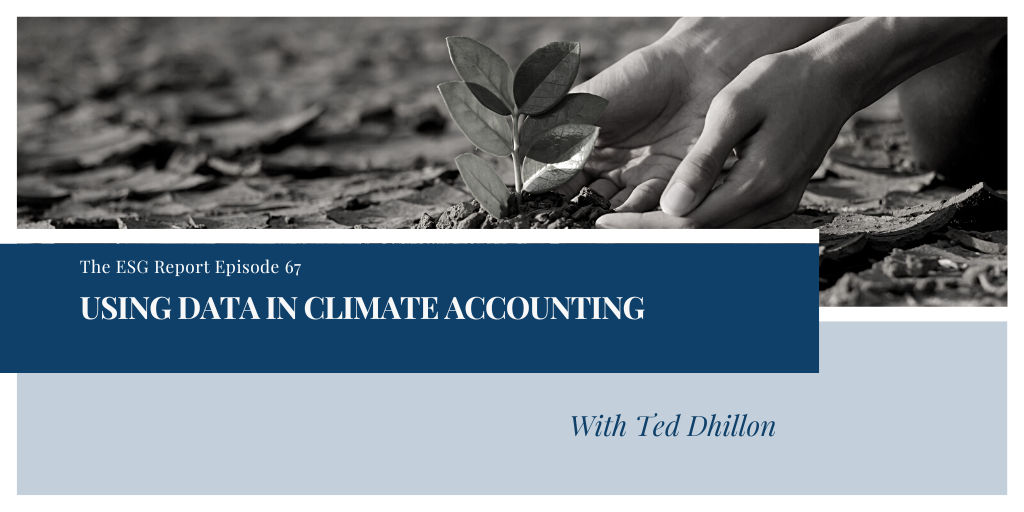
Tom Fox welcomes Ted Dhillon to this episode of the ESG Report. Ted is the co-founder of FigBytes, an ESG insight platform that tracks raw data for environmental, social, and governance management. In this conversation, he and Tom talk about the ways FigBytes helps other companies do data analytics around ESG, the financial impact of ESG, and water stewardship.
FigBytes
FigBytes as a platform tracks data for social, environmental and governance management. That raw data is then converted into impacts and metrics. The analyzed data is then implemented into different technological frameworks. “What we also do is we take the next step yet towards engagement,” Ted tells Tom. FigBytes connects data with organizational strategy and changes the dynamic of how sustainability and ESG is looked at within a company.
ESG as a Business Approach
“[ESG] is clearly a business process approach, and I also look at ESG as a reporting initiative as well,” Ted tells Tom. ESG has moved the organizational sector into a phase of new sustainability that’s more evolved. The metrics and numbers can be compared and contrasted across various different organizations. ESG is also driven by investment from the financial community. Investors will look at the things that are happening in the world, how it impacts companies, and make risk-based assessments on those factors.
Water Stewardship
Water is the next carbon, so Tom asks Ted how FigBytes is facilitating water stewardship. Water stewardship is about the responsible use of water, in a way that is equitable and beneficial to the communities you are drawing it from. Water is a resource with significant impact and a resource that overlaps with climate. You won’t achieve climate sustainability without taking water into account. “Water has got a very regional and localized focus and therefore stewardship is critical because companies have direct and indirect impacts of water as well,” Ted says.
Resources
Ted Dhillon | LinkedIn
In this episode, I visit with Foley & Lardner partners David Simon and Mike Walsh on the disruption to the global supply, which I explored in the podcast series, Never the Same. They have co-authored an article entitled, Managing Supply Chain Disruption in an Era of Geopolitical Risk on the topic. In this Part 1 of a two-series, we begin to explore the topic of the events which have led to the disruption of the global supply chain and the impact on compliance functions. Some of the highlights include:
· What led to the disruption in the global supply chain?
· Will this continue for the foreseeable future?
· Why is the global supply chain and the global economy of the past 30 years or so now dead?
· Why the impact of this supply chain disruption is greater in the EU than in the US?
Resources
Managing Supply Chain Disruption in an Era of Geopolitical Risk by Mike Walsh and David Simon
Why Supply Chain Will Never Be the Same After the Russian Invasion by Tom Fox
Welcome to a special five-part blog series, entitled Corporate Case Management in the Era of the DoJ’s Monaco Memo, sponsored by i-Sight Software Solutions (i-Sight). Over this series, Jakub Ficner, Director of Partnership Development, and I consider how the Monaco Doctrine and Monaco Memo have impacted compliance in several key areas. We not only detail the changes wrought by the Monaco Memo but how compliance professionals can respond to these new challenges. In Part 1, we look at the role of a speak up culture in responding to the Department of Justice (DOJ) changes set out in the Monaco Memo.
There have been some significant announcements from the DOJ over the past year, which have really re-emphasized what I think many thought were the nuts and bolts of compliance. It started a year ago when Deputy Attorney General Lisa Monaco gave a speech where, for the first time, the DOJ talked about corporate culture as a key indicia that the Department would evaluate if a company was under investigation, leading to corporate culture being evaluated in enforcement actions over the past 12 months.
That led to the now formalized Monaco Doctrine, as memorialized in the Monaco Memo. Corporate culture is now a key assessment the DOJ will make in Foreign Corrupt Practices Act (FCPA) investigations or enforcement actions. How does an organization create and maintain an ethical culture? Key questions include how do you produce a culture? How do you assess that culture? How do you monitor that culture? How do you continuously improve your culture? How is a speak up culture so critical to a good corporate culture? How should a company think through responding to these new developments?
Ficner said the first step for any organization should be “how do we encourage and foster a speak up culture?” He said you should begin with differentiating between a whistleblower hotline and whistleblower program versus a speak up culture. “By focusing on a speak up culture, a company is moving away from potentially the negative connotation associated to the word whistleblower, to one of really fostering and encouraging your employees to speak up and voice any concerns if they encounter them. There is a difference because a speak up culture can help to foster a community.” There can be multiple different channels where an employee can voice their concerns and they will be heard by the organization. Ficner believes it is a “two-step process of building a multi-channel approach to voice concerns and then having a process in place to have a consistent approach to dealing with a concern once it has been voiced.”
There are additional steps beyond simply providing the mechanism to allow employees to speak up. Ficner said, “setting expectations is another key. An organization should desire to set expectations for the employees that have come forward in terms of next steps and roughly the process that we’ll follow from there. Once the employees have taken the active step of coming forward with a concern, they need to know that their voice has been heard, and that there will be a process followed. They should be given a rough expectation of what that process will be going forward.”
The ability to actively keep a reporter who has submitted a complaint or concern up to date as the process moves forward and then having rules in place to keep that process moving forward is also critical. After an organization receives the information, it should keep the person up to date and informed on the various steps or milestones as it transitions through the process. One great example is it starts with a two-way portal. The ability for an initiator to submit their concern, actively be able to look up the status of their concern and potentially add additional information to their concern, enabling them to either remain anonymous or choose to be named and associated to that concern or allegation should be maintained throughout the process. Unfortunately, many organizations fall down on these steps. This failure can have a very negative impact on a speak up ethos and an overall culture of ethics and compliance in an organization.
Ficner concluded by noting, once an organization has such information, it can then start to use it to improve any compliance program deficiencies. It can be shared with various stakeholders, from executive leadership to the Board of Directors, on the effects of a good compliance program and the effects of a bad compliance program. He noted, “that is where the investment starts to come in as organizations see that having a strong ethical program in place that encourages first culture speak up and then a structured process that gives us the data that we need to reinforce it is a benefit to the organization.”
Join us for Part 2, where we consider the importance of strategic triage.
In today’s edition of Sunday Book Review:
Second Variety by Philip K. Dick
City by Clifford Simak
Fondly Fahrenheit by Alfred Bester
The Quest for Saint Aquin by Anthony Boucher
Act of Faith by By Fadzlishah Johanabas
Resources
The Best Robots in Science Fiction by Via Tachyon