Categories
Blog

Compliance Lessons from the World Series: Part 4 – The Astros and Continuous Improvement

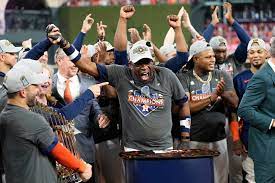
We continue our celebration of the Houston Astros winning the 2022 World Series by considering the Houston Astros, their road to the championship and what lessons might be drawn for the compliance professional around continuous improvement. Sports is perhaps one of the best metaphors for the compliance concept of ‘continuous improvement’, a mandatory component of any best practices compliance regime. Every team must evolve every year to be or remain competitive. Players age and get injured; economics dictate some players are traded or released; strategies evolve to meet new successes and new challenges; and, at least in baseball, sometimes the rules change.

It all started with the executive level of the club. Both a new General Manager (GM) and Manager were brought in after the sign-stealing scandal was revealed. Bradford Doolittle, writing in ESPN, said, “This franchise is an organizational baseball machine that continues to roll even after the scandal led to changes on the field and behind the scenes. James Click, the soft-spoken, analytics-savvy executive, took over one of the most proficient front offices in the game, and under his management, the Astros haven’t missed a beat. In some ways, they’ve even iterated into a higher form, especially given the pitching depth that is the envy of the majors. Dusty Baker arrived, then, too, and the beloved manager’s very presence restored a measure of integrity to the Astros when they badly needed it.”

Further, there are only five players remaining from the 2017 team which won the Astros first World Series in the wake of the cheating scandal: Justin Verlander, Lance McCullers Jr., Yuli Gurriel, Jose Altuve and Alex Bregman. That means there were 20 new players added to the team and, as Doolittle noted, “It’s a different team on the field — the 2017 club was more explosive offensively, with a well-rounded lineup of skilled players such as Springer and Correa. In 2022, though, the team does less damage on balls in play, making them more reliant on the long ball to keep the scoreboard turning.”

But the execution by the front office is also different. Whereas prior GM Jeff Luhnow relied heavily on data and analytics, Click has taken a more holistic approach bringing back human scouting assets to supplement the data the team reviews. Most crucially the team invested heavily in Latin America scouting and the dividends paid off. Tyler Kepner, writing in the NYT said, “Javier switched from outfielder to pitcher at 16, the age when many prospects from the Dominican Republic turn pro. He signed just before his 18th birthday for $10,000, the same bonus the Astros had given Framber Valdez, a Dominican left-hander, in 2015. The team gave a $100,000 bonus that year to José Urquidy, a right-hander from Mexico, and $20,000 in 2017 to Luis Garcia, a right-hander from Venezuela. Add it all up and the Astros spent $140,000 to sign four pitchers from Latin America who combined to make 112 starts this season. None of the four were ever listed among the top 100 prospects by MLB.com.”

Continuous improvement also comes in the form of player development. Former GM Luhnow was quoted in the NYT, “I think we’re seeing a result of the next big thing, which really started in the 2015 era, which is player development and teaching young arms pitches that are going to work in the big leagues and keeping them healthy and developing young arms so that you have not only starters but bullpen arms that can do exactly what they’re doing right now.” Pitcher Lance McCullers Jr. was quoted in SI.com by Tom Verducci on this topic as well, “I think it goes back to our pitching development. Our guys in the minor leagues are just fabulous. I think that’s becoming lost in today’s game. I think developing pitchers and developing pitches still matter, and it starts from the bottom up.”

Compliance Lessons

The Department of Justice (DOJ) has made clear that continuous monitoring should lead to continuous improvement of your compliance program. This concept was originally enshrined in Hallmark Nine of the Ten Hallmarks of Compliance Program, as found in the original FCPA Resource Guide. It said, “compliance programs that do not just exist on paper but are followed in practice will inevitably uncover compliance weaknesses and require enhancements. Consequently, DOJ and SEC evaluate whether companies regularly review and improve their compliance programs and not allow them to become stale.” The DOJ/Securities and Exchange Commission (SEC) expects that a company will review and test its compliance controls and “think critically” about its own weaknesses and risk areas. Internal controls should also be periodically tested through “targeted audits.”

The lessons from the Astros continuous improvement provide the compliance professional with three key insights.

  1. Risk Management. When your risks changes, risk management must change with it, including compliance. For baseball those risks include players, economic issues, game changes and others. The DOJ made clear in the 2020 Update to the Evaluation of Corporate Compliance Programs that companies must assess their risk as the change. In this era of post-Covid and Russian invasion of Ukraine, your risks have changed. When was the last time you performed a risk assessment?
  2. Talent Acquisition. Obviously, the Astros have been superior in this arena. In addition to the World Series MVP, rookie Jeremy Pena who was drafted in the 3rd of the MLB player draft, there is Chas McCormack, who made a run saving catch in Game 5 and who was a 21st round draft pick, and of course the aforementioned pitching acquisitions. Free agent pick-ups were critical, such as Trey Mancini who made the game saving catch, also in Game 5. The clear message is to bring in talent to your compliance team.
  3. Talent Development. Here the Astros excel as well. The minor league system actually develops talent. Former Astros star and now minor league coach Morgan Ensberg was quoted in the Kepner piece, “the Astros essentially doubled their inventory of starters by using a piggyback system; that is, two pitchers working four innings apiece each time through the rotation. That way, the organization had more options for pitchers who could be stretched into starters at the higher levels — and more starter types who were familiar with relief.” What are you doing to develop the compliance talent in your organization?

What is your organization doing to improve your compliance program? Your risks change over time and your compliance program must adapt. How you monitor those changes and then create new risk management strategies to improve your compliance program are key to maintaining a successful compliance regime.

Join me tomorrow as I explore World Series Champions and reputation.
Categories
Jamming with Jason

It’s Time for a New Life with Jennifer Waters

What do you do when everything is going as planned, and a shift pulls the rug out from under you? What if your whole identity of who you change in the blink of an eye?

Your kids are adults and no longer need Mom. Your marriage ends, and you are no longer a wife. Your safety and security of retirement, career, and healthcare are lost.

You realize it’s time for a new life and one that Jason Mefford’s friend, Jennifer Waters, has experienced. In this #jammingwithjason #podcast, Jason and Jennifer discuss how she worked through the change in her identity and healed through a more intentional connection with nature and her dogs.

How do you move from prescriptions to nature for your healing? How do you connect with nature? What is re-wilding, and how does it affect our dogs and us when the majority of the people in the world are living in urban environments often disconnected from the nature around us?

This and much more in this episode.

Jennifer Waters is a former journalist, healthcare content writer, and owner of Grumpy Pups Pet Photography, Happy Dog Mom, and Dogkind. Dogkind is a revolution in dog care, communication, and wellness. She is obsessed with finding ways to feel happier and healthier and doing the same for her senior Boxers.

Learn more about Jennifer and download her free book “5 Ways to Make Your Dog Healthier and Happier” at: https://dogkind.com/

FOR FULL SHOW NOTES AND LINKS, VISIT:

E297 It’s Time for a New Life with Jennifer Waters

You can also listen to the previous episode with Marty: Ged Out of BED https://jasonmefford.com/jammingwithjason79/.

LIKE THE PODCAST?

If you’re the kind of person who likes to help others, then share this with your friends and family. If you find value, they will too. Please leave a review [https://itunes.apple.com/us/podcast/jamming-with-jason-mefford/id1456660699] on Apple Podcasts so we can reach more people.

Join my Facebook group: https://www.facebook.com/groups/beinguniquely

OTHER RESOURCES YOU MAY ENJOY:

My YouTube channel [https://www.youtube.com/c/jasonleemefford] and make sure to subscribe

My Facebook page [https://www.facebook.com/jammingwithjasonmefford]

My LinkedIn page [https://www.linkedin.com/in/jasonmefford/]

My website [https://jasonmefford.com]

STAY UP TO DATE WITH NEW CONTENT:

It can be difficult to find information on social media and the internet, but you get treated like a VIP and have one convenient list of new content delivered to your inbox each week when you subscribe to Jason’s VIP Lounge at: https://jasonmefford.com/vip/ plus; that way, you can communicate with me through email.

Categories
Creativity and Compliance

Corporate Compliance and Ethics Week 2022, Part 3-Contests and Games

Where does creativity fit into compliance? In more places than you think. Problem-solving, accountability, communication, and connection – all take creativity. Join Tom Fox and Ronnie Feldman on Creativity and Compliance, part of the Compliance Podcast Network. In this episode, Ronnie and Tom continue their five-part series on creative ideas you can use during Corporate Compliance and Ethics Week 2022.

In this Part 3, we introduce the use of contests and games. In this episode, we discuss ideas to help make your compliance team and your compliance function more approachable. Tom and Ronnie agree that Corporate Compliance and Ethics Week initiatives must be followed up throughout the year.

Some of the ideas include:

§  Why not try a scavenger hunt through your compliance policies and procedures? You can put some fun easter eggs in different parts of the Code and have them look for them and report back. This would teach employees where to find information relevant to compliance.

§  What about prizes for employees?

§  Some contests include a Lip Sync Contest and Two Truths & a Lie.

§  All of this should be designed to allow your employees to get to know your compliance team.

Resources:

Ronnie Feldman (LinkedIn)

Learnings & Entertainments (LinkedIn)

Ronnie Feldman (Twitter)

Learnings & Entertainments (Website)

60-Second Communication & Awareness Shorts – A variety of short, customizable, quick-hitter “commercials,” including songs & jingles, video shorts, newsletter graphics & Gifs, and more. Promote integrity, compliance, the Code, the helpline, and the E&C team as helpful advisors and coaches.

Workplace Tonight Show! Micro-learning – a library of 1-10-minute training and communications wrapped in the style of a late-night variety show that explains corporate risk topics and why employees should care.

Custom Live & Digital Programing – We’ll develop programming that fits your culture and balances the seriousness of the subject matter with a more engaging delivery.

Categories
Hill Country Authors

John Aceti on Profiles in Leadership

Welcome to The Hill Country Authors Podcast. In this podcast series, Hill Country resident Tom Fox visits with authors in and around the Texas Hill Country. Join Tom as he explores the authors and their activities of the Texas Hill Country. In this episode, I visit John Aceti, author of 7 books about people and places in the Hill County. We discuss John’s most recent book Profiles in Leadership We discuss John’s most recent book Profiles in Leadership. Highlights include:

·       John’s storytelling skill.

·       His endless curiosity.

·       The leadership styles of 18 persons he interviewed for the book.

·       What are their leadership philosophies?

·       What strategies did they use to succeed in their individual career fields?

·       What’s next for John.

Resources

Profiles in Leadership on Amazon

Categories
Great Women in Compliance

All Star Women Monitors, Part 2

Welcome to the Great Women in Compliance Podcast, co-hosted by Lisa Fine and Mary Shirley.

Today is the second part of a 2-part series that we have been planning for a while, and the timing turned out to be perfect.  Lisa is speaking with an all-star panel of Audrey Harris, Bethany Hengsbach and Dionne Lomax,  Managing Directors from Affiliated Monitors.  Audrey’s area is  Global Anticorruption, Compliance, Ethics & Non–Financial Risk, Bethany focuses on Global Corporate Compliance, with a focus on healthcare, and Dionne works in Antitrust and Trade Regulation, as well as being a professor at Boston University. The timing for this series turned out perfectly, as the group was able to get into an in-depth discussion about Lisa Monaco’s statements in September about the Monaco Doctrine and some of their key takeaways.

In Part 2, the group discusses the statements about compensation and clawbacks, and the importance of appropriate resources, among other topics. They also provide their individual perspectives on two other topics that many of us discuss.  One is the reporting line for CECOs, and the importance of a direct line to the Board or Audit Committees.  The other is the certification of Corporate Compliance programs by CEOs and CECOs. The entire discussion was extremely insightful, filled with practical ideas and good tips for everyone who is trying to build and/or maintain a program.

Listen to Part 1 here.

The Great Women in Compliance Podcast is on the Compliance Podcast Network with a selection of other Compliance related offerings to listen in to.  If you are enjoying this episode, please rate it on your preferred podcast player to help other likeminded Ethics and Compliance professionals find it.  If you have a moment to leave a review at the same time, Mary and Lisa would be so grateful.  You can also find the GWIC podcast on Corporate Compliance Insights where Lisa and Mary have a landing page with additional information about them and the story of the podcast.  Corporate Compliance Insights is a much-appreciated sponsor and supporter of GWIC, including affiliate organization CCI Press publishing the related book; “Sending the Elevator Back Down, What We’ve Learned from Great Women in Compliance” (CCI Press, 2020).

If you enjoyed the book, the GWIC team would be very grateful if you would consider rating it on Goodreads and Amazon and leaving a short review.  Don’t forget to send the elevator back down by passing on your copy to someone who you think might enjoy reading it when you’re done, or if you can’t bear parting with your copy, consider it as a holiday or appreciation gift for someone in Compliance who deserves a treat.

You can subscribe to the Great Women in Compliance podcast on any podcast player by searching for it and we welcome new subscribers to our podcast.

Join the Great Women in Compliance community on LinkedIn here.

Categories
Compliance Into the Weeds

300th Anniversary Episode – Policies Policies Policies

The award-winning, Compliance into the Weeds is the only weekly podcast that takes a deep dive into a compliance-related topic, literally going into the weeds to explore a subject. In this special 300th Anniversary episode, we consider a recent academic paper that suggests that policies play a small role in persuading employees not to engage in bribery and corruption. Highlights include:

·       What did the paper conclude?

·       What is the role of procedures?

·       Tom details the one function of policies.

·       How does an operationalized compliance program work?

·       What is the intersection of policies and internal controls?

 Resources

Matt in Radical Compliance

Categories
Daily Compliance News

November 9, 2022 the Photography Edition

In today’s edition of Daily Compliance News:

  • UBS CRO quits becoming a photographer. (FT)
  • First Energy case continues to amaze. (Reuters)
  • Elizabeth Holmes denied a new trial. (NYT)
  • Binance buys FTX. (WaPo)
Categories
Blog

Compliance Lessons from the World Series: Part 3 – Dusty Baker and Leadership

We continue our celebration of the Houston Astros winning the 2022 World Series by considering the Astros manager, Dusty Baker, how his leadership helped lead the Astros to the 2022 World Series win and what lessons might be drawn for the compliance professional.

Baker already had a Hall of Fame managing career before he added his first World Series title as a manager. (Baker won a World Series as a player with the Los Angeles Dodgers in 1981.) He had been to the World Series twice, in 2002 and 2021 but had come up empty each time. As a manager, he had won 2,093 regular-season games and 40 more in the playoffs while being the first manager to guide five different organizations to the postseason. But there was always that weight on his back that he had never won a World Series. That weight is now lifted, and he proved it by hoisting the World Series Trophy himself Saturday night in Houston.

Baker was brought in to manage the Astros at one of the franchises lowest points. After the sign stealing scandal was made public, the prior manager and General Manager (GM), AJ Hinch and Jeff Luhnow respectively, were fired the day the MLB Report was made public. Baker was hired shortly thereafter to manage the club and James Click was hired as the new GM.

Tom Verducci, writing in SI.com, said, “Jim Crane, the Astros owner who needed someone not just to manage his team in 2020 after he fired A.J. Hinch in the wake of the team’s sign-stealing scandal, but also to manage the choppy waters around it. Crane could not change the taint associated with the ’17 team—that’s here to stay—but he needed a championship that moved the franchise forward. He flew Baker to Houston for a lunch meeting. “We talked for like two and a half hours, and it seemed like we talked 10 minutes,” Crane says. “We had a lot in common. I got very comfortable with him. I knew he knew baseball. I knew he wanted to come back. I made the decision pretty much as soon as I walked out of the restaurant.”

Jeff Passan, writing in ESPN, said, “He inherited an impossible situation, summoned in 2020 to shepherd a team that had fired its manager and general manager following the revelation that the Astros cheated during their prior championship season in 2017. Baker was beloved around the game, and his presence could bifurcate that of the Astros, who would be supported fanatically in Houston, booed and loathed everywhere else. But Baker refused to separate his own reputation from the team’s. He embraced the Astros, warts and all, and tempered the negativity. He was brought in to play a role — more pop psychologist than in-the-weeds overlord — and he did it masterfully.”

Even though they had cheated, he would not allow that to define their next incarnation. They would mold something new, something better. It wouldn’t erase the past, because nothing can, but it would stand alongside it as proof that this organization is more than a trash can used to relay oncoming pitch types to batters in real time. In a world where narratives super glue themselves to stories, Baker was intent on writing a competing one that would change the perspective of the Astros — and him, too.”

The players loved his as well. Second Baseman Jose Altuve said of Baker, “Right guy at the right time.” Third Baseman Alex Bregman said, “He has been an unbelievable manager. He has been an unbelievable human being, just on a personal level with every single person in our clubhouse. He loves the game of baseball. He has dedicated his life to this game, and he deserves it. He deserves it.”

Leadership Lessons for Compliance

What can Baker and the Astros World Series win teach up about leadership and compliance? I think a clear lesson is that trust goes both ways. Just as employees must trust their employers to help create and foster a true speak up culture, leaders must trust their employees to not simply do the right thing but do the right thing while doing their jobs. As Passan noted, “Dusty Baker finally winning a World Series might not have ever happened without him sticking to his principles — relying on a starting pitcher longer than the modern game suggests, or relying on trusted hitters despite their deep struggles. In the past, unconditional faith hindered Baker, presaged his downfall. In 2022, it won him a championship. He let his players do what they do. He let the Astros be the best version of themselves.”

Leadership in the 2020 business environment certainly means using data and data analytics. The Astros have been one of the foremost exponents of data analytics in baseball. Yet anyone who is 73 years of age certainly qualifies as ‘old school’ and Baker has those tendencies. Sometimes those tendencies do not always work as in Game 1, when his ‘long leash’ on pitchers hurt him for not pulling starting pitcher Justin Verlander before he squandered a 5 run lead. There were certainly questions about allowing Game 3 pitcher Lance McCullers Jr. stay in to be shellacked for a World Series record five home runs by Phillies pitchers. Baker said that he did not want to go through the Astros bullpen by pulling McCullers as early as the second inning. Baker’s faith was rewarded in Game 4 when the Astros starter and bullpen combined for the second no-hitter in World Series history.

Jeff Lorie, former owner of the Miami Marlins, had perhaps the best word on Baker, writing in the Wall Street Journal (WSJ), said “Mr. Baker is an equally powerful motivator; his players talk about their “love” of playing for him. “I’m a very goal-oriented person,” Mr. Baker says. And as Saturday night proved, he gets results.” Every Chief Compliance Officer should strive for such an accolade.

Join me tomorrow as I explore the Houston Astros and Continuous Improvement.

Categories
The Compliance Life

Stephen Martin – Three Troubled Companies

The Compliance Life details the journey to and in the role of a Chief Compliance Officer. How does one come to sit in the CCO chair? What are some of the skills a CCO needs to success navigate the compliance waters in any company? What are some of the top challenges CCOs have faced and how did they meet them? These questions and many others will be explored in this new podcast series. Over four episodes each month on The Compliance Life, I visit with one current or former CCO to explore their journey to the CCO chair. This month, my guest is Stephen Martin, CCO at Skillsoft on his path to the CCO Chair.

From the federal government Martin went on work at three of the most troubled companies in the first decade of the new century; WorldCom, Quest and Adelphia. Martin has some wild stories about his work to under cover corporate fraud at WorldCom, working to remediate a corrupt organization while at Quest and negotiating to same Adelphia with the DOJ.

Resources

Stephen Martin LinkedIn Profile

Categories
Blog

Compliance Lessons from the World Series: Part 2 – Trey Mancini; Defense in a Best Practices Compliance Program

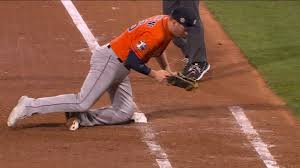
We continue our celebration of the Houston Astros winning the 2022 World Series by considering defense in baseball and prevention and detection in a best practices compliance program. According to Stephanie Apstein, writing in SI.com, the situation was in Game 5 in Philadelphia with the following, “Righty Rafael Montero walked two of the first three men he faced, then allowed a single to Jean Segura to plate a run and bring the game within one. Closer Ryan Pressly struck out Brandon Marsh on three pitches to bring up left-handed left fielder Kyle Schwarber, one of the Phillies’ most fearsome hitters.”

With two Philly baserunners on and a 2-2 count in the 8th inning, “Schwarber drilled a rocket, straight at the baseline. Mancini leaned to his right, snared it and, toppling over, stomped his left foot on the base for the out. He looked more like a catcher or a hockey goalie than a first baseman, the textbook approach on a ball like that. If he’d been two steps off the bag, he would not have caught it. “The ball was hit that hard,” Espada said. Instead, inning over. Rally over. Espada smothered him with a hug once he returned to the dugout.” Mancini’s stop save at least one and more probably two runs from coming home to score.

Up until that point, Mancini was hitting a big fat ZERO for the World Series. The only reason he was in the game in such a crucial time was the starting 3rd baseman, Yuli Gurriel, had been injured in the prior inning. Mancini had only played at first base in 30 games in 2022 and had not played the position in a game in nearly 30 days. Yet here he was on the biggest stage, near the end of the game with the Astros clinging to a 3-2 lead, making the biggest play of his career. Mancini said, “I just tackled it, basically.” Apstein went on to note, “He added that given the stakes, this had to have been the best play of his career. “I don’t know how many highlight reel plays I have on defense,” he said, laughing. “Probably not too many.”” (Check out herefor a video of the play.)

Part of Mancini’s story which makes all this much more poignant was that in 2020, when he was 28, Mancini was diagnosed with colon cancer, underwent surgery to have a malignant tumor removed and had chemotherapy. He recovered sufficiently to come back and play in the 2021 season where he was awarded the American League Comeback Player of the Year.

There was another great defensive play from Game 5 that I must mention, which was the catch off the centerfield wall by Chas McCormick in the 9th inning. Alden Gonzales, writing in ESPN, said “The Phillies were down to their final two outs, and their superstar catcher stayed back on a 1-1, outside-corner slider and hit an opposite-field drive that seemed primed for extra bases.” But McCormick, who grew up a Phillies fan made the catch, bounced off the wall and held on to the baseball as he fell backwards. Gonzales called it “one of the most memorable and important in baseball history.” (Check it out here.)

What does all this great defense mean for your compliance program? Just as in baseball, you have to hit, play defense and pitch; every best practices compliance program consists of three parts; prevention, detection and remediation. These three both interact and act separately to fulfill the obligations of a compliance program. One of the best explanations of this tripartite formulation is Paul McNulty’s three maxims of a Foreign Corrupt Practices Act (FCPA) compliance program: 1) What did you do to prevent it?; 2) What did you do to detect it?; and 3) What did you do to remedy it? Just as each prong can stand alone or in concert with the other two, each one of McNulty’s Maxim’s can be asked alone or together with one or more of the other two. For instance, while many compliance professions generally think of internal controls component of a minimum best practices FCPA compliance program and they applied to Maxim 2, detection; they also act to comport with Maxim 1. As a specific focus is needed to ensure there are control procedures in place to ensure compliance with Maxim 1, prevention.

How did that play out in Game 5? According to Apstein, Astro Bench Coach Joe Espada “got Mancini’s attention and motioned for him to move two steps closer to the bag. They needed to prevent a double—Segura is fast enough to score from first and give the Phillies the lead—and they knew Schwarber would try to pull a ball for a home run. “I saw the spin on Pressly,” Espada said, “So I’m like, ‘Dude, just stay on that line.’” In other words, because of the detect component, the prevent component saved at least two runs and the game.

Join me tomorrow as I explore the Astros Manager Dusty Baker and leadership lessons.