Categories
Innovation in Compliance

Innovation in Compliance – Navigating Compliance and Innovation with Colin Darke

Innovation comes in many forms, and compliance professionals need to be ready for it and embrace it. Join Tom Fox, the Voice of Compliance, as he visits with top innovative minds, thinkers, and creators in the award-winning Innovation in Compliance podcast. In this episode, host Tom Fox visits with Colin Darke, an attorney and compliance professional with a diverse career spanning over twenty years.

Colin shares his journey from banking and finance law to in-house compliance roles, eventually co-founding CompliSun, an AI-enhanced compliance management system. Colin discusses his experience handling regulatory challenges, building compliance programs from scratch, and innovating within fintech. He also delves into his book ‘Unleashing Innovation: Compliance Strategies for FinTech Disruptors,’ which offers practical guidance for compliance professionals. Additionally, Colin explores his dual passion for art, explaining how being an artist has contributed to his mental well-being and professional success. Listeners will gain valuable insights into integrating AI in compliance, effective training techniques, and the importance of creating a strong compliance narrative for regulators.

Key highlights:

  • Colin Darke’s Professional Journey
  • Authorship and Book Insights
  • CompliSun: AI-Enhanced Compliance
  • Regulated vs. Non-Regulated Industries
  • AI Revolution in Compliance
  • Art and Compliance: A Unique Intersection

Resources:

Colin Darke on LinkedIn

CompliSun

Unleashing Innovation-Compliance Strategies for Fintech Disruptors

Tom Fox

Instagram

Facebook

YouTube

Twitter

LinkedIn

Categories
Blog

Compliance Lessons Learned: Building Meaningful Workplace Connections

In today’s business environment, compliance professionals are often praised for their pivotal role in fostering ethical, sustainable, and resilient corporate cultures. A recent HBR article, What Employers Get Wrong About How People Connect at Work, provides a compelling framework that compliance officers can integrate into their strategies to strengthen organizational integrity and trust.

The authors believe that connections in the workplace are commonly thought of as a single dimension that prioritizes interpersonal relationships with co-workers. However, the authors have identified that connections in the workplace are made up of four interrelated and essential elements: employee connections with their colleagues, leader, employer, and role. This more accurate and nuanced view of workplace connections has implications for how organizations can design intentional talent strategies to create workplaces where employees are committed, engaged, and performing. They introduce the CLEAR framework to help facilitate transformative workplace lessons. I have adapted their ideas for the compliance professional.

  • Colleague Connection: Compliance as a Collaborative Endeavor

In compliance, collaboration is non-negotiable. The CLEAR framework emphasizes the importance of trust and mutual support among colleagues, a principle that extends seamlessly into compliance programs. When employees feel connected to their peers, they are more likely to share insights and raise concerns, a cornerstone of effective whistleblowing mechanisms. For compliance professionals, this means building platforms and safe spaces for employees to collaborate. Initiatives like ethics roundtables or cross-departmental compliance champions can foster peer-to-peer connections, encouraging the open exchange of ideas and concerns about compliance issues.

  • Leader Connection: Ethical Leadership in Action

The article identifies leader connection as a key factor, noting that 70% of the variance in team engagement is attributed to managerial quality. For compliance professionals, this underscores the need for leadership at all levels to embody ethical conduct. Leaders who communicate, provide constructive feedback, and model ethical behavior are indispensable in embedding compliance into an organization’s DNA. You should work to train your business leaders to be compliance ambassadors. This means both senior managers and middle managers as well. Equip them with tools to integrate compliance into their everyday leadership practices, from reinforcing training to discussing real-world ethical dilemmas with their teams.

  • Employer Connection: Aligning Compliance with Corporate Values

A strong employer connection, where employees see their work as meaningful and aligned with organizational goals, is critical. Compliance professionals are central in shaping this narrative by linking ethical practices to the company’s mission. When employees view compliance as an enabler of corporate success rather than a hindrance, their engagement deepens. Positioning compliance as a competitive business advantage and using internal communications to highlight how ethical practices contribute to the organization’s reputation, financial health, and long-term success will further align your employees with your overall goal of doing business ethically and in compliance.

  • Role Connection: Engaging Through Purpose

Role connection thrives when employees find satisfaction in their work and see clear pathways for growth. Compliance means integrating ethical considerations into individual roles and responsibilities. Employees who understand how their job contributes to the company’s compliance goals are likelier to take ownership of ethical behavior. Here, your compliance team should work to tailor compliance training to individual roles. Move beyond generic programs to create targeted, role-specific training that shows employees how compliance intersects with their day-to-day responsibilities.

  • CLEAR Connections and the Return-to-Office Debate

The authors critique a narrow focus on colleague connections in return-to-office mandates, warning that neglecting other CLEAR elements can undermine employee engagement. For compliance teams, this presents a nuanced challenge. Remote work can dilute compliance oversight, but rigid in-office policies may harm trust and morale. This will allow your compliance function to adopt flexible compliance monitoring strategies. Use technology to maintain oversight while respecting diverse work arrangements and ensure employees feel trusted and supported regardless of where they work. 

  • The Patchwork Principle: Balancing Connection Needs

The authors propose the “patchwork principle,” urging leaders to adopt a portfolio of policies that reflect employees’ diverse connection preferences. Compliance teams can take inspiration from this approach to design policies that address various needs while ensuring alignment with regulatory requirements. The DOJ has long clarified that your compliance program should be based on your company’s compliance risks. This means you should customize your compliance program. Consider employee demographics, cultural nuances, and risk profiles when designing policies and procedures, ensuring they resonate across the organization.

Final Thoughts: CLEAR Insights for Compliance Success

The CLEAR framework challenges compliance professionals to think beyond policies and procedures, emphasizing the human connections that underpin ethical behavior. By fostering meaningful relationships across these four pillars, compliance leaders can build a culture that adheres to regulations and thrives on trust, engagement, and integrity.

Incorporating these lessons is not simply about compliance but redefining how organizations connect, collaborate, and succeed. By adopting these principles, compliance professionals can lead the way in creating workplaces that are not only compliant but also connected and committed to excellence.

Categories
Compliance Tip of the Day

Compliance Tip of the Day – Compliance Obligation for Boards

Welcome to “Compliance Tip of the Day,” the podcast where we bring you daily insights and practical advice on navigating the ever-evolving landscape of compliance and regulatory requirements. Whether you’re a seasoned compliance professional or just starting your journey, we aim to provide bite-sized, actionable tips to help you stay on top of your compliance game. Join us as we explore the latest industry trends, share best practices, and demystify complex compliance issues to keep your organization on the right side of the law. Tune in daily for your dose of compliance wisdom, and let’s make compliance a little less daunting, one tip at a time.

Today, we begin considering Board obligations around compliance.

For more information on the Ethico Toolkit for Middle Managers, available at no charge, click here.

Check out the full 3-book series, The Compliance Kids, on Amazon.com.

Categories
Daily Compliance News

Daily Compliance News: December 2, 2024 – The Committed to Compliance Edition

Welcome to the Daily Compliance News. Each day, Tom Fox, the Voice of Compliance, brings you compliance-related stories to start your day. Sit back, enjoy a cup of morning coffee, and listen in to the Daily Compliance News—all from the Compliance Podcast Network. Each day, we consider four stories from the business world: compliance, ethics, risk management, leadership, or general interest for the compliance professional.

For more information on the Ethico Toolkit for Middle Managers, available at no charge, click here.

Check out the entire 3-book series, The Compliance Kids on Amazon.com.

Categories
Corruption, Crime and Compliance

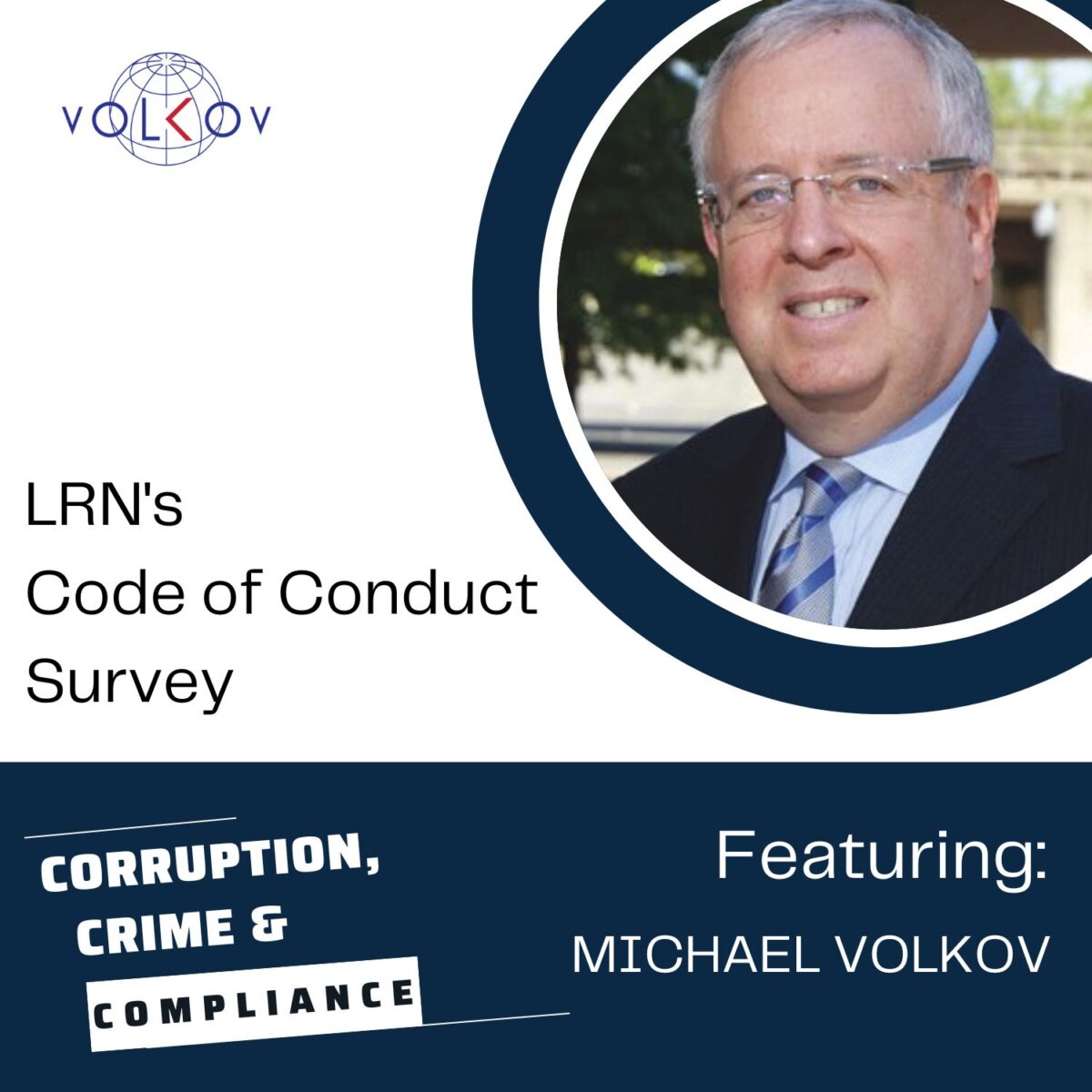
LRN’s Code of Conduct Survey

Have you ever wondered how different cultures and generations engage with a company’s code of conduct? Do employees across the globe really follow ethical guidelines in the same way, or are there stark contrasts depending on where they are and what they do? In this episode of Corruption, Crime & Compliance, Michael Volkov explores LRN’s latest Code of Conduct Report, which reveals vital benchmarks and trends that can help companies strengthen their ethics and compliance programs. As LRN consistently provides high-quality insights on ethics and compliance, this episode dives deep into the findings that highlight how the code of conduct can serve as the cornerstone of a company’s ethics culture—if used effectively.

You’ll hear him discuss:

  • How the usage of codes of conduct differs across geographic regions, with India, China, and Australia showing the highest engagement rates.
  • The surprising statistic that 35% of employees in the Netherlands reported never consulting their company’s code of conduct.
  • The impact of training, with countries like China and India seeing the highest percentage of employees trained on their code of conduct.
  • The generational divide, with Gen Z employees consulting their codes of conduct more than Baby Boomers, despite prior reports suggesting Gen Z’s tendency to bend rules.
  • The significant gap in perceptions of code usage between senior leaders, middle managers, and frontline employees.
  • The role of hybrid work in fostering higher engagement with codes of conduct, contrary to the common assumption that remote work leads to disengagement.

Resources

Michael Volkov on LinkedIn | Twitter

The Volkov Law Group

Categories
Career Can D0

From Family Dream to a Lasting Legacy with Jessica Levine

How do you turn a family dream into a thriving business? On this episode of Career Can Do, Jessica Levine shares the inspiring story of Jonathan’s The Rub, a Houston-based restaurant group started by her father. As Director of Operations, Jessica reflects on how their journey began with a small catering business and grew into a beloved local restaurant chain with multiple locations.

Jessica’s passion for the restaurant industry began early, working alongside her father at just 12 years old. “I always say I grew up in the business,” she says, recalling how those early experiences shaped her career. After college, she joined her father to help grow the business, opening their first small restaurant with just seven tables. From there, Jonathan’s The Rub expanded into a Houston favorite, earning awards like the Ed Wolf Economic Development Award. But it wasn’t always smooth sailing—Jessica explains how they adapted through challenges like the pandemic while staying true to their values. “You have to embrace the chaos. It’s a rollercoaster, but that’s where growth happens.”

For Jessica, the heart of their success lies in creating a “third place” for the community—a welcoming space where guests feel at home and everything is made from scratch with care. “It’s not just about the food; it’s about the experience and the relationships we build,” she shares. Her advice for others? Follow your passion, be prepared for ups and downs, and focus on building meaningful connections.

This episode is an inspiring look at how hard work, resilience, and dedication can transform a family vision into a lasting legacy.

Resources

Jessica Levine on Jonathan’s The Rub | Jonathan’s The Rub Instagram

Mary Ann Faremouth on Web | X (Twitter)

Categories
FCPA Compliance Report

FCPA Compliance Report – Adrian Roux on South Africa’s New Compliance Legislation and Its Global Impact

Welcome to the award-winning FCPA Compliance Report, the longest-running podcast in compliance. In this edition, Tom Fox welcomes Adrian Roux, a senior associate at Edward Nathan Sonnenberg, to discuss recent legislative changes in South Africa’s anti-corruption efforts and their global relevance.

Adrian highlights the introduction of a new offense in South Africa akin to the UK’s Bribery Act’s ‘failure to prevent bribery’ offense and discusses a new policy directive for non-trial resolutions for companies facing corruption charges. Both initiatives aim to mitigate extensive corruption exposed during the Zuma era’s state capture saga, which involved high-profile public and private sector corruption cases investigated by the Zondo Commission.

Adrian explains the challenges and implications of these legislative changes for compliance professionals globally, emphasizing the importance of understanding new compliance obligations and developing adequate procedural defenses. Additionally, the episode touches on increased international cooperation between South African and U.S. authorities in white-collar enforcement. This collaboration, noted in recent FCPA enforcement actions, signifies a growing trend towards global enforcement in corporate compliance and anti-corruption matters.

Highlights in this episode:

  • New Legislative Changes in South Africa
  • Failure to Prevent Offense
  • Adequate Procedures and Compliance Programs
  • Corporate Alternative Dispute Resolution Directive
  • International Cooperation in White Collar Enforcement 

Resources:

Arian Roux on LinkedIn

ENS Law Firm

Zondo Commission Report on State Capture

Article on 34A of the Prevention and Combating of Corrupt Activities Act

Tom Fox

Instagram

Facebook

YouTube

Twitter

LinkedIn

For more information on the Ethico Toolkit for Middle Managers, available at no charge, click here.

Check out the full 3-book series, The Compliance Kids, on Amazon.com.

For an audio/video version of the Compliance Kids book, Speaking Up is AWESOME, contact Tom Fox.

Categories
Blog

The Role of Compliance in Employee Retention

The fight to attract and retain top talent has long been a concern for corporate leaders, but the stakes are even higher for compliance professionals. The insights from the Harvard Business Review (HBR) article Why Employees Quit the authors offer actionable lessons that compliance professionals can integrate into their strategic efforts. Let’s explore how fostering a meaningful employee experience can mitigate compliance risks and strengthen organizational integrity.

The Compliance Costs of Employee Attrition

Employee turnover is more than a budgetary concern; it is also a compliance risk. When experienced employees leave, they take with them institutional knowledge, including an understanding of the organization’s policies, culture, and compliance framework. The cost of replacing employees ranges from 6 to 9 months of their salary—and for executive roles, it can double their annual pay. More insidiously, high attrition rates may signal deeper issues, such as cultural dysfunction or ethical lapses, which could attract regulatory scrutiny.

For the compliance professional, employee retention is not simply about the cost of replacement and retraining but about sustaining a culture of ethics and compliance. Addressing the root causes of turnover is an investment in long-term corporate resilience.

Understanding Employee Quests for Progress

The authors identify four primary motivations driving employees to switch jobs:

  1. Getting Out- escaping from toxic environments or dead-end roles.
  2. Regaining Control- seeking autonomy and work-life balance.
  3. Regaining Alignment – a desire for respect and utilization of skills.
  4. Taking the Next Step- pursuing growth opportunities.

Each of these quests resonates with compliance principles. For example, consistent policy enforcement may frustrate employees seeking alignment, while those striving for growth may feel supported by a lack of training or mentorship.

Compliance Takeaway: A compliance program should ensure adherence to laws and regulations and foster an environment where employees feel valued and empowered.

Proactive Measures: Compliance as a Partner in Employee Retention

The authors recommend three strategies for aligning employee experiences with organizational goals. Here’s how compliance can lead the charge:

  • Interview Employees Early and Often

Exit interviews should be conducted more often, but they should be too late. Instead, compliance professionals can implement regular “pulse checks” to assess the ethical climate and identify areas where employees feel unsupported. Consider aligning these efforts with the DOJ’s emphasis on continuous monitoring in compliance programs. As a practical step, include ethical climate questions in employee surveys and encourage anonymous reporting to surface hidden concerns.

  • Develop Shadow Job Descriptions

Official job descriptions often need to capture the dynamic realities of roles, leading to mismatched expectations. Compliance can play a pivotal role in ensuring these descriptions reflect the ethical responsibilities associated with the job. Your corporate compliance function should work closely with HR to include clear expectations for ethical behavior, reporting obligations, and compliance training in every role.

  • Collaborate with HR to Align Roles with Employee Progress

Flexible role design can create opportunities for employees to grow while adhering to compliance standards. This approach satisfies employees’ quests for progress and reduces the likelihood of ethical lapses driven by disengagement or frustration. This ties directly into what the DOJ wants to see around non-financial incentives for employees doing business ethically and in compliance. The 2024 ECCP speaks directly to this issue, and once again, compliance should partner with HR to design roles that balance individual aspirations with organizational needs, ensuring compliance remains a core element and fully incentivizes employees in and around compliance.

The Compliance Implications of “Pushes” and “Pulls”

The authors identify joint “push” factors, such as lack of trust, poor management, and generally poor culture, as well as “pull” factors, including alignment with values, flexibility, and a more positive corporate culture in job switches. Push Factors include a lack of trust in leadership, which often correlates with higher compliance risks. Employees disengaged from management will typically disengage from compliance initiatives. Conversely, Pull Factors enhance values-driven employees. Such employees are more likely to thrive in organizations that prioritize ethical behavior. Compliance professionals should pay close attention to these dynamics in their organizations. Moreover, for corporate compliance professionals, as the holders of Institutional Justice and Institutional Fairness in an organization, addressing push factors and amplifying pull factors can help create a culture where compliance is not merely a requirement but a shared value.

Technology’s Role in Enhancing the Employee Experience

Advanced compliance monitoring tools like AI-driven analytics can support compliance objectives and employee retention efforts. These tools can provide real-time insights into employee sentiment, flagging potential compliance risks while highlighting areas for improvement in the employee experience. Compliance professionals can utilize analytics to monitor ethical climate indicators, including response rates to compliance training and engagement in whistleblower programs.

Building a Workplace Employees Want to “Rehire” Every Day

Compliance professionals have a critical role in shaping an ethical, engaging workplace. By embedding employee-focused strategies into compliance initiatives, organizations can reduce turnover, strengthen their ethical culture, and build a more resilient compliance program.

The employee experience is no longer a “soft” issue; it is now imperative for compliance. By proactively addressing why employees leave, compliance leaders can ensure their organizations retain talent and integrity. For the CCO, you should ask: Are you engaging your employees in ways that align with compliance priorities? If not, it’s time to reimagine compliance as a partner in the employee experience. This intersection of compliance and employee experience is an opportunity to drive meaningful change. Compliance professionals need to seize it and move your entire culture forward.

Categories
10 For 10

10 For 10: Top Compliance Stories For the Week Ending November 30, 2024

Welcome to 10 For 10, the podcast which brings you the week’s Top 10 compliance stories in one podcast each week. Tom Fox, the Voice of Compliance brings to you, the compliance professional, the compliance stories you need to be aware of to end your busy week. Sit back, and in 10 minutes hear about the stories every compliance professional should be aware of from the prior week. Every Saturday, 10 For 10 highlights the most important news, insights, and analysis for the compliance professional, all curated by the Voice of Compliance, Tom Fox. Get your weekly filling of compliance stories with 10 for 10, a podcast produced by the Compliance Podcast Network.

  • Larry Thompson looks back. (Press Release)
  • VW to exit Jingjing region of China. (NYT)
  • Hong Kong becoming financial crime hub.  (WSJ)
  • China Defense Minister under investigation for corruption. (FT)
  • Thale under corruption investigation. (BBC)
  • Was it fraud or worse? (NYT)
  • What happens when a company loses its groove.  (WSJ)
  • How the Adani case will test the long arm of US jurisdiction. (Bloomberg)
  • SEC racks up $8bn in penalties under Gensler. (WSJ)
  • 30 Chinese companies added to blacklist.  (WSJ)

For more information on the Ethico Toolkit for Middle Managers, available at no charge by clicking here.

You can check out the Daily Compliance News for four curated compliance and ethics related stories each day, here.

Check out the full 3-book series, The Compliance Kids on Amazon.com.

Connect with Tom 

Instagram

Facebook

YouTube

Twitter

LinkedIn

Categories
Into the Darkness

Into the Darkness – Behind the Scenes with the Assistant Director Kayla Rich

Into the Darkness: CJ Goodwyn’s Vision of Sherlock Holmes: Mare of the Night is a deep dive into the creative journey behind an ambitious reimagining of the Sherlock Holmes legacy. This 10-part podcast series will unravel the entire movie production process, offering listeners an insider’s look into the making of Sherlock Holmes Mare of the Night, a film that blends the mystique of classic Sherlock Holmes with a dark, supernatural twist. In episode 4, Tom Fox is joined by Kayla Rich, the first assistant director of ‘Sherlock Holmes-Mare of the Night,’ to discuss her role in the film production process.

We go into her journey from a supportive spouse to a key team member, managing schedules and overcoming challenges on set, especially dealing with unpredictable wildlife and weather in the Texas Hill Country. Kayla shares her current post-production work, focusing on marketing and theatrical distribution to enhance cinema community engagement. The episode also touches on independent filmmakers’ broader struggles with industry red tape and the importance of revitalizing local theaters post-pandemic for family-friendly outings. Additionally, listeners are introduced to the second annual Halloween party at Kerrville’s River Hill Mansion, featuring director CJ Goodwyn and the cast, aimed at raising funds for post-production and theater distribution. Information on tickets, sponsorships, and social media updates are also provided.

Highlights include:

  • Challenges Faced During Production
  • Experienced Director CJ Goodwyn’s Influence
  • Marketing Strategies for Theatrical Distribution
  • Importance of Bringing People Back to Theaters
  • Halloween Party Fundraiser Details

Resources:

Sherlock Holmes-Mare of the Night

On Facebook

TriGoodwyn Productions