Categories
AI Today in 5

AI Today in 5: December 15, 2025, The Good, Bad & Ugly Edition

Welcome to AI Today in 5, the newest edition of the Compliance Podcast Network. Each day, Tom Fox will bring you 5 stories about AI to start your day. Sit back, enjoy a cup of morning coffee, and listen in to AI Today In 5. All, from the Compliance Podcast Network. Each day, we consider four stories from the business world, compliance, ethics, risk management, leadership, or general interest about AI.

Top AI stories include:

  1. Data Sovereignty and AI compliance. (DataCentre)
  2. Trump’s EO cuts down on AI compliance. (Bitget)
  3. The Good, Bad & Ugly of AI. (WSJ)
  4. AI leaders eye breakthroughs. (Bloomberg)
  5. Swiss Re signs MoU to develop AI capabilities. (FinTechGlobal)

For more information on the use of AI in Compliance programs, my new book, Upping Your Game, is available. You can purchase a copy of the book on Amazon.com.

Categories
Daily Compliance News

Daily Compliance News: December 15, 2025, The End of the FCA Edition

Welcome to the Daily Compliance News. Each day, Tom Fox, the Voice of Compliance, brings you compliance-related stories to start your day. Sit back, enjoy a cup of morning coffee, and listen in to the Daily Compliance News. All, from the Compliance Podcast Network. Each day, we consider four stories from the business world, compliance, ethics, risk management, leadership, or general interest for the compliance professional.

Top stories include:

  • 11th Circuit hears arguments invalidating the FCA. (Reuters)
  • The boss got drunk at the Christmas party. Yikes! (NYT)
  • SEC is weighing PCAOB changes. (WSJ)
  • The perils of AI in recruiting. (FT)

The Daily Compliance News has been honored as the No. 2 in Best Regulatory Compliance Podcasts category.

Categories
FCPA Compliance Report

FCPA Compliance Report – Kristy Grant-Hart on the Evolution of Compliance in 2026: Navigating New Risks and Regulations

Welcome to the award-winning FCPA Compliance Report, the longest-running podcast in compliance. In this episode, Tom welcomes Kristy Grant-Hart, Head of Advisory Services at Diligent’s Spark Compliance Group, to discuss where compliance has been in 2025 and where it is going into 2026.

Tom Fox and Kristy Grant-Hart explore the future of corporate compliance in 2026 and beyond. Key discussion areas include the Trump administration’s changing focus on the Foreign Corrupt Practices Act (FCPA), the designation of cartels as foreign terrorist organizations, and the implications for third-party due diligence. They also delve into modern slavery laws, the impacts of AI on compliance, and the necessity of a unified approach to compliance strategy.

Additionally, Kristy introduces the Compliance and Ethics Innovation Collective, a new program from Spark and Diligent that integrates services and software to deliver a more robust compliance solution. The session concludes with strategic advice for compliance officers on staying ahead of dynamic regulatory changes and maintaining effective risk management.


Resources:

Kristy Grant-Hart on LinkedIn

Diligent Website

Tom Fox

Instagram

Facebook

YouTube

Twitter

LinkedIn

Categories
Blog

The Michigan Man, Part 1 – From Winning Program to Institutional Crisis

There are moments when an organization confronts a crisis so severe that it overwhelms every narrative it once controlled. The University of Michigan now finds itself in precisely that moment. What began as a continuation of compliance issues stemming from the sign-stealing scandal has rapidly escalated into something far more serious, far more painful, and far more destabilizing. This is no longer a story about NCAA rules or institutional embarrassment. It is a story about human failure, organizational breakdown, and the real-world consequences of ignoring warning signs.

As compliance professionals, our instinct is to move quickly to frameworks, root causes, and lessons learned. That work will come later in this series. But first, it is essential to set out the facts as they are currently known and to acknowledge the human cost embedded in every paragraph of this story. This story is far beyond compliance and ethics, but it is a true human tragedy. But it will also show how such a human tragedy could have been prevented if the basic tenets of organizational compliance and ethics had been followed.

All resources cited in this four-part series are listed at the end of this blog post. Finally, this writing is personal, as I am a UM graduate.

The Rise of Sherrone Moore

Sherrone Moore’s ascent within the University of Michigan football program appeared, at least on the surface, to be a model of internal succession. Moore joined Jim Harbaugh’s staff in 2018 and rose steadily through the ranks, ultimately serving as offensive coordinator during Michigan’s 2023 national championship season. When Harbaugh departed for the NFL, Moore was promoted to head coach, a decision widely praised as ensuring continuity and stability.

Moore was not simply a coach. He was a symbol. His emotional post-game interview after a victory over Penn State, while Harbaugh was suspended, became an iconic moment for Michigan fans. He embodied loyalty, perseverance, and what many referred to as the “Michigan Man” ethos. ESPN

Yet even at the time of his promotion, Moore’s record was not unblemished. He had already been implicated in the Connor Stalions sign-stealing investigation and had received NCAA suspensions for deleting text messages during that inquiry. Those issues were treated by the university and much of the fan base as technical compliance matters rather than as indicators of deeper governance or integrity risks. Slate

That framing now appears deeply flawed.

The Inappropriate Relationship Investigation

According to reporting by The AthleticESPNSlate, and The Wall Street Journal, the University of Michigan received an anonymous tip earlier in 2025 alleging an inappropriate relationship between Moore and a female football staffer. The university retained Jenner & Block, an outside counsel, to conduct an investigation. Initially, both Moore and the staffer denied any relationship, and investigators reported that insufficient evidence existed to substantiate the claim.

That changed dramatically in December 2025. Prosecutors allege that the staffer disclosed corroborating evidence confirming a multi-year intimate relationship after she ended it earlier that week. At that point, the university determined that Moore had violated institutional policy and terminated him for cause, avoiding a reported $14 million buyout. The Athletic

This was not merely an employment decision. It was the spark that ignited a cascading crisis.

The Criminal Charges

Within hours of his dismissal, Moore’s personal situation escalated into a criminal matter. Prosecutors allege that Moore went to the staffer’s residence without permission, entered through an unlocked door, and engaged in a confrontation during which he picked up scissors and butter knives and threatened to harm himself. According to court statements, Moore allegedly made repeated statements such as “I am going to kill myself” and “My blood is on your hands. The Athletic

Moore was subsequently charged with felony third-degree home invasion and misdemeanor charges of stalking and breaking. He was taken into custody, evaluated at a hospital, and later released on bond with GPS monitoring and a requirement that he continue mental health treatment. A probable cause hearing is scheduled for January 2026.

At this point, it bears stating plainly: these are allegations, and Moore has pleaded not guilty. The legal process will determine criminal responsibility. However, from an organizational perspective, the damage has already been done.

The Expanding Institutional Investigation

What began as an inquiry into Moore’s conduct has now broadened into a comprehensive review of the University of Michigan athletic department. University leadership has confirmed that Jenner & Block’s mandate has expanded to examine how the athletic department handled the Moore matter and other recent scandals, including the sign-stealing investigation and prior misconduct by football staffers. ESPN

Interim President Domenico Grasso has publicly called for anyone with relevant information to come forward, emphasizing that “all of the facts here must be known.” Athletic Director Warde Manuel remains in his position for now, but multiple reports note that his leadership and oversight are under intense scrutiny.

This expansion matters. It signals that the university itself recognizes that Moore’s actions cannot be isolated from the environment in which they occurred.

Beyond Compliance: The Human Tragedy

It would be a profound mistake to reduce this story to a checklist of policy violations.

At the center of this crisis are people whose lives have been irreversibly altered. Moore is a married father of three whose career has collapsed in public view. His family faces humiliation, uncertainty, and emotional trauma that will not disappear with headlines. Prosecutors describe the staffer at the center of the allegations as someone who felt terrorized and unsafe, a position no employee should ever occupy. University of Michigan players have lost their head coach midseason, forcing them to process personal loyalty, public scandal, and institutional chaos simultaneously. There is also the culture of an entire university athletic department, which not only allowed such behavior but also tolerated and even celebrated it by promoting Moore to Head Coach.

The broader Michigan community, alumni, students, and fans are also stakeholders in this tragedy. For an institution that has long traded on its image of integrity and moral leadership, the reputational damage cuts deeply. Being a ‘Michigan Man’ was meant to stand for something—something positive, that you did things in the right way, and you personally held yourself to a higher standard. As The Wall Street Journal observed, this is no longer a college football story. It is “agony in Ann Arbor. I certainly echo that feeling personally.

A Pattern, Not an Anomaly

The most troubling aspect of the facts as currently known is how familiar they feel. The Moore scandal follows a series of incidents involving Michigan athletics over recent years, including the Stalions’ sign-stealing operation, multiple staff arrests, internal HR complaints, and even a federal indictment of a former assistant coach for accessing student-athletes’ private data. WSJ

The issue may not be any single actor but rather an entrenched culture that has historically insulated powerful figures from accountability. Slate: When organizations repeatedly frame misconduct as isolated events, they fail to confront systemic risk.

Why This Matters for Compliance Professionals

For compliance professionals, this case is already instructive even before we reach lessons learned. It demonstrates how compliance failures often emerge not as sudden collapses but as accumulations of ignored signals. It shows how reputational capital built over decades can evaporate in a matter of days. Most importantly, it reminds us that behind every policy failure are human beings who bear the consequences.

While there will be others who say ‘I told you so’ or want to bring the vaunted Michigan Man down a peg or two, the lessons from this scandal and human tragedy are no less important for your team, your school, and your university.

In the next installment of this series, I will turn directly to Sherrone Moore’s individual compliance and ethics violations, including his conduct during the sign-stealing investigation and his alleged misrepresentations to investigators. That analysis is necessary. But it should never obscure the reality that this story is about far more than rules. Compliance exists to protect people, institutions, and trust. When it fails, the cost is measured not only in fines or sanctions but also in lives disrupted and communities shaken.

Resources:

The Terrible Mess at Michigan Football, by Jason Gay, writing in the Wall Street Journal.

Ex-Michigan coach Sherrone Moore charged with home invasion, stalking, breaking—Austin Meek and Sam Jane writing in The Athletic.

Fire Everybody—Alex Kirshner, writing in Slate.

Source: Michigan begins a review of the athletic department, by Dan Wetzel and Pete Thamel, writing for ESPN.


Categories
Sunday Book Review

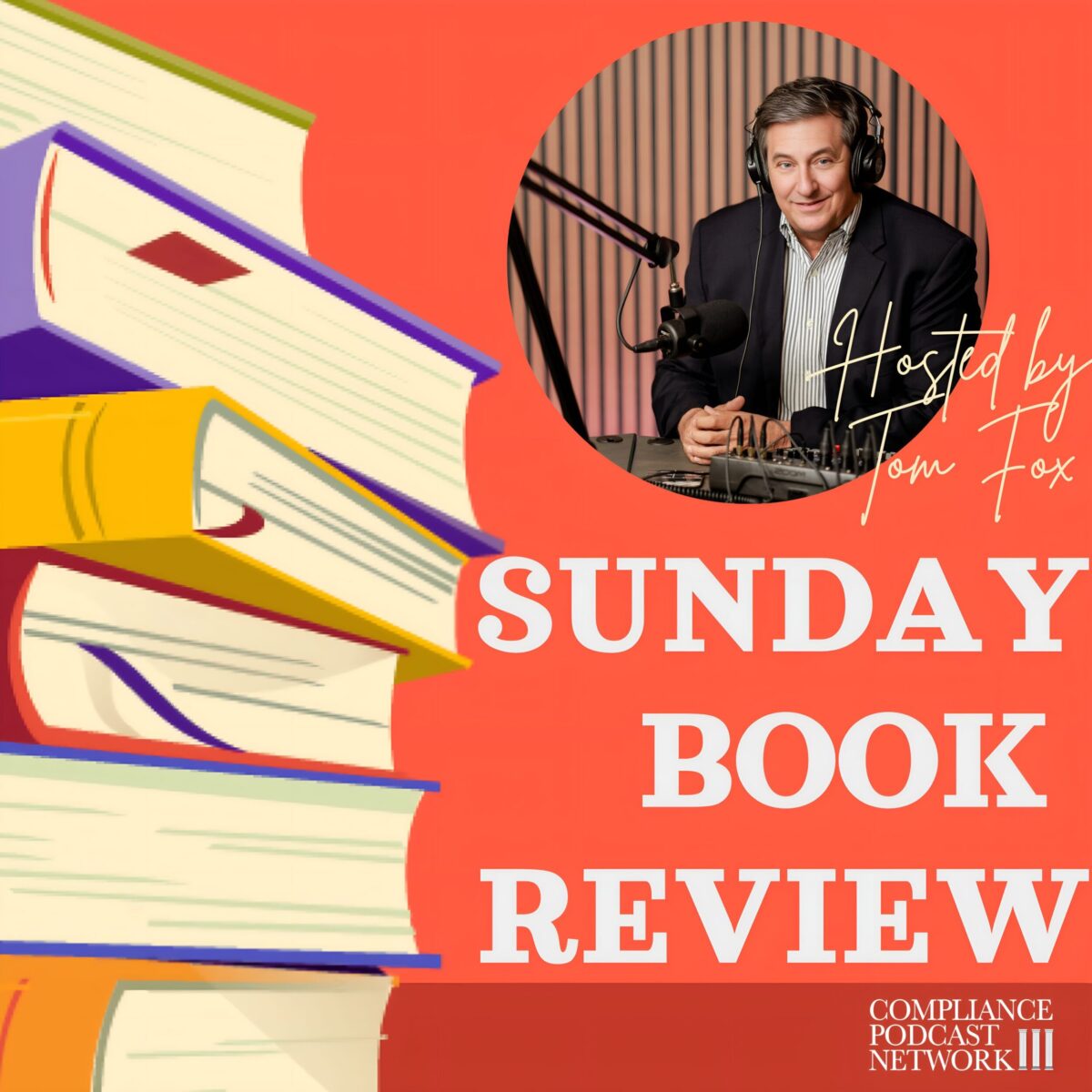
Sunday Book Review: December 14, 2025, The Best Books on Business Edition

In the Sunday Book Review, Tom Fox considers books that would interest compliance professionals, business executives, or anyone curious. It could be books about business, compliance, history, leadership, current events, or anything else that might interest Tom. Today, we continue our review of some years’ top books in various categories as curated by the Financial Times. In this episode, we look at a book by Andrew Hill on business.

  • Make Work Fair by Iris Bohnet and Siri Chilazi
  • House of Huawei by Eva Dou
  • The Thinking Machine by Stephen Witt
  • The New Geography of Innovation by Mehran Gul
  • Your Life is Manufactured by Tim Minshall

Resources:

Best Books of 2025: Business by Andrew Hill

Categories
10 For 10

10 For 10: Top Compliance Stories For the Week Ending December 13, 2025

Welcome to 10 For 10, the podcast that brings you the week’s Top 10 compliance stories in one podcast each week. Tom Fox, the Voice of Compliance, brings you the compliance stories you need to know to end your busy week. Sit back, and in 10 minutes, hear about the stories every compliance professional should be aware of from the prior week. Every Saturday, 10 For 10 highlights the most important news, insights, and analysis for the compliance professional, all curated by the Voice of Compliance, Tom Fox. Get your weekly filling of compliance stories with 10 for 10, a podcast produced by the Compliance Podcast Network. AI architects are Time’s Person of the Year, Disney licenses figures to Sora AI for use, McDonald’s pulls AI-created Christmas ads, AI hackers are getting very good at it, and NAACP presses for equity-first AI in healthcare.

This week’s stories include:

  • DOJ folds another set of corruption convictions. (ESPN)
  • Bessent wants DOT to take over all AML roles. (WSJ)
  • US credibility in countering corruption is under strain. (JustSecurity)
  • Nadine Menendez wants her jewelry back. (4NBCNY)
  • China executes a second banker over corruption. (Bloomberg)
  • EU fines X $140MM. (WSJ)
  • Zelensky’s sabotage of oversight; you can see the results. (NYT)
  • UK to crack down on bankers, lawyers, and accountants involved in money laundering. (Bloomberg)
  • Nepal accuses China of corruption over the airport. (NYT)
  • Trump to pre-empt state laws on AI. (Reuters)

You can check out the Daily Compliance News for four curated compliance and ethics-related stories each day, ⁠here⁠.

Connect with Tom 

Instagram

Facebook

YouTube

Twitter

LinkedIn

You can purchase a copy of my new book, Upping Your Game, on ⁠Amazon.com.⁠

Categories
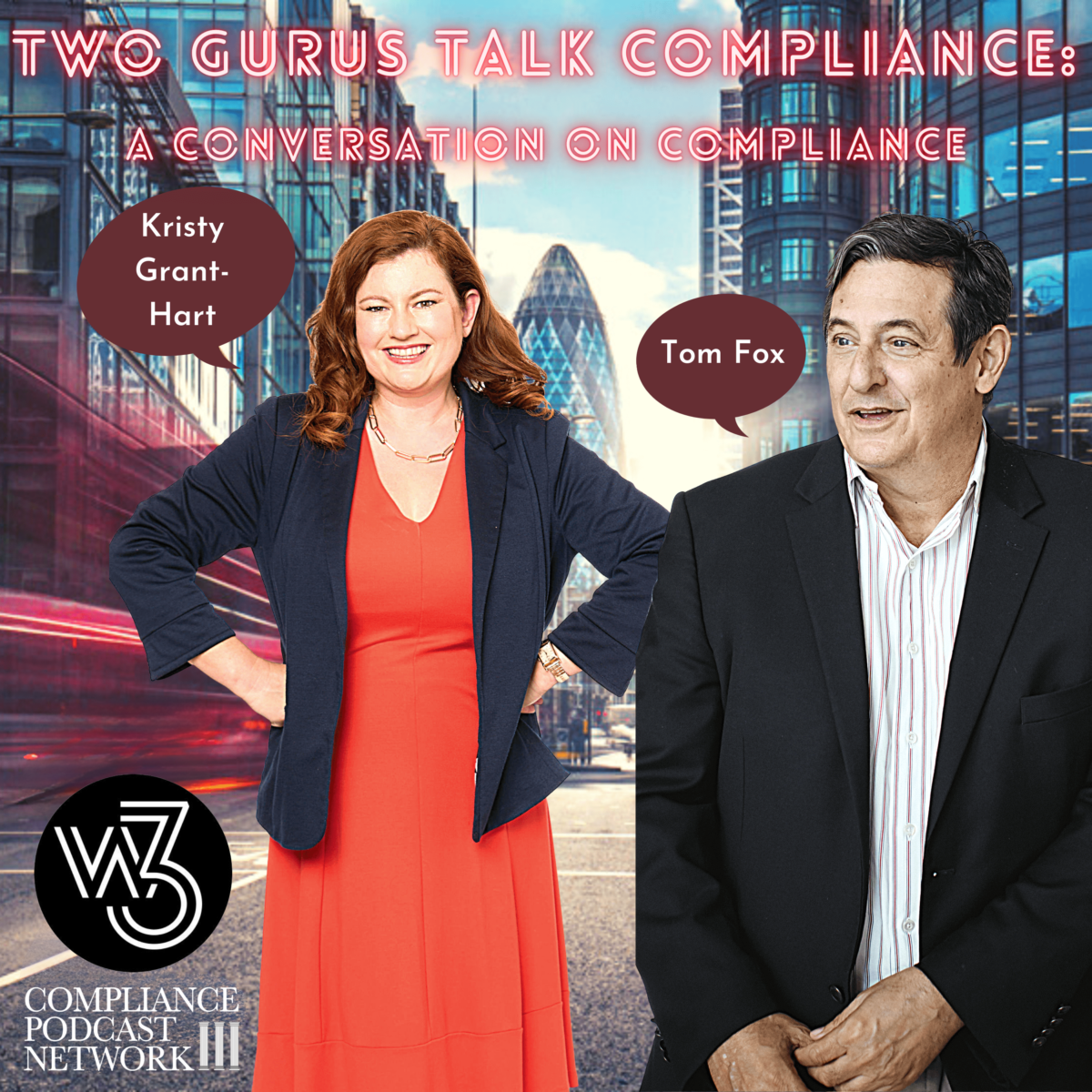
2 Gurus Talk Compliance

2 Gurus Talk Compliance – Episode 65 – The This Is Nuts Edition

What happens when two top compliance commentators get together? They talk compliance, of course. Join Tom Fox and Kristy Grant-Hart in 2 Gurus Talk Compliance as they discuss the latest compliance issues in this week’s episode! ABC protests topple the Bulgarian government, a French tennis player is suspended for 20 years over corruption, a UM coach is fired over an affair with a staffer, and Trump puts the DOJ in a no-win position over Warner Bros.

Stories this week include:

  • NY state could be a battleground for AI regulation. NYT
  • Massive fraud in aircraft parts uncovered in the UK. TheTimes
  • Switzerland charges Credit Suisse over Tuna Bond fraud. ACAMS
  • Former Labour PM convicted of corruption in Bangladesh. Independent
  • Lane Kiffin should be nowhere near Ole Miss football. WSJ
  • U.S. Supply Chains Deemed Vulnerable to Chinese Exploitation – WSJ
  • Europe Aimed to Set Standards for Tech Rules; Now It Wants to Roll Them Back – WSJ
  • Campbell Soup executive called its products food for “poor people,” lawsuit claims – CBS News
  • I Made an Offensive Joke. But So Did Everyone Else! Why Did I Get Fired? – NYT
  • Florida Man Stops Paying for Rental Car, Uses It to Give Uber Rides – FloridaMan.com

Connect with the Hosts:

Resources:

Kristy Grant-Hart on LinkedIn

Prove Your Worth

Tom

Instagram

Facebook

YouTube

Twitter

LinkedIn

Categories
Compliance Tip of the Day

Compliance Tip of the Day – Ethical Deployment of AI Powered Controls

Welcome to “Compliance Tip of the Day,” the podcast that brings you daily insights and practical advice for navigating the ever-evolving landscape of compliance and regulatory requirements. Whether you’re a seasoned compliance professional or just starting your journey, we aim to provide you with bite-sized, actionable tips to help you stay on top of your compliance game. Join us as we explore the latest industry trends, share best practices, and demystify complex compliance issues to keep your organization on the right side of the law. Tune in daily for your dose of compliance wisdom, and let’s make compliance a little less daunting, one tip at a time.

We conclude our week on internal controls by considering the ethical deployment of AI-powered internal controls.

For more on this topic, check out The Compliance Handbook: A Guide to Operationalizing your Compliance Program, 6th edition, which LexisNexis recently released. It is available here.

Categories
Daily Compliance News

Daily Compliance News: December 12, 2025, The All New York Times Edition

Welcome to the Daily Compliance News. Each day, Tom Fox, the Voice of Compliance, brings you compliance-related stories to start your day. Sit back, enjoy a cup of morning coffee, and listen in to the Daily Compliance News. All, from the Compliance Podcast Network. Each day, we consider four stories from the business world, compliance, ethics, risk management, leadership, or general interest for the compliance professional.

Top stories include:

  • ABC protests topple the Bulgarian government. (NYT)
  • French tennis player suspended for 20 years over corruption. (NYT)
  • UM coach fired over affair with staffer. (NYT)
  • Trump puts the DOJ in a no-win position over Warner Bros.(NYT)

The Daily Compliance News has been honored as the No. 2 in Best Regulatory Compliance Podcasts category.

Categories
Regulatory Ramblings

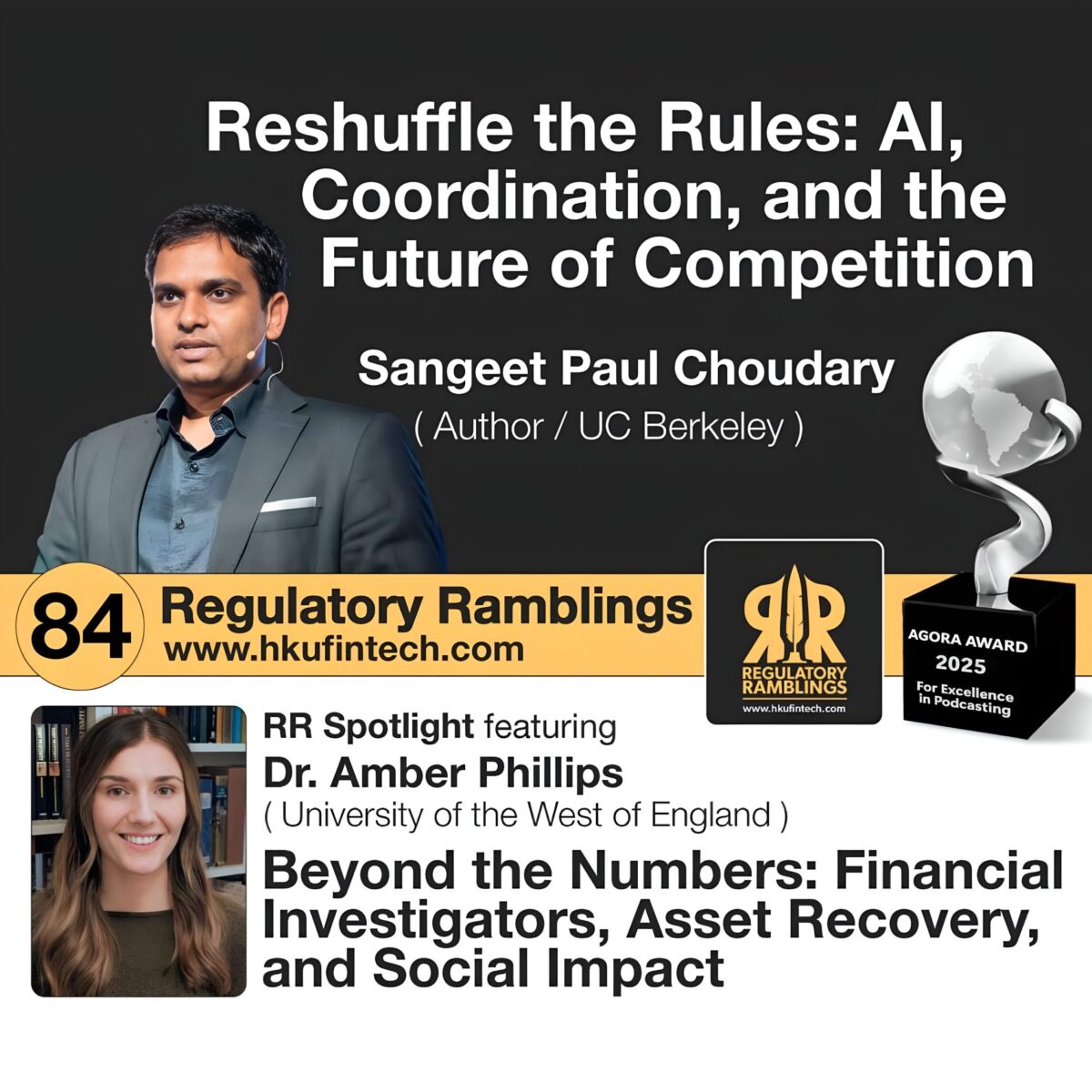
Regulatory Ramblings: Episode 84 – From Asset Recovery to AI Revolution: Risk, Coordination, and the Future with Sangeet Paul Choudary and Dr. Amber Phillips

Today’s episode kicks off with a spotlight discussion with Dr. Amber Phillips, a British senior lecturer in criminology, on the importance of accredited financial investigators and asset recovery experts in ferreting out fraud. Following that, we’ll be chatting with the author Sangeet Paul Choudary from UC Berkeley about his new book Reshuffle: Who Wins When AI Restacks the Knowledge Economy. He reframes the artificial intelligence debate, arguing that AI should not be seen as a smarter brain but rather as better glue that creates synergies for human collaboration.

But first, on a recent episode of the Tax Justice Network’s podcast, Dr. Amber Phillips highlighted the importance of accredited financial investigators and how they are often unsung heroes in cracking cases—especially those involving financial fraud and the concealment of assets.

Biography:

Dr. Amber Phillips is a senior lecturer in criminology at UWE Bristol. Her journey as a criminologist began in 2012, while she lived and worked in Calabria, Italy. Her primary research interests are organized crime and economic crime, both of which draw on her continuing interest in mafia-type groups. She has developed collaborative partnerships with law enforcement practitioners and fellow academics in the UK and abroad. She is a member of the ECPR Standing Group on Organized Crime and the RUSI Strategic Hub for Organized Crime.

Amber’s work has been published in international journals, including Trends in Organised Crime, and she is a member of the editorial board for the Journal of Economic Criminology. Her most recent research has focused on the social reuse of confiscated mafia assets in Italy and the challenges faced by police officers investigating financial crime.

She is currently researching asset recovery in England and Wales, supported by a VC Early Career Researcher Award. She is also an expert reviewer for funding bodies, including the European Commission and the Independent Social Research Foundation.

Amber has been nominated and shortlisted for the UWE Outstanding Teacher Award and has written teaching-focused articles for Times Higher Education. She is a Fellow of the Higher Education Academy and has served as a mentor for the WHEN 100 Black Women Professors NOW program.

Sangeet Paul Choudary is the co-author of the book Platform Revolution. His latest work—Reshuffle, the subject of today’s discussion—was recently awarded the 2025 Thinkers50 Strategy Award at Guildhall in London for the most impactful idea in the field of strategy.

Thinkers50 has often been described by the Financial Times as the “Oscars of management thinking”—a premier global award recognizing leading management thinkers. Other shortlisted nominees this year included Karim Lakhani (Harvard Business School), Vijay Govindarajan (Dartmouth), Richard Rumelt (UCLA), and Seth Godin.

Sangeet has advised CEOs at more than 40 Fortune 500 companies and leading pre-IPO technology firms. He is currently a senior fellow at the University of California, Berkeley, and has spoken at premier global forums, including the G20 Summit, the World50 Summit, and the World Economic Forum.

Sangeet’s latest book offers a radical rethink of AI and a practical contribution to industry incumbents grappling with genAI.

Discussion:

The spotlight chat commences with Amber sharing with Regulatory Ramblings host Ajay Shamdasani why accredited financial investigators and asset recovery experts are so important for detecting malfeasance and why many in law enforcement lack the financial backgrounds or sophistication to stay one step ahead of criminals who are often far more financially savvy.

The growing role of analytics, data scientists, and AI in financial investigations raises the question of whether veteran investigators and asset recovery specialists still play a role in the process. The answer is a resounding yes.

Amber shares her thoughts on how stripping criminals of their pecuniary assets may be more effective than short custodial sentences. She also remarks that, from her discussions with investigators, they regard the possibility of turning ‘bad money’ into good money as a net positive for society.

The spotlight discussion concludes with a brief description of a research project that Amber is wrapping up, measuring success in financial recovery, called “Beyond the Figures.” The aim is to move beyond quantitative measures, as numbers are not always a reliable indicator of impact and success in asset recovery.

Following that, we chat with Sangeet about his new book, Reshuffle. From the overlooked brilliance of the shipping container to the F1 pits that dethroned Schumacher’s dominance, Sangeet unearths a powerful pattern: the most transformative technologies do not merely automate; they transform entire economic systems.

With vivid storytelling and razor-sharp analysis, Reshuffle connects the dots between technology, behavior, and economic architecture. It delivers a bold and incisive exploration of how AI’s impact goes far beyond changing how we work, reorienting the foundations of power and control in our economic systems.

Blending compelling examples, historical parallels, and bold insights, Reshuffle equips readers to navigate the many opportunities and challenges that AI introduces as it reshapes the knowledge economy. This book is your guide to understanding who wins and who gets left behind when AI restacks the deck.”

“What if we’ve misunderstood the real power of AI — not as a tool for doing tasks faster, but as the missing mechanism for making complex systems finally work together?” Sangeet asks

We have all heard the common refrain from thought leaders like Peter Zeihan that “AI won’t take your job, but someone using AI will.” At this point, it is a hackneyed phrase.

Sangeet shares with Ajay what drew him to AI, why he felt the need to write his book now, and what it offers to an ever-growing, crowded field.

His message is to the heads of executives of incumbent firms across sectors, and he elaborates during the broadcast that financial services sector veterans are still dealing with COBOL-based mainframes and siloed databases. Reshuffle provides a guide to thinking about how artificial AI will disrupt and how it can be harnessed.

Specifically for leaders in financial services, Sangeet’s framework offers sobering and practical lessons:

– AI is not an upgrade but a governance shift. It shifts control from top-down compliance to bottom-up feedback. Governance emerges not through rules but through continuous observation.

– Legacy integration is a coordination challenge, not a software one. AI exposes the limits of point solutions by making the frictions between them evident.

– The new competition operates above the algorithm. Those who own the models may not capture the most value; those who orchestrate decisions and distribution around them will.

– Traditional productivity metrics are misleading. Efficiency inside a department can destroy coherence across the enterprise. The metric to optimize is coordination quality.

In this context, financial institutions face a choice: remain custodians of static infrastructure or become orchestrators of dynamic ecosystems. The former optimizes for compliance; the latter competes for relevance.

In this new world of AI, the standard corporate playbook for digital transformation no longer works. AI is not a laboratory initiative; it is built around innovation labs, agile working, and sprints. These may remain helpful at a tactical level, but they do nothing to reconsider how the basis of value creation is changing, nor sustain an incumbent’s advantages of trust, compliance, and scale. If someone else can better coordinate all the disparate elements, banks or insurers focused just on digital transformation will lose.

The good news is that there is no reason why financial institutions cannot leverage AI to remain leaders in their field or even set the rules for the next cycle. But AI requires an even more radical approach than digitalization. Sangeet’s book is a good place to start.

The Regulatory Ramblings podcast is brought to you by The University of Hong Kong – Reg/Tech Lab, HKU-SCF Fintech Academy, Asia Global Institute, and HKU-edX Professional Certificate in Fintech, with support from the HKU Faculty of Law.

Useful links in this episode:

  • Follow Amber Phillips on LinkedIn

  • Follow Sangeet Paul Choudary on LinkedIn

  • Choudary’s new book Reshuffle: Who wins when AI restacks the knowledge economy on  Amazon

You might also be interested in:

Connect with RR Podcast at:

LinkedIn: https://hk.linkedin.com/company/hkufintech 
Facebook: https://www.facebook.com/hkufintech.fb/
Instagram: https://www.instagram.com/hkufintech/ 
Twitter: https://twitter.com/HKUFinTech 
Threads: https://www.threads.net/@hkufintech
Website: https://www.hkufintech.com/regulatoryramblings 

Connect with the Compliance Podcast Network at:

LinkedIn: https://www.linkedin.com/company/compliance-podcast-network/
Facebook: https://www.facebook.com/compliancepodcastnetwork/
YouTube: https://www.youtube.com/@CompliancePodcastNetwork
Twitter: https://twitter.com/tfoxlaw
Instagram: https://www.instagram.com/voiceofcompliance/
Website: https://compliancepodcastnetwork.net