Categories
Blog

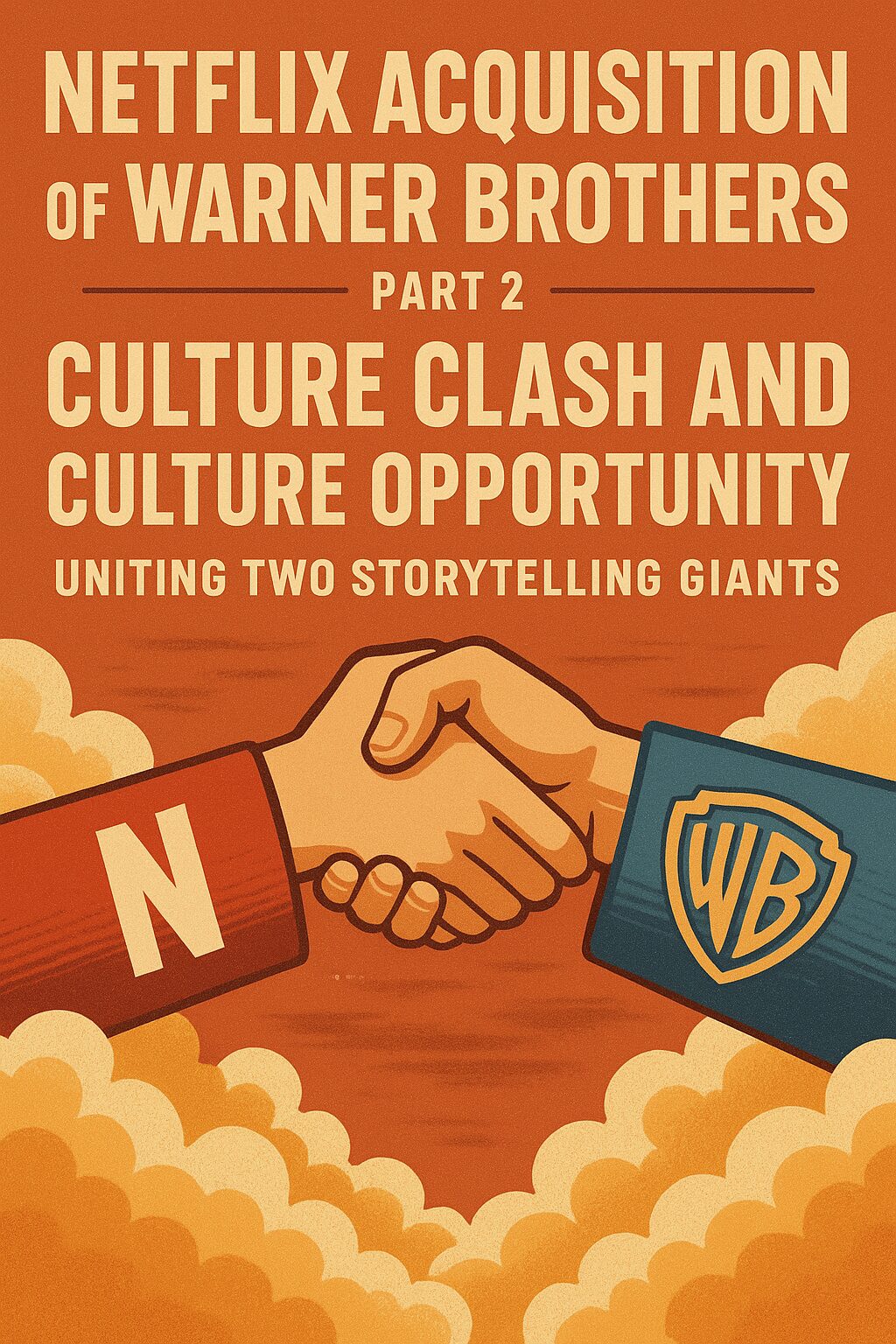
Netflix Acquisition of Warner Brothers: Part 2, Culture Clash and Culture Opportunity

When Netflix announced its acquisition of Warner Brothers, some industry observers immediately reached for superlatives. It is rare to witness the merging of two companies that so powerfully define the past and future of entertainment. Netflix represents the digital era’s relentless velocity. Warner Brothers represents a century-long tradition of filmmaking, artistry, and institutional memory. Many analysts have framed this transaction as a battle between new and old Hollywood. For compliance professionals, the more important reality is that culture will determine whether the combined enterprise thrives or falters.

Every acquisition carries cultural implications, but few present such a stark contrast. Netflix’s culture has long been described as radical transparency, high accountability, and a willingness to experiment without fear of failure. Warner Brothers has its own culture, marked by legacy practices, powerful creative guilds, long-standing production hierarchies, and a deep reverence for the studio system. When two creative ecosystems operating on fundamentally different rhythms are forced together, cultural friction is inevitable. The question is not whether tensions will emerge. The question is whether compliance, ethics, and governance leaders recognize the early signals and guide the organization through them.

Today, in Part 2, we explore whether the acquisition will be a clash of cultures or a cultural opportunity. Culture is not a soft concept. It is a compliance risk vector. Culture shapes decision-making, reporting behavior, ethical judgment, and employees’ willingness to raise concerns. Culture determines whether a problem surfaces early or metastasizes quietly. A transaction of this magnitude requires compliance professionals to approach culture not as a slogan to harmonize, but as an operational system that requires disciplined stewardship.

Why Culture Drives Compliance Outcomes in Creative Enterprises

Entertainment companies operate differently from many corporate environments. The creative process is inherently subjective. Decision-making is distributed across talent, producers, executives, and technical teams. Informal norms often guide behavior more powerfully than written policies. In this context, culture determines not only how work gets done but also how risks are managed.

Netflix has built a culture that embraces candid feedback, open decision frameworks, and data-driven experimentation. This environment reduces the risk that ethical concerns remain unspoken because communication channels are normalized around transparency. Warner Brothers, in contrast, operates in a world where relationships, tradition, and lineage carry weight. Legacy contracts, industry customs, and the tacit expectations between studios and talent can influence decisions.

Both cultures have strengths. Both cultures have vulnerabilities. Compliance professionals must understand that the goal of integration is not to erase one culture and impose another. The goal is to create a culture aligned with the company’s values that supports ethical decision-making and enables employees to speak up without hesitation. This is particularly important during a merger, when uncertainty heightens risk.

Two Different Operating Systems

Culture is an operating system. Netflix’s operating system prizes agility and real-time feedback loops. Warner Brothers’ operating system prizes craft, tradition, and continuity. When these systems converge, the risk is not that one replaces the other. The risk is that both weaken simultaneously without strong governance.

Netflix’s rapid decision cycles may clash with Warner Brothers’ structured production processes, where approvals, guild rules, and contractual obligations often slow the pace by design. If Netflix attempts to accelerate processes without a deep understanding of these obligations, compliance risks can emerge quickly, including breached talent contracts, overlooked union requirements, or misaligned production timelines.

Conversely, if Warner Brothers imposes its legacy processes without adapting to the digital and data-driven environment in which Netflix operates, it may undermine the transparent decision-making practices that help identify ethical and operational risks early.

Compliance leaders must act as interpreters between these operating systems. They must help leadership understand where flexibility is an asset and where structure is indispensable. Compliance must also ensure that employees across both organizations understand not only what the combined culture aspires to be, but also why certain controls exist and how they protect both the enterprise and the creative process.

Ethical Decision Frameworks Across Two Creative Ecosystems

Another challenge in cultural integration is aligning ethical decision frameworks. Netflix’s culture is rooted in accountability to metrics and performance outcomes. Warner Brothers’ culture is rooted in long-term relationships with talent, creative guilds, and industry stakeholders. This means the two companies differ in how they make decisions, escalate concerns, and evaluate the risks associated with innovative choices.

Compliance professionals must provide an ethical framework that is consistent, intuitive, and accessible across the enterprise. Employees should know how to evaluate potential conflicts of interest, report concerns, document decisions, and align risk-taking with corporate values.

When a company operates across multiple jurisdictions, creative functions, and regulatory environments, ethical consistency becomes essential. The compliance function must clearly articulate expectations repeatedly, using training, leadership engagement, and storytelling to reinforce behaviors that support integrity.

Early Indicators of Cultural Strain

Cultural tension is predictable in a transaction of this scale. The key is not to prevent tension but to identify it early. Compliance professionals should monitor indicators such as:

  • Decreased willingness to speak up;
  • Increased turnover in specific departments;
  • Divergent interpretations of policies between legacy teams.
  • Informal decision-making that bypasses established controls; and
  • Escalation patterns that shift without explanation.

These signals are rarely obvious to senior leadership unless compliance highlights them. Regular cultural risk assessments, pulse surveys, and qualitative interviews help the compliance function stay ahead of emerging conflict zones. Culture is dynamic, and risk velocity increases when expectations are unclear.

Building a Unified Culture Through Transparency and Accountability

Culture integration must be intentional. It cannot be delegated to internal communications or left to evolve without direction. Compliance leaders should work alongside HR, legal, and integration management to define the key elements of a unified culture.

This may include:

  • A consolidated code of conduct that reflects both creativity and accountability;
  • Standardized reporting channels that work across all business units;
  • Leadership models that bring together Netflix’s transparency and Warner Brothers’ collaborative ethos;
  • Clear explanations of why controls exist and how they support the creative process; and
  • Renewed emphasis on ethics as a competitive advantage.

Transparent communication is essential. Employees need to know why the organization is making certain cultural choices, what is expected of them, and how they can raise questions without fear.

The Compliance Lesson

The Netflix acquisition of Warner Brothers reveals a timeless truth: culture determines compliance outcomes. When two creative powerhouses join forces, the opportunity is immense, but the risk is equally significant. Compliance professionals must approach cultural integration with the same rigor they apply to regulatory integration or third-party risk management. Culture is not ornamental. It is operational. It is the foundation upon which speak-up behavior, ethical judgment, and internal trust are built.

If governance is the anchor of a merger, culture is the current that either carries the organization forward or pulls it off course. For compliance leaders, this is the moment to step forward, shape expectations, and ensure that the convergence of two storytelling giants becomes a model of ethical integration rather than a cautionary tale.

Join us tomorrow in Part 3, where we will consider the intellectual property risk, which could well be the hidden compliance battlefield going forward.

Categories
Compliance Tip of the Day

Compliance Tip of the Day – What Can Lead to an Internal Control Over-ride

Welcome to “Compliance Tip of the Day,” the podcast that brings you daily insights and practical advice for navigating the ever-evolving landscape of compliance and regulatory requirements. Whether you’re a seasoned compliance professional or just starting your journey, we aim to provide you with bite-sized, actionable tips to help you stay on top of your compliance game. Join us as we explore the latest industry trends, share best practices, and demystify complex compliance issues to keep your organization on the right side of the law. Tune in daily for your dose of compliance wisdom, and let’s make compliance a little less daunting, one tip at a time.

This week, we return to one of my favorite topics in compliance: internal controls. In this episode, we look at what can lead to an internal control failure

For more on this topic, check out The Compliance Handbook: A Guide to Operationalizing your Compliance Program, 6th edition, which LexisNexis recently released. It is available here.

Categories
FCPA Compliance Report

FCPA Compliance Report – Nicole Di Schino on Harnessing AI for Compliance: Governance, Risks, and Best Practices

Welcome to the award-winning FCPA Compliance Report, the longest-running podcast in compliance. In this episode, Tom welcomes Nicole Di Schino, Principal Compliance Services Consultant at Diligent’s Spark Compliance Group, to discuss how best to harness AI for your compliance regime through 2026 and beyond.

Nicole and Tom discuss the critical importance of AI governance, compliance, and modern GRC. They cover practical steps for developing comprehensive compliance programs, emphasizing the necessity for AI risk assessments, the establishment of AI governance committees, and the implementation of human oversight in AI processes. Nicole highlights the intrinsic risks of AI, including privacy concerns and AI bias, and shares her personal experiences with AI’s impact in educational settings. Tom underscores the role of compliance education, advocating for the broader view of compliance as an ambassadorial and academic function. This session also explores the integration of AI into compliance workflows and the essential role of board and committee oversight.


Resources:

Nicole Di Schino on LinkedIn

Diligent Website

Tom Fox

Instagram

Facebook

YouTube

Twitter

LinkedIn

Categories
AI Today in 5

AI Today in 5: December 8, 2025, The AI in Battling Edition

Welcome to AI Today in 5, the newest edition of the Compliance Podcast Network. Each day, Tom Fox will bring you 5 stories about AI to start your day. Sit back, enjoy a cup of morning coffee, and listen in to AI Today In 5. All, from the Compliance Podcast Network. Each day, we consider four stories from the business world, compliance, ethics, risk management, leadership, or general interest about AI.

Top AI stories include:

  1. Banks are battling fraud with AI. (FinTech Magazine)
  2. Principles to Secure Integration of Artificial Intelligence in Operational Technology. (CISA.gov)
  3. Apple exec exodus. (Yahoo Finance)
  4. AI-powered PCs do not share in the cloud. (Fortune)
  5. Insurers accelerate AI rollout. (FinTechGlobal)

For more information on the use of AI in Compliance programs, my new book, Upping Your Game, is available. You can purchase a copy of the book on Amazon.com.

Categories
Daily Compliance News

Daily Compliance News: December 8, 2025, The Surviving Holiday Parties Edition

Welcome to the Daily Compliance News. Each day, Tom Fox, the Voice of Compliance, brings you compliance-related stories to start your day. Sit back, enjoy a cup of morning coffee, and listen in to the Daily Compliance News. All, from the Compliance Podcast Network. Each day, we consider four stories from the business world, compliance, ethics, risk management, leadership, or general interest for the compliance professional.

Top stories include:

  • EU fines X $140MM. (WSJ)
  • Regulators relax rules on high-risk lending. (WSJ)
  • Ukraine sabotaged oversight; you can see the results. (NYT)
  • Surviving the company holiday party season. (FT)

The Daily Compliance News has been honored as No. 2 in the Best Regulatory Compliance Podcasts category.

Categories
Blog

Netflix Acquisition of Warner Brothers: Part 1, Lessons on Board Oversight

I have long been fascinated by non-movie company attempts to break into the film business. I do not know if it is simply the glitz of Hollywood, the glamour of movies, or something else, but history has been littered with attempts by companies as diverse as Gulf & Western and AOL to purchase movie companies. They have almost always ended in unmitigated disaster for the acquirer, with the AOL/Time Warner merger widely viewed as one of the worst mergers of all time.

I was therefore intrigued by the news that Netflix will acquire Warner Bros. This news has sent shockwaves through the entertainment industry and the corporate governance world alike. It is a transformational deal that combines a digital-native streaming powerhouse with one of the most storied legacy studios in American history. For many commentators, the headline is about competition, content libraries, or the future shape of Hollywood. For compliance professionals, the far more important headline is this: governance again reveals itself as the ballast that keeps a company steady when the tides of strategy, technology, and disruption rise together.

Major acquisitions are rarely about the mechanics of financing or the elegance of strategic theory. They are about governance. They test whether the board has the visibility, discipline, controls, and documentation to manage a bet that will define corporate identity for decades. In this sense, the Netflix acquisition of Warner Bros. is a real-time case study for the compliance profession. It shows the growing importance of governance during periods of high-velocity change. It offers essential insights into what compliance teams must do to ensure oversight keeps pace with the moment.

Over the next several days, I will explore the deal from several compliance angles. In today’s Part 1, we look at the role of Board oversight.

The Heightened Governance Duties in Transformational Deals

Transformational deals differ from standard mergers. They cover not only business lines but often entire creative and operational identities. Netflix and Warner Bros. represent two very different eras of entertainment. Netflix is built on a culture of experimentation, transparent metrics, and rapid decision cycles. Warner Bros. carries a century of artistic legacy, union relationships, and long-term production pipelines.

When a board approves a deal that fuses these worlds, its oversight responsibilities increase significantly. The fiduciary duty of care requires directors to ask deeper questions, demand clearer scenario planning, and insist on stronger integration plans. Compliance plays a direct role here. Compliance leaders provide critical insight into risk velocity, regulatory exposure, cultural gaps, and integration vulnerabilities. That input helps the board demonstrate that it conducted a thoughtful and well-documented evaluation rather than relying on rosy projections or strategic rhetoric.

Moreover, regulators and shareholders expect boards to show greater rigor when a company expands its scope so dramatically. Documentation becomes more than an internal process. It serves as evidence that the board asked the right questions, sought independent advice, and understood the potential risks, rather than hoping they would resolve themselves.

Industry Volatility Raises the Oversight Stakes

No sector has experienced more disruption over the past decade than entertainment. Business models shift every few years. Distribution platforms multiply and consolidate. Audience expectations evolve faster than production cycles. At the same time, regulatory frameworks for data privacy, antitrust enforcement, worker protections, and digital rights management continue to expand.

A board overseeing a transformational acquisition in this environment must navigate not only the specifics of the deal but also the broader industry volatility. For compliance professionals, this means building risk models that incorporate shifting regulatory landscapes rather than static obligations. It also means framing governance conversations around future-state risks rather than only current compliance requirements.

For instance, combining Netflix’s content libraries and datasets with Warner Bros.’ creates new privacy, antitrust, and market-dominance considerations. These issues are not theoretical. They will sit at the center of regulatory reviews. Compliance teams must therefore ensure that the board has a complete picture of emerging risks in addition to traditional acquisition-related obligations.

Legacy Obligations and Integration Complexity

Warner Bros. carries decades of legacy obligations: union agreements, talent contracts, residual structures, intellectual property commitments, and international distribution deals. Netflix brings a leaner structure but a highly complex ecosystem of global partnerships, digital rights frameworks, and data-driven production strategies.

Where these systems collide, governance risk increases. The board must understand whether integration plans can reconcile the two companies without creating blind spots. Compliance professionals should guide directors through the implications of merging contract systems, production pipelines, distribution frameworks, and content governance models.

A critical governance question is whether the two companies are aligned on their risk tolerances. Netflix has historically embraced rapid iteration and decision agility. Warner Bros. has traditionally embraced predictability rooted in long-standing industry practices. When these two philosophies meet, the board must ensure that the resulting enterprise neither undermines internal controls nor sacrifices necessary governance discipline in the name of speed.

What Regulators, Investors, and Stakeholders Expect

Regulatory expectations are rising across sectors, but particularly in media and technology. When a company expands both content ownership and distribution control, regulators begin to view governance structures as an essential element of market integrity.

Stakeholders will expect the board to have:

  1. Clear documentation of risk assessments;
  2. A detailed integration roadmap;
  3. Independent reviews of operational, cultural, and compliance risks;
  4. Transparent reporting structures that ensure accountability; and
  5. Regular updates on integration progress and risk mitigation.

For compliance professionals, this means preparing governance materials early, establishing a consolidated risk register, and ensuring that directors have access to complete and timely information. Investors will also demand visibility into how risks are evaluated and mitigated, particularly given the significant financial stakes. Compliance leaders must therefore integrate governance reporting into their communication strategy to ensure the board is fully supported in its oversight responsibilities.

How Compliance Shapes Integration Decision-Making

Compliance often gains more responsibility during acquisitions, but the Netflix–Warner Brothers deal highlights a deeper truth. Compliance is no longer a downstream function. It is a front-end strategic voice that helps define the success of integration.

During the first year post-acquisition, compliance must lead or co-lead several critical processes:

  • Harmonization of codes of conduct;
  • Rationalization of policies and procedures;
  • Alignment of reporting channels and speak-up systems;
  • Integration of third-party risk management;
  • Data governance and privacy harmonization; and
  • Internal control updates that reflect new operations.

Boards depend heavily on compliance to ensure that these systems are well designed and monitored. Without strong compliance leadership, integration risks multiply, and the transaction’s strategic goals begin to erode.

Strengthening Governance Protocols During High-Velocity Change

Given the scale of this deal, compliance professionals should view governance as a dynamic system rather than a static structure. The following actions can help support the board throughout the acquisition and integration period:

  1. Produce frequent, concise risk summaries tailored for directors.
  2. Encourage the board to test assumptions through independent validation.
  3. Establish a cross-functional governance working group that includes compliance, legal, HR, finance, and integration management.
  4. Prioritize early detection of cultural friction points.
  5. Maintain meticulous documentation of board engagement, decisions, and follow-up actions.

Governance is most valuable when it is forward-looking, actionable, and transparent. This deal demands that level of rigor.

The Compliance Lesson

The Netflix acquisition of Warner Bros. illustrates a simple but powerful truth: governance is not a corporate formality. It is the anchor that prevents strategic ambition from becoming strategic exposure. For compliance professionals, the mandate is clear. Build governance systems that give directors clarity, give regulators confidence, and give the enterprise the stability it needs to navigate a rapidly changing industry.

The acquisition is a strategic announcement. The governance behind it is the actual risk management.

Join us tomorrow in Part 2, where we will consider the potential culture clash.

Categories
Sunday Book Review

Sunday Book Review: December 7, 2025, The Best Books on History Edition

In the Sunday Book Review, Tom Fox considers books that would interest the compliance professional, the business executive, or anyone curious. It could be books about business, compliance, history, leadership, current events, or anything else that might interest Tom. Today, we continue our review of some years’ top books in various categories as curated by the Financial Times. In this episode, we look at a history book by Frederick Studemann.

  • The Revolutionists by Jason Burke
  • Shattered Lands by Sam Dalrymple
  • The First Russian Revolution by Susanna Rabow-Edling
  • The West: the History of an Idea by Georgios Varouxakis
  • The World of the Cold War by Vladislav Zubok

Resources:

Best Books of 2025: History by Frederick Studemann

Categories
10 For 10

10 For 10: Top Compliance Stories For the Week Ending December 6, 2025

Welcome to 10 For 10, the podcast that brings you the week’s Top 10 compliance stories in one podcast each week. Tom Fox, the Voice of Compliance, brings you the compliance stories you need to know to end your busy week. Sit back, and in 10 minutes, hear about the stories every compliance professional should be aware of from the prior week. Every Saturday, 10 For 10 highlights the most important news, insights, and analysis for the compliance professional, all curated by the Voice of Compliance, Tom Fox. Get your weekly filling of compliance stories with 10 for 10, a podcast produced by the Compliance Podcast Network. 

This week’s stories include:

  • The US lost over $29bn to fraud, waste, and abuse in Afghanistan. ⁠(USA Today⁠)
  • Does AI portend the end of the law/consulting firm pyramid? ⁠(FT⁠)
  • Will a Civility Oath make lawyers more civil?  ⁠(Reuters)⁠
  • What is the environmental cost of corruption? ⁠(BBC)⁠
  • Lane Kiffin should be nowhere near Ole Miss football. ⁠(WSJ⁠)
  • Police detain former EU top diplomat. ⁠(FT)⁠
  • Massive fraud in aircraft parts uncovered in the UK. ⁠(The Times⁠)
  • Switzerland charges Credit Suisse over Tuna Bond fraud. ⁠(ACAMS)⁠
  • Corruption scandals impact the Chinese Army.  ⁠(Reuters)⁠
  • Former Labour PM convicted of corruption in Bangladesh. ⁠(Independent)⁠

You can check out the Daily Compliance News for four curated compliance and ethics-related stories each day, ⁠here⁠.

Connect with Tom 

⁠Instagram⁠

⁠Facebook⁠

⁠YouTube⁠

⁠Twitter⁠

⁠LinkedIn⁠

You can purchase a copy of my new book, Upping Your Game, on ⁠Amazon.com.⁠

Categories
Regulatory Ramblings

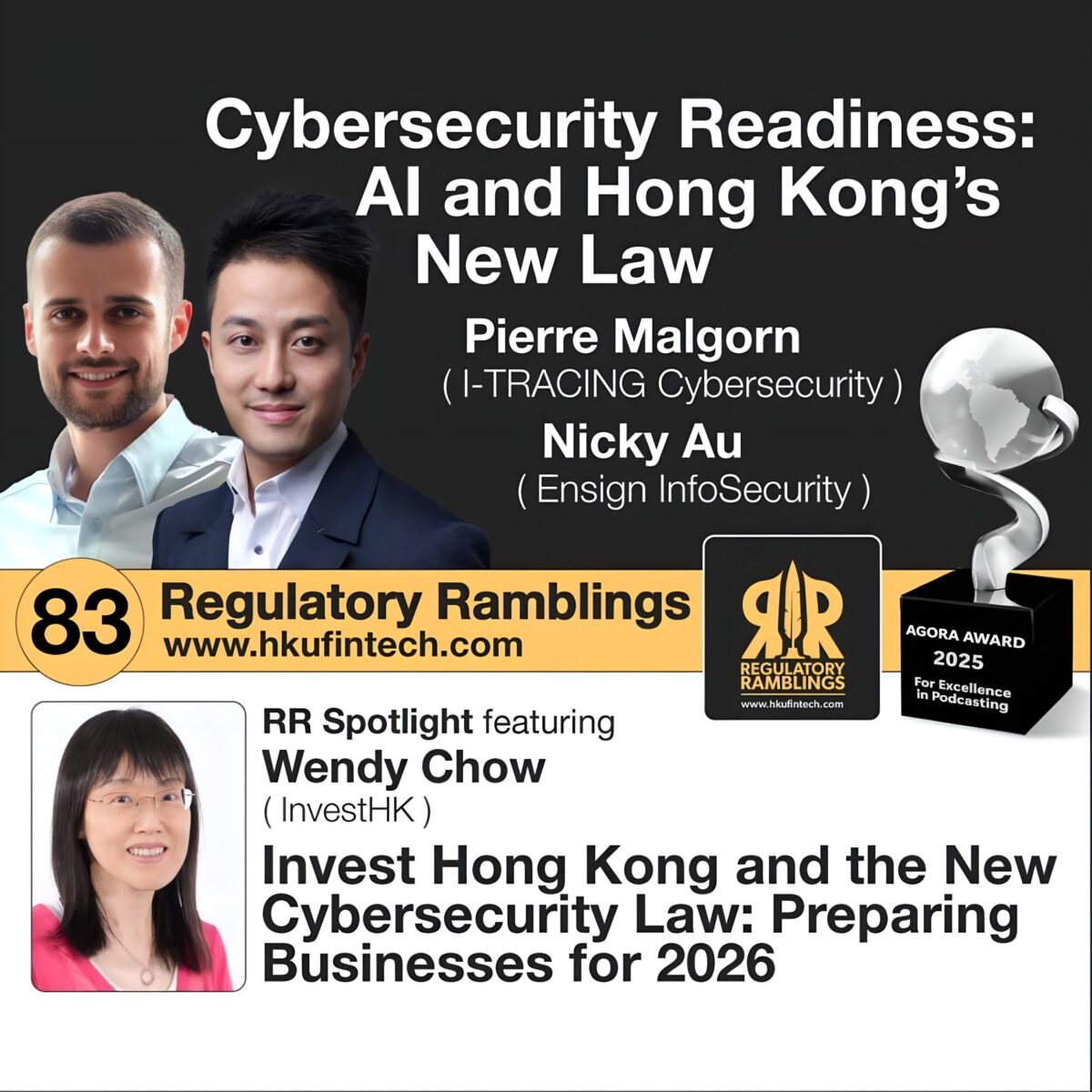
Regulatory Ramblings: Episode 83 – Hong Kong’s New Protection of Critical Infrastructures (Computer Systems) Ordinance

This episode focuses on Hong Kong’s new Protection of Critical Infrastructures (Computer Systems) Ordinance. Currently in bill form before the territory’s Legislative Council, it is expected to go into effect in January 2026. The discussion first features Wendy Chow, Invest Hong Kong’s Head of Digital Technologies & Data Infrastructure, on how her group is raising awareness of the forthcoming legislation locally.

Following that, the conversation moves to Nicky Au, Ensign InfoSecurity’s General Manager, Greater Bay Area, and Pierre Malgorn, I-TRACING Cybersecurity’s Asia Pacific Director, about what financial institutions and corporations need to do to prepare for the new law.

The Protection of Critical Infrastructure (Computer Systems) Ordinance in Hong Kong seeks to safeguard the computer systems of designated Critical Infrastructures (CIs) by creating a regulatory framework to boost cybersecurity and strengthen defenses against cyber threats. The Ordinance will take effect on January 1, 2026.

Who are Considered Critical Infrastructure Providers?

Organizations crucial for delivering essential services for daily life operating in the following eight designated sectors will be affected:

Air Transport, Banking and Financial services, Energy, Healthcare services, Information Technology, Land Transport, Maritime, and Telecommunications and Broadcasting services.

Key highlights:

  • The Ordinance requires organizations that manage critical infrastructure in Hong Kong to comply with strict cybersecurity regulations.
  • Failure to meet the Ordinance’s obligations may result in fines ranging from HK$500,000 to HK$5 million. For ongoing offenses, an additional daily fine of HK$50,000 to HK$100,000 may be imposed for each day the offense persists.
  • Penalties target the organization as a whole, not senior management individually. However, individuals may be personally liable for crimes such as providing false information or committing fraud.

Biography:

Wendy Chow is based in Hong Kong and has been with Invest Hong Kong for almost a quarter of a century in various roles. She is currently the Head of Digital Technologies and Data Infrastructure. She specializes in providing bespoke guidance and hands-on facilitation services to help establish and grow mainland Chinese and overseas tech businesses in Hong Kong and regional markets.

An HKU alum, she holds a BA, a master’s in social science in mental health, and an MBA from the University of Hong Kong. She also has an MA degree from the University of Massachusetts Amherst.

Nicky Au is Ensign InfoSecurity’s Hong Kong-based General Manager for the Greater Bay Area. He is a graduate of the City University of Hong Kong, where he earned his bachelor’s degree in business administration with a focus on information systems, and he is also a certified professional, holding CISSP, CISM, CISA, and CISP-CISO certifications.

Pierre Malgorn is the Asia Pacific Director for I-TRACING Cybersecurity. He holds an engineer’s degree in IT technologies from the EPF Engineering School in Cachan, France, and is currently based in Hong Kong.

Discussion:

The spotlight chat begins with Wendy sharing why the Ordinance matters to Hong Kong and what it means for the territory’s digital regulatory landscape. She goes on to explain Invest Hong Kong’s role in raising awareness of the bill and helping the local business community understand and adapt to it. She also shares her thoughts on whether there was sufficient cybersecurity and infrastructure support locally in the city and, if not, what the strategy was to attract more talent and firms to Hong Kong.

Wendy acknowledges that for multinationals operating across Asia, the regulatory landscape can be complex. Yet, the belief is that the new ordinance is necessary and will strengthen Hong Kong’s long-term position as a secure, reliable hub for international business.

Following that, we continue the discussion on the Ordinance with Nicky and Pierre. They share their views on how the law will likely affect their clients and what they are doing to help them prepare for its rollout. While awareness and preparation are key for smooth implementation, the Ordinance’s definition of “critical infrastructure” can seem broad. Nicky and Pierre comment on how they help companies determine whether they are covered by the new law and on the practical first steps they would recommend.

They also comment on how the Ordinance introduces financial penalties, which are helping change the conversation at the board level, with cybersecurity matters now treated as a core business risk. Increasingly, the risk landscape includes emerging threats such as AI-powered attacks. Nicky and Pierre comment on how new technologies are changing the threat landscape for their clients and how they would advise them to build genuine security—going beyond mere box-ticking and compliance.

A sad reality is that in a major cyber incident, the local authorities will get involved. How does one prepare their clients to manage crisis communications while interacting with regulators, law enforcement, and policymakers? Our guests offer some “dos” or “don’ts” for such scenarios.

Regulatory Ramblings podcasts is brought to you by The University of Hong Kong – Reg/Tech Lab, HKU-SCF Fintech Academy, Asia Global Institute, and HKU-edX Professional Certificate in Fintech, with support from the HKU Faculty of Law.

Useful links in this episode:

You might also be interested in:

Connect with RR Podcast at:

LinkedIn: https://hk.linkedin.com/company/hkufintech 
Facebook: https://www.facebook.com/hkufintech.fb/
Instagram: https://www.instagram.com/hkufintech/ 
Twitter: https://twitter.com/HKUFinTech 
Threads: https://www.threads.net/@hkufintech
Website: https://www.hkufintech.com/regulatoryramblings 

Connect with the Compliance Podcast Network at:

LinkedIn: https://www.linkedin.com/company/compliance-podcast-network/
Facebook: https://www.facebook.com/compliancepodcastnetwork/
YouTube: https://www.youtube.com/@CompliancePodcastNetwork
Twitter: https://twitter.com/tfoxlaw
Instagram: https://www.instagram.com/voiceofcompliance/
Website: https://compliancepodcastnetwork.net

Categories
From the Editor's Desk

From the Editor’s Desk – Compliance Week’s Insights and Reflections for November and into December 2025

In this episode of ‘The Editor’s Desk’ podcast, hosts Tom Fox and Aaron Nicodemus delve into key compliance issues featured in Compliance Week. Tom and Aaron discuss top stories from Compliance Week in November, look at stories that will appear in December, and provide a preview of upcoming content and events in January and beyond.

They discuss FCPA investigations closed under the Trump administration and the implications for compliance professionals. Aaron highlights stories from Compliance Week, including an FCPA enforcement action involving Millicom Cellular in Guatemala and a detailed look at financial institutions in Latin America involved in money laundering for drug cartels. The hosts also touch on significant interviews and upcoming features, such as compliance wins and fails of the year, an AI and compliance survey, and the upcoming Compliance Week national conference. The episode offers valuable insights into compliance trends and regulatory changes, providing practical advice for compliance officers.

Resources:

Aaron Nicodemus on LinkedIn

Compliance Week

From the Mind of the CCO survey