Categories
Blog

Arena and Lessons in Cross – Cultural Compliance

One of the most powerful aspects of compliance leadership is its profound connection with broader lessons drawn from seemingly unrelated sources. Few are as richly instructive as the original Star Trek series. Today, let’s boldly explore an insightful compliance case study from the iconic episode “Arena.” This episode illustrates the immense value of cross-cultural understanding and effective intercultural compliance strategies.

In “Arena,” Captain Kirk and the USS Enterprise respond to an apparent distress call at a Federation outpost. They soon discover that the base has been obliterated by an unknown attacker, the Gorn, a formidable alien species. Kirk chases the Gorn, determined to exact revenge. Yet, through a dramatic series of events orchestrated by the omnipotent entity known as the Metrons, Kirk ultimately learns powerful lessons in cultural empathy, conflict resolution, and mutual understanding. Here are the cross-cultural compliance lessons that corporate compliance professionals can derive from this gripping tale.

1. Avoiding Misinterpretation through Cultural Empathy

Illustrated By: Captain Kirk, consumed by the destruction of the Federation outpost at Cestus III, immediately assumes malevolent intent. He perceives the Gorn’s actions as unprovoked aggression, swiftly deciding retaliation is his only recourse. 

Kirk’s initial response highlights a common mistake in cross-cultural interactions: hasty assumptions based solely on one’s cultural framework. In global compliance, cultural empathy is crucial to avoid similar errors. Compliance professionals must recognize their inherent biases and strive for deeper cultural understanding, particularly when operating internationally. Rather than jumping to conclusions, compliance leaders should rigorously question their assumptions, investigate thoroughly, and engage in respectful dialogues with international counterparts. Only by sincerely seeking to understand different cultural perspectives can compliance officers effectively manage risks and avoid unnecessary conflicts or damaging misunderstandings.

2. Communication and Mutual Understanding

Illustrated By During the climactic confrontation, Kirk and the Gorn captain are forced into single combat. Initially driven by anger and mistrust, Kirk ultimately realizes, through observing and assessing the Gorn’s motivations and behavior, that the Gorn believed they were acting in legitimate self-defense, perceiving the Federation outpost as a threat to their security. 

This realization highlights the vital importance of clear and transparent communication in fostering mutual understanding. Compliance officers navigating multinational operations must ensure effective communication channels and explicit clarity in expressing company values, expectations, and regulatory requirements across cultural divides. Cultural barriers can lead to confusion or misinterpretation of compliance policies. Compliance communications prioritize clarity, cultural sensitivity, and ongoing dialogue, fostering trust and ensuring all parties correctly understand their roles and obligations.

3. Respectful Negotiation as a Foundation for Resolution

Illustrated By: In the episode’s finale, rather than taking advantage of a vulnerable and incapacitated Gorn captain, Kirk refuses to deliver a lethal blow. By choosing mercy and respect over vengeance, Kirk signals a willingness to negotiate peace rather than prolong the conflict.

Respectful negotiation rooted in empathy is vital for resolving conflicts, especially in cross-cultural compliance scenarios. Disagreements or regulatory issues arising from cultural differences require patient negotiation, respectful engagement, and a genuine willingness to find common ground. Compliance leaders should employ collaborative negotiation techniques, prioritize understanding diverse perspectives, and demonstrate respect for local customs and regulatory norms. Such respectful negotiation not only resolves immediate issues but also establishes lasting trust and collaborative relationships that strengthen global compliance initiatives.

4. Continuous Learning and Adaptability in Cultural Contexts

Illustrated throughout the battle, Kirk improvises weapons from minerals found on the planet. He learns from his environment, adapting his strategies to the unique circumstances imposed by the Metrons’ forced confrontation. His ability to adapt and learn continuously becomes his greatest asset.

Compliance professionals must also embrace continuous learning and adaptability, particularly in diverse cultural contexts. Static, inflexible compliance programs fail when imposed universally without considering local customs, business practices, and regulatory landscapes. Successful compliance officers cultivate adaptability by actively engaging with regional teams to gain nuanced insights and perspectives. They continually revise their compliance strategies to reflect the cultural intelligence gained through real-world experience, feedback loops, and active listening. This dynamic approach ensures that compliance policies remain adequate, relevant, and culturally appropriate.

5. Leveraging Cultural Differences as Opportunities

Illustrated By Although initially viewed as monstrous and hostile, the Gorn prove to be strategic, thoughtful, and capable. Kirk eventually recognizes that the differences he initially saw as threatening can also represent strengths, wisdom, and insight if approached in the right way.

In corporate compliance, cultural differences should be viewed not as threats but as opportunities for growth and innovation. Diverse cultural perspectives can enrich compliance strategies, offering fresh approaches to risk mitigation, ethical practices, and the interpretation of regulations. Compliance officers who actively solicit and integrate cultural diversity within compliance teams and leadership structures benefit from varied insights, innovative problem-solving, and enriched ethical decision-making. Leveraging these cultural differences constructively builds stronger, more resilient, and truly global compliance frameworks.

6. Cross-Cultural Leadership Drives Ethical Behavior

Illustrated by Kirk’s ultimate refusal to kill the defenseless Gorn, ethical leadership inspires respect even among the observing Metrons. His cross-cultural leadership sends a powerful message about humanity’s commitment to higher ethical standards and the pursuit of peace.

Cross-cultural ethical leadership is essential for compliance success. Compliance leaders must exemplify unwavering ethical principles across cultural boundaries, clearly communicating standards of conduct and demonstrating personal integrity. Visible ethical leadership encourages teams worldwide to consistently adopt and maintain compliance and ethical behaviors. Leaders who model integrity in cross-cultural interactions significantly strengthen their organization’s compliance culture, creating global cohesion around shared ethical values and compliance objectives.

Final ComplianceLog Reflections

The cross-cultural lessons from Star Trek’s “Arena” vividly illustrate essential compliance principles for the contemporary global organization. Compliance leaders must cultivate cultural empathy, maintain clear communication, negotiate respectfully, demonstrate adaptability, positively capitalize on cultural diversity, and exemplify ethical cross-cultural leadership. Just as Captain Kirk learned to move beyond initial assumptions toward more profound understanding, compliance professionals can greatly enhance their effectiveness by applying these timeless lessons.

By adopting these culturally intelligent compliance practices, organizations not only ensure regulatory adherence but also significantly enrich their internal culture and ethical stature. Let us commit to boldly going forward, embracing cross-cultural intelligence and empathy as the cornerstones of effective global compliance strategies.

Resources:
Excruciatingly Detailed Plot Summary by Eric W. Weisstein

MissionLogPodcast.com

Memory Alpha

Categories
FCPA Compliance Report

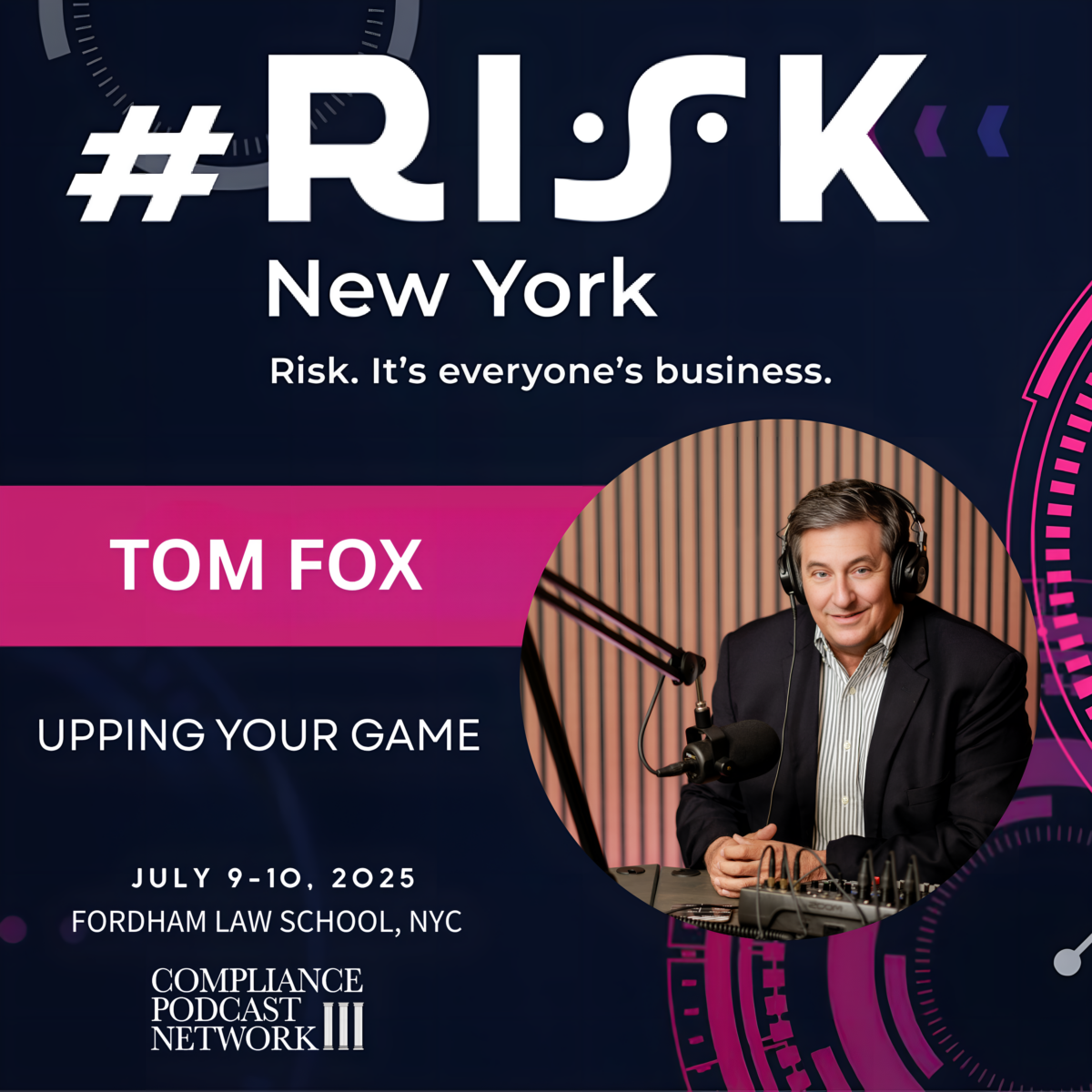
#Risk New York Speaker Series – Upping Your Game with Tom Fox

Join Tom Fox and hundreds of other GRC professionals in the city that never sleeps, New York City, on July 9 & 10 for one of the top conferences around, #Risk New York. The current US landscape, shaped by evolving policies, rapid advancements in AI, and shifting global dynamics, demands adaptive strategies and cross-functional collaboration.

At #RISK New York, you will master the New Regulatory Reality by getting ahead of US regulatory shifts and their impact. Conquer AI and Tech Risk by Safeguarding Your Organization in an AI-Driven World and Understanding the Implications of Major Tech Investments. Navigate Financial and Crypto Volatility by Protecting Your Assets and Exploring Solutions in a Dynamic Market. Strengthen Your GRC Framework by Leveraging Governance, Risk, and Compliance for Strategic Advantage. Protect Digital Trust by addressing challenges in cybersecurity and data privacy and combating misinformation. All while meeting with the country’s top #Risk management professionals.

In this episode of the Risk New York podcast series, Tom Fox introduces the upcoming Risk New York Conference, scheduled for July 9-10 at Fordham Law School. The conference, hosted by GRC World Forums, will focus on various aspects of risk management, including AI, tech risk, financial and crypto risk, and GRC frameworks. Tom discusses his keynote based on his book ‘Upping the Game’ and highlights key speakers and exhibitors, including Robert Clark from Howard University, Bill Coffin and Erica Alburn from Ecosphere, and Michael Rasmussen, known as the father of GRC. The episode highlights the importance of the conference and provides details on discounted tickets, as well as other information available in the show notes.

Resources:

#Risk Conference Series

#RiskNYC—Tickets and Information

Compliance Podcast Network Website

Tom Fox

Instagram

Facebook

YouTube

Twitter

LinkedIn

Categories
Hill Country Authors

Hill Country Authors Podcast – Exploring Writing, Literature, and Texas Coastal Culture with Skip Rhudy

Welcome to a new season of the award-winning Hill Country Authors Podcast, sponsored by Stoney Creek Publishing. In this podcast, Hill Country resident Tom Fox visits with authors who live in and write up the Texas Hill Country. In this episode, Tom Fox visits Skip Rhudy, a writer with deep ties to the Texas Gulf Coast.

Rhudy shares his experiences growing up in Port Aransas and delves into the contrasts of living in a tourist spot. They discuss Rhudy’s two novels, ‘Under the Gulf Coast Sun’ and ‘One Punk Summer,’ touching on themes of setting as character, the punk music scene in Austin, and preserving Texas culture through fiction. Rhudy also discusses his writing process, inspirations from Ernest Hemingway, and future projects, including a novel interwoven with Greek mythology and a nonfiction account of building a kit plane.

Key highlights:

  • Life in Port Aransas
  • Port Aransas Culture and Community
  • Holiday Vibes and Seasonal Contrasts
  • Setting as a Character in Literature
  • Writing Process and Inspirations
  • Texas History and Cultural Preservation
  • Comparing Two Novels
  • Punk Music and Austin’s Scene
  • Publishing Journey and Editorial Insights

Resources:

Skip Rhudy on Stoney Creek Publishing

‘Under the Gulf Coast Sun on Texas A&M University Press

Stoney Creek Publishing Website

 Podcast Cover Art

 Nancy Huffman Fine Art

Tom Fox

Instagram

Facebook

YouTube

Twitter

LinkedIn

Categories
Compliance Tip of the Day

Compliance Tip of the Day – Preparing for the Failure to Prevent Fraud Act

Welcome to “Compliance Tip of the Day,” the podcast that brings you daily insights and practical advice on navigating the ever-evolving landscape of compliance and regulatory requirements. Whether you’re a seasoned compliance professional or just starting your journey, our goal is to provide you with bite-sized, actionable tips to help you stay ahead in your compliance efforts. Join us as we explore the latest industry trends, share best practices, and demystify complex compliance issues to keep your organization on the right side of the law. Tune in daily for your dose of compliance wisdom, and let’s make compliance a little less daunting, one tip at a time.

Today, we examine the UK’s Failure to Prevent Fraud Act, which is set to take effect later this year. We consider what compliance professionals need to do to prepare for it.

For more information on this topic, refer to The Compliance Handbook: A Guide to Operationalizing Your Compliance Program, 6th edition, recently released by LexisNexis. It is available here.

Categories
Great Women in Compliance

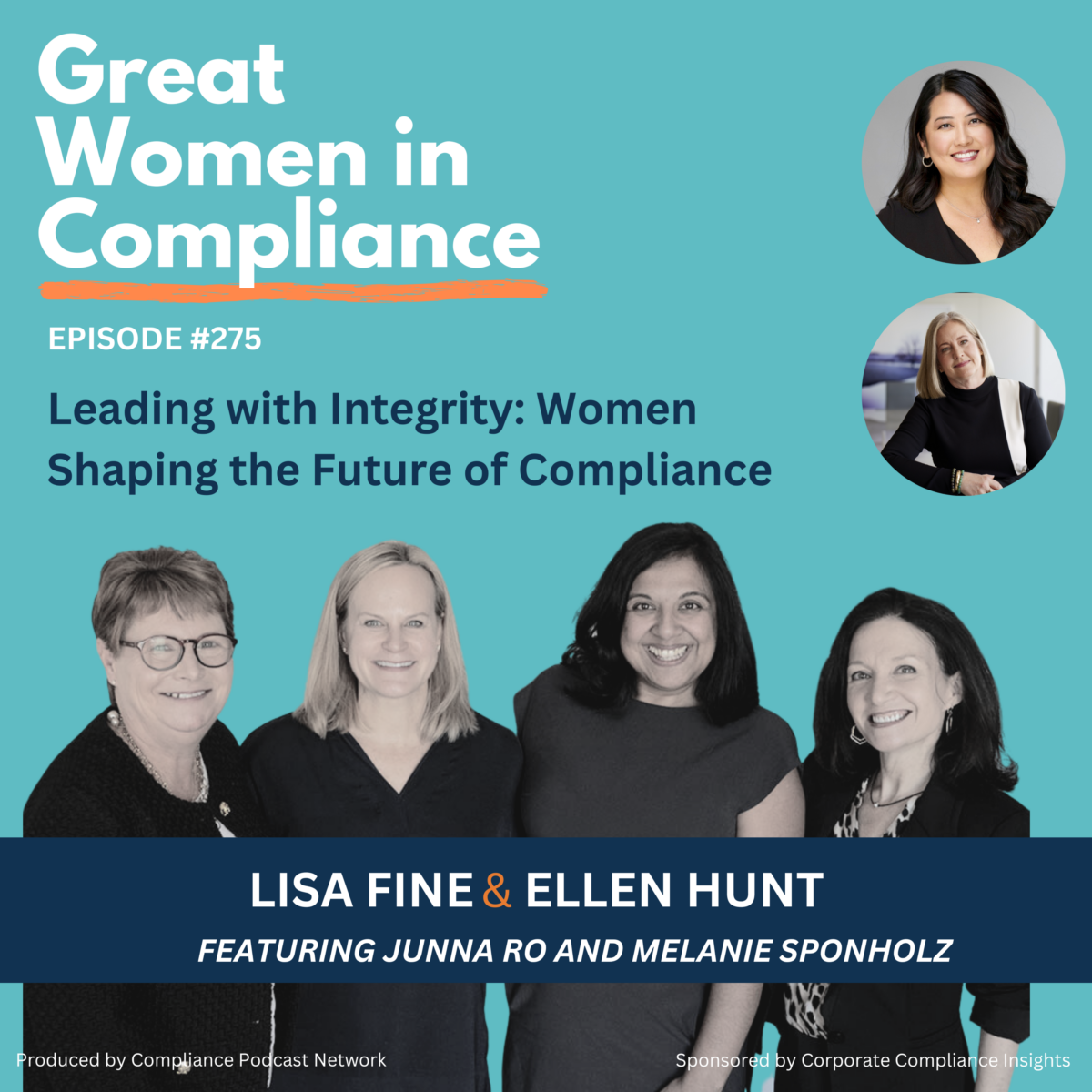
Great Women in Compliance – Leading with Integrity: Women Shaping the Future of Compliance

In this episode, Lisa and Ellen get the opportunity to speak with Junna Ro and Melanie Sponholz to recap the Women in Compliance Summit and discuss the evolving landscape for women in the field.

Junna Ro, a seasoned legal and compliance executive and the Head of Strategic Legal Initiatives at the University of California, and Melanie Sponholz, Chief Compliance Officer & Director of Responsible Investing—Portfolio Operations at Waud Capital Partners, shared insights from the summit.

Both Junna and Melanie emphasized the collective support and sense of community at the event, discussing their session on mentorship and allyship, as well as effective strategies for building these relationships. Junna’s session with Elizabeth Simon focused on Women on Boards and also provided insight and strategy.

They also discuss the current state of the profession, examining both its challenges and opportunities.

Categories
Compliance Into the Weeds

Compliance into the Weeds: The COSO Governance Framework

The award-winning Compliance into the Weeds is the only weekly podcast that takes a deep dive into a compliance-related topic, literally going into the weeds to explore a subject more fully. Are you seeking insightful perspectives on compliance? Look no further than Compliance into the Weeds! In this episode of Compliance into the Weeds, Tom Fox and Matt Kelly discuss the recently released COSO Corporate Governance Framework.

Tom and Matt take a deep dive into the new COSO Corporate Governance Framework draft. They discuss the importance of public comment on the draft, which is open until July 11, and explore the framework’s six key components. The framework aims to provide discipline in achieving good governance within organizations, covering areas such as strategy, culture, human resources, and resilience. Kelly highlights the significance of culture in compliance and the role of information quality in the future, providing practical tips on implementing and testing the framework. The episode highlights the importance of this framework for various stakeholders, encouraging practitioners to review and provide feedback on the draft.

Key highlights:

  • Overview of COSO’s Draft Corporate Governance Framework
  • The Six Objectives of the Framework
  • Importance of Culture in Compliance
  • Principles and Points of Focus
  • Resilience in Corporate Governance

Resources:

Matt Kelly in Radical Compliance

Tom

Instagram

Facebook

YouTube

Twitter

LinkedIn

A multi-award-winning podcast, Compliance into the Weeds, was most recently honored as one of the Top 25 Regulatory Compliance Podcasts, a Top 10 Business Law Podcast, and a Top 12 Risk Management Podcast.

Categories
All Things Investigations

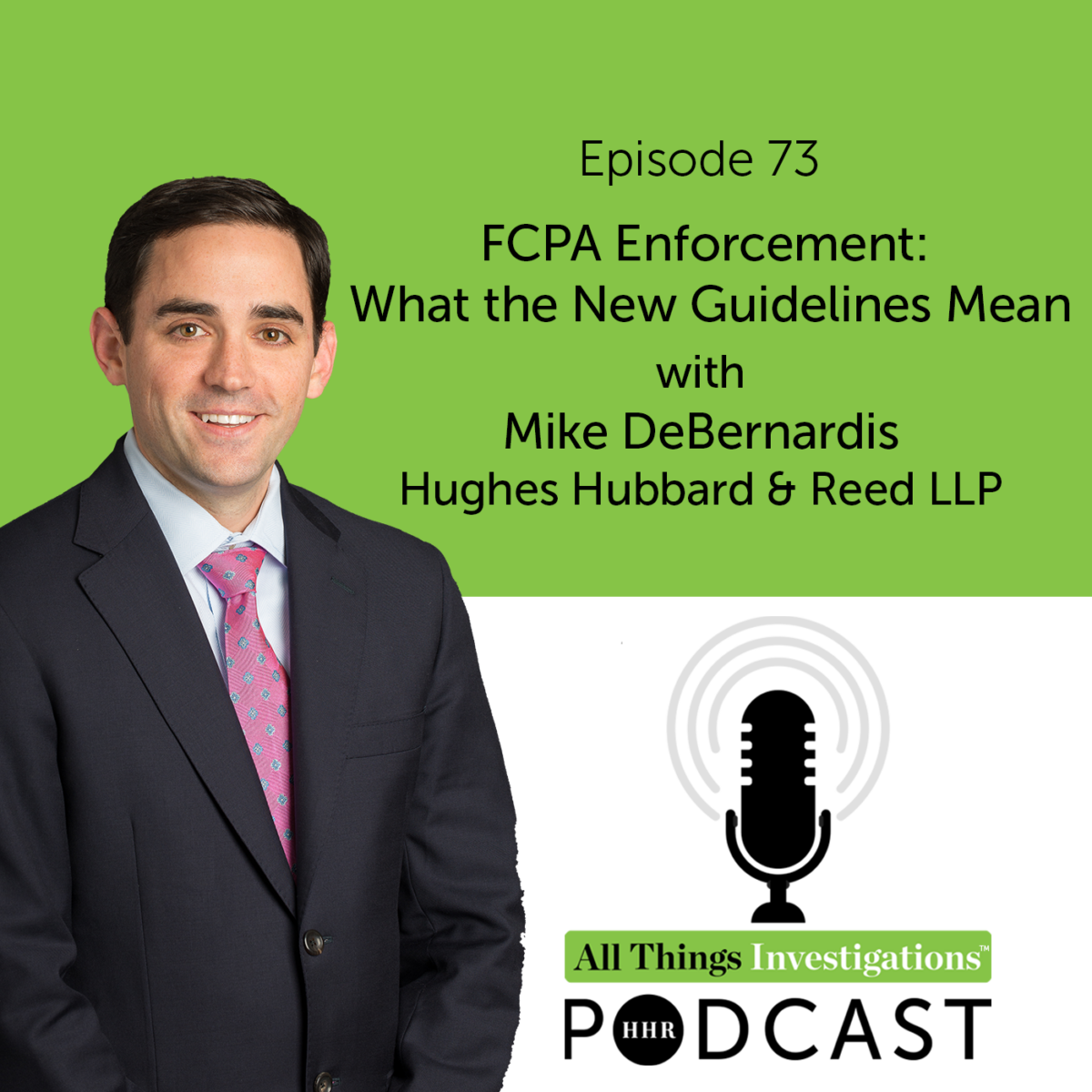
All Things Investigations – FCPA Enforcement: What the New Guidelines Mean with Mike DeBernardis

Welcome to the Hughes Hubbard Anti-Corruption & Internal Investigations Practice Group’s podcast, All Things Investigation. In this episode of ‘All Things Investigations,’ host Tom Fox is joined by Mike DeBernardis to discuss the recent guidelines released by Deputy Attorney General Todd Blanche on the enforcement of the Foreign Corrupt Practices Act (FCPA).

They dissect the new memorandum, its implications for corporate investigations, and the focus on eliminating cartels and transnational criminal organizations. The conversation also delves into topics such as competitive advantage, the role of national security in FCPA enforcement, and the strategic implications for companies. The episode concludes with insights on how companies and their legal counsel should navigate these updated guidelines and prepare for a more expedited and focused investigation process.

Key highlights:

  • Overview of New FCPA Guidelines
  • Focus on Competitive Advantage
  • Prosecutorial Considerations
  • National Security and Strategic Business
  • Prioritizing Serious Misconduct
  • Advising Clients on FCPA Compliance

Resources:

Mike DeBernardis

Hughes Hubbard & Reed website

HHR Client Alert: DOJ Ends FCPA Enforcement Pause

Categories
Daily Compliance News

Daily Compliance News: June 18, 2025, The Cost of Corruption Edition

Welcome to the Daily Compliance News. Each day, Tom Fox, the Voice of Compliance, brings you compliance-related stories to start your day. Sit back, enjoy a cup of morning coffee, and listen in to the Daily Compliance News. All from the Compliance Podcast Network. Each day, we consider four stories from the business world: compliance, ethics, risk management, leadership, or general interest for the compliance professional.

Top stories include:

  • Sarkozy’s trial shows the insidiousness of corruption. (Just Security)
  • Brussels to loosen merger rules for the defense industry. (FT)
  • Bye-bye, Whole Foods. (Business Insider)
  • MyPillow founder Mike Lindell was ordered to pay $2.3MM for defamation. (NYT)
Categories
Blog

Is FCPA Enforcement Back? Part 2 – What Compliance Professionals Should Do

After months of speculation and a noticeable lull in FCPA enforcement, the U.S. Department of Justice (DOJ) has made a significant announcement with a new policy statement. In a recently released memorandum titled Guidelines for Investigations and Enforcement of the FCPA (FCPA Memo), Deputy Attorney General (DAG) Todd Blanche has sent a clear message that FCPA enforcement is still alive under the Trump Administration. However, it will now focus on new areas, including cartel disruption, national security, US business development, and leveling the global playing field for U.S. companies.

This two-part blog post series delves deeply into the FCPA Memo. Yesterday, in Part 1, we examined the key compliance takeaways from this significant policy shift. Today, in Part 2, we provide practical insights into how you, the compliance professional, should respond.

1. Reassess your FCPA risk profile—especially in high-risk geographies and industries now under the national security spotlight.

Following the FCPA Memo, compliance professionals must reassess their FCPA risk profiles, particularly in high-risk geographies and industries that are increasingly scrutinized due to national security concerns. The FCPA Memo signaled that corruption-related activities, especially those intertwined with national security interests, are receiving enhanced scrutiny. This includes critical infrastructure sectors, technology industries, energy companies, pharmaceutical enterprises, and defense contractors. It also applies particularly to businesses operating in emerging or high-corruption-risk markets such as Brazil, China, India, Mexico, and Russia, among others.

Companies should move to update their geographic and sector-specific risk assessments. A robust reassessment involves reviewing recent enforcement actions, analyzing geopolitical developments, and carefully monitoring regulatory guidance that identifies new enforcement priorities. It means conducting thorough due diligence on third-party intermediaries, scrutinizing joint venture partnerships, and proactively understanding local business practices that could expose the organization to corruption risks.

Furthermore, compliance leaders should engage senior executives and board members in understanding how heightened national security risks intersect with anti-corruption compliance. This awareness ensures leadership commitment and alignment, enabling resources to be strategically allocated to address emerging risks comprehensively. The current enforcement climate mandates increased vigilance around political contributions, lobbying activities, dealings with foreign government-owned entities, and managing interactions with politically exposed persons (PEPs).

Finally, integrate scenario planning and predictive analytics into your risk assessment procedures to proactively anticipate potential compliance vulnerabilities. By considering worst-case scenarios and conducting regular tabletop exercises, compliance teams can identify possible gaps and vulnerabilities before enforcement authorities do. This forward-looking approach ensures that your FCPA compliance framework remains agile, responsive, and attuned to the evolving global enforcement landscape, providing a robust defense should regulators or investigators come calling.

2. Stress-test your investigation protocols to ensure you can respond quickly and comprehensively when issues arise. Speed now matters more than ever.

The DOJ’s recent pronouncements underscore a critical message for compliance professionals: investigative agility is now paramount. Authorities are increasingly emphasizing the need for rapid and comprehensive responses to allegations or evidence of misconduct. Companies struggle to quickly mobilize internal investigations in response to heightened scrutiny, potential penalties, and reputational damage. Therefore, it is essential to regularly stress-test your internal investigative protocols, ensuring readiness to launch effective and thorough inquiries when allegations surface swiftly.

Begin by evaluating your investigative playbook, checking for clearly defined roles, immediate escalation procedures, and robust communication plans. Conduct scenario-based drills involving different departments—legal, compliance, audit, HR, and senior management—to gauge response times and coordination effectiveness. These exercises help reveal procedural gaps, unclear accountabilities, or bottlenecks that slow down your response capabilities.

Critically test your protocols’ effectiveness in preserving and collecting evidence, managing chain-of-custody requirements, and handling electronically stored information (ESI). Time is your enemy when evidence could be lost, altered, or destroyed. Ensure your team has immediate access to necessary forensic and technical resources, enabling rapid and precise data extraction and preservation. Likewise, train your squad extensively on conducting compelling witness interviews, crafting proper documentation, and swiftly reporting initial findings to internal stakeholders and, if necessary, external regulators.

Additionally, proactively assess your external support networks, including law firms, forensic accountants, and crisis management specialists, and pre-negotiate engagement terms to ensure a seamless process. Having your external investigative partners pre-vetted and standing by will significantly expedite your investigative response. Prompt internal investigations demonstrate organizational integrity, cooperation, and seriousness to regulators, significantly influencing potential penalties or remedial expectations.

Ultimately, speed and thoroughness in investigations are essential not only to meet DOJ expectations but also to mitigate reputational risks, reduce financial exposure, and maintain internal employee confidence in the integrity of the compliance program. Comprehensive and efficient investigations demonstrate proactive, ethical leadership, reassure stakeholders, and position your organization as credible and transparent under regulatory scrutiny.

3. Refocus your compliance program on detecting and preventing serious misconduct, not just paperwork violations. The DOJ isn’t interested in minor slips—it wants meaningful enforcement with real-world impact.

Historically, compliance programs have sometimes overly emphasized procedural compliance, focusing on checking boxes, ensuring policies are signed, and conducting routine training without verifying the actual behavioral impact. However, recent enforcement trends and DOJ guidance unequivocally indicate a shift toward substantive compliance outcomes over procedural adherence. Authorities are explicitly uninterested in minor technical infractions; their priority is detecting meaningful misconduct, preventing real-world harm, and demonstrating a genuine organizational commitment to integrity.

Therefore, compliance leaders must pivot their approach to prioritize detecting and deterring serious wrongdoing, including bribery, fraud, financial misstatements, money laundering, and other forms of criminal conduct. This involves investing in sophisticated monitoring technologies, predictive analytics, and behavioral data analysis to proactively identify anomalies or indicators of serious misconduct. Traditional periodic audits and passive whistleblower hotlines alone are no longer sufficient; compliance programs must evolve into proactive, data-driven risk detection systems capable of identifying misconduct early and intervening decisively.

Tailor your compliance training to address real-world scenarios relevant to your employees’ actual work environments. Interactive, scenario-based training that actively engages employees in solving compliance dilemmas provides deeper learning, reinforces ethical behaviors, and fosters an organizational culture that is sensitive to misconduct red flags. Employees who understand the practical implications of ethical failures are better equipped to identify and escalate serious issues early, providing compliance teams a critical window for intervention.

Moreover, refine compliance incentives and disciplinary systems to reward genuine integrity and ethical behavior rather than mere policy adherence. Incorporate ethics and compliance objectives into performance reviews, leadership promotions, and recognition programs. Conversely, demonstrate a firm stance against serious misconduct through consistent and publicized enforcement actions. Employees must recognize that the organization’s ethical stance is authentic, actionable, and carries consequences.

By refocusing compliance programs on substantive misconduct, organizations send a clear and powerful message to employees, stakeholders, and regulators alike: compliance is not an administrative exercise but a fundamental component of the business’s integrity, sustainability, and long-term success. Such a program meets DOJ expectations for effective compliance, mitigates regulatory exposure, and safeguards the organization’s reputation, credibility, and value.

This FCPA memo was not simply a policy update. It was a strategic reset. And for the compliance community, it’s a call to action.

The bottom line is that the FCPA is here to stay. It may be entering one of its most aggressive and geopolitically consequential phases yet. For compliance professionals, that means redoubling your efforts, not out of fear, but with clarity, purpose, and a seat at the strategic table. As always, effective compliance is not—and never has been—about checklists. Instead, it is about protecting your business and enabling it to compete ethically, globally, and with confidence.

And even if this administration does not follow its own FCPA memo and brings no enforcement actions, the FCPA will still be the law under the next administration.

Categories
FCPA Compliance Report

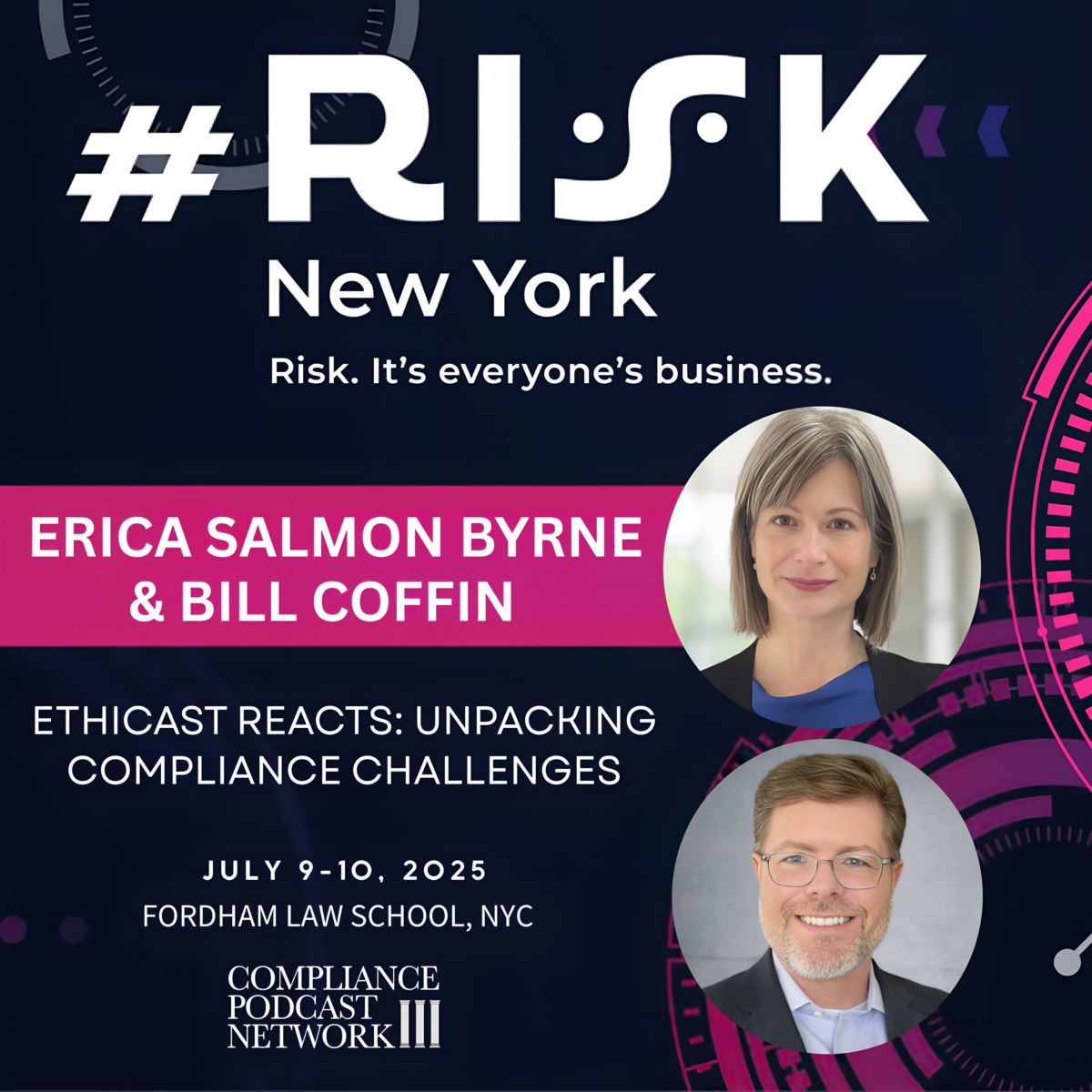
#Risk New York Speaker Series- Ethicast Reacts: Unpacking Compliance Challenges with Erica Salmon Bryne and Bill Coffin

Join Tom Fox and hundreds of other GRC professionals in the city that never sleeps, New York City, on July 9 & 10 for one of the top conferences around, #Risk New York. The current US landscape, shaped by evolving policies, rapid advancements in AI, and shifting global dynamics, demands adaptive strategies and cross-functional collaboration.

At #RISK New York, you will master the New Regulatory Reality by getting ahead of US regulatory shifts and their impact. Conquer AI and Tech Risk by Safeguarding Your Organization in an AI-Driven World and Understanding the Implications of Major Tech Investments. Navigate Financial and Crypto Volatility by Protecting Your Assets and Exploring Solutions in a Dynamic Market. Strengthen Your GRC Framework by Leveraging Governance, Risk, and Compliance for Strategic Advantage. Protect Digital Trust by addressing challenges in cybersecurity and data privacy and combating misinformation. All while meeting with the country’s top #Risk management professionals.

In this episode, Tom Fox is joined by Erica Salmon Byrne, Chief Strategy Officer and Executive Chair at Ethisphere, and Bill Coffin, Editor-in-Chief at Ethisphere. The conversation delves into their roles in the compliance community, focusing on their work with the Ethicast Reacts series. They discuss how they analyze news stories to extract compliance lessons, help organizations understand and mitigate risks, and create storytelling opportunities to advance compliance programs. They also share their excitement for their upcoming presentation at the Risk New York City conference, where they’ll engage with professionals from diverse backgrounds.

Resources:

#Risk Conference Series

#RiskNYC—Tickets and Information

Erica Salmon Byrne on LinkedIn

Bill Coffin on LinkedIn

Ethisphere