Categories
Blog

Behavioral Analytics: Revolutionizing Corporate Compliance in the AI Age

In today’s high-velocity business world, checking a compliance box once a year is as useful as lighting a football stadium with a candle. The 2025 compliance function is no longer a reactive afterthought; it’s a strategic business partner actively shaping corporate culture, managing risks, and protecting enterprise value.

Behavioral analytics is at the heart of this evolution, a powerful tool transforming how compliance professionals assess culture, predict risks, and drive proactive interventions. Let’s dive into how behavioral analytics is revolutionizing corporate compliance and the critical lessons for compliance professionals ready to lead the next generation of risk management.

The New Reality of Compliance

Once upon a time, compliance was about writing policies, training employees, and investigating breaches after the fact. Those days are long gone. Today, driven by digital transformation, skyrocketing regulatory expectations, and the explosive power of AI and machine learning, compliance moves upstream, spotting risks early, analyzing cultural shifts in real-time, and becoming a guardian of ethical business practices before crises occur.

As I often say (and will continue to preach), effective compliance equates to greater business efficiency and profitability. Regulators have clarified that access to real-time internal data is now an expectation, but it is not nice. Compliance teams must embrace tools that enable them to predict and prevent problems rather than simply reacting to them.

Behavioral Analytics Explained

Behavioral analytics might sound like a buzzword, but the concept is simple: it’s about understanding how people act and why they behave the way they do before their behavior becomes a problem. Key components include:

  • Employee Behavior Analysis: AI systems track work patterns, communication anomalies, and procedural deviations to identify potential misconduct or disengagement early.
  • Survey Data: Modern surveys, analyzed through AI, can track sentiment shifts in real time, uncovering emerging risks or weakening ethical climates.
  • Internal Communications Monitoring: By applying natural language processing (NLP) to emails, chats, and meeting notes, compliance can detect early signs of dissatisfaction, unethical behavior, or brewing fraud.

Behavioral analytics gives compliance professionals a real-time, actionable view of the company’s ethical health, moving beyond static audits or annual risk assessments.

The Business Case for Behavioral Analytics

We need to be clear: compliance must always deliver business value. Behavioral analytics offers just that:

  • Enhancing Transparency: Providing an unobstructed view into ethical culture and emerging risks.
  • Improving Risk Management: Allowing early interventions that prevent costly misconduct.
  • Enabling Real-Time Insights: Facilitating fast, informed decision-making based on real-world, real-time data.
  • Driving Data-Driven Decisions: Replacing intuition and subjective judgment with objective, evidence-based compliance strategies.

In short, behavioral analytics turns compliance into a proactive, strategic asset, not just a defensive mechanism.

Lessons from the Trenches: Albemarle’s Experience

Pioneers like Albemarle have shown how to operationalize behavioral analytics effectively. Their journey offers critical lessons for compliance officers seeking to lead cultural transformation.

1. Collaboration Across Functions is Crucial

Behavioral analytics does not live in a vacuum. Albemarle’s compliance teams worked closely with HR and Health & Safety to access meaningful data proxies, like attrition rates and near-miss safety incidents, that illuminated deeper cultural health indicators. Lesson: Compliance must break down silos and build bridges across departments to gain a holistic view of organizational health.

2. Prioritize Data Accessibility and Quality

Albemarle focused on easily accessible, high-quality metrics that reflected real employee behaviors, such as engagement with compliance communications, rather than mere policy completions. Lesson: Quality and accessibility of data are non-negotiable. Choose metrics illuminating employee ethics and engagement, not just compliance “checkmarks.

3. Real-Time Monitoring Drives Proactive Compliance

Waiting for an annual survey is like driving by looking only in the rearview mirror. Albemarle’s real-time monitoring system enabled rapid responses to emerging risks. Lesson: Compliance must invest in real-time analytics to anticipate, not just react to, ethical risks.

4. Tailor Metrics to Your Organization

Albemarle’s metrics were not generic but tailored to the company’s specific risks and operations. Lesson: There is no one-size-fits-all in behavioral analytics. Customize your metrics to fit your organizational DNA.

5. Engage Leadership Through Meaningful Insights

Raw data does not move leaders—stories do. Albemarle’s compliance team translated analytics into clear, strategic insights tied directly to business outcomes, winning executive buy-in. Lesson: Tell compelling stories with your data. Show leadership how ethical culture impacts performance, resilience, and reputation.

Conclusion: The Future is Now

Behavioral analytics is not just the next shiny compliance tool; it is the foundation for the future of proactive, strategic risk management.

Compliance professionals who master these tools and are willing to collaborate across departments, prioritize data quality, customize metrics, and meaningfully engage leadership will not only protect their companies from misconduct but also help them thrive ethically and financially. The future of compliance is behavioral—in real time, strategic, and here.

Are you ready to lead it?

The above is from my latest book, Upping Your Game: How Compliance and Risk Management Move to 2030 and Beyond, which is available from Amazon.com.

Categories
Compliance Tip of the Day

Compliance Tip of the Day – AI and Compliance Education

Welcome to “Compliance Tip of the Day,” the podcast where we bring you daily insights and practical advice on navigating the ever-evolving landscape of compliance and regulatory requirements. Whether you’re a seasoned compliance professional or just starting your journey, we aim to provide bite-sized, actionable tips to help you stay on top of your compliance game. Join us as we explore the latest industry trends, share best practices, and demystify complex compliance issues to keep your organization on the right side of the law. Tune in daily for your dose of compliance wisdom, and let’s make compliance a little less daunting, one tip at a time.

Today, we explore why the future is now for AI and Compliance Education.

For more on embedded compliance, check out my new book, Upping Your Game: How Compliance and Risk Management Move to 2030 and Beyond, available from Amazon.com.

Categories
Word of the Week

Word of the Week with Kenneth O’Neal – The Importance and Decline of Common Sense

Each week, Kenneth O’Neal discusses a word that describes a principle or value of the Qualities of Success. We suggest you use the Word of the Week in your thoughts, deeds, and actions. You might possess the quality and desire to develop it to a higher level. You could replace a bad habit with a good habit. Write an action step and use it daily to develop the quality of your life. In this episode, Kenneth discusses the word – Common Sense.

Kenneth O’Neal and Rick discuss the significance of common sense, its historical roots, and its decline in contemporary society. They highlight the upcoming Nurses Week event at the Kerr County Courthouse and reflect on a recent poll showing nurses as the most trusted group. The conversation explores how information overload and technology dependence have overshadowed common sense, rooted in practical wisdom and initiative. They cite historical figures like Thomas Paine and Benjamin Franklin, illustrating common sense’s role in history and modern times. The episode closes with reflections on reclaiming grit, resilience, and long-term commitments in today’s complex world.


Key highlights:

  • Word of the Week: Common Sense
  • Historical Context of Common Sense
  • Modern Challenges to Common Sense

Resources:

KRONEAL Consulting

Categories
Upping Your Game

Upping Your Game: Episode 1 – Meeting Hui Chen’s Challenge

In February, the Trump Administration suspended investigations under and enforcement of the FCPA. Many compliance professionals have since wondered what this will mean for corporate compliance programs going forward. Hui Chen challenged compliance professionals with “It’s time to up your game.”

This podcast series, sponsored by Ethico and co-hosted with Ethico co-CEO Nick Gallo, hopes to meet Hui Chen’s challenge for compliance professionals. We will discuss how compliance professionals can ‘Up Their Game’ using currently existing Generative AI (GenAI) tools to improve compliance programs dramatically. As compliance professionals, it is critical to recognize that this moment is not merely about incremental improvements but about elevating our profession to an entirely new level of effectiveness, efficiency, and organizational value.

In the inaugural episode of ‘Upping Your Game,’ co-hosts Tom Fox and Nick Gallo, co-CEO at Ethical, discuss the future of compliance and risk management. They explore the need for compliance professionals to evolve by integrating AI and focusing on creating business value. The conversation covers the importance of the user experience (UX), the employee and third-party experience (CX), and the shift towards a proactive and predictive compliance program. Real-world examples, such as Citibank’s use of AI for compliance, illustrate how technology can enhance compliance programs. The episode emphasizes the crucial role of compliance in risk management and the potential for professionals to elevate their impact within organizations.

Key highlights:

  • The Spark Behind ‘Upping Your Game’
  • The Role of AI in Compliance
  • Evolving Compliance to Business Value
  • The Human Experience in Compliance
  • Risk Management and Future Outlook

Resources:

Upping Your Game: How Compliance and Risk Management Move to 2030 on Amazon.com

Nick Gallo on LinkedIn

Ethico

Check out the Ethico White Paper on the Introduction to Upping Your Game, click here.

Tom Fox

Instagram

Facebook

YouTube

Twitter

Categories
Innovation in Compliance

Innovation in Compliance: Exploring the Fractional COO Model with La Tonya Roberts

Innovation comes in many forms, and compliance professionals need to be ready for it and embrace it. Join Tom Fox, the Voice of Compliance, as he visits with top innovative minds, thinkers, and creators in the award-winning Innovation in Compliance podcast. In this episode, host Tom Fox visits with La Tonya Roberts to discuss the concept of the fractional COO and how it can benefit organizations of all sizes.

Roberts shares her professional journey, including transitioning from working for a major consulting firm to becoming an entrepreneur and fractional COO. She emphasizes the importance of strategic planning, relationship building, and effective change management in achieving business success. She also highlights how fractional COOs can provide valuable expertise to visionary founders and smaller companies, ensuring operations run smoothly and effectively.

They explore the critical role of a fractional COO in supporting business growth, optimizing processes, and leveraging AI to enhance efficiency. Roberts introduces her Operations Gold Mine Framework, an eight-part process that helps businesses develop sustainable and scalable operations. Listeners will gain insights into the unique challenges and opportunities presented by the fractional COO model and practical tips for fostering resilience and creativity in the entrepreneurial space.

Key highlights:

• Roberts’s Professional Journey
• The Fractional COO Model
• Leveraging AI in Business
• CEO and COO Relationship Dynamics
• Operations Gold Mine Framework

Resources

La Tonya Roberts on LinkedIn

Harmony Consulting

Tom Fox

Instagram

Facebook

YouTube

Twitter

LinkedIn

Innovation in Compliance was recently honored as the number 4 podcast in Risk Management by 1,000,000 Podcasts.

Categories
SBR - Authors' Podcast

SBR – Author’s Podcast – Understanding Complexity with Dr. Jean Boulton, Part 1: Ethics, Compliance, and Organizational Dynamics

Welcome to the SBR – Authors Podcast! Host Tom Fox visits with authors in the compliance arena and beyond in this podcast series. Today, Tom is joined by his friend and colleague Earnie Broughton as they co-host Dr. Jean Boulton, author of ‘The Dao of Complexity.’ This is Part 1 of a special two-part episode on the SBR – Author’s Podcast.

They dive into Dr. Boulton’s background in physics, her transition to business management, and her exploration of complexity theory. The conversation highlights the persistent compliance and ethics violations issues, the need for more dynamic and adaptive organizational policies, and how complexity theory provides a new framework for understanding and influencing organizational behavior. Dr. Boulton explains the nuances of complexity, differentiating it from chaos and game theory while providing practical approaches for sensing and navigating complexity within organizations. The episode underscores the importance of adaptive strategies, ethical conduct, and the intricate relationship between past actions and future outcomes. Dr. Boulton also shares insights on how organizations can cultivate resilience and foster a culture that values ethical decision-making.

Key highlights:

  • Dr. Boulton’s Journey into Complexity
  • Understanding Complexity Theory
  • The Dao of Complexity
  • Complexity vs. Chaos and Game Theory

Resources:

Dr. Jean Boulton ⁠Website⁠

Dr. Jean Boulton  on ⁠LinkedIn⁠

The Dao of Complexity on ⁠Amazon.com⁠

Earnie Broughton on ⁠LinkedIn⁠

Tom Fox

⁠Instagram⁠

⁠Facebook⁠

⁠YouTube⁠

⁠Twitter⁠

⁠LinkedIn

Categories
Daily Compliance News

Daily Compliance News: April 29, 2025, The GenZ/RTO Edition

Welcome to the Daily Compliance News. Each day, Tom Fox, the Voice of Compliance, brings you compliance-related stories to start your day. Sit back, enjoy morning coffee, and listen to the Daily Compliance News. All, from the Compliance Podcast Network. Each day, we consider four stories from the business world: compliance, ethics, risk management, leadership, or general interest for the compliance professional.

Top stories include:

  • Wells Fargo nears full regulatory relief. (Reuters)
  • Gen Z wants RTO. (FT)
  • The man who posed as CCO was found guilty of fraud. (Bloomberg)
  • Can the Feds win a bribery trial? (Chicago Sun-Times)
Categories
Blog

AI and the Future of Compliance Education: Why the Future is Now

For too long, compliance training has been seen as little more than a necessary evil, a one-size-fits-all exercise in checking a regulatory box. Employees shuffled through mandatory seminars, PowerPoint decks, and click-through e-learning modules, treating them as hurdles to clear, not learning opportunities. That world is dead. Buried. In 2025, compliance education is radically transforming, and AI is leading the way.

The future of compliance education is personal, immediate, engaging, and embedded. It’s about delivering the right knowledge to the right employee at the right time, i.e.,. Before a violation occurs. Compliance is no longer a periodic event; it’s a continuous experience. How can AI, microlearning, gamification, and VR completely change the game, and what lessons must compliance professionals learn today to build a better tomorrow?

Lesson 1: Traditional Training is Outdated—AI is Leading the Way

First, yesterday’s training models cannot keep up with the proper pace of modern regulatory risk. Static, annual training modules don’t resonate with today’s workforce or dangers. Enter AI. Smart compliance platforms now personalize training based on individual employee roles, learning styles, risk exposure, and past behavior. Employees are no longer passive listeners but active participants in scenario-based simulations that mirror real-world dilemmas. Imagine practicing an FCPA dilemma in a gamified environment rather than skimming through a bullet-point list.

Even better, AI does not simply deliver content; it measures how employees engage with it. Advanced analytics track progress, flag disengagement, and allow compliance teams to adjust real-time training strategies. The result? A proactive, continuously evolving compliance culture.

If you’re still relying on static training in a dynamic risk environment, you are not only behind; you are exposed.

Lesson 2: Customization is Key—One Size Fits Nobody

Let’s be blunt: Generic compliance training wastes everyone’s time. Different employees face different risks. Your sales team in Latin America needs training that is different from your engineering team in Berlin. A one-size-fits-all approach is not simply ineffective; it can indeed be counterproductive.

AI-driven compliance platforms address this head-on by customizing content at the individual level. They analyze roles, responsibilities, risk profiles, and even upcoming activities. Imagine this: An employee traveling to a high-risk country automatically receives reminders about anti-bribery policies, gift-giving guidelines, and applicable trade sanctions before they step on the plane.

This proactive, role-specific approach exceeds DOJ expectations around tailored training (first articulated in the 2017 Evaluation of Corporate Compliance Programs and reinforced in the 2024 ECCP). It embeds compliance into employees’ day-to-day decision-making.

Customization drives engagement. Engagement drives behavior change. Behavior change protects the organization. It is that simple.

Lesson 3: Real-Time Compliance Training is Proactive, Not Reactive

Historically, compliance teams operated in a reactive mode. Violations occurred, investigations followed, and training was assigned as a remedial slap on the wrist—no more. With AI, compliance training can now be real-time and predictive. Imagine an AI system that monitors workflow data and employee behavior, delivering just-in-time reminders before a decision is made, not after a violation occurs.

Picture this: An employee processing an unusual third-party payment receives an instant alert reminding them of anti-corruption controls. Another employee about to click a suspicious email gets a real-time warning about phishing attacks. AI can even draw insights from external events. If a major competitor is penalized in China for export control violations, your employees operating in that region can immediately receive a warning and updated guidance.

Real-time training transforms compliance from a “policing” function into a “partnering” function, guiding employees to make better decisions in the moment. That’s the future we should be building toward.

Lesson 4: Gamification and Microlearning Supercharge Retention

We’ve known for years that traditional long-form compliance training doesn’t stick. Most employees forget 70% of what they learned within a week. Why? Because brains aren’t wired to retain dense information delivered in passive, hour-long blocks. Gamification and microlearning flip the script.

Microlearning delivers bite-sized, focused modules that employees can absorb quickly, perfectly tailored to today’s fast-paced work environments. Gamification adds points, badges, competitions, and rewards to incentivize engagement. Together, they create training experiences that are not only more effective but also fun. And the results aren’t theoretical. Studies show that microlearning can improve knowledge retention by up to 75%. Walmart’s use of VR compliance training led to a reported 30% decrease in policy violations.

When employees are immersed in gamified simulations where decisions have consequences and feel the real-world weight of ethical challenges, they build the muscle memory to act correctly under pressure. Compliance becomes instinct, not obligation.

If you are serious about building a culture of compliance, gamification and microlearning must be part of your toolkit.

Lesson 5: AI is the Ultimate Training Effectiveness Engine

Finally, AI does not just deliver better training; it measures and improves it.

Modern AI-powered compliance platforms track every interaction. They identify which employees are struggling, which departments face higher risks, and which topics aren’t sticking. They can predict which employees are most likely to face ethical dilemmas—and target interventions accordingly. This feedback loop is transformative. Instead of guessing whether training “worked,” compliance professionals can know and take swift action when needed. AI-driven insights allow for dynamic course corrections, ensuring compliance education stays aligned with emerging risks, regulatory updates, and organizational changes.

By embedding continuous improvement into training, AI moves compliance education from a static obligation to a living, breathing strategy for risk management and corporate resilience.

Conclusion: The Future Is Now—Are You Ready?

The transformation of compliance education isn’t a “someday” concept. It is happening right now. Leading companies are already embedding AI, gamification, microlearning, real-time alerts, and VR simulations into their compliance ecosystems—and they’re seeing measurable results. Compliance training is no longer a boring box to check. It’s a dynamic, personal, data-driven force multiplier for ethics, integrity, and business performance.

The real question for compliance professionals today isn’t whether AI will reshape compliance education. It’s whether your organization will be a leader or a laggard in embracing change. The future of compliance education is here. It is immersive, predictive, personal, and powered by AI.

Are you ready to lead the way?

In short, the future of whistleblower programs is here—and it’s intelligent.

The above is from my latest book, Upping Your Game: How Compliance and Risk Management Move to 2030 and Beyond, available from Amazon.com.

Categories
Corruption, Crime and Compliance

DOJ Issues Data Security Program Requirements

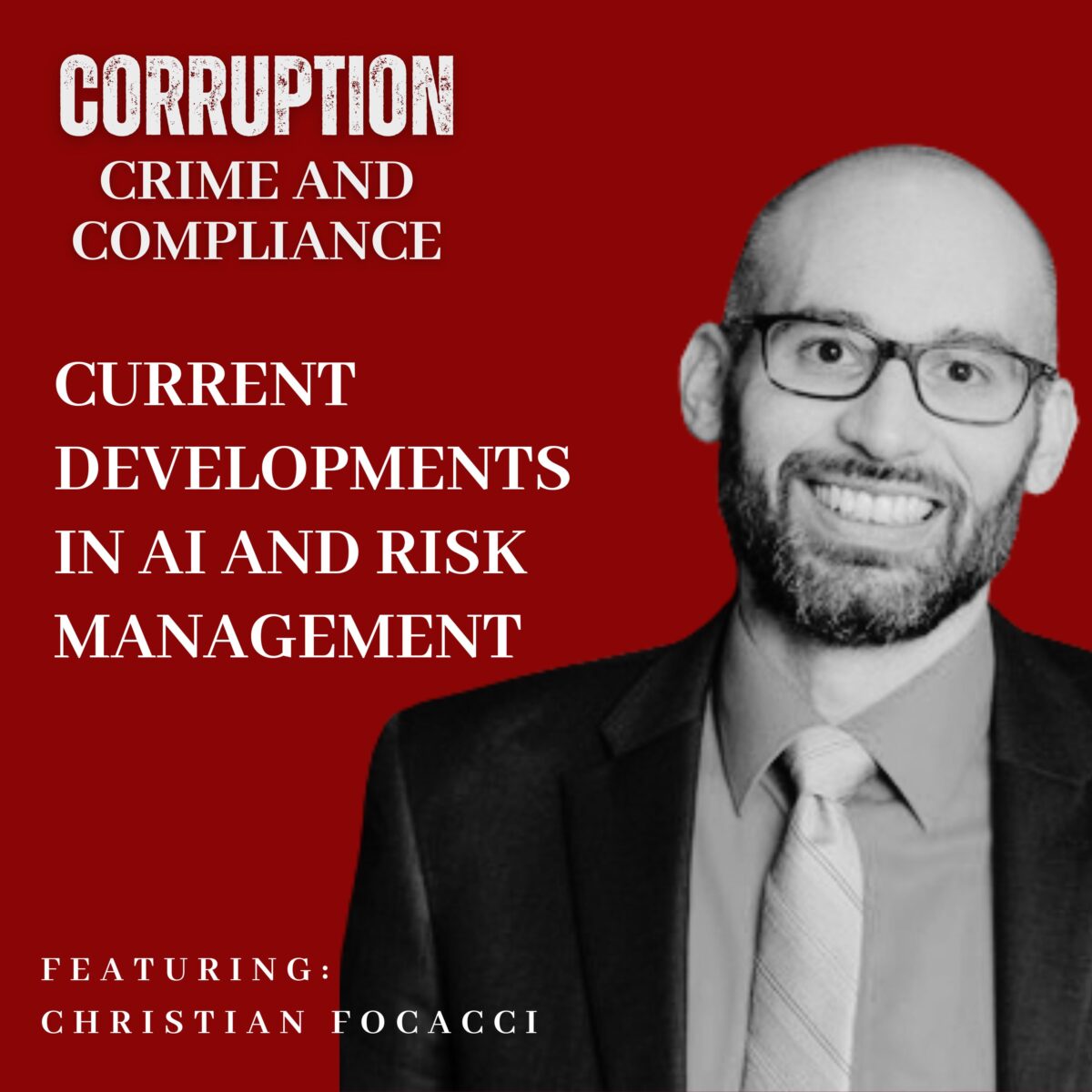
Could your routine data transfers now violate federal law? The DOJ’s new Data Security Program (DSP) targets the flow of U.S. sensitive personal and government data to foreign adversaries — and the clock is ticking. In this episode of Corruption, Crime and Compliance, Michael Volkov breaks down the Justice Department’s sweeping new Data Security Program, enacted under Executive Order 14117 and finalized in January 2025.

You’ll hear him discuss:

  • The origins of the DSP, created through Executive Order 14117 under the Trump Administration, and the key national security concerns it addresses.
  • What constitutes a “covered data transaction” and the thresholds for U.S. personal and government data that trigger compliance obligations.
  • The list of “countries of concern” and what it means for companies doing business with entities tied to these regions.
  • The types of U.S. data covered by the DSP, including biometric, genomic, financial, and geolocation data, and the specific quantity thresholds that trigger restrictions.
  • Why data brokerage and bulk human genomic data transactions are prohibited outright, raising new compliance challenges for affected industries.
  • How “restricted transactions” like cloud computing services and vendor agreements are subject to conditional exceptions under the DSP.
  • The critical actions U.S. companies must take during the 90-day enforcement hiatus, including vendor assessments, renegotiations, and compliance system updates before the July 8th deadline.

Resources

Michael Volkov on LinkedIn | Twitter

The Volkov Law Group

Categories
Adventures in Compliance

Adventures in Compliance: The Novels – A Study in Scarlet, Introduction to Compliance Lessons

In this new season of Adventures in Compliance, host Tom Fox will explore the Sherlock Holmes novels in depth. Over the course of this season, Tom will do so in a four-part series. The four novels we will consider from the ethics and compliance perspective are A Study in Scarlet, The Sign of Four, The Hound of the Baskervilles, and The Valley of Fear.

For our first offering this season, we begin with A Study in Scarlet. In part 1 of our four-part exploration of this novel, which introduced Sherlock Holmes and Dr. Watson to the world. We begin by summarizing the novel’s plot, which dsummarizeiscusses key events and Holmes’ brilliant deductive methods. We then take a deep dive into five critical compliance lessons from the story, including the dangers of institutional abuse of power, the imperative for structured justice, the necessity of root cause analysis, due diligence, and transparent communication within organizations. Join us for an engaging episode that underscores the relevance of Sherlock Holmes’ investigative strategies to modern compliance practices.

Highlights include:

  • Welcome to a New Season of Adventures in Compliance
  • The Summary of and a Deep Dive into ‘A Study in Scarlet’
  • Ethical Lessons for Compliance Professionals

Resources:

The New Annotated Sherlock Holmes

Sherlock Holmes FAQ by Dave Thompson

Connect with Tom Fox

Instagram

Facebook

YouTube

Twitter

LinkedIn