Categories
TechLaw10

TechLaw10 – AI: New Laws in the US & Enforcement in Europe

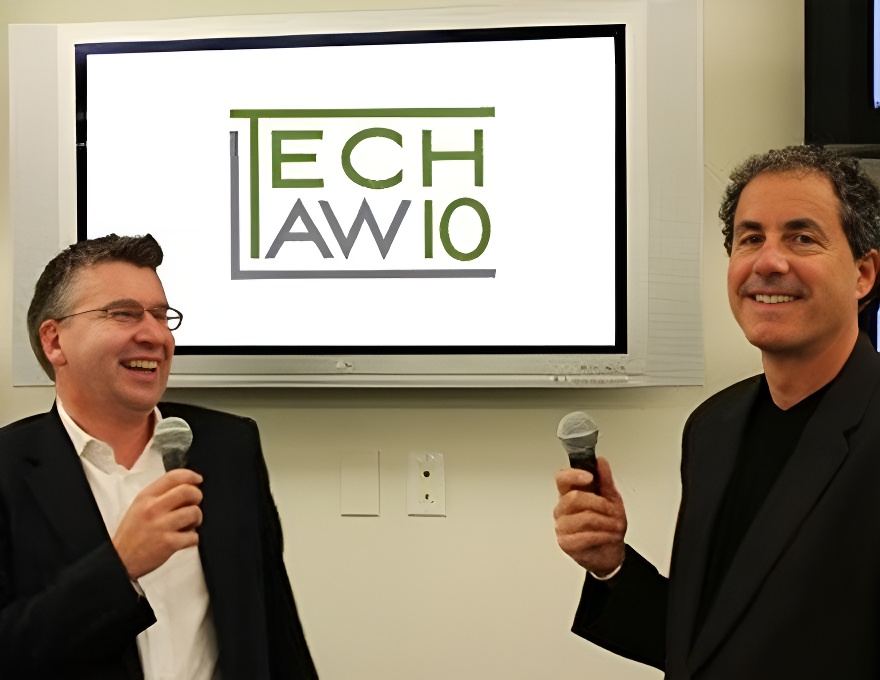
In this film, Punter Southall Law’s Jonathan Armstrong discusses new AI laws with Eric Sinrod, California professor and attorney at Duane Morris LLP. This is episode 292 in the popular TechLaw10 series. You can listen to earlier podcasts at Duane Morris. The podcast starts with a round-up from Eric of the latest legal proposals in California dealing with issues, including AI concerns over:

  • Deepfakes
  • Identity Theft
  • Digital Replicas (including of the dead)
  • Elections
  • Healthcare
  • Watermarking for AI-generated Content
  • AI Voice Messages & Calls

Jonathan talks about the EU AI Act. There are FAQs on that here: https://bit.ly/euaifaq. There is also a glossary of AI terms here: https://puntersouthall.law/insights/eu-ai-act-glossary/. Jonathan looks at a round-up of recent GDPR cases involving AI, including cases relating to:

  • ChatGPT/OpenAI
  • Grok/X
  • ReplikaAI
  • Deepseek
  • Google
  • Deliveroo
  • Foodinho
  • ClearviewAI
  • Budapest Bank

Jonathan also talks about recent UK AI regulation announcements from Minister Peter Kyle. He discusses the need for those running businesses to take a balanced view of AI, including taking risks with AI in some cases to promote the business. Jonathan talks about the NYSBA AI Task Force. There are details of that here: https://nysba.org/app/uploads/2022/03/2024. Jonathan also talks about regulatory findings against Deepseek in South Korea. The details are here https://www.pipc.go.kr/np/

You can learn more about Eric at Duane Morris LLP: https://www.duanemorris.com/attorneys/ericjsinrod.html and Jonathan here at Punter Southall Law: https://puntersouthall.law/about-us/jonathan-armstrong/

Connect with the Compliance Podcast Network at:

LinkedIn: https://www.linkedin.com/company/compliance-podcast-network/

Facebook: https://www.facebook.com/compliancepodcastnetwork/

YouTube: https://www.youtube.com/@CompliancePodcastNetwork

Twitter: https://twitter.com/tfoxlaw

Instagram: https://www.instagram.com/voiceofcompliance/

Website: https://compliancepodcastnetwork.net/

Categories
10 For 10

10 For 10: Top Compliance Stories For the Week Ending, May 3, 2025

Welcome to 10 For 10, the podcast that brings you the week’s Top 10 compliance stories in one podcast each week. Tom Fox, the Voice of Compliance, brings you the compliance professional and the compliance stories you need to know to end your busy week. Sit back, and in 10 minutes, hear about the stories every compliance professional should know from the prior week. Every Saturday, 10 For 10 highlights the most important news, insights, and analysis for the compliance professional, all curated by the Voice of Compliance, Tom Fox. Get your weekly filling of compliance stories with 10 for 10, a podcast produced by the Compliance Podcast Network.

You can check out the Daily Compliance News for four curated compliance- and ethics-related stories each day here.

Connect with Tom 

Instagram

Facebook

YouTube

Twitter

LinkedIn

You can purchase a copy of my new book, Upping Your Game, on Amazon.com.

Categories
Compliance Tip of the Day

Compliance Tip of the Day – Standing at the Turning Point

Welcome to “Compliance Tip of the Day,” the podcast where we bring you daily insights and practical advice on navigating the ever-evolving landscape of compliance and regulatory requirements. Whether you’re a seasoned compliance professional or just starting your journey, we aim to provide bite-sized, actionable tips to help you stay on top of your compliance game. Join us as we explore the latest industry trends, share best practices, and demystify complex compliance issues to keep your organization on the right side of the law. Tune in daily for your dose of compliance wisdom, and let’s make compliance a little less daunting, one tip at a time.

Today, we conclude a week of AI in compliance by seeing Trump’s Executive Order for compliance as standing at the turning point.

For more on embedded compliance, check out my new book, Upping Your Game: How Compliance and Risk Management Move to 2030 and Beyond, available from Amazon.com.

Categories
2 Gurus Talk Compliance

2 Gurus Talk Compliance – Episode 51 – The Compliance Week at 20 Edition

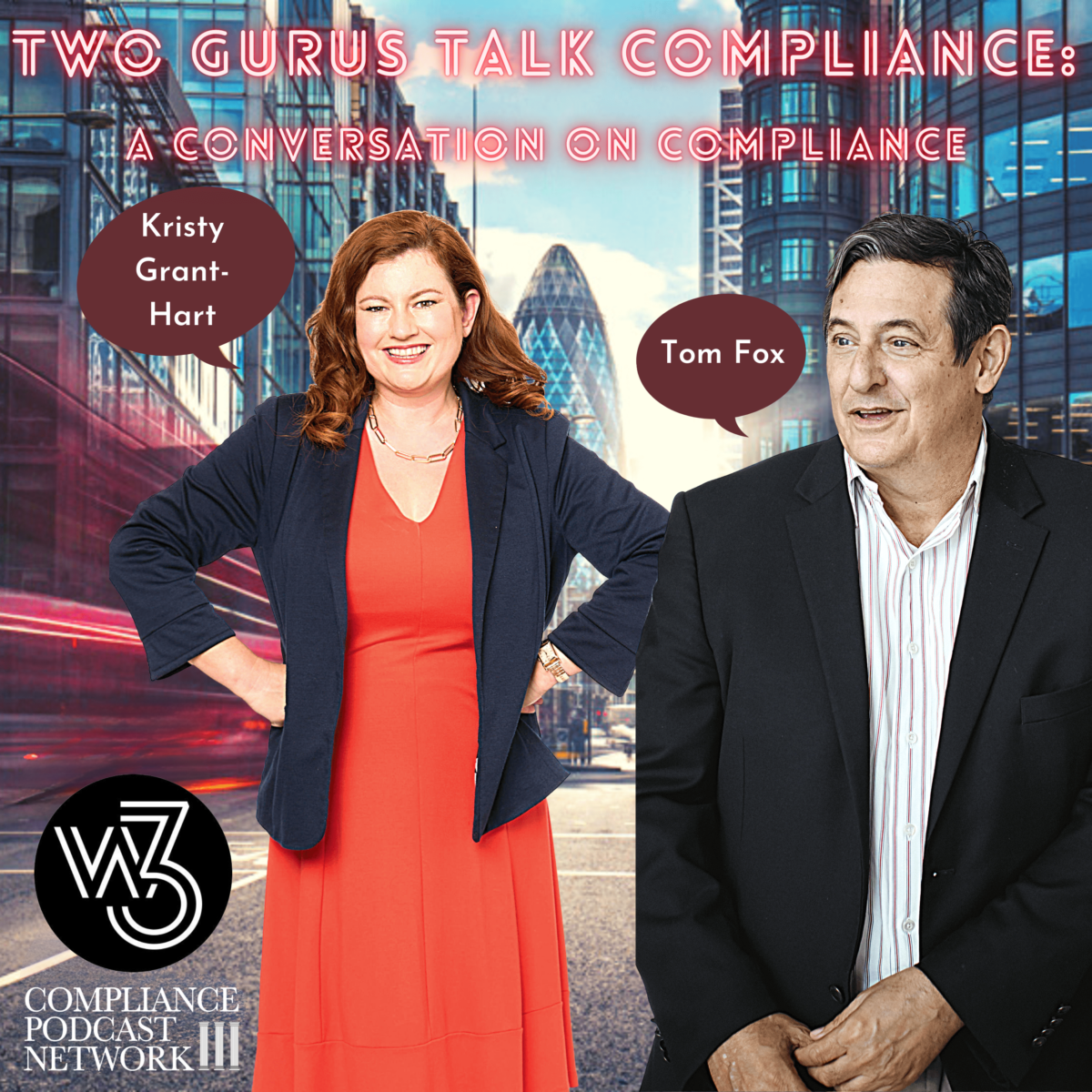
What happens when two top compliance commentators get together? They talk compliance, of course. Join Tom Fox and Kristy Grant-Hart in 2 Gurus Talk Compliance as they discuss the latest compliance issues in this week’s episode!


Stories this week include:

  • SFO plans to explore whistleblower rewards in fraud crackdown (Scottish Financial News)
  • Power Shift: What Happens When America Steps Back From Global AML Enforcement? (Corporate Compliance Insights)
  • AI Is Enabling an Always-On Economy. Companies Need to Pick Up the Pace. (WSJ)
  • Knife-wielding Florida man with last name ‘Cocaine’ arrested after allegedly attacking Subway employees with ‘bad attitudes’ (New York Post)
  • CW 25 Wrap-Up (Compliance Week)
  • Elizabeth Warren with 100 days of Trump corruption. (HuffPost)
  • House wants to strip FTC of antitrust work. (Reuters)
  • SFO issues corporate cooperation guidance. (SFO Press Release)
  • The man who posed as CCO was found guilty of fraud.    (Bloomberg)

Resources:

Kristy Grant-Hart on LinkedIn

Prove Your Worth

Tom

Instagram

Facebook

YouTube

Twitter

LinkedIn

Categories
Blog

Compliance Stands at the Turning Point

As compliance professionals, we are at a turning point. We either embrace the opportunity that Trump has presented us, or our professionals will be consigned to an organization’s technical back office function. AI is not merely an intriguing possibility for tomorrow; it has become the reality of today’s compliance landscape. From predictive analytics to behavioral monitoring, embedded compliance education, and conversational chatbots, AI is fundamentally reshaping the compliance function. Organizations that embrace this revolution achieve greater operational efficiency and risk management and position themselves as ethical leaders in an increasingly complex and demanding regulatory world.

AI is now indispensable to robust compliance practices. Yet, technology itself is not the endpoint. Instead, AI is the catalyst driving compliance teams from reactive, check-the-box mentalities toward proactive, strategic, and culturally embedded roles. It empowers compliance to engage employees at every organizational level in real-time, turning passive observers into active participants in cultivating an ethical business culture.

Consider third-party risk management, historically burdened by static, manual reviews and periodic due diligence. AI-driven predictive analytics and blockchain-backed transparency have emerged as game-changing technologies, continuously evaluating third parties, rapidly identifying emerging risks, and automating enforcement actions through smart contracts. There are documented and substantial benefits of reducing compliance risk, enhancing commercial efficiency, and minimizing legal exposure. AI fundamentally alters the equation, enabling compliance teams to achieve real-time transparency and responsiveness unimaginable a decade ago.

In continuous monitoring, Andrew McBride’s compelling vision of compliance as the “Holy Grail” reveals a future already upon us, where AI synthesizes vast datasets from internal transactions to communications, pinpointing anomalies with unprecedented precision. Real-time monitoring, once aspirational, is now achievable, providing compliance teams the agility to act swiftly and decisively. The necessity of integrating such systems has grown urgent, underscored by regulators like the DOJ, whose 2024 Evaluation of Corporate Compliance Programs explicitly cites real-time analytics as integral to compliance excellence.

Yet, the transformative power of AI extends beyond risk mitigation alone. The most profound innovation lies in compliance education. Long constrained by rigid formats and yearly box-checking exercises, today’s compliance training leverages AI and gamification, transforming learning into immersive, personalized experiences. Microlearning and scenario-driven simulations have replaced passive information absorption with active, ongoing engagement. This approach embeds compliance principles into daily workflows, reinforcing knowledge when employees need it. Vorecol’s striking revelation that virtual reality can enhance knowledge retention by up to 75% illustrates how transformative these approaches have become. Compliance training is now an integrated, real-time, strategic advantage rather than a peripheral, periodic chore.

Behavioral analytics offer another revolutionary dimension. By analyzing employee behavior, survey data, and internal communications in real-time, compliance teams can proactively identify cultural risks and implement targeted interventions. Albemarle’s practical experience clearly demonstrates how behavioral analytics foster cross-functional collaboration, prioritize data accessibility, and engage leadership through meaningful insights. By shifting from reactive enforcement to proactive culture shaping, compliance professionals using behavioral analytics are empowered to create resilient, ethically robust organizations.

But perhaps nothing epitomizes AI’s immediacy and practicality better than compliance chatbots. As seen through HSBC’s deployment of the ORRA chatbot, AI-driven conversational agents significantly streamline compliance operations. Employees worldwide gain instant access to precise policy guidance, effectively embedding compliance within everyday business interactions. Chatbots address queries consistently and escalations intelligently and provide compliance teams invaluable insights through analytics. This example illustrates the operational efficiencies achievable through AI and emphasizes the strategic potential of embedding AI tools within an organization’s digital fabric.

Yet, as we embrace these technological innovations, we must heed critical lessons:

  • Data Quality and Ethical Management: AI’s effectiveness depends on rigorous data governance, ensuring unbiased and comprehensive training data. Ethical use of AI must remain a core commitment, upholding transparency, fairness, and privacy in all deployments.
  • Continuous Human Oversight: AI systems require ongoing human judgment. Compliance professionals must remain closely engaged, providing nuanced oversight and strategic decision-making, particularly in complex ethical scenarios that algorithms alone cannot resolve.
  • Strategic Scalability and Agility: Implement AI solutions with future growth in mind, prioritizing adaptable, scalable technologies that swiftly adjust to emerging regulations and evolving compliance needs.
  • Robust Cross-Functional Collaboration: Successful AI integration demands proactive partnerships across compliance, legal, IT, HR, procurement, and business units. Shared accountability and mutual understanding amplify AI’s impact across the organization.

AI is not replacing compliance professionals—it is empowering them. Our roles shift from manual oversight and routine administrative tasks to strategic leadership, advanced risk anticipation, and deep organizational influence. As compliance programs increasingly leverage predictive analytics, continuous monitoring, conversational AI, and behavioral insights, compliance officers must evolve into visionary strategists who guide their organizations confidently through complex ethical landscapes.

Ultimately, the embrace of AI is a strategic imperative for sustainable success. Organizations slow to adopt these innovations risk falling behind, both operationally and ethically. Meanwhile, forward-thinking compliance teams leveraging AI gain operational advantages and reputational distinction as leaders in responsible, transparent business practices.

Let the insights shared throughout this book be a clarion call. The future of corporate compliance is proactive, predictive, personalized, and powered by AI. This is our new compliance normal. The opportunities are limitless for compliance professionals ready to adapt, innovate, and lead.

The future is now. Embrace AI, embed compliance into every business operation, and lead your organizations confidently toward enduring ethical excellence.

Hui Chen, perhaps the most respected commentator in the compliance arena, has challenged us: “The pause on FCPA enforcement is not a crisis; it is an opportunity to lead with culture, data, and ethics.” Let us all embrace that opportunity.

Categories
Compliance Tip of the Day

Compliance Tip of the Day – Role of Chatbots in Compliance

Welcome to “Compliance Tip of the Day,” the podcast where we bring you daily insights and practical advice on navigating the ever-evolving landscape of compliance and regulatory requirements. Whether you’re a seasoned compliance professional or just starting your journey, we aim to provide bite-sized, actionable tips to help you stay on top of your compliance game. Join us as we explore the latest industry trends, share best practices, and demystify complex compliance issues to keep your organization on the right side of the law. Tune in daily for your dose of compliance wisdom, and let’s make compliance a little less daunting, one tip at a time.

Today, we look at how chatbots can enhance and improve engagement with your compliance program. 

For more on embedded compliance, check out my new book, Upping Your Game: How Compliance and Risk Management Move to 2030 and Beyond, available from ⁠Amazon.com⁠.

Categories
Blog

The Role of AI Chatbots in Compliance

Today, most compliance professionals deal with a dynamic environment where questions and potential issues do not wait conveniently for office hours. Whether you oversee a global team operating in multiple time zones or are responsible for a fast-paced organization where rapid decision-making is crucial, you know compliance guidance can’t afford to lag. Enter AI-driven chatbots, your newest and perhaps most valuable partner in corporate compliance.

In today’s interconnected and highly scrutinized business world, employees frequently face challenging ethical questions and policy conundrums that demand immediate answers. Gone are the days when a compliance inquiry could sit in an inbox for days before receiving attention. Moreover, employees don’t always have time to sift through thick manuals or dense codes of conduct. There is genuine excitement about the potential of AI-driven chatbots to streamline compliance processes.

How AI-Driven Chatbots Work in Corporate Compliance

Think of these AI chatbots as your tireless policy librarians and advisors, available round-the-clock to dispense instant, accurate answers. They harness advanced natural language processing (NLP) and machine learning (ML) to parse employee questions, interpret the intent behind the inquiry, and pull tailored responses directly from your organization’s policies, procedures, and regulatory guidelines. These tools can be embedded into familiar platforms like Microsoft Teams, Slack, or corporate intranets, making compliance support conveniently accessible in the same digital spaces employees frequent for daily work interactions.

One of the most compelling advantages of these chatbots is their precision and consistency. Unlike human counterparts, who may inadvertently provide varied interpretations or answers to similar queries, a well-trained AI-driven chatbot consistently references a single source of truth: your organization’s policies and procedures. This substantially mitigates the risk of inconsistent guidance or misinformation.

Further enhancing their utility, AI chatbots “learn” from interactions, gradually improving their accuracy and understanding. Companies like HSBC have adopted solutions leveraging Google’s cloud technology, allowing their internal compliance chatbots to retrieve and serve precise policy excerpts dynamically. Consequently, employees receive prompt answers and understand the underlying rationale, reinforcing their comprehension of the compliance landscape.

Strategic Insights for Leveraging Compliance Chatbots Effectively

Deploying AI chatbots in compliance programs is not merely about technological integration; rather, it is about strategically embedding these tools to enrich your organization’s compliance culture. What key strategic considerations do you need to consider when starting such a project?

1. Define Clear Use Cases and Boundaries

2. Begin with specificity. Determine precisely which compliance areas your chatbot will handle effectively: HR FAQs, gift and hospitality policies, or conflict-of-interest disclosures. Establishing clear boundaries on the bot’s capabilities prevents confusion and ensures alignment with regulatory guidelines. The chatbot should offer practical advice within its designated sphere while deferring more complex matters or nuanced interpretations to human compliance professionals.

3. Ensure a Human Escalation Path

4. It is crucial to maintain a clearly defined point at which AI steps aside for human intervention. If an inquiry hints at significant risks, such as harassment, fraud, or serious ethical violations, the chatbot should automatically flag the issue and escalate it to human compliance officers. Implementing an intelligent and seamless hand-off preserves both regulatory integrity and employee trust.

5. Rigorous Real-Life Testing

6. Before full deployment, pilot your chatbot using authentic scenarios from past employee questions, hotline inquiries, or email communications. This rigorous, scenario-based testing helps identify gaps in the chatbot’s knowledge base or its linguistic comprehension capabilities. Testing should also encompass how employees phrase similar questions, ensuring robust NLP adaptability.

6. Integrate Chatbots Seamlessly into Workflows

7. Ease of access and ubiquity are key. Integrate your compliance chatbot within platforms employees regularly use. Whether via Teams, Slack, your intranet, or even mobile texting, embedding compliance support into daily workflows reinforces that compliance isn’t a separate responsibility but integral to everyone’s daily duties. With Gen Z’s growing presence in the workforce, familiarity and ease with chatbot interfaces make them a natural fit for employee communication.

8. Harness Chatbot Analytics for Compliance Insights

9. Your chatbot isn’t just an answering service; it’s a goldmine of compliance intelligence. Monitor chatbot usage analytics to discern compliance knowledge gaps and identify areas where employee uncertainty or confusion is prevalent. By analyzing the volume, type, and frequency of queries, compliance teams can proactively adjust training materials, simplify complicated policies, or spotlight emerging risk areas requiring deeper intervention.

Practical Challenges to Keep in Mind

While the benefits are substantial, implementing AI-driven chatbots also involves careful management of certain challenges. Accuracy and privacy concerns remain paramount. Compliance professionals must constantly validate and verify chatbot responses against evolving regulations and internal policy updates. Organizations must also ensure robust cybersecurity measures, keeping data shared through chatbots confidential and protected.

Additionally, fostering employee confidence and trust in using chatbots as compliance resources is vital. Staff must perceive chatbots as reliable advisors rather than surveillance tools. Transparent communication about the chatbot’s purpose, limitations, and data privacy policies can go a long way in cultivating trust and widespread adoption.

The Future Is Here: Chatbots in Best Practices Compliance Programs

AI chatbots’ transformation to corporate compliance programs can’t be overstated. What was once a passive, reactive role for compliance departments has evolved into a proactive, integral presence in daily business activities. AI chatbots do not merely react to compliance inquiries; they actively guide ethical decision-making in real-time, reinforcing a compliance-conscious organizational culture.

Moreover, beyond answering straightforward questions, sophisticated chatbots can engage in context-rich dialogues, prompting employees for additional information to provide tailored, nuanced guidance. Chatbots are increasingly capable of recognizing compliance red flags and potential conflicts of interest, immediately providing appropriate guidance or escalating issues to compliance professionals as necessary.

AI-driven compliance chatbots also serve as vital first-line intake mechanisms, lowering barriers to reporting ethical concerns or policy violations. By providing approachable and conversational interfaces, they encourage more candid, detailed reporting than traditional methods, thus strengthening your overall compliance ecosystem.

The introduction of AI-driven chatbots signifies a pivotal advancement for corporate compliance functions. Offering instantaneous, tailored guidance at critical moments significantly enhances employees’ understanding and adherence to compliance requirements. Furthermore, by automating routine inquiries, these intelligent virtual assistants liberate compliance professionals to concentrate on high-risk areas, strategic oversight, and program enhancement.

As we stand at the intersection of technology and compliance, AI chatbots represent both a convenience and an essential compliance asset. For compliance professionals committed to building ethical, responsive, and resilient organizations, integrating these smart assistants thoughtfully into their compliance toolkit is a step not merely toward efficiency but toward compliance excellence.

Further, as Carten Tams continually reminds us, it is all about the UX. Employees want to have access to the answers to their questions when they need the information. Using chatbots can enhance the UX for your employees. If you can improve the UX and provide the information needed more timely, what is holding you back?


Categories
Red Flags Rising

Red Flags Rising: S01 E10 – AI Diffusion: A Proposed Path for Industry & Government

Mike & Brent propose an AI Diffusion Rule path forward to help both companies and the U.S. government. They start with an update on last-minute reporting before the episode was published (00:00) then cover the attention the AI Diffusion Rule is getting before its May 15, 2025 compliance date (03:56), the Rule’s similarity’s to the First World War’s “rationing system” for export controls (08:08), a report by Barath Harithas of the Center for Strategic & International Studies (CSIS) about the AI Diffusion Rule (09:15), how the AI Diffusion Rule incorporates by reference for companies in Tier 2 countries several new U.S. inbound and outbound restrictions that turn on the “high probability” standard (10:53), a CSIS report by Gregory C. Allen on DeepSeek and AI export controls in which Allen raises concerns about a high-regulation, low enforcement (or high loopholes) environment—which Mike & Brent refer to as Allen’s “One-Way Policy Fallacy” (13:21), and what Tier 2 countries (e.g., India, Israel, Singapore, Saudi Arabia, and the UAE)—and their U.S. design or manufacturing companies can do to best position customers in such countries to have national companies become National Validated End Users to obtain more chips (19:07). They conclude with the latest installment, back by ever-increasing popular demand, of Brent Carlson’s “Managing-Up” segment (23:51).

Resources:

CSIS, Barath Harithas, The AI Diffusion Framework: Securing U.S. AI Leadership While Preempting Strategic Drift (Feb. 18, 2025)

CSIS, Gregory C. Allen, DeepSeek, Huawei, Export Controls, and the Future of the U.S.-China AI Race (Mar. 7, 2025)

Gregory C. Allen’s “AI Policy” Podcast

Bloomberg Law, Michael Huneke, Outbound Investment Rule Embraces New National Security Paradigm (Nov. 7, 2024)

Brent LinkedIn

Mike LinkedIn

Mike & Brent’s “Fresh Looks” Series

Categories
Compliance Tip of the Day

Compliance Tip of the Day – AI and Behavioral Analytics

Welcome to “Compliance Tip of the Day,” the podcast where we bring you daily insights and practical advice on navigating the ever-evolving landscape of compliance and regulatory requirements. Whether you’re a seasoned compliance professional or just starting your journey, we aim to provide bite-sized, actionable tips to help you stay on top of your compliance game. Join us as we explore the latest industry trends, share best practices, and demystify complex compliance issues to keep your organization on the right side of the law. Tune in daily for your dose of compliance wisdom, and let’s make compliance a little less daunting, one tip at a time.

Today, we dive into how behavioral analytics is revolutionizing corporate compliance and the critical lessons for compliance professionals ready to lead the next generation of risk management.

For more on embedded compliance, check out my new book, Upping Your Game: How Compliance and Risk Management Move to 2030 and Beyond, available from Amazon.com.

Categories
Compliance Tip of the Day

Compliance Tip of the Day – AI and Compliance Education

Welcome to “Compliance Tip of the Day,” the podcast where we bring you daily insights and practical advice on navigating the ever-evolving landscape of compliance and regulatory requirements. Whether you’re a seasoned compliance professional or just starting your journey, we aim to provide bite-sized, actionable tips to help you stay on top of your compliance game. Join us as we explore the latest industry trends, share best practices, and demystify complex compliance issues to keep your organization on the right side of the law. Tune in daily for your dose of compliance wisdom, and let’s make compliance a little less daunting, one tip at a time.

Today, we explore why the future is now for AI and Compliance Education.

For more on embedded compliance, check out my new book, Upping Your Game: How Compliance and Risk Management Move to 2030 and Beyond, available from Amazon.com.