Categories
Culture Crafters

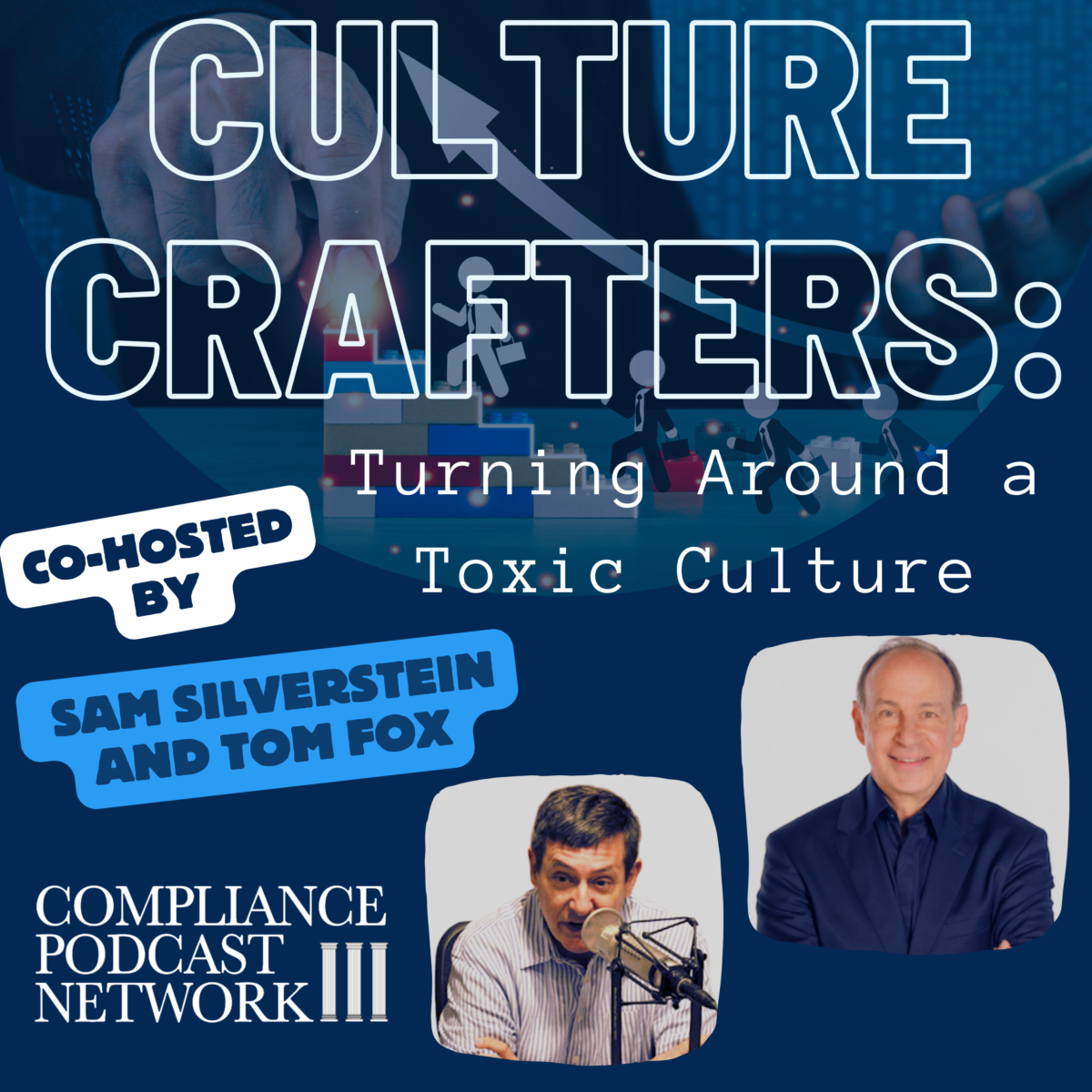
Culture Crafters – Turning Around a Toxic Culture: Part 1 – The Problem

Boeing has recently seen one of the most public meltdowns over corporate culture. In 2024 alone, there have been multiple incidents, allegations, and reports about the company in the public arena. The company is under investigation by numerous governmental agencies. Several news organizations have reported a ‘toxic’ culture at the company, and there are ripples throughout the worldwide aviation industry. In such a situation, the question for any organization is how it thinks about turning around its culture. In this special five-part podcast series, Sam Silverstein, the most trusted voice in America on accountability, and Tom Fox, the Voice of Compliance, look at the ways a company in the depths of such a situation can plan out and take concrete steps to turn around and rebuild its culture. In Part 1, we consider the steps that led Boeing to the current state of its corporate culture.

A culture does not go toxic overnight. There are always multiple steps, roads taken (or perhaps not taken), and sometimes years for the toxicity to manifest itself. The cultural problems of Boeing can be traced back to its 1997 merger with McDonnell Douglas, which has since manifested in significant safety and quality issues. This issue highlights the importance of prioritizing quality over stock performance, a lesson to be learned for the future of the commercial airline industry. The root of Boeing’s problems lies in this shift in culture post-merger, from a quality-driven ethos to a profit-centered one, leading to a compromising situation for safety and quality. The company needs a cultural transformation that values quality, safety, and employee feedback for an improved company reputation. Silverstein highlights that the company’s cultural problem stems from a shift towards short-term financial gains after the merger. Drawing on his expertise in accountability, Silverstein underlines the importance of a culture that values quality, safety, and open communication, which is vital for attracting top talent, enhancing productivity, and, ultimately, maximizing profitability.

Key Highlights:

  • Shift in Boeing’s Prioritization Towards Stock Performance
  • Impact of Culture on Mergers and Acquisitions
  • Workplace Culture’s Influence on Business Outcomes

Resources:

 Sam Silverstein

Sam Silverstein on LinkedIn

Sam Silverstein

The Culture Audit™

Tom Fox

Instagram

Facebook

YouTube

Twitter

LinkedIn

Categories
Daily Compliance News

Daily Compliance News: May 6, 2024 – The ISS Says Vote No Edition

Welcome to the Daily Compliance News. Each day, Tom Fox, the Voice of Compliance, brings you compliance-related stories to start your day. Sit back, enjoy a cup of morning coffee and listen to the Daily Compliance News. All from the Compliance Podcast Network.

Each day, we consider four stories from the business world: compliance, ethics, risk management, leadership, or general interest for the compliance professional.

In today’s edition of Daily Compliance News:

  • ISS advises voting against the Boeing CEO pay package. (FT)
  • A house member was charged with accepting bribes.  (WSJ)
  • Trump auditors are charged with fraud. (NYT)
  • Corruption in Gaza. (Bloomberg)

For more information on the Ethico ROI Calculator and a free White Paper on the ROI of Compliance, click here.

Categories
Blog

Transforming Culture: Part 1 – From Merger to Culture Toxicity

Boeing is not the first company to find itself amid a massive scandal. You can think of Siemens’ bribery and corruption scandal, the VW emissions-testing scandal, the Wells Fargo fraudulent accounts scandal, or any other myriad of corporate scandals where culture failed and created a toxic culture. The question for any organization in such a situation is how to transform its culture. Currently running on the Culture Crafters podcast on the Compliance Podcast Network is a 5–part of podcast series with myself and Sam Silverstein, the most trusted voice in America on accountability.

Over this companion, 5-part blog post series, we look at how a company in the depths of such a toxic culture can begin to make a culture comeback by planning and taking concrete steps to turn around and rebuild its culture. In this concluding Part 5, we explore the dynamism of culture, assessing culture through The Culture Audit™ (the sponsor of this blog post series), putting together a plan to remediate your culture and implementing that plan, and conclude with why ongoing monitoring and continuous improvement are so critical for a true culture transformation. In Part 1, we consider the steps that led Boeing to the current state of its corporate culture.

Boeing’s cultural miasma led to the 737 MAX crisis, which has tarnished the company’s reputation and raised doubts about its future in the commercial airline industry. Yet the company’s slide into cultural toxicity began long before the 737 MAX disasters. From these pre-pandemic disasters, the company now finds itself in one of the worst places in recent memory for a company’s reputation.

The slide began with the merger with McDonnell Douglas back in 1996. This led to a shift in leadership, which transformed the company’s culture by prioritizing stock performance over quality. This emphasizes the importance of cultural due diligence in mergers and acquisitions, with the need to evaluate existing cultures, plan post-merger integration, and uphold a robust culture within the acquiring firm. The significance of workplace culture was highlighted as a pivotal factor influencing stakeholders, from employees to customers, impacting talent retention, productivity, and overall profitability.

The culture that permeates an organization’s operations plays a pivotal role in determining its outcomes. A toxic culture characterized by shortsightedness, a profit-over-quality mentality, and a lack of ethical standards can have catastrophic consequences for the organization as a whole. Such cultures often prioritize immediate gains at the expense of long-term sustainability, leading to compromised quality, ethical dilemmas, and damaged stakeholder relationships.

The merger with McDonnell Douglas in 1997 marked a turning point for Boeing. A shift towards a culture focused on stock performance and short-term gains took precedence over a culture of engineering excellence. This shift strayed from Boeing’s legacy of quality and engineering excellence, resulting in significant setbacks like the 737 MAX crisis. The Boeing situation underscores the importance of upholding a culture that values integrity, quality, and long-term success to avoid such catastrophic outcomes.

 Mergers and acquisitions are complex processes that extend beyond financial considerations to encompass cultural integration. The compatibility of organizational cultures is a critical factor that can significantly impact the success or failure of such strategic decisions. To mitigate risks and facilitate a smooth transition, assessing cultural alignment, creating a clear roadmap for integration, and ensuring a strong, cohesive culture in the new entity are essential steps that leaders must prioritize during mergers and acquisitions.

In the context of mergers and acquisitions, culture synergy is critical, and indeed, the Boeing-McDonnell Douglas merger is a cautionary tale. The takeover of Boeing by McDonnell Douglas’s leadership brought about a cultural shift that veered away from Boeing’s core values, leading to subsequent challenges. Organizations embarking on such endeavors must pay close attention to cultural compatibility and actively work towards fostering a unified culture built on shared values and objectives. All of this underscores the critical role of culture in shaping the success of strategic business decisions like mergers and acquisitions.

The bottom line is that the best cultures are always the ones where senior leadership at the top always asks, how can we improve this culture?” This emphasizes the need for organizations to continually prioritize ongoing efforts to enhance their workplace culture. Action follows belief. This underscores the notion that an organization’s outcomes are rooted in its beliefs and values. Companies like Boeing can drive positive actions and results by fostering a culture that prioritizes quality and safety.

When you create a fantastic workplace culture, it goes home with your people. It impacts their spouses. It affects other businesses in the community. This serves as a poignant reminder of the far-reaching influence of workplace culture on individuals and broader societal interactions.

With this unique narrative, Boeing demonstrates the profound impact of leadership on culture and the overall organizational environment. Yet this sets the stage for exploring strategies to transform toxic cultures into thriving, ethical ones for CEOs and organizational leaders seeking actionable insights. I hope you will join us for the rest of the blog posts this week, in which we show how a company can transform its culture.

Categories
FCPA Compliance Report

FCPA Compliance Report: How Boeing Can Make a Cultural Comeback

Welcome to the award-winning FCPA Compliance Report, the longest running podcast in compliance.

In this special edition of the FCPA Compliance Report, welcome Sam Silverstein. They take a deep dive into how Boeing can begin to overhaul and reform their toxic culture, which led to the 2024 compliance and ethics failures. They discuss the power of the Culture Audit™, which is the sponsor of this podcast.

Sam Silverstein is a seasoned professional with over three decades of experience in corporate culture. Silverstein believes that a strong leadership role is crucial in driving culture change within an organization. His philosophy is that action follows belief, stressing that leaders must genuinely prioritize creating a culture of quality, compliance, and safety for it to truly thrive.

Silverstein maintains that the CEO’s primary role is to protect the organization’s culture, while the COO should ensure operations align with the board and CEO’s strategic plan. His experiences, particularly his insights drawn from Boeing’s situations, have shaped his belief that prioritizing culture over short-term profits, along with a culture audit and specific implementation plan, can help address systemic issues and foster a high-performance workplace culture. 

Topics Covered in This Episode:

  • Transition from Safety to Profit Culture at Boeing
  • Measuring Organizational Culture through Employee Engagement
  • Creating Accountable Leaders for Organizational Culture Transformation
  • Cultivating Sustainable High-Performance Organizational Culture
  • Cultivating Employee Trust Through Genuine Leadership Efforts
  • Rewarding Ethical Behavior for Organizational Integrity
  • Data-Driven Organizational Culture Enhancement Process
  • Recognition and Amplification through Personalized Engagement

Resources:

Sam Silverstein

Sam Silverstein on LinkedIn

Sam Silverstein

The Culture Audit™

Tom Fox

Instagram

Facebook

YouTube

Twitter

LinkedIn


For more information on the Ethico ROI Calculator and a free White Paper on the ROI of Compliance, click here.

Categories
10 For 10

10 For 10: Top Compliance Stories For The Week Ending April 27, 2024

Welcome to 10 For 10, the podcast that brings you the week’s top 10 compliance stories in one podcast each week. Tom Fox, the Voice of Compliance, brings to you, the compliance professional, the compliance stories you need to be aware of to end your busy week. Sit back, and in 10 minutes, hear about the stories every compliance professional should be aware of from the prior week.

Every Saturday, 10 For 10 highlights the most important news, insights, and analysis for the compliance professional, all curated by the Voice of Compliance, Tom Fox. Get your weekly filling of compliance stories with 10 for 10, a podcast produced by the Compliance Podcast Network.

  • A former SNC Lavalin exec sentenced to 3 years on corruption charges. (Financial Post)
  • Trade sanctions in PdVSA-related case. (WSJ)
  • McKinsey is under criminal investigation for opioid work. (NYT)
  • A Deputy Russian Defense Minister was arrested on corruption charges. (CNN)
  • South Africa ups pressure on the UAE to extradite Guptas.  (Bloomberg)
  • DOJ wants a 3-year prison term for the former Binance CEO.  (Bloomberg)
  • SFO to review cases after software problems. (FT)
  • FTC bans non-competes.  (FTC Press Release)
  • Real-Estate Agents, Investment Advisers Chafe at the New Anti-Money-Laundering Rules. (WSJ)
  • Boeing families want criminal charges filed. (France24)

For more information on the Ethico ROI Calculator and a free White Paper on the ROI of Compliance, click here.

You can check out the Daily Compliance News for four curated compliance and ethics-related stories each day, here.

Connect with Tom 

Instagram

Facebook

YouTube

Twitter

LinkedIn

Categories
Daily Compliance News

Daily Compliance News: April 25, 2024 – The In Bad Faith Edition

Welcome to the Daily Compliance News. Each day, Tom Fox, the Voice of Compliance, brings you compliance-related stories to start your day. Sit back, enjoy a cup of morning coffee and listen to the Daily Compliance News. All from the Compliance Podcast Network.

Each day, we consider four stories from the business world: compliance, ethics, risk management, leadership, or general interest for the compliance professional.

In today’s edition of Daily Compliance News:

  • The NPR chief says criticism was brought ‘in bad faith’. (WSJ)
  • The DOJ wants a 3-year prison term for the former Binance CEO.  (Bloomberg)
  • A Deputy Russian Defense Minister was arrested on corruption charges. (CNN)
  • Boeing families want criminal charges filed. (Reuters)

For more information on the Ethico ROI Calculator and a free White Paper on the ROI of Compliance, click here.

Categories
Blog

Transforming a Corporate Culture in Crisis: Lessons from Boeing

There has not been a company that has had a run of worse publicity in 2024 than Boeing. Unfortunately, it has been self-inflicted. I recently participated in a webinar with Sam Silverstein on what Boeing can do to try and pull itself out of the miasma it now finds itself in, which has led to regulatory and criminal scrutiny, critical damage to its reputation, loss of market share, deterioration of its customer relationships, the resignation of its CEO, and destruction of trust within its massive workforce.

The webinar began with a dive into Boeing’s historical mergers, particularly with McDonnell Douglas in 1997, which marked a significant cultural shift within the company. Initially, Boeing was renowned for its high engineering standards, but post-merger, a more bottom-line-focused culture from McDonnell Douglas took precedence. This shift from quality to cost-efficiency laid the groundwork for the issues Boeing faces today.

This consequence of post-merger cultural misalignments led to deep-rooted issues. For Boeing, this resulted in a culture where the drive to reduce costs and increase profitability overshadowed the foundational emphasis on engineering excellence and safety. This cultural shift manifested in various high-profile crises, such as the 737 Max incidents, which were symptomatic of broader systemic problems—problems where the cultural ethos of safety and thoroughness was compromised. Further, when cultural values are misaligned with corporate actions, employee morale, and product quality suffer significantly.

The most important question for Boeing is how it begins a cultural comeback. It all begins with the top leadership, which plays a key role in any cultural transformation. The reason is straightforward: true change starts at the top—leaders must embody the values they wish to see throughout the organization. This involves more than just setting policies; it requires leaders to actively promote a culture of quality, safety, and integrity.

Fortunately, there is a blueprint for Boeing to begin a culture turnaround. It is the procedure that compliance professionals use to manage ethics and compliance risks. The process itself is simple, but execution is not always easy. The process of Assessment leads to Strategy Development, Strategy Implementation, Monitoring of Strategy Implementation, and Continuous Improvement.

With a company the size of Boeing, you need a comprehensive software tool that can assess the corporate culture in a wide variety of ways. Trust, ethics, health, safety, values, beliefs, clarity of mission, quality of decision-making, the value of people, the quality of engagement, accountability, innovation and change, and leadership are but some of the areas that need to be measured in your initial assessment.

In short, you need a tool designed to diagnose and understand your organization’s cultural health. This assessment is not just about identifying weaknesses but also reinforcing strengths. A culture assessment can offer actionable insights that guide strategic change by systematically analyzing various cultural facets—like accountability, ethics, employee engagement, and safety.

Using a software tool to diagnose and understand the current state of organizational culture, you will obtain data about the state of your culture and actionable insights that you can use to form the basis of your comeback strategy. A practical culture assessment can reveal areas of strength to build upon and weaknesses that require strategic interventions. For instance, if there is a deficiency in trust and safety in manufacturing, leadership can clarify that safety is the No. 1 priority. Management can celebrate those who come forward with safety issues in the manufacturing process instead of marginalizing them.

Next is implementing the strategy through training and communications throughout the company. Once again, such an approach is well-known to the compliance community. Further, it is simple but will require effort and commitment by senior management. In 2022, Boeing reported roughly 156,000 employees, representing 47 nationalities in 65 countries around the globe. Yet, think of Siemens’ comeback after its 2008 bribery and corruption scandal. With a similar number of employees around the globe, the company’s top leadership made it clear through in-person training and communications that a change would happen.

Not surprisingly, Siemens management found that employees were sick and tired of being known as a bribery and corruption company. Boeing employees are the same way. They take tremendous pride in working for their organization and will embrace any change to return to the company’s roots of quality and excellence.

Next is the ongoing monitoring of the implemented strategy, which forms an essential component going forward. You cannot simply implement your strategy; you must also monitor the results. Using software tools like the Culture Audit allows companies to gauge their progress and continuously make adjustments where necessary.

You then move to continuous improvement from monitoring. A data-driven approach will allow your organization to provide additional resources, communications, and training where needed. This continuous feedback loop is crucial to maintaining cultural health and aligning it with the company’s strategic objectives.

The lessons from Boeing are applicable globally across industries. Every organization aiming for long-term success must prioritize a culture aligned with its values and objectives. A healthy corporate culture supports a positive internal environment and enhances the company’s reputation and reliability in the eyes of its customers and stakeholders. For companies in cultural crisis, facing their cultural challenges head-on with transparent, actionable strategies offers a path to regain trust and ensure sustainable success. As corporate landscapes continue to evolve, the principles discussed will remain vital for any organization committed to meaningful, enduring change.


Categories
10 For 10

10 For 10: Top Compliance Stories For The Week Ending April 20, 2024

Welcome to 10 For 10, the podcast that brings you the week’s top 10 compliance stories in one podcast each week. Tom Fox, the Voice of Compliance, brings to you, the compliance professional, the compliance stories you need to be aware of to end your busy week. Sit back, and in 10 minutes, hear about the stories every compliance professional should be aware of from the prior week.

Every Saturday, 10 For 10 highlights the most important news, insights, and analysis for compliance professionals, all curated by the Voice of Compliance, Tom Fox. Get your weekly filling of compliance stories with 10 for 10, a podcast produced by the Compliance Podcast Network.

1. Menendez defense: My wife did it.  (ABC)

2. Rethinking how your company handles cyber-risk. (FT)

3. The story of the jailed crypto officer. (NYT)

4. Jontay Porter was banned for life by the NBA for gambling on games.  (ESPN)

5. More Boeing whistleblowers step forward. (WSJ)

6. Nigeria recovers $27 million in a corruption probe. (Barron’s)

7. The EU urged China to take on Chinese forced labor. (WSJ)

8. DOJ Whistleblower program rolled out. (WSJ)

9. Silence and omission are not securities fraud.  (Reuters)

10. Venezuela arrests more PdVSA execs. (Bloomberg)

For more information on the Ethico ROI Calculator and a free White Paper on the ROI of Compliance, click here.

You can check out the Daily Compliance News for four curated compliance and ethics related stories each day, here.

Connect with Tom 

Instagram

Facebook

YouTube

Twitter

LinkedIn

Categories
Daily Compliance News

Daily Compliance News: April 18, 2024 – The Banned for Life Edition

Welcome to the Daily Compliance News. Each day, Tom Fox, the Voice of Compliance, brings you compliance-related stories to start your day. Sit back, enjoy a cup of morning coffee and listen to the Daily Compliance News. All from the Compliance Podcast Network.

Each day, we consider four stories from the business world: compliance, ethics, risk management, leadership, or general interest for the compliance professional.

In today’s edition of Daily Compliance News:

  • Jontay Porter was banned for life by the NBA for gambling on games.  (ESPN)
  • More Boeing whistleblowers step forward. (WSJ)
  • The EU urged China to take on Chinese forced labor. (WSJ)
  • DOJ Whistleblower program rolled out. (WSJ)

For more information on the Ethico ROI Calculator and a free White Paper on the ROI of Compliance, click here.

Categories
10 For 10

10 For 10: Top Compliance Stories For The Week Ending April 13, 2024

Welcome to 10 For 10, the podcast which brings you the week’s Top 10 compliance stories in one podcast each week.

Tom Fox, the Voice of Compliance, brings to you, the compliance professional, the compliance stories you need to be aware of to end your busy week. Sit back, and in 10 minutes, hear about the stories every compliance professional should be aware of from the prior week.

Every Saturday, 10 For 10 highlights the most important news, insights, and analysis for compliance professionals, all curated by the Voice of Compliance, Tom Fox.

Get your weekly filling of compliance stories with 10 for 10, a podcast produced by the Compliance Podcast Network.

1. EY is still under fire for Wirecard imbroglio.  (FT)

2. The former Cognizant executives trial moved yet again. (Law360)

3. US to crack down on UFLPA loophole. (WSJ)

4. Yet another Boeing whistleblower allegation. (NYT)

5. The US agrees to the Menendez trial postponement. (Reuters)

6. The imprisoned Binance Director denies the AML charge. (BBC)

7. Was Wirecard a Russian spy operation?  (FT)

8. A Vietnamese property tycoon was sentenced to death for fraud.  (FT)

9. Zuma is back on the ballot in South Africa. (Bloomberg)

10. More trouble for Boeing executives. (WSJ)

For more information on the Ethico ROI Calculator and a free White Paper on the ROI of Compliance, click here.

You can check out the Daily Compliance News for four curated compliance and ethics related stories each day, here.

Connect with Tom 

Instagram

Facebook

YouTube

Twitter

LinkedIn