Categories
Daily Compliance News

Daily Compliance News: July 15, 2025, The Fighting Workplace Bullying Edition

Welcome to the Daily Compliance News. Each day, Tom Fox, the Voice of Compliance, brings you compliance-related stories to start your day. Sit back, enjoy a cup of morning coffee, and listen in to the Daily Compliance News. All, from the Compliance Podcast Network. Each day, we consider four stories from the business world, including compliance, ethics, risk management, leadership, or general interest, relevant to the compliance professional.

Top compliance stories:

  • When was the last time you checked your fuel switches? (Reuters)
  • FCA to take on workplace bullying. (FT)
  • Of tariff fraud and tipsters. (WSJ)
  • Ramaphosa opens corruption investigation. (NYT)

You can donate to flood relief for victims of the Kerr County flooding by going to the Hill Country Flood Relief here.

Categories
Compliance Into the Weeds

Compliance into the Weeds: Boeing’s New Safety Initiatives and Compliance Reforms

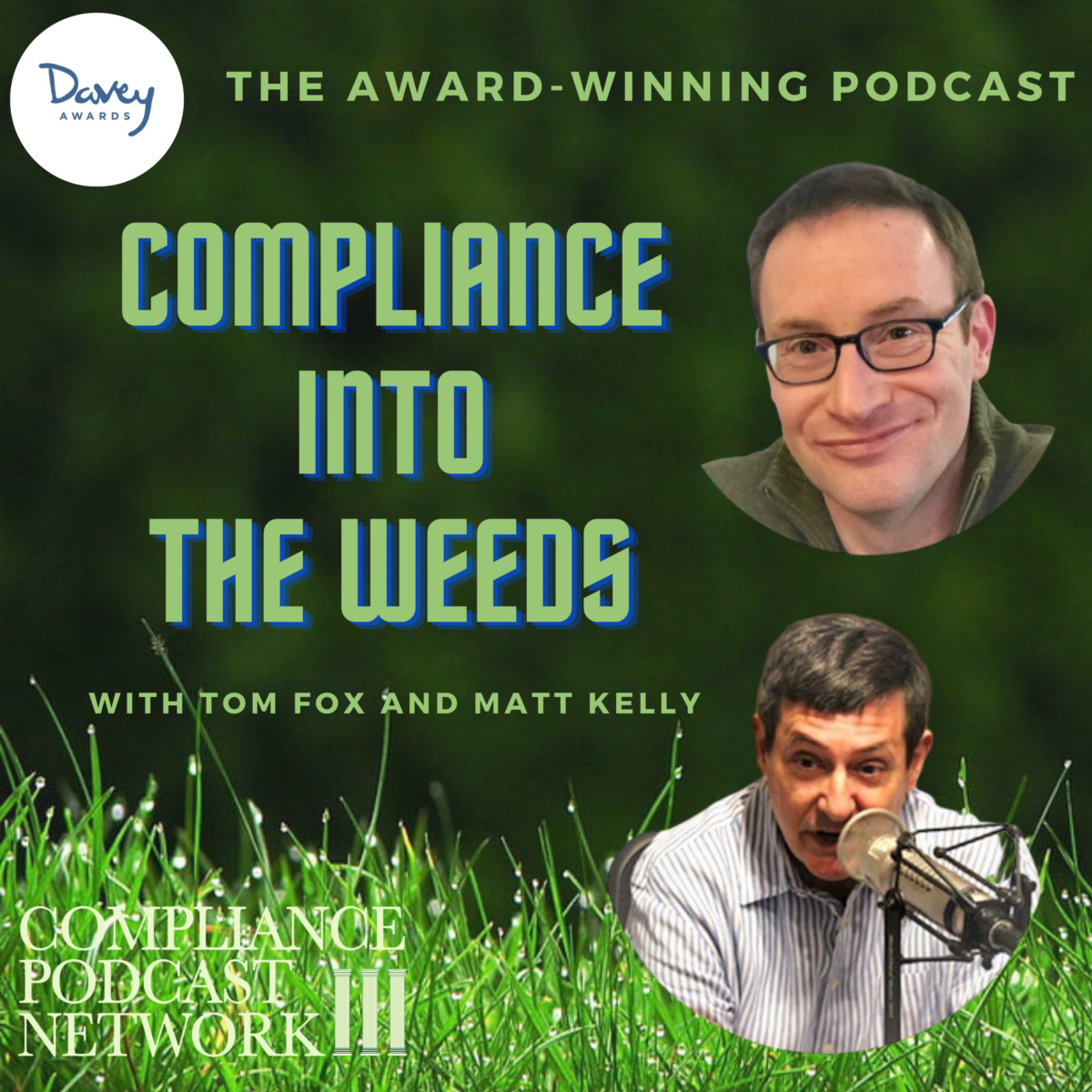
The award-winning Compliance into the Weeds is the only weekly podcast that takes a deep dive into a compliance-related topic, literally going into the weeds to explore a subject more fully. Are you seeking insightful perspectives on compliance? Look no further than Compliance into the Weeds! In this episode of Compliance into the Weeds, Tom Fox and Matt Kelly discuss Boeing’s recent safety initiatives and reforms, as outlined in their annual aerospace safety report.

They explore Boeing’s efforts to improve its speak-up culture, internal reporting systems, and the introduction of an expansive Safety Champions Program. The episode explores the procedural changes Boeing has implemented, including the handling of third-party reports and increased transparency for employees. Additionally, they examine the challenges and necessities of manager training in fostering an ethical corporate culture. The conversation concludes with insights on the recent Federal District Court hearing regarding Boeing’s non-prosecution agreement and the implications for transparency and accountability.

Key highlights:

  • Speak Up Culture Enhancements
  • Ambassador Program Expansion
  • Manager Training and Corporate Culture
  • Court Hearing on Boeing’s Non-Prosecution Agreement

Resources:

Matt Kelly in Radical Compliance

Tom

Instagram

Facebook

YouTube

Twitter

LinkedIn

A multi-award-winning podcast, Compliance into the Weeds, was most recently honored as one of the Top 25 Regulatory Compliance Podcasts, a Top 10 Business Law Podcast, and a Top 12 Risk Management Podcast.

Categories
Blog

The Boeing 737 Max Imbroglio: Part 2 – A Path Forward with a Special Master

In recent weeks, the spotlight has again intensified on The Boeing Company, following a provocative motion filed by families of victims from the tragic 737 Max crashes. They have petitioned a Texas federal judge to appoint a special prosecutor in Boeing’s criminal conspiracy case, arguing fervently against the Department of Justice’s recent Non-Prosecution Agreement (NPA) with Boeing. At stake is not merely corporate accountability but, fundamentally, the integrity of our justice system itself. If all a company is required to do under the Department of Justice (DOJ) is throw money at a series of problems, there will never be true reform.

Yesterday, I began a two-part look at the current set of issues raised in the DOJ capitulation to Boeing, its ignoring of the families of the crash victims, and its complete lack of holding Boeing accountable beyond financial penalties. Today, I want to conclude this short series by proposing a path forward that helps to ameliorate the rights of the parties as well as all the other stakeholders involved in this Boeing imbroglio.

For reasons that are not articulated, the DOJ has dropped its requirement for an Independent Corporate Monitor to oversee the overhaul of culture at Boeing, instead allowing a Boeing-hired compliance consultant to be part of the process. This is wholly insufficient as it requires zero transparency for any of the key parties to the litigation: the families of the victims of the 737 MAX crashes, the Court, and even the DOJ itself. Indeed, the DOJ did not even consult with the families of the victims, as it was reported that the DOJ gave them one day’s notice that it was going to provide Boeing with a Non-Prosecution Agreement (NPA) with no Independent Compliance Monitor.

The significance of an Independent Compliance Monitor tasked with overseeing Boeing’s adherence to compliance and safety protocols over the next three years cannot be overstated. The role of an Independent Compliance Monitor in this case should be expansive. Beyond traditional compliance responsibilities, such as policies, procedures, internal controls, and training, the Independent Compliance Monitor should also address anti-fraud measures, safety, and quality assurance/control (QA/QC) issues. This broader remit is essential, given the systemic failures at Boeing that contributed to the 737 MAX disasters. (Looming, of course, is the 787 Dreamliner crash in India.)

The DOJ previously found disturbing lapses in Boeing’s safety and quality records.  It is unclear whether the DOJ has revised these findings in light of its proposed NPA. Boeing employees reported feeling pressured to prioritize productivity and financial performance over safety and quality, a cultural flaw that contributed to the compliance breaches. This pressure led to out-of-sequence work, poor record-keeping, and inadequate safety audits, all of which are indicative of a deeper systemic problem.

Addressing these issues requires a comprehensive culture-focused approach. An Independent Compliance Monitor must not only enforce existing standards but also foster a culture of integrity and transparency within Boeing. This involves ensuring that employees can report concerns without fear of retaliation and that safety protocols are rigorously followed and documented.

The families of the crash victims are not mere bystanders in this process. They have voiced strong objections to this NPA, particularly its leniency and the lack of accountability for senior executives, as well as for any future actions by Boeing. They argue that the NPA exonerates those responsible for the safety lapses. This concern resonates with many compliance professionals who advocate for robust accountability at all levels of an organization.

In light of the unique facts and procedural history of this matter, judicial oversight will be crucial in ensuring that an Independent Compliance Monitor leads to genuine remediation. Transparency is a cornerstone of effective compliance and accountability, and its absence could undermine the entire process.

This is where the District Court should step in and appoint a Special Master to act as an Independent Compliance Monitor. Under the Federal Rules of Procedure, a District Court can appoint a Special Master to monitor compliance with court orders or settlement agreements. This can be especially useful in cases where the parties have a history of noncompliance or need ongoing oversight. The appointment of a Special Master is a powerful option for this specific fact pattern.

For Boeing to restore its reputation and regain public trust, it must go beyond the minimum requirements of the NPA. This involves a commitment to comprehensive remediation, encompassing cultural change, structural reforms, and rigorous enforcement of safety and compliance standards. All done with transparency.

A Special Master’s remit would be a step in the right direction, but it must be accompanied by genuine transparency and accountability. This includes involving the victims’ families in meaningful ways, such as through regular updates and consultations, and ensuring that their concerns are addressed substantively. In other words, transparency.

The Boeing case serves as a stark reminder of the critical importance of compliance, transparency, and accountability in the corporate world. It highlights the devastating consequences of systemic failures and the urgent need for robust oversight mechanisms. As compliance professionals, we must advocate for comprehensive and transparent processes that ensure not only compliance with legal standards but also the fostering of a culture of integrity and responsibility.

Ultimately, true remediation and accountability are in the best interests of all stakeholders, from the victims’ families seeking justice to the company itself, which strives to rebuild its reputation and restore public trust.  The DOJ has completely abrogated its role in this moving forward. However, the District Court can facilitate this process by appointing a Special Master who can act as an Independent Compliance Monitor.

The path forward is clear: there must be a firm commitment to rigorous compliance, transparent practices, and a culture that prioritizes safety and integrity above all else. However, this must be accompanied by independent oversight. If the DOJ does not wish to assume this role, the District Court should consider appointing a Special Master. Only then can it hope to move beyond the shadows of the 737 MAX scandal and emerge as a leader in the aviation industry once again.

Categories
Blog

The Boeing 737 Max Imbroglio: Part 1 – The DOJ Ditches Transparency

In recent weeks, the spotlight has again intensified on The Boeing Company, following a provocative motion filed by families of victims from the tragic 737 Max crashes. They have petitioned a Texas federal judge to appoint a special prosecutor in Boeing’s criminal conspiracy case, arguing fervently against the Department of Justice’s recent Non-Prosecution Agreement (NPA) with Boeing. At stake is not merely corporate accountability but, fundamentally, the integrity of our justice system itself. Today, I begin a two-part look at the current set of issues raised in the DOJ capitulation to Boeing, its ignoring of the families of the crash victims, and its complete lack of holding Boeing accountable beyond financial penalties.

The victims’ families and the general flying public represent crucial stakeholders who deserve answers, accountability, and assurances of safety. Disturbingly, the DOJ’s actions appear dismissive of these stakeholders. This lack of consideration significantly undermines public confidence in Boeing and the effectiveness of regulatory enforcement.

The victims’ families seek accountability, including criminal charges for executives, strict compliance oversight, and transparency to prevent future disasters.  Instead, they have received a diminished settlement and an opaque independent consultant, leaving them rightly skeptical and outraged, all of which occurred without any meaningful consultation with the DOJ. At its core, the families argue, the DOJ’s latest move sets a hazardous precedent, allowing corporations essentially to circumvent accountability through financial settlements and carefully crafted agreements.

The current controversy revolves around the DOJ’s decision to dismiss a conspiracy charge under the conditions outlined in the $1.1 billion NPA. This agreement, critics assert, permits Boeing to effectively “buy its way out of a criminal conviction,” marking a disturbing shift in how corporate criminal cases might be handled going forward.

The families’ legal representatives have raised compelling arguments about why the NPA represents a perilous deviation from standard judicial procedures. Specifically, their motion asserts that the NPA dangerously erodes the separation of powers by attempting to bypass the judicial review requirement mandated by the Federal Rule of Criminal Procedure 48(a). Such maneuvering, the families contend, could become a worrying precedent that effectively creates a new branch of governmental power, immune to the checks and balances essential to American governance.

Moreover, this case highlights critical issues surrounding the Crime Victims’ Rights Act (CVRA), legislation designed to ensure victims and their families are treated fairly throughout judicial proceedings. The families argue passionately that the NPA, in its current form, diminishes their statutory rights and sidesteps meaningful accountability, thus undermining the broader principles of justice.

Equally concerning is Boeing’s historical engagement with DOJ agreements. Initially, under a Deferred Prosecution Agreement (DPA) brokered in 2021, Boeing pledged reforms and accepted specific responsibilities. However, a disturbing mid-air incident involving a Boeing 737 Max 9 jet in January 2024 revealed serious safety oversights and compliance deficiencies, prompting the DOJ to reexamine Boeing’s commitments. Boeing’s readiness to plead guilty evaporated swiftly when the political landscape appeared favorable, a clear indication, families argue, that the aerospace giant’s commitments were strategic rather than genuine.

This raises fundamental questions about corporate culture, accountability, and oversight. Compliance professionals everywhere must consider: What mechanisms truly ensure meaningful corporate reform? Can performative contrition substitute for authentic, monitored change?

Under the revised NPA, Boeing has agreed to pay significant fines and allocate funds to victim compensation and program enhancements for compliance. Yet notably absent from this agreement is any oversight mechanism akin to the independent compliance monitor stipulated in previous arrangements. Instead, Boeing must merely retain an independent compliance consultant, a far softer requirement and one that has rightly alarmed observers concerned with genuine reform.

From a compliance standpoint, the removal of the independent monitor provision is a clear red flag. Monitors are essential to verifying that changes implemented within a corporation are genuine, sustained, and effective. By settling for a consultant rather than an empowered, independent monitor, the DOJ is creating an environment that is ripe for surface-level reforms that fail to address deeply rooted, systemic issues.

This scenario underscores a crucial lesson for corporate compliance professionals: genuine compliance reforms cannot rely solely on internal assurances or perfunctory oversight. Rigorous external verification mechanisms are essential to ensuring that compliance efforts are meaningful, impactful, and sustained over the long term. The bottom line is that transparency is the key, and this DOJ has completely deleted any Boeing requirement for transparency in its remediation process.

Furthermore, this case illustrates the importance of judicial independence and the robust application of oversight principles. Without vigilant oversight, corporations could increasingly perceive settlements as mere financial calculations rather than genuine opportunities to recalibrate organizational ethics and compliance cultures. Compliance professionals must advocate for and implement frameworks that prioritize meaningful oversight and genuine reform.

As compliance leaders, we must recognize the far-reaching implications of the Boeing case. This case serves as a stark reminder that true corporate reform cannot be bought—it must be earned through demonstrable, monitored change. Regulators and justice departments globally must hold corporations accountable not just financially but also operationally and culturally.

The demand by the victims’ families for a special prosecutor highlights a crucial juncture. Will we endorse a system where accountability is negotiable and oversight diluted? Or will we reaffirm the essential tenets of justice, ensuring robust judicial review, stringent oversight of compliance, and genuine corporate reform?

Boeing’s future actions, closely scrutinized, will reflect its genuine commitment to change. Compliance professionals, corporate leaders, and regulators alike must take heed—reform without rigorous oversight is merely an empty promise. The integrity of corporate compliance demands far more.

Ultimately, the Boeing case offers a powerful lesson: the pursuit of meaningful corporate compliance and ethical integrity requires more than financial penalties; it demands transparency, accountability, and true oversight. For corporations, anything less risks not only reputational harm but also the profound erosion of public trust, which is essential to long-term sustainability.

Tomorrow, we will explore a court-imposed solution to this imbroglio.

Categories
10 For 10

10 For 10: Top Compliance Stories For the Week Ending June 21, 2025

Welcome to 10 For 10, the podcast that brings you the week’s Top 10 compliance stories in one podcast each week. Tom Fox, the Voice of Compliance, brings you the compliance stories that compliance professionals need to be aware of to end your busy week. Sit back, and in 10 minutes, hear about the stories every compliance professional should be aware of from the prior week. Every Saturday, 10 For 10 highlights the most important news, insights, and analysis for the compliance professional, all curated by the Voice of Compliance, Tom Fox. Get your weekly filling of compliance stories with 10 for 10, a podcast produced by the Compliance Podcast Network.

  • EU Advisor backs $4.7bn Google fine. (WSJ)
  • An Interpol official has been arrested for corruption related to Red Notices. (NYT)
  • Who mourns the death of the business card? (WSJ)
  • Mike Madigan was sentenced to 7.5 years in prison. (NYT)
  • The DOJ whistleblower program focuses on healthcare fraud. (Reuters)
  • Congolese customs officer beatified for anti-corruption. (AP)
  • JBS hits the US stock exchange. (FT)
  • MyPillow Founder Mike Lindell was ordered to pay $2.3MM for defamation. (NYT)
  • IMF to assess corruption in Kenya. (Bloomberg)
  • Families of Boeing victims file formal objections. (Reuters)

You can check out the Daily Compliance News for four curated compliance and ethics-related stories each day here.

Connect with Tom 

Instagram

Facebook

YouTube

Twitter

LinkedIn

You can purchase a copy of my new book, Upping Your Game, on Amazon.com

Categories
2 Gurus Talk Compliance

2 Gurus Talk Compliance – Episode 54 – The FCPA is Back On Edition

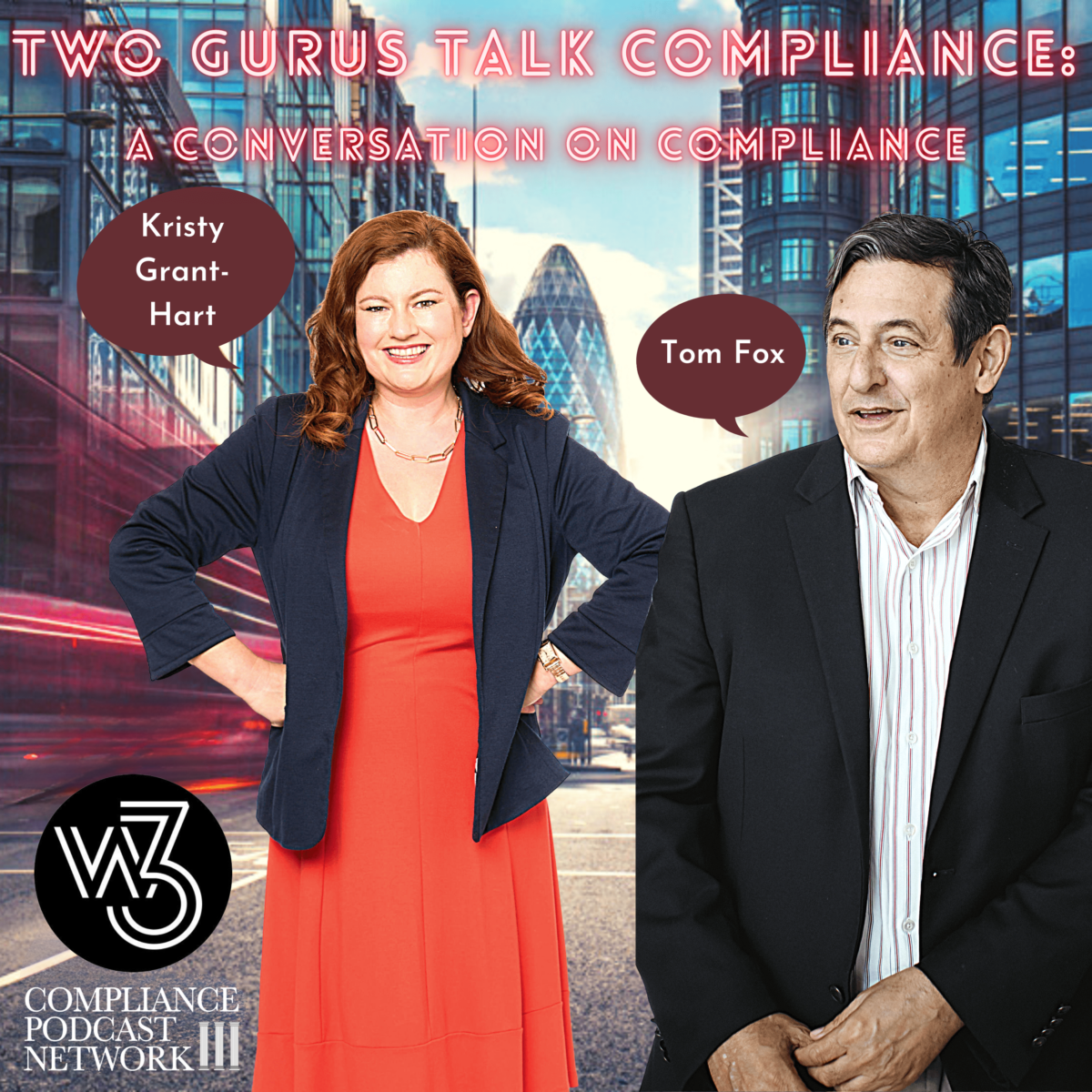
What happens when two top compliance commentators get together? They talk compliance, of course. Join Tom Fox and Kristy Grant-Hart in 2 Gurus Talk Compliance as they discuss the latest compliance issues in this week’s episode!

Stories this week include:

  • DOJ’s New FCPA Playbook: ‘Time to get to work’ – Ropes & Gray
  • Thought from the Compliance in AI Conference—Kristy attended
  • Building brands with culture—Fast Company
  • How to Say No at Work—Wall Street Journal
  • Fake cop pulls over real cop on I-4, gets arrested, authorities say—WESH 2
  • What does the crash mean for Boeing? (⁠BBC⁠)
  • The CITGO auction date has been extended (yet again). (⁠Reuters⁠)
  • Rubio is pressing OFAC to investigate Harvard. ⁠(NYT⁠)
  • Brad Bondi loses the DC Bar election. (⁠Reuters⁠)
  • The EU levies fresh sanctions on the Nord pipeline. (NYT⁠)

Resources:

Kristy Grant-Hart on LinkedIn

Prove Your Worth

Tom

Instagram

Facebook

YouTube

Twitter

LinkedIn

Categories
Daily Compliance News

Daily Compliance News: June 19, 2025, The Corruption in Spain Edition

Welcome to the Daily Compliance News. Each day, Tom Fox, the Voice of Compliance, brings you compliance-related stories to start your day. Sit back, enjoy a cup of morning coffee, and listen in to the Daily Compliance News. All from the Compliance Podcast Network. Each day, we consider four stories from the business world: compliance, ethics, risk management, leadership, and general interest, all of which are relevant to the compliance professional.

Top compliance stories.

  • Will the corruption scandal bring down Spain’s government? (Politico)
  • How the Culture War Is Remaking Advertising. (FT)
  • Who will run US Steel? (WSJ)
  • Families of Boeing victims file formal objections. (Reuters)
Categories
Daily Compliance News

Daily Compliance News: June 13, 2025, The All Boeing Edition

Welcome to the Daily Compliance News. Each day, Tom Fox, the Voice of Compliance, brings you compliance-related stories to start your day. Sit back, enjoy a cup of morning coffee, and listen in to the Daily Compliance News. All from the Compliance Podcast Network. Each day, we consider four stories from the business world: compliance, ethics, risk management, leadership, and general interest, all of which are relevant to the compliance professional.

Top stories include:

  • A Boeing whistleblower warned about the 787. (TMZ)
  • Will ‘Sweetheart Deal’ continue? (Common Dreams)
  • What does the crash mean for Boeing? (BBC)
  • What about the 737 MAX settlement? (Yahoo)
Categories
10 For 10

10 For 10: Top Compliance Stories For the Week Ending June 12, 2025

Welcome to 10 For 10, the podcast which brings you the week’s Top 10 compliance stories in one podcast each week. Tom Fox, the Voice of Compliance brings to you, the compliance professional, the compliance stories you need to be aware of to end your busy week. Sit back, and in 10 minutes hear about the stories every compliance professional should be aware of from the prior week. Every Saturday, 10 For 10 highlights the most important news, insights, and analysis for the compliance professional, all curated by the Voice of Compliance, Tom Fox. Get your weekly filling of compliance stories with 10 for 10, a podcast produced by the Compliance Podcast Network.

You can check out the Daily Compliance News for four curated compliance and ethics related stories each day, here.

Connect with Tom 

Instagram

Facebook

YouTube

Twitter

LinkedIn

You can purchase a copy of my new book, Upping Your Game, on Amazon.com

Categories
Daily Compliance News

Daily Compliance News: June 9, 2025, The Repugnant Edition

Welcome to the Daily Compliance News. Each day, Tom Fox, the Voice of Compliance, brings you compliance-related stories to start your day. Sit back, enjoy a cup of morning coffee, and listen in to the Daily Compliance News. All from the Compliance Podcast Network. Each day, we consider four stories from the business world: compliance, ethics, risk management, leadership, and general interest, all of which are relevant to the compliance professional.

Top stories include:

  • Families of Boeing victims call NPA repugnant. (BBC)
  • The EU wants to impose additional sanctions on Russia. (FT)
  • Dams holding back corruption in the US are breaking. (NYT)
  • The Trump Administration is attempting to weaken Russian sanctions. (WSJ)