Categories
31 Days to More Effective Compliance Programs

One Month to a More Effective Compliance Program Through Data Analytics: Day 5 – Data Driven Compliance and ESG Integration

ESG integration focuses on incorporating environmental, social, and governance considerations into business processes. This broader overview allows organizations to gain a comprehensive understanding of their impact, save costs, improve efficiency, and increase profitability. However, it is important to note that ESG initiatives often come with additional costs, as environmentally sound products may be more expensive than traditional alternatives. This is a tradeoff that companies must carefully consider when implementing ESG practices.

ESG integration in business processes is crucial for organizations aiming to enhance their compliance programs and make informed decisions. By leveraging data analytics, companies can identify and address ESG risks and opportunities more effectively. Collaboration and information sharing among companies also play a significant role in improving compliance efforts. As the compliance landscape continues to evolve, staying informed and adapting to new evaluation processes will be key for compliance professionals.

Three key takeaways:

  1. ESG integration in business processes is crucial for organizations aiming to enhance their compliance programs and make informed decisions.
  2. By leveraging data analytics, companies can identify and address ESG risks and opportunities more effectively.
  3. Collaboration and information sharing among companies also play a significant role in improving compliance efforts.

For more information on KonaAI, check out their website here.

Categories
Great Women in Compliance

Great Women In Compliance – Jessica Hayden on Sliding Doors

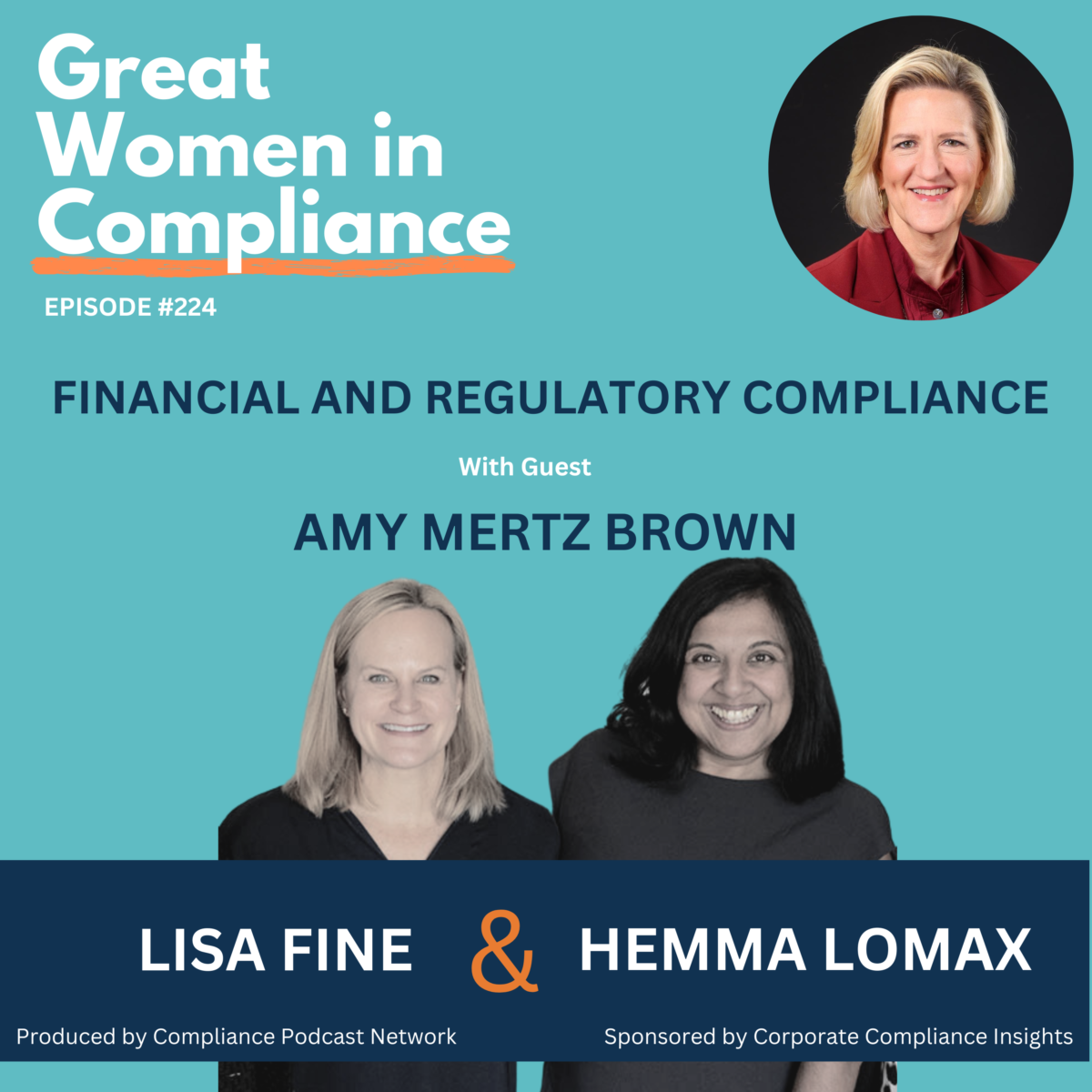
Welcome to the Great Women in Compliance Podcast. Today Hemma Lomax visits with Jessica Hayden, a graduate of Georgetown University Law Center and held senior compliance roles at 21st Century Fox, Disney, and Comcast Corporation. This past year she took a step back from corporate life to work on refugee assistance, writing, and moving her family (once again) overseas. Jessica is a seasoned compliance professional with a diverse background in global ethics and international living experiences, having honed her skills in the compliance function through a career in law, including expertise in litigation and the FCPA world.

Her perspective on her global ethics career and international living experiences is one of adaptability and seizing opportunities. She has navigated her career alongside her husband’s Foreign Service career, finding unique opportunities in each country they have lived in, such as working on freedom of speech and freelance journalism in Azerbaijan. Hayden sees her international experiences open doors and explore different areas of law. She also recognizes the challenges and hardships that come with living in different countries, such as the evacuation from Ukraine and has used these experiences to gain perspective and find her purpose in helping others through pro bono immigration cases. Join Hemma Lomax and Jessica Hayden on this episode of the Great Women in Compliance podcast to learn more about her fascinating journey.

Key Highlights

  • Navigating International Compliance Careers with Cultural Awareness
  • The Power of Choice: Navigating Living Abroad
  • Building Trust in Global Professional Relationships
  • Finding Purpose Through Evacuation and Resilience
  • Balancing Motherhood and Career Growth
  • Discovering Hidden Gems in Every Job

Resources

Join the Great Women in Compliance community on LinkedIn here.


Categories
31 Days to More Effective Compliance Programs

One Month to a More Effective Compliance Program Through Data Analytics: Day 3 – Building An Effective Data Analytics Program

Chief Compliance Officers (CCOs) are increasingly turning to data analytics programs to enhance their compliance efforts. These programs leverage the power of data to identify risks, monitor activities, and detect potential compliance violations. There are several key factors that impact the success of building out data analytics programs. One crucial aspect is the need to define the risks that organizations want to monitor. By identifying the specific risks, compliance officers can focus their data analytics efforts on gathering relevant data and analyzing it to gain insights into potential compliance issues. This process involves thinking innovatively and finding creative ways to capture data that may not be immediately obvious.

Building effective data analytics programs for compliance enhancement requires careful consideration of various factors. Compliance officers must define the risks they want to monitor, identify valuable data sources, and think innovatively to capture relevant data. Leveraging internal expertise and fostering collaboration between different departments is essential for successful implementation. By starting small and gradually expanding their capabilities, organizations can demonstrate their commitment to using data analytics and gain compliance expertise. Ultimately, these programs enable companies to enhance their compliance effectiveness and mitigate risks effectively.

 Three key takeaways:

1. There are multiple factors in the design, creation, and implementation of a data-driven compliance program.

2. A data-driven approach will allow a shift of the focus from individual policy violations to identifying systemic issues.

3. Compliance officers should focus on how to begin and gradually build their capabilities.

Check out the month’s sponsor, KonaAI here.

Categories
2 Gurus Talk Compliance

2 Gurus Talk Compliance – The Disturbing Edition

What happens when two top compliance commentators get together? They talk compliance of course. Join Tom Fox and Kristy Grant-Hart in 2 Gurus Talk Compliance as they discuss the latest compliance issues in this week’s episode! In this episode, Tom and Kristy take on a wide variety of topics including Florida Woman gone astray.

In the ever-evolving world of regulatory compliance and risk management, challenges are constant and strategies must be dynamic. Tom highlights recent FCPA enforcement actions and a Declination. Kristy highlights the criminal enterprise that was Binance and the role of its former CCO, asks why employees are so miserable, and checks in on Florida Woman. Join Tom Fox and Kristy Grant-Hart as they delve deeper into these issues in this episode of the 2 Gurus Talk Compliance podcast.

  • FCPA enforcement actions involving UK Reinsurers. FCPA Blog
  • Compliance Officers feeling regulatory heat. Compliance Week
  • Why you should be very wary of forever chemicals. CCI
  • Lifecore receives declination. Pryor Cashman
  • ABC insights from Sierra Leone GAB
  • ‘I am personally disturbed’ by FDIC harassment allegations: Gruenberg Yahoo Finance
  • Binance Penalties Include a Number of Crypto Industry Firsts WSJ
  • Kristy’s new book has been published! Your Year as a Wildly Effective Compliance Officer
  • Why Is Everyone So Unhappy at Work Right Now? WSJ
  • Florida woman with outstanding warrants busted after calling cops to report stolen weed worth $5. New York Post

 Resources

Kristy Grant-Hart on LinkedIn

Spark Consulting

Tom

Instagram

Facebook

YouTube

Twitter

LinkedIn

Categories
31 Days to More Effective Compliance Programs

One Month to a More Effective Compliance Program Through Data – Driven Compliance: Day 1 – Introduction to Data – Driven Compliance

In the world of compliance, data analytics and monitoring have become increasingly important. The Department of Justice (DOJ) has emphasized the significance of effective compliance programs, highlighting the role of data analytics and technology-driven approaches. Data-driven compliance helps companies gain insights into their data for informed decisions and improved compliance culture. Data-driven compliance should be designed to identify hidden money, prevent improper payments, and improve business efficiency. A key is the ability to facilitate collaboration and data sharing without compromising privacy or security, thereby enhancing the performance of predictive models.

In the Albemarle FCPA enforcement, the DOJ said for the first time that data-driven compliance is now a part of the requirements of an effective compliance program. By leveraging data and data analytics, compliance professionals more effectively manage risks, improve compliance culture, investigate issues, and ultimately keep companies out of trouble. Additionally, a robust data analytics platform will also contribute to making the business better by identifying hidden money, stopping improper payments, and enhancing overall business efficiency.

By leveraging data analytics, companies can identify hidden money, prevent improper payments, and enhance overall business efficiency. In today’s regulatory environment, the risk of not adopting data-driven compliance approaches is high, making solutions essential for companies seeking to stay compliant and improve their business practices.

 Three key takeaways:

1. The DOJ identified data analytics as a part of a best practices compliance program in the Albemarle FCPA enforcement action.

2. Data-driven compliance allows companies to access their data, search vendors, analyze transactions, run corruption and fraud tests, and even evaluate predictive models.

3. Data-driven compliance should be designed to identify hidden money, prevent improper payments, and improve business efficiency.

For more information on KonaAi, click here.

Categories
Blog

Compliance Lessons from The Adventure of the Crooked Man

One of the great things about having a podcast network is that I get to not only explore topics that I love but I get to tie them into compliance. Perhaps the best example is my award-winning series, Trekking Through Compliance where I review all 79 episodes of Star Trek-the Original Series (TOS) and mine each episode of compliance, ethics and leadership lessons. This past summer, I began a full exploration of the Sherlock Holmes oeuvre beginning with the first series of short stories published by A. Conan Doyle in the Strand Magazine which became the book, The Adventures of Sherlock Holmes.  I made it through the original 13 stories and am now onto the second set of stories, which became the book, The Memoirs of Sherlock Holmes.

This week, I reviewed The Adventure of the Crooked Man where the focus is on the intriguing murder mystery involving the death of Colonel James Barkley. In this story Holmes is initially presented with evidence pointing towards the guilt of the Colonel’s wife, Nancy. However, Holmes, with his keen deductive skills, uncovers the presence of a third person and an oversized weasel at the murder scene, leading to a tale of deceit and betrayal.

One of the key factors impacting Sherlock Holmes’ investigation in this case is his unwavering pursuit of truth and justice. Holmes is not easily swayed by the evidence arranged against Nancy, and he meticulously examines each piece of information to uncover the real culprit. This reflects Holmes’ high ethical standard, emphasizing the importance of truth and justice over personal gain or convenience.

Another factor that plays a significant role in Holmes’ investigation is his ability to understand and empathize with the people involved. Holmes goes beyond the analytical aspects of the case and delves into the motivations and emotions of the characters. In the case of the crooked man, Holmes empathizes with him and refrains from exposing him to the police, recognizing the heavy price the man has already paid. This highlights the importance of empathy and understanding others’ perspectives in all dealings.

The story also emphasizes the concept of retribution and consequences. Holmes believes in the principle that actions have consequences, and the main antagonist in the story faces retribution for his past actions. However, this retribution is not achieved through direct legal means but rather indirectly through the consequences of his own actions. The narrative underscores the notion of karma and the ethical lesson that wrong actions can have unexpected and harmful repercussions.

Personal responsibility is another key theme in The Adventure of the Crooked Man. Both the crooked man and Colonel Barkley demonstrate personal responsibility in different ways. The Colonel’s guilt for his past actions is evident, and he is unable to escape the consequences. On the other hand, the crooked man takes responsibility for his life and makes his own way despite his disability. This encourages readers to take personal responsibility for their own actions and circumstances.

In the resolution of the case, Holmes opts for a peaceful resolution rather than seeking punishment. He recognizes that the Colonel’s death was unintentional and a result of his own guilt and horror. This demonstrates the principle that vengeance and punishment are not always the best or most ethical solutions to conflicts.

The Adventure of the Crooked Man is a captivating Sherlock Holmes story that delves into themes of truth, justice, empathy, retribution, consequences, and personal responsibility. It encourages readers to reflect on their actions and circumstances, imparting valuable ethical lessons. Holmes’ investigation in this case showcases the tradeoffs involved in balancing different factors and the challenges associated with different approaches. By considering the impact on all parties involved, Holmes is able to uncover the truth and deliver justice in his own unique way.

I found The Adventure of the Crooked Man  to be a thought-provoking episode from The Memoirs of Sherlock Holmes. Through Holmes’ investigation, listeners are taken on a journey of unraveling deceit and betrayal, while also exploring important ethical lessons. The episode highlights the significance of truth, justice, empathy, retribution, consequences, and personal responsibility in solving mysteries and making decisions. It serves as a reminder that actions have consequences and that understanding others’ perspectives is crucial in achieving a peaceful resolution.

Check out my podcast episode of The Memoirs of Sherlock Holmes here.

Categories
31 Days to More Effective Compliance Programs

One Month to a More Effective Compliance Program Through Culture: Day 16 – How a Culture of Speak Up Improves Corporate Culture

What is a speak-up culture, and how does it improve the overall corporate culture? A speak-up culture is a work environment where open communication is encouraged, fostering trust and innovation. This culture is built on leadership that values listening and employee involvement in problem-solving. One of the key factors in fostering a speaking-up culture is protecting employees from retaliation. Anti-retaliation policies and procedures, training for middle managers, and a consistent, transparent process for investigating concerns are crucial to maintaining this culture. The fair process doctrine, which emphasizes transparency, consistency, and protection from retaliation, plays a significant role in building trust, encouraging engagement, and enhancing the overall organizational culture.

Empowered Employees. When employees feel empowered to contribute their ideas, it can lead to significant positive outcomes for the organization. However, fostering a speak-up culture goes beyond just listening. Retaliation should never be tolerated, and organizations must make it clear that it will not be accepted under any circumstances.

Role of Middle Managers. Middle managers play a vital role in fostering a speak-up culture. They need to be trained to listen, accept information, and report it to the appropriate channels.

Consistency and transparency. Consistency and transparency in the investigation process are also key components of a speak-up culture. Organizations must have a clear process in place for investigating concerns, and employees should be aware of this process.

Fostering a speak-up culture in the workplace is crucial for building trust, encouraging engagement, and enhancing the overall organizational culture. It requires leadership that values listening and employee involvement, as well as policies and procedures to protect employees from retaliation. Middle managers play a vital role in supporting employees and facilitating open communication. Consistency and transparency in the investigation process are essential for building trust and ensuring that employees feel comfortable bringing forward their concerns. By fostering a speak-up culture, organizations can create a culture where employees feel empowered to contribute their ideas and make a positive impact on the workplace.

 Three key takeaways:

1. Having a reporting system is important but listening is equally critical.

2. Employees must be protected from retaliation.

3. Fostering a speak-up culture can create a culture where employees feel empowered to contribute their ideas and make a positive impact on the workplace.

Do you want to improve your culture? How can you assess your culture and develop a strategy to improve it going forward? Check out the new tool, The Culture Audit. For more registration, click here.

Categories
31 Days to More Effective Compliance Programs

One Month to a More Effective Compliance Program Through Culture – Day 15 – The ROI of a Culture of Speak Up

We are now at a place where there is sufficient data, academic research, and actual use cases from corporations and businesses that demonstrate good ethics and compliance programs are not simply good for business but when properly used, they lead to greater profitability.

For 15 years, Ethisphere has been collecting data around its World’s Most Ethical Company awards. Companies that receive this designation have been found to outperform their peers on various stock indices. Ethisphere calls this the “Ethics Premium.” Ethisphere Executive Vice President (EVP) Erica Salmon Byrne has noted, “In tracking how the stock prices of publicly traded honorees compare to the U.S. Large Cap Index, we found that listed World’s Most Ethical Companies outperformed the large cap sector.” In 2010 that number was a delta of 4.5%. Yet by 2020, that number had skyrocketed to 13.5%. Clearly, Ethisphere has been on to something.

Academic research has also shown the efficacy of ethics and compliance programs. George Serafeim and Paul M. Healy demonstrated in their paper, An Analysis of Firm’s Self-Reported Anti-Corruption Efforts, that companies with robust compliance programs do better financially in countries prone to corruption than companies with less effective compliance programs. Without a robust compliance program, even with high sales in a high-risk country, the sales will drop off and lead to a negative Return on Equity (ROE) of between 24% to 30%.

Dr. Kyle Welch, Assistant Professor at George Washington University (GWU), in his paper, co-authored with Stephen Stubben, Associate Professor from The University of Utah, entitled “Evidence on the Use and Efficacy of Internal Whistleblowing Systems” (Report). In this paper, Welch and Stubben reviewed some 15 years of anonymized data from NAVEX Global, Inc. This data was from the company’s hotline reporting systems. Some of the key findings included that companies with a robust whistleblower and reporting system had greater profitability and workforce productivity as measured by Return on Assets (ROA) there were fewer material lawsuits brought against the company overall and there were lower settlement costs if a lawsuit did occur. Finally, there were fewer external whistleblower reports to regulatory agencies and other authorities.

 Three key takeaways:

1. It’s not simply speaking up, it’s a culture of speaking up.

2. Companies with speak-up culture, have a material reduction in legal fines and penalties.

3. Use Companies with a speak-up culture, to have a higher ROI.

Do you want to improve your culture? How can you assess your culture and develop a strategy to improve it going forward? In this free webinar on the new tool, The Culture Audit with Tom Fox and Sam Silverstein on Tuesday, November 28, 12 CT. For more information and registration, click here.

Categories
31 Days to More Effective Compliance Programs

One Month to a More Effective Compliance Program Through Culture: Day 14 – How Investigative Triage Can Drive Culture

One area that organizations rarely consider impacting culture is the assessment and triage process in a hotline or speak-up process. A proactive approach allows for increased response time and the ability to set realistic expectations for stakeholders, but this is a key component for improving corporate culture. One mechanism not thought of by compliance professionals is the setting of service level agreements (SLAs) to set response times based on the nature of the allegation. This concept, borrowed from customer service practices, ensures that employees who come forward with complaints or allegations are provided with a clear understanding of the expected timeline for response and communication. By setting these expectations, organizations can foster a culture of open communication and trust.

Obviously, a triage process is particularly important for multinational companies that operate across different regions. With varying compliance programs and regulations in different countries, having a well-documented process becomes essential. It allows compliance departments to navigate the complexities of compliance programs and investigations, ensuring consistency and adherence to local laws.

The triage process and technology play a vital role in promoting a corporate culture. By proactively assessing and triaging complaints and allegations, organizations can increase response time and set realistic expectations for stakeholders. It is important to consider the impact on employee rights and the need for thorough investigations when making decisions about the importance of the triage process and technology in organizational compliance.

 Three key takeaways:

1. Think about how your triage process can be used to foster culture.

2. Set Service Level Agreements, make them public, and adhere to them to engender trust in your organization.

3. However, it is important to recognize the tradeoffs involved in balancing different factors when implementing a triage process.

Do you want to improve your culture? How can you assess your culture and develop a strategy to improve it going forward? In this free webinar on the new tool, The Culture Audit with Tom Fox and Sam Silverstein on Tuesday, November 28, 12 CT. For more information and registration, click here.

Categories
Blog

Understanding the Risk – Return Relationship in Compliance

Investing in any form involves a certain level of risk, and the potential return is directly related to the level of risk taken on. This principle holds true for both private equity and venture capital investing. Private equity investors aim for positive returns on most of their investments by acquiring established businesses, while venture capital investors accept higher risk for the potential of significant returns on early-stage companies. Understanding this risk-return relationship is crucial for making informed investment decisions.

It is incumbent for every Chief Compliance Officer (CCO) and compliance professional to understand the risk-return relationship in investment and how that relationship applies to a corporate compliance function. By developing such an understanding, CCOs and compliance professionals can not only change the dynamic between seemingly disparate corporate functions such as compliance and finance; but will also allow a broader and more fulsome discussion of corporate investment in compliance resources.

One key concept in assessing investment stability and potential rewards is beta risk. Investopedia defines it as “Beta is used in the capital asset pricing model (CAPM), which describes the relationship between systematic risk and expected return for assets (usually stocks). CAPM is widely used as a method for pricing risky securities and for generating estimates of the expected returns of assets, considering both the risk of those assets and the cost of capital.” In other words, Beta risk refers to the correlation between an investment and the broader market. Compliance officers can utilize this concept to identify low-risk investments that perform well regardless of market conditions. By considering beta risk, compliance officers can make more informed decisions about allocating resources and managing compliance programs.

This highlights the concept of compliance as risk balancing, which challenges traditional notions of avoiding surprises and instead embraces potential positive surprises and opportunities for growth. This approach recognizes that managing risk can create significant growth opportunities, demonstrating the value of compliance in supporting business growth. This also provides an opportunity for the compliance function to demonstrate its role in a business’s overall growth strategies and greater profitability.

Such an approach also emphasizes the importance of CCOs and compliance professionals speaking the language of finance when discussing risk and return. By using concepts such as beta risk and understanding the different approaches to investing, compliance professionals can have more meaningful conversations with finance departments and other stakeholders. This enables them to effectively communicate the potential risks and rewards associated with compliance investments.

Obviously there are tradeoffs involved in balancing different factors when considering risk and return. While minimizing surprises may seem like a desirable goal, CCOs and compliance professionals should also be open to positive surprises can lead to unexpected growth opportunities. By managing risk effectively and considering the potential rewards, compliance officers can make strategic decisions that align with the organization’s goals.

This also leads directly to the importance of considering the compliance impact when making decisions about risk and return. Compliance programs play a crucial role in managing risk and ensuring ethical business practices. By investing in compliance initiatives, organizations can protect their reputation, mitigate legal and regulatory risks, and create a culture of integrity. Compliance investments can yield positive returns by fostering employee trust, attracting investors, and enhancing overall business performance.

Understanding the risk-return relationship in investment and compliance roles is essential for making informed decisions. Compliance officers can leverage concepts such as beta risk to identify low-risk investments that perform well regardless of market conditions. By embracing Compliance as Risk Balancing and considering the potential rewards, compliance professionals can effectively communicate the value of compliance investments to finance departments and other stakeholders. Ultimately, investing in compliance supports business growth and helps organizations navigate the complex landscape of risk and return.