Categories
Compliance Tip of the Day

Compliance Tip of the Day – Middle Managers as the Eyes and Ears of Compliance

Welcome to “Compliance Tip of the Day,” the podcast where we bring you daily insights and practical advice on navigating the ever-evolving landscape of compliance and regulatory requirements. Whether you are an experienced compliance professional or just beginning your journey, our goal is to offer concise, practical advice to keep you at the forefront of compliance. Join us as we explore the latest industry trends, share best practices, and demystify complex compliance issues to ensure your organization remains compliant with the law. Tune in daily for your dose of compliance wisdom, and let’s make compliance a little less daunting, one tip at a time.

Today, we will discuss how middle managers can serve as compliance’s primary observers and auditors.

For more on this topic, check out The Compliance Handbook, a Guide to Operationalizing Your Compliance Program, 6th edition, which LexisNexis recently released. It is available here.

Categories
Innovation in Compliance

Innovation in Compliance: Exploring the Intersection of Compliance, Technology, and AI with Ben Sperry

Innovation comes in many areas, and compliance professionals need to be ready for it and embrace it. Join Tom Fox, the Voice of Compliance, as he visits with top innovative minds, thinkers, and creators in the award-winning Innovation in Compliance podcast. This series is introduced by Tom Fox and hosted by Roxeanne Petraeus. Ethena sponsors this special five-part series on Innovation in Compliance.

In this episode, Roxanne Petraeus explores the intersection of compliance, technology, and AI with Ben Sperry, Deputy Chief Compliance Officer at Bestow. Sperry is a tech-driven life insurance provider that shares its journey from political science and legislative analysis to its current compliance role. The discussion delves into Bestow’s innovative approach to making life insurance accessible through technology and the challenges and strategies of implementing effective compliance training programs. Sperry highlights the importance of employee engagement and specific training tailored to different roles and departments. He also discusses the increasing significance of AI in the compliance landscape, both in terms of governance and practical application, and shares insights on using AI to enhance training effectiveness. The episode discusses the value of close vendor support and technical integration to streamline compliance processes.

Key highlights:

  • Bestow’s Unique Approach to Life Insurance
  • Challenges and Strategies in Compliance Training
  • Leveraging AI in Compliance
  • Future Trends and Final Thoughts

Resources:

Ben Sperry on LinkedIn

Bestow on LinkedIn

Bestow Website

Ethena Website

Roxanne Petraeus on LinkedIn

Ethena on LinkedIn

 Tom Fox

Instagram

Facebook

YouTube

Twitter

LinkedIn

Categories
Blog

Muddle in the Middle Week: Part 4 – Middle Managers as the Eyes and Ears of Compliance

We continue exploring how a corporate compliance function can use middle managers to make compliance more effective. This is perhaps the most dynamic era for business, with sweeping reengineering, digitization, and agile initiatives that have dramatically transformed the job of managers. Change has come in three dimensions: power, skills, and structure. Managers now have to think about making their teams successful rather than being served by them, coaching performance, not overseeing tasks, and leading in rapidly changing, more fluid environments.

No role has shifted more than that of the middle manager, who has undergone significant transformations. Today’s managers are no longer task overseers; they are increasingly expected to serve as vital conduits for compliance, embodying and advocating ethical standards across organizational layers. A recent article from Harvard Business Review, “Managers Can’t Do It All” by Diane Gherson and Lynda Gratton, lays bare the mounting pressures managers face and underscores a compelling necessity: reinventing the middle manager role to navigate contemporary workplace demands effectively.

These shifts have piled more responsibilities onto middle managers, requiring them to demonstrate new capabilities. The authors found that research shows that most middle managers struggle to keep up. More importantly, they posit a crisis is looming, if not already here, for middle managers. Some organizations, however, are heading it off by reimagining the role of middle managers. This article looks at three factors that have helped middle managers develop new skills, rewire systems and processes to support their work better, and even radically redefine the role.

Despite these pressures, the role of middle managers as compliance champions has become even more critical. Compliance officers rely on middle management to uphold standards and monitor and report potential risks. Ensuring these managers understand and embrace their evolving responsibilities is no longer optional; compliance is imperative.

Compliance professionals are uniquely positioned to leverage these insights. Middle managers, after all, play a crucial role in compliance frameworks, acting as frontline observers who detect and escalate potential ethical and compliance risks. Compliance teams must evolve their training methods and operational expectations to equip these pivotal figures better. In part 4, we explain how middle managers can work to be the eyes and ears of compliance.

Training Middle Managers to be the Eyes and Ears of Compliance

Drawing from these organizational examples, compliance leaders can consider several key lessons to empower middle managers effectively:

  • Shift Mindsets from Oversight to Coaching
  • The authors pointed to Standard Chartered’s initiative in developing its middle managers as “people leaders,” which underscores a vital transition: moving from traditional supervisory roles to ones of active coaching. Compliance professionals should train middle managers to adopt a coaching mindset that focuses less on direct oversight and more on empowering and guiding their teams through supportive, ongoing feedback.

When middle managers learn to coach, they naturally cultivate environments where openness and transparency thrive. Employees feel comfortable bringing compliance concerns forward and secure in knowing their managers will support rather than penalize them for raising issues.

  • Invest in Managerial Accreditation and Continuous Development
  • Next, the author looks at IBM’s strategic approach, which highlights the impact of investing in robust accreditation and continuous learning programs for managers. Compliance officers can replicate this model by creating certifications or licenses tied to compliance competencies. Courses in ethical decision-making, risk identification, and fostering psychological safety can empower middle managers to address compliance concerns before they escalate proactively.

A dedicated compliance accreditation signals clearly that your organization prioritizes compliance skills as essential managerial capabilities, helping ensure managers remain attuned to the shifting compliance landscape.

  • Utilize Digital Tools to Streamline Compliance Activities
  • The authors noted that IBM’s use of artificial intelligence to remove administrative burdens from managers serves as a powerful example of compliance functions. By automating routine compliance tasks, such as approvals or routine monitoring, compliance professionals can free managers to focus on more significant compliance issues, including fostering a culture of integrity.

Equipping managers with digital tools for real-time guidance, instant risk assessments, and compliance insights allows them to swiftly spot compliance risks and report potential red flags without getting bogged down in administrative details.

  • Clarify Roles by Splitting Responsibilities
  • The authors found that Telstra’s innovative management structure, clearly dividing “leaders of people” from “leaders of work,” is instructive for compliance. Clearly delineating roles within compliance can relieve managerial overload and sharpen compliance effectiveness. As “leaders of people,” middle managers can concentrate on building ethical cultures, supporting compliance education, and nurturing open communication about ethical concerns.

In contrast, “leaders of work” roles can ensure compliance measures are embedded directly into day-to-day operations and workflows. Clear role definitions help middle managers understand how they contribute to the compliance mission, enhancing accountability and effectiveness.

  • Foster Community and Peer-to-Peer Learning Among Managers
  • One particularly valuable strategy highlighted by Standard Chartered involves creating robust managerial communities. Compliance professionals should replicate this practice by establishing regular forums where managers can share compliance experiences, insights, and best practices. Peer-to-peer discussions can significantly enhance managers’ awareness and responsiveness to compliance issues.

Community-focused approaches to addressing common challenges, such as diversity initiatives or ethical dilemmas, help embed compliance deeply into the organizational culture. Compliance becomes a shared responsibility rather than merely an isolated regulatory function.

Strengthening Compliance through Empowered Middle Management

Once perceived merely as conduits for executive directives, middle managers must now become active facilitators of compliance culture. Compliance professionals face the critical task of equipping these managers to navigate their evolving roles adeptly. The authors’ article provides powerful insights and practical models to guide this transformation.

Organizations that invest wisely in their middle managers, explicitly developing them as proactive compliance champions, will discover they possess invaluable partners positioned perfectly to detect and address compliance risks early. In our digitized, agile, and remote workplace, it’s not enough for compliance professionals alone to manage compliance risks; effective management relies on empowering managers to recognize, respond to, and ultimately embody a culture of compliance.

As the authors suggest, transformative managerial roles are not merely advantageous but essential for thriving in today’s new world of work. Compliance professionals who internalize these lessons and train middle managers to become proactive stewards of compliance will enhance organizational integrity, reduce risks, and strengthen their company’s ethical foundation.

I hope you join me tomorrow when I consider empowering middle managers to drive compliance transformation.

For more on this topic, check out The Compliance Handbook, a Guide to Operationalizing Your Compliance Program, 6th edition, which LexisNexis recently released. It is available here.

Categories
Compliance Tip of the Day

Compliance Tip of the Day – Elevating Compliance Through Connected Middle Managers

Welcome to “Compliance Tip of the Day,” the podcast where we bring you daily insights and practical advice on navigating the ever-evolving landscape of compliance and regulatory requirements. Whether you are an experienced compliance professional or just beginning your journey, our goal is to offer concise, practical advice to keep you at the forefront of compliance. Join us as we explore the latest industry trends, share best practices, and demystify complex compliance issues to ensure your organization remains compliant with the law. Tune in daily for your dose of compliance wisdom, and let’s make compliance a little less daunting, one tip at a time.

Today, we look at how compliance professionals can tap into these connected middle managers to elevate compliance and the strategy of ethical business conduct.

For more on this topic, check out The Compliance Handbook, a Guide to Operationalizing Your Compliance Program, 6th edition, which LexisNexis recently released. It is available here.

Categories
Blog

Muddle in the Middle Week: Part 3 – Elevating Compliance Through Connected Middle Managers

We continue our exploration of the role of middle managers in compliance. In compliance, we often focus heavily on top executives’ tone at the top and frontline employees’ behaviors at the bottom, but what about the critical layer in between? Middle managers, often unjustly maligned as mere bureaucratic obstacles or ineffective supervisors, play a crucial compliance role, acting as connectors, communicators, and cultural ambassadors. I was therefore intrigued by an article in the Harvard Business Review by Zahira Jaser entitled The Real Value of Middle Managers, which focused on four key types of connecting leaders and their associated practices. Each has rewards and challenges, but successfully addressing them can help make your business more successful after the pandemic.

Middle managers serve a dual function: leading their teams and effectively communicating with senior executives. Jaser refers to these pivotal roles as “connecting leaders,” vital for maintaining organizational coherence, especially as remote and hybrid work arrangements proliferate. Effective middle managers possess sophisticated communication skills and can adeptly mediate between varying organizational layers, skills invaluable to compliance professionals. In Part 3, we look at how compliance professionals can tap into these connected leaders to help elevate compliance and the strategy of doing business ethically.

Four Key Roles of Middle Managers in Compliance

1. The Janus Leader: Empathizing Across Levels

Named after the Roman god who faced two directions simultaneously, Janus-type leaders maintain continuous empathy with their subordinates and senior executives. In compliance, this duality is essential. Middle managers must understand their teams’ operational pressures and communicate these challenges to ensure realistic compliance expectations and adequate resource allocation. Organizations can support Janus leaders by providing coaching and psychological resources, mitigating the risk of burnout from this continuous emotional labor.

2. The Broker: Negotiating Ethical Solutions

Middle managers often find themselves negotiating between conflicting organizational objectives. They function as brokers, facilitating dialogues that reconcile differing needs and goals. This role is especially critical in ethical compliance scenarios, where business objectives and compliance principles might seem to clash. Effective brokers foster a culture of transparency and humility, creating environments where ethical considerations are openly discussed and valued.

One practical example highlighted by Jaser involved a middle manager named Sumiya, who effectively mediated a disagreement about employee performance ratings, demonstrating transparency and fostering increased loyalty and motivation through direct executive engagement.

3. The Conduit: Advocating Upward

Middle managers in the conduit role courageously amplify their team’s voices, often at personal risk. They are crucial in compliance environments, particularly when ethical issues or potential violations must be escalated to higher management. For compliance teams, conduits are allies who ensure critical frontline insights reach senior leadership. Promoting a culture of psychological safety empowers middle managers to speak up without fear of negative repercussions, enhancing organizational transparency and integrity.

For instance, Simon, a risk manager featured by Jaser, exemplified this role by courageously voicing team concerns to senior executives, significantly improving the implementation of new compliance processes.

4. The Tightrope Walker: Balancing Strategic Compliance Decisions

Compliance professionals understand that organizational decisions often involve complex ethical dilemmas. Middle managers, described as tightrope walkers, navigate these challenging decisions daily, balancing competing demands such as operational efficiency, employee morale, and compliance obligations. Organizations can support these managers by fostering safe environments for critical-thinking discussions, thus preventing cognitive overload and paralysis.

Andrea’s case in Jasper’s research illustrates the Tightrope Walker’s role vividly. As a sales team leader during a transition requiring intensive client communication tracking, Andrea strategically managed her team’s workload and maintained compliance with corporate requirements while safeguarding employee autonomy and morale.

Strengthening Compliance through Middle Managers

To maximize the compliance potential of middle managers, organizations must provide targeted support, recognizing these roles’ intrinsic challenges. This support should include comprehensive development programs, not just in leadership but also in active and engaged followership—empowering managers to effectively influence upwards and downwards.

Organizations should integrate these roles explicitly into their compliance strategies, ensuring that middle managers’ efforts are recognized and appropriately incentivized through performance management systems, training, and corporate communications. This recognition validates middle managers’ crucial compliance roles, enhancing their motivation and effectiveness.

Additionally, investing in emotional and psychological support systems for middle managers is essential, particularly during periods of significant organizational change. Such investments underscore a commitment to a robust compliance culture, recognizing that compliance effectiveness is deeply tied to organizational health and employee well-being.

Middle Managers—Compliance Champions in the Shadows

Jaser’s research underscores a powerful truth: middle managers are not just connectors in an operational sense; they are essential compliance allies who uphold and reinforce ethical standards throughout an organization. For compliance professionals, the implication is clear—by supporting, empowering, and leveraging these vital figures, organizations can build stronger, more responsive, and resilient compliance cultures.

Ultimately, compliance is not solely dictated from the top or performed at the bottom, and it thrives most robustly in organizations where middle managers actively embody and champion ethical values and compliance standards every day. Embracing and amplifying their roles will undoubtedly position organizations for compliance success and sustainable, ethical leadership.

I hope you will join me tomorrow as I explore why middle managers should be seen as compliance’s eyes and ears and how compliance can use this skill to create and maintain a more effective compliance program.

For more on this topic, check out The Compliance Handbook, a Guide to Operationalizing Your Compliance Program, 6th edition, which was recently released by LexisNexis and is available here.

Categories
Compliance Tip of the Day

Compliance Tip of the Day – Middle Managers as Ethical Cornerstones

Welcome to “Compliance Tip of the Day,” the podcast where we bring you daily insights and practical advice on navigating the ever-evolving landscape of compliance and regulatory requirements. Whether you’re a seasoned compliance professional or just starting your journey, we aim to provide bite-sized, actionable tips to help you stay on top of your compliance game. Join us as we explore the latest industry trends, share best practices, and demystify complex compliance issues to ensure your organization remains compliant with the law. Tune in daily for your dose of compliance wisdom, and let’s make compliance a little less daunting, one tip at a time.

What lessons can compliance professionals learn from recognizing and empowering middle managers as vital moral compasses within their organizations?

For more on this topic, check out The Compliance Handbook, a Guide to Operationalizing Your Compliance Program, 6th edition, which LexisNexis recently released. It is available here.

Categories
Blog

Muddle in the Middle Week: Part 2, Middle Managers as an Ethical Cornerstone

We continue our exploration of middle managers as a key to effective compliance. Middle managers often find themselves unfairly characterized and depicted as bottlenecks or bureaucratic hurdles, and their essential contributions to corporate culture and ethics are frequently overlooked. However, these unsung heroes in corporate compliance are crucial in promoting compliance and upholding ethical business practices. In Brooke Vuckovic’s article “Employees See Middle Managers as an Organization’s Moral Compass,” the author wrote how middle managers made a meaningful difference in their teams’ lives and upheld their organizations’ moral compass. In Part 2, I want to demonstrate that middle managers can be your organization’s ethical cornerstones.

Becoming the middle manager whom others genuinely respect, admire, and recall as a moral role model requires deep work. She noted two areas in particular where middle managers can assist compliance: first, by taking a regular self-inventory to gauge their existing standing and willingly correcting habits and behaviors; second, by monitoring them on an ongoing basis. I wanted to use her article to highlight what lessons compliance professionals can learn from recognizing and empowering middle managers as vital moral compasses within their organizations.

The Quiet Power of Everyday Ethics

When asked about exemplary moral business leaders, MBA students in Vuckovic’s survey commonly referenced high-profile CEOs known for their ethical stances, such as Yvon Chouinard and Ratan Tata. However, far more frequently, they cited their middle managers, whose day-to-day actions and decisions consistently demonstrated integrity and moral leadership. These managers reinforced ethics through small, repeated actions, showing politeness, offering genuine compliments, and consistently supporting their teams.

Lesson 1: Commitment Matters Most

Compliance begins with genuine care and commitment to people. Middle managers earn trust and respect through simple, consistent actions, following promises, actively advocating for their teams, and being genuinely attentive to concerns. When managers demonstrate such commitment, compliance becomes an authentic expression of the organization’s culture rather than merely procedural adherence.

One powerful example from the research illustrates a manager who carefully paced workloads and fairly distributed responsibilities, creating an environment where employees willingly stepped up during urgent situations. “I would have followed her over a cliff,” stated one respondent, reflecting profound respect earned through everyday integrity and empathy.

Lesson 2: Upholding Values Under Pressure

Middle managers frequently face the dual pressures of organizational demands and ethical considerations. Compliance professionals must recognize and empower managers who are willing to stand firm on ethical grounds, even when faced with significant pressure. In Vuckovic’s findings, managers prioritizing integrity over expediency gained the deepest admiration. For example, one manager’s decision not to hurriedly approve complex financial changes without thorough review demonstrated an unwavering commitment to doing the right thing, reinforcing the critical compliance principle of diligence over speed.

Lesson 3: Proactive Protection of Team Culture

Managers who proactively address ethical and behavioral issues before they escalate provide critical protection for their teams and organizations. Effective compliance involves early intervention, and middle managers are ideally positioned to identify and correct behaviors that could undermine conformity. For instance, managers praised by respondents were those who confronted team members withholding crucial information or engaging in behaviors detrimental to organizational integrity. Such proactive stances resolved immediate issues and set lasting expectations for ethical behavior.

Lesson 4: Continuous Ethical Inventory

Compliance professionals can leverage Vuckovic’s recommendation of regular ethical self-inventories to encourage middle managers to consistently reflect on their commitments to their teams and higher ethical standards. This method involves routinely examining instances where managers have demonstrated integrity, fairness, and moral courage. Managers are encouraged to regularly ask themselves critical questions, such as “Have I demonstrated a commitment to integrity under pressure?” This type of assessment can deeply embed ethical considerations into daily managerial practices.

Lesson 5: Learning from Ethical Role Models

Finally, the importance of role modeling in compliance cannot be overstated. Middle managers who actively engage in ethical practices provide practical, observable models for their teams, cultivating an organizational culture where compliance and ethics are deeply valued and proactively pursued. Managers who publicly advocate for clear policies and consistently reinforce ethical priorities, such as data privacy and integrity, set benchmarks that elevate the entire organization. Compliance professionals should celebrate and highlight such ethical exemplars, making their behaviors visible and emulated across the company.

Empowering Middle Management for Stronger Compliance

Compliance professionals have a clear role in reframing how middle management is viewed within their organizations, not as obstacles or bureaucratic necessities, but as indispensable ethical leaders. As Vuckovic compellingly illustrates, middle managers who regularly demonstrate care, integrity, and moral courage form the backbone of an authentic compliance culture.

By championing the ethical contributions of middle managers, organizations reinforce compliance at every level and build a resilient, trustworthy culture that sustains ethical excellence in the face of daily pressures and complex dilemmas. Middle managers not only play a crucial role in corporate compliance, but they also serve as exemplary role models.

I hope you will join me tomorrow when I consider how to elevate your compliance regime by empowering middle managers.

For more on this topic, check out The Compliance Handbook, a Guide to Operationalizing Your Compliance Program, 6th edition, which LexisNexis recently released. It is available here.

Categories
Innovation in Compliance

Understanding Human Trafficking and Modern Slavery: A Business Imperative with Clint Palermo

Innovation comes in many areas, and compliance professionals must be ready for and embrace it. Join Tom Fox, the Voice of Compliance, as he visits with top innovative minds, thinkers, and creators in the award-winning Innovation in Compliance podcast. Today, we begin a 3-part podcast series sponsored by Diligent with Clint Palermo, Kristy Grant-Hart, and Stephanie Font. In part 1, we discuss understanding human trafficking and modern slavery: a business imperative with Clint Palermo, Senior Manager (Due Diligence) at Diligent

Tom and Clint take a deep dive into the pressing issues of human trafficking and modern slavery and their significance to the business community. Palermo highlights his professional journey in compliance, beginning in 2018 at Diligent, and discusses the regulatory landscape across various jurisdictions, including notable laws like Canada’s S-211, the EU’s CS3D Directive, and the US’s Uyghur Forced Labor Prevention Act. The conversation emphasizes the importance of knowing third parties (KY3P), managing reputational risks, and maintaining continuous due diligence to ensure ethical business practices and compliance.

Key highlights:

  • Significance of Human Trafficking and Modern Slavery
  • Global Regulations on Forced Labor
  • Impact of Forced Labor on Businesses
  • Reputational Risks and Moral Imperatives
  • Solutions and Compliance Programs

Resources:

Clint Palermo on LinkedIn

Visit Diligent Website

Tom Fox

Instagram

Facebook

YouTube

Twitter

LinkedIn

Categories
FCPA Compliance Report

FCPA Compliance Report – Ethical Decision-Making in Times of Change

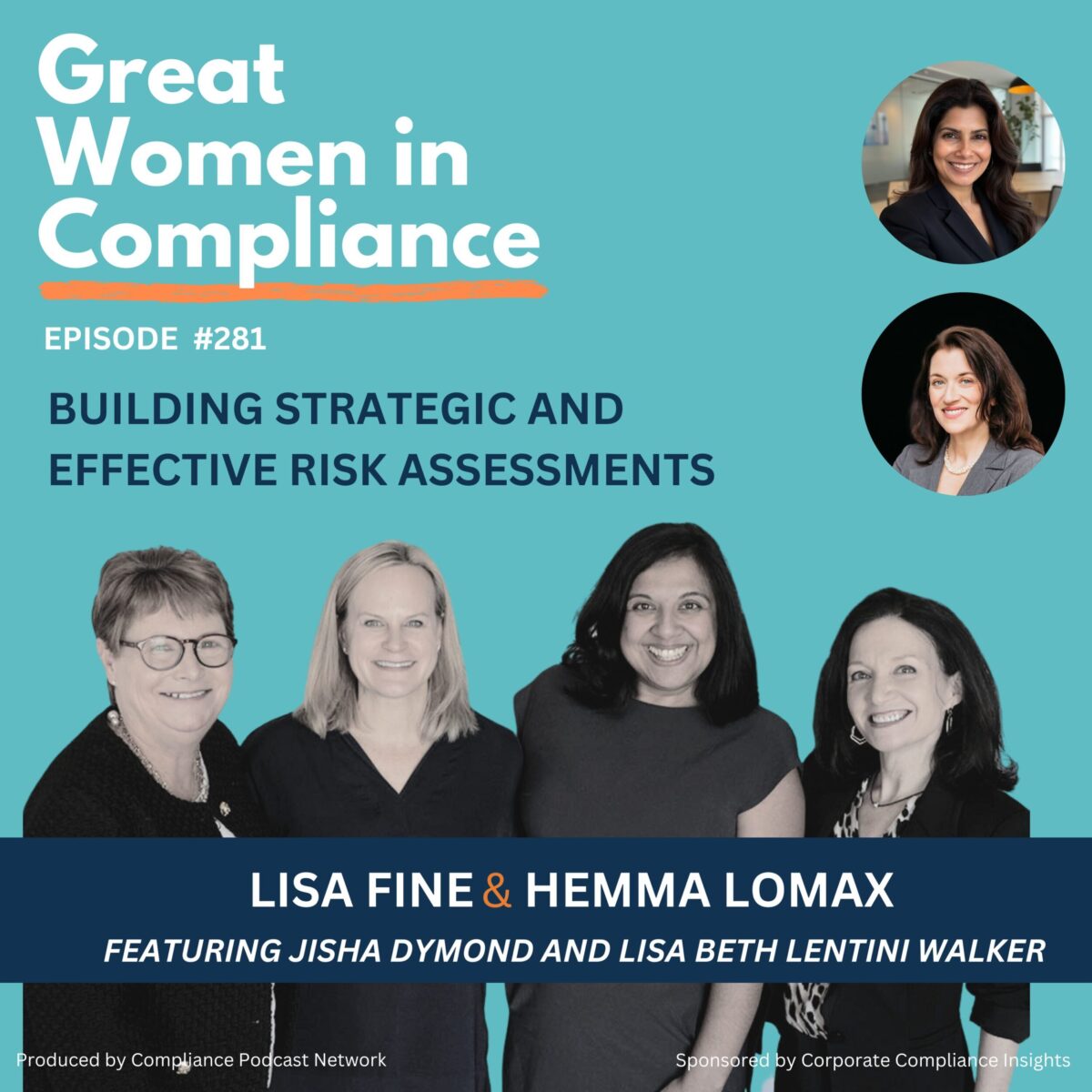
Welcome to the award-winning FCPA Compliance Report, the longest-running podcast in compliance. This is a very special episode. Tom Fox is joined by Lisa Fine, Ellen Hunt, and Hemma Lomax from the Great Women in Compliance podcast for our annual GWIC/FCPA Compliance Report cross-post podcast. We recorded this at Compliance Week 2025.

In this year of uncertainty and change in compliance, we discussed the need to revisit and emphasize foundational ethics amid the evolving compliance landscape, seeing uncertainty as a chance for professional growth and deeper ethical reflection. We also discussed integrating ethics into compliance functions and advocating for a community-oriented approach that respects diverse viewpoints and fosters global perspectives; highlighted the importance of innovative strategies and understanding human behavior, advocating for creative approaches like podcasts to foster a speak-up culture and stressing the use of technology and coaching to enhance ethical decision-making, ultimately contributing to a robust corporate culture capable of navigating international compliance challenges.


Key highlights:

  • Ethical Decision-Making in Times of Change and in a Global Business Arena
  • Global Training Program for Anti-Corruption Enforcement
  • Promoting Ethical Culture and Fair Treatment
  • Harnessing Collective Energy for Compliance Excellence

Resources:

Lisa Fine on LinkedIn

Ellen Hunt on LinkedIn

Hemma Lomax on LinkedIn

Tom Fox

Instagram

Facebook

YouTube

Twitter

LinkedIn

For more information on the use of AI in Compliance programs, see my new book, Upping Your Game. You can purchase a copy of the book on Amazon.com

Categories
Adventures in Compliance

Adventures in Compliance: The Novels – A Study in Scarlet, Dr. Watson

In this new season of Adventures in Compliance, host Tom Fox will dive deep into the Sherlock Holmes novels. Over this season, Tom will do so in a four-part series. The four novels we will consider from the ethics and compliance perspective are A Study in Scarlet, The Sign of Four, The Hound of the Baskervilles, and The Valley of Fear.

We begin with A Study in Scarlet for our first offering this new season. In Part 2, Tom will take a deep dive into Dr. Watson, how he and Holmes met, and Watson’s contributions to their partnership and consider Watson’s professional training as a doctor, his war services and injuries during the Second Anglo-Afghan War, and his return to England, all leading to his initial introduction to Holmes by their mutual acquaintance Stamford. Watson’s involvement in the case helps Holmes move beyond isolated brilliance to true investigative mastery. In compliance, pairing sharp analytic talent with professionals rooted in operational or practical experience often yields the strongest compliance strategies.

Highlights include:

  • Diversified Skill Sets
  • Trust Encourages Innovation
  • Objective Feedback Sharpens Analysis
  • Emotional Intelligence Deepens Understanding
  • Structured Communication Improves Decision-Making

Resources:

The New Annotated Sherlock Holmes

Sherlock Holmes FAQ by Dave Thompson

Connect with Tom Fox

Instagram

Facebook

YouTube

Twitter

LinkedIn