Categories
#RiskNYC Speaker Series

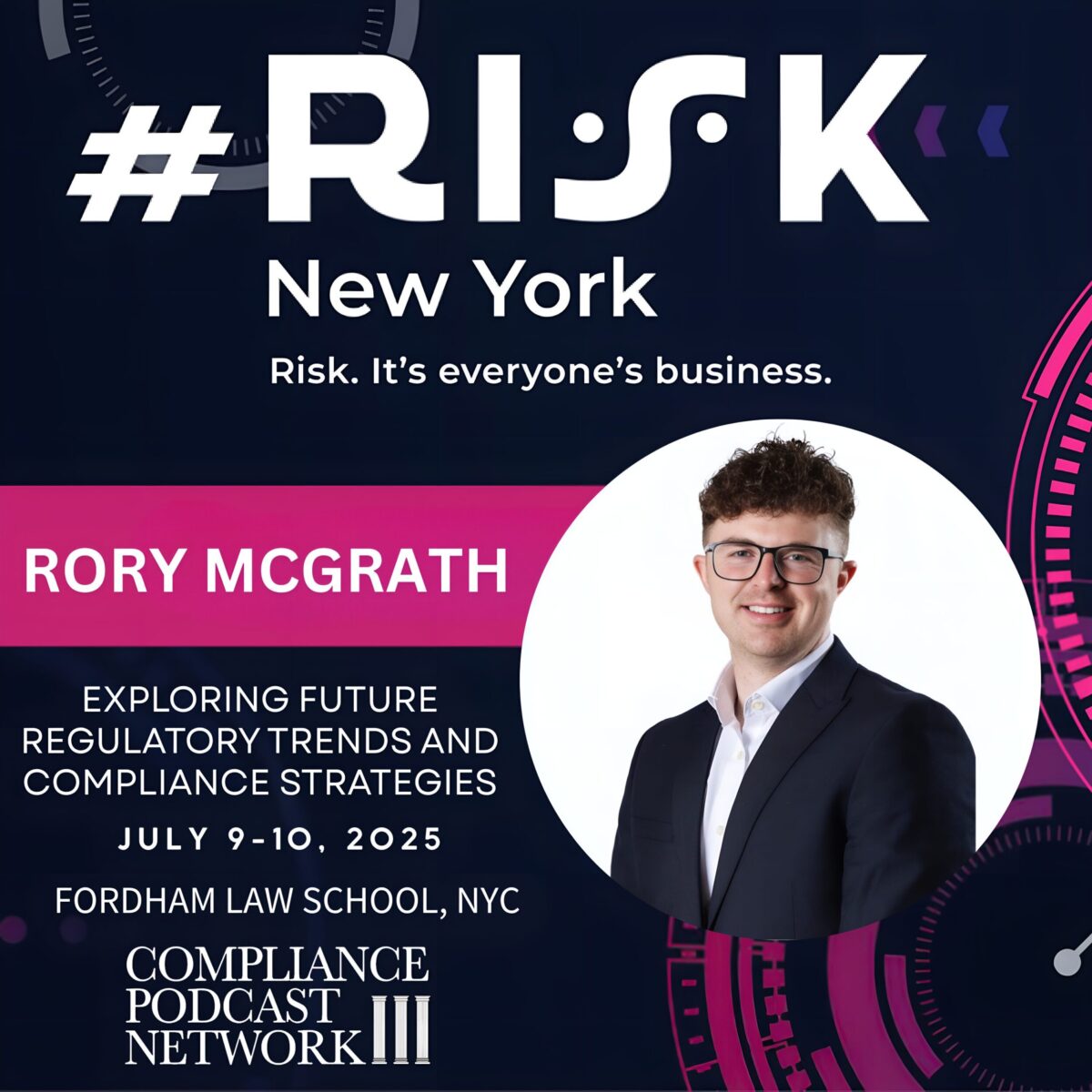
#Risk New York Speaker Series – Exploring Future Regulatory Trends and Compliance Strategies with Rory McGrath

Join Tom Fox and hundreds of other GRC professionals in the city that never sleeps, New York City, on July 9 & 10 for one of the top conferences around, #Risk New York. The current US landscape, shaped by evolving policies, rapid advancements in AI, and shifting global dynamics, demands adaptive strategies and cross-functional collaboration.

At #RISK New York, you will master the New Regulatory Reality by getting ahead of US regulatory shifts and their impact. Conquer AI and Tech Risk by Safeguarding Your Organization in an AI-Driven World and Understanding the Implications of Major Tech Investments. Navigate Financial and Crypto Volatility by Protecting Your Assets and Exploring Solutions in a Dynamic Market. Strengthen Your GRC Framework by Leveraging Governance, Risk, and Compliance for Strategic Advantage. Protect Digital Trust by addressing challenges in cybersecurity and data privacy, and combating misinformation. All while meeting with the country’s top #Risk management professionals.

In this episode of the Risk New York City speaker preview series, host Tom Fox interviews Rory McGrath, leader of the global pre-sales team at Corlytics. Rory discusses his role in helping financial institutions transform and operationalize compliance through the use of AI and smart automation. He also provides a teaser for his upcoming panel on the future of US regulation and the impact of deregulation at the #RiskNYC event. Highlighting key themes such as the evolving nature of compliance governance and the importance of cross-functional conversations, Rory shares insights on addressing fragmented regulations and fostering data-driven compliance strategies.

Resources:

#Risk Conference Series

#RiskNYC—Tickets and Information

Rory McGrath on LinkedIn

Categories
Blog

The Future of Compliance: From Risk Management to Strategic Business Partner

Recently, I had the opportunity to visit with John Byrne, the CEO at Corlytics. You can listen to the podcast here. One of the areas we discussed is that the compliance landscape is experiencing a fundamental shift, moving compliance professionals from traditional gatekeeping roles to strategic leadership positions within their organizations. Historically viewed as mere regulatory enforcers, compliance teams are increasingly recognized as essential partners in managing strategic risks. Recent global disruptions, such as unexpected tariffs and political upheavals that impact anti-corruption enforcement, as well as unprecedented events like the COVID-19 pandemic, underscore the inadequacies of traditional, static compliance frameworks.

These events emphasize a crucial truth: compliance must become agile, proactive, and deeply integrated into core business strategies to effectively anticipate and respond to rapidly evolving risks. The compliance function of tomorrow is not simply reactive; it actively shapes organizational resilience and strategic decision-making. By harnessing advanced technologies like artificial intelligence, compliance professionals can significantly enhance their capacity to identify and manage emerging risks rapidly.

In this transformed role, compliance becomes not just a defensive measure but a strategic asset positioned to enable innovation, accelerate growth, and protect organizational integrity. Embracing this vision is essential if compliance teams are to fully realize their potential as indispensable strategic leaders, securing their organizations against unforeseen challenges and positioning them for sustained success.

Lesson 1: Recognizing Compliance as Strategic Risk Management

Compliance is evolving from a purely regulatory-driven necessity into a dynamic strategic asset. At its core, compliance is a risk management process that involves identifying, assessing, managing, and mitigating risks to ensure organizational stability and effectiveness. Traditionally, this process has been laborious, reactive, and often separated from core business functions. Now, aided by technology such as artificial intelligence (AI), compliance professionals can leverage dynamic traceability and advanced analytics to accelerate risk identification and assessment dramatically.

In this rapidly evolving environment, compliance must take an active leadership role. Rather than passively reacting to regulatory requirements, compliance professionals need to proactively anticipate and manage emerging threats, positioning themselves as forward-thinking strategic advisors who protect and enable business growth.

Lesson 2: No More Black Swans—Every Risk Must Be Anticipated

Historically, compliance teams spent significant resources preparing for rare, highly impactful “black swan” events. However, recent history teaches that events previously considered extraordinary, such as pandemics, economic disruptions, or sudden political shifts, are becoming increasingly commonplace. There are no actual black swan events anymore; instead, there are just unexpected events.

Compliance professionals must recalibrate their mindset and methods, accordingly building agile systems capable of rapid adaptation. Compliance frameworks must be resilient, flexible, and proactive enough to manage uncertainties and unexpected scenarios effectively, even those we have not imagined yet. Rather than planning for specific black swans, compliance teams need adaptive frameworks and advanced scenario-planning capabilities to navigate an uncertain future.

Lesson 3: Embedding Compliance Directly into Core Business Operations

One of the most promising evolutions in compliance is its integration directly into the heart of business operations. Traditionally, compliance and operational functions operated in isolation, often misunderstanding or miscommunicating with one another. Compliance would issue requirements, leaving operational teams struggling to interpret and effectively implement directives.

Future-oriented compliance departments must break down these walls. The ideal structure aligns compliance closely with operational teams, creating shared understanding and cooperation. For instance, onboarding a large corporate client at a tier-one bank typically takes 40 days. Embedding compliance directly into the onboarding process and leveraging real-time compliance monitoring and collaboration could dramatically shorten this timeframe, delivering tangible value to customers and the firm.

Lesson 4: Creating a Learning Compliance Organization

A strategic compliance function doesn’t merely enforce rules; it continuously learns and adapts. It asks key questions: How can we improve outcomes? How can compliance processes create greater value for the business and its clients?

To become genuinely strategic, compliance departments must embrace a culture of continuous improvement. They should leverage advanced technologies, foster cross-functional teamwork, and cultivate an open and collaborative learning culture that continually seeks improvement in processes and outcomes. By shifting towards this learning organization model, compliance can better support business growth, enhance customer satisfaction, and foster a competitive advantage.

Lesson 5: Leveraging ‘What If’ Scenario Planning to Enable Business Innovation

A dynamic compliance function can actively support and accelerate business innovation through sophisticated “what if” scenario analysis. Instead of merely assessing past risks, compliance teams equipped with advanced analytical tools can proactively evaluate risks associated with potential future business decisions.

This capability enables compliance professionals to quickly analyze the implications of entering new markets, launching innovative products, or changing business strategies. Imagine compliance contributing proactively during product development, swiftly identifying regulatory or operational roadblocks. This proactive, strategic role not only prevents future compliance issues but also dramatically accelerates innovation, reduces client pain points, and fosters faster, more confident business decisions.

Compliance as a Critical Strategic Partner

The compliance profession stands at a crossroads, with immense potential to redefine itself as a strategic asset essential to organizations. Compliance professionals possess a unique skill set that enables them to lead dynamic risk management efforts—identifying risks, rapidly deploying mitigation strategies, and facilitating proactive decision-making. By leveraging technologies like AI and cultivating deep integration with operational functions, compliance departments can reposition themselves from gatekeepers to strategic business enablers.

The future of compliance lies in proactive leadership, continuous learning, and deep integration within the organization’s strategic fabric. This evolution not only enhances compliance outcomes but also transforms compliance into a mighty, positive contributor to organizational growth, innovation, and success.


Categories
Blog

From Compliance to Strategic Risk Management: A Conversation with John Byrne

I recently had an opportunity to sit down with John Byrne, CEO of Corlytics, for a podcast recording. The episode is posted here in my Compliance and AI podcast. Corlytics sponsored the podcast. We had a fascinating conversation about the next steps forward for compliance professionals, exploring tools, insights, and strategies that help us not just react to regulatory changes but proactively embed compliance into the heart of business operations.

Corlytics has recently achieved ISO 42001 certification, a milestone that marks it as a true pioneer in the RegTech space. For those unfamiliar, ISO 42001 establishes rigorous standards for AI model testing, validation, and robust processes that protect against misuse and data vulnerabilities. Byrne emphasized that this certification demonstrates the company’s dedication to applying meticulous, methodical processes typically reserved for cloud computing security to the burgeoning field of AI. Given the increasing centrality of AI to operational infrastructure, John argued convincingly that managing AI risks should be as rigorous and robust as managing any critical business software.

We dove deeper into AI’s role in compliance, highlighting a shift from reactive detective strategies to proactive, predictive capabilities. Compliance, historically viewed as the “business prevention unit,” has undergone significant evolution. AI-driven solutions enable the considerable acceleration of compliance operations, leading to improved outcomes and enhanced traceability. This means compliance professionals can now focus their expertise on strategic issues rather than mundane, repetitive tasks.

Byrne also linked compliance with fundamental banking principles, reminding us that compliance is not a new concept, but rather, it is rooted in maintaining trust. Banking, at its core, is about trust, and the robustness of compliance directly affects this trust. This echoes the historical narrative that compliance is not merely about following rules but also about ensuring long-term business viability and customer satisfaction. Compliance, at its best, is good business.

One of the critical compliance risks in AI highlighted during our conversation was data poisoning, a growing and increasingly significant threat. Bad actors deliberately corrupt AI training data to manipulate model outputs, creating misleading results. John pointed out that managing this risk involves rigorous data provenance checks and cleansing techniques. The objective is not only to secure data but also to validate its accuracy and integrity continuously.

We also explored the distinction between large language models (LLMs) and small language models (SLMs). While LLMs like ChatGPT excel with vast datasets, SLMs are invaluable when privacy, specificity, and accuracy are paramount, such as in proprietary compliance controls within financial institutions. John’s insights into this nuanced approach are particularly critical for compliance professionals managing highly confidential or regulated information.

Moreover, our discussion touched on traceability and auditability, key concerns for compliance practitioners. AI solutions now facilitate real-time audit trails, enabling the immediate tracing of every compliance decision, control update, and policy shift back to their origins. The emphasis is clear that automation and digitization are not optional; they should be viewed as necessary to meet current regulatory expectations effectively.

Byrne provided a powerful case study example regarding dynamic traceability, from risk identification to response, highlighting how AI can dramatically compress timeframes. Traditionally, significant regulatory changes, such as those stemming from MiFID II, would take organizations months or even years to fully operationalize. Today, AI-driven systems can manage this lifecycle in seconds. Such rapid responsiveness not only ensures compliance but also provides strategic flexibility, which is crucial in our ever-changing regulatory landscape.

Recent geopolitical developments underscored the strategic potential of compliance as a proactive risk management function. The Trump Administration’s suspension of FCPA investigation and enforcement raises questions about the role of compliance in the absence of strict regulatory frameworks. A key compliance response is embedding compliance within core business operations, as this integration is a powerful enabler rather than a mere defensive posture. Once again, we see that effective compliance drives more efficient business operations, leading to greater profitability.

Finally, we discussed the future of RegTech, which Byrne believes will democratize compliance technology. Historically restricted to larger financial institutions, advanced compliance tech is now becoming accessible to smaller entities, leveling the competitive field. This democratization ensures that sophisticated compliance is no longer the privilege of only the largest, most resource-rich banks.

In wrapping up our conversation, it became clear that AI and compliance together represent not just a shift but a leap forward, transforming compliance from a cost center into a strategic business partner capable of driving significant organizational value. It’s an exciting time to be a compliance professional as we witness firsthand how AI innovation is reshaping our roles and the very nature of compliance itself.

Stay smart, stay ethical, and, as always, stay compliant. The future is here, and AI is powering it.

Categories
Compliance and AI

Compliance and AI: Revolutionizing Risk Management with John Byrne

What is the role of Artificial Intelligence in compliance? What about Machine Learning? Are you using ChatGPT? These are but three questions we will explore in this cutting-edge podcast series, Compliance and AI, hosted by Tom Fox, the award-winning Voice of Compliance. In this episode, Tom welcomes John Byrne, founder and CEO at Corlytics, to discuss the company’s groundbreaking ISO 42001 certification and its significance for RegTech.

They delve into the evolving role of compliance, emphasizing the transition from reactive to proactive problem-solving. John highlights the shift towards AI-centric operations at Corlytics, aiming for enhanced accuracy, consistency, and traceability in compliance processes. The conversation explores the benefits and risks of AI, including data poisoning and the practical differences between large and small language models. They also touch upon integrating compliance into core business operations, aiming for better client outcomes and speeding up processes like account opening. John envisions RegTech becoming widely accessible, benefiting even the smallest regulated players by enabling proactive business solutions and reducing bottlenecks.

Key highlights:

  • ISO 42001 Certification and Its Importance
  • AI in Compliance and Security
  • AI as an Everyday Tool in Banking
  • Large Language Models vs. Small Language Models
  • Data Poisoning and Its Risks
  • Dynamic Traceability and Policy Lifecycle
  • Compliance as a Strategic Risk Management Tool

Resources:

John Byrne on LinkedIn

Corlytics

Tom Fox

Instagram

Facebook

YouTube

Twitter

LinkedIn

Check out my latest book, Upping Your Game: How Compliance and Risk Management Move to 2030 and Beyond, available from Amazon.com.

Categories
Innovation in Compliance

Innovation in Compliance: John Byrne and Corlytics – Innovations in Regulatory Compliance

Innovation comes in many areas, and compliance professionals need to be ready for it and embrace it. Join Tom Fox, the Voice of Compliance, as he visits with top innovative minds, thinkers, and creators in the award-winning Innovation in Compliance podcast.

In this episode, Tom speaks with John Byrne, founder and CEO of Corlytics.

John shares his background as a serial entrepreneur focusing on technology and finance and discusses the inception and mission of Corlytics. The conversation delves into the complexities of regulatory compliance, the need for real-time risk assessments, and the integration of AI and machine learning in regulatory monitoring.

John also explores how Corlytics helps financial institutions navigate evolving regulations, including ESG metrics, and forecasts the future regulatory landscape. This episode offers valuable insights for professionals interested in compliance, risk management, and the role of technology in these fields.

Key Highlights:

  • Founding Corlytics and Its Mission
  • Real-Time Risk Assessment
  • Policy Management and Global Compliance
  • Impact of Current Events on Financial Institutions
  • The Rise of ESG in Financial Institutions
  • Future of Regulation and AI

Resources:

John Byrne on LinkedIn.

Corlytics

Tom Fox

Instagram

Facebook

YouTube

Twitter

LinkedIn