Categories
Blog

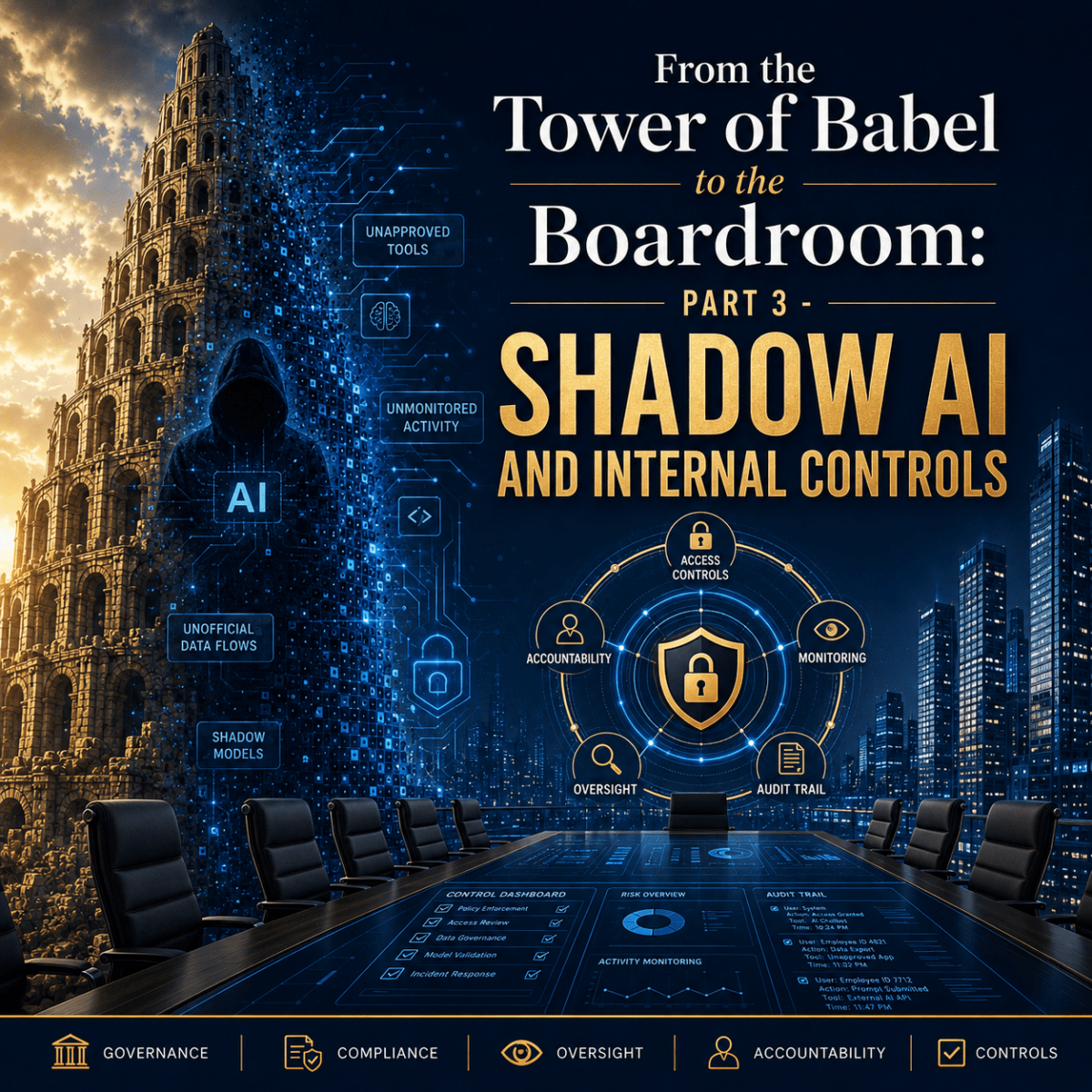
The 30-Day Shadow-AI Amnesty: Turning Hidden Risk into Governance

There is a hard truth that every Chief Compliance Officer and compliance professional needs to confront right now: artificial intelligence is already inside your organization, whether it arrived through formal approval channels or not.

Employees are testing tools independently. Business teams are adopting AI-enabled workflows without waiting for a governance committee to approve them. Vendors are embedding AI into products and services faster than many companies can update their policies. Somewhere inside that mix, decisions are being influenced by systems that may not be documented, reviewed, or governed in any meaningful way. That is the world of Shadow-AI.

It is not necessarily malicious. In many cases, it is simply the predictable result of innovation outpacing governance. But from a compliance perspective, that does not make it any less risky. Under the Department of Justice’s Evaluation of Corporate Compliance Programs, the question is not whether management intended to allow uncontrolled use of AI. The question is whether the company can identify emerging risks, implement controls that address them, encourage internal reporting, and demonstrate that the program works in practice.

That is why the 30-day Shadow-AI Amnesty matters. Properly designed, it is not an admission of failure. It is proof of governance. It is a practical mechanism for surfacing hidden risk, reinforcing a speak-up culture, and creating the operational baseline needed to govern AI over the long term.

You Cannot Govern What You Cannot See

The first challenge with Shadow-AI is visibility. Too many organizations still assume that AI risk begins with approved enterprise systems. That assumption is already outdated. The real risk universe is broader. It includes employees using public generative AI tools for drafts or analysis. It includes business units creating internal automations that affect workflows. It includes third-party applications with embedded AI functionality that have not been separately assessed. It includes pilots that started small and quietly became part of day-to-day decision-making.

This is exactly the sort of problem the ECCP is built to address. The DOJ asks whether a company’s risk assessment is dynamic and updated in light of lessons learned and changing business realities. Shadow-AI embodies the changing business reality. If your risk assessment fails to account for hidden AI use, your compliance program is lagging behind the business.

A 30-day amnesty closes that gap by creating a controlled mechanism to identify what is already happening. It allows the company to convert unknown risk into known risk and known risk into governable risk. In other words, it turns hidden risk into a governance advantage.

Why Amnesty Works Better Than Enforcement at the Start

One of the smartest features of a Shadow-AI Amnesty is that it begins with disclosure rather than punishment. If you want employees to report unapproved AI use, you need to give them a credible reason to come forward. If the first signal from compliance is that disclosure will trigger blame, discipline, or reputational harm, employees will remain silent. The result will be exactly the opposite of what the compliance function needs. This is where the amnesty becomes a culture-and-speak-up control.

The ECCP places significant emphasis on culture, internal reporting, and non-retaliation. Prosecutors are instructed to evaluate whether employees feel comfortable raising concerns and whether the company responds appropriately when they do. A well-structured amnesty aligns directly with those expectations because it tells employees that transparency is valued, that reporting is encouraged, and that remediation matters more than finger-pointing.

That does not mean there are no consequences for reckless or prohibited conduct. It means the organization recognizes that the first step toward control is visibility. The safe-harbor period exists to gather information, assess risk, and bring informal AI activity into a formal governance structure. That is not a weakness. That is smart compliance design.

Designing the Amnesty for Participation

The success of a Shadow-AI Amnesty depends heavily on its design. If the process is burdensome, legalistic, or overly technical, participation will be limited. The design principle should be simple: lower the barrier to disclosure while collecting enough information to support triage.

A short intake process is essential. Employees should be able to disclose a tool, workflow, or use case quickly. The company needs basic information: what the tool is, who owns it, where it is used, what data it touches, what decisions it may influence, and whether any controls already exist. This is not the stage for a full investigation. It is the stage for building inventory and context.

That approach is fully consistent with good governance practice. The NIST AI Risk Management Framework emphasizes understanding context, mapping use cases, and establishing governance for the actual use of AI. ISO/IEC 42001 similarly reflects the principle that effective AI management begins with a defined scope, documented processes, and clear responsibility. You cannot apply either framework if you do not know what systems or uses exist in the first place. The amnesty, then, is not a side exercise. It is the front door to a credible AI governance program.

Triage Is Where Governance Becomes Real

Once disclosures start coming in, the company must shift from intake to triage. This is where design and control become critical. Not every disclosed use of AI presents the same level of risk. Some uses may be low-risk productivity aids. Others may influence hiring, investigations, financial reporting, customer-facing communications, or core operational decisions. The compliance function needs a disciplined way to distinguish between them.

A risk-based triage model should ask a few straightforward questions. Does the AI influence a decision that affects employees, customers, or regulated outcomes? Does it involve sensitive or confidential data? Is there human review, or is the output used automatically? Is the use visible externally? Is it part of a business-critical workflow? What controls exist today?

These are compliance questions. They are also ECCP questions because they go directly to risk assessment, resource allocation, and whether controls are tailored to the realities of the business. This is also where culture and control begin to work together. A company that invites disclosure but fails to triage intelligently will lose credibility. Employees need to see that reporting leads to measured, thoughtful governance, not chaos. The point is not to shut everything down. The point is to classify, prioritize, and respond appropriately.

Culture as a Control

One of the most important themes in the modern compliance conversation is that culture is not soft. Culture is a control. That is especially true with Shadow-AI. In many organizations, the first people to know that a workflow has drifted outside approved channels are the employees using it every day. The first people to spot unreviewed prompts, risky data inputs, or overreliance on AI-generated outputs are often not senior executives or formal governance committees. They are line employees, managers, analysts, and business operators.

If those people do not believe they can report what they see without retaliation or embarrassment, then the organization loses one of its most effective early warning systems. A Shadow-AI Amnesty sends a powerful signal. It says the company would rather know than remain in the dark. It says that governance begins with honesty. It says that disclosure is part of doing the right thing.

Under the ECCP, that matters. A culture that encourages internal reporting and constructive remediation is a hallmark of an effective compliance program. In the AI context, it may be one of the few ways to surface emerging risks before they become control failures, regulatory issues, or public problems.

From Amnesty to Operating Model

The amnesty itself is only the beginning. Its true value lies in what follows. Once the company has a baseline inventory of disclosed AI uses, it should not let that information sit in a spreadsheet and die. The next step is to convert the amnesty into a long-term governance operating model.

That means maintaining a living registry of AI use cases. It means embedding disclosure and review into normal business processes. It means defining approval pathways for higher-risk uses. It means establishing ongoing monitoring to detect performance changes, data drift, and control effectiveness. It means updating policies, training, and communications based on what the company has actually learned from the amnesty.

This is where the governance frameworks become especially useful. NIST AI RMF helps organizations move from mapping and understanding AI uses to governing, measuring, and managing them. ISO/IEC 42001 provides the management-system discipline needed to assign responsibility, document controls, review performance, and drive continual improvement.

In other words, the amnesty is not the solution by itself. It is the catalyst that allows a real operating model to emerge.

Proof of Governance Under the ECCP

Why does this matter so much from an enforcement perspective? Because the amnesty produces evidence. If regulators ask how the company identified AI uses, there is a process. If they ask how risks were assessed, there is a methodology for it. If they ask what was done with high-risk cases, there are records of triage and remediation. If they ask what role culture played, there is a concrete speak-up initiative tied to internal reporting and governance design.

This is exactly what the ECCP is looking for. Not slogans. Not a glossy AI principles deck. Evidence that the company identified a risk, created a mechanism to surface it, encouraged reporting, evaluated what it found, and built controls that match the risk. That is why the 30-day Shadow-AI Amnesty is so important. It transforms governance from assertion into proof.

The Practical Bottom Line

The compliance function does not need to wait for a perfect enterprise AI strategy before acting. In fact, waiting may be the biggest mistake. Shadow-AI is already there. The question is whether your organization is prepared to see it, hear about it, and govern it.

A 30-day amnesty is one of the most practical tools available because it combines two things strong compliance programs need: better visibility and a stronger culture. It surfaces risk while reinforcing speak-up. It creates documentation while improving control design. It gives the company a starting point for long-term governance without pretending the problem can be solved in one month.

In the end, that is what good compliance has always done. It does not deny business reality. It creates the structure that allows the business to move forward with integrity, accountability, and confidence.

Categories
Blog

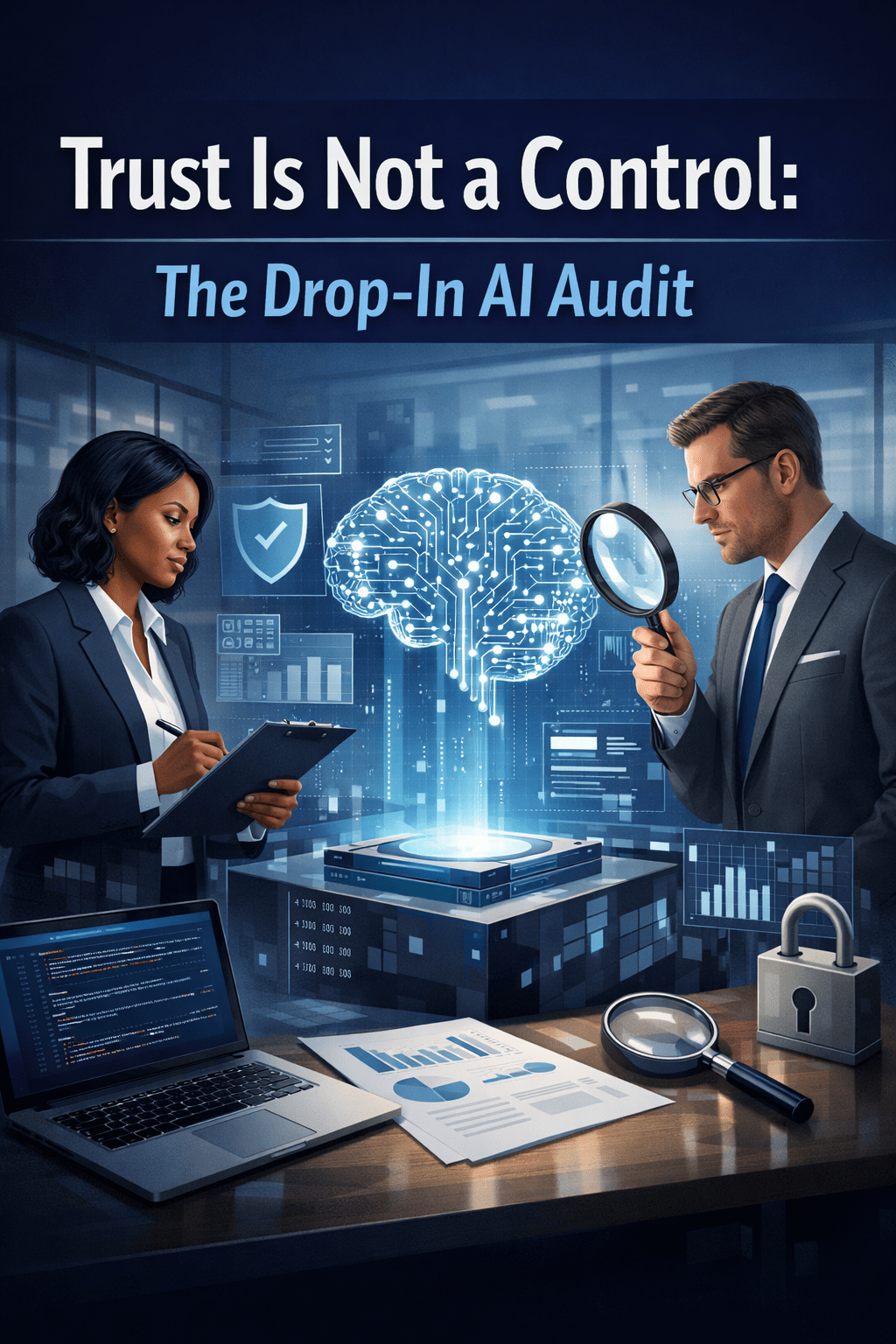
Trust Is Not a Control: The Drop-In AI Audit

There is a hard truth at the center of modern AI governance that every compliance professional needs to confront: trust is not a control. For too long, organizations have approached AI oversight with a familiar but outdated mindset. They collect a vendor certification. They review a policy statement. They ask whether a third party is “aligned” with a recognized framework. Then they move on, assuming the governance box has been checked. In today’s enforcement and risk environment, that approach is no longer good enough.

The Department of Justice has repeatedly made this point in its Evaluation of Corporate Compliance Programs. The DOJ does not ask whether a company has a policy on paper. It asks whether the program is well designed, whether it is applied earnestly and in good faith, and, most importantly, whether it works in practice. That final phrase matters. Works in practice. It is the dividing line between performative governance and effective governance.

That is why every compliance program now needs a drop-in AI audit. It is not simply another diligence exercise. It is a mechanism for proving that governance is real. It is a practical third-party risk tool. And it is one of the clearest ways to operationalize the ECCP in the age of artificial intelligence.

The Problem: Third-Party AI Risk Is Moving Faster Than Oversight

Most companies do not build every AI capability internally. They rely on vendors, service providers, cloud platforms, embedded applications, analytics partners, and other third parties whose tools increasingly shape business processes and compliance outcomes. In many organizations, these third parties now influence investigations, due diligence, monitoring, onboarding, reporting, customer interactions, and internal decision-making. That creates a new class of third-party risk.

The problem is not only whether a vendor has responsible AI language in its contract or whether it can point to a certification. The problem is whether your organization can verify that the relevant controls are functioning as represented in the real-world use case affecting your business. That is where too many compliance programs still fall short.

Under the ECCP, the DOJ asks whether a company’s risk assessment is updated and informed by lessons learned. It asks whether the company has a process for managing risks presented by third parties. It asks whether controls have been tested, whether data is available to compliance personnel, and whether the company can demonstrate continuous improvement. These are not abstract questions. They go directly to how you oversee AI-enabled third parties. If your third-party AI governance begins and ends with a questionnaire and a PDF certification, you do not have evidence of governance. You have evidence of intake.

What a Drop-In Audit Really Does

A drop-in AI audit changes the question from “What does the third party say?” to “What can the third party prove?” That is a profound shift.

The value of the drop-in audit is that it brings compliance discipline directly into third-party AI oversight. Instead of accepting broad claims about safety, control, and alignment, you examine operational evidence. Instead of relying solely on design statements, you test for performance in practice. Instead of treating governance as a one-time approval event, treat it as a repeatable audit process. In that sense, the drop-in audit becomes proof of governance.

It also becomes a far more mature third-party risk tool. You are no longer merely assessing whether a vendor appears sophisticated. You are assessing whether a third party can withstand scrutiny on the questions that matter most: scope, controls, traceability, escalation, and evidence.

And from an ECCP perspective, that is precisely the point. The DOJ has emphasized that compliance programs must move beyond paper design into operational reality. A drop-in audit is one of the few mechanisms that let you do that in a disciplined, documentable way.

From Vendor Oversight to Third-Party Governance

This discipline should not be limited only to classic vendors. The better view is to expand the concept across all third parties that provide, influence, host, or materially shape AI-enabled services. That includes software providers, outsourced service partners, embedded AI functionality in enterprise tools, cloud-based analytics environments, compliance technology vendors, and any external party whose systems affect business-critical decisions or regulated processes.

Risk does not care about the label on the contract. If the third party’s AI affects your organization’s screening, monitoring, investigations, decision support, or disclosures, the compliance risk is real. Your governance process must be equally real. This is why “trust but verify” is no longer just a slogan. It is a design principle for third-party oversight of AI.

The Core Elements of the Drop-In Audit

A strong drop-in audit has three features: sampling, contradiction testing, and escalation.

1. Sampling: Evidence of Operation, Not Merely Design

Sampling is where governance becomes tangible. A company requests specific artifacts tied to actual use cases and actual control operations. This may include scope documents, Statements of Applicability, system documentation, training data summaries, access controls, incident records, runtime logs, or evidence of human review. The point is simple: operational evidence is what matters.

This is where a compliance function moves from hearing about controls to seeing them in action. It is also where internal audit can add real value by testing whether the evidence supports the stated control environment.

2. Contradiction Testing: Where Real Risk Emerges

This is one of the most important and underused concepts in third-party AI oversight. Inconsistencies between claims and reality are where governance failures emerge. If a third party says its certification covers a given service, does the scope document confirm it? If it claims strong incident response, does the record back it up? If it represents strong human oversight, do the runtime traces show meaningful intervention or only theoretical review points?

Contradiction testing is powerful because it goes to credibility. It tests whether the governance narrative matches the operating reality. Under the ECCP, that is exactly the kind of inquiry prosecutors and regulators will care about. It speaks to effectiveness, honesty, and control discipline.

3. Escalation: Governance in Action

Governance without consequences is not governance. A drop-in audit must include clear escalation triggers. Missing evidence, mismatched certification scope, unexplained gaps, unresolved incidents, or inconsistent remediation should not be noted in isolation. They should trigger action.

That action may include enhanced diligence, contractual remediation, independent validation, temporary use restrictions, or deeper audit review. The important point is that the program responds. This is where the drop-in audit becomes operationalizing the ECCP. It demonstrates that the company not only identifies risk but also acts on it.

How the Drop-In Audit Maps to the ECCP

The drop-in audit aligns tightly with the DOJ’s framework for an effective compliance program. Risk assessment is addressed because the audit focuses attention on where AI-enabled third parties create actual operational and control exposure. Policies and procedures are tested because the company does not merely accept them at face value. It assesses whether the stated controls are supported by evidence. Third-party management is strengthened by making oversight continuous, risk-based, and verifiable. Testing and continuous improvement are built into the audit process, which identifies gaps, contradictions, and corrective actions. Investigation and remediation principles are reinforced by documenting, escalating, and using findings to improve the control environment.

Most importantly, the audit answers the ECCP’s central practical question: Does the program work in practice?

How the Drop-In Audit Maps to NIST AI RMF

The NIST AI Risk Management Framework provides a highly useful structure for the drop-in audit, especially through its Govern, Map, Measure, and Manage functions.

  1. Governance is reflected in defined ownership, accountability, and escalation when issues are identified.
  2. A map is reflected in understanding the third party’s actual AI use case, scope, dependencies, and business impact.
  3. The measure is reflected in the use of evidence, runtime observations, contradiction testing, and performance assessment.
  4. Management is reflected in remediation, ongoing oversight, and updates to controls based on audit findings.

In this way, the drop-in audit becomes a practical tool for taking the NIST AI RMF from concept to execution.

How the Drop-In Audit Maps to ISO/IEC 42001

ISO/IEC 42001 adds the management-system discipline that compliance programs need. Its value lies in documented scope, role clarity, control applicability, monitoring, corrective action, and continual improvement. A drop-in audit fits naturally into that structure because it tests whether those elements are visible in operation, not merely stated in documentation.

The Statement of Applicability becomes meaningful when the company verifies that the controls identified there actually correspond to the deployed service. Monitoring becomes meaningful when evidence is examined. Corrective action becomes meaningful when gaps trigger follow-up. Continual improvement becomes meaningful when findings are fed back into governance. That is why the documentation you generate should serve your board, regulators, and internal stakeholders without additional work. Producing evidence that travel is one of the most strategic benefits of this approach.

Why Every Compliance Program Needs This Now

The strategic payoff is straightforward. Strong AI governance is not a drag on innovation. It is what allows innovation to scale with trust. A drop-in audit gives compliance and internal audit a mechanism to test what matters, document their findings, and create evidence that withstands scrutiny. It moves governance from assertion to proof. It transforms third-party diligence into a repeatable, auditable process. It helps ensure that when regulators, boards, or business leaders ask how the company knows its third-party AI governance is working, there is a real answer.

Because, in the end, evidence of governance matters. Not narratives. Not slide decks. Evidence. President Reagan was right in the 1980s, and he is still right today: “Trust but verify.”

Categories
Blog

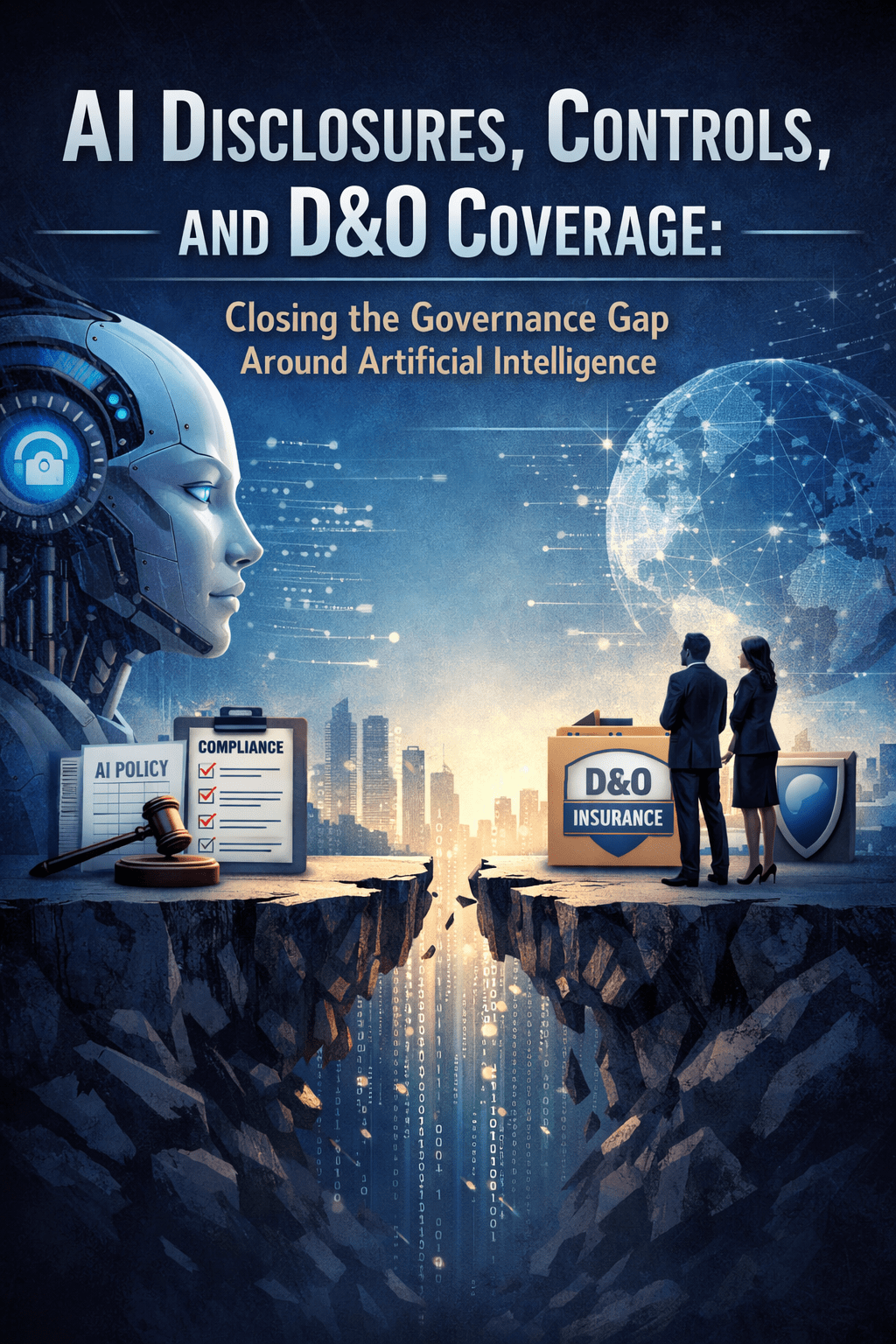
AI Disclosures, Controls, and D&O Coverage: Closing the Governance Gap Around Artificial Intelligence

A new governance gap is emerging around artificial intelligence, and it is one that Chief Compliance Officers, compliance professionals, and boards need to confront now. It sits at the intersection of three areas that too many companies still treat separately: public disclosures, internal controls, and insurance coverage. That siloed approach is no longer sustainable.

As companies speak more confidently about their AI strategies, insurers are becoming more cautious about the risks those strategies create. That tension matters. It signals that the market is beginning to see something many organizations have not yet fully addressed: when a company’s statements about AI outpace its actual governance, the exposure is not merely operational or reputational. It can become a disclosure issue, a board oversight issue, and ultimately a proof-of-governance issue under the Department of Justice’s Evaluation of Corporate Compliance Programs (ECCP).

For the compliance professional, this is not simply an insurance story. It is a compliance integration story. The question is whether the company can align its statements about AI, the controls it has in place, and the protections it believes it has in place if something goes wrong.

The New Governance Gap

Many organizations are eager to describe AI as a source of innovation, efficiency, better decision-making, or competitive advantage. Those messages increasingly appear in earnings calls, investor decks, public filings, marketing materials, and board presentations. Yet the underlying governance structures often remain immature. That disconnect is the governance gap.

It appears when management speaks broadly about responsible AI but has not built a complete inventory of AI use cases. It appears when companies discuss oversight but cannot show testing, documentation, or monitoring. It appears that boards assume that insurance will respond to AI-related claims without understanding how new policy language may narrow coverage.

This is where D&O coverage becomes so important. It is not the center of the story, but it is a revealing signal. If insurers are revisiting policy language and introducing exclusions or limitations tied to AI-related conduct, it suggests the market sees governance risk. In other words, the insurance market is sending a message: AI-related claims are no longer hypothetical, and companies that cannot demonstrate disciplined oversight may find that risk transfer is less available than they assumed.

Why the ECCP Should Be the Primary Lens

The DOJ’s ECCP remains the most useful framework for analyzing this issue because it asks exactly the right questions.

Has the company conducted a risk assessment that accounts for emerging risks? Are policies and procedures aligned with actual business practice? Are controls working in practice? Is there proper oversight, accountability, and continuous improvement? Can the company demonstrate all of this with evidence? Those are compliance questions, but they are also the right AI governance questions.

If a company makes public statements about AI capability, oversight, or reliability, the ECCP lens requires more than aspiration. It requires substantiation. Can the company show who owns the AI risk? Can it demonstrate how models or systems are tested? Can it show escalation procedures when problems arise? Can it document how AI-related decisions are monitored, reviewed, and improved over time?

If the answer is no, then the issue is not simply that the company may have overpromised. The issue is that its compliance program may not be adequately addressing a material emerging risk. That is why CCOs should view AI as a cross-functional challenge requiring integration across legal, compliance, technology, risk, audit, investor relations, and the board.

AI Disclosure Must Be Evidence-Based

One of the most practical steps a compliance function can take is to push for an evidence-based disclosure process around AI. This means that public statements about AI should not be driven solely by enthusiasm, market pressure, or executive optimism. They should be grounded in underlying documentation. If the company says it uses AI responsibly, where is the governance framework? If it claims AI improves decision-making, what testing supports that assertion? If it says it has safeguards, where are the control descriptions, monitoring results, and escalation records?

This is not about suppressing innovation. It is about ensuring that disclosure discipline keeps pace with technological ambition. For boards, this means asking harder questions before approving or relying on public AI narratives. For compliance officers, it means helping management build the evidentiary record that turns broad statements into defensible representations.

Controls Must Catch Up to Strategy

This is where the “how-to” work begins. Compliance professionals should begin by creating a structured inventory of AI use cases across the enterprise. That inventory should identify where AI is being used, what decisions it informs, what data it relies on, who owns it, and what risks it entails.

Once that inventory exists, risk tiering should follow. Not every AI use case carries the same compliance significance. A low-risk productivity tool does not need the same oversight as a system that affects investigations, third-party due diligence, customer interactions, financial reporting, or core operational decisions.

From there, the company can design controls proportionate to risk. High-impact uses of AI should have documented governance, human review where appropriate, testing protocols, escalation triggers, and monitoring requirements. The compliance team should be able to answer a simple question: where are the controls, and how do we know they work? That is the heart of the ECCP inquiry.

Where NIST AI RMF and ISO/IEC 42001 Fit

This is also where the NIST AI Risk Management Framework and ISO/IEC 42001 become highly practical tools. NIST AI RMF helps organizations govern, map, measure, and manage AI risks. For compliance professionals, this provides a disciplined structure for identifying AI use cases, understanding impacts, assessing reliability, and managing response. It is especially useful in linking abstract AI risk to operational decision-making.

ISO/IEC 42001 brings management system discipline to AI governance. It focuses on defined roles, documented processes, control implementation, monitoring, internal review, and continual improvement. That makes it an excellent bridge between policy and execution. Together, these frameworks help operationalize the ECCP. The ECCP tells you what an effective compliance program should be able to demonstrate. NIST AI RMF helps structure the risk analysis. ISO 42001 helps embed those requirements into a repeatable governance process.

For CCOs, the practical lesson is clear: use these frameworks not as academic overlays, but as working tools to build ownership, documentation, testing, and accountability.

Insurance Is a Governance Input

Companies also need to stop treating insurance as an afterthought. D&O coverage should be considered a governance input, not merely a downstream purchase. If policy language is narrowing around AI-related claims, boards and compliance leaders need to understand what that means. What scenarios might raise disclosure-related allegations? Where is ambiguity in coverage? What assumptions has management made about protection that may no longer hold?

Compliance does not need to become an insurance specialist. But it does need to ensure that disclosure, governance, and risk transfer are aligned. If the company is making strong public claims about AI while carrying unexamined governance weaknesses and uncertain coverage, that is precisely the kind of mismatch that can trigger a crisis.

Closing the Gap Before It Becomes a Failure

The larger lesson is straightforward. AI governance is not simply about technology controls. It is about integration. It is about ensuring that what the company says, what it does, and what it can prove all line up. That is why the governance gap matters so much. It is the space where strategy outruns structure, where disclosure outruns evidence, and where confidence outruns control. For boards and compliance professionals, the task is to close that gap before it becomes a failure.

The companies that do this well will not necessarily be the ones moving the fastest. They will be the ones building documented, tested, monitored, and governed AI programs that stand up to regulatory scrutiny, investor pressure, and real-world disruption. That is not bureaucracy. That is the price of sustainable innovation.

Categories
Blog

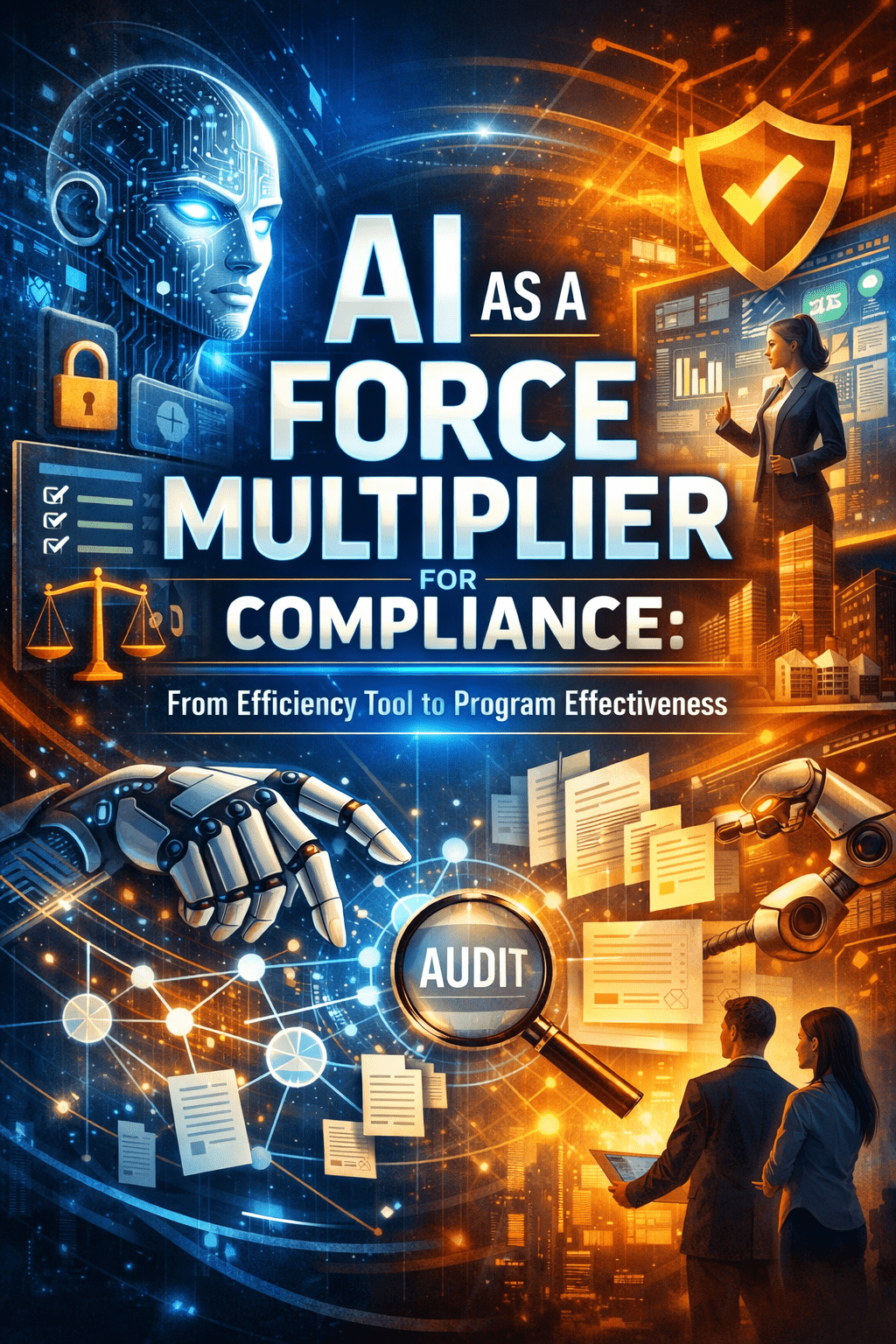
AI as a Force Multiplier for Compliance: From Efficiency Tool to Program Effectiveness

There is a temptation in every wave of new technology to focus first on speed. How much faster can we do the work? How many hours can we save? How many tasks can we automate? Yet for the compliance professional, those are not the right first questions. The right first question is always: does this make our compliance program more effective?

That is why the recent Moody’s discussion of GenAI is so interesting when viewed through a compliance lens. The article describes AI not simply as a productivity engine, but as a tool that changes how professionals interact with information, generate insights, and support decision-making. It emphasizes workflow transformation, role-based support, auditability, data quality, and the need for governance and human oversight . For compliance officers, that is the real story. AI can indeed make work faster. But its true promise is that it can make compliance more targeted, more consistent, more responsive, and more operationally embedded.

The Department of Justice has been telling us for years, through the Evaluation of Corporate Compliance Programs (ECCP), that effectiveness is the standard. The questions are not whether a company has a policy on the shelf or a training module in the system. The questions are whether the company has access to data, whether it uses that data, whether controls are tested, whether issues are triaged appropriately, whether lessons learned are fed back into the program, and whether the program evolves as risks change. AI, properly governed, can help answer yes to each of those questions.

AI and the Compliance Program of the Future

The Moody’s paper notes that GenAI is moving from passive, knowledge-based support toward more action-oriented solutions that can assist with complex, multi-step workflows . That observation should resonate with every Chief Compliance Officer. The future is not an AI toy that drafts emails. The future is an AI-enabled compliance architecture that helps the function move from reactive to proactive.

Consider third-party due diligence. Most compliance teams still struggle with volume, fragmentation, and prioritization. Information sits in onboarding questionnaires, sanctions screens, beneficial ownership reports, payment histories, audit findings, hotline allegations, and open-source media. The challenge is not merely gathering that information. The challenge is turning it into risk-based action. AI can help synthesize disparate information sources, surface red flags, identify missing documentation, and create a more coherent risk picture. Under the ECCP, that supports a more thoughtful, risk-based approach to third-party management.

Take investigations triage. Every mature speak-up program faces the same problem: how to distinguish between the urgent, the important, and the routine. AI can help sort allegations by subject matter, geography, potential legal exposure, prior related issues, implicated business units, and urgency indicators. That does not mean AI decides guilt, materiality, or discipline. It means AI helps compliance direct scarce investigative resources where they matter most. In ECCP terms, it strengthens case handling, responsiveness, consistency, and root-cause readiness.

Now think about risk assessment. The best compliance risk assessments are dynamic, not annual rituals. AI can assist in identifying patterns across reports, controls failures, investigation outcomes, gifts and entertainment data, third-party activity, and regulatory developments. It can help compliance professionals see concentrations of risk earlier and with greater context. In a program built around continuous improvement, that is a force multiplier.

Effectiveness, Not Mere Automation

One of the most important lessons from the Moody’s article is that the value of AI lies in supporting higher-value analytical work, not just reducing routine effort. That is exactly how compliance leaders should approach deployment.

Transaction monitoring is a good example. Many organizations already use rules-based systems, but these often produce high volumes of noise. AI can support better prioritization, pattern recognition, and anomaly detection. It can help identify clusters of conduct that might otherwise remain hidden across vendors, employees, geographies, or payment channels. But the point is not simply to clear alerts faster. The point is to make the monitoring program smarter, more risk-based, and more defensible.

The same is true in training and communications. Too much compliance training remains generic, static, and detached from actual risk. AI opens the door to role-based, scenario-based, and even timing-based communications. A sales team in a high-risk market should not receive the same examples as procurement professionals dealing with third parties. A manager with hotline escalation responsibilities should not receive the same training as a new hire. AI can help tailor content, refresh scenarios, and improve accessibility. Under the ECCP, that supports effectiveness in training design, communications, and accessibility of guidance.

Speak-up and case management also stand to benefit. AI can help identify repeat issue patterns, detect retaliation indicators, cluster similar allegations, and flag unresolved themes across regions or functions. Done correctly, it can help compliance move from case closure to issue intelligence. That is where a hotline becomes not just a reporting channel but an early warning system.

Governance Is the Price of Admission

Here is where the compliance professional earns his or her stripes. The Moody’s piece is explicit that none of this works without robust governance, trustworthy data, transparency, documentation, validation, and human expertise remaining central to critical decisions . That is the bridge to both the NIST AI Risk Management Framework (NIST AI RMF) and ISO/IEC 42001.

NIST AI RMF gives compliance teams a practical way to think about governance, mapping, measurement, and management. ISO/IEC 42001 provides a management-system structure for implementing AI governance in an enterprise setting. Together with the ECCP, they provide a powerful architecture. The ECCP asks whether your compliance program works. NIST AI RMF helps define and manage AI risk. ISO/IEC 42001 helps operationalize governance and accountability.

What does that mean on the ground for  your compliance regime?

It means every AI use case in compliance should have a defined business purpose, an identified owner, approved data sources, documented limitations, escalation criteria, testing protocols, and monitoring for drift or unintended consequences. It means AI outputs should be reviewable. It means prompt logs, source provenance, and validation results should be retained where appropriate. It means employees should know when they are permitted to rely on AI and when human review is mandatory. It means there must be clear boundaries around privacy, privilege, confidentiality, bias, and record retention.

Most of all, it means compliance should resist the easy sales pitch that AI is a substitute for professional judgment. It is not. It is a force multiplier for judgment.

The Board and Senior Management Imperative

Boards and senior leaders should be asking a straightforward question: are we using AI to make compliance more effective, or are we simply using it to do old tasks faster? Those are not the same thing. A mature answer would include at least five elements. First, a risk-based inventory of compliance AI use cases. Second, governance over data quality and model performance. Third, defined human-review thresholds for consequential decisions. Fourth, ongoing monitoring and periodic validation. Fifth, a feedback loop so lessons from investigations, audits, and operations improve the system over time.

That is very much in line with both the ECCP and the Moody’s article’s emphasis on verifiable data, decision auditability, and governance at scale.

Five Lessons Learned

  1. Start with effectiveness, not efficiency. If AI only helps you do low-value tasks faster, you have not transformed compliance. Use it where it improves risk identification, triage, analysis, and action.
  2. Build around the ECCP. The DOJ already gave compliance professionals the framework. Use AI to strengthen risk assessment, third-party management, investigations, training, and continuous improvement.
  3. Govern the data before you celebrate the tool. Bad data, undocumented prompts, or unvalidated outputs will undermine trust. Governance over data provenance and output review is essential.
  4. Keep humans in the loop where it matters. AI can assist with pattern recognition, drafting, prioritization, and synthesis. It should not replace judgment on materiality, discipline, escalation, privilege, or remediation.
  5. Treat AI as part of your compliance operating model. This is not an innovation side project. It should be documented, tested, monitored, and improved like any other core compliance process.

The bottom line is this: AI offers compliance functions a genuine opportunity to become more effective, more focused, and more business relevant. But that opportunity only becomes real when it is grounded in governance, disciplined by the ECCP, and supported by frameworks like NIST AI RMF and ISO/IEC 42001. Done right, AI will not diminish the role of the compliance professional. It will elevate it.

Categories
Blog

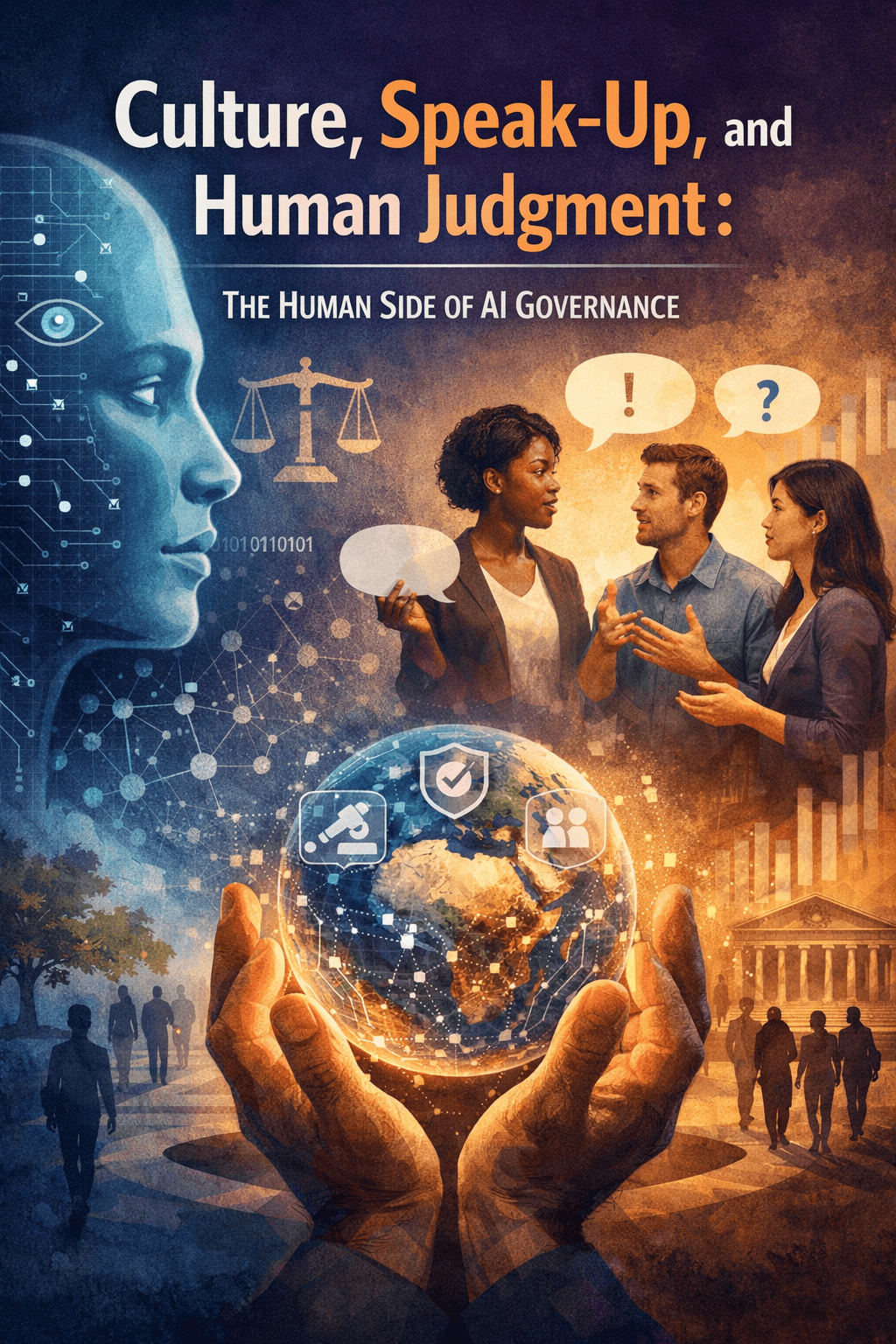
Culture, Speak-Up, and Human Judgment: The Human Side of AI Governance

Artificial intelligence may be built on data, models, and code, but governance ultimately rests on people. For boards and Chief Compliance Officers, one of the most important questions is not only whether the organization has responsibly approved AI tools, but also whether employees are prepared to challenge them, report concerns, and apply human judgment when something does not look right. In many organizations, the earliest warning system for AI failure is not a dashboard. It is the workforce.

Over the course of this series, I have explored four critical governance challenges in AI: board oversight and accountability, strategy outrunning governance, data governance and privacy, and ongoing monitoring. This final blog post turns to the fifth and most underappreciated challenge of all: culture, speak-up, and human judgment.

Underappreciated because organizations often begin AI governance with structure in mind. They build committees, draft policies, classify risks, and establish approval gates. All of that is necessary. But structure alone is not sufficient. If the human beings closest to the work do not understand their role in AI governance, do not feel empowered to raise concerns, or begin to defer too readily to machine-generated outputs. The governance framework will be weaker than it appears on paper.

This is the point many companies miss. AI governance is not only about the technology. It is about whether the organization’s culture supports the responsible use of technology.

Employees Will See AI Failures First

In many companies, the first person to notice an AI problem will not be a board member, a Chief Executive Officer, or even a member of the governance committee. It will be an employee interacting with the tool in daily operations. It may be the customer service representative who sees the system generating inaccurate responses. It may be the HR professional who notices troubling patterns from an AI-supported screening tool. It may be the sales employee who sees a generative tool overstating product claims. It may be the finance professional who questions an automated summary that does not match underlying records. It may be the compliance analyst who sees a tool being used for an unapproved purpose.

That matters because early visibility is one of the most valuable protections a company can have. But visibility only becomes a control if employees know what to do with what they see. That is why culture is a governance issue. A workforce may spot the problem, but if employees do not understand that AI-related concerns are reportable, are unsure where to raise them, or believe management will ignore them, the warning system fails.

For boards and CCOs, that means AI governance cannot stop at policy creation. It must extend into behavior, reporting norms, and organizational trust.

Speak-Up Culture Is an AI Governance Control

Compliance professionals have long known that a speak-up culture is a control. It is often the first way a company learns of misconduct, process breakdowns, weak supervision, retaliation, harassment, fraud, or control evasion. The same principle now applies with equal force to AI.

Employees may observe biased outputs, inaccurate recommendations, privacy concerns, unexplained model behavior, misuse of tools, inappropriate reliance on machine-generated content, or efforts to bypass required human review. If they do not report those concerns, management may have no timely way to know what is happening.

This is where the Department of Justice’s Evaluation of Corporate Compliance Programs (ECCP) remains highly instructive. The ECCP places substantial emphasis on whether employees are comfortable raising concerns, whether the company investigates them appropriately, and whether retaliation is prohibited in practice. Those same questions should now be asked in the context of AI. Does the company’s reporting framework explicitly include AI-related concerns? Are managers trained to recognize and escalate those concerns? Are reports investigated with the same seriousness as other compliance issues? Are employees protected if they raise uncomfortable questions about a tool the business wants to use?

If the answer is no, the company may have AI procedures, but does not yet have embedded AI governance in its culture.

Human Judgment Cannot Be Optional

One of the most significant risks in AI governance is not simply that a model will be wrong. It is that people will stop questioning it. AI systems can produce outputs quickly, fluently, and with apparent confidence. That creates a powerful temptation for users to over-trust the tool. When a system sounds polished, appears efficient, and reduces workload, people may assume that its conclusions deserve deference. This is precisely where governance needs the corrective force of human judgment.

Human judgment cannot be treated as a ceremonial step or a paper requirement. It must be meaningful. That means the people reviewing AI outputs must have the authority, time, training, and confidence to challenge those outputs when needed. A human review requirement that exists only on paper is not much of a safeguard. If reviewers are overloaded, insufficiently trained, or culturally discouraged from slowing the process, the control may be largely illusory.

Boards should care about this because one of the easiest mistakes management can make is to describe human oversight in governance documents without testing whether it is functioning in practice. CCOs should care because this is a classic compliance problem. A control may be designed elegantly but fail in daily operations because the supporting culture is too weak to sustain it.

Training Must Change with AI

A company cannot expect good judgment around AI if it has not trained people on what good judgment looks like. That means AI training should go beyond technical usage instructions. Employees need to understand what risks may arise, what concerns are reportable, what approved use looks like, what prohibited use looks like, and why human challenge matters. Managers need additional training because they are often the first informal escalation point when an employee raises a concern. If managers dismiss AI concerns as overreactions, inconveniences, or resistance to innovation, the speak-up system will quickly lose credibility.

Training should also be role-based. The risks faced by a customer-facing team may differ from those faced by teams in HR, legal, procurement, marketing, finance, or internal audit. A generic AI training module may create awareness, but it will not create the operational judgment needed in high-risk areas.

This is where the NIST AI Risk Management Framework provides practical value. NIST’s emphasis on governance is not limited to formal structures. It contemplates culture, accountability, and the need for organizations to support informed decision-making across the enterprise. ISO/IEC 42001 similarly reinforces the importance of organizational competence, awareness, and defined responsibilities. Both frameworks point to a critical truth: responsible AI use depends not only on controls over the technology, but also on the capabilities of the people who use and oversee it.

Managers Matter More Than Companies Often Realize

If culture is the operating environment of governance, managers are often its most important local translators. An employee may not begin by filing a formal report. More often, an employee may raise a concern informally with a supervisor or colleague. “This output does not seem right.” “I do not think we should be using it this way.” “This seems to be pulling in sensitive information.” “This recommendation may be biased.” “The human review is not really happening anymore.”

The manager’s response in that moment matters enormously. Does the manager take the concern seriously? Does the manager know it should be escalated? Does the manager see it as a governance issue or as resistance to efficiency? Does the manager understand the difference between a minor usability complaint and a potentially significant compliance concern?

This is why boards and CCOs should not think about speak-up solely in hotline terms. AI governance depends on the broader management culture. If supervisors are not equipped to receive and escalate AI concerns appropriately, many issues will die in the middle of the organization before they ever reach a formal channel.

Anti-Retaliation Must Be Real in the AI Context

There is another dimension that cannot be overlooked: the risk of retaliation. In some organizations, employees may hesitate to raise AI concerns because they fear being labeled anti-innovation, obstructionist, or not commercially minded. That creates a subtle but serious governance risk. If the corporate atmosphere celebrates rapid AI adoption without equally celebrating responsible challenge, then employees may conclude that silence is safer than candor.

This is why anti-retaliation messaging must be explicit in the AI context. The company should make clear that raising concerns about inaccurate outputs, misuse, privacy risks, unfairness, or control breakdowns is part of responsible business conduct. It is not a failure to embrace innovation. It is a contribution to the effective governance of innovation.

The CCO should ensure that AI-related concerns are incorporated into existing anti-retaliation frameworks, investigations protocols, and communications. Boards should ask whether employee sentiment data, hotline trends, and internal investigations provide any signal that people are reluctant to question AI initiatives. If the organization is moving aggressively on AI, it should be equally serious about protecting those who raise governance concerns about it.

Documentation and Escalation Still Matter

As with every other aspect of AI governance, culture and judgment must be integrated into the process. A company should document how AI-related concerns can be reported, how they are triaged, who reviews them, what escalation triggers apply, and how resolutions are tracked. Concerns about AI should not be dismissed as vague general complaints. They should be reviewable and analyzable over time.

This is essential not only for accountability but for learning. Patterns in employee concerns may reveal weaknesses in training, design, vendor management, access controls, or oversight. A single report may be an isolated event. Repeated concerns within a single function may point to a systemic governance problem. That is why speak-up is not just about receiving reports. It is about turning those reports into organizational intelligence.

The ECCP again offers a useful framework. It asks whether investigations are timely, whether root causes are examined, and whether lessons learned are fed back into the compliance program. AI governance should work the same way. A reported concern should not end with a narrow answer to the immediate complaint. It should prompt management to ask what the issue reveals about the broader governance environment.

Boards Must Model the Right Tone

This final point may be the most important. Culture is shaped by what leadership rewards, tolerates, and asks about. If the board only asks about AI efficiency, adoption, and speed, management will take the signal. If the board asks whether employees are raising concerns, whether human oversight is meaningful, whether managers are trained, and whether retaliation protections are working, management will take that signal as well.

For CCOs, this is a vital opportunity. The compliance function can help boards understand that governance is not only about structure and controls, but also about whether the organization has preserved the human capacity to question, escalate, and correct. In the AI context, that may be the most important governance capability of all.

Because in the end, even the most advanced system will not govern itself. An enterprise must govern it. That requires culture. It requires trust. It requires the courage to speak up. And it requires strong human judgment to look at an impressive output and still ask, “Is this right?”

The Human Side of Governance Is the Decisive Side

This final article brings the series back to a simple truth. AI governance is not only about what the company builds. It is about how the company behaves.

Boards may establish oversight. Management may create structures. Compliance may build controls. But if employees are not prepared to report concerns or exercise judgment, the organization will remain vulnerable. A strong AI governance program does not merely control the system. It empowers the people around the system to challenge it responsibly.

That is the human side of governance, and in many ways it is the decisive side. 

Categories
Blog

Preventing Strategy Outrunning Governance in AI

One of the clearest AI governance challenges facing companies today is not a failure of ambition. It is a failure of pacing. Put simply, strategy is moving faster than governance. Business teams want results. Senior executives hear daily about efficiency gains, lower costs, faster decision-making, enhanced customer engagement, and competitive advantage. Vendors are more than happy to promise it all. Employees are already experimenting with AI tools on their own. In that environment, the pressure to move quickly is relentless.

That is where the compliance function must step forward. Not to say no. Not to slow innovation for the sake of slowing it. But to ensure that innovation moves with structure, discipline, and accountability. Governance is not the enemy of AI strategy. Governance is what allows an AI strategy to scale without becoming an enterprise risk event.

The Central Question for Boards and CCOs

For boards, Chief Compliance Officers, and business leaders, the central question is straightforward: has the company defined the rules of the road before putting AI into production? If the answer is no, the company is already behind.

This is not a theoretical problem. It is happening every day. A business unit buys an AI-enabled tool before legal, compliance, IT, privacy, and security have reviewed it. A vendor pitches a product as low-risk automation, even though it actually makes consequential recommendations. An employee uploads sensitive data into a generative AI platform for convenience. A use case that began as internal support quietly migrates into customer-facing decision-making. A pilot project becomes business as usual without anyone documenting who approved it, what risks were considered, or what human oversight is supposed to look like.

That is what it means when strategy outruns governance. The business has a faster process for adopting AI than it has for understanding, controlling, and monitoring AI risk.

What the DOJ Expects

The Department of Justice has been telling compliance professionals for years that an effective compliance program must be dynamic, risk-based, and integrated into the business. That lesson applies directly here. Under the ECCP, prosecutors ask whether a company has identified and assessed its risk profile, whether policies and procedures are practical and accessible, whether responsibilities are clearly assigned, whether decisions are documented, and whether the program evolves as risks change. AI governance sits squarely in that framework.

What “Rules of the Road” Means in Practice

What do the “rules of the road” look like in practice?

First, the company must define which AI use cases are permissible. These are lower-risk applications that can be used within established controls. Think internal drafting support, workflow automation for non-sensitive administrative tasks, or summarization tools used on approved data sets. Even here, there should be basic conditions: approved tools only, no confidential data unless authorized, user training, logging, and manager accountability.

Second, the company must identify restricted or high-risk use cases. These are situations where AI may be allowed, but only after enhanced review. This can include uses involving personal data, HR decisions, customer communications, pricing, fraud detection, credit or eligibility decisions, compliance surveillance, or any function where bias, opacity, or error could create legal, regulatory, or reputational harm. These use cases should trigger a more formal process that includes a documented risk assessment, legal and compliance review, data governance checks, testing, defined human oversight, and ongoing monitoring.

Third, the company must be clear about prohibited use cases. If an AI application cannot be used consistently with the company’s values, control environment, legal obligations, or risk appetite, it should be off-limits. That might include tools that process sensitive data in unapproved environments, systems that make fully automated consequential decisions without human review, or applications that cannot be explained, tested, validated, or monitored sufficiently for their intended use.

Fourth, the company must establish escalation thresholds. Not every AI decision belongs at the board level, but some certainly do. Use cases involving strategic transformation, material legal exposure, major customer impact, significant third-party dependency, or high-consequence decision-making may need escalation to senior management, a designated AI or risk committee, or the board itself. If management cannot explain when a matter gets elevated, governance is too vague to be trusted.

Why the NIST AI RMF Matters

This is where the NIST Framework is so useful. NIST does not treat AI governance as a one-time signoff exercise. It organizes governance as an ongoing discipline through four connected functions: Govern, Map, Measure, and Manage. For compliance professionals, that is a practical operating model.

Governance means setting accountability, policies, oversight structures, and risk tolerances. It answers who is responsible, who decides, and what standards apply. A map means understanding the use case, context, stakeholders, data, and risks. It answers what the system is actually doing and where exposure lies. Measure means testing, validating, and assessing performance and controls. It answers whether the system works as intended and whether the company can prove it. Managing means acting on what is learned through oversight, remediation, change management, and continual improvement. It answers whether the company is prepared to respond when reality diverges from the plan.

How ISO 42001 Reinforces Governance Discipline

ISO 42001 reinforces the same message from a management systems perspective. It brings structure, accountability, controls, and continual improvement to AI governance. That matters because many organizations do not fail because of a lack of policy language. They fail because they do not operationalize accountability. ISO 42001 pushes companies to embed AI governance into defined processes, assign responsibilities, document controls, conduct internal reviews, and take corrective action. In other words, it turns aspiration into a management discipline.

What Happens When Strategy Outruns Governance

What happens when none of this is done well?

Shadow AI is usually the first warning sign. Employees use public or lightly reviewed tools because they are easy to use, fast, and readily available. Sensitive data may be entered without approval. Outputs may be used in business decisions without validation. The organization tells itself it is still in the experimentation phase, while the risk has already gone live.

Vendor-driven deployment is another danger. The company relies too heavily on what the vendor says the product can do and not enough on its own evaluation of what the product should do, how it works, what data it uses, and what controls are required. When something goes wrong, accountability becomes murky. Procurement says the business wanted speed. The business says IT approved the integration. IT says legal reviewed the contract. Legal says compliance owns the policy. Compliance says no one submitted the use case for formal review. That is not governance. That is institutional finger-pointing.

Undocumented approvals are equally dangerous. An AI tool is launched because everyone generally agrees it seems useful. But there is no record of the intended purpose, risk rating, required controls, human review standard, or approval rationale. Six months later, the company cannot explain why the system was deployed, what guardrails were put in place, or whether its use has drifted beyond its original scope.

The Compliance Mechanisms Companies Need Now

That is why companies need concrete compliance mechanisms now. They need an intake process for AI use cases to enter a formal review channel before deployment. They need risk tiering so not every use case gets the same treatment, but higher-risk applications receive enhanced scrutiny. They need approval workflows with defined roles for the business, legal, compliance, privacy, security, IT, and, where appropriate, model risk or internal audit. They need board reporting triggers to inform leadership when AI adoption crosses materiality or risk thresholds. They need a current model and use-case inventory so the company knows what is in operation. They need change management, so updates, retraining, vendor changes, and scope shifts are reviewed rather than assumed. And they need periodic review because AI risk does not stand still after launch.

The Special Role of Compliance

The compliance professional has a special role here. Compliance is often the function best positioned to connect governance, process, accountability, documentation, and escalation. That is precisely what the DOJ expects in an effective program. If the company can buy AI faster than it can classify risk, document controls, assign accountability, and test outcomes, the program is not keeping pace with the business. That gap will not stay theoretical for long. It will harden into enterprise risk.

Conclusion: Governance Must Keep Pace With Strategy

The lesson is direct. Strategy and governance must move together. AI governance is not a brake pedal. It is the steering system. A company that wants the benefits of AI must be disciplined enough to define where AI can go, where it cannot go, who decides, what gets documented, and when the business must stop and reassess. If the company can move faster on AI strategy than on AI governance, it is creating risk faster than it can manage. That is not innovation. That is exposure.

Categories
Blog

When AI Incidents Collide with Disclosure Law: A Unified Playbook for Compliance Leaders

There was a time when the risk of artificial intelligence could be discussed as a forward-looking innovation issue. That time has passed. AI governance now sits squarely at the intersection of operational risk, regulatory enforcement, and securities disclosure. For compliance professionals, the question is no longer whether AI risk will mature into a board-level issue. It already has.

If your organization deploys high-risk AI systems in the European Union, you face post-market monitoring and serious incident reporting obligations under the EU AI Act. If you are a U.S. issuer, you face potential Form 8-K disclosure obligations under Item 1.05 when a cybersecurity incident becomes material. Add the NIST AI Risk Management Framework for severity evaluation, ISO 42001 governance expectations for evidence and documentation, and the compliance function, which stands at the crossroads of law, technology, and investor transparency.

The challenge is not understanding each framework individually. The challenge is integrating them into one operational escalation model. Today, we consider what that means for the Chief Compliance Officer.

The EU AI Act: Post-Market Monitoring Is Not Optional

The EU AI Act requires providers of high-risk AI systems to implement post-market monitoring systems. This is not a paper exercise. It requires structured, ongoing collection and analysis of performance data, including risks to health, safety, and fundamental rights. Where a “serious incident” occurs, providers must notify the relevant national market surveillance authority without undue delay. A serious incident includes events that result in death, serious harm to health, or a significant infringement of fundamental rights. The obligation is proactive and regulator-facing. Silence is not an option.

This means that if your AI-enabled hiring tool systematically discriminates, or your AI-driven medical device produces dangerous outputs, you may face mandatory reporting obligations in Europe even before your legal team finishes debating causation. The compliance implication is straightforward: you need an operational definition of “serious incident” embedded inside your incident response process. Waiting to interpret the statute after the event is not governance. It is risk exposure.

SEC Item .05: The Four-Business-Day Clock

Across the Atlantic, the Securities and Exchange Commission (SEC) has made its expectations equally clear. Item 1.05 of Form 8-K requires disclosure of material cybersecurity incidents within four business days after the registrant determines the incident is material. Here is where compliance professionals must lean forward: AI incidents can trigger cybersecurity implications. Data exfiltration through model vulnerabilities, adversarial manipulation of training data, or unauthorized system access to AI infrastructure may constitute cybersecurity incidents.

The clock does not start when the breach occurs. It starts when the company determines materiality. That determination must be documented, defensible, and timestamped. If your AI governance framework does not feed into your materiality assessment process, you have a structural weakness. Compliance must ensure that AI incident severity assessments are directly connected to the legal determination of materiality. The board will ask one question: When did you know, and what did you do? You must have an answer supported by contemporaneous documentation.

NIST AI RF: Speaking the Language of Severity

The NIST AI Risk Management Framework provides the operational vocabulary compliance teams need. Govern, Map, Measure, and Manage are not theoretical constructs. They form the backbone of defensible severity assessment. When an AI incident arises, you must evaluate:

  • Scope of affected stakeholders
  • Magnitude of operational disruption
  • Likelihood of recurrence
  • Financial exposure
  • Reputational harm

This impact-likelihood matrix is what transforms noise into signal. It allows the organization to distinguish between model drift requiring retraining and systemic failure requiring regulatory notification. Importantly, severity classification must not be left solely to engineering teams. Compliance, legal, and risk must participate in the evaluation. A purely technical assessment may underestimate regulatory or investor impact.

If the NIST severity rating is high-impact and high-likelihood, escalation must be automatic. There should be no debate about whether the issue reaches executive leadership. Governance means predetermined thresholds, not ad hoc discussions.

ISO 42001: If It Is Not Logged, It Did Not Happen

ISO 42001, the emerging AI management system standard, adds another layer of discipline: documentation. It requires structured governance, defined roles, documented controls, and demonstrable evidence of monitoring and incident handling. For compliance professionals, this is where audit readiness becomes real. When regulators ask for logs, you must produce:

  • Model version identifiers
  • Training data provenance
  • Decision traces and outputs
  • Operator interventions
  • Access logs and export records
  • Timestamps and system configurations

In other words, you need a chain of custody for AI decision-making. Without logging discipline, you will not survive regulatory scrutiny. Worse, you will not survive shareholder litigation. ISO 42001 forces organizations to treat AI systems with the same governance rigor as financial controls under SOX. That alignment should not surprise anyone. Both concern trust in automated decision systems.

One Incident, Multiple Obligations

Consider a practical scenario. A vulnerability in a third-party model component has compromised your AI-driven customer analytics platform. Sensitive customer data is exposed. The compromised system also produced biased credit scores during the attack window. You now face:

  • Potential serious incident reporting under the EU AI Act
  • Cybersecurity disclosure analysis under SEC Item 1.05
  • Data protection obligations under GDPR
  • Internal audit review of governance controls
  • Reputational fallout

If your organization handles each of these as separate tracks, you will lose time and coherence. Instead, you need a unified incident command structure with embedded regulatory triggers. As soon as the issue is identified, you preserve logs. Within 24 hours, severity scoring occurs under NIST criteria. Within 48 hours, the legal team evaluates materiality. By 72 hours, the evidence packet is assembled for board review. The board should receive:

  • Incident timeline
  • Severity classification
  • Regulatory reporting analysis
  • Financial exposure estimate
  • Remediation plan

This is not overkill. This is operational discipline.

The Board’s Oversight Obligation

Boards are increasingly being asked about AI governance. Institutional investors want transparency. Regulators want accountability. Plaintiffs’ lawyers want leverage. Directors should demand:

  1. Clear definitions of serious AI incidents.
  2. Pre-established escalation thresholds.
  3. Integrated disclosure decision protocols.
  4. Evidence preservation policies aligned with ISO standards.
  5. Regular tabletop exercises involving AI scenarios.

If your board has not run an AI incident simulation that includes SEC disclosure timing and EU reporting triggers, it is time to schedule one. Calm leadership during a crisis does not happen spontaneously. It is built through preparation.

The CCO’s Moment

This convergence of AI regulation and securities disclosure creates an opportunity for compliance professionals. The CCO can position the compliance function as the integrator between engineering, legal, cybersecurity, and investor relations. That requires proactive steps:

  • Embed AI into enterprise risk assessments.
  • Update incident response playbooks to include AI-specific triggers.
  • Align AI logging architecture with evidentiary standards.
  • Train leadership on materiality determination for AI incidents.
  • Report AI governance metrics to the board quarterly.

The compliance function should not be reacting to AI innovation. It should be shaping its governance architecture.

Governance Is Strategy

Too many organizations treat AI governance as defensive compliance. That mindset is outdated. Effective governance builds trust. Trust drives adoption. Adoption drives competitive advantage.

A well-documented post-market monitoring system demonstrates operational maturity. A disciplined severity assessment process demonstrates strong internal control. Transparent disclosure builds investor confidence. Conversely, fragmented incident handling erodes credibility. The market will reward companies that demonstrate responsible AI oversight. Regulators will scrutinize those who do not.

Conclusion: Integration Is the Answer

The EU AI Act, SEC Item 1.05, NIST AI RMF, and ISO 42001 are not competing frameworks. They are complementary lenses on the same reality: AI systems create risk that must be monitored, measured, disclosed, and documented.

Compliance leaders who integrate these frameworks into a single escalation and reporting architecture will protect their organizations. Those who treat them as separate checklists will struggle. AI risk is no longer hypothetical. It is operational, regulatory, and financial. The compliance function must be ready before the next incident occurs. Because when it does, the clock will already be ticking.


Categories
AI Today in 5

AI Today in 5: January 5, 2026, The Does The World Have Time Edition

Welcome to AI Today in 5, the newest edition to the Compliance Podcast Network. Each day, Tom Fox will bring you 5 stories about AI to start your day. Sit back, enjoy a cup of morning coffee, and listen in to the AI Today In 5. All, from the Compliance Podcast Network. Each day, we consider four stories from the business world, compliance, ethics, risk management, leadership, or general interest about AI.

Top AI stories include:

  1. Does the world have time to prepare for AI? (The Guardian)
  2. Colombia adopts an international standard for AI. (Global Compliance News)
  3. Client enablement with AI. (FinTechWeekly)
  4. Agentic AI rewriting rules for compliance. (Dallas Business Journal)
  5. Why AI Compliance needs to build operating systems. (Forbes)

For more information on the use of AI in Compliance programs, my new book, Upping Your Game, is available. You can purchase a copy of the book on Amazon.com.

Categories
Compliance and AI

Compliance and AI: Revolutionizing Risk Management with John Byrne

What is the role of Artificial Intelligence in compliance? What about Machine Learning? Are you using ChatGPT? These are but three questions we will explore in this cutting-edge podcast series, Compliance and AI, hosted by Tom Fox, the award-winning Voice of Compliance. In this episode, Tom welcomes John Byrne, founder and CEO at Corlytics, to discuss the company’s groundbreaking ISO 42001 certification and its significance for RegTech.

They delve into the evolving role of compliance, emphasizing the transition from reactive to proactive problem-solving. John highlights the shift towards AI-centric operations at Corlytics, aiming for enhanced accuracy, consistency, and traceability in compliance processes. The conversation explores the benefits and risks of AI, including data poisoning and the practical differences between large and small language models. They also touch upon integrating compliance into core business operations, aiming for better client outcomes and speeding up processes like account opening. John envisions RegTech becoming widely accessible, benefiting even the smallest regulated players by enabling proactive business solutions and reducing bottlenecks.

Key highlights:

  • ISO 42001 Certification and Its Importance
  • AI in Compliance and Security
  • AI as an Everyday Tool in Banking
  • Large Language Models vs. Small Language Models
  • Data Poisoning and Its Risks
  • Dynamic Traceability and Policy Lifecycle
  • Compliance as a Strategic Risk Management Tool

Resources:

John Byrne on LinkedIn

Corlytics

Tom Fox

Instagram

Facebook

YouTube

Twitter

LinkedIn

Check out my latest book, Upping Your Game: How Compliance and Risk Management Move to 2030 and Beyond, available from Amazon.com.

Categories
Compliance and AI

Compliance and AI: Harnessing Generative AI for Compliance: An Interview with Eric Sydell

What is the role of Artificial Intelligence in compliance? What about Machine Learning? Are you using ChatGPT? These are but three questions we will explore in this cutting-edge podcast series, Compliance and AI, hosted by Tom Fox, the award-winning Voice of Compliance. In this episode, Tom is joined by Eric Sydell, co-founder and CEO of Vero AI, to discuss the intersection of AI and compliance.

Eric shares his unique journey from industrial psychology to HR technology and ultimately to the realm of compliance through AI. They explore how Vero AI utilizes generative AI to analyze and interpret vast amounts of unstructured data at scale, such as text, video, and imagery. Eric emphasizes that AI provides a scalable solution for compliance processes, reducing manual labor and increasing efficiency.

Eric discusses the importance of AI governance in compliance, particularly in light of emerging standards like ISO 42001 and the EU AI Act. He introduces the Vero AI’s Violet Impact Model, which provides a comprehensive framework for evaluating the impact of algorithms and complex systems. The conversation covers practical applications of Vero AI in corporate procurement and risk management, highlighting how the tool can assist compliance officers in continuously monitoring and improving their compliance programs. Eric concludes by explaining how businesses can reach out to learn more about implementing these advanced AI-driven solutions.

Key highlights:

  • Generative AI and Unstructured Data
  • AI in Compliance and Predictive Models
  • AI Governance and Monitoring
  • The Violet Impact Model
  • Vero AI in Risk Management and Procurement

Resources:

Eric Sydell on Linkedin

Vero AI

Tom Fox

Instagram

Facebook

YouTube

Twitter

LinkedIn