

Categories
Blog

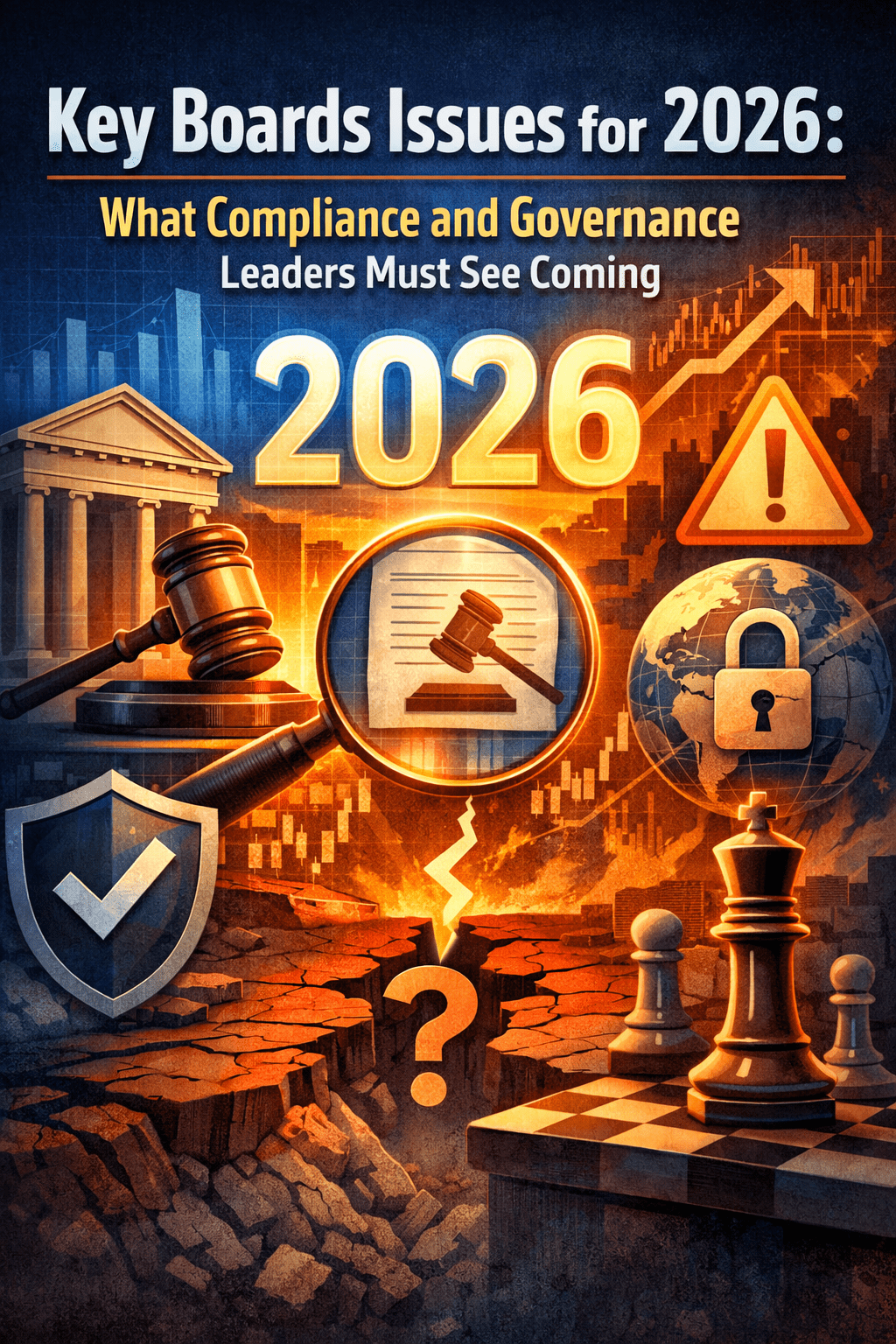
Key Boards Issues for 2026: What Compliance and Governance Leaders Must See Coming

Boards entering 2026 are doing so in an environment defined not by stability, but by volatility. Regulatory priorities are shifting rapidly, geopolitical risk is reshaping markets, technology is accelerating faster than governance frameworks can keep pace, and long-standing assumptions about shareholder engagement and corporate oversight are being tested. In this environment, the role of compliance is no longer reactive or advisory at the margins. It is structural.

The Thoughts for Boards: Key Issues for 2026 memorandum from the law firm of Wachtell, Lipton, Rosen & Katz, which appeared in the Harvard Law School Forum on Corporate Governance, provides a valuable roadmap for boards navigating this uncertainty. For compliance professionals, however, the document does something more important: it reveals where governance risk is quietly migrating. The challenge for compliance leaders is not simply to track these developments, but to translate them into oversight, controls, and strategic guidance that boards can use going forward.

A More Permissive SEC Does Not Mean Less Risk

One of the most striking developments outlined in the memorandum is the SEC’s recalibration of its role. From easing reporting burdens to stepping back from adjudication of shareholder proposals under Rule 14a-8, the Commission is signaling greater deference to companies in deciding how and when to engage with shareholders. At first glance, this appears to reduce regulatory pressure. In reality, it shifts risk inward.

When regulators retreat, discretion moves to boards and management. Predictable SEC processes no longer mediate decisions about disclosure cadence, shareholder engagement, and proposal exclusion. They are governance judgments that will be evaluated ex post by investors, courts, activists, and the media. For compliance professionals, this means fewer bright lines and more gray zones.

The potential move toward semi-annual reporting is a prime example. While it may reduce short-termism, it also alters internal disclosure controls, forecasting discipline, and market expectations. Compliance must ensure that reduced frequency does not translate into reduced rigor. Less reporting does not mean less accountability.

DEI and ESG: From Public Messaging to Quiet Risk Management

The memorandum describes sustained political and regulatory pushback against DEI and ESG initiatives, including executive orders, revised SEC guidance, and heightened scrutiny of shareholder proposals. Yet it also notes an important countervailing force: institutional investors have not abandoned interest in these areas. They have become quieter. This creates a compliance paradox.

On one hand, public signaling around DEI and ESG may expose companies to political and regulatory risk. On the other hand, abandoning these initiatives entirely risks alienating long-term shareholders, employees, and business partners. The compliance function sits at the center of this tension. In 2026, DEI and ESG will increasingly be treated less as branding exercises and more as internal governance risks. Compliance leaders should focus on process integrity, consistency, and documentation rather than rhetoric. The question is no longer whether a company “supports” DEI or ESG, but whether its practices align with its stated values and risk disclosures.

Tone at the top matters here more than ever. Boards must understand that silence does not equal neutrality. How a company governs these issues internally will determine its exposure externally.

Government as Shareholder: A New Governance Reality

Perhaps the most underappreciated development highlighted in the memorandum is the Trump Administration’s growing role as an equity holder in public companies deemed critical to national security. These investments vary widely in form, from passive economic stakes to golden shares with veto rights over strategic decisions. For compliance and governance professionals, this raises novel questions.

Government ownership blurs traditional distinctions between regulator and shareholder. It introduces new stakeholders with potentially divergent objectives, including national security, industrial policy, and geopolitical strategy. Even when governance rights are limited, the mere presence of the government on the cap table can alter decision-making dynamics and investor perceptions.

Compliance must be prepared to advise boards on conflicts of interest, disclosure obligations, and fiduciary duties in this new context. The risk is not simply regulatory; it is structural. Companies operating in sensitive sectors must assume that government involvement is no longer exceptional but potentially recurring.

AI Oversight Moves from Optional to Mandatory

Artificial intelligence dominated board agendas in 2025, and there is no indication that attention will diminish in 2026. The memorandum correctly emphasizes that AI is no longer confined to technology companies. It is embedded in products, operations, compliance monitoring, and decision-making across industries. For boards, the oversight challenge is acute. AI introduces opacity, speed, and scale that traditional governance frameworks were not designed to manage. For compliance officers, this creates both opportunity and risk.

AI is increasingly used within compliance itself, from transaction monitoring to proxy voting analytics. But the use of AI does not eliminate accountability. Boards will still be expected to understand how AI systems function, what risks they create, and how those risks are mitigated.

This is why board-level AI literacy is becoming a governance imperative. Compliance leaders should be proactive in helping boards understand AI not as a technical novelty, but as a risk multiplier. Data governance, model bias, explainability, and third-party reliance must all be incorporated into enterprise risk management frameworks.

Crypto and Digital Assets: Strategy First, Compliance Always

The memorandum highlights a friendlier regulatory environment for crypto-assets, alongside growing corporate interest in crypto treasury strategies and asset tokenization. This combination is dangerous if misunderstood. Regulatory friendliness is not regulatory clarity. Crypto engagement introduces risks related to custody, valuation, sanctions, AML, cybersecurity, and financial reporting. Boards that view crypto as a strategic opportunity without fully appreciating these risks are exposing the company to significant downside.

Compliance must insist on strategic discipline. Why is the company engaging with crypto? What problem is it solving? How does it align with the business model? Without clear answers, crypto becomes speculation rather than strategy. In 2026, compliance officers should expect to spend more time explaining why not to move quickly than how to move fast.

Shareholder Engagement Is Becoming More Fragmented, Not Less Important

The memorandum’s discussion of shareholder engagement reflects a fundamental shift. Institutional investors are splintering their stewardship approaches. Retail investors are more organized and more volatile. Proxy advisors are under regulatory and political attack. The result is unpredictability.

Boards can no longer rely on a small set of proxy advisor recommendations or institutional voting norms. Engagement must become more targeted, more frequent, and more informed. Compliance plays a critical role here by ensuring that engagement practices remain consistent with disclosure rules, insider trading controls, and governance policies.

The rise of retail activism and meme-stock dynamics also creates reputational risk that traditional governance tools were not designed to address. Social media is now a governance arena. Compliance must help boards understand that investor relations, communications, and risk management are increasingly inseparable.

Delaware Still Matters, Even as Alternatives Emerge

Finally, the memorandum addresses trends toward reincorporation in Texas and Nevada, as well as Delaware’s legislative response. While high-profile moves grab headlines, the underlying message is continuity rather than disruption. For most public companies, Delaware remains the default for a reason: predictability. Reincorporation carries costs, risks, and uncertainty that often outweigh perceived benefits. Compliance professionals should ensure that boards approach these decisions with discipline rather than reaction to political or cultural trends. Governance arbitrage is rarely a substitute for governance quality.

Conclusion: Compliance as Governance Infrastructure

The overarching lesson from the Key Issues for 2026 memorandum is that governance risk is becoming more diffuse, not less. Regulatory pullbacks, technological acceleration, geopolitical intervention, and fragmented shareholder bases all point to one conclusion: boards will be expected to exercise more judgment with fewer guardrails. As with all things under this Trump Administration, another key concept is volatility. That places compliance at the center of corporate governance.

In 2026, effective compliance will not be measured solely by the absence of enforcement actions. It will be measured by whether boards can navigate volatility and ambiguity without losing coherence, integrity, or trust. Compliance professionals who understand this shift will be indispensable partners in long-term value creation.
Categories
Blog

From Good to Great Governance: How Aspiring Directors Can Master the Art of Board Leadership

Exceptional boards do not happen by accident. They are the result of disciplined, emotionally intelligent, and strategically minded leadership —the kind that transforms oversight from a duty into an engine of organizational performance.

For anyone seeking a seat at the board table, the message from PwC in their Harvard Law School Forum on Corporate Governance article Effective Board Leadership: The Art of Doing It Well and the Risks of Getting It Wrong could not be clearer: you are not applying for a title;  instead, you are accepting a stewardship. Board leadership is about building trust, balancing competing priorities, and guiding organizations through uncertainty with integrity and foresight.

Today, I want to explore what aspiring board leaders can learn from PwC’s insights and how you can start cultivating the mindset and behaviors that distinguish a “good” director from a transformative one.

The Leadership Mindset: From Governance to Guidance

A company’s long-term health depends as much on its board as on its CEO. In a world of activist investors, digital disruption, and ESG scrutiny, the boardroom is no longer a ceremonial space. It’s where strategy, risk, and purpose intersect, and that intersection demands leaders who are curious, decisive, and adaptable. Board leaders, whether they are chairs, lead directors, or committee heads, do not lead by authority. They lead by influence. They unite peers, challenge management constructively, and maintain independence while working together with executives to deliver sustainable value.

For those preparing to join a board, it is important to understand early that governance is not about “watching management.” It’s about partnering with management to ensure that the organization not only complies but thrives. The most successful board leaders approach oversight like coaches, not referees, creating the conditions where CEOs and directors alike can perform at their best.

Emotional Intelligence Is a Strategic Advantage

PwC’s research emphasizes a trait too often overlooked in governance: emotional intelligence (EQ). Great board leaders cultivate psychological safety, encourage diverse viewpoints, and model humility. They admit when they do not know something. Aspiring directors should take note. Technical expertise, such as in finance, law, or operations, may get you into the boardroom. But EQ keeps you there. The best chairs and lead directors are skilled listeners who can defuse conflict, mediate divergent views, and maintain composure under pressure.

In practice, that means building trust one conversation at a time. It’s asking the right questions without posturing, pushing back without condescension, and fostering a tone of curiosity over certainty. When you can balance empathy with accountability, you create what PwC calls a “high-functioning relationship” between the board and CEO, one where issues are addressed early, tensions are managed constructively, and decisions are made with confidence.

Strategic Foresight: Thinking Beyond the Quarter

Boards exist to safeguard long-term value creation. Yet too many still fall into the trap of quarterly thinking, consumed by immediate performance metrics rather than strategic trajectory. Exceptional board leadership requires foresight: setting agendas that focus on the future, integrating strategy into CEO evaluation and succession planning, and regularly revisiting assumptions about risk and opportunity.

For future board members, this means you should always be thinking beyond compliance. During your candidacy, articulate how your experience contributes to forward-looking oversight. Can you connect market trends to strategic implications? Can you help a board think differently about innovation, sustainability, or geopolitical risk? Directors who elevate the conversation from “what happened” to “what’s next” are the ones who stand out and make a difference.

The Discipline of Continuous Improvement

The PwC framework underscores a powerful truth: even great boards can stagnate. Effective leadership is not static; it must evolve with the organization, industry, and stakeholder landscape. That’s why outstanding boards embrace structured self-assessment and external evaluation. They seek feedback not as a formality but as a growth mechanism. PwC’s data reveals that while 59% of directors believe their leadership manages board assessments well, only 34% think their leaders effectively address underperforming directors. That gap is where complacency grows.

For those aspiring to join boards, this insight is gold. It means that the best directors are learners, not lecturers. They reflect on their own blind spots, solicit feedback, and model a growth mindset. As a future board leader, consider developing a personal feedback practice now, whether through executive coaching, peer mentorship, or 360° reviews. Self-awareness today is preparation for stewardship tomorrow.

Balancing Oversight and Partnership

Every new director eventually faces a defining moment when the line between governance and management blurs. Do you step in or step back? The authors remind us that great board leadership maintains clarity of role. Directors exist to guide, not to manage. The best board chairs coordinate with the CEO regularly but avoid micromanaging execution. They set thoughtful agendas, focus discussions on outcomes, and intervene only when governance or ethics are at stake.

For those aiming for the boardroom, influence comes from credibility and restraint. You’ll need to learn when to question, when to support, and when to challenge, all while preserving trust. The art of board leadership lies in that balance; firm yet fair, supportive yet independent.

Building and Refreshing the Board Itself

A strong board is not just a collection of impressive resumes. It is a living organism that must evolve with the company’s mission. Outstanding board leaders take ownership of composition and succession. They identify skills gaps, coach underperformers, and bring in fresh perspectives to maintain energy and relevance. They also plan their own exits. PwC suggests that leadership roles should peak within five years and refresh within eight to ten years. This timeframe should allow enough time to build mastery without stagnating new ideas. Aspiring directors should see this as an invitation, not a warning. Governance needs renewal, and you may be the fresh perspective a board needs. Bring both humility and courage to that opportunity.

Navigating Stakeholders and Reputation Risk

Today’s directors must be diplomats as much as strategists. Shareholders, employees, regulators, activists, and the public all expect transparency and accountability. PwC highlights that effective board leaders help define who matters most, coordinate messaging with management, and ensure the board’s voice aligns with corporate purpose. They understand that trust is not a given but rather is earned through credibility, communication, and consistency. If you are pursuing a board role, develop your own credibility now. Contribute thoughtfully in your industry, write, speak, and mentor. Build a reputation for substance over self-promotion. Boards increasingly seek directors who can represent them confidently in complex stakeholder environments.

When Leadership Fails — And How to Fix It

Even the best boards occasionally lose their rhythm. Groupthink sets in. The CEO relationship frays. Performance lags. PwC’s guidance here is pragmatic: act early. Use governance processes such as evaluations, nominating committees, and role clarifications to diagnose and correct the course before a crisis strikes. For future board members, this means understanding that courage is part of the job. You must be willing to speak uncomfortable truths, advocate for leadership transitions, and uphold the board’s fiduciary duty even when it is personally difficult. As one seasoned chair told PwC researchers, “An ounce of prevention is worth a pound of cure.” Effective directors prevent dysfunction through vigilance, not intervention after the fact.

The Final Lesson: Leadership as Legacy

At its core, Effective Board Leadership offers a simple but profound insight: governance is leadership at its highest level. It is about service over status, stewardship over self-interest, and purpose over politics. For those aspiring to board roles, the path forward is clear. Cultivate emotional intelligence, strategic foresight, and moral courage. Learn to listen as well as lead. And above all, remember that the board’s greatest power lies not in authority but in example.

Because great governance, like great leadership, is never accidental. It’s intentional, exacting, and indispensable.

Categories
Blog

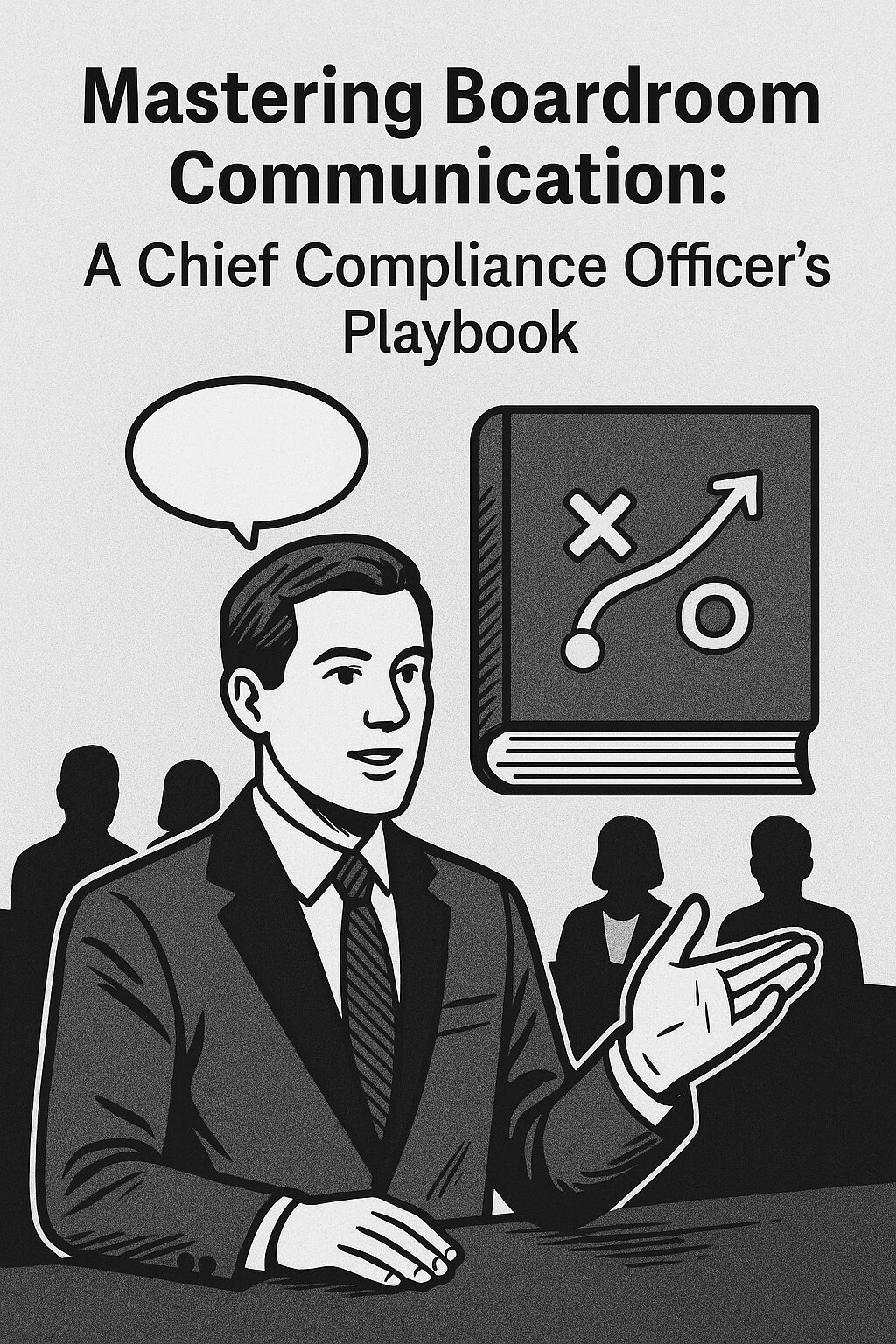
Board Week, Part 2: Mastering Boardroom Communication: A Chief Compliance Officer’s Playbook

Boardroom communication is not just a matter of style; it is a skill much needed for every Chief Compliance Officer (CCO). In today’s environment of heightened regulatory scrutiny, geopolitical disruption, and rapid technological change, a CCO sits squarely at the intersection of risk, ethics, and strategy. How a CCO communicates with the board can shape director confidence, influence resource allocation, and ultimately determine whether compliance is viewed as a strategic partner or a cost center.

A recent Harvard Law School Forum on Corporate Governance article outlined five essentials for executives engaging with their boards. For CCOs, these essentials carry even more weight. Compliance is often the messenger of uncomfortable truths: misconduct uncovered, regulatory inquiries, or cultural red flags that leadership may prefer to avoid. Delivering these messages effectively requires preparation, precision, and presence. In this blog post, we will explore how CCOs can adapt these five essentials to elevate their boardroom communication.

1. Invest in Relationships: Building Trust Before the Crisis

For CCOs, credibility with the board is currency. Relationships cannot be built during a crisis; they must be established well in advance of one arriving. Intentional relationship-building with directors pays dividends. CCOs should regularly meet with audit and compliance committee chairs outside of formal sessions. These pre-meeting touchpoints allow you to test messaging, gauge concerns, and set expectations. They also build the trust needed when delivering difficult news, such as a whistleblower report implicating senior leadership or an FCPA investigation.

Equally important, CCOs must present a united front with fellow executives. Fragmented messaging from the CCO versus the CFO or General Counsel undermines board confidence. Directors want assurance that compliance is embedded across all functions, not confined to silos. Demonstrating cross-functional collaboration signals maturity and readiness. You can provide directors with candid “heads-up” updates on emerging risks. If the Department of Justice signals a shift in compliance program evaluation (as it did with the 2024 ECCP Update), brief your directors in advance. Early transparency fosters credibility.

2. Know Your Audience: Translating Compliance into Board Priorities

Directors are a distinct audience; they are seasoned leaders with broad but varied expertise. The article emphasizes the importance of tailoring messages to individuals’ backgrounds and perspectives. For CCOs, this means translating compliance risks into business-relevant language. For example, when discussing data privacy, it is best to avoid using technical jargon. Instead, connect privacy risks to reputational harm, customer trust, and market access. When discussing sanctions enforcement, frame it in terms of geopolitical instability and supply chain resilience.

CCOs must also bridge perspective gaps between management and the board. Senior executives often want boards to add expertise in emerging areas, such as AI, but directors are slower to prioritize it. The CCO’s role is to highlight how these gaps translate into real risk exposure. If the board does not see the value of AI oversight on its agenda, provide evidence, such as regulator speeches, enforcement trends, and peer actions. Do your homework: know which directors come from legal, financial, or technology backgrounds. A director with former regulatory experience will expect different details than one with private equity experience. Anticipating these perspectives ensures that your compliance story resonates.

3. Prepare What You Will Share: Making Compliance Digestible

The board’s time is scarce. As the article notes, directors want strategy, not operations. That makes the pre-read and presentation materials critical tools for the CCO. Your pre-read should strike a balance: concise enough to be digestible, but substantive enough to demonstrate rigor. A best practice is a one-to-two-page executive summary highlighting:

  • Key compliance risks and emerging issues.
  • Required board actions (e.g., policy approval, risk appetite setting).
  • High-level metrics (e.g., hotline trends, third-party due diligence outcomes).

Supporting dashboards or appendices can provide depth for directors who want to dive in. Use visuals such as heat maps, trend charts, and red/yellow/green risk indicators to cut through dense text. During the meeting, avoid repeating the pre-read. Instead, highlight the “so what”: why a risk matters now, how it aligns with strategy, and what action is needed. For example: “We are seeing a 40% increase in third-party red flags in Latin America. This aligns with the DOJ’s recent statements on third-party risk. We recommend enhanced monitoring of intermediaries before the next audit committee meeting.”

End with a clear ask: whether you need endorsement, resources, or merely board awareness. Ambiguity is the enemy of effective compliance communication.

4. Manage the Meeting: Maximizing Scarce Minutes

Most CCOs are allocated just 15–20 minutes on a crowded board agenda. This means every minute counts. Enter with a game plan: two or three key messages, delivered crisply. Speak for no more than half the time; reserve the rest for questions and answers. Board members’ questions are where trust is built and oversight is demonstrated.

If the meeting drifts into operational details, such as the specifics of a particular investigation, steer the conversation back to the strategic view: patterns, controls, and lessons learned. Capture follow-up items and commit to deliver them post-meeting. This demonstrates respect for the board’s time while ensuring no issue is left unresolved. Align with the corporate secretary to understand time allocations and broader agenda flow. If your presentation follows the CFO’s, anticipate financial framing; if it precedes the General Counsel’s, coordinate on legal versus compliance perspectives. Seamless alignment avoids director confusion and reinforces management cohesion.

Above all, project confidence. If you appear tentative when discussing risks, directors may question the maturity of your program. Credibility is as much about presence as it is about content.

5. Continue the Conversation: Compliance as a Constant Dialogue

Boardroom communication does not end when the gavel falls. You should reach out to board members to cultivate ongoing engagement. For CCOs, this is mission-critical. Complex topics, such as sanctions, cybersecurity, or ESG reporting, cannot be fully explored in a single board session. Utilize committee meetings or off-cycle workshops for in-depth discussions and analysis. For example, a compliance officer might host a session with the audit committee on DOJ expectations for root cause analysis, tying it to the company’s investigation protocols.

Follow up after meetings with concise updates. If a regulator issues new guidance relevant to a recent board discussion, send a one-page summary highlighting its implications. Demonstrating responsiveness keeps compliance at the forefront and positions you as a trusted advisor. Finally, monitor evolving board concerns. Directors’ focus shifts with the environment—activist campaigns, regulatory changes, or high-profile enforcement actions. Staying attuned allows you to tailor communications to what keeps your directors up at night.

The CCO and the 3 ‘T’s”

Boardroom communication is not about dazzling directors with slides or overwhelming them with data. For the Chief Compliance Officer, it is about trust, translation, and truth. (1) Trust, because relationships established before crises determine how your messages are received in a storm. (2) Translation, because directors need compliance framed in terms of strategy, value, and risk, not technical minutiae. (3) Truth, because your role is to surface uncomfortable realities. This means discussing topics such as cultural weaknesses, compliance failures, and regulatory gaps that others may prefer to avoid.

Board time is limited and precious. For CCOs, mastering the art of concise, transparent, and strategic communication is not optional. It is the difference between compliance being perceived as a watchdog or as a partner in building resilient, ethical, and sustainable business practices.

The boardroom is your stage. Prepare, practice, and perform with clarity. The future of your compliance program and your credibility as its leader may depend on it.