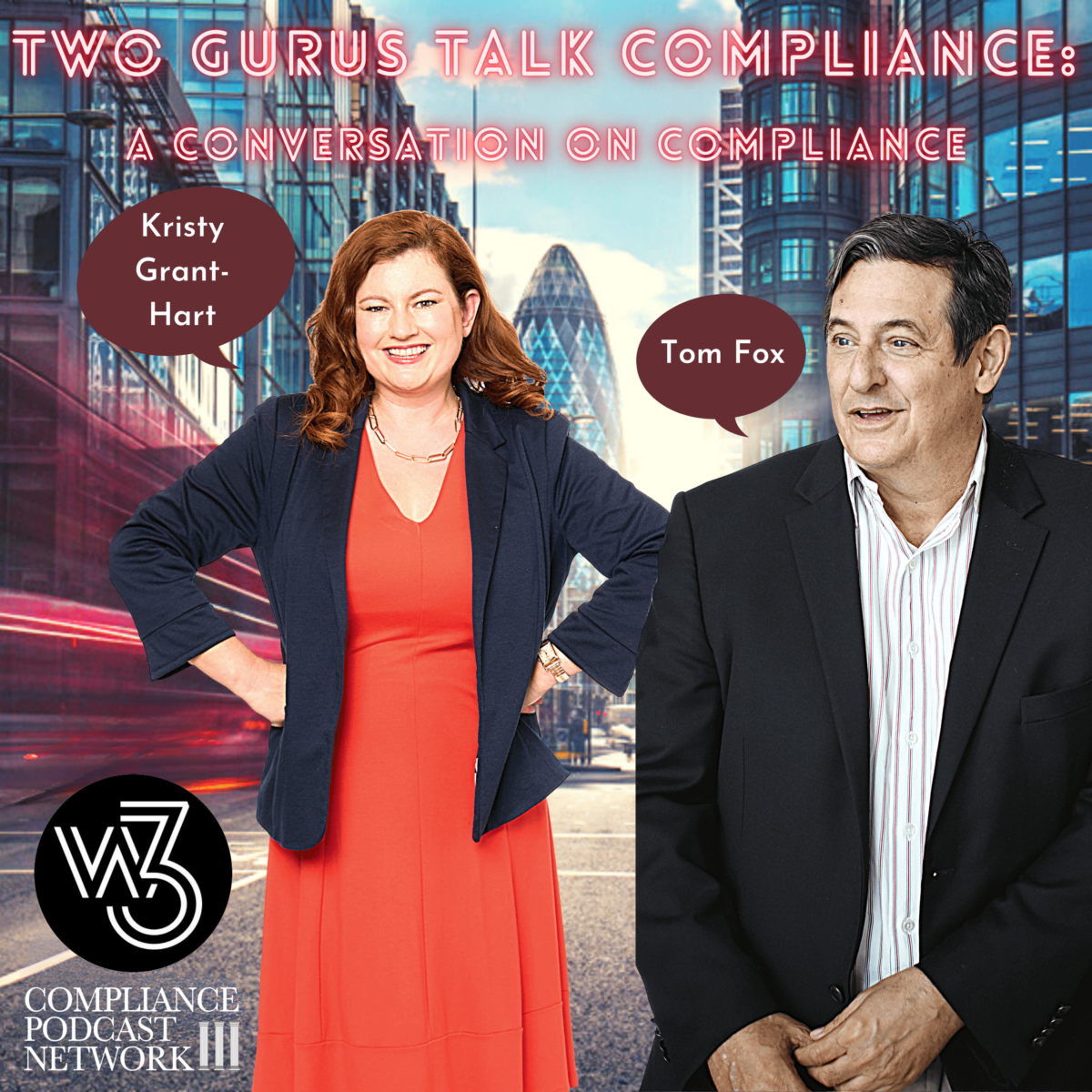
What happens when two top compliance commentators get together? They talk compliance, of course. Join Tom Fox and Kristy Grant-Hart in 2 Gurus Talk Compliance as they discuss the latest compliance issues in this week’s episode!
Stories This Week Include:
FirstEnergy defendants in Ohio say corruption is simply ‘free speech’. (Ohio Capitol Journal)
British national sentenced to 6 years in jail over Wirecard fraud. (FT)
Corruption led to the Hong Kong fire disaster. (Bloomberg)
Welcome to the Daily Compliance News. Each day, Tom Fox, the Voice of Compliance, brings you compliance-related stories to start your day. Sit back, enjoy a cup of morning coffee, and listen in to the Daily Compliance News. All, from the Compliance Podcast Network. Each day, we consider four stories from the business world, compliance, ethics, risk management, leadership, or general interest for the compliance professional.
Top stories include:
Dealing with past trauma is critical for CEOs. (FT)
The common theme for this episode is FinTech and Web3 writ large – with an eye towards digital assets and virtual currency.
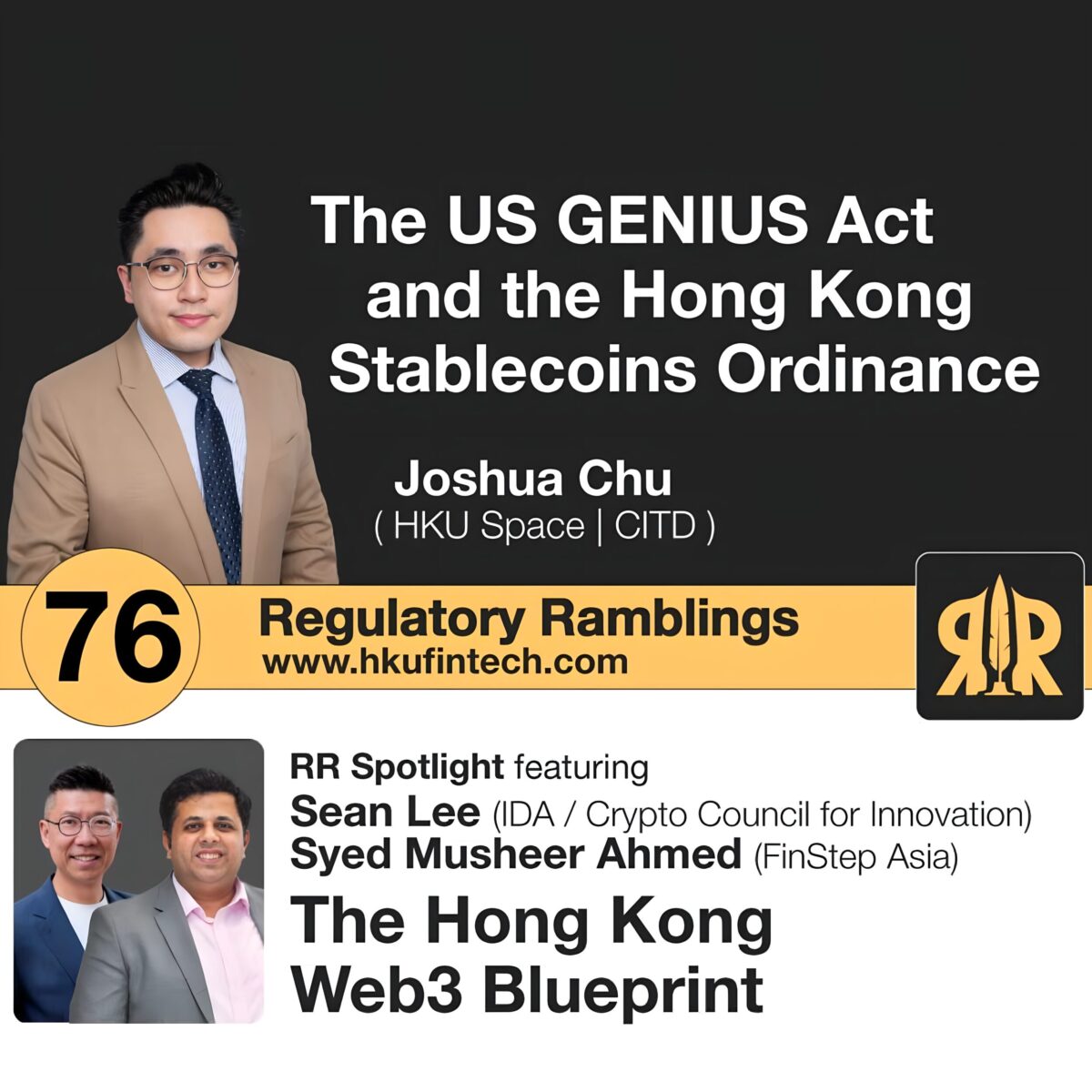
In today’s spotlight segment, we’ll be speaking with a returning guest and a dear friend of the program – Syed Musheer Ahmed of Hong Kong-based FinStep Asia on the recently disseminated “Hong Kong Web3 Blueprint: Building a Web 3 International Financial Hub” report. Joining Musheer is Sean Lee, co-lead of Web3 Harbour’s Policy Committee and one of the key leaders of the Blueprint task force.
Following that, we’ll be chatting with local lawyer Joshua Chu on the recently passed US GENIUS Act and what it means for making the US a stablecoin hub.
Joshua Chu
Joshua Chu is a prominent Hong Kong lawyer in all matters fintech and crypto, and a prolific writer. His opinion and insights are much sought after by the local press and correspondents of major foreign news organizations operating in the city. You can often hear him at his most candid on the radio at RTHK. He is also co-chair of the Hong Kong Web 3 Association and legal advisor to the Hong Kong Blockchain Association.
Syed Musheer Ahmed
Syed Musheer Ahmed is managing director of FinStep Asia – a firm he founded six years ago. With over 18 years of extensive experience as an ecosystem builder in the realms of capital markets, fintech, and virtual assets, including a decade as a global markets trader, he came to Hong Kong to attain his MBA from the University of Hong Kong and London Business School’s joint program.
A self-described “fintech ballerina,” since 2016, Musheer has contributed extensively to building the region’s fintech and virtual assets ecosystem, particularly as the co-founder and concurrent board member and the inaugural general manager of the Fintech Association of Hong Kong (FTAHK).
He has also done a stint as a regulator. Beyond his many contributions to the territory’s fintech regulatory policy during his tenure with the FTAHK, from October 2022 to January 2024, he served as a financial markets risk assurance lead with the Virtual Assets Regulatory Authority in Dubai.
Sean Lee
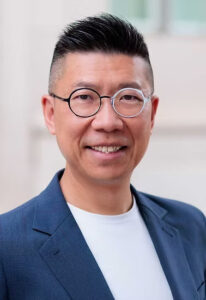
Sean Lee, Co-founder of IDA, a digital asset technology company, aims to lead the widespread adoption of blockchain finance and empower Belt and Road businesses to integrate seamlessly between Web2 and Web3. Previously, Sean was the CEO of the Algorand Foundation, where he led the layer-1 protocol to achieve a top-10 network valuation of over $10 billion under his leadership.
Sean has active engagements with global regulators and policymakers as a Senior Advisor for the Crypto Council for Innovation in regulatory advocacy and advancing the transformative potential of digital assets, and APAC policy advisor for the Stablecoin Standard. Sean is also an elected member of the Hong Kong Government’s Cyberport Entrepreneurship Committee Advisory Group and a Forbes Digital Asset contributor.
Discussion:
The conversation starts with a discussion of the Hong Kong Web3 Blueprint Report. Musheer and Sean share with Regulatory Ramblings host Ajay Shamdasani that the document should be seen as a roadmap for hastening blockchain development in the territory. For that purpose, Web3 Harbour joined forces with PwC Hong Kong to launch five action groups this August on stablecoins, funds, and other critical segments.
Ultimately, it is a call for more action across various aspects, from investment to talent, policy, infrastructure, and standards, to accelerate the development of Web 3.0 in the SAR.
The report highlights the “transparency, security, and user empowerment” of decentralization.
As the SCMP put it: “The blueprint seeks to leverage what it calls ‘Web3 superpowers’ through the development of ‘five key enablers’: talent, market infrastructure, standards, regulation, and funding and economic contribution. It calls on participants to focus on open finance, trade finance, capital markets, asset management, and carbon markets.
The report was compiled with input from Web3 Harbour members and other industry stakeholders.
Web3 Harbour chairman Gary Liu, formerly CEO of the Post, said greater private-public collaboration was among its goals, but it was primarily a guide for where the private sector should focus its efforts.
To that end, the report should not be seen as just a document- it is a blueprint for transformation, the guests say. From regulation and standards to infrastructure and talent, the Hong Kong Web3 Blueprint identifies the key enablers that will shape Hong Kong’s position as a global Web3 finance hub.
Hong Kong has distinct advantages to capture a significant part of the global Web3 opportunity, but the question is, how do we get there? asks Musheer and Sean. They also share what prompted them to write the report now, their key observations and conclusions, and what policy outcomes they advocate.
Ultimately, talent, infrastructure, standards, regulation, and funding are the critical enablers identified in the Web3 Blueprint that are crucial to positioning Hong Kong as a Web3-enabled international financial centre. The document outlines how Web3 technologies can drive sustainable innovation, create economic growth, and raise the territory’s digital finance leadership on the world stage.
Following that, we discussed the enactment of the new GENIUS Act in the US in late July with Joshua. In what was labelled “Crypto Day” during that country’s recent “Crypto Week,” the U.S. House of Representatives first passed the CLARITY market structure bill and then the GENIUS Act on July 18 – the latter of which was signed by President Trump. These moves by Congress were seen as historic steps forward in the regulation of virtual assets in the United States – or as one pundit put it: “Crypto’s time has come.”
The US legislation is the first standalone bill aimed at providing clarity for the growing cryptocurrency ecosystem – particularly the regulation of stablecoins.
According to TRM Labs, stablecoins now represent over 60% of all crypto transaction volume – up from just 35% two years ago. More than 90% of fiat-backed stablecoins in circulation are pegged to the US dollar. Although TRM estimates that 99% of stablecoin activity is licit, their speed, scale, and liquidity have made them appealing for illicit uses, including ransomware payments, fraud, and terrorist financing.
The GENIUS Act (Guiding and Establishing National Innovation for U.S. Stablecoins) establishes reserve requirements for stablecoin issuers, alongside consumer protection measures and anti-money laundering (AML) provisions.
These provisions aim to provide greater stability and security for stablecoin markets, ensuring they are better integrated into the U.S. financial system. This marks a key moment for the regulatory framework governing digital assets, as the U.S. works to balance innovation with risk management.
As for the CLARITY Act, it addresses broader market structure issues within the cryptocurrency space. The Senate is working on its market structure bill. After both chambers have acted, they will conference to reconcile their differences and finalize a version of the CLARITY bill that will move forward – likely this fall.
The passage of both bills reflects a significant effort to provide clear regulatory guidance for the crypto market, helping to address the growing need for oversight as the industry continues to expand.
At the same time, half a world away in Hong Kong, the city’s Stablecoins Ordinance (Cap. 656) (Stablecoins Ordinance) and related implementation guidelines issued by the Hong Kong Monetary Authority commenced operation on 1 August 2025 – with a transitional period granted solely for issuance purposes.
This new regime is touted as a significant milestone for Hong Kong’s growing digital assets market. According to King & Wood Mallesons: “It is relevant to institutions that wish to engage in the primary market issuance of fiat-referenced stablecoins, as well as other secondary market transactions in or involving Hong Kong. Even if you are outside Hong Kong, you should pay attention to the restrictions imposed under the Stablecoins Ordinance for any stablecoin-related activities with a Hong Kong nexus.”
At a glance, the Hong Kong Stablecoins Ordinance regulates:
– Issuers of stablecoins and the structure of a stablecoin itself.
– Offers of stablecoins.
– Related market integrity and conduct matters.
The regime took effect on 1 August 2025, with a transitional period for issuance only.
The Stablecoins Ordinance regulates “specified stablecoins,” which are stablecoins (ie, a cryptographically secured digital representation of value) that purport to maintain a stable value with reference wholly to one or more official currencies or other HKMA-specified units of account or stores of economic value (see section 4 of the Stablecoins Ordinance).
While this is a rather technical definition, it essentially captures:
– a stablecoin linked to an “official currency”; and
– a stablecoin linked to other “units of account” or “stores of economic value”, in each case, as designated by the HKMA (by notice published in the Gazette).
To date, the HKMA has not specified any such units of account or stores of economic value, but we expect they may include commodities such as gold.
Joshua delineates the longer-term implications for our region and the world as a result of the above regulatory developments in Hong Kong and the US.
Regulatory Ramblings podcasts is brought to you by The University of Hong Kong – Reg/Tech Lab, HKU-SCF Fintech Academy, Asia Global Institute, and HKU-edX Professional Certificate in Fintech, with support from the HKU Faculty of Law.
Welcome to 10 For 10, the podcast that brings you the week’s Top 10 compliance stories in one podcast each week. Tom Fox, the Voice of Compliance, brings to you, the compliance professional, the compliance stories you need to be aware of to end your busy week. Sit back, and in 10 minutes, hear about the stories every compliance professional should be aware of from the prior week.
Every Saturday, 10 For 10 highlights the most important news, insights, and analysis for the compliance professional, all curated by the Voice of Compliance, Tom Fox. Get your weekly filling of compliance stories with 10 for 10, a podcast produced by the Compliance Podcast Network.
Welcome to the Daily Compliance News. Each day, Tom Fox, the Voice of Compliance, brings you compliance-related stories to start your day. Sit back, enjoy a cup of morning coffee, and listen to the Daily Compliance News. All from the Compliance Podcast Network. Each day, we consider four stories from the business world: compliance, ethics, risk management, leadership, or general interest for the compliance professional.
More neurodiverse claims are made in the workplace. (FT)
Singapore’s ex-transportation minister faces more charges. (Reuters)
The State Department issues a business advisory to caution U.S. businesses about emerging risks to their operations and activities in Hong Kong. Listen in as the Kitchen brings you more details on this release.





 Syed Musheer Ahmed is managing director of FinStep Asia – a firm he founded six years ago. With over 18 years of extensive experience as an ecosystem builder in the realms of capital markets, fintech, and virtual assets, including a decade as a global markets trader, he came to Hong Kong to attain his MBA from the University of Hong Kong and London Business School’s joint program.