Categories
Compliance Tip of the Day

Compliance Tip of the Day – NBA Betting Scandal-Introduction

Welcome to “Compliance Tip of the Day,” the podcast that brings you daily insights and practical advice on navigating the ever-evolving landscape of compliance and regulatory requirements. Whether you’re a seasoned compliance professional or just starting your journey, our goal is to provide you with bite-sized, actionable tips to help you stay ahead in your compliance efforts. Join us as we explore the latest industry trends, share best practices, and demystify complex compliance issues to keep your organization on the right side of the law. Tune in daily for your dose of compliance wisdom, and let’s make compliance a little less daunting, one tip at a time.

This week, we will mine the ongoing NBA betting scandal for compliance lessons. Today in Part 1, we introduce the scandal, those involved, and the questions we have at this point.

For more information on this topic, refer to The Compliance Handbook: A Guide to Operationalizing Your Compliance Program, 6th edition, recently released by LexisNexis. It is available here.

Categories
Blog

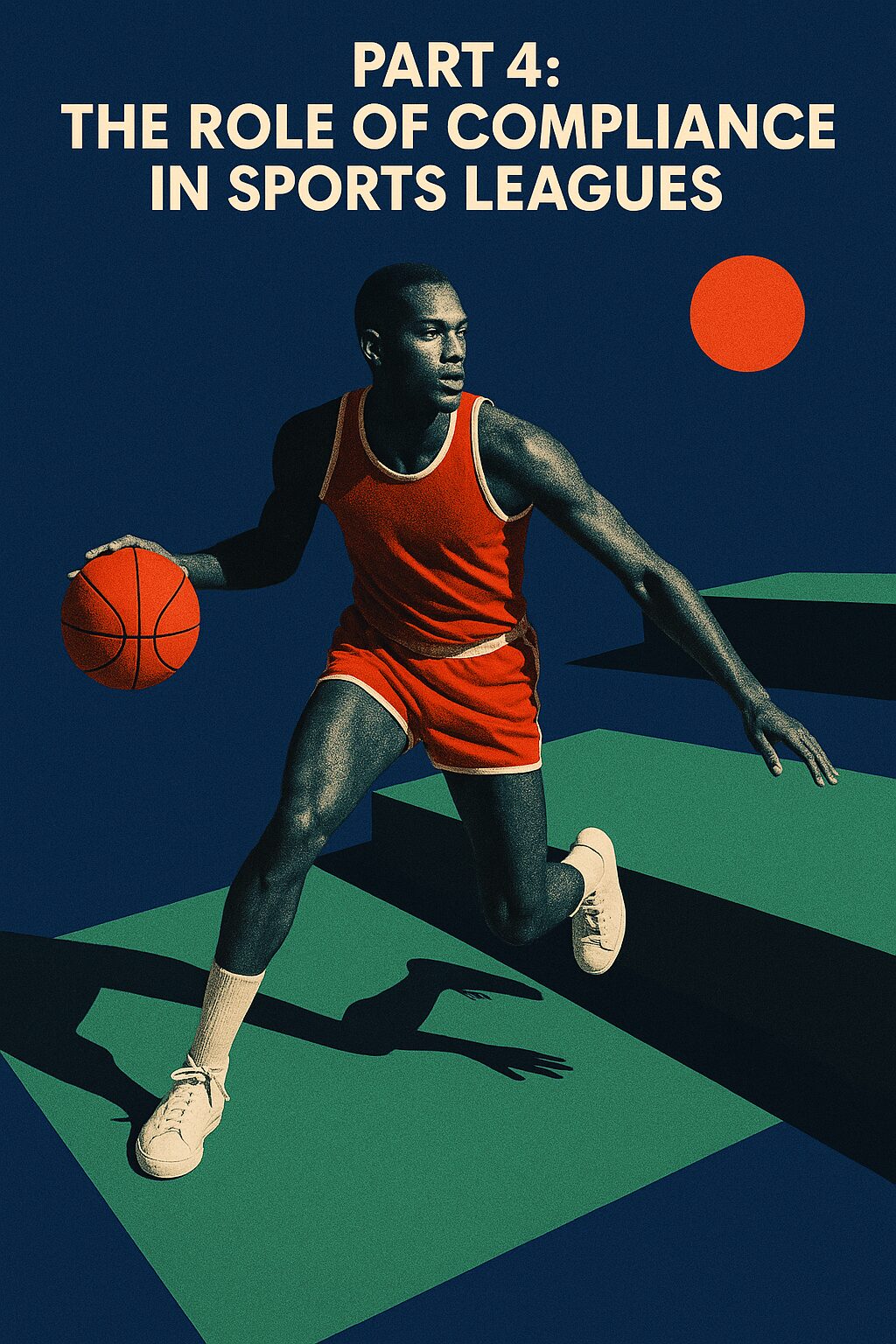
The NBA Betting Scandal, Part 4: The Role of Compliance in Sports Leagues

We previously considered the who, the what, and the histories of the NBA betting scandal. Today, we explore the ‘how’: how a compliance function could have prevented this, and what both sports leagues and corporations can learn from each other about safeguarding integrity. Whether your organization manages global investments or global fan bases, the lesson remains the same: governance without compliance is merely a façade, and compliance without culture is noise.

The NBA’s Blind Spot: Compliance Is Not Just for Corporations

The NBA, like many professional leagues, has long emphasized rules enforcement rather than risk management. It has compliance policies, anti-gambling rules, player education programs, and disclosure requirements, but these are largely reactive. What’s missing is the proactive, integrated approach that corporate compliance professionals have built over the last two decades.

Think about the Sarbanes-Oxley Act (SOX). Following a series of accounting scandals in the early 2000s, companies not only created new rules but also established compliance infrastructures, internal controls, whistleblower channels, independent oversight committees, and risk-based monitoring systems.

The NBA, in contrast, still operates under a “trust-the-player” model, one that assumes personal integrity will outpace financial temptation. The DOJ indictment proves that assumption no longer holds. In today’s data-driven, gambling-integrated sports environment, league compliance must evolve into a true governance function, not merely a disciplinary office.

The Corporate Compliance Framework Applied to Sports

To understand what that evolution might look like, I want to apply the classic corporate compliance framework — the Seven Elements of an Effective Compliance Program, as outlined in the US Sentencing Guidelines —to a professional sports context.

1. Standards and Procedures

Corporations have codes of conduct that define acceptable behavior. Sports leagues have them too, but they’re often vague or limited to rulebooks. The NBA needs a clear, enforceable code of compliance that articulates not just what players cannot do, but also why a framework rooted in integrity, rather than punishment, is necessary. Imagine a “Sports Compliance Charter” that explicitly defines insider betting as a form of fraud, akin to insider trading. That reframing alone would elevate the stakes, moving it from a “rules violation” to a “trust violation.”

2. Oversight and Accountability

Corporate boards delegate compliance oversight to audit and ethics committees. The NBA’s governance, however, largely resides in the Commissioner’s office. That’s too much concentration of oversight for a league managing billions in sports betting partnerships.

A modern model would involve an independent Compliance and Integrity Committee reporting directly to the league’s Board of Governors. This committee would review potential conflicts of interest, audit betting-related data, and monitor patterns of suspicious player performance. Independence breeds credibility.

3. Due Diligence and Risk Assessment

Before a merger, corporations perform risk-based due diligence. Before every season, leagues could conduct a similar compliance risk assessment, focusing on areas such as gambling exposure, data security, and player-agent relationships. Who are the players with large gambling debts? Which coaches or trainers have undisclosed financial interests in betting companies? These are not personal invasions; they are integrity controls. Compliance starts by identifying risk, not reacting to scandal.

4. Training and Communication

Corporate compliance officers understand that training isn’t about memorizing policy; it’s about shifting mindsets. The NBA’s anti-gambling training should move beyond the “don’t do this” model toward scenario-based ethics education where players explore gray areas, learn about real-world enforcement cases, and understand the long-term reputational damage of misconduct. In corporate terms, this distinction lies between check-the-box training and culture-building education. Compliance is not a slide deck; rather, it is a dialogue.

5. Monitoring and Auditing

Just as compliance programs utilize transaction monitoring or expense audits, the NBA can leverage data analytics to identify irregularities in player performance and betting patterns. If a player suddenly exits two games early, as Jontay Porter did, that should trigger an automatic integrity review, just as an anomalous financial transaction might trigger an AML alert.

This is where the corporate concept of continuous monitoring can revolutionize sports compliance. Algorithms already track betting odds in real-time; coupling that data with player analytics would enable early detection of suspicious trends.

6. Reporting and Whistleblowing

No compliance program functions without psychological safety. The NBA should establish anonymous channels for reporting concerns not only for employees but also for players, trainers, and referees. If a player suspects a teammate is manipulating outcomes, there must be a trusted way to report it without fear of retaliation. In the corporate world, such mechanisms are essential to uncovering misconduct early. The same must apply to locker rooms.

7. Enforcement and Remediation

Discipline must be consistent and transparent. When corporations investigate misconduct, they publish their findings, impose proportionate penalties, and integrate the lessons learned. The NBA’s enforcement process remains opaque, with outcomes often perceived as being influenced by politics. Public trust demands transparency in discipline. When penalties are seen as fair and consistent, they reinforce the league’s credibility, just as consistent FCPA enforcement enhances the integrity of the corporate sector.

Compliance Culture: The Missing Link

Ultimately, no framework works without culture. Compliance officers recognize that even the most sophisticated policies are ineffective if the culture prioritizes winning at any cost. Sports leagues often celebrate risk-taking, competitiveness, and personal brand-building, traits that, when unchecked, evolve into entitlement and moral flexibility. That’s the same cultural recipe that fueled Enron, Wells Fargo, and Volkswagen.

The solution is not to suppress ambition, but to align it with ethical purpose. Imagine if the NBA  and other leagues embedded compliance values into player leadership programs, performance reviews, and even contract bonuses. The message would shift from “Don’t get caught” to “Play with integrity.”

The Compliance Officer as Integrity Architect

For compliance professionals, this scandal presents an opportunity to reimagine the role of the compliance officer not just in business, but in every trust-based institution. In corporations, the CCO acts as an integrity architect, designing systems that enable ethical decision-making even under pressure. Sports leagues need the same role. Call it the Chief Integrity Officer: a function that bridges governance, analytics, education, and enforcement.

This role could oversee not just gambling risks, but conflicts of interest, sponsorship ethics, and social media conduct, the entire ecosystem of reputation management. In the modern economy, integrity is a managed asset, and someone must be accountable for its stewardship.

Moreover, corporate compliance programs succeed when leadership models ethical behavior. The same applies in sports. When coaches or executives participate in insider schemes, as alleged in the case of Damon Jones, they set a destructive tone. But imagine the opposite, a league where coaches discuss integrity as openly as game strategy, and general managers reward transparency over secrecy. Tone at the top is contagious. In corporations, it builds trust. In sports, it rebuilds it.

From Scandal to Systemic Change

The NBA betting scandal is a compliance failure, but it can also be a catalyst. Like Enron and WorldCom before it, this crisis can drive reform if the league commits to systemic change.

For compliance officers, the takeaway is both familiar and urgent:

  • Do not wait for regulation to force change.
  • Design compliance as governance, not guidance.
  • Measure culture as closely as you measure performance.

Whether you’re managing a multinational enterprise or a billion-dollar sports league, the principle remains constant: integrity isn’t enforced; it’s engineered.

Final Thought: Compliance Beyond the Court

The NBA’s scandal is not simply a sports story. It is a warning about what happens when performance eclipses principle. For compliance professionals, it also serves as a form of validation.

Our work, often behind the scenes, is what protects institutions from self-destruction. The NBA didn’t fail because of bad luck; it failed because of missing systems. The same can happen in any organization that mistakes compliance for bureaucracy instead of recognizing it for what it truly is: the infrastructure of trust. Whether you are in a boardroom or a locker room, culture always calls the next play.

Join us tomorrow, as we continue our exploration in Part 5, to delve into the intersection of culture, incentives, and the psychology of ethical failure. We will examine how even well-meaning individuals cross ethical lines when the system prioritizes results over values.


Categories
10 For 10

10 For 10: Top Compliance Stories For the Week Ending, November 1, 2025

Welcome to 10 For 10, the podcast that brings you the week’s Top 10 compliance stories in one podcast each week. Tom Fox, the Voice of Compliance, brings to you, the compliance professional, the compliance stories you need to be aware of to end your busy week. Sit back, and in 10 minutes, hear about the stories every compliance professional should be aware of from the prior week. Every Saturday, 10 For 10 highlights the most important news, insights, and analysis for the compliance professional, all curated by the Voice of Compliance, Tom Fox. Get your weekly filling of compliance stories with 10 for 10, a podcast produced by the Compliance Podcast Network.

Top weekly stories include:

  • Boeing hit with $5bn in late fee penalties. (BBC)
  • Corruption probe at Historic Environment Scotland. (BBC)
  • KPMG, Novo Bank targeted in corruption probe. (Bloomberg)
  • Ukraine receives an award for ABC. (Ukrinform)
  • All about FATF. (Bloomberg)
  • Texting in meetings is a CEO no-no. (WSJ)
  • Will Tesla lose Musk (w/o $1tn pay package)? (Yahoo!Finance)
  • Does insider trading = insider betting? (Bloomberg)
  • Tom Hayes sues UBS for $400MM. (Reuters)
  • How will the US define ‘country of origin’? (NYT)

You can check out the Daily Compliance News for four curated compliance and ethics-related stories each day, here.

Connect with Tom 

Instagram

Facebook

YouTube

Twitter

LinkedIn

You can purchase a copy of my new book, Upping Your Game, on Amazon.com

Categories
Blog

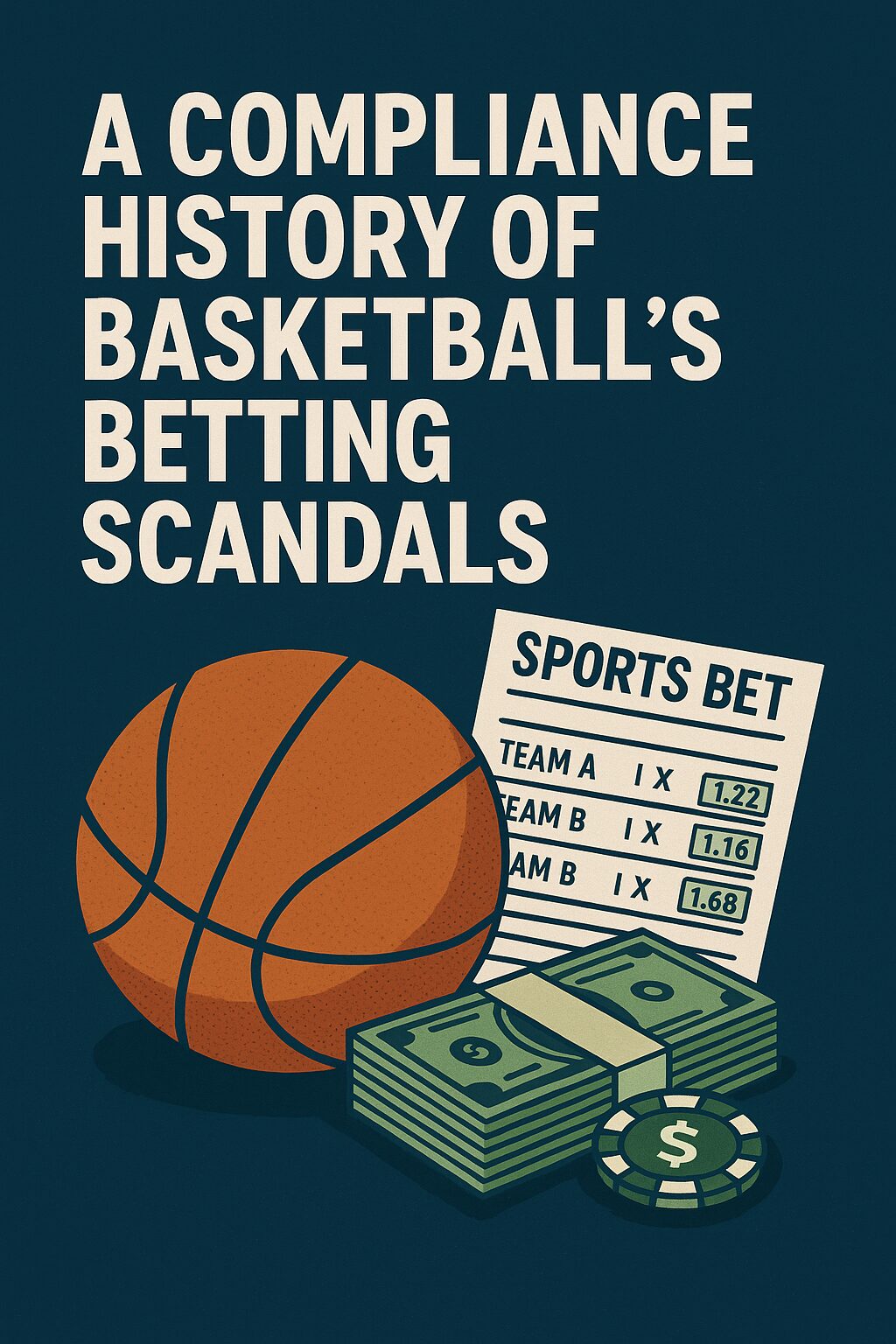
The NBA Betting Scandal: Part 3 – A Compliance History of Basketball’s Betting Scandals

In 1951, the New York City College of New York (CCNY) basketball team stood at the pinnacle of collegiate glory. The Beavers had just achieved the impossible: winning both the NCAA Tournament and the National Invitation Tournament (NIT) in the same season —an accomplishment never repeated.

But within months, that glory turned to infamy. According to ESPN, what began as whispers of “odd plays” and “missed shots” would explode into one of the largest betting scandals in American sports history and would establish a pattern of ethical failure that has haunted basketball ever since.

From CCNY to Boston College, from Tim Donaghy to Terry Rozier, the story is not just one of athletes gone astray. It is a case study in compliance breakdown. Indeed, a lesson in what happens when integrity becomes a negotiable asset.

The CCNY Point-Shaving Scandal: The Original Sin (1951)

In the early 1950s, college basketball was America’s premier sport. Madison Square Garden was its temple. Gambling was its shadow congregation. The scandal began when New York prosecutors uncovered that players from CCNY, along with several other schools, including Kentucky, Long Island University, and Bradley, were “shaving points” in exchange for bribes from gamblers. They weren’t losing games intentionally; they were merely making sure the final score stayed within the betting spread.

It was a subtle corruption, and that is what made it so insidious. Seventeen players were arrested, including CCNY star Ed Warner and Kentucky’s All-American Bill Spivey. The fallout was immediate and devastating: CCNY dropped out of major college basketball, the NCAA banned Kentucky for the 1952 season, and the sport’s image was tarnished for a generation.

Compliance lesson: The CCNY scandal revealed that corruption does not always come from losing; it comes from compromise. The players rationalized their behavior as “not really cheating,” echoing the same rationalizations heard in every modern scandal:  “just a little inside tip,” “it doesn’t affect the outcome,” “everyone does it.”

Boston College and the Mob: Organized Corruption Returns (1978–79)

Nearly thirty years later, another college basketball powerhouse found itself in the crosshairs of organized crime. Once again, as reported by ESPN, the 1978–79 Boston College point-shaving scandal was orchestrated by notorious mob associates Henry Hill and Jimmy Burke, names later immortalized in Martin Scorsese’s Goodfellas. Hill recruited players to manipulate game outcomes for a New York-based betting syndicate. The scheme involved “shaving” small margins, losing by just enough to beat the spread, not enough to draw suspicion. Three players were implicated, including Rick Kuhn, who served four years in prison for his role.

What made the Boston College scandal different was its sophistication. The mob did not just bribe; it strategized, using statistical analysis and betting volume tracking—the early version of compliance risk modeling—but turned it inside out.

Compliance lesson: The Boston College scandal marked the point at which gambling corruption shifted from individual temptation to organized manipulation. The oversight mechanisms (if any) were reactive rather than preventive. The NCAA had no integrity infrastructure. Compliance, as a concept, did not yet exist in sports.

Arizona State and the Spread: The Modern Betting Market (1994)

By the 1990s, college basketball was big business, and so was gambling. The 1994 Arizona State point-shaving scandal reflected this evolution from local bookies to national betting markets. Two Arizona State players, Stevin “Hedake” Smith and Isaac Burton, were paid thousands of dollars to fix games for Las Vegas gamblers. Smith, the team’s leading scorer, was told to “miss a few shots” and “keep the score close.” Over several games, the betting lines swung wildly enough to draw the attention of sportsbooks, which reported the unusual activity.

The FBI stepped in. Smith eventually pleaded guilty to conspiracy to commit sports bribery and served time in federal prison. What made this scandal a watershed moment was not just the players’ involvement but also the detection and analytics of the data. Sportsbooks’ internal monitoring systems flagged the irregular betting volume. For the first time, technology, not whistleblowers, uncovered corruption.

Compliance lesson: Transparency through data can be a safeguard, if used properly. The Arizona State case demonstrated that integrity monitoring, akin to anti-money laundering analytics, could identify misconduct patterns before they metastasize. But it also showed that without ethical culture, monitoring is just a safety net under a collapsing bridge.

The Tim Donaghy Scandal: Corruption Inside the Whistle (2007)

The next great basketball scandal was not about players; it was about the referees. In 2007, NBA referee Tim Donaghy pleaded guilty to two federal charges: conspiracy to engage in wire fraud and transmitting betting information. Donaghy had bet on NBA games he officiated, and worse, according to ESPN, he provided insider information to gamblers about player injuries, officiating crews, and game dynamics.

The scandal rocked the NBA to its core. Commissioner David Stern called it “the most serious breach of integrity in the history of the game.” Donaghy served 15 months in prison, but the real damage was to public trust. The case exposed a blind spot: the NBA had no independent integrity oversight system. Donaghy’s access to inside information was unmonitored. His betting activity went undetected for years because there was no compliance-grade audit trail.

Compliance lesson: Even the enforcers need enforcement. When compliance is limited to the playing field, insiders with access to privileged information can exploit the system unchecked. It is the same lesson corporations learned from rogue traders and insider dealers: if your monitors are not monitored, integrity collapses from within.

The NBA’s Modern Reckoning: From Jontay Porter to Terry Rozier (2024–2025)

Fast-forward to today, and the NBA finds itself once again mired in scandal. The indictments of players like Terry Rozier and coaches like Chauncey Billups show that technology has advanced, but human rationalization has not. Players allegedly used non-public injury information to enable friends and associates to place lucrative “prop bets”; that is, wagers that, as Nate Silver notes, are “inherently more subject to manipulation”.

The irony is painful. The NBA helped legalize the very betting structures that now threaten its credibility. ESPN and FanDuel run ads during live games; team apps link directly to sportsbooks. A regulated industry has now replaced the oversight that once kept the mob out of basketball with conflicted incentives.

Compliance lesson: When your regulators are your business partners, independence becomes an illusion. This is the same governance flaw that led to Enron’s collapse, where auditors were paid by the companies they were supposed to oversee. In the NBA’s case, integrity enforcement depends on data and diligence from entities financially invested in the betting volume itself.

A Seventy-Year Pattern: From Street Corners to Algorithms

From the smoky backrooms of 1950s New York to the AI-driven betting apps of 2025, the story has not changed; only the tools have. Each generation of basketball betting scandals follows the same pattern:

  1. Information advantage exploited for profit.
  2. Ethical rationalization (“It’s not really cheating”).
  3. Compliance lag — oversight catching up after the fact.

The players, the technology, and the money evolve, but the root cause endures. When systems fail to align incentives, ethics, and oversight, integrity becomes a casualty of innovation.

Final Thought: Integrity Is the Ultimate Competitive Advantage

For compliance professionals, the through line from CCNY to the modern NBA is crystal clear. Every industry, sports included, faces a moment when it must choose between performance and principle. Basketball’s history teaches that when you gamble with integrity, you might win for a season, but you lose for a generation.

The compliance professional’s mission, whether in a Fortune 500 boardroom or a basketball arena, is the same: to make sure the game stays honest, the system remains fair, and the culture never forgets what’s at stake when ethics take a timeout.

Join us for our next blog post on Monday, November 3, as we consider the role of compliance in sports leagues.

Categories
Compliance Into the Weeds

Compliance into the Weeds: The NBA Betting Scandal – Lessons for the Compliance Professional

The award-winning Compliance into the Weeds is the only weekly podcast that takes a deep dive into a compliance-related topic, literally going into the weeds to explore it more fully. Looking for some hard-hitting insights on compliance? Look no further than Compliance into the Weeds! In this episode of Compliance into the Weeds, Tom Fox and Matt Kelly discuss the unfolding NBA betting scandal and explore what it all might mean for the compliance professional. 

Their discussion covers the allegations and implications involving high-profile NBA figures, including Terry Rozier, Damon Jones, and Chauncey Billups. They explore the role of material non-public information, the importance of risk assessment, the effectiveness of current compliance measures, and the crucial role of data analytics in detecting fraudulent activities. Insights into sports betting, preventive controls, and the ethical challenges faced by professional athletes are also discussed, drawing parallels for corporate compliance professionals.


 Key highlights:

  • NBA Betting Scandal Overview
  • Historical Context and Data Analytics
  • Conflict of Interest and Risk Assessment
  • Investigation and Compliance Strategies

 Resources:

Tom is writing a multipart series on the scandal on the FCPA Compliance and Ethics blog.

Tom  

Instagram

Facebook

YouTube

Twitter

LinkedIn

A multi-award-winning podcast, Compliance into the Weeds was most recently honored as one of the ⁠Top 25 Regulatory Compliance Podcasts⁠ , a ⁠Top 10 Business Law Podcast⁠, and ⁠a Top 12 Risk Management Podcast⁠. Compliance into the Weeds has been conferred a Davey, a Communicator Award, and a W3 Award, all for podcast excellence. 

Categories
Daily Compliance News

Daily Compliance News: October 28, 2025, The Sleeper Issue Edition

Welcome to the Daily Compliance News. Each day, Tom Fox, the Voice of Compliance, brings you compliance-related stories to start your day. Sit back, enjoy a cup of morning coffee, and listen in to the Daily Compliance News. All, from the Compliance Podcast Network. Each day, we consider four stories from the business world, compliance, ethics, risk management, leadership, or general interest for the compliance professional.

Top stories include:

  • Corruption probe in Mongolia. (WSJ)
  • How will the US define ‘country of origin’? (NYT)
  • US sanctions the Colombian President for ‘not doing enough.’ (WSJ)
  • Sports and mafia ties run deep. (ESPN)

The Daily Compliance News has been honored as the No. 2 in the Best Regulatory Compliance Podcasts category.

Categories
Blog

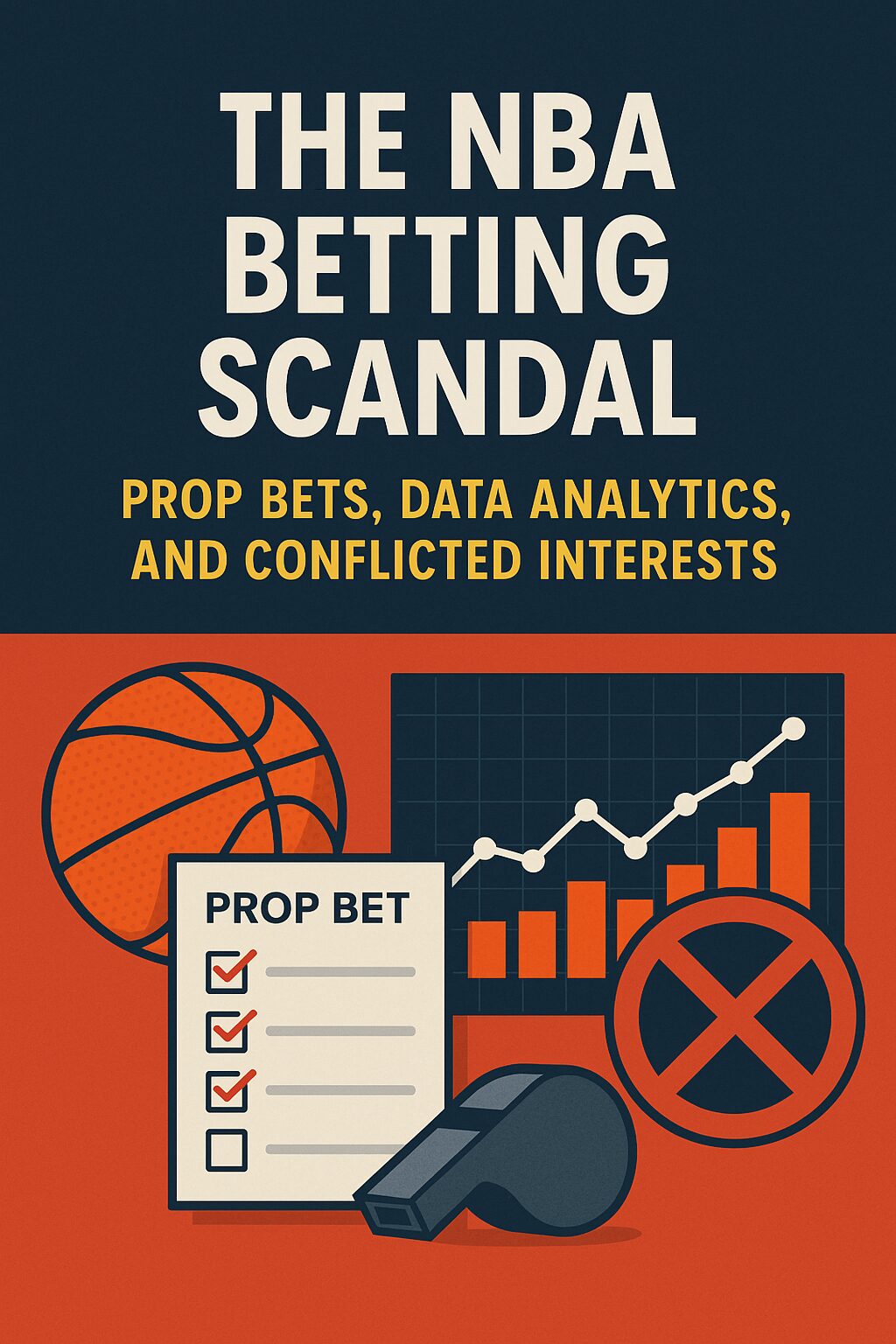
The NBA Betting Scandal: Part 2 – Prop Bets, Data Analytics, and Conflicted Interests

In Part 2 of our exploration of the NBA betting scandal, we consider one of the culprits: Prop Bets. However, we also consider the roles of the NBA’s sports betting partners in detecting suspicious activity that may flag the illegal release of information, and then explore whether the NBA’s financial ties to betting companies create an ethical conflict of interest eerily familiar to corporate compliance professionals.

Prop bets that began as an innovation to boost fan engagement have become a Trojan horse for corruption. Prop bets are wagers on specific player outcomes, like points scored or minutes played. Unfortunately, they have introduced a new form of insider trading into sports. And as the NBA, DraftKings, FanDuel, and ESPN Bet have learned the hard way, you cannot mix integrity and profit without a serious compliance framework in between.

The Prop Bet Problem

Traditional sports betting was straightforward: who wins, who loses, and by how much. But in today’s digital betting ecosystem, gamblers can place hundreds of micro-wagers per game;  on rebounds, turnovers, three-pointers, or even whether a player checks out early with an injury.

These “prop bets” (short for proposition bets) have become a massive driver of revenue. According to Silver Bulletin’s Nate Silver, player-specific prop bets now represent as much as 10–30% of total sportsbook activity, and they carry higher margins than traditional wagers because they’re marketed to casual fans, not professionals.

But with that innovation came a compliance nightmare. When Terry Rozier allegedly told a friend he’d fake an injury early in a March 2023 game, enabling insiders to bet the “under” on his scoring stats, he was not required to throw the entire game, and he arguably did not even affect the score. He only had to manipulate one statistic. That’s what makes prop bets so insidious: They make partial corruption profitable.

From a compliance perspective, this is micro-fraud. It is where individual actors exploit subcomponents of a larger system for localized gain. It’s the same logic behind an employee falsifying a single line item on an expense report or a trader front-running small transactions to avoid detection. As The New York Times’ David French warned, “Prop bets give the player absolute control over the outcome for many gamblers. Players can enrich themselves and their confederates — at least until they’re caught”. The result is a system in which the game’s integrity can be compromised without altering its final score.

How Sportsbooks Detect Suspicious Betting Patterns

To their credit, major sportsbooks like FanDuel, DraftKings, and BetMGM have built sophisticated monitoring systems to detect anomalies. These are the compliance analytics engines of the betting world.

Here is how they work and how they discovered the NBA scandal in the first place:

1. Data Aggregation and Pattern Recognition

Licensed sportsbooks collect vast amounts of betting data, literally down to timestamps, geolocations, and bet types. When dozens of bets suddenly target a specific player’s “under” statistics within minutes of tipoff, that’s a red flag. Nate Silver notes that these regulated sportsbooks have a “Know Your Customer” framework akin to AML rules. They know exactly who is betting and how much. This allows them to flag sudden spikes in specific markets or betting clusters linked by shared IP addresses or payment methods.

2. Odds Movement Analysis

Sophisticated betting algorithms continuously monitor line shifts. If insider information leaks,  such as a player’s plan to sit out, odds will move dramatically before official announcements. Sportsbooks cross-reference those shifts against bet timing to determine whether someone is acting on non-public information.

3. Regulator and League Reporting

When patterns suggest insider activity, sportsbooks are legally obligated to report suspicious behavior to state gaming commissions and, in this case, to the NBA’s integrity unit. That is exactly how the Rozier bets and before them, Jontay Porter’s suspicious unders, were first flagged.

Much like a financial institution’s Suspicious Activity Report (SAR) to the SEC or FinCEN, these alerts become the foundation for investigations. In both cases, data-driven compliance exposes behavior long before public whistleblowing ever could. But detection only works when the watchers are independent. And that’s where the NBA’s problem deepens.

The Conflict of Interest: When Integrity Is Also a Business Partner

The modern NBA is financially entangled with the very entities tasked with reporting its integrity breaches. FanDuel, DraftKings, and BetMGM are not simply sportsbooks. More importantly, they are official league partners. ESPN, now operating its own sportsbook, is simultaneously a rights holder and an integrity stakeholder.

That creates a textbook compliance conflict of interest.

  • The NBA profits directly from the volume of bets placed, even on the prop bets that compromise its credibility.
  • Sportsbooks rely on NBA data feeds and licensing deals worth millions, giving them a vested interest in maintaining the appearance of a “clean” market.
  • Broadcasters like ESPN and Turner promote betting lines in real time, normalizing gambling within the game narrative itself.

This convergence of profit and policing mirrors the very risks that Sarbanes-Oxley sought to eliminate in corporate America, when auditors and clients had overlapping interests, objectivity vanished. The same principle applies here; you cannot be both the regulator and the revenue partner. As The Athletic’s Eric Koreen observed, “The league is inextricably tied to the alleged behavior, tied as it is to its gambling partners”. And as compliance professionals know, perception of independence matters as much as actual independence. If the NBA’s integrity unit relies on the cooperation and financial goodwill of its betting partners, how impartial can its investigations truly be?

The Compliance Parallel: When Oversight Becomes Complicity

Corporate compliance officers will find this moment uncomfortably familiar. The NBA’s integrity dilemma is not unique. It is the same trap that financial institutions, energy conglomerates, and tech giants fall into when they mistake profitability for legitimacy. When the people tasked with monitoring the game for integrity are also profiting from it, compliance becomes theater.

For the NBA, the only way forward is to disentangle integrity from income. For corporate leaders, the lesson is the same: your monitoring function can’t share the same incentives as your money-makers. Whether it’s a boardroom or a basketball court, the rule never changes: you cannot bet on integrity if you are already gambling with it.

Join us tomorrow as we consider the history of basketball’s betting scandals and a few compliance lessons.

Categories
Blog

The NBA Betting Scandal: Integrity Under Fire: Part 1 – Introduction

In the world of professional basketball, few things cut deeper than a betrayal of trust. Fans expect grit, competition, and authenticity, not a rigged game. Yet last week, the U.S. Department of Justice (DOJ) unsealed an Indictment that shook the National Basketball Association (NBA) to its core. Current and former NBA players, along with several associates, stand accused of running an insider-betting ring built on confidential medical and lineup information.

For compliance professionals, this is more than a sports story. It is a real-time case study in integrity risk, insider information abuse, and governance failure. It also demonstrates how arrogance, blindness, and even incompetence can blindside any organization. Over the next several blog posts, I will take a deep dive into not only who was involved and what they did, but also how the same ethical breakdowns that can corrupt a corporate organization found their way into America’s most celebrated sports league. (I am not sure how many posts I will have on this series.) Today, in Part 1, we introduce the players and allegations.

The Conspiracy

The indictment, unsealed in the Eastern District of New York, reads like the playbook of a financial fraud operation dressed up in jerseys. The six defendants. They include Eric Earnest, Marves Fairley, Shane Hennen, Damon Jones, Deniro Laster, and Terry Rozier, who are all charged with wire fraud conspiracy and money laundering conspiracy.

The scheme allegedly unfolded between December 2022 and March 2024, when the group exploited non-public NBA injury and lineup information to place fraudulent bets worth hundreds of thousands of dollars. They allegedly received insider tips directly from players and coaches, including Rozier and Jones, and then laundered the illicit profits through a web of intermediaries.

U.S. Attorney Joseph Nocella Jr. stated in the DOJ Press Release on the Indictment, “As alleged, the defendants turned professional basketball into a criminal betting operation, using private locker rooms and medical information to enrich themselves and cheat legitimate sportsbooks. This was a sophisticated conspiracy involving athletes, coaches, and intermediaries who exploited confidential information for profit.  Insider betting schemes erode the integrity of American sports, and this Office will continue in its strong tradition of holding accountable anyone who seeks to corrupt sports through illegal means.”

The Defendants — and Their Roles

Terry Rozier — “Scary Terry” Turns Scandalous

Known for his explosive play as a guard for the Charlotte Hornets, Rozier allegedly tipped off longtime friend Deniro Laster that he would exit a March 23, 2023, game early due to a “purported injury.” According to the indictment, Rozier gave this information specifically so that Laster could place bets on Rozier’s under” stats, predicting he would underperform.

Laster, Fairley, and others allegedly bet over $200,000 on the game using this insider knowledge. When Rozier exited after only nine minutes, the bets paid off handsomely. Laster then drove through the night to Rozier’s house, where they reportedly counted the profits together.

Damon Jones — From Coach to Co-Conspirator

Once a respected NBA player and later coach, Damon “D Jones” Jones allegedly became a hub for insider information. Prosecutors claim that on several occasions, Jones shared or sold confidential lineup and medical details, particularly concerning the Los Angeles Lakers,  to his co-conspirators. Two key examples cited occurred on February 9, 2023, and January 15, 2024, when Jones allegedly provided early medical information about Lakers star players, allowing others to place lucrative wagers before the news became public. For a league that prides itself on data transparency and player health disclosures, this allegation strikes at the heart of data governance,  an issue that corporate compliance officers know all too well.

Eric Earnest — The Middleman with a Coach’s Ear

At 53, Eric “Spook” Earnest was no athlete, but he allegedly wielded powerful connections. In one cited incident, Earnest received insider information from a friend, an NBA coach, who alerted him that several Portland Trail Blazers starters would sit out a March 24, 2023, matchup against the Chicago Bulls. Before that information went public, Fairley and his associates wagered over $100,000 against the Blazers. When the lineup was confirmed, the betting lines shifted dramatically, and the conspirators’ early bets cashed in.

Marves Fairley — The Fixer

Operating under nicknames like “Vezino” and “Vezino Locks,” Marves Fairley allegedly acted as both a bettor and a connector. He is accused of placing bets using information from multiple inside sources, including players with the Orlando Magic and the Toronto Raptors. On April 6, 2023, Fairley allegedly used information from an Orlando Magic player to learn that several top teammates would sit out a game against the Cleveland Cavaliers. Fairley bet approximately $11,000 on the Cavaliers to cover the spread, and when the Cavs won by 24, he pocketed the winnings.

Deniro Laster — The Courier

At age 30, Deniro “Niro” Laster allegedly served as a courier, moving cash, distributing tips, and laundering proceeds. He was reportedly Rozier’s point of contact in the infamous March 23 Hornets game and allegedly helped convert illicit betting profits into cash payments.

Shane Hennen — The Straw Bettor

Finally, Shane “Sugar” Hennen allegedly helped conceal the betting activity by using a network of straw bettors, placing wagers under different names to evade sportsbook compliance checks. He reportedly received inside information not only from Rozier and Jones, but also via secondary intermediaries, including Long Phi Pham, a previously convicted co-conspirator tied to former Raptors player Jontay Porter.

The Porter Connection: A Prequel to the Scandal

While not a named defendant in this indictment, Jontay Porter, formerly of the Toronto Raptors, looms large in the background. Porter had already pleaded guilty earlier in 2025 for his role in a similar insider-betting scheme, one that the DOJ now says was part of the same web of corruption. Porter allegedly told co-conspirators that he would intentionally leave games early due to “injuries,” allowing others to place bets on his underperformance. Those fraudulent bets paid out when he exited games on January 26 and March 20, 2024.

For compliance professionals, Porter’s earlier conviction was the canary in the coal mine, a warning that insider collusion in sports betting wasn’t a one-off anomaly. It was systemic risk spreading through the ecosystem.

Final Thoughts

As FBI Director Kash Patel noted in the DOJ Press Release, “Using private information and positions of power to rig sports gambling outcomes is not only illegal, but destroys the integrity of the game.” His words echo across industries: wherever inside access can be monetized, the temptation exists, and so does the compliance risk.

For the NBA, this scandal demands a hard reset. It is not enough to suspend players or ban bettors. The league must now confront questions about compliance governance, data ethics, and the duty of care owed by players and coaches as fiduciaries of the sport’s reputation.

For now, the facts are clear: between 2022 and 2024, a small group of insiders treated NBA injury reports as market-moving data. They manipulated outcomes, corrupted competition, and, in doing so, jeopardized the public’s faith in one of America’s most beloved institutions.

The DOJ’s prosecution is not just about punishing individuals. It is about protecting integrity as a public asset. For compliance professionals, that principle transcends industries. Whether you work in finance, healthcare, energy, or sports, the message is the same:

Integrity is the game. And if you cheat it, you lose.

Join us tomorrow as we consider how insider betting parallels insider trading.