


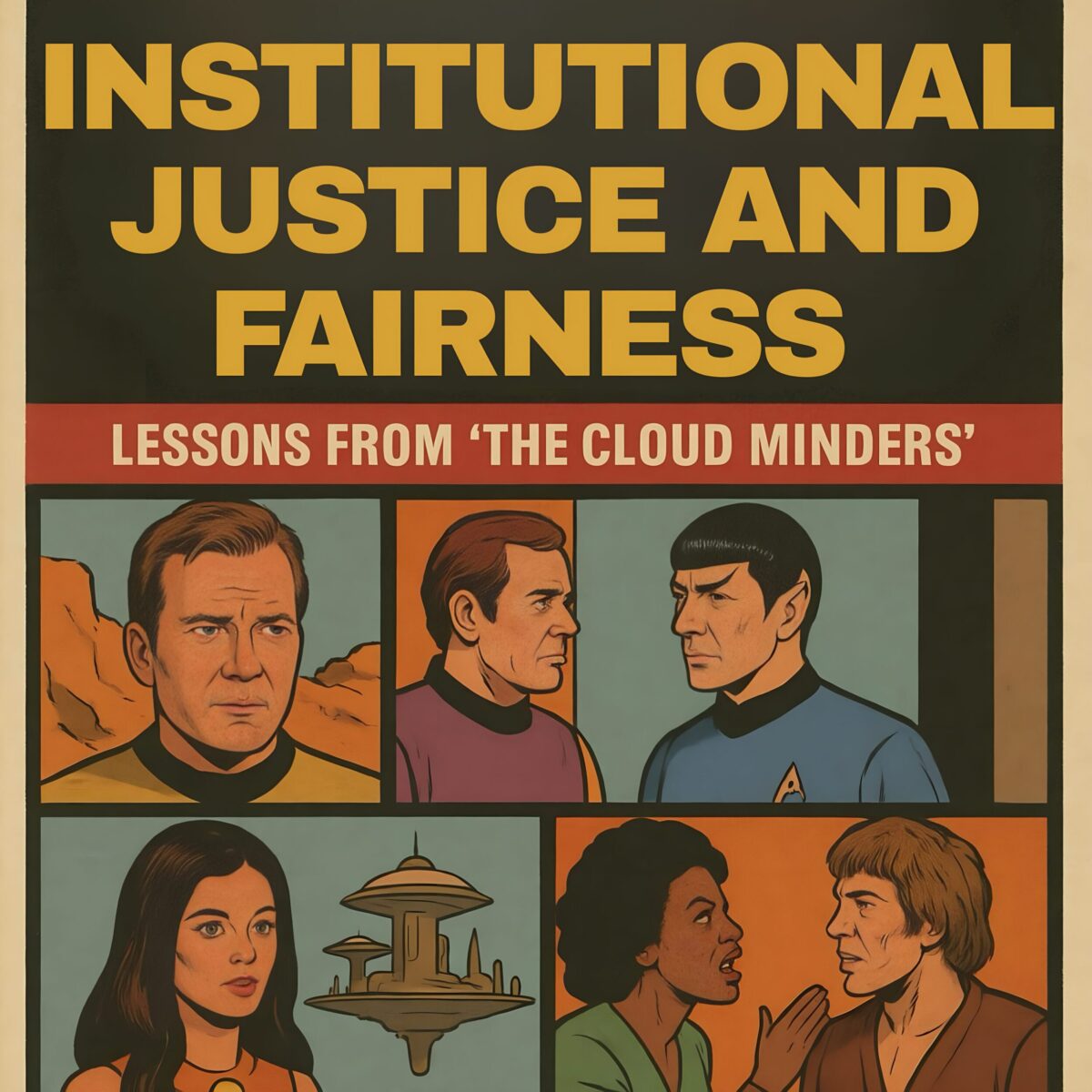
Institutional justice and institutional fairness are not abstract ideals; they are operational requirements in a corporate compliance program. They define how policies are enforced, how decisions are made, and how employees perceive the integrity of their workplace. One of the most vivid illustrations of the dangers of systemic injustice and perceived unfairness comes from Star Trek: The Original Series in “The Cloud Minders.”
The DOJ’s 2024 Evaluation of Corporate Compliance Programs (ECCP) reinforces this point: for a compliance program to be effective, it must not only exist on paper but also operate fairly in practice. The DOJ expects companies to show that their compliance processes are applied consistently across the organization, regardless of seniority, revenue generation, or personal connections.
Why the DOJ Cares About Justice and Fairness in Compliance
In the ECCP, the DOJ focused on institutional justice and institutional fairness as key mandates for the compliance function. Why? It was rooted in practicality: a compliance program that is seen as biased or inconsistent will fail. Employees will not report misconduct, will hide mistakes, and will disengage from ethics initiatives.
Prosecutors know that when misconduct occurs in such an environment, it’s often a symptom of deeper cultural problems. That’s why, during investigations, they ask:
- Are policies applied equally to all levels of the organization?
- Is discipline consistent and documented?
- Do employees believe the process is fair?
- Has the company addressed the underlying causes of misconduct?
If the answers to these questions are unsatisfactory, the DOJ is more likely to view the compliance program as ineffective, regardless of its written policies.
The Tale
The Enterprise is sent to the planet Ardana to collect zenite, a mineral needed to stop a plague on another world. Captain Kirk and Mr. Spock beam down to Stratos, a floating city inhabited by the planet’s elite, only to discover a deep societal divide. The surface of Ardana is worked by “Troglytes,” a laborer class forced to mine zenite under hazardous conditions, denied access to the comforts and education of Stratos.
The elites justify this arrangement as necessary for stability, while the Troglytes see it as systemic exploitation. The episode becomes a study in the consequences of entrenched inequality, distrust, and the refusal to address legitimate grievances, exactly the kinds of dynamics that can erode trust in a corporate compliance program if not addressed.
From this story, we can extract five compliance lessons on institutional justice and institutional fairness.
Lesson 1: Consistency in Standards Is Non-Negotiable
Illustrated by: The leaders of Stratos apply rules differently depending on social status. The elite enjoy cultural and political freedoms, while Troglytes face restrictions and harsher punishments for similar conduct.
Compliance Lesson. The DOJ has repeatedly emphasized that policies and disciplinary measures must be applied consistently. If employees perceive that “rainmakers” or executives receive lighter sanctions, or none at all, for policy violations, trust in the compliance function evaporates. In The Cloud Minders, the double standard deepens resentment and drives conflict, precisely what can happen inside a company when justice is selective.
Why It Matters to DOJ: Prosecutors evaluate whether discipline is enforced “consistently across the organization, regardless of position or power.” Inconsistency is a red flag that the program is a paper exercise rather than a living system.
What should you do?
- Establish clear, documented disciplinary protocols.
- Apply them uniformly, with oversight from the compliance function.
- Communicate to the workforce that no one is above the rules.
Lesson 2: Address Root Causes, Not Just Symptoms
Illustrated by: The Troglytes’ performance and health are impaired because mining zenite exposes them to toxic vapors. The elites interpret this as proof of inferiority, ignoring the environmental cause.
Compliance Lesson. Organizations sometimes treat compliance failures as isolated misconduct rather than symptoms of deeper issues, such as inadequate training, unrealistic sales targets, or flawed incentive structures. In Ardana, fixing the air quality in the mines would have solved much of the productivity gap, just as fixing systemic drivers of noncompliance prevents repeat issues.
Why It Matters to DOJ: The DOJ looks for root cause analysis after misconduct. They want to see whether the company took corrective action to address systemic issues, not just discipline the individuals involved.
What should you do?
- Investigate not only “who” did something wrong, but “why” it happened.
- Use findings to improve processes, incentives, and controls.
- Share non-confidential lessons learned with the workforce to demonstrate fairness and transparency.
Lesson 3: Perceived Fairness Matters as Much as Actual Fairness
Illustrated by: Even when Kirk offers protective gear to the Troglytes, they are slow to trust his intentions. Years of mistreatment have convinced them that promises from the elites are empty.
Compliance Parallel: Employees judge compliance programs not only by their design but by how fair they feel in practice. If people believe investigations are biased or that whistleblowers will be punished, they will avoid reporting, even if the official policy says otherwise. On Ardana, the absence of trust kept both sides from engaging in good-faith solutions—something corporate leaders must avoid at all costs.
Why It Matters to DOJ: Prosecutors assess whether employees trust the compliance program enough to use it. A hotline no one calls is not evidence of a healthy culture—it may be proof of fear or cynicism.
What should you do?
- Publicize examples where issues were raised and resolved fairly.
- Protect whistleblowers from retaliation and make that protection visible.
- Use employee surveys to measure trust in compliance processes.
Lesson 4: Leadership Must Model Ethical Behavior
Illustrated by: Stratos’s leaders speak about justice and stability, but are unwilling to live under the same risks or hardships as the Troglytes. Their detachment from the reality of mining life fuels the unrest.
Compliance Lesson. Leaders who preach ethics but cut corners for themselves undermine institutional fairness. Employees take cues from the top; if executives are exempt from rules, the rest of the organization will follow suit. In The Cloud Minders, the Stratos elite’s credibility collapses because they refuse to share the burdens of those they govern, a mistake no corporate leadership team should make.
Why It Matters to DOJ: The DOJ examines “tone at the top” and “conduct at the middle.” They want to see that leadership’s actions match their words and that managers reinforce the message through daily decisions.
What should you do?
- Ensure executives participate in the same training and certifications as all employees.
- Make leadership accountable for compliance metrics.
- Publicly acknowledge when senior leaders are held to account for violations.
Lesson 5: Dialogue and Inclusion Are Tools for Justice
Illustrated by: Spock approaches the Troglytes with genuine respect, listening to their grievances and acknowledging their intelligence. His willingness to engage earns him credibility that Stratos leaders lack.
Compliance Parallel: Institutional fairness is strengthened when employees feel heard and included in shaping solutions. This doesn’t mean every request can be granted, but the act of listening and considering input builds trust. Just as Spock bridged the divide on Ardana, compliance leaders can bridge gaps in trust by treating all stakeholders with respect and dignity.
Why It Matters to DOJ: A compliance program is stronger when it incorporates feedback from the workforce. The DOJ favors companies that regularly assess the program’s effectiveness through interviews, surveys, and focus groups.
What should you do?
- Include employee representatives in policy review committees.
- Hold listening sessions for employees and other stakeholders after major incidents or policy changes.
- Act on feasible suggestions and explain when ideas can’t be implemented.
Practical Compliance Takeaways from The Cloud Minders
- Apply Rules Equally: Avoid double standards by holding everyone—from the C-suite to front-line staff—to the exact requirements.
- Investigate Root Causes: Fix systemic issues, not just individual mistakes.
- Build Trust in the Process: Ensure employees perceive the program as fair and protective.
- Lead by Example: Leadership must model the ethical behavior expected of all.
- Listen and Include: Use dialogue to bridge divides and strengthen buy-in.
Final ComplianceLog Reflections
The Cloud Minders is more than a parable about class division; it is a warning for any institution that neglects fairness and justice. In Ardana, injustice created resentment, distrust, and rebellion. In a corporation, those same dynamics can lead to silent disengagement, hidden misconduct, and public scandal.
The DOJ’s message is clear: fairness and justice are not optional add-ons to compliance; they are the foundation of a program that works. As compliance leaders, our role is to be the “Spock” in the room, listening, respecting, and bridging divides while ensuring that the rules are fair, transparent, and consistently applied.
When we do that, we do not just comply with the DOJ’s expectations; we build organizations where people trust the system enough to make it work.
Resources:
Excruciatingly Detailed Plot Summary by Eric W. Weisstein
