Categories
The Ethics Experts

Episode 223 – Anitha Vittal

In this episode of The Ethics Experts, Nick welcomes Anitha Vittal.

Anitha is recognized as a global leader in ethics, risk, compliance, and internal audit, with proven experience and expertise in establishing Centers of Excellence at GCCs across various industry verticals.

A passionate professional, she has over 23 years of service in leading and developing high-performing teams across India, Europe, and the US markets. Her engagements include internal audit, risk management, compliance, business process and financial compliance, data privacy, SOX, GRC program management, and digitization.

Categories
Trekking Through Compliance

Trekking Through Compliance: Episode 50 – Five Ethics Lessons from ‘Patterns of Force’ for the Modern Compliance Professional

One of the defining strengths of Star Trek: The Original Series (TOS) is its willingness to confront the thorniest questions of morality, leadership, and power. Few episodes tackle these issues as directly, or as provocatively, as “Patterns of Force.” For compliance professionals, “Patterns of Force” offers a cautionary tale about the dangers of compromising ethical principles, even for seemingly pragmatic reasons. The story serves as a powerful reminder that organizations cannot pursue “efficiency” or “success” at the expense of their core values. The lessons are as relevant for today’s boardrooms and C-suites as they are for starships in the 23rd century.

Lesson 1: The Danger of Ethical Shortcuts—The Ends Never Justify the Means

Illustrated By: John Gill, the Federation historian, justifies the creation of a Nazi-like regime on Ekos by arguing that it is the “most efficient state Earth ever knew.”

Compliance Lesson: One of the oldest ethical traps is believing that good intentions justify unethical means. John Gill’s fatal error is to separate efficiency from morality, imagining that a “system” can be controlled and its inherent evils contained.

Lesson 2: Leadership Responsibility—Ethics Must Flow from the Top

Illustrated By: Throughout the episode, the regime’s horror is magnified by the passivity and silence of John Gill, who, under the manipulation of his subordinate Melakon, allows atrocities to proceed. Gill’s abdication of responsibility is a direct contributor to the disaster.

Compliance Lesson: Tone at the top is not a cliché; it is a living, breathing necessity. Leaders who abdicate their ethical responsibilities or look the other way empower bad actors and create environments where misconduct flourishes.

Lesson 3: Unintended Consequences—Control Over Ethical Outcomes is an Illusion

Illustrated By: Gill’s initial plan is to use the Nazi system “without the hate.” But he is quickly manipulated by Melakon, who exploits the machinery of power for his ends.

Compliance Lesson: Rationalizing minor code of conduct violations or tolerating small acts of corruption can quickly escalate beyond your ability to contain them.

Lesson 4: The Importance of Speaking Up—Silence Enables Unethical Behavior

Illustrated By: On Ekos, many citizens and officials are complicit in the regime’s crimes, not through malice but through silence and inaction.

Compliance Lesson: A culture of silence is fertile ground for ethical misconduct. If employees feel they cannot speak up or if whistleblowers are punished or ignored, misconduct becomes normalized.

Lesson 5: Vigilance Against Ethical Blind Spots—History Repeats if We Forget

Illustrated By: The episode closes with a pointed warning that “the price of liberty is eternal vigilance.”

Compliance Lesson: Patterns of Force” reminds us that even the best intentions can lead to disaster if we forget the lessons of the past.

Final ComplianceLog Reflections

Patterns of Force” remains a chilling, relevant parable for compliance professionals. It warns us that even the noblest intentions can go awry when ethical principles are sacrificed for expedience or efficiency. The lessons are clear. As compliance officers, our mission is to ensure that our organizations stay true to their core values, never allowing expediency, pressure, or misguided reasoning to compromise our ethical bearings. In the words of Captain Kirk, “The first duty of every Starfleet officer is to the truth.” For us, the first duty of every compliance professional is to ethics, no matter the circumstances.

Resources:

Excruciatingly Detailed Plot Summary by Eric W. Weisstein

MissionLogPodcast.com

Memory Alpha

Categories
Blog

“Patterns of Force”: Five Ethics Lessons from Star Trek for the Modern Compliance Professional

One of the defining strengths of Star Trek: The Original Series (TOS) is its willingness to confront the thorniest questions of morality, leadership, and power. Few episodes tackle these issues as directly, or as provocatively, as “Patterns of Force.” In this controversial episode, the crew of the USS Enterprise discovers a planet where a well-intentioned Federation historian has recreated the organizational structure of Nazi Germany, believing its efficiency could bring order and peace. Instead, the society devolves into oppression and brutality, proving once again that the ends can never justify the means when it comes to ethics.

For compliance professionals, “Patterns of Force” offers a cautionary tale about the dangers of compromising ethical principles, even for seemingly pragmatic reasons. The story serves as a powerful reminder that organizations cannot pursue “efficiency” or “success” at the expense of their core values. The lessons are as relevant for today’s boardrooms and C-suites as they are for starships in the 23rd century. Today, we explore five key ethics lessons for the modern compliance professional, drawn straight from the pivotal scenes of “Patterns of Force.”

Lesson 1: The Danger of Ethical Shortcuts—The Ends Never Justify the Means

Illustrated By: John Gill, the Federation historian, justifies the creation of a Nazi-like regime on Ekos by arguing that it is the “most efficient state Earth ever knew.” He believes that by adopting its organizational structure, but stripping away its evil, he can bring order and peace to a chaotic planet. The result is a nightmare: the re-emergence of fascism, oppression, and genocide.

Compliance Lesson: One of the oldest ethical traps is believing that good intentions justify unethical means. John Gill’s fatal error is to separate efficiency from morality, imagining that a “system” can be controlled and its inherent evils contained. In the corporate world, this translates to shortcuts: ignoring policies for expediency, rationalizing small acts of fraud for the sake of business survival, or tolerating toxic cultures for the sake of “results.”

Compliance officers must reinforce that ethical lapses, no matter how small or “practical,” are never justified. Once the door is opened to compromising values for perceived efficiency, the consequences can be catastrophic. Gill’s experiment failed because the foundation itself was rotten. Embed ethical decision-making frameworks into your risk assessments and strategic planning. Make it clear that no result, no matter how profitable, can ever excuse unethical conduct.

Lesson 2: Leadership Responsibility—Ethics Must Flow from the Top

Illustrated By: Throughout the episode, the regime’s horror is magnified by the passivity and silence of John Gill, who, under the manipulation of his subordinate Melakon, allows atrocities to proceed. Gill’s abdication of responsibility is a direct contributor to the disaster.

Compliance Lesson: Tone at the top is not a cliché; it is a living, breathing necessity. Leaders who abdicate their ethical responsibilities or look the other way empower bad actors and create environments where misconduct flourishes. Those in charge set the moral climate of any organization. If leadership is disengaged, passive, or silent on matters of ethics, the consequences can spiral rapidly, just as on Ekos.

A compliance program must ensure that senior leaders not only model ethical behavior but also actively reinforce it at every opportunity. Passivity in the face of unethical conduct is itself dishonest. Develop ongoing training and communications for leadership, focusing on ethical accountability, the importance of speaking up, and the personal responsibility of setting the right example.

Lesson 3: Unintended Consequences—Control Over Ethical Outcomes is an Illusion

Illustrated By: Gill’s initial plan is to use the Nazi system “without the hate.” But he is quickly manipulated by Melakon, who exploits the machinery of power for his ends. The regime becomes a vehicle for oppression, anti-Semitism, and war—exactly what Gill intended to prevent.

Compliance Lesson: When an organization embraces questionable tactics or overlooks ethical red flags for the sake of “greater good,” it can never fully control where those choices will lead. Rationalizing minor code of conduct violations or tolerating small acts of corruption can quickly escalate beyond your ability to contain them. Compliance officers should remember that the ethical “slippery slope” is real, and you rarely control where it leads.

The episode’s warning is clear: systems built on unethical foundations are easily hijacked and can have far-reaching, destructive consequences. Implement regular ethics audits and scenario testing. Encourage employees at all levels to challenge policies or practices that may risk unintended harm, regardless of their good intentions.

Lesson 4: The Importance of Speaking Up—Silence Enables Unethical Behavior

Illustrated By: On Ekos, many citizens and officials are complicit in the regime’s crimes, not through malice but through silence and inaction. Only a handful, like the underground resistance leader Isak, speak out and act against the injustice.

Compliance Lesson: A culture of silence is fertile ground for ethical misconduct. If employees feel they cannot speak up or if whistleblowers are punished or ignored, misconduct becomes normalized. Compliance professionals must cultivate a speak-up culture where ethical concerns can be raised without fear of retribution.

Organizations should provide multiple, easily accessible avenues for employees to report concerns anonymously and without retaliation. Moreover, employees should be trained to recognize that failing to report is itself a form of complicity. Regularly communicate and reinforce the importance of speaking up. Celebrate examples of ethical courage and ensure that every employee knows how to report concerns and is confident they will be heard.

Lesson 5: Vigilance Against Ethical Blind Spots—History Repeats if We Forget

Illustrated By: Kirk and Spock are horrified by the resurgence of Nazi imagery and tactics, and work to remind the people of Ekos—and the audience—that history’s darkest chapters must never be repeated. The episode closes with a pointed warning that “the price of liberty is eternal vigilance.”

Compliance Lesson: Ethical blind spots are the hidden risks that can undo organizations, especially when we convince ourselves that “it couldn’t happen here.” “Patterns of Force” reminds us that even the best intentions can lead to disaster if we forget the lessons of the past. Compliance officers must continually review, update, and stress-test ethics and compliance programs to ensure they are relevant, resilient, and responsive to evolving threats.

Never assume your organization is immune to ethical lapses. The most successful compliance cultures are those that actively seek out and address blind spots—before they grow into existential risks. Include historical case studies, both from inside and outside your industry, in compliance training. Use them as springboards for honest discussion about ethical risk and organizational vulnerability.

Final ComplianceLog Reflections

Patterns of Force” remains a chilling, relevant parable for compliance professionals. It warns us that even the noblest intentions can go awry when ethical principles are sacrificed for expedience or efficiency.

As compliance officers, our mission is to ensure that our organizations stay true to their core values, never allowing expediency, pressure, or misguided reasoning to compromise our ethical bearings. In the words of Captain Kirk, “The first duty of every Starfleet officer is to the truth.” For us, the first duty of every compliance professional is to ethics, no matter the circumstances.

In the ongoing journey of compliance, let “Patterns of Force” serve as both a warning and a guidepost. Only by holding fast to our ethical compass can we boldly go where no organization has gone before, successfully, sustainably, and with integrity.

Resources:

Excruciatingly Detailed Plot Summary by Eric W. Weisstein

MissionLogPodcast.com

Memory Alpha

Categories
Compliance Tip of the Day

Compliance Tip of the Day – Avoiding CCO Liability

Welcome to “Compliance Tip of the Day,” the podcast that brings you daily insights and practical advice on navigating the ever-evolving landscape of compliance and regulatory requirements. Whether you’re a seasoned compliance professional or just starting your journey, our goal is to provide you with bite-sized, actionable tips to help you stay ahead in your compliance efforts. Join us as we explore the latest industry trends, share best practices, and demystify complex compliance issues to keep your organization on the right side of the law. Tune in daily for your dose of compliance wisdom, and let’s make compliance a little less daunting, one tip at a time.

Today, we look at the issue of CCO liability in regulated industries and how to avoid it.

For more information on this topic, refer to The Compliance Handbook: A Guide to Operationalizing Your Compliance Program, 6th edition, recently released by LexisNexis. It is available here.

Categories
Daily Compliance News

Daily Compliance News: July 21, 2025, The More Reasons Not to Go to China Edition

Welcome to the Daily Compliance News. Each day, Tom Fox, the Voice of Compliance, brings to you compliance-related stories to start your day. Sit back, enjoy a cup of morning coffee, and listen in to the Daily Compliance News. All, from the Compliance Podcast Network. Each day, we consider four stories from the business world, including compliance, ethics, risk management, leadership, or general interest, relevant to the compliance professional.

Top stories include:

  • Astronomer CEO resigns. (BBC)
  • Wells Fargo employee under investigation, 2 more can’t leave. (NYT)
  • Meta refuses to agree to EU Code of AI Practice. (WSJ)
  • X to fight French investigation. (Reuters)

You can donate to flood relief for victims of the Kerr County flooding by going to the Hill Country Flood Relief here.

Categories
Corruption, Crime and Compliance

Export and Sanctions Enforcement Update

What happens when companies ignore red flags, bypass legal advice, and underestimate the reach of U.S. export laws? In this episode, Michael Volkov unpacks two major enforcement actions from the Department of Commerce’s Bureau of Industry and Security (BIS) and the Treasury Department’s Office of Foreign Assets Control (OFAC). These cases serve as cautionary tales for companies navigating complex trade and sanctions landscapes, highlighting the steep costs of compliance failures, even when violations aren’t willful.

You’ll hear him discuss:

  • BIS’s $4.25 million penalty against Alpha and Omega Semiconductor (AOS) for 15 violations of the Export Administration Regulations (EAR), including unauthorized shipments to Huawei
  • How AOS disregarded legal advice and internal compliance warnings while continuing to export EAR99 items from the U.S. to an Entity List company
  • The significance of BIS’s finding that even non-willful violations will trigger serious enforcement consequences
  • OFAC’s $608,825 settlement with Key Holding LLC over Cuban sanctions violations linked to its Colombian subsidiary, Key Colombia
  • How a failure to implement sanctions compliance after acquiring a foreign affiliate exposed Key Holding to U.S. jurisdiction – and liability
  • The importance of post-acquisition compliance integration and automated screening in mitigating enforcement risk
  • Why these cases mark a return to traditional administrative enforcement priorities and serve as stark reminders of jurisdictional reach

Resources

Michael Volkov on LinkedIn | Twitter

The Volkov Law Group

Categories
FCPA Compliance Report

FCPA Compliance Report – The Impact of Secondary Tariffs on Global Trade with Mike Huneke and Brent Carlson

Welcome to the award-winning FCPA Compliance Report, the longest-running podcast in compliance. In this episode, Tom Fox welcomes back Mike Huneke and Brent Carlson, who help us navigate the implications of secondary tariffs, focusing on recent developments following the President’s announcement.

They explore why secondary tariffs could be considered the ‘nuclear bomb’ of trade sanctions, examining their potential impacts on various countries, particularly those doing business with Russia, such as China and India, as well as the broader geopolitical shifts affecting global trade patterns. The conversation emphasizes the need for multinational companies to reassess their supply chains and compliance strategies to mitigate potential risks associated with these tariffs. The episode underscores the importance of companies adapting to a rapidly evolving geopolitical landscape to ensure compliance and maintain their business operations.

Key highlights include:

  • Understanding Secondary Tariffs
  • Implications of Secondary Tariffs on Global Trade
  • Corporate Response to Secondary Tariffs
  • Geopolitical Realities and Trade Compliance
  • False Claims Act and Enforcement Risks

Resources:

Brent Carlson on LinkedIn

Mike Huneke on LinkedIn

Tom Fox

Instagram

Facebook

YouTube

Twitter

LinkedIn

For more information on the use of AI in Compliance programs, my new book, Upping Your Game. You can purchase a copy of the book on Amazon.com

Categories
Blog

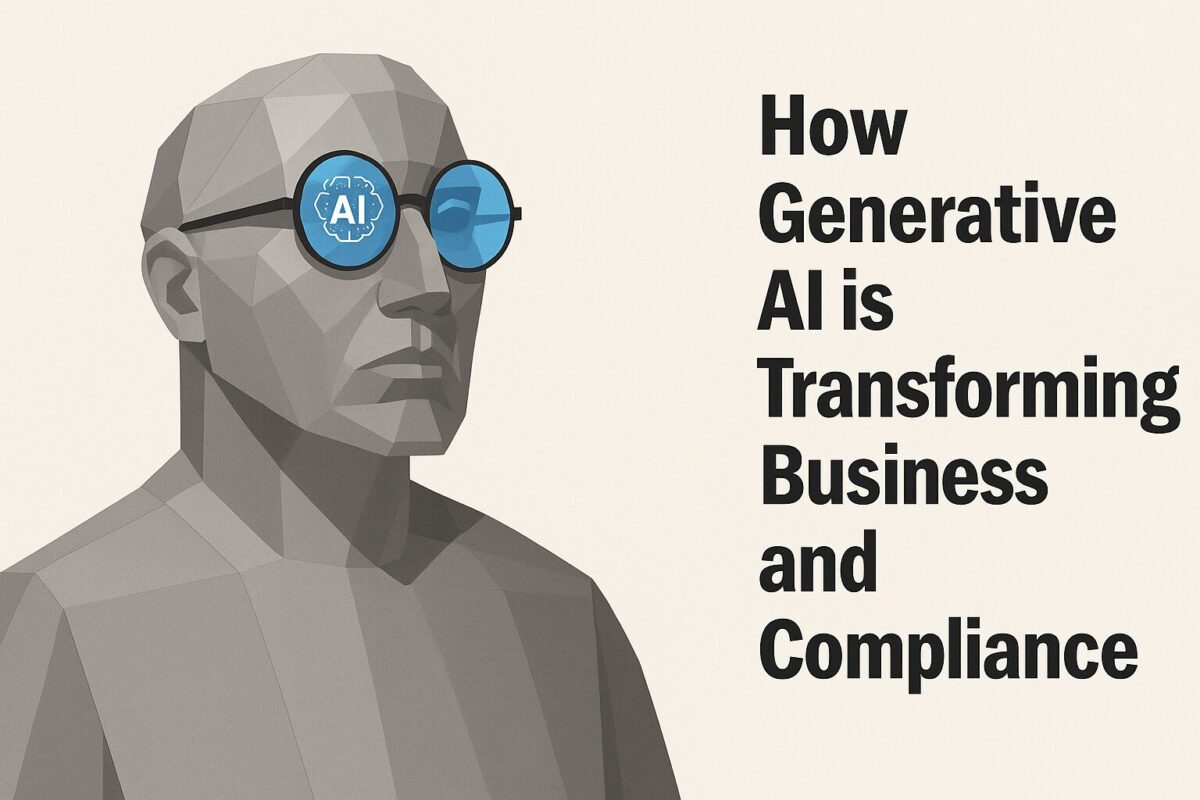
How Generative AI is Transforming Business and Compliance in 2025

One thing I have learned from the digital age is that to stay ahead, we must stay informed and proactive about how new technologies impact corporate governance, ethics, and operational compliance. In this context, generative AI (Gen AI) is no longer a futuristic concept; it is embedded deeply in our everyday activities. Marc Zao-Sanders’ article in Harvard Business Review (HBR), “How People Are Really Using Gen AI in 2025,” presents an excellent opportunity to reflect on how these developments impact compliance, governance, and risk management.

Zao-Sanders highlights a critical shift in how generative AI is utilized: from purely technical assistance towards significantly more personal and emotive applications. With “Therapy/Companionship,” “Organizing my life,” and “Finding purpose” emerging as the top three use cases, it’s clear that users seek emotional and organizational support, demonstrating Gen AI’s versatility beyond traditional technological roles.

Compliance professionals must recognize that as AI increasingly becomes integral to both professional services and personal well-being, the accompanying risk and compliance implications magnify exponentially. The nature of these interactions, often intimate or deeply personal, demands robust data privacy protections and stringent ethical governance frameworks. Businesses integrating these technologies need precise, transparent policies and effective oversight mechanisms to mitigate new compliance risks.

Implications for Compliance Professionals

Enhanced Data Privacy and Ethical Considerations

Zao-Sanders emphasizes the rising prominence of personal and professional support through Gen AI, especially in areas such as AI-based therapy, emotional companionship, and life organization. As users entrust AI with highly sensitive personal data, compliance professionals face increased responsibilities regarding data privacy, security, and the ethical use of data. This scenario elevates the stakes considerably. He notes, “data safety is not a concern when your health is deteriorating,” highlighting users’ willingness to sacrifice privacy for crucial emotional or medical support. Such conditions can quickly lead to ethical and compliance vulnerabilities if businesses fail to manage and protect sensitive user data rigorously.

Organizations must reinforce their compliance strategies to manage ethical risks inherent in AI-human interactions. As Zao-Sanders indicates, professional services, including medical, legal, and financial advisement, are increasingly relying on generative AI, pushing regulatory boundaries. Notably, EY’s deployment of 150 AI agents specifically for tax-related tasks highlights the profound impact of generative AI on professional services, adding layers of complexity to compliance strategies.

Regulatory Response and Enforcement Trends

The article briefly touches on the growing regulatory scrutiny that Gen AI is attracting globally, noting explicitly that governments are “taking more emphatic and explicit positions” due to heightened stakes surrounding AI technology. For compliance professionals, this should serve as a clarion call: regulatory oversight is intensifying. Preparing for audits, demonstrating compliance, and actively engaging with regulatory developments will be essential. The rapid pace of AI adoption necessitates an agile and proactive approach to compliance management that anticipates, rather than merely reacts to, regulatory shifts.

Balancing AI Dependence with Human Oversight

A striking tension highlighted in the article is the debate over the impact of generative AI on human cognitive abilities, decision-making, and ethical judgment. Users express genuine concern about becoming overly reliant on AI, which could erode their ability to think critically and make independent, ethical decisions.

This reliance poses significant implications for compliance officers charged with safeguarding ethical decision-making. Effective compliance programs must emphasize human oversight, cultivating a culture where AI supports rather than supplants human judgment. Investing in AI literacy among employees can mitigate potential over-reliance, fostering an environment where staff understand both the capabilities and limitations of AI.

Compliance in AI-Driven Professional Services

Zao-Sanders illustrates how AI integration into professional tasks is increasingly sophisticated. For instance, the transformation underway at EY, training employees extensively in generative AI, reflects broader industry trends. Compliance officers must respond to these developments by establishing clear standards and compliance checkpoints. It is crucial to determine whether AI outputs meet professional standards, remain unbiased, and do not inadvertently violate regulatory obligations.

Given AI’s pervasive integration into professional judgments (such as tax preparation, legal advice, and medical diagnosis), the accuracy and regulatory compliance of AI-driven outputs become paramount. Compliance programs must integrate AI auditability, accountability, and transparency deeply into corporate governance frameworks.

Practical Compliance Steps in the Gen AI Era

1. Proactive Policy Development and Training

Develop clear policies that outline the acceptable use of generative AI, including specific guidelines on data handling, ethical considerations, and regulatory obligations. Embed these policies into your organization’s culture through rigorous training and communication strategies.

2. Rigorous Risk Assessment and Ongoing Monitoring

Gen AI compliance must adopt continuous monitoring. Regular risk assessments and periodic audits of AI systems will promptly detect and rectify issues. Compliance officers should remain actively involved in assessing new AI technologies for ethical, privacy, and regulatory considerations before full-scale implementation.

3. Transparent Data Practices

Given the heightened public sensitivity to data privacy concerns, as noted by Zao-Sanders’ mention of users’ concerns around data privacy and their cynicism toward Big Tech, companies must prioritize transparent data practices. Clear communication about data usage, consent, and protection measures will foster trust and reduce compliance risks.

4. Ethical AI Governance Frameworks

Design and deploy ethical AI governance frameworks that address algorithmic fairness, transparency, and accountability, ensuring responsible use of AI. These frameworks ensure generative AI tools are deployed responsibly and ethically, aligning with stakeholder expectations and regulatory standards.

5. Encourage Human-AI Collaboration

Foster a balanced approach between AI-driven solutions and human judgment. Reinforce the importance of human oversight to ensure compliance, accuracy, and ethical decision-making, thus minimizing over-dependence on AI.

Looking Ahead—The Compliance Imperative in the Gen AI Landscape

As we approach a future increasingly defined by AI integration, compliance professionals have a unique opportunity to lead their organizations proactively. Understanding and managing the compliance and ethical dimensions of Gen AI is now critical, not optional. The risks and opportunities outlined in Zao-Sanders’ article underscore the urgent need for a strategic, well-informed approach to integrating generative AI into corporate compliance frameworks.

Compliance professionals should view this moment as an opportunity to demonstrate thought leadership, to guide ethical AI adoption, and to establish robust frameworks that enable businesses to thrive responsibly. By proactively addressing the compliance and moral challenges presented by generative AI, we not only fulfill our professional obligations but also position our organizations as ethical, forward-thinking leaders in the digital age. The compliance journey ahead is demanding, but equally, it offers profound opportunities to influence and shape a responsible, compliant, and ethically robust AI-driven future.