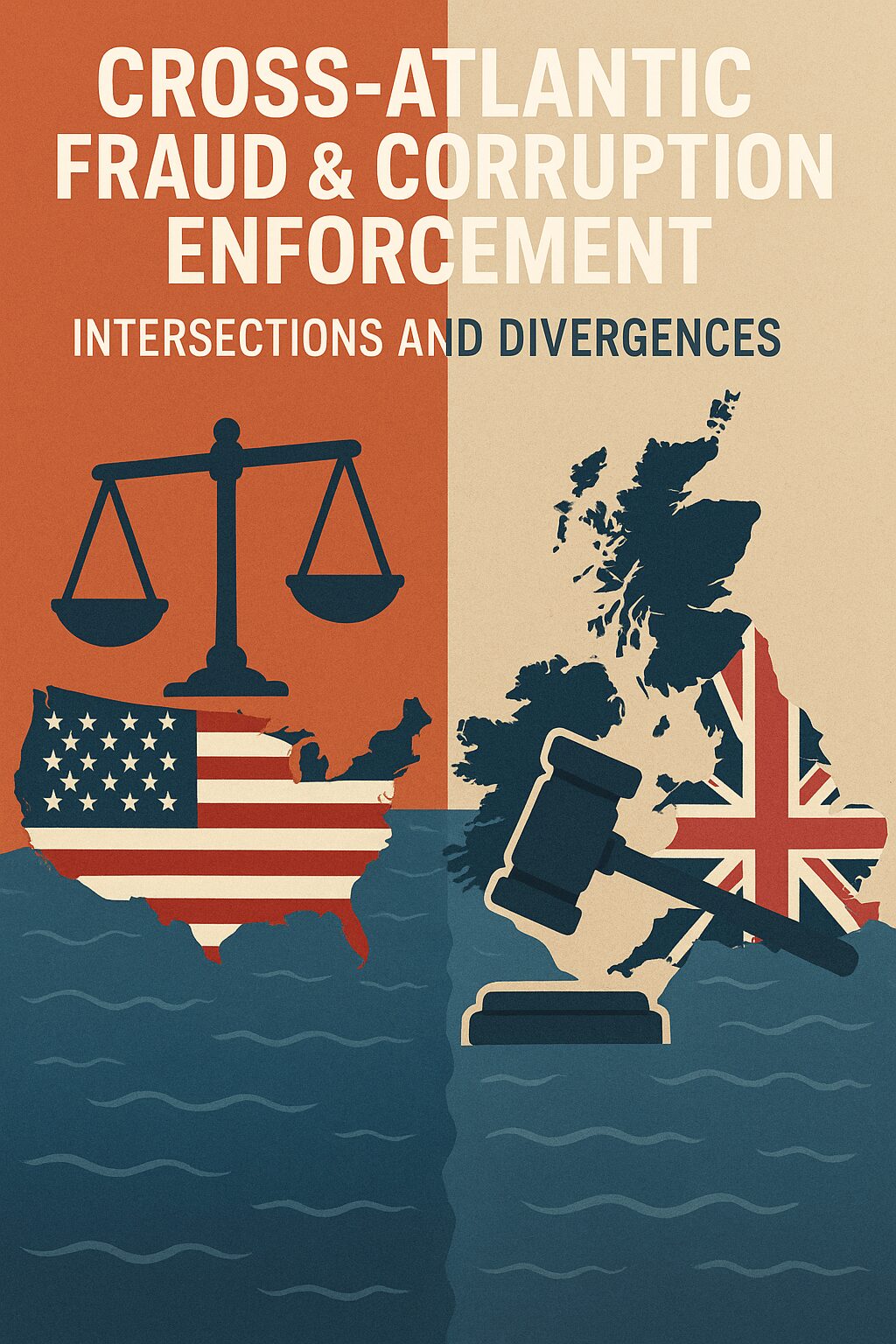
In today’s dynamic compliance landscape, navigating the complexities of international corporate wrongdoing requires vigilance, foresight, and strategic action, as highlighted in A recent article entitled “Cross-Atlantic Impact: DOJ and SFO Self-Reporting and Enforcement Priorities,” by lawyers from McDermott, Will & Schulte. The article is an excellent review of areas where the fight against fraud and corruption aligns between the two countries and areas where they diverge. Today, I will review the article and consider what it means for the US company doing business in the UK or with UK companies.
The Serious Fraud Office (SFO) in the United Kingdom has made clear its expectations regarding self-reporting corporate misconduct, mainly aligning in philosophy, if not always in exact details, with its U.S. counterpart, the Department of Justice (DOJ). American companies must understand these nuances and adapt their compliance programs accordingly. Here are five critical reasons why U.S. businesses must closely monitor and adhere to the UK’s evolving fraud and bribery enforcement regime.
Prompt Self-Reporting Weighs Heavily in Favor of DPAs
The SFO guidance unequivocally states that companies demonstrating prompt self-reporting of corporate wrongdoing significantly increase their chances of obtaining a Deferred Prosecution Agreement (DPA). Conversely, any delay in self-reporting suspected wrongdoing “within a reasonable time of it coming to light” adversely impacts the company’s standing with the SFO.
Much like the DOJ, the SFO does not insist on complete internal investigations before self-reporting. Indeed, in many ways, both sets of prosecutors want companies to step forward as soon as possible. The degree of the inquiry expected depends on the clarity and strength of evidence. Where evidence indicates wrongdoing, companies are expected to self-report swiftly. Ambiguities may permit a more extensive preliminary investigation, but American companies should note that delays can risk losing the advantages offered by early disclosure.
Jurisdictional Triggers Demand Simultaneous Reporting
For American companies dealing with potential misconduct spanning jurisdictions, awareness and agility become paramount. According to SFO guidance, companies reporting suspected misconduct to another agency, such as the DOJ, should also inform the SFO simultaneously or immediately thereafter. Failure to do so negates any potential credit for self-reporting.
Consider a scenario where a company seeks a declination from the DOJ through prompt self-disclosure. Identifying a UK jurisdictional nexus, such as conduct occurring partly in the UK or financial impact felt within the UK, is crucial. The UK’s “failure to prevent bribery” and new “failure to prevent fraud” offenses can impose liability based on international conduct linked to a business presence or financial repercussions in the UK. Understanding and navigating these jurisdictional nuances quickly is imperative to safeguard against regulatory pitfalls and secure favorable treatment.
Increasingly Aggressive Fraud Enforcement
Fraud has emerged as a prominent enforcement priority for both the DOJ and SFO. American companies should pay particular attention to the UK’s new “failure to prevent fraud” (FTPF) offense, effective from September 1, 2025. This robust enforcement tool targets UK and non-UK entities whose associates engage in fraudulent conduct impacting UK interests.
American companies operating internationally must proactively establish “reasonable fraud prevention procedures” to counteract potential liability under this legislation. The urgency conveyed by the SFO, highlighted by senior officials expressing eagerness to utilize these new powers aggressively, cannot be overstated. Companies that neglect preparation risk being among the first prosecuted examples of this powerful legislation.
Coordination Between DOJ and SFO Enhances Risk Exposure
With the DOJ emphasizing fraud in areas affecting U.S. interests, ranging from healthcare and procurement fraud to investment scams, there is considerable overlap with misconduct addressed by the UK’s FTP fraud offense. The authors note that the US Supreme Court held in Kousisis v. United States that a defendant may be convicted of wire fraud for inducing a victim to enter a contract under material pretenses, even if there was no economic loss to the victim. This ruling may allow US prosecutors to pursue a broader range of fraud cases.”
A cross-jurisdictional approach is therefore essential. American companies uncovering fraud that victimizes both U.S. and UK entities or markets must carefully assess reporting obligations to both jurisdictions. The simultaneous or nearly simultaneous reporting requirements heighten the stakes and complexity, demanding robust internal mechanisms for rapid assessment and disclosure.
Continuing Vigorous Anti-Bribery Efforts Globally
Despite temporary uncertainties in the DOJ’s stance toward anti-bribery enforcement, global initiatives indicate relentless international focus. The SFO has intensified anti-bribery efforts through initiatives like the International Anti-Corruption Prosecutorial Taskforce, collaborating closely with French and Swiss authorities. The SFO’s involvement in the International Anti-Corruption Coordination Centre (IACCC) further underscores its commitment. The authors report that “the IACCC aims to facilitate international cooperation on ‘grand corruption’ investigations, including concerning intelligence and evidence gathering.”
In addition to the IACCC, “In March 2025, the SFO established an ‘International Anti-Corruption Prosecutorial Taskforce’ with the French Parquet National Financier (PNF) and the Office of the Attorney General of Switzerland (OAG) (Taskforce). Through the Taskforce, the SFO, PNF, and OAG commit to strengthening their existing cooperation and collaborating to deploy their wide-reaching anti-bribery legislation to prosecute overseas conduct.”
The DOJ’s recent reaffirmation of anti-bribery efforts through its White-Collar Enforcement Plan, highlighting bribery and money laundering harming U.S. interests, may complement these international initiatives. American companies must remain vigilant regarding potential liabilities under both the FCPA and the UK Bribery Act, carefully calibrating their compliance programs to meet rigorous enforcement expectations across jurisdictions.
Practical Steps for American Companies
Given these compelling reasons to pay close attention to the SFO guidance and evolving UK legislation, American companies must take proactive steps to fortify their compliance efforts:
- Enhance Internal Controls: Companies must quickly develop comprehensive “reasonable fraud prevention procedures,” supported by thorough risk assessments and regularly updated policies.
- Cross-Jurisdictional Risk Assessments: Implement rigorous processes for promptly assessing jurisdictional ties when misconduct emerges, allowing immediate and coordinated reporting where necessary.
- Integrated Compliance Training: Ensure global compliance teams, legal counsel, and executive management understand SFO and DOJ expectations clearly, fostering prompt, informed responses.
- Monitoring International Developments: Maintain continuous awareness of evolving enforcement policies and initiatives, particularly regarding fraud and bribery, to swiftly adapt compliance programs accordingly.
- Preparedness and Responsiveness: Establish clear protocols for internal investigations and self-reporting decisions, emphasizing speed and comprehensiveness to maximize potential cooperation credit.
Conclusion
Navigating the intricate and often intersecting expectations of the SFO and DOJ presents ongoing challenges for American companies. However, understanding the strategic implications of prompt self-reporting, jurisdictional coordination, aggressive fraud enforcement, international collaboration, and robust anti-bribery efforts is vital.
Proactive compliance management, aligned closely with evolving international regulatory landscapes, is not merely advisable but something that every multinational needs to put in place. American corporations should approach compliance with the understanding that today’s oversight environment demands swift and strategic decision-making to mitigate risks effectively and position themselves favorably in the face of potential regulatory scrutiny.