Categories
Compliance Into the Weeds

Compliance into the Weeds: USRA Declination Case Study: Self-Disclosure Best Practices

The award-winning Compliance into the Weeds is the only weekly podcast that takes a deep dive into a compliance-related topic, literally going into the weeds to explore a subject more fully. Are you looking for some hard-hitting insights on compliance? Look no further than Compliance into the Weeds! In this Compliance into the Weeds episode, Tom Fox and Matt Kelly take a deep dive into the declination recently given by the DOJ to the Universities Space Research Association (USRA).

In this episode, Tom and Matt dive deeply into a recent decline issued by the Department of Justice (DOJ) to the University Space Research Association (USRA). The discussion focuses on the organization’s exemplary behavior in self-disclosure and cooperation during an investigation into an employee’s misconduct. This misconduct included unauthorized export of software to Beijing University. The hosts highlight the case as a textbook example of effective compliance practices, self-reporting, and cooperation with regulators. They also explore the DOJ’s guidelines on self-disclosure and the importance of internal controls in high-risk areas.

Key highlights:

  • Case Overview: USRA Declination
  • DOJ Press Release Insights
  • Details of the Misconduct
  • USRA’s Response and Cooperation

Resources:

DOJ Press Release on Universities Space Research Association Declination

Tom

Instagram

Facebook

YouTube

Twitter

LinkedIn

Compliance into the Weeds was recently honored as one of a Top 25 Regulatory Compliance Podcast and a Top 10 Business Law Podcast, and a Top 12 Risk Management Podcast.

Categories
Daily Compliance News

Daily Compliance News: May 7, 2025, The Private Lives Edition

Welcome to the Daily Compliance News. Each day, Tom Fox, the Voice of Compliance, brings you compliance-related stories to start your day. Sit back, enjoy a cup of morning coffee, and listen in to the Daily Compliance News—all from the Compliance Podcast Network. Each day, we consider four stories from the business world: compliance, ethics, risk management, leadership, or general interest for the compliance professional.

Top stories include:

  • UBS will pay over $500MM to settle the tax fraud case. (WSJ)
  • Mike Jeffries was found incompetent to stand trial. (BBC)
  • Do CEOs have private lives? (Bloomberg)
  • Fighting Trump’s tariffs. (FT)
Categories
Blog

Muddle in the Middle Week: Part 3 – Elevating Compliance Through Connected Middle Managers

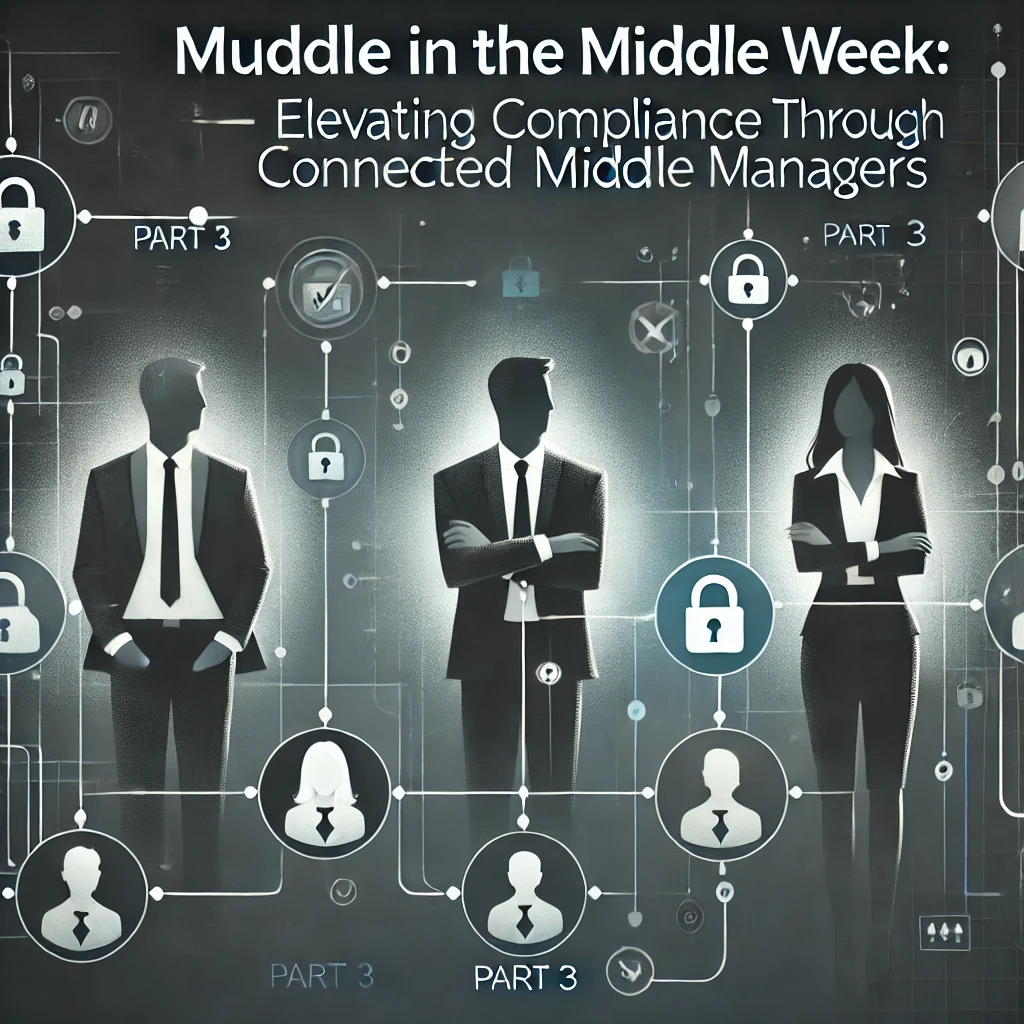
We continue our exploration of the role of middle managers in compliance. In compliance, we often focus heavily on top executives’ tone at the top and frontline employees’ behaviors at the bottom, but what about the critical layer in between? Middle managers, often unjustly maligned as mere bureaucratic obstacles or ineffective supervisors, play a crucial compliance role, acting as connectors, communicators, and cultural ambassadors. I was therefore intrigued by an article in the Harvard Business Review by Zahira Jaser entitled The Real Value of Middle Managers, which focused on four key types of connecting leaders and their associated practices. Each has rewards and challenges, but successfully addressing them can help make your business more successful after the pandemic.

Middle managers serve a dual function: leading their teams and effectively communicating with senior executives. Jaser refers to these pivotal roles as “connecting leaders,” vital for maintaining organizational coherence, especially as remote and hybrid work arrangements proliferate. Effective middle managers possess sophisticated communication skills and can adeptly mediate between varying organizational layers, skills invaluable to compliance professionals. In Part 3, we look at how compliance professionals can tap into these connected leaders to help elevate compliance and the strategy of doing business ethically.

Four Key Roles of Middle Managers in Compliance

1. The Janus Leader: Empathizing Across Levels

Named after the Roman god who faced two directions simultaneously, Janus-type leaders maintain continuous empathy with their subordinates and senior executives. In compliance, this duality is essential. Middle managers must understand their teams’ operational pressures and communicate these challenges to ensure realistic compliance expectations and adequate resource allocation. Organizations can support Janus leaders by providing coaching and psychological resources, mitigating the risk of burnout from this continuous emotional labor.

2. The Broker: Negotiating Ethical Solutions

Middle managers often find themselves negotiating between conflicting organizational objectives. They function as brokers, facilitating dialogues that reconcile differing needs and goals. This role is especially critical in ethical compliance scenarios, where business objectives and compliance principles might seem to clash. Effective brokers foster a culture of transparency and humility, creating environments where ethical considerations are openly discussed and valued.

One practical example highlighted by Jaser involved a middle manager named Sumiya, who effectively mediated a disagreement about employee performance ratings, demonstrating transparency and fostering increased loyalty and motivation through direct executive engagement.

3. The Conduit: Advocating Upward

Middle managers in the conduit role courageously amplify their team’s voices, often at personal risk. They are crucial in compliance environments, particularly when ethical issues or potential violations must be escalated to higher management. For compliance teams, conduits are allies who ensure critical frontline insights reach senior leadership. Promoting a culture of psychological safety empowers middle managers to speak up without fear of negative repercussions, enhancing organizational transparency and integrity.

For instance, Simon, a risk manager featured by Jaser, exemplified this role by courageously voicing team concerns to senior executives, significantly improving the implementation of new compliance processes.

4. The Tightrope Walker: Balancing Strategic Compliance Decisions

Compliance professionals understand that organizational decisions often involve complex ethical dilemmas. Middle managers, described as tightrope walkers, navigate these challenging decisions daily, balancing competing demands such as operational efficiency, employee morale, and compliance obligations. Organizations can support these managers by fostering safe environments for critical-thinking discussions, thus preventing cognitive overload and paralysis.

Andrea’s case in Jasper’s research illustrates the Tightrope Walker’s role vividly. As a sales team leader during a transition requiring intensive client communication tracking, Andrea strategically managed her team’s workload and maintained compliance with corporate requirements while safeguarding employee autonomy and morale.

Strengthening Compliance through Middle Managers

To maximize the compliance potential of middle managers, organizations must provide targeted support, recognizing these roles’ intrinsic challenges. This support should include comprehensive development programs, not just in leadership but also in active and engaged followership—empowering managers to effectively influence upwards and downwards.

Organizations should integrate these roles explicitly into their compliance strategies, ensuring that middle managers’ efforts are recognized and appropriately incentivized through performance management systems, training, and corporate communications. This recognition validates middle managers’ crucial compliance roles, enhancing their motivation and effectiveness.

Additionally, investing in emotional and psychological support systems for middle managers is essential, particularly during periods of significant organizational change. Such investments underscore a commitment to a robust compliance culture, recognizing that compliance effectiveness is deeply tied to organizational health and employee well-being.

Middle Managers—Compliance Champions in the Shadows

Jaser’s research underscores a powerful truth: middle managers are not just connectors in an operational sense; they are essential compliance allies who uphold and reinforce ethical standards throughout an organization. For compliance professionals, the implication is clear—by supporting, empowering, and leveraging these vital figures, organizations can build stronger, more responsive, and resilient compliance cultures.

Ultimately, compliance is not solely dictated from the top or performed at the bottom, and it thrives most robustly in organizations where middle managers actively embody and champion ethical values and compliance standards every day. Embracing and amplifying their roles will undoubtedly position organizations for compliance success and sustainable, ethical leadership.

I hope you will join me tomorrow as I explore why middle managers should be seen as compliance’s eyes and ears and how compliance can use this skill to create and maintain a more effective compliance program.

For more on this topic, check out The Compliance Handbook, a Guide to Operationalizing Your Compliance Program, 6th edition, which was recently released by LexisNexis and is available here.


Categories
Compliance Tip of the Day

Compliance Tip of the Day – Middle Managers as Ethical Cornerstones

Welcome to “Compliance Tip of the Day,” the podcast where we bring you daily insights and practical advice on navigating the ever-evolving landscape of compliance and regulatory requirements. Whether you’re a seasoned compliance professional or just starting your journey, we aim to provide bite-sized, actionable tips to help you stay on top of your compliance game. Join us as we explore the latest industry trends, share best practices, and demystify complex compliance issues to ensure your organization remains compliant with the law. Tune in daily for your dose of compliance wisdom, and let’s make compliance a little less daunting, one tip at a time.

What lessons can compliance professionals learn from recognizing and empowering middle managers as vital moral compasses within their organizations?

For more on this topic, check out The Compliance Handbook, a Guide to Operationalizing Your Compliance Program, 6th edition, which LexisNexis recently released. It is available here.

Categories
Word of the Week

Word of the Week with Kenneth O’Neal – The Power of Thinking

Each week, Kenneth O’Neal discusses a word that describes a principle or value of the Qualities of Success. We suggest you use the Word of the Week in your thoughts, deeds, and actions. You might possess the quality and desire to develop it to a higher level. You could replace a bad habit with a good habit. Write an action step and use it daily to improve the quality of your life. In this episode, Kenneth discusses the word – Thinking.

In this episode, Rick and Kenneth look at the significance of the word ‘thinking,’ exploring its historical roots and essential role in shaping human civilization. They discuss notable thinkers like Socrates, Plato, Aristotle, and Confucius, who have profoundly influenced various aspects of life and knowledge. The conversation then shifts to the relevance of critical thinking in today’s fast-paced, information-saturated world. They look at the importance of intentional and active thinking, unbiased evaluation of information, and the necessity of fostering critical thinking skills for personal and professional growth. The hosts conclude by encouraging listeners to engage in deep reflection and continuous learning to navigate better and influence their environments.

Key highlights:

  • The Evolution and Importance of Thinking
  • Great Thinkers in History
  • Modern Day Thinkers and Critical Thinking
  • The Nature of Thoughts and Thinking
  • Encouragement to Become a Critical Thinker

Resources

KRONEAL Consulting

Categories
Daily Compliance News

Daily Compliance News: May 6, 2025, The Made in China Edition

Welcome to the Daily Compliance News. Each day, Tom Fox, the Voice of Compliance, brings you compliance-related stories to start your day. Sit back, enjoy morning coffee, and listen to the Daily Compliance News. All from the Compliance Podcast Network. Each day, we consider four stories from the business world: compliance, ethics, risk management, leadership, or general interest for the compliance professional.

Top stories include:

  • Made in China, gaining traction. (WSJ)
  • The EU Parliament cracks down on lobbyists. (Politico)
  • Adani tries to settle the corruption case. (Bloomberg)
  • Albemarle gets out of NPA early. (ComplianceWeek)
Categories
Everything Compliance - Shout Outs and Rants

Shout Outs and Rants – Episode 153, The CW 25 Edition

Welcome to this edition of Everything Compliance, Shout-Outs, and Rants. This episode features Matt Kelly, Jonathan Armstrong, Karen Woody, Tom Fox, and Karen Moore.

  1. Karen Moore rants at the Department of Education for setting up a 1984-style anonymous reporting line for students to report on their teachers.
  2. Matt Kelly has a shout-out to Microsoft for picking up Jenner & Block as counsel and ranting about the GOP effort to abolish the PCAOB.
  3. Jonathan Armstrong shouts out to the compliance community for their support of Diana Trevley and encourages her continuing recovery now that she is back in the US.
  4. Karen Woody shouts out to the movie Conclave.
  5. Tom Fox shouts out to former San Antonio Spurs coach Gregg Popovich, who announced his retirement on May 1.

The members of Everything Compliance are:

Tom Fox, the Voice of Compliance, is the host, producer, and sometimes panelist of Everything Compliance. He can be reached at tfox@tfoxlaw.com. The award-winning Everything Compliance is part of the Compliance Podcast Network.

Categories
SBR - Authors' Podcast

SBR Author’s Podcast – Understanding Complexity with Dr. Jean Boulton, Part 2: The Power of Simple Principles in Ethics and Compliance

 Welcome to the SBR – Authors Podcast! In this podcast series, host Tom Fox visits with authors in the compliance arena and beyond. Today, Tom’s friend and colleague Earnie Broughton joins him in co-hosting Dr. Jean Boulton, the author of The Dao of Complexity. This concludes Part 2 of a special two-part SBR – Authors Podcast episode.

In episode 2, Tom, Earnie, and Dr. Boulton explore the intricate balance between simple rules and simple principles within corporate compliance and ethics. Their discussion highlights the limitations of relying solely on rigid rule systems, especially in complex and evolving environments. We emphasize the importance of establishing shared principles and values, which serve as a more adaptable foundation for ethical decision-making. Drawing on real-world examples from healthcare and education, we explore how fostering a culture of trust, collaboration, and ethical behavior can lead to more sustainable and effective outcomes. Key takeaways include the significance of a ‘speak up’ culture, the role of leadership in building trust, and the necessity of addressing root causes to drive meaningful change.

Key highlights:

  • Introduction to Simple Rules vs. Simple Principles
  • Exploring the Philosophy of Simple Rules
  • The Role of Principles and Ethics
  • Compliance and Ethics in Organizations
  • The Importance of Trust and Culture

Resources:

Dr. Jean Boulton’s Website

Dr. Jean Boulton  on LinkedIn

The Dao of Complexity on Amazon.com

Earnie Broughton on LinkedIn

Tom Fox

Instagram

Facebook

YouTube

Twitter

LinkedIn

Categories
Blog

Muddle in the Middle Week: Part 2, Middle Managers as an Ethical Cornerstone

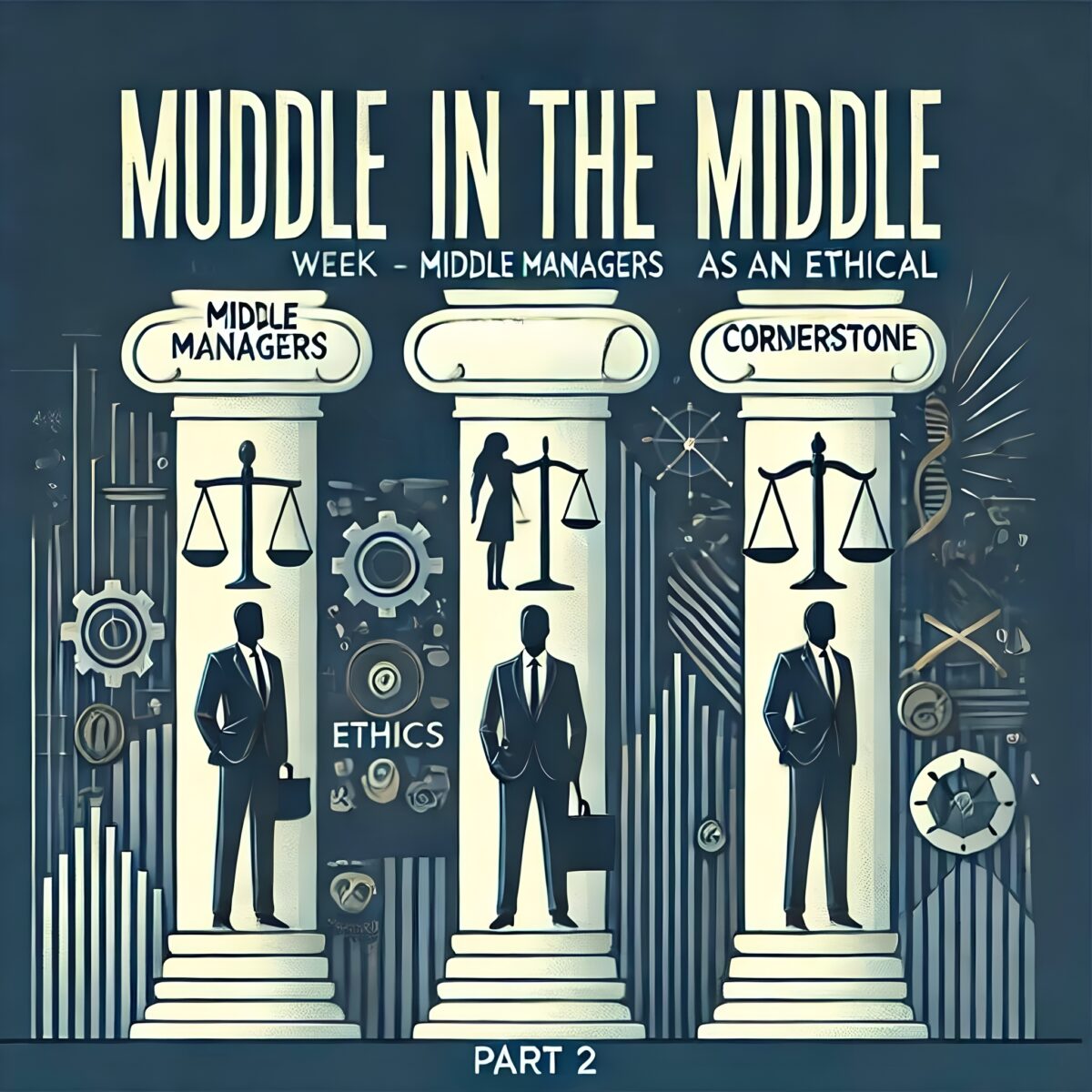
We continue our exploration of middle managers as a key to effective compliance. Middle managers often find themselves unfairly characterized and depicted as bottlenecks or bureaucratic hurdles, and their essential contributions to corporate culture and ethics are frequently overlooked. However, these unsung heroes in corporate compliance are crucial in promoting compliance and upholding ethical business practices. In Brooke Vuckovic’s article “Employees See Middle Managers as an Organization’s Moral Compass,” the author wrote how middle managers made a meaningful difference in their teams’ lives and upheld their organizations’ moral compass. In Part 2, I want to demonstrate that middle managers can be your organization’s ethical cornerstones.

Becoming the middle manager whom others genuinely respect, admire, and recall as a moral role model requires deep work. She noted two areas in particular where middle managers can assist compliance: first, by taking a regular self-inventory to gauge their existing standing and willingly correcting habits and behaviors; second, by monitoring them on an ongoing basis. I wanted to use her article to highlight what lessons compliance professionals can learn from recognizing and empowering middle managers as vital moral compasses within their organizations.

The Quiet Power of Everyday Ethics

When asked about exemplary moral business leaders, MBA students in Vuckovic’s survey commonly referenced high-profile CEOs known for their ethical stances, such as Yvon Chouinard and Ratan Tata. However, far more frequently, they cited their middle managers, whose day-to-day actions and decisions consistently demonstrated integrity and moral leadership. These managers reinforced ethics through small, repeated actions, showing politeness, offering genuine compliments, and consistently supporting their teams.

Lesson 1: Commitment Matters Most

Compliance begins with genuine care and commitment to people. Middle managers earn trust and respect through simple, consistent actions, following promises, actively advocating for their teams, and being genuinely attentive to concerns. When managers demonstrate such commitment, compliance becomes an authentic expression of the organization’s culture rather than merely procedural adherence.

One powerful example from the research illustrates a manager who carefully paced workloads and fairly distributed responsibilities, creating an environment where employees willingly stepped up during urgent situations. “I would have followed her over a cliff,” stated one respondent, reflecting profound respect earned through everyday integrity and empathy.

Lesson 2: Upholding Values Under Pressure

Middle managers frequently face the dual pressures of organizational demands and ethical considerations. Compliance professionals must recognize and empower managers who are willing to stand firm on ethical grounds, even when faced with significant pressure. In Vuckovic’s findings, managers prioritizing integrity over expediency gained the deepest admiration. For example, one manager’s decision not to hurriedly approve complex financial changes without thorough review demonstrated an unwavering commitment to doing the right thing, reinforcing the critical compliance principle of diligence over speed.

Lesson 3: Proactive Protection of Team Culture

Managers who proactively address ethical and behavioral issues before they escalate provide critical protection for their teams and organizations. Effective compliance involves early intervention, and middle managers are ideally positioned to identify and correct behaviors that could undermine conformity. For instance, managers praised by respondents were those who confronted team members withholding crucial information or engaging in behaviors detrimental to organizational integrity. Such proactive stances resolved immediate issues and set lasting expectations for ethical behavior.

Lesson 4: Continuous Ethical Inventory

Compliance professionals can leverage Vuckovic’s recommendation of regular ethical self-inventories to encourage middle managers to consistently reflect on their commitments to their teams and higher ethical standards. This method involves routinely examining instances where managers have demonstrated integrity, fairness, and moral courage. Managers are encouraged to regularly ask themselves critical questions, such as “Have I demonstrated a commitment to integrity under pressure?” This type of assessment can deeply embed ethical considerations into daily managerial practices.

Lesson 5: Learning from Ethical Role Models

Finally, the importance of role modeling in compliance cannot be overstated. Middle managers who actively engage in ethical practices provide practical, observable models for their teams, cultivating an organizational culture where compliance and ethics are deeply valued and proactively pursued. Managers who publicly advocate for clear policies and consistently reinforce ethical priorities, such as data privacy and integrity, set benchmarks that elevate the entire organization. Compliance professionals should celebrate and highlight such ethical exemplars, making their behaviors visible and emulated across the company.

Empowering Middle Management for Stronger Compliance

Compliance professionals have a clear role in reframing how middle management is viewed within their organizations, not as obstacles or bureaucratic necessities, but as indispensable ethical leaders. As Vuckovic compellingly illustrates, middle managers who regularly demonstrate care, integrity, and moral courage form the backbone of an authentic compliance culture.

By championing the ethical contributions of middle managers, organizations reinforce compliance at every level and build a resilient, trustworthy culture that sustains ethical excellence in the face of daily pressures and complex dilemmas. Middle managers not only play a crucial role in corporate compliance, but they also serve as exemplary role models.

I hope you will join me tomorrow when I consider how to elevate your compliance regime by empowering middle managers.

For more on this topic, check out The Compliance Handbook, a Guide to Operationalizing Your Compliance Program, 6th edition, which LexisNexis recently released. It is available here.

Categories
Innovation in Compliance

Understanding Human Trafficking and Modern Slavery: A Business Imperative with Clint Palermo

Innovation comes in many areas, and compliance professionals must be ready for and embrace it. Join Tom Fox, the Voice of Compliance, as he visits with top innovative minds, thinkers, and creators in the award-winning Innovation in Compliance podcast. Today, we begin a 3-part podcast series sponsored by Diligent with Clint Palermo, Kristy Grant-Hart, and Stephanie Font. In part 1, we discuss understanding human trafficking and modern slavery: a business imperative with Clint Palermo, Senior Manager (Due Diligence) at Diligent

Tom and Clint take a deep dive into the pressing issues of human trafficking and modern slavery and their significance to the business community. Palermo highlights his professional journey in compliance, beginning in 2018 at Diligent, and discusses the regulatory landscape across various jurisdictions, including notable laws like Canada’s S-211, the EU’s CS3D Directive, and the US’s Uyghur Forced Labor Prevention Act. The conversation emphasizes the importance of knowing third parties (KY3P), managing reputational risks, and maintaining continuous due diligence to ensure ethical business practices and compliance.

Key highlights:

  • Significance of Human Trafficking and Modern Slavery
  • Global Regulations on Forced Labor
  • Impact of Forced Labor on Businesses
  • Reputational Risks and Moral Imperatives
  • Solutions and Compliance Programs

Resources:

Clint Palermo on LinkedIn

Visit Diligent Website

Tom Fox

Instagram

Facebook

YouTube

Twitter

LinkedIn