Categories
31 Days to More Effective Compliance Programs

One Month to a More Effective Compliance Program Through Culture: Day 6 – Attributes of a Toxic Culture

Corporate culture is finally being acknowledged as a key ingredient in a successful business, particularly one that operates ethically and in compliance. But what are some indicia of good culture and more importantly what are some indicia of a toxic culture? A recent article in the MIT Sloan Management Review provided some guidance. In Why Every Leader Needs to Worry About Toxic Culture, the authors posited that by pinpointing the elements of toxic culture in a company, its leaders focus on addressing the issues that lead employees to disengage and quit. These ideas have significant importance for the compliance function as it navigates corporate culture, both in assessing and improving it.

Moreover, the Chief Compliance Officer and corporate compliance function were identified in the 2023 3 Evaluation of Corporate Compliance Programs as the keepers of institutional justice and institutional fairness. This means recognizing and then preventing a toxic culture from spreading and infecting your entire organization squarely in the compliance wheelhouse. The article lays out key red flags for every CCO and compliance professional to look for in assessing culture. Finally, for any company with a toxic culture, the chances are much greater to be defrauded by its own employees or to defraud others through bribery and corruption by violating such laws as the Foreign Corrupt Practices Act (FCPA).

The authors identify behaviors that they call “the Toxic Five attributes”, being “disrespectful, noninclusive, unethical, cutthroat, and abusive – poison corporate culture in the eyes of employees. While organizational culture can disappoint employees in many ways, these five elements have by far the largest negative impact on how employees rate their corporate culture and have contributed most to employee attrition throughout the Great Resignation.” As a CCO or compliance professional you need to be on the watch for them and take steps to remedy them if you see or hear about them.

 Three key takeaways:

1. Are the attributes of a toxic culture present in your organization?

2. The 2020 Update to the Evaluation of Corporate Compliance Programs mandated the compliance lead this effort.

3. Does your organization have abusive behavior?

Check the free webinar on the new tool, The Culture Audit with Tom Fox and Sam Silverstein on Tuesday, November 28, 12 CT. For more information and registration, click here.

Categories
Compliance Into the Weeds

Compliance into the Weeds – Remediation During an Enforcement Action

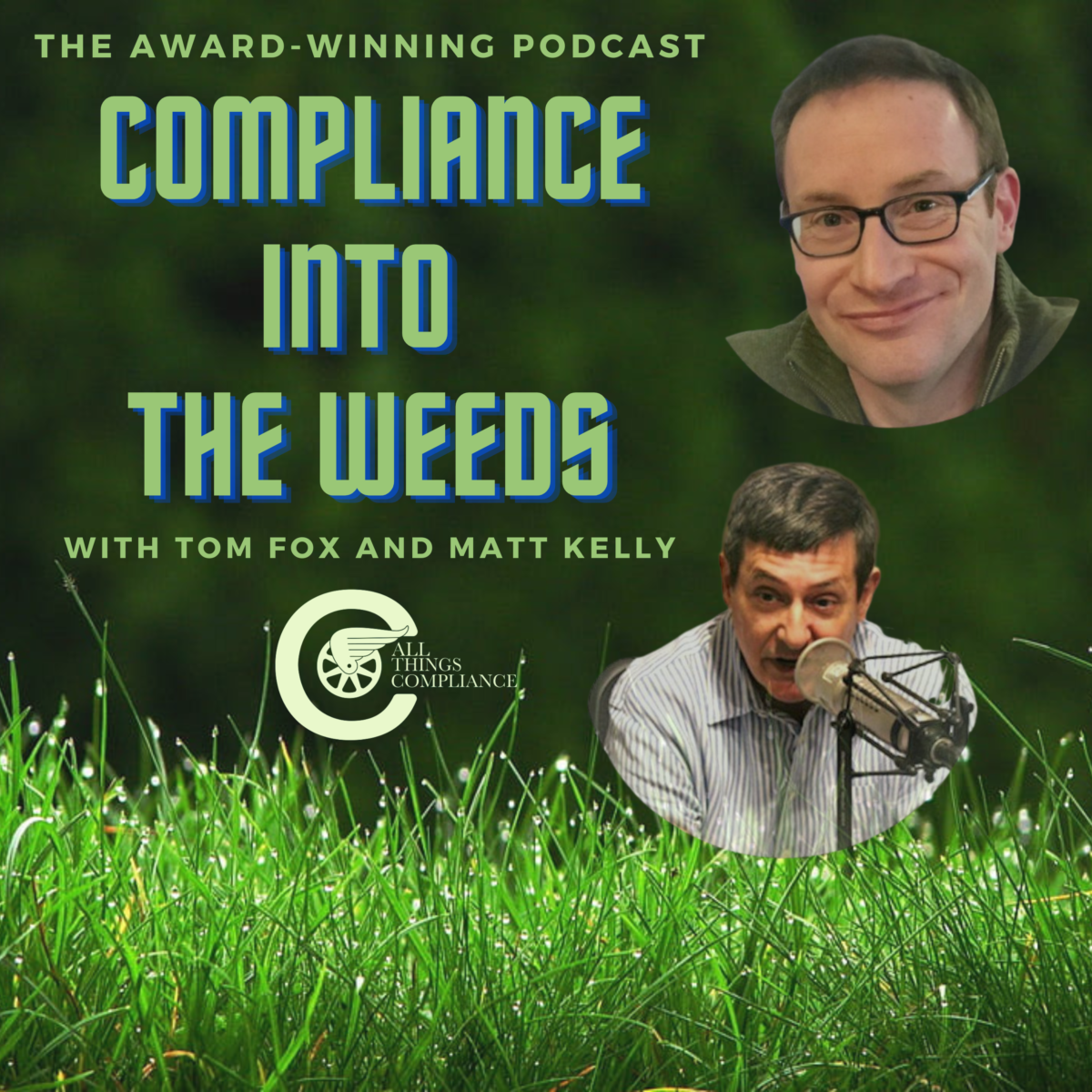
The award-winning Compliance into the Weeds is the only weekly podcast that takes a deep dive into a compliance-related topic, literally going into the weeds to more fully explore a subject. Looking for some hard-hitting insights on compliance? Look no further than Compliance into the Weeds! In this episode, Tom and Matt take a deep dive into the issue of how and whether you should remediate during an enforcement action.

The importance of early and continuous remediation of compliance issues cannot be overstated. It is a critical aspect of maintaining a healthy relationship with regulators and ensuring effective strategies are in place to address any uncovered issues. Tom firmly believes in the necessity of initiating the remediation process as early as possible, even during the investigation phase. He emphasizes the importance of regular communication with regulators and the potential risks of delaying remediation.

Matt echoes Fox’s sentiments. He highlights the confidence that early remediation brings to compliance officers and the increased likelihood of successful resolution. Join Tom Fox and Matt Kelly as they delve deeper into this topic in this episode of the Compliance into the Weeds podcast.

 Key Highlights:

  • Proactive Remediation for Effective Compliance Management
  • Navigating Personnel Matters During Remediation
  • Logical and Consistent Employee Discipline Compliance
  • Remediation Strategies for Confident Compliance Officers

 Resources:

Matt on Radical Compliance

Tom 

Instagram

Facebook

YouTube

Twitter

LinkedIn

Categories
Daily Compliance News

Daily Compliance News: November 8, 2023 – The Farewell to WeWork Edition

Welcome to the Daily Compliance News. Each day, Tom Fox, the Voice of Compliance, brings you compliance-related stories to start your day. Sit back, enjoy a cup of morning coffee, and listen to the Daily Compliance News. all from the Compliance Podcast Network. Each day we consider four stories from the business world: compliance, ethics, risk management, leadership, or general interest for the compliance professional.

Stories we are following in today’s edition:

  • WeWork files for bankruptcy.  (FT)
  • Congress must aid in the fight against illicit crypto. (WSJ)
  • The Portuguese PM resigns over corruption. (The Guardian)
  • The Supreme Court refuses to take up the PDVSA bribery case. (LatinLawyer)
Categories
Blog

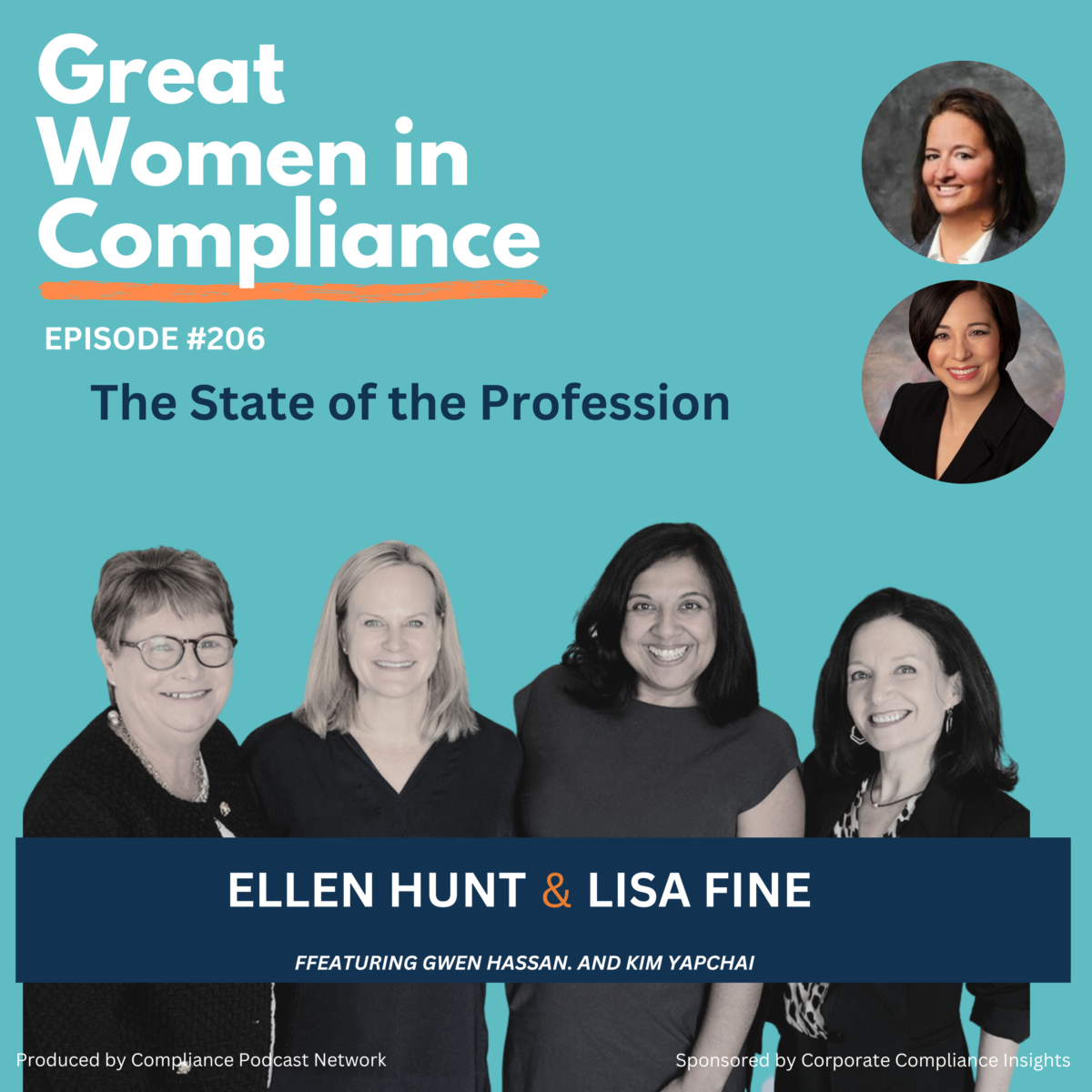
GWIC Roundtable: The Importance and Challenges of Compliance in Corporate America

The compliance profession plays a crucial role in ensuring ethical practices and maintaining regulatory compliance within corporate America. In a recent episode of the Great Women in Compliance Podcast, Lisa Fine and Ellen Hunt, a former Chief Ethics and Compliance Officer, chief Audit Officer and Chief Privacy Officer, and currently Principal Consultant and Advisor with Spark Consulting;  hosted Gwen Hassan, Deputy Chief Compliance Officer at Unisys (and host of the award winning Hidden Traffic podcast) and Kim Yapchai, currently a board member of Direct Women, which is a nonprofit focused on promoting women to be public company board members and expert in a variety of corporate areas including ESG, corporate governance, M&A, compliance and Supply Chain. They discussed the importance and challenges of the compliance profession in today’s corporate landscape.

One of the key challenges highlighted by Yapchai is the struggle for recognition and resources within organizations. Compliance professionals often report to the General Counsel (GC) rather than the CEO, which can hinder their ability to have a seat at the table and influence decision-making processes. Additionally, limited access to data and budget constraints can further impede the effectiveness of compliance programs.

Yapchai see Compliance 1.0 as “being the police. Compliance 2.0, looking at culture and working with HR. Compliance 3.0 I think is really the type of ESG role that I had in my last role and reported to the CEO as part of the executive leadership team.” She believes this is another step in the compliance function being changed. It has moved to “to revenue protector, brand protector incorporating know and it is the people that drive everything. And all of this leads to better profits, it’s better risk management.”

To overcome these challenges, the speakers emphasize the need for compliance professionals to build key relationships, understand the nuances of the business, and effectively communicate the value of compliance programs. Hassan suggests that speaking the language of the business, using terms like return on investment (ROI), and showcasing the financial impact of compliance efforts can help gain traction and support from the C-suite and the board. By demonstrating the value of compliance in dollars, compliance professionals are more likely to capture the attention of business leaders who think in terms of profit margins and ROI.

The speakers also stress the importance of continuous growth and adaptation in the compliance profession. As the business landscape evolves, compliance professionals must stay abreast of new challenges, such as ESG (Environmental, Social, and Governance) and AI (Artificial Intelligence). They need to actively seek opportunities to expand their roles beyond traditional compliance functions and become revenue protectors and brand protectors. By incorporating culture and working closely with HR, compliance professionals can contribute to better risk management and overall profitability.

However, the speakers caution against complacency and the risk of devaluing the work of compliance professionals. Hassan believes that if the profession fails to grow and adapt, it could contribute to the moral decline of corporate America. Compliance professionals have a unique opportunity to shape the values and impact of organizations, not just in terms of financial success but also in making the world a better place for all stakeholders. By embracing a holistic view of what a company represents, compliance professionals can help drive positive change and ensure ethical practices.

Hassan went on to say she has ‘tempered optimism’ for the compliance profession. She believes that employees know what our intent and what we are trying to do. She notes that the compliance profession has “done herculean work in some particularly crazy times, especially over the last ten to 15 years.” Yapchai agreed and related that “when I started, the concept of a compliance officer and a compliance function was something that was brand new and really a heavy lift when talking to companies about compliance because it was almost unheard of to have a separate compliance department and a separate compliance team and report into the board.” In many ways compliance was seen as an  “offshoot of what the law department was already doing” but there has been much improvement in that view.  The status of the profession has been elevated and there are now colleges and law schools that are now teaching separate programs in compliance. This means that Gen Z and Millennials are studying compliance as a specific degree.

Creating a supportive community, or what the speakers refer to as a “Blue Zone,” is also crucial in combating the stress and loneliness that can come with the compliance profession. It helps people live longer and healthier, but the concept that you can create your own right with your surroundings and the way your daily habits and other things you can create your own. All of the speakers feel that it is important for ethics and compliance professionals to have their blue zone or their network or their support group by connecting with peers and sharing experiences, compliance professionals can find support and inspiration to navigate the challenges they face.”

In conclusion, the compliance profession in corporate America is of utmost importance in ensuring ethical practices and regulatory compliance. However, it faces challenges such as limited resources, lack of recognition, and the need to continuously adapt to a changing business landscape. By building relationships, understanding the business, and effectively communicating the value of compliance programs, compliance professionals can overcome these challenges and contribute to the success and ethical standing of their organizations.

Categories
Principled Podcast

Principled Podcast – S10E9: What are the Latest Global Standards and Trends in E&C Program Effectiveness?

What you’ll learn on this podcast episode

Since 2014, LRN has published an annual Ethics & Compliance Program Effectiveness Report that reflects the input of ethics, compliance, and legal professionals from around the world. These reports aim to identify key differentiators that make some E&C programs more effective than others—especially in the midst of global risks and crises. But the risk landscape has shifted dramatically over the last few years; we’ve experienced the COVID-19 pandemic, worldwide political upheaval, and the start of the war in Ukraine. How are E&C programs weathering these challenges? What changes have they made to adapt, and what global trends are emerging as a result? In this episode of LRN’s Principled Podcast, LRN Advisory colleagues Emily Miner and Susan Divers discuss key findings from a special Global Standards Edition of LRN’s E&C Program Effectiveness Report. 

Download the LRN E&C Program Effectiveness Report – Global Standards Edition. 

Take this 10-minute survey and share your experiences for LRN’s 2024 E&C Program Effectiveness research. Results will be published in February. 

Guest: Susan Divers

Susan_Divers_Principled_Podcast

Susan Divers is a senior advisor with LRN Corporation. In that capacity, Ms. Divers brings her 30+ years’ accomplishments and experience in the ethics and compliance area to LRN partners and colleagues. This expertise includes building state-of-the-art compliance programs infused with values, designing user-friendly means of engaging and informing employees, fostering an embedded culture of compliance and substantial subject matter expertise in anti-corruption, export controls, sanctions, and other key areas of compliance.

Prior to joining LRN, Mrs. Divers served as AECOM’s Assistant General for Global Ethics & Compliance and Chief Ethics & Compliance Officer. Under her leadership, AECOM’s ethics and compliance program garnered six external awards in recognition of its effectiveness and Mrs. Divers’ thought leadership in the ethics field. In 2011, Mrs. Divers received the AECOM CEO Award of Excellence, which recognized her work in advancing the company’s ethics and compliance program.

Mrs. Divers’ background includes more than thirty years’ experience practicing law in these areas. Before joining AECOM, she worked at SAIC and Lockheed Martin in the international compliance area. Prior to that, she was a partner with the DC office of Sonnenschein, Nath & Rosenthal. She also spent four years in London and is qualified as a Solicitor to the High Court of England and Wales, practicing in the international arena with the law firms of Theodore Goddard & Co. and Herbert Smith & Co. She also served as an attorney in the Office of the Legal Advisor at the Department of State and was a member of the U.S. delegation to the UN working on the first anti-corruption multilateral treaty initiative.

Mrs. Divers is a member of the DC Bar and a graduate of Trinity College, Washington D.C. and of the National Law Center of George Washington University. In 2011, 2012, 2013 and 2014 Ethisphere Magazine listed her as one the “Attorneys Who Matter” in the ethics & compliance area. She is a member of the Advisory Boards of the Rutgers University Center for Ethical Behavior and served as a member of the Board of Directors for the Institute for Practical Training from 2005-2008.

She resides in Northern Virginia and is a frequent speaker, writer and commentator on ethics and compliance topics. Mrs. Divers’ most recent publication is “Balancing Best Practices and Reality in Compliance,” published by Compliance Week in February 2015. In her spare time, she mentors veteran and university students and enjoys outdoor activities.

Host: Emily Miner

Host - Emily Miner

Emily Miner is a vice president in LRN’s Ethics & Compliance Advisory practice. She counsels executive leadership teams on how to actively shape and manage their ethical culture through deep quantitative and qualitative understanding and engagement. A skilled facilitator, Emily emphasizes co-creative, bottom-up, and data-driven approaches to foster ethical behavior and inform program strategy. Emily has led engagements with organizations in the healthcare, technology, manufacturing, energy, professional services, and education industries. Emily co-leads LRN’s ongoing flagship research on E&C program effectiveness and is a thought leader in the areas of organizational culture, leadership, and E&C program impact.

Prior to joining LRN, Emily applied her behavioral science expertise in the environmental sustainability sector, working with non-profits and several New England municipalities; facilitated earth science research in academia; and contributed to drafting and advancing international climate policy goals. Emily has a Master of Public Administration in Environmental Science and Policy from Columbia University and graduated summa cum laude from the University of Florida with a degree in Anthropology.

Categories
Innovation in Compliance

Innovation in Compliance – Jamie Hoyle on Finding the Needle in a Haystack for Communications Compliance

Innovation comes in many forms, and compliance professionals need to not only be ready for it but also embrace it. One of those areas is in financial services communications compliance. My guest in this episode is Jamie Hoyle, VP of Product at MirrorWeb Jamie Hoyle is a seasoned software engineer and technology executive with a strong background in compliance and communication surveillance. He currently serves as the VP of Product at MirrorWeb, where he leverages his expertise in capturing and utilizing metadata from native APIs and platforms to provide valuable business intelligence in communication surveillance.

Jamie’s perspective on the topic of “MirrorWeb: a surveillance platform for digital communication compliance” is that communications compliance is a crucial aspect of regulatory enforcement actions, which are only increasing. He emphasizes the importance of capturing insights from emerging platforms and technologies and scaling these surveillance platforms to meet the requirements of both regulated and non-regulated businesses. Join Tom Fox and Jamie Hoyle on this episode of the Innovation in Compliance podcast to learn more about Jamie’s insights and experiences.

Key Highlights:

  • Insightful Compliance Solutions for Digital Communications
  • The “Needle in a Haystack” of Communications Compliance
  • The Rise of Individual Accountability in Compliance
  • Communications Surveillance and Compliance Solutions

Resources:

Jamie Hoyle on LinkedIn

MirrorWeb


Tom

Instagram

Facebook

YouTube

Twitter

LinkedIn

Categories
Daily Compliance News

Daily Compliance News: November 7, 2023 – The Apology Accepted Edition

Welcome to the Daily Compliance News. Each day, Tom Fox, the Voice of Compliance, brings you compliance-related stories to start your day. Sit back, enjoy a cup of morning coffee, and listen to the Daily Compliance News. all from the Compliance Podcast Network. Each day we consider four stories from the business world: compliance, ethics, risk management, leadership, or general interest for the compliance professional.

  • ICO apologizes to the ex-Nat West chief. (FT)
  • A 70-hour work week in India? (BBC)
  • Integrity in cricket. (University of Sussex)
  • Do chatbots violate anti-wiretap laws? (Reuters)
Categories
Blog

SEC, Solar Winds and Compliance

The recent SEC lawsuit against SolarWinds Corp and its CISO, Tim Brown, following the 2020 data breach, has brought the issue of executive liability in cybersecurity disclosures to the forefront. This case sheds light on the culture of deception within SolarWinds, where lower-level employees struggled to communicate the severity of cybersecurity issues to management. The lawsuit raises important questions about the personal liability of senior executives for inaccurate risk disclosures and has potential implications for other industries.

The 2020 breach, orchestrated by Russian hackers, targeted SolarWinds’ software, Orion, and exposed highly sensitive information. The hackers gained access to SolarWinds and planted spyware into the Orion program. SolarWinds then distributed an update to its corporate customers, unknowingly spreading the Russian spyware. This allowed the hackers to gain access to the highest levels of the US government and major corporations.

The SEC’s lawsuit against SolarWinds and Tim Brown focuses on the poor disclosures about the company’s information security throughout 2018, 2019, and 2020. While SolarWinds publicly claimed to have good cybersecurity, internal communications revealed that employees were aware of the company’s cybersecurity issues and considered them a mess. This discrepancy between internal knowledge and external disclosures forms the basis of the SEC’s allegations.

The SEC complaint alleges that SolarWinds’ public statements about its cybersecurity practices and risks were at odds with its internal assessments, including a 2018 presentation prepared by a company engineer and shared internally, including with Brown, that SolarWinds’ remote access set-up was “not very secure” and that someone exploiting the vulnerability “can basically do whatever without us detecting it until it’s too late,” which could lead to “major reputation and financial loss” for SolarWinds. Similarly, as alleged in the SEC’s complaint, 2018 and 2019 presentations by Brown stated, respectively, that the “current state of security leaves us in a very vulnerable state for our critical assets” and that “[a]ccess and privilege to critical systems/data is inappropriate.”

The case raises important questions about the responsibility and liability of senior executives for misleading disclosures. In this instance, the focus is on the former CISO, Tim Brown, who is facing civil penalties and potential trial. The SEC is seeking to bar him from serving at publicly traded companies. However, the case also raises questions about the CEO’s potential liability. In SolarWinds’ case, the former CEO, Kevin Thompson, who did not have a cybersecurity background, may have relied on assurances from the CISO regarding the company’s cybersecurity risks and disclosures.

The issue of executive liability in cybersecurity disclosures is complex. Should senior executives be held accountable for inaccurate assurances provided by their subordinates, especially in areas where they may not have expertise? Security is a complex matter, and executives may rely on the expertise of others to make informed decisions. However, this case highlights the potential consequences of such reliance and the need for executives to ensure accurate and transparent disclosures.

The SEC’s lawsuit against SolarWinds and Tim Brown also raises broader questions about the liability of executives in charge of risk, such as compliance officers. If executives are given assurances that turn out to be incorrect, where does the liability lie? This case could have implications beyond the cybersecurity realm and may impact how executives approach risk disclosures in various industries.

Balancing the need for accurate risk disclosures with the challenges of understanding complex cybersecurity issues is a tradeoff that executives must navigate. The case highlights the importance of fostering a culture of transparency and effective communication within organizations. It also emphasizes the need for executives to stay informed and engaged in areas of risk, even if they do not have direct expertise.

Moving forward, organizations should consider implementing the NIST framework for cybersecurity to effectively defend against cyber threats. This framework provides a comprehensive approach to managing and mitigating cybersecurity risks. By following best practices and ensuring accurate risk disclosures, organizations can reduce the likelihood of facing legal action and protect their stakeholders.

In the SEC Press Release Gurbir S. Grewal, Director of the SEC’s Division of Enforcement said “We allege that, for years, SolarWinds and Brown ignored repeated red flags about SolarWinds’ cyber risks, which were well known throughout the company and led one of Brown’s subordinates to conclude: ‘We’re so far from being a security minded company. Rather than address these vulnerabilities, SolarWinds and Brown engaged in a campaign to paint a false picture of the company’s cyber controls environment, thereby depriving investors of accurate material information.” Finally,  “Today’s enforcement action not only charges SolarWinds and Brown for misleading the investing public and failing to protect the company’s ‘crown jewel’ assets, but also underscores our message to issuers: implement strong controls calibrated to your risk environments and level with investors about known concerns.”

In conclusion, the SEC’s lawsuit against SolarWinds and Tim Brown brings executive liability in cybersecurity disclosures into focus. The case highlights the importance of accurate and transparent risk disclosures and raises questions about the responsibility of senior executives. Executives must balance the need for accurate disclosures with the challenges of understanding complex cybersecurity issues. By fostering a culture of transparency and implementing best practices, organizations can mitigate risks and protect their stakeholders.


Categories
31 Days to More Effective Compliance Programs

One Month to a More Effective Compliance Program Through Culture: Day 5 – Redesigning Culture

How can you think through a different way to redesign your culture and compliance program based on an article in MIT Sloan Management, entitled The Four-Step Process for Redesigning Work by Lynda Gratton? Gratton believes that a “fear of failure weighs heavily on many leaders tasked with managing new workplace expectations. Seeing the challenge as a process is the way forward.” Her piece provides a great way to think about the decision on hybrid or other models of working going forward.

Understand What Matters

Reimagine new ways of operating

Model and test new ways of working

Act and create

Gratton ended her piece by challenging leaders to ask themselves three questions: “Where are you now on the journey of redesigning work? Are there steps you need to reengage in a more purposeful manner? Are you clear about what your biggest priorities are? The actions you take now will create your signature model of work and define the deal that you are making with your employees and your customers.” The same is even more so for a Chief Compliance Officer, the corporate compliance function and culture.

 Three key takeaways:

1. How to think through redesigning your culture.

2. Understand what matters to your employees.

3. Listen, listen, listen.

Check the free webinar on the new tool, The Culture Audit with Tom Fox and Sam Silverstein on Monday, November 20, 12 CT. For more information and registration, click here.

Categories
Adventures in Compliance

The Memoirs of Sherlock Holmes – The Adventure of the Musgrave Ritual

Welcome to a review of all the Sherlock Holmes stories that are collected in the work “The Memoirs of Sherlock Holmes.” They appeared in Strand Magazine from December 1892 to December 1893. Over the next 12 episodes, I will be reviewing each story and mining them for leadership, compliance, and ethical lessons. In this, we look at the story of the Adventure of the Musgrave Ritual. 

The intriguing world of Sherlock Holmes, penned by Arthur Conan Doyle, is not only a realm of thrilling detective stories but also a treasure trove of lessons in business ethics and compliance. Tom Fox, the Compliance Evangelist, draws fascinating parallels between the detective’s methods and the principles of ethical business conduct. In this podcast, he focuses on the story The Musgrave Ritual, highlighting the importance of confidentiality, ethical behavior, conflict resolution, succession planning, attention to detail, respect for rules and procedures, and transparency. Fox’s perspective is shaped by his extensive experience in the field of compliance, leading him to see the potential for practical application of these fictional narratives in real-world business scenarios. Join Tom Fox in this episode of the Adventures in Compliance podcast as he delves deeper into the lessons Sherlock Holmes can teach us about business ethics and compliance.

Key Highlights:

  • The Significance of the Musgrave Ritual
  • The Story
  • Compliance Implications
  • Conclusion

Resources:

The New Annotated Sherlock Holmes

Connect with Tom Fox:

Instagram

Facebook

YouTube

Twitter

LinkedIn