Categories
Corruption, Crime and Compliance

Export and Sanctions Enforcement Update

What happens when companies ignore red flags, bypass legal advice, and underestimate the reach of U.S. export laws? In this episode, Michael Volkov unpacks two major enforcement actions from the Department of Commerce’s Bureau of Industry and Security (BIS) and the Treasury Department’s Office of Foreign Assets Control (OFAC). These cases serve as cautionary tales for companies navigating complex trade and sanctions landscapes, highlighting the steep costs of compliance failures, even when violations aren’t willful.

You’ll hear him discuss:

  • BIS’s $4.25 million penalty against Alpha and Omega Semiconductor (AOS) for 15 violations of the Export Administration Regulations (EAR), including unauthorized shipments to Huawei
  • How AOS disregarded legal advice and internal compliance warnings while continuing to export EAR99 items from the U.S. to an Entity List company
  • The significance of BIS’s finding that even non-willful violations will trigger serious enforcement consequences
  • OFAC’s $608,825 settlement with Key Holding LLC over Cuban sanctions violations linked to its Colombian subsidiary, Key Colombia
  • How a failure to implement sanctions compliance after acquiring a foreign affiliate exposed Key Holding to U.S. jurisdiction – and liability
  • The importance of post-acquisition compliance integration and automated screening in mitigating enforcement risk
  • Why these cases mark a return to traditional administrative enforcement priorities and serve as stark reminders of jurisdictional reach

Resources

Michael Volkov on LinkedIn | Twitter

The Volkov Law Group

Categories
FCPA Compliance Report

FCPA Compliance Report – The Impact of Secondary Tariffs on Global Trade with Mike Huneke and Brent Carlson

Welcome to the award-winning FCPA Compliance Report, the longest-running podcast in compliance. In this episode, Tom Fox welcomes back Mike Huneke and Brent Carlson, who help us navigate the implications of secondary tariffs, focusing on recent developments following the President’s announcement.

They explore why secondary tariffs could be considered the ‘nuclear bomb’ of trade sanctions, examining their potential impacts on various countries, particularly those doing business with Russia, such as China and India, as well as the broader geopolitical shifts affecting global trade patterns. The conversation emphasizes the need for multinational companies to reassess their supply chains and compliance strategies to mitigate potential risks associated with these tariffs. The episode underscores the importance of companies adapting to a rapidly evolving geopolitical landscape to ensure compliance and maintain their business operations.

Key highlights include:

  • Understanding Secondary Tariffs
  • Implications of Secondary Tariffs on Global Trade
  • Corporate Response to Secondary Tariffs
  • Geopolitical Realities and Trade Compliance
  • False Claims Act and Enforcement Risks

Resources:

Brent Carlson on LinkedIn

Mike Huneke on LinkedIn

Tom Fox

Instagram

Facebook

YouTube

Twitter

LinkedIn

For more information on the use of AI in Compliance programs, my new book, Upping Your Game. You can purchase a copy of the book on Amazon.com

Categories
Blog

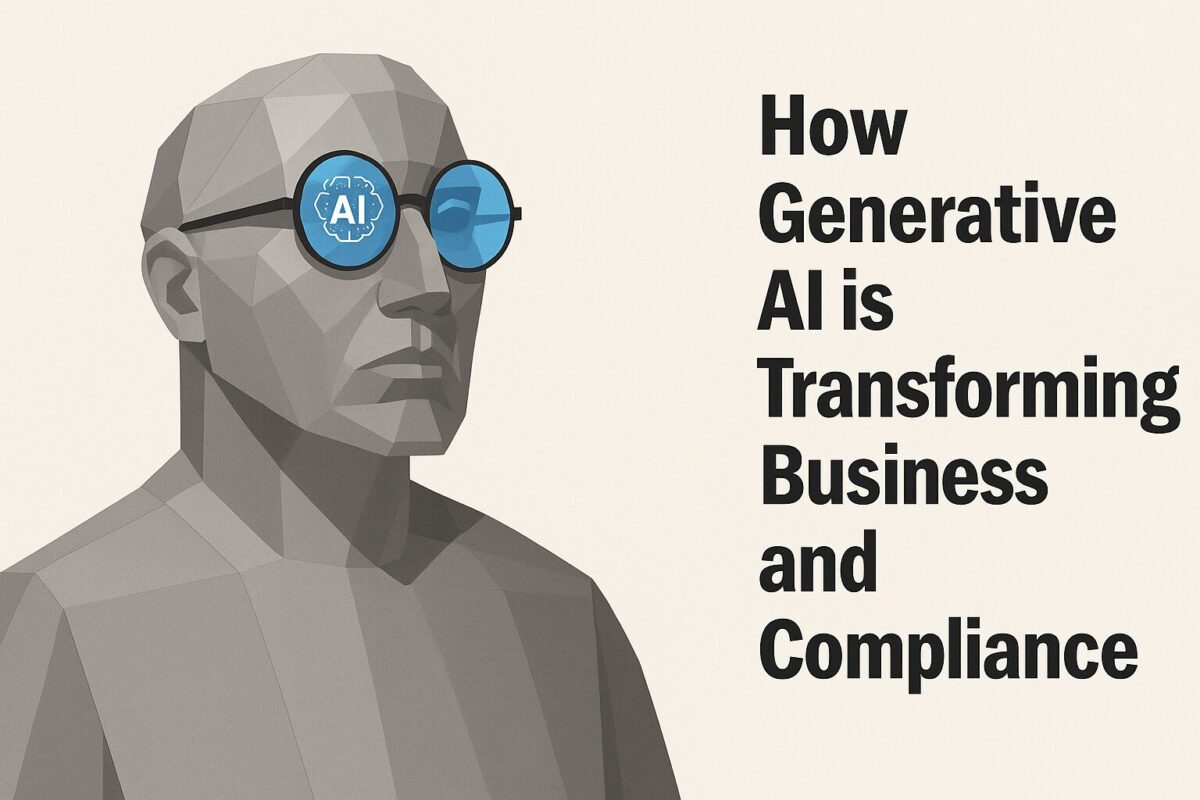
How Generative AI is Transforming Business and Compliance in 2025

One thing I have learned from the digital age is that to stay ahead, we must stay informed and proactive about how new technologies impact corporate governance, ethics, and operational compliance. In this context, generative AI (Gen AI) is no longer a futuristic concept; it is embedded deeply in our everyday activities. Marc Zao-Sanders’ article in Harvard Business Review (HBR), “How People Are Really Using Gen AI in 2025,” presents an excellent opportunity to reflect on how these developments impact compliance, governance, and risk management.

Zao-Sanders highlights a critical shift in how generative AI is utilized: from purely technical assistance towards significantly more personal and emotive applications. With “Therapy/Companionship,” “Organizing my life,” and “Finding purpose” emerging as the top three use cases, it’s clear that users seek emotional and organizational support, demonstrating Gen AI’s versatility beyond traditional technological roles.

Compliance professionals must recognize that as AI increasingly becomes integral to both professional services and personal well-being, the accompanying risk and compliance implications magnify exponentially. The nature of these interactions, often intimate or deeply personal, demands robust data privacy protections and stringent ethical governance frameworks. Businesses integrating these technologies need precise, transparent policies and effective oversight mechanisms to mitigate new compliance risks.

Implications for Compliance Professionals

Enhanced Data Privacy and Ethical Considerations

Zao-Sanders emphasizes the rising prominence of personal and professional support through Gen AI, especially in areas such as AI-based therapy, emotional companionship, and life organization. As users entrust AI with highly sensitive personal data, compliance professionals face increased responsibilities regarding data privacy, security, and the ethical use of data. This scenario elevates the stakes considerably. He notes, “data safety is not a concern when your health is deteriorating,” highlighting users’ willingness to sacrifice privacy for crucial emotional or medical support. Such conditions can quickly lead to ethical and compliance vulnerabilities if businesses fail to manage and protect sensitive user data rigorously.

Organizations must reinforce their compliance strategies to manage ethical risks inherent in AI-human interactions. As Zao-Sanders indicates, professional services, including medical, legal, and financial advisement, are increasingly relying on generative AI, pushing regulatory boundaries. Notably, EY’s deployment of 150 AI agents specifically for tax-related tasks highlights the profound impact of generative AI on professional services, adding layers of complexity to compliance strategies.

Regulatory Response and Enforcement Trends

The article briefly touches on the growing regulatory scrutiny that Gen AI is attracting globally, noting explicitly that governments are “taking more emphatic and explicit positions” due to heightened stakes surrounding AI technology. For compliance professionals, this should serve as a clarion call: regulatory oversight is intensifying. Preparing for audits, demonstrating compliance, and actively engaging with regulatory developments will be essential. The rapid pace of AI adoption necessitates an agile and proactive approach to compliance management that anticipates, rather than merely reacts to, regulatory shifts.

Balancing AI Dependence with Human Oversight

A striking tension highlighted in the article is the debate over the impact of generative AI on human cognitive abilities, decision-making, and ethical judgment. Users express genuine concern about becoming overly reliant on AI, which could erode their ability to think critically and make independent, ethical decisions.

This reliance poses significant implications for compliance officers charged with safeguarding ethical decision-making. Effective compliance programs must emphasize human oversight, cultivating a culture where AI supports rather than supplants human judgment. Investing in AI literacy among employees can mitigate potential over-reliance, fostering an environment where staff understand both the capabilities and limitations of AI.

Compliance in AI-Driven Professional Services

Zao-Sanders illustrates how AI integration into professional tasks is increasingly sophisticated. For instance, the transformation underway at EY, training employees extensively in generative AI, reflects broader industry trends. Compliance officers must respond to these developments by establishing clear standards and compliance checkpoints. It is crucial to determine whether AI outputs meet professional standards, remain unbiased, and do not inadvertently violate regulatory obligations.

Given AI’s pervasive integration into professional judgments (such as tax preparation, legal advice, and medical diagnosis), the accuracy and regulatory compliance of AI-driven outputs become paramount. Compliance programs must integrate AI auditability, accountability, and transparency deeply into corporate governance frameworks.

Practical Compliance Steps in the Gen AI Era

1. Proactive Policy Development and Training

Develop clear policies that outline the acceptable use of generative AI, including specific guidelines on data handling, ethical considerations, and regulatory obligations. Embed these policies into your organization’s culture through rigorous training and communication strategies.

2. Rigorous Risk Assessment and Ongoing Monitoring

Gen AI compliance must adopt continuous monitoring. Regular risk assessments and periodic audits of AI systems will promptly detect and rectify issues. Compliance officers should remain actively involved in assessing new AI technologies for ethical, privacy, and regulatory considerations before full-scale implementation.

3. Transparent Data Practices

Given the heightened public sensitivity to data privacy concerns, as noted by Zao-Sanders’ mention of users’ concerns around data privacy and their cynicism toward Big Tech, companies must prioritize transparent data practices. Clear communication about data usage, consent, and protection measures will foster trust and reduce compliance risks.

4. Ethical AI Governance Frameworks

Design and deploy ethical AI governance frameworks that address algorithmic fairness, transparency, and accountability, ensuring responsible use of AI. These frameworks ensure generative AI tools are deployed responsibly and ethically, aligning with stakeholder expectations and regulatory standards.

5. Encourage Human-AI Collaboration

Foster a balanced approach between AI-driven solutions and human judgment. Reinforce the importance of human oversight to ensure compliance, accuracy, and ethical decision-making, thus minimizing over-dependence on AI.

Looking Ahead—The Compliance Imperative in the Gen AI Landscape

As we approach a future increasingly defined by AI integration, compliance professionals have a unique opportunity to lead their organizations proactively. Understanding and managing the compliance and ethical dimensions of Gen AI is now critical, not optional. The risks and opportunities outlined in Zao-Sanders’ article underscore the urgent need for a strategic, well-informed approach to integrating generative AI into corporate compliance frameworks.

Compliance professionals should view this moment as an opportunity to demonstrate thought leadership, to guide ethical AI adoption, and to establish robust frameworks that enable businesses to thrive responsibly. By proactively addressing the compliance and moral challenges presented by generative AI, we not only fulfill our professional obligations but also position our organizations as ethical, forward-thinking leaders in the digital age. The compliance journey ahead is demanding, but equally, it offers profound opportunities to influence and shape a responsible, compliant, and ethically robust AI-driven future.

Categories
Trekking Through Compliance

Trekking Through Compliance: Episode 49 – Compliance, Controls, and Cosmic Risks: What Return to Tomorrow Teaches About Risk Assessments

Few episodes of Star Trek TOS capture the perils and promise of risk assessments like “Return to Tomorrow,” the classic second-season adventure where Kirk and his crew face a literal mind-bending dilemma. For compliance professionals, “Return to Tomorrow” offers more than sci-fi drama. It serves as a blueprint for effective risk assessment, rich with lessons for every organization navigating uncertainty.

Lesson 1: Identify and Understand the Full Scope of Risks—Don’t Let Opportunity Blind You

Illustrated By: The crew is awestruck by the possibility of contacting one of the galaxy’s oldest civilizations. Sa

Compliance Lesson: Risk assessments often begin with an exciting opportunity, such as expansion, innovation, new markets, or partnerships. However, in the excitement of the moment, organizations may overlook hidden dangers. Just as the Enterprise crew is dazzled by the promise of ancient knowledge, compliance teams can be swept up by the potential upside of a new venture.

Lesson 2: Involve All Stakeholders in Risk Analysis—Don’t Go It Alone

Illustrated By: Sargon asks for the voluntary use of Kirk, Spock, and Dr. Mulhall’s bodies for his species’ survival. Spock, McCoy, and Mulhall debate the risks, with McCoy especially vocal about the potential dangers to the hosts.

Compliance Lesson: Risk assessments cannot be conducted in a vacuum. Kirk’s leadership shines as he brings together key stakeholders for honest discussion, each bringing their unique expertise, biases, and concerns.

Lesson 3: Evaluate Controls and Safeguards—Trust, but Verify

Illustrated By: The process of transferring Sargon and his companions into human hosts is carefully orchestrated, but Spock, ever the scientist, insists on “fail-safes.

Compliance Lesson: Risk assessment without strong controls is little more than wishful thinking. The Enterprise crew is willing to take calculated risks, but only after establishing controls.

Lesson 4: Beware the Human Element—Risk Changes When Emotions Run High

Illustrated By: Henoch quickly abuses his power, attempting to make the arrangement permanent and manipulating others to his advantage.

Compliance Lesson: Risk assessments that focus solely on systems, processes, or technical controls ignore the most volatile variable of all: people. Henoch’s deception is a vivid reminder that intentions can change, and personal incentives can undermine even the best-laid plans.

Lesson 5: Prepare for Rapid Escalation—Build Resilience into Your Risk Response

Illustrated By: As Henoch’s true motives become clear and the threat to the crew escalates, Kirk, McCoy, and Nurse Chapel must rapidly adapt their strategy.

Compliance Lesson: Even the best risk assessment cannot predict every twist and turn. The ability to respond with agility is what separates organizations that survive crises from those that they undone.

Final ComplianceLog Reflections

Return to Tomorrow” is more than a sci-fi adventure. It is a parable for today’s risk-conscious enterprise. The Enterprise crew faces the unknown not with blind optimism, but with rigor, transparency, and a willingness to confront hard truths. They model a process every compliance professional can adopt:

So, the next time you’re charting your organization’s course through risk, remember: as Captain Kirk once intoned early in this episode, “Risk is our business.” For the compliance

Resources:

Excruciatingly Detailed Plot Summary by Eric W. Weisstein

MissionLogPodcast.com

Memory Alpha

Categories
Sunday Book Review

Sunday Book Review: July 20, 2025, The Best Books on Business Edition

In the Sunday Book Review, Tom Fox considers books that interest compliance professionals, business executives, or anyone curious about the subject. It could be books about business, compliance, history, leadership, current events, or any other topic that might interest Tom. For the month of July, Tom looks at the FT’s recommendations for top books in the summer of 2025. In this episode, Tom reviews the FT’s list of the top books on business for the Summer of 2025.

  1. The Chairman’s Lounge: The Inside Story of How Qantas Sold Us Out by Joe Aston 
  2. Abundance: How We Build a Better Future by Ezra Klein and Derek Thompson
  3. Mood Machine: The Rise of Spotify and the Costs of the Perfect Playlist by Liz Pelly
  4. House of Huawei: Inside the Secret World of China’s Most Powerful Company by Eva Dou

The Sunday Book Review was recently honored as one of the Top 100 Book Podcasts.

Resources:

FT’s Best Books of Summer for 2025: Business by Andrew Hill.

Categories
Blog

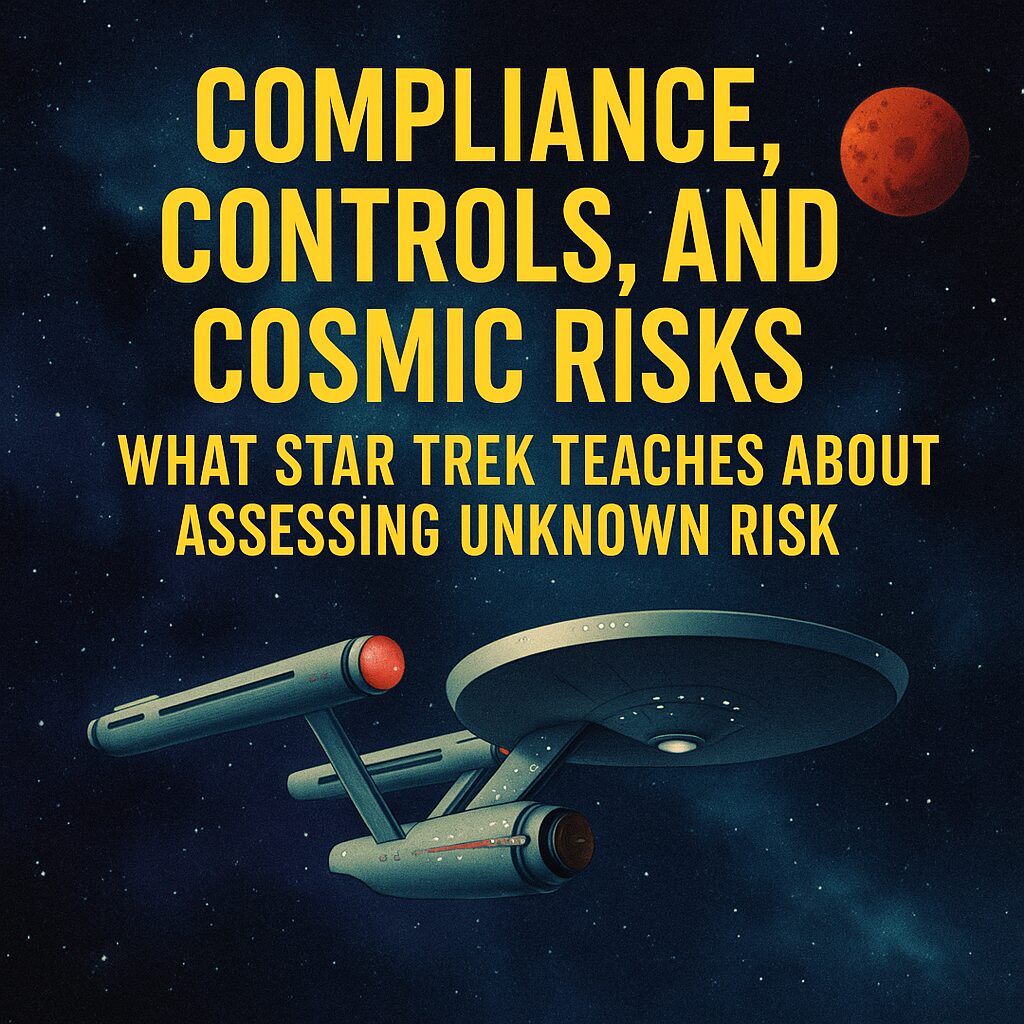
Compliance, Controls, and Cosmic Risks: What Star Trek Teaches About Assessing the Unknown

If you have spent any time in the world of corporate compliance, you know risk assessment is not just a box-ticking exercise. It is the navigational star by which a company charts its course, whether through deep space or the turbulent markets of the 21st century. No single pop culture franchise has more vividly illuminated the challenges of risk, trust, and decision-making than Star Trek. And few episodes capture the perils and promise of risk assessment like “Return to Tomorrow,” the classic second-season adventure where Kirk and his crew face a literal mind-bending dilemma.

In this episode, the USS Enterprise responds to a mysterious signal from a long-dead planet, only to encounter the disembodied consciousness of Sargon, an ancient being with a desperate request: the use of human bodies to restore his species. What unfolds is a master class in risk identification, stakeholder analysis, and the timeless tension between opportunity and threat.

For compliance professionals, “Return to Tomorrow” offers more than sci-fi drama. It serves as a blueprint for effective risk assessment, rich with lessons for every organization navigating uncertainty.

Lesson 1: Identify and Understand the Full Scope of Risks—Don’t Let Opportunity Blind You

Illustrated By: The crew is awestruck by the possibility of contacting one of the galaxy’s oldest civilizations. Sargon promises the advancement of knowledge beyond their wildest dreams. Kirk, Spock, and McCoy are quick to consider the benefits, but it’s Nurse Chapel who voices a warning about the dangers of the unknown.

Compliance Lesson: Risk assessments often begin with an exciting opportunity, such as expansion, innovation, new markets, or partnerships. However, in the excitement of the moment, organizations may overlook hidden dangers. Just as the Enterprise crew is dazzled by the promise of ancient knowledge, compliance teams can be swept up by the potential upside of a new venture.

Effective risk assessment demands a disciplined approach: you must methodically identify not only the obvious but also the hidden and long-tail risks. Map out all the possible threats, including those that seem remote or are easily overshadowed by the “upside.” This is especially crucial in mergers, acquisitions, third-party partnerships, and areas of technological innovation, where excitement and FOMO can cloud judgment. Build a “devil’s advocate” review into your risk assessment process, empowering someone who, like Chapel, is authorized to surface uncomfortable questions.

Lesson 2: Involve All Stakeholders in Risk Analysis—Don’t Go It Alone

Illustrated By: Sargon asks for the voluntary use of Kirk, Spock, and Dr. Mulhall’s bodies for his species’ survival. Kirk consults with the senior staff to seek consensus. Spock, McCoy, and Mulhall debate the risks, with McCoy especially vocal about the potential dangers to the hosts.

Compliance Lesson: Risk assessments cannot be conducted in a vacuum. Kirk’s leadership shines as he brings together key stakeholders for honest discussion, each bringing their unique expertise, biases, and concerns. McCoy’s medical knowledge, Spock’s logic, Mulhall’s scientific insight, and Kirk’s command perspective combine to create a robust risk dialogue.

For compliance professionals, this is a timeless reminder: Risk identification is strengthened by the diversity of thought and cross-functional input. Compliance, legal, operations, HR, IT, and, crucially, the front-line business must all have a seat at the table. What one group misses, another may spot. Formalize cross-functional risk assessment teams and ensure that every key function is empowered to raise and discuss risks, particularly those that others might overlook.

Lesson 3: Evaluate Controls and Safeguards—Trust, but Verify

Illustrated By: The process of transferring Sargon and his companions into human hosts is carefully orchestrated, but Spock, ever the scientist, insists on “fail-safes”; specifically, the ability to reverse the process and safeguards against permanent takeover.

Compliance Lesson: Risk assessment without strong controls is little more than wishful thinking. The Enterprise crew is willing to take calculated risks, but only after establishing controls. Those are mechanisms to monitor, reverse, or mitigate unintended consequences. Their trust in Sargon is tempered by clear boundaries and “kill switches.”

This is a core compliance principle: don’t simply trust that partners, vendors, or new technologies will behave as expected. Build robust controls, including due diligence, contracts with clear exit clauses, real-time monitoring, and escalation procedures. In high-stakes scenarios, you need the compliance equivalent of Spock’s “fail-safe.” After every risk assessment, conduct a controls gap analysis. What mechanisms are in place to detect and address emerging risks if things go wrong? Are escalation and reversal options clear, documented, and tested?

Lesson 4: Beware the Human Element—Risk Changes When Emotions Run High

Illustrated By: Henoch, one of the disembodied beings, is transferred into Spock’s body. Unlike the others, he quickly abuses his power, attempting to make the arrangement permanent and manipulating others to his advantage. The risk profile shifts dramatically, not due to process failure, but human (or in this case, alien) ambition.

Compliance Lesson: Risk assessments that focus solely on systems, processes, or technical controls ignore the most volatile variable of all: people. Henoch’s deception is a vivid reminder that intentions can change, and personal incentives can undermine even the best-laid plans.

For compliance professionals, this is the heart of behavioral risk. Tone at the top, ethical culture, personal motivations, and pressures are critical factors in every risk scenario. A well-documented process means nothing if people are incentivized or tempted to circumvent it. Include behavioral and ethical risk in every assessment. Use scenario analysis to stress-test your controls against “rogue actor” scenarios, both internal and external. Periodically re-evaluate as people and incentives change.

Lesson 5: Prepare for Rapid Escalation—Build Resilience into Your Risk Response

Illustrated By: As Henoch’s true motives become clear and the threat to the crew escalates, Kirk, McCoy, and Nurse Chapel must rapidly adapt their strategy. The team moves from negotiation to containment, leveraging every resource, including unexpected alliances, to regain control.

Compliance Lesson: Even the best risk assessment cannot predict every twist and turn. The ability to respond with agility is what separates organizations that survive crises from those that they undone. The Enterprise crew’s resilience, quickly shifting tactics, and marshalling resources mirror what is needed in the corporate world when new risks or fraud schemes emerge.

For compliance teams, this means robust incident response plans, clear escalation paths, and regular crisis simulations. Don’t just document risks; stress-test your organization’s capacity to respond. Schedule regular tabletop exercises and simulations that test not only your risk assessment but also your organization’s response and resilience.

Final ComplianceLog Reflections

Return to Tomorrow” is more than a sci-fi adventure. It is a parable for today’s risk-conscious enterprise. The Enterprise crew faces the unknown not with blind optimism, but with rigor, transparency, and a willingness to confront hard truths. They model a process every compliance professional can adopt:

As we voyage into new business frontiers, whether through AI, new markets, or digital transformation, these lessons remain as relevant as ever. In a universe of uncertainty, let your risk assessment process be your Enterprise: equipped for adventure, but always with a careful eye on what lies ahead.

So, the next time you’re charting your organization’s course through risk, remember: as Captain Kirk once intoned early in this episode, “Risk is our business.” For the compliance professional, this means being prepared for what’s out there, beyond tomorrow.

Resources:

Excruciatingly Detailed Plot Summary by Eric W. Weisstein

MissionLogPodcast.com

Memory Alpha

Categories
Trekking Through Compliance

Trekking Through Compliance: Episode 48 – When Compliance Gets Complicated: Navigating the ‘Should We’ Question with Captain Kirk

There comes a time in every compliance professional’s journey when the rules and the regulations alone cannot answer the central ethical question at hand. In the fast-moving, high-stakes world of business, it’s easy to focus on what is permissible and whether we can do something. But the actual test of leadership, integrity, and organizational culture is found in those moments when we pause and ask, “Should we? ”

Today, we journey back to the planet Neural and see what Kirk’s struggle can teach us about the central ethical challenge of our time.

Lesson 1: When External Pressures Push, Ethics Must Anchor Us

Illustrated By: Kirk discovers that the Klingons are arming one side of Neural’s primitive society with flintlock rifles, violating the natural development of the culture.

Compliance Lesson: Business pressures, from competition, regulatory ambiguity, or market demands, often tempt us to respond in kind, rationalizing that “everyone else is doing it.”

Lesson 2: Slippery Slopes Begin with Small Steps

Illustrated By: Despite his misgivings, Kirk ultimately agrees to supply flintlocks to the peaceful villagers so that they can defend themselves.

Compliance Lesson:

Ethical lapses rarely begin with headline-grabbing misconduct. More often, they start with small, “necessary” exceptions just this once, just for now. But these exceptions lay the groundwork for systemic problems. Beware the “just this once” rationale.

Lesson 3: The Limits of Policy—When Rules Don’t Fit the Situation

Illustrated By: The Prime Directive prohibits interference in the natural development of alien societies.

Compliance Lesson: Understand the spirit behind the rule. The Prime Directive’s intent is non-interference, but its strict application could enable greater harm.

Lesson 4: Leaders Bear the Burden of Ethical Choices

Illustrated By: In the episode’s climax, Kirk must make the final call: whether to arm the villagers, risking an escalation he cannot control, or refuse, likely dooming them to subjugation.

Compliance Lesson: Ethical dilemmas often land on the shoulders of compliance leaders, general counsel, or executive management. These moments are defined not by easy answers, but by courage, humility, and accountability.

Lesson 5: Every Ethical Decision Has Ripple Effects

Illustrated By: As Kirk arms the villagers, Dr. McCoy questions the long-term consequences.

Compliance Lesson:

No ethical decision occurs in a vacuum. Actions taken under pressure today set precedents, influence culture, and shape stakeholder expectations for years to come.

Final ComplianceLog Reflections

A Private Little War” reminds us that the most consequential decisions in compliance and ethics aren’t about whether something is allowed but whether it is right. Kirk’s journey is ours: to grapple with ambiguity, resist the seduction of expediency, and own the responsibility for the choices we make.

For today’s compliance professionals, the lesson is clear. The real work begins where the rulebook ends, in those gray areas where business, culture, and humanity intersect. Lead with integrity. Question not just what is possible, but what is just. Because in compliance, as in the universe of Star Trek, our future depends not only on what we can do but on the courage to do what we should do.

Resources:

Excruciatingly Detailed Plot Summary by Eric W. Weisstein

MissionLogPodcast.com

Memory Alpha

Categories
10 For 10

10 For 10: Top Compliance Stories For the Week Ending July 19, 2025

Welcome to 10 For 10, the podcast that brings you the week’s top 10 compliance stories in one episode each week. Tom Fox, the Voice of Compliance, brings to you, the compliance professional, the compliance stories you need to be aware of to end your busy week. Sit back, and in 10 minutes, hear about the stories every compliance professional should be aware of from the prior week. Every Saturday, 10 For 10 highlights the most important news, insights, and analysis for the compliance professional, all curated by the Voice of Compliance, Tom Fox. Get your weekly filling of compliance stories with 10 for 10, a podcast produced by the Compliance Podcast Network.

  • SEC sanctions CCO who altered documents. (SEC Order)
  • The SEC grants $5 million in whistleblower awards. (Law360)
  • Meta settles shareholder claims on data privacy violations. (WSJ)
  • A Wells Fargo employee was denied departure from China. (WSJ)
  • ABC heads to the BVI to find out why it is dragging its feet. (The Guardian)
  • COSO pulls its Corporate Governance Framework (Radical Compliance)
  • Corruption comes to the Cannes Film Festival. (Ad Age)
  • SEC drops case against former Cognizant execs. (SEC Press Release)
  • FCA to take on workplace bullying. (FT)
  • Ramaphosa opens corruption investigation. (NYT)

You can donate to flood relief for victims of the Kerr County flooding by going to the Hill Country Flood Relief here.

Connect with Tom 

Instagram

Facebook

YouTube

Twitter

LinkedIn

Categories
Blog

Beyond “Can We?” – Ethical Lessons for Compliance Professionals from Star Trek’s “A Private Little War”

There comes a time in every compliance professional’s journey when the rules and the regulations alone cannot answer the central ethical question at hand. In the fast-moving, high-stakes world of business, it’s easy to focus on what is permissible and whether we can do something. But the actual test of leadership, integrity, and organizational culture is found in those moments when we pause and ask, “Should we? ”

No episode of Star Trek: The Original Series better dramatizes this ethical crossroads than “A Private Little War.” Here, Captain Kirk is confronted with a situation that blurs the boundaries between what is allowed and what is right, between the technicalities of Federation policy and the broader demands of moral responsibility.

For compliance professionals facing similar dilemmas, whether in the boardroom, emerging markets, or product development, “A Private Little War” offers powerful and relevant lessons. Today, we journey back to the planet Neural and see what Kirk’s struggle can teach us about the central ethical challenge of our time.

Lesson 1: When External Pressures Push, Ethics Must Anchor Us

Illustrated By: Kirk discovers that the Klingons are arming one side of Neural’s primitive society with flintlock rifles, violating the natural development of the culture. Dr. McCoy and Spock debate whether the Enterprise should intervene by arming the opposing side, thus escalating the arms race.

Compliance Lesson: Business pressures, from competition, regulatory ambiguity, or market demands, often tempt us to respond in kind, rationalizing that “everyone else is doing it.” But ethics demand a different calculus. Just because you can match or outdo a competitor’s questionable practice doesn’t mean you should.

Remember to pause before mirroring bad behavior. The fact that a competitor is bending the rules is not justification for lowering your standards. Ethical anchoring, knowing your organization’s “North Star,” matters most when external pressure mounts. Kirk listens to Spock’s cold logic and McCoy’s moral pleas. True compliance leadership means allowing for dissent and critical ethical discussion.

Lesson 2: Slippery Slopes Begin with Small Steps

Illustrated By: Despite his misgivings, Kirk ultimately agrees to supply flintlocks to the peaceful villagers so that they can defend themselves, justifying it as a necessary evil to preserve balance, yet he is visibly haunted by the decision’s potential consequences.

Compliance Lesson:

Ethical lapses rarely begin with headline-grabbing misconduct. More often, they start with small, “necessary” exceptions just this once, just for now. But these exceptions lay the groundwork for systemic problems. Beware the “just this once” rationale. Any deviation from ethical standards needs to be scrutinized, debated, and justified with transparency. Document decisions and rationales. If you must make an exception, create a record that can withstand later review and scrutiny. Finally, assess long-term impact. Kirk’s haunted expression signals what every compliance pro knows: today’s “necessary evil” is tomorrow’s policy norm.

Lesson 3: The Limits of Policy—When Rules Don’t Fit the Situation

Illustrated By: The Prime Directive prohibits interference in the natural development of alien societies. Yet Kirk faces a no-win scenario: intervene and escalate violence or do nothing and watch an entire people be conquered.

Compliance Lesson: Regulations and policies are essential, but they cannot anticipate every situation that may arise. Sometimes, doing the right thing means going beyond the letter of the law, considering the broader impact on people and communities. Understand the spirit behind the rule. The Prime Directive’s intent is non-interference, but its strict application could enable greater harm. Promote a culture of ethical escalation. Encourage employees to seek guidance rather than relying solely on a policy manual. Empower ethical decision-making. Equip teams with frameworks and training to evaluate ambiguous situations, rather than relying exclusively on clear-cut rules.

Lesson 4: Leaders Bear the Burden of Ethical Choices

Illustrated By: In the episode’s climax, Kirk must make the final call: whether to arm the villagers, risking an escalation he cannot control, or refuse, likely dooming them to subjugation. The choice weighs heavily, and Kirk’s solitary decision reflects the isolation that often comes with leadership.

Compliance Lesson: Ethical dilemmas often land on the shoulders of compliance leaders, general counsel, or executive management. These moments are defined not by easy answers, but by courage, humility, and accountability. Acknowledge the weight of ethical decisions. Let your teams see the seriousness with which you consider the “should we” question. Seek collective wisdom but accept ultimate responsibility. Like Kirk, gather perspectives, but be prepared to make a decision. Communicate your reasoning. Explain not just what was decided, but why and what values guided your decision.

Lesson 5: Every Ethical Decision Has Ripple Effects

Illustrated By: As Kirk arms the villagers, Dr. McCoy questions the long-term consequences: “Do you know what you’re doing? ”Kirk can only reply, “No. But if the Klingons give their side even one more gun…” The episode closes with an uneasy truce and the awareness that the future is uncertain.

Compliance Lesson:

No ethical decision occurs in a vacuum. Actions taken under pressure today set precedents, influence culture, and shape stakeholder expectations for years to come. Think beyond the immediate outcome. Consider the secondary and tertiary effects of major ethical choices. Review and revisit as appropriate. Monitor the results of tough calls and be willing to make adjustments as needed. Foster a culture of reflection. Make it safe for your organization to revisit, debate, and learn from past ethical crossroads.

Final ComplianceLog Reflections

“A Private Little War” reminds us that the most consequential decisions in compliance and ethics aren’t about whether something is allowed but whether it is right. Kirk’s journey is ours: to grapple with ambiguity, resist the seduction of expediency, and own the responsibility for the choices we make.

For today’s compliance professionals, the lesson is clear. The real work begins where the rulebook ends, in those gray areas where business, culture, and humanity intersect. Lead with integrity. Question not just what is possible, but what is just. Because in compliance, as in the universe of Star Trek, our future depends not only on what we can do but on the courage to do what we should do.

Resources:

Excruciatingly Detailed Plot Summary by Eric W. Weisstein

MissionLogPodcast.com

Memory Alpha

Categories
Blog

Integrity Under Fire: Key Compliance Lessons from the Suzanne Ballek SEC Enforcement Action

In the realm of corporate compliance, integrity is a foundational principle. It underscores the effectiveness of every compliance program, defines the culture of an organization, and acts as a safeguard against misconduct. When integrity is compromised, compliance programs crumble. The recent administrative proceeding by the Securities and Exchange Commission (SEC) against Suzanne Ballek, the former Chief Compliance Officer (CCO) of an SEC-registered investment adviser (“Adviser A”), underscores this critical truth. (The Ballek Order) The SEC’s findings and resulting sanctions offer vital lessons for compliance professionals. Today, we examine what happens when a CCO goes awry and identify the essential lessons that every compliance professional should adopt.

Overview

Suzanne Ballek served as Vice President and CCO for Adviser A, an investment adviser that managed approximately $249 million in assets. The heart of the SEC’s action was that Ballek falsified and manipulated compliance records requested during an SEC examination. Specifically, she altered pre-clearance trading forms, backdated signatures, completed missing entries, and even created new forms without authorization, all to give the false appearance of compliance with the company’s trading pre-clearance policy.

Ultimately, Ballek’s actions violated Sections 204(a) and 206(4) of the Investment Advisers Act of 1940, prompting the SEC to impose a cease-and-desist order, a three-year prohibition on her acting in any compliance capacity, and a $40,000 civil penalty.

Compliance Lessons from the Ballek Administrative Order

Ballek presents several significant lessons for compliance professionals. Here are the top takeaways:

1. Integrity Must Guide Compliance Efforts

Compliance officers are custodians of organizational integrity. The Ballek Order emphasizes the importance of maintaining honest and accurate compliance documentation and record-keeping practices. Integrity is non-negotiable. Even under pressure from internal or external examinations, compliance professionals must resist any impulse to alter or falsify records. Ballek’s lapse serves as a stark reminder of how rapidly ethical transgressions can escalate, creating compliance risks that undermine entire organizations.

2. Maintain True and Accurate Records

The case highlights the importance of accurate record-keeping, a core responsibility codified in the Investment Advisers Act and Rule 204A-1. Adviser A was required to maintain true and accurate records of its pre-clearance trading activities. Instead, Ballek engaged in backdating, altering dates, filling out missing fields after the fact, and fabricating records entirely. Compliance officers must establish clear documentation procedures, train employees on those expectations, and conduct regular internal audits to ensure accurate records and immediate corrections of any identified discrepancies.

3. Implement Robust Policies and Procedures

Having written policies is essential, but they must be diligently and consistently followed. Adviser A had policies requiring prior approval of trades by access persons and mandated record retention for six years. However, these policies were consistently violated in practice. The Ballek Order emphasizes that maintaining a façade of compliance, particularly through document falsification, is insufficient. Compliance programs must include proactive monitoring and periodic testing of policies and procedures to ensure ongoing effectiveness and efficacy. Compliance officers need to embed policies into daily operational practices rather than treating them as mere formalities or check-the-box requirements.

4. Transparency During Regulatory Examinations

The SEC views transparency and honesty during examinations as fundamental compliance obligations. Ballek misrepresented the truth by submitting falsified documents and subsequently misleading examiners. Providing accurate, unaltered documentation to regulators is crucial. If errors or gaps in records are found, they should be openly disclosed, accompanied by a clear action plan to rectify deficiencies. Transparency with regulatory bodies builds credibility and can mitigate potential enforcement actions. Conversely, a lack of transparency can significantly exacerbate penalties and sanctions, as seen in this enforcement action.

5. Leadership Must Exemplify Compliance

Every compliance officer must embody the principles of compliance, acting as a model for the rest of the organization. In this case, the failure originated from the CCO herself, the person responsible for enforcing adherence to compliance norms. Compliance officers must exhibit behaviors they wish to see across the organization. When compliance leadership itself falters, the damage to organizational culture and employee confidence is profound and challenging to repair.

6. Beware of Slippery Slopes

Lawyers are familiar with the gradual escalation from minor oversights to serious misconduct, a phenomenon known as the slippery slope. Ballek’s missteps likely started small but eventually ballooned into substantial and systematic falsification. Compliance professionals must remain vigilant for early indicators of lax procedures or ethical compromises and address them immediately. Regular ethical training, scenario-based exercises, and creating a culture that encourages speaking up when irregularities arise can help organizations stay ahead of this slippery slope.

7. Prompt and Accurate Internal Reporting

The Ballek Order matter emphasizes the importance of encouraging honest internal reporting. Compliance professionals should foster a culture that encourages employees to report compliance concerns or failures without fear of retribution or retaliation. Effective internal reporting mechanisms and whistleblower protections enable organizations to identify and address issues before they escalate into regulatory violations. If Adviser A had promoted more robust internal communication around compliance deviations, this unfortunate event might have been avoided entirely.

8. Ensure Segregation of Compliance Duties

One significant issue highlighted by this case is the risk associated with concentrating compliance oversight and documentation responsibilities within one individual. To safeguard against record alteration and concealment, organizations should institute checks and balances, including periodic independent reviews and segregation of compliance duties. Compliance tasks should never be assigned solely to a single individual. This practice fosters accountability, mitigates fraud risk, and promotes a culture of healthy compliance.

9. Understand Consequences of Non-Compliance

The SEC’s enforcement action illustrates severe professional and financial consequences. Beyond monetary penalties, reputational damage and restrictions on future employment in compliance roles serve as powerful deterrents. Compliance professionals must ensure the entire organization, from executives to entry-level employees, fully understands these potential ramifications. Periodic compliance training emphasizing the severity of regulatory penalties and personal liability should reinforce adherence to rules and ethical standards.

10. Continuously Improve and Adapt Compliance Practices

Finally, the compliance function must be adaptive and responsive to evolving regulatory requirements and risks. Continuous improvement of compliance practices, through regular assessments and the incorporation of lessons from regulatory actions such as the Ballek order, helps maintain a proactive stance. Updating policies, strengthening internal controls, and enhancing compliance monitoring based on enforcement insights will help safeguard organizations from similar incidents in the future.

The SEC’s administrative order against Suzanne Ballek serves as a wake-up call for compliance professionals everywhere. It provides a poignant example of how ethical lapses, particularly from compliance leaders, can devastate an organization. By internalizing and applying these ten compliance lessons, organizations can reinforce integrity, build robust compliance frameworks, and protect themselves against regulatory actions.

In the world of compliance, integrity is not optional; it is the cornerstone of everything we do. Remembering this truth, compliance professionals must lead the charge toward uncompromising ethical standards. Only then can true compliance be achieved, fostering sustainable corporate growth and credibility.