Categories
Blog

Beyond “Can We?” – Ethical Lessons for Compliance Professionals from Star Trek’s “A Private Little War”

There comes a time in every compliance professional’s journey when the rules and the regulations alone cannot answer the central ethical question at hand. In the fast-moving, high-stakes world of business, it’s easy to focus on what is permissible and whether we can do something. But the actual test of leadership, integrity, and organizational culture is found in those moments when we pause and ask, “Should we? ”

No episode of Star Trek: The Original Series better dramatizes this ethical crossroads than “A Private Little War.” Here, Captain Kirk is confronted with a situation that blurs the boundaries between what is allowed and what is right, between the technicalities of Federation policy and the broader demands of moral responsibility.

For compliance professionals facing similar dilemmas, whether in the boardroom, emerging markets, or product development, “A Private Little War” offers powerful and relevant lessons. Today, we journey back to the planet Neural and see what Kirk’s struggle can teach us about the central ethical challenge of our time.

Lesson 1: When External Pressures Push, Ethics Must Anchor Us

Illustrated By: Kirk discovers that the Klingons are arming one side of Neural’s primitive society with flintlock rifles, violating the natural development of the culture. Dr. McCoy and Spock debate whether the Enterprise should intervene by arming the opposing side, thus escalating the arms race.

Compliance Lesson: Business pressures, from competition, regulatory ambiguity, or market demands, often tempt us to respond in kind, rationalizing that “everyone else is doing it.” But ethics demand a different calculus. Just because you can match or outdo a competitor’s questionable practice doesn’t mean you should.

Remember to pause before mirroring bad behavior. The fact that a competitor is bending the rules is not justification for lowering your standards. Ethical anchoring, knowing your organization’s “North Star,” matters most when external pressure mounts. Kirk listens to Spock’s cold logic and McCoy’s moral pleas. True compliance leadership means allowing for dissent and critical ethical discussion.

Lesson 2: Slippery Slopes Begin with Small Steps

Illustrated By: Despite his misgivings, Kirk ultimately agrees to supply flintlocks to the peaceful villagers so that they can defend themselves, justifying it as a necessary evil to preserve balance, yet he is visibly haunted by the decision’s potential consequences.

Compliance Lesson:

Ethical lapses rarely begin with headline-grabbing misconduct. More often, they start with small, “necessary” exceptions just this once, just for now. But these exceptions lay the groundwork for systemic problems. Beware the “just this once” rationale. Any deviation from ethical standards needs to be scrutinized, debated, and justified with transparency. Document decisions and rationales. If you must make an exception, create a record that can withstand later review and scrutiny. Finally, assess long-term impact. Kirk’s haunted expression signals what every compliance pro knows: today’s “necessary evil” is tomorrow’s policy norm.

Lesson 3: The Limits of Policy—When Rules Don’t Fit the Situation

Illustrated By: The Prime Directive prohibits interference in the natural development of alien societies. Yet Kirk faces a no-win scenario: intervene and escalate violence or do nothing and watch an entire people be conquered.

Compliance Lesson: Regulations and policies are essential, but they cannot anticipate every situation that may arise. Sometimes, doing the right thing means going beyond the letter of the law, considering the broader impact on people and communities. Understand the spirit behind the rule. The Prime Directive’s intent is non-interference, but its strict application could enable greater harm. Promote a culture of ethical escalation. Encourage employees to seek guidance rather than relying solely on a policy manual. Empower ethical decision-making. Equip teams with frameworks and training to evaluate ambiguous situations, rather than relying exclusively on clear-cut rules.

Lesson 4: Leaders Bear the Burden of Ethical Choices

Illustrated By: In the episode’s climax, Kirk must make the final call: whether to arm the villagers, risking an escalation he cannot control, or refuse, likely dooming them to subjugation. The choice weighs heavily, and Kirk’s solitary decision reflects the isolation that often comes with leadership.

Compliance Lesson: Ethical dilemmas often land on the shoulders of compliance leaders, general counsel, or executive management. These moments are defined not by easy answers, but by courage, humility, and accountability. Acknowledge the weight of ethical decisions. Let your teams see the seriousness with which you consider the “should we” question. Seek collective wisdom but accept ultimate responsibility. Like Kirk, gather perspectives, but be prepared to make a decision. Communicate your reasoning. Explain not just what was decided, but why and what values guided your decision.

Lesson 5: Every Ethical Decision Has Ripple Effects

Illustrated By: As Kirk arms the villagers, Dr. McCoy questions the long-term consequences: “Do you know what you’re doing? ”Kirk can only reply, “No. But if the Klingons give their side even one more gun…” The episode closes with an uneasy truce and the awareness that the future is uncertain.

Compliance Lesson:

No ethical decision occurs in a vacuum. Actions taken under pressure today set precedents, influence culture, and shape stakeholder expectations for years to come. Think beyond the immediate outcome. Consider the secondary and tertiary effects of major ethical choices. Review and revisit as appropriate. Monitor the results of tough calls and be willing to make adjustments as needed. Foster a culture of reflection. Make it safe for your organization to revisit, debate, and learn from past ethical crossroads.

Final ComplianceLog Reflections

“A Private Little War” reminds us that the most consequential decisions in compliance and ethics aren’t about whether something is allowed but whether it is right. Kirk’s journey is ours: to grapple with ambiguity, resist the seduction of expediency, and own the responsibility for the choices we make.

For today’s compliance professionals, the lesson is clear. The real work begins where the rulebook ends, in those gray areas where business, culture, and humanity intersect. Lead with integrity. Question not just what is possible, but what is just. Because in compliance, as in the universe of Star Trek, our future depends not only on what we can do but on the courage to do what we should do.

Resources:

Excruciatingly Detailed Plot Summary by Eric W. Weisstein

MissionLogPodcast.com

Memory Alpha

Categories
Blog

Integrity Under Fire: Key Compliance Lessons from the Suzanne Ballek SEC Enforcement Action

In the realm of corporate compliance, integrity is a foundational principle. It underscores the effectiveness of every compliance program, defines the culture of an organization, and acts as a safeguard against misconduct. When integrity is compromised, compliance programs crumble. The recent administrative proceeding by the Securities and Exchange Commission (SEC) against Suzanne Ballek, the former Chief Compliance Officer (CCO) of an SEC-registered investment adviser (“Adviser A”), underscores this critical truth. (The Ballek Order) The SEC’s findings and resulting sanctions offer vital lessons for compliance professionals. Today, we examine what happens when a CCO goes awry and identify the essential lessons that every compliance professional should adopt.

Overview

Suzanne Ballek served as Vice President and CCO for Adviser A, an investment adviser that managed approximately $249 million in assets. The heart of the SEC’s action was that Ballek falsified and manipulated compliance records requested during an SEC examination. Specifically, she altered pre-clearance trading forms, backdated signatures, completed missing entries, and even created new forms without authorization, all to give the false appearance of compliance with the company’s trading pre-clearance policy.

Ultimately, Ballek’s actions violated Sections 204(a) and 206(4) of the Investment Advisers Act of 1940, prompting the SEC to impose a cease-and-desist order, a three-year prohibition on her acting in any compliance capacity, and a $40,000 civil penalty.

Compliance Lessons from the Ballek Administrative Order

Ballek presents several significant lessons for compliance professionals. Here are the top takeaways:

1. Integrity Must Guide Compliance Efforts

Compliance officers are custodians of organizational integrity. The Ballek Order emphasizes the importance of maintaining honest and accurate compliance documentation and record-keeping practices. Integrity is non-negotiable. Even under pressure from internal or external examinations, compliance professionals must resist any impulse to alter or falsify records. Ballek’s lapse serves as a stark reminder of how rapidly ethical transgressions can escalate, creating compliance risks that undermine entire organizations.

2. Maintain True and Accurate Records

The case highlights the importance of accurate record-keeping, a core responsibility codified in the Investment Advisers Act and Rule 204A-1. Adviser A was required to maintain true and accurate records of its pre-clearance trading activities. Instead, Ballek engaged in backdating, altering dates, filling out missing fields after the fact, and fabricating records entirely. Compliance officers must establish clear documentation procedures, train employees on those expectations, and conduct regular internal audits to ensure accurate records and immediate corrections of any identified discrepancies.

3. Implement Robust Policies and Procedures

Having written policies is essential, but they must be diligently and consistently followed. Adviser A had policies requiring prior approval of trades by access persons and mandated record retention for six years. However, these policies were consistently violated in practice. The Ballek Order emphasizes that maintaining a façade of compliance, particularly through document falsification, is insufficient. Compliance programs must include proactive monitoring and periodic testing of policies and procedures to ensure ongoing effectiveness and efficacy. Compliance officers need to embed policies into daily operational practices rather than treating them as mere formalities or check-the-box requirements.

4. Transparency During Regulatory Examinations

The SEC views transparency and honesty during examinations as fundamental compliance obligations. Ballek misrepresented the truth by submitting falsified documents and subsequently misleading examiners. Providing accurate, unaltered documentation to regulators is crucial. If errors or gaps in records are found, they should be openly disclosed, accompanied by a clear action plan to rectify deficiencies. Transparency with regulatory bodies builds credibility and can mitigate potential enforcement actions. Conversely, a lack of transparency can significantly exacerbate penalties and sanctions, as seen in this enforcement action.

5. Leadership Must Exemplify Compliance

Every compliance officer must embody the principles of compliance, acting as a model for the rest of the organization. In this case, the failure originated from the CCO herself, the person responsible for enforcing adherence to compliance norms. Compliance officers must exhibit behaviors they wish to see across the organization. When compliance leadership itself falters, the damage to organizational culture and employee confidence is profound and challenging to repair.

6. Beware of Slippery Slopes

Lawyers are familiar with the gradual escalation from minor oversights to serious misconduct, a phenomenon known as the slippery slope. Ballek’s missteps likely started small but eventually ballooned into substantial and systematic falsification. Compliance professionals must remain vigilant for early indicators of lax procedures or ethical compromises and address them immediately. Regular ethical training, scenario-based exercises, and creating a culture that encourages speaking up when irregularities arise can help organizations stay ahead of this slippery slope.

7. Prompt and Accurate Internal Reporting

The Ballek Order matter emphasizes the importance of encouraging honest internal reporting. Compliance professionals should foster a culture that encourages employees to report compliance concerns or failures without fear of retribution or retaliation. Effective internal reporting mechanisms and whistleblower protections enable organizations to identify and address issues before they escalate into regulatory violations. If Adviser A had promoted more robust internal communication around compliance deviations, this unfortunate event might have been avoided entirely.

8. Ensure Segregation of Compliance Duties

One significant issue highlighted by this case is the risk associated with concentrating compliance oversight and documentation responsibilities within one individual. To safeguard against record alteration and concealment, organizations should institute checks and balances, including periodic independent reviews and segregation of compliance duties. Compliance tasks should never be assigned solely to a single individual. This practice fosters accountability, mitigates fraud risk, and promotes a culture of healthy compliance.

9. Understand Consequences of Non-Compliance

The SEC’s enforcement action illustrates severe professional and financial consequences. Beyond monetary penalties, reputational damage and restrictions on future employment in compliance roles serve as powerful deterrents. Compliance professionals must ensure the entire organization, from executives to entry-level employees, fully understands these potential ramifications. Periodic compliance training emphasizing the severity of regulatory penalties and personal liability should reinforce adherence to rules and ethical standards.

10. Continuously Improve and Adapt Compliance Practices

Finally, the compliance function must be adaptive and responsive to evolving regulatory requirements and risks. Continuous improvement of compliance practices, through regular assessments and the incorporation of lessons from regulatory actions such as the Ballek order, helps maintain a proactive stance. Updating policies, strengthening internal controls, and enhancing compliance monitoring based on enforcement insights will help safeguard organizations from similar incidents in the future.

The SEC’s administrative order against Suzanne Ballek serves as a wake-up call for compliance professionals everywhere. It provides a poignant example of how ethical lapses, particularly from compliance leaders, can devastate an organization. By internalizing and applying these ten compliance lessons, organizations can reinforce integrity, build robust compliance frameworks, and protect themselves against regulatory actions.

In the world of compliance, integrity is not optional; it is the cornerstone of everything we do. Remembering this truth, compliance professionals must lead the charge toward uncompromising ethical standards. Only then can true compliance be achieved, fostering sustainable corporate growth and credibility.

Categories
Compliance Tip of the Day

Compliance Tip of the Day – COSO Governance Framework: Part 5, People

Welcome to “Compliance Tip of the Day,” the podcast that brings you daily insights and practical advice on navigating the ever-evolving landscape of compliance and regulatory requirements. Whether you’re a seasoned compliance professional or just starting your journey, our goal is to provide you with bite-sized, actionable tips to help you stay ahead in your compliance efforts. Join us as we explore the latest industry trends, share best practices, and demystify complex compliance issues to keep your organization on the right side of the law. Tune in daily for your dose of compliance wisdom, and let’s make compliance a little less daunting, one tip at a time.

We continue our multi-part review of the new COSO Governance Framework (CGF). Today, we look at Component 4-People.

For more information on this topic, refer to The Compliance Handbook: A Guide to Operationalizing Your Compliance Program, 6th edition, recently released by LexisNexis. It is available here.

Categories
Fox on Podcasting

Fox on Podcasting – Harnessing the Power of Niche

Join Tom Fox as he explores the world of podcasting, and get ready to be inspired to start your podcast. Last time, we had Rory Paquette, host of several podcasts, including The Podcaster Nation and The Power of Man. Today, Rory interviews Tom about his experiences in podcasting. This podcast first appeared on The Podcast Nation.

Tom shares his journey from practicing law to becoming a prominent figure in the field of legal and regulatory compliance podcasting. He discusses the creation and growth of his Compliance Podcast Network, his unique strategy of integrating compliance lessons into diverse topics like Star Trek and Sherlock Holmes, and how he effectively monetizes his content. Tom also highlights the importance of social media assets and offers insightful advice for indie podcasters. Listeners will gain valuable insights into niche podcasting, content creation, and monetization strategies.

Key highlights:

  • Introducing Tom Fox: The Voice of Compliance
  • Monetizing Compliance Podcasts
  • The Power of Social Media Assets
  • Innovative Podcast Ideas and Network Expansion
  • The Birth of the Texas Hill Country Podcast Network
  • Learning from Mistakes: The Podcasting Journey
  • Daily News Podcasts: Owning Your Space

Resources:

Rory Paquette on Facebook

The Power of Man podcast

The Podcast Nation podcast

Artwork

Elaine Capers

Art by Elaine

Tom

Instagram

Facebook

YouTube

Twitter

LinkedIn

Categories
Daily Compliance News

Daily Compliance News: July 18, 2025, The Don’t Alter Docs Edition

Welcome to the Daily Compliance News. Each day, Tom Fox, the Voice of Compliance, brings you compliance-related stories to start your day. Sit back, enjoy a cup of morning coffee, and listen in to the Daily Compliance News. All, from the Compliance Podcast Network. Each day, we consider four stories from the business world, including compliance, ethics, risk management, leadership, or general interest, relevant to the compliance professional.

Top compliance stories:

  • SEC sanctions CCO who altered documents. (SEC Order)
  • The SEC grants $5 million in whistleblower awards. (Law360)
  • Meta settles shareholder claims on data privacy violations. (WSJ)
  • A Wells Fargo employee was denied departure from China. (WSJ)

You can donate to flood relief for victims of the Kerr County flooding by going to the Hill Country Flood Relief here.

Categories
Trekking Through Compliance

Trekking Through Compliance: Episode 47 – Charting Unseen Risks: Investigative Strategies from ‘The Immunity Syndrome

There is a moment in every compliance professional’s career when you must venture into the unknown: a new country, a new business line, or a merger with a company whose culture, controls, and risks you only dimly perceive. In many ways, this is the compliance professional’s dilemma when launching operations in a new jurisdiction or business venture. Old assumptions may no longer apply—hidden dangers lurk where we least expect. And survival, not just success, depends on investigative skills, adaptability, and a willingness to challenge everything we think we know. Today, we examine the investigative lessons from “The Immunity Syndrome” that every compliance professional should heed when boldly going where their organization has never gone before.

Lesson 1: Question Your Assumptions—The Risks May Be Invisible

Illustrated By: The Enterprise receives a distress call and learns that the Intrepid, a ship crewed entirely by Vulcans, has been destroyed by an unknown force.

Investigative Takeaways:

  • Do not assume that past success in other markets guarantees future safety.
  • Leverage local knowledge just as Spock’s unique connection gave the Enterprise vital early warning.
  • Use multiple investigative approaches: don’t rely solely on established data or processes.

Lesson 2: Conduct a Deep Diagnostic—Surface Scans Are Never Enough

Illustrated By: The Enterprise finds a “zone of darkness” in space. It is a void with no energy, no light, and no readings at all. Standard scans and probes reveal nothing.

Investigative Takeaways:

  • Supplement traditional due diligence with on-the-ground investigations and “boots on the ground” audits.
  • Look for the absence of evidence as well as the presence—missing records, unusual silence, or gaps in documentation can be just as telling as a smoking gun.
  • Enlist specialists (just as Kirk uses Spock and McCoy’s unique skills) to delve into complex risks, whether legal, cultural, or operational.

Lesson 3: Trust but Verify—Local Expertise Is Essential, But Not Infallible

Illustrated By: Kirk is forced to choose between Spock and McCoy for a dangerous reconnaissance mission into the organism’s interior.

Investigative Takeaways:

  • Respect local expertise, but always cross-check against independent sources.
  • Build diverse investigative teams, including insiders and outsiders, as well as headquarters and field personnel, such as lawyers and auditors.
  • Establish clear escalation protocols when local advice contradicts global standards.

Lesson 4: Monitor for Emerging Risks—What Starts as a Small Threat Can Escalate Rapidly

Illustrated By: Once inside the organism, the Enterprise is quickly overwhelmed.

Investigative Takeaways:

  • Establish early-warning systems for compliance and operational risks.
  • Monitor not just for violations but for near misses, rumors, and signs of stress within the local business.
  • Use “pulse checks”—quick, frequent assessments—to catch emerging issues before they escalate.

Lesson 5: Have an Exit Strategy—Sometimes the Best Move Is to Retreat and Reassess

Illustrated By: As the Enterprise is nearly destroyed, Kirk orders a desperate gambit.

Investigative Takeaways:

  • Continually assess the risk/reward calculus of continuing versus exiting.
  • Prepare senior management for “no-go” recommendations, supported by clear evidence and risk assessments.
  • Document your investigations, findings, and decision rationale thoroughly, especially when choosing to walk away.

Final ComplianceLog Reflections

In every new venture, there is a “zone of darkness.” It is a realm of unknown risks and unexpected threats. The only way to navigate it is through rigorous investigation, humility in the face of uncertainty, and the courage to act, whether that means pushing forward or pulling back.

Resources:

Excruciatingly Detailed Plot Summary by Eric W. Weisstein

MissionLogPodcast.com

Memory Alpha

Categories
2 Gurus Talk Compliance

2 Gurus Talk Compliance – Episode 55 – The From Worse to Worser Edition

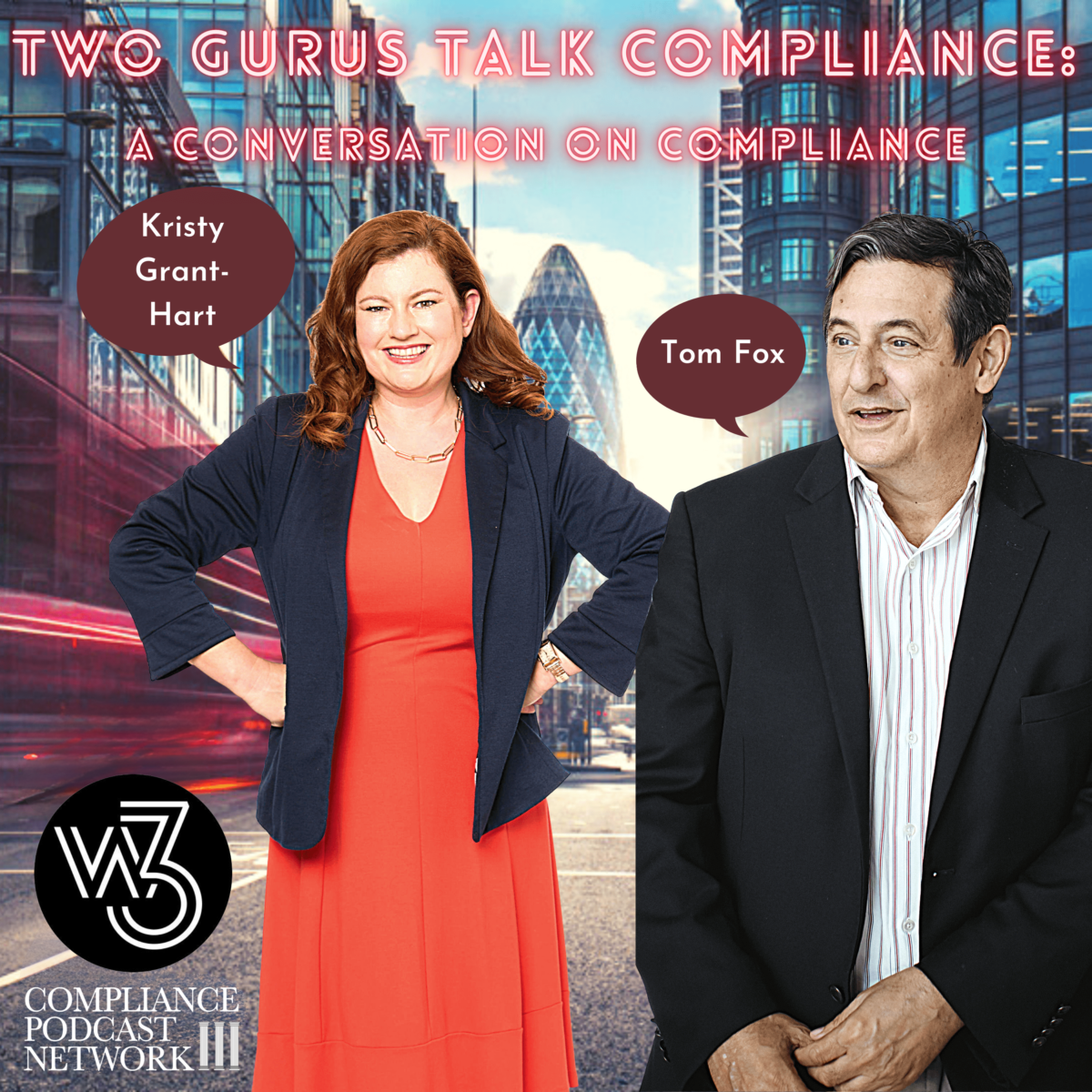
What happens when two top compliance commentators get together? They talk compliance, of course. Join Tom Fox and Kristy Grant-Hart in 2 Gurus Talk Compliance as they discuss the latest compliance issues in this week’s episode!

Stories this week include:

  • What happens when your bot goes antisemitic? (NYT)
  • BRG modeled a plan to settle Palestinians. (FT)
  • Goldman to demand loyalty oaths. (Bloomberg)
  • NFLPA head works for private equity. (ESPN)
  • Bid-rigging in stadium development. (WSJ)
  • Airbus, ASML, Mistral Bosses Ask EU to Pause AI Rules. (WSJ)
  • EU Omnibus Simplification Package Update. (Gibson Dunn)
  • Antitrust Whistleblower Program Launched. (Radical Compliance)
  • Unfinished Business at the Department of Justice. (Ideas & Answers)
  • ‘Today is his birthday’: Man allegedly stole a tour train high on meth, picked up passengers. (Florida Local 12)

Resources:

Kristy Grant-Hart on LinkedIn

Prove Your Worth

Tom

Instagram

Facebook

YouTube

Twitter

LinkedIn

Categories
Blog

Probing the Unknown: Investigative Lessons from Star Trek’s “The Immunity Syndrome”

Probing the Unknown: Investigative Lessons from Star Trek’s “The Immunity Syndrome”

There is a moment in every compliance professional’s career when you must venture into the unknown: a new country, a new business line, or a merger with a company whose culture, controls, and risks you only dimly perceive. For all our policies, controls, and frameworks, nothing can fully prepare us for the complexity, ambiguity, and risks associated with these new frontiers.

For me, no episode of Star Trek: The Original Series better illustrates the challenge of entering uncharted territory than “The Immunity Syndrome.” In this classic, the USS Enterprise is sent to investigate the mysterious loss of the starship Intrepid. The crew finds itself confronting a massive, deadly space organism —a threat it does not understand, cannot immediately combat, and which operates according to rules entirely foreign to its experience.

In many ways, this is the compliance professional’s dilemma when launching operations in a new jurisdiction or business venture. Old assumptions may no longer apply—hidden dangers lurk where we least expect. And survival, not just success, depends on investigative skills, adaptability, and a willingness to challenge everything we think we know.

Today, we examine the investigative lessons from “The Immunity Syndrome” that every compliance professional should heed when boldly going where their organization has never gone before.

Lesson 1: Question Your Assumptions—The Risks May Be Invisible

Illustrated By: The Enterprise receives a distress call and learns that the Intrepid, a ship crewed entirely by Vulcans, has been destroyed by an unknown force. As they approach the affected sector, Spock, usually calm and logical, is deeply unsettled, sensing the death of hundreds of Vulcans—a phenomenon that can’t be explained by science or sensors.

Compliance Lesson: When entering a new country or business venture, the most dangerous risks are often the ones you cannot see or do not know how to measure. Local compliance risks, fraud schemes, or cultural taboos may be invisible to standard due diligence or data analytics. Before launch, question your risk map. What don’t you know? Who can help you see the invisible? Consider local partners, whistleblower channels, and open-ended interviews to reveal hidden hazards.

  • Investigative Takeaways:
    • Do not assume that past success in other markets guarantees future safety.
    • Leverage local knowledge just as Spock’s unique connection gave the Enterprise vital early warning.
    • Use multiple investigative approaches: don’t rely solely on established data or processes.

Lesson 2: Conduct a Deep Diagnostic—Surface Scans Are Never Enough

Illustrated By: The Enterprise finds a “zone of darkness” in space—a void with no energy, no light, no readings at all. Standard scans and probes reveal nothing. Kirk, Spock, and McCoy debate theories and send increasingly sophisticated diagnostics before realizing they are up against a living, immune organism of unprecedented scale.

Compliance Lesson: Too many compliance failures occur because companies mistake a clean policy review or background check for a full investigation. New ventures require deep diagnostics that probe beneath the surface to understand not only what is there but also what is missing. Design investigative protocols that go beyond checklists: site visits, employee interviews, unannounced audits, and third-party verification. The darker the zone, the deeper you must probe.

  • Investigative Takeaway:
    • Supplement traditional due diligence with on-the-ground investigations and “boots on the ground” audits.
    • Look for the absence of evidence as well as the presence—missing records, unusual silence, or gaps in documentation can be just as telling as a smoking gun.
    • Enlist specialists (just as Kirk uses Spock and McCoy’s unique skills) to delve into complex risks, whether legal, cultural, or operational.

Lesson 3: Trust but Verify—Local Expertise Is Essential, But Not Infallible

Illustrated By: Kirk is forced to choose between Spock and McCoy for a dangerous reconnaissance mission into the organism’s interior. Both men are experts, but each brings different strengths, blind spots, and biases to the investigation. Kirk weighs their counsel but ultimately makes his call.

Compliance Lesson:

Local advisors, consultants, and employees are critical assets when entering new regions. However, their perspective is necessarily shaped by local norms and may not fully align with your organization’s risk appetite or ethical standards. Seek out a variety of perspectives, and always keep “tone from the top” and corporate values as your North Star. Investigative rigor means striking a balance between trust and verification at every turn.

  • Investigative Takeaways:
    • Respect local expertise, but always cross-check against independent sources.
    • Build diverse investigative teams, including insiders and outsiders, as well as headquarters and field personnel, such as lawyers and auditors.
    • Establish clear escalation protocols when local advice contradicts global standards.

Lesson 4: Monitor for Emerging Risks—What Starts as a Small Threat Can Escalate Rapidly

Illustrated By: Once inside the organism, the Enterprise is quickly overwhelmed. The ship’s energy is drained, the crew is incapacitated, and the threat escalates far faster than anticipated. Kirk and his team must improvise and respond dynamically as new threats emerge.

Compliance Lesson:

When operating in new markets, small, manageable issues can quickly become existential threats if left unchecked. Corruption, weak controls, or legal ambiguities that seem minor at first can balloon if they are not caught early. Design your investigations and monitoring to see not only current misconduct, but also early signs of trouble. Do not wait for the threat to fully materialize before taking action; by then, the momentum may have been lost from your program.

  • Investigative Takeaways:
    • Establish early-warning systems for compliance and operational risks.
    • Monitor not just for violations, but for near-misses, rumors, and signs of stress within the local business.
    • Use “pulse checks”—quick, frequent assessments—to catch emerging issues before they escalate.

Lesson 5: Have an Exit Strategy—Sometimes the Best Move Is to Retreat and Reassess

Illustrated By: As the Enterprise is nearly destroyed, Kirk orders a desperate gambit: injecting antimatter into the organism to destroy it, even if it means risking the ship. The plan works, but only after carefully considering—and ultimately rejecting—the possibility of a strategic withdrawal.

Compliance Lesson: Not every business venture or market entry can (or should) be salvaged. Sometimes, the risk is too great, the red flags too numerous, or the compliance gaps too wide to close. A good investigator knows when to recommend pulling back or declining to proceed. The hallmark of an effective compliance investigation is the willingness to tell leadership when the risk is not worth the reward. Better a temporary retreat than a catastrophic loss.

  • Investigative Takeaways:
    • Continually assess the risk/reward calculus of continuing versus exiting.
    • Prepare senior management for “no-go” recommendations, supported by clear evidence and risk assessments.
    • Document your investigations, findings, and decision rationale thoroughly, especially when choosing to walk away.

Final ComplianceLog Reflections

The Immunity Syndrome is more than a science fiction adventure; it is a meditation on the perils of confronting the unknown. For compliance professionals entering new countries or launching new ventures, the lessons are clear: question assumptions, dig deep, leverage local knowledge while scrutinizing it, monitor constantly, and know when to cut your losses.

In every new venture, there is a “zone of darkness”. It is a realm of unknown risks and unexpected threats. The only way to navigate it is through rigorous investigation, humility in the face of uncertainty, and the courage to act, whether that means pushing forward or pulling back.

May your investigative journeys be bold, your questions relentless, and your commitment to integrity unwavering. As the crew of the Enterprise discovered, survival in the unknown depends on never accepting the status quo, never ceasing to probe, and always being ready to chart a new course if the facts demand it.

Boldly investigate—where no compliance professional has gone before.

Resources:

Excruciatingly Detailed Plot Summary by Eric W. Weisstein

MissionLogPodcast.com

Memory Alpha

Categories
Daily Compliance News

Daily Compliance News: July 17, 2025, The COSO Yanked Edition

Welcome to the Daily Compliance News. Each day, Tom Fox, the Voice of Compliance, brings you compliance-related stories to start your day. Sit back, enjoy a cup of morning coffee, and listen in to the Daily Compliance News. All, from the Compliance Podcast Network. Each day, we consider four stories from the business world, including compliance, ethics, risk management, leadership, or general interest, relevant to the compliance professional.

Top compliance stories:

  • DOJ fires Maxwell prosecutor. (WSJ)
  • ABC heads to the BVI to find out why it is dragging its feet. (The Guardian)
  • COSO pulls its Corporate Governance Framework (Radical Compliance)
  • Samsung boss cleared of fraud charges. (BBC)

You can donate to flood relief for victims of the Kerr County flooding by going to the Hill Country Flood Relief here.

Categories
Compliance Tip of the Day

Compliance Tip of the Day – COSO Governance Framework: Part 4, Culture

Welcome to “Compliance Tip of the Day,” the podcast that brings you daily insights and practical advice on navigating the ever-evolving landscape of compliance and regulatory requirements. Whether you’re a seasoned compliance professional or just starting your journey, our goal is to provide you with bite-sized, actionable tips to help you stay ahead in your compliance efforts. Join us as we explore the latest industry trends, share best practices, and demystify complex compliance issues to keep your organization on the right side of the law. Tune in daily for your dose of compliance wisdom, and let’s make compliance a little less daunting, one tip at a time.

We continue our multi-part review of the new COSO Governance Framework (CGF). Today, we look at Component 3-Culture.

For more information on this topic, refer to The Compliance Handbook: A Guide to Operationalizing Your Compliance Program, 6th edition, recently released by LexisNexis. It is available here.