Categories
Trekking Through Compliance

Trekking Through Compliance: Episode 42 – Objectivity Under Fire: What “Obsession” Teaches Compliance Leaders

In the world of corporate compliance, the most challenging issues are often not the ones found in policies and procedures but the ones that hit close to home. When an investigation, a potential violation, or a risk becomes personal, even the most seasoned compliance professionals can struggle to maintain objectivity, leadership, and ethical clarity.

No episode of Star Trek: The Original Series captures this dilemma more powerfully than “Obsession.” Today, we have five key leadership lessons for compliance professionals, each illustrated by a scene from this classic episode.

Lesson 1: The Danger of Letting Past Failures Drive Present Decisions

Illustrated by: Early in “Obsession,” Captain Kirk becomes fixated on the mysterious cloud creature, which he encountered as a young officer. He blames himself for not destroying it years ago, feeling responsible for the deaths of his former crewmates. This guilt clouds his judgment, leading him to pursue the creature at the expense of his current mission and crew.

Compliance Lesson: It is natural for past failures or unresolved issues to haunt compliance professionals, whether it is a missed red flag, a mishandled investigation, or a colleague’s misconduct that slipped through the cracks. However, leadership means acknowledging these feelings without letting them dictate current actions. Fixating on the past can compromise your objectivity, impair decision-making, and erode team trust.

Create a structured debrief process after investigations and audits that encourages candid discussions of lessons learned—but draw a clear line between healthy reflection and self-blame. If you notice yourself or a colleague ruminating on a past failure, seek outside perspective from a mentor or coach.

Lesson 2: Beware of Conflicts Between Personal Motivations and Organizational Mission

Illustrated by: The pursuit of the creature leads him to override the advice of Spock and McCoy, risking a critical rendezvous with the USS Yorktown, which is carrying vital medical supplies. His vendetta threatens to derail the Enterprise’s primary mission and put others at risk.

Compliance Lesson: Personal motivations, even those rooted in a sense of justice or accountability, can create conflicts with the organization’s broader mission. For compliance leaders, it’s essential to recognize when personal feelings, loyalties, or ambitions are at odds with what’s best for the company, stakeholders, or compliance program as a whole.

Regularly revisit your program’s core mission and values. Before making significant decisions, pause to ask, “Am I doing this for the right reasons? Is this truly about compliance and ethics, or is my agenda creeping in? “Encourage a culture of peer challenge, where team members can safely question each other’s motivations in high-stakes situations.

Lesson 3: Listen to Your Team—Even When You Disagree

Illustrated by: Throughout the episode, Spock, McCoy, and other crew members challenge Kirk’s judgment, pointing out the risks of his obsession. Kirk initially rebuffs their advice, convinced that only he understands the threat. It is only when he finally listens to his officers that he can devise an effective plan to confront the creature.

Compliance Lesson: Leadership in compliance is not about always being right; rather, it is about fostering a culture that welcomes diverse perspectives, especially when an issue becomes personal. Leaders must actively seek and value dissenting opinions and be open to changing course based on credible advice, even if it stings.

During high-stress or personal cases, explicitly ask your team for feedback and alternative viewpoints. Consider creating “devil’s advocate” roles in investigations and setting ground rules that ensure even junior team members can raise concerns without fear of reprisal.

Lesson 4: Maintain Professional Distance—Don’t Let Emotions Overwhelm Ethics

Illustrated by: Kirk’s obsession nearly leads him to take unnecessary risks, endangering himself and his crew. His emotional investment clouds his judgment, and he pushes past reasonable boundaries in pursuit of what he believes is justice. Only when he regains his professional composure does he successfully lead his crew to resolve the crisis.

Compliance Lesson: When issues become personal, whether due to relationships, past failures, or high stakes, it is easy for emotions to override ethics and professionalism. Compliance leaders must learn to recognize when they are too close to a situation and take deliberate steps to regain perspective.

Build time for reflection into your workflow, especially during emotionally charged investigations. When possible, delegate or recuse yourself from cases where you cannot maintain impartiality. Seek support from trusted colleagues or external advisors to help you keep perspective and objectivity.

Lesson 5: The Power of Accountability—Owning Up to Mistakes and Moving Forward

Illustrated by: At the episode’s conclusion, Kirk reflects on his actions with McCoy, admitting that his personal feelings clouded his judgment and nearly led to disaster. He doesn’t make excuses but owns up to his mistakes and takes the lessons to heart, recommitting himself to his duty as captain.

Compliance Lesson: True leadership is not about perfection but about accountability. When personal issues intrude and mistakes are made, the best compliance leaders acknowledge their errors, communicate them transparently, and model a commitment to continuous improvement. This builds credibility, trust, and resilience within the team and across the organization.

Foster a culture of accountability at all levels. After challenging cases, hold post-mortems to identify both successes and failures, and publicly recognize leaders and team members who model accountability. Use mistakes as learning opportunities, not sources of shame.

Final ComplianceLog Reflections

“Obsession” stands as a reminder that even the best leaders are vulnerable when the stakes become personal. But it also shows the power of self-awareness, teamwork, and accountability to bring us back to our best selves. For compliance professionals, the message is clear: We must learn to recognize when our history, emotions, or motivations are shaping our decisions; then pause, reflect, and act in line with our values and mission.

By encouraging diverse viewpoints, maintaining professional boundaries, and owning our mistakes, we can transform moments of personal challenge into opportunities for growth and organizational strength. That is the essence of ethical leadership in compliance.

So, as you navigate your next difficult investigation or compliance challenge, especially the one that hits close to home, remember Kirk’s journey. Do not shy away from what is personal. Embrace it, learn from it, and lead with courage, humility, and integrity.

  Resources:

Excruciatingly Detailed Plot Summary by Eric W. Weisstein

MissionLogPodcast.com

Memory Alpha

Timothy and Fiona are AI-generated voices.
Categories
Blog

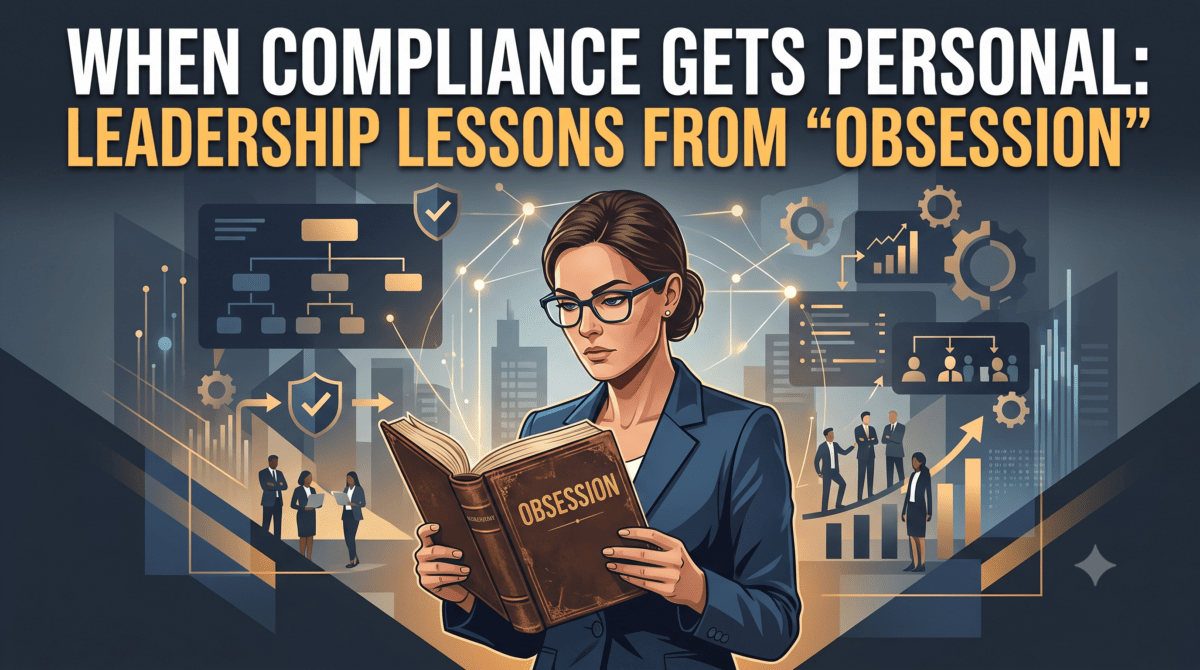
When Compliance Gets Personal: Leadership Lessons from Star Trek’s “Obsession”

In the world of corporate compliance, the most challenging issues are often not the ones found in policies and procedures but the ones that hit close to home. When an investigation, a potential violation, or a risk becomes personal, even the most seasoned compliance professionals can struggle to maintain objectivity, leadership, and ethical clarity.

No episode of Star Trek: The Original Series captures this dilemma more powerfully than “Obsession.” Captain Kirk finds himself battling a deadly cloud-like creature that once decimated his former crew. His pursuit becomes a personal vendetta, blurring the lines between duty and obsession. For compliance professionals, “Obsession” offers a vivid cautionary tale about the dangers and the growth opportunities when leadership gets personal.

Here are five key leadership lessons for compliance professionals, each illustrated by a scene from this classic episode.

Lesson 1: The Danger of Letting Past Failures Drive Present Decisions

Illustrated by: Early in “Obsession,” Captain Kirk becomes fixated on the mysterious cloud creature, which he encountered as a young officer. He blames himself for not destroying it years ago, feeling responsible for the deaths of his former crewmates. This guilt clouds his judgment, leading him to pursue the creature at the expense of his current mission and crew.

Compliance Lesson: It is natural for past failures or unresolved issues to haunt compliance professionals, whether it is a missed red flag, a mishandled investigation, or a colleague’s misconduct that slipped through the cracks. However, leadership means acknowledging these feelings without letting them dictate current actions. Fixating on the past can compromise your objectivity, impair decision-making, and erode team trust.

Create a structured debrief process after investigations and audits, encouraging candid discussions of lessons learned—but draw a clear line between healthy reflection and self-blame. If you notice yourself or a colleague ruminating on a past failure, seek outside perspective from a mentor or coach.

Lesson 2: Beware of Conflicts Between Personal Motivations and Organizational Mission

Illustrated by: The pursuit of the creature leads him to override the advice of Spock and McCoy, risking a critical rendezvous with the USS Yorktown, which is carrying vital medical supplies. His vendetta threatens to derail the Enterprise’s primary mission and put others at risk.

Compliance Lesson: Personal motivations, even those rooted in a sense of justice or accountability, can create conflicts with the organization’s broader mission. For compliance leaders, it’s essential to recognize when personal feelings, loyalties, or ambitions are at odds with what’s best for the company, stakeholders, or compliance program as a whole.

Regularly revisit your program’s core mission and values. Before making significant decisions, pause to ask, “Am I doing this for the right reasons? Is this truly about compliance and ethics, or is my agenda creeping in? “Encourage a culture of peer challenge, where team members can safely question each other’s motivations in high-stakes situations.

Lesson 3: Listen to Your Team—Even When You Disagree

Illustrated by: Throughout the episode, Spock, McCoy, and other crew members challenge Kirk’s judgment, pointing out the risks of his obsession. Kirk initially rebuffs their advice, convinced that only he understands the threat. It is only when he finally listens to his officers that he can devise an effective plan to confront the creature.

Compliance Lesson: Leadership in compliance is not about always being right; rather, it is about fostering a culture that welcomes diverse perspectives, especially when an issue becomes personal. Leaders must actively seek and value dissenting opinions and be open to changing course based on credible advice, even if it stings.

During high-stress or personal cases, explicitly ask your team for feedback and alternative viewpoints. Consider creating “devil’s advocate” roles in investigations and setting ground rules that ensure even junior team members can raise concerns without fear of reprisal.

Lesson 4: Maintain Professional Distance—Don’t Let Emotions Overwhelm Ethics

Illustrated by: Kirk’s obsession nearly leads him to take unnecessary risks, endangering himself and his crew. His emotional investment clouds his judgment, and he pushes past reasonable boundaries in pursuit of what he believes is justice. Only when he regains his professional composure does he successfully lead his crew to resolve the crisis.

Compliance Lesson: When issues become personal, whether due to relationships, past failures, or high stakes, it is easy for emotions to override ethics and professionalism. Compliance leaders must learn to recognize when they are too close to a situation and take deliberate steps to regain perspective.

Build time for reflection into your workflow, especially during emotionally charged investigations. When possible, delegate or recuse yourself from cases where you cannot maintain impartiality. Seek support from trusted colleagues or external advisors to help you keep perspective and objectivity.

Lesson 5: The Power of Accountability—Owning Up to Mistakes and Moving Forward

Illustrated by: At the episode’s conclusion, Kirk reflects on his actions with McCoy, admitting that his personal feelings clouded his judgment and nearly led to disaster. He doesn’t make excuses but owns up to his mistakes and takes the lessons to heart, recommitting himself to his duty as captain.

Compliance Lesson: True leadership is not about perfection but about accountability. When personal issues intrude and mistakes are made, the best compliance leaders acknowledge their errors, communicate them transparently, and model a commitment to continuous improvement. This builds credibility, trust, and resilience within the team and across the organization.

Foster a culture of accountability at all levels. After challenging cases, hold post-mortems to identify both successes and failures, and publicly recognize leaders and team members who model accountability. Use mistakes as learning opportunities, not sources of shame.

Final ComplianceLog Reflections

“Obsession” stands as a reminder that even the best leaders are vulnerable when the stakes become personal. But it also shows the power of self-awareness, teamwork, and accountability to bring us back to our best selves. For compliance professionals, the message is clear: We must learn to recognize when our history, emotions, or motivations are shaping our decisions; then pause, reflect, and act in line with our values and mission.

By encouraging diverse viewpoints, maintaining professional boundaries, and owning our mistakes, we can transform moments of personal challenge into opportunities for growth and organizational strength. That is the essence of ethical leadership in compliance.

So, as you navigate your next difficult investigation or compliance challenge, especially the one that hits close to home, remember Kirk’s journey. Do not shy away from what is personal. Embrace it, learn from it, and lead with courage, humility, and integrity.

Resources:

Excruciatingly Detailed Plot Summary by Eric W. Weisstein

MissionLogPodcast.com

Memory Alpha

Categories
Trekking Through Compliance

Trekking Through Compliance: Episode 41 – Duty Over Ego: Leadership Change in “The Deadly Years”

If you have spent any time in leadership, especially in compliance or corporate governance, you know that one of the most gut-wrenching duties is addressing a colleague who can no longer fulfill their responsibilities. Today, we step onto the bridge and examine five ethical lessons for compliance professionals faced with these hard but necessary transitions. Each lesson is illustrated by a specific scene from “The Deadly Years.”

Lesson 1: Recognize the Signs—Objectivity Must Trump Sentiment

Illustrated by: Early in the episode, the landing party is exposed to a form of radiation that accelerates aging. Captain Kirk, Spock, Scotty, and others quickly show signs of physical and cognitive decline. Kirk, in particular, becomes forgetful and indecisive, missing important details and even failing to recall security procedures.

Compliance Lessons: The first ethical responsibility is to recognize, without sentiment or denial, when a colleague can no longer perform. Whether due to age, health, burnout, or changing business demands, the signs must be identified early, not ignored out of deference to history or personal loyalty.

Implement regular, objective performance reviews and peer assessments. Train managers to look for early indicators of declining performance, especially in high-stress or high-responsibility roles, and provide pathways for safe, supportive reporting.

Lesson 2: Prioritize Mission and Stakeholders—Not Individual Status

Illustrated by: As Kirk’s abilities deteriorate, the safety of the Enterprise is jeopardized. He hesitates during a Romulan encounter and issues conflicting orders, putting the crew at risk. Spock and Dr. McCoy discuss his decline, acknowledging their concern for their friend but focusing on the danger to the mission.

Compliance Lesson: An organization’s purpose, stakeholders, and people must come before individual egos or career legacies. Ethical leadership means putting the mission first, even when that requires difficult conversations or unpopular actions. This is especially critical in compliance, where risks can have enterprise-wide impacts.

Make mission-driven decision-making a core value in your compliance program. Regularly communicate that the enterprise’s integrity takes precedence over personal status. Ensure that all leaders, from the C-suite to middle management, understand that their primary obligation is to the organization and its stakeholders.

Lesson 3: Fair, Transparent Processes Protect All Involved

Illustrated by: When the decline in Kirk’s performance can no longer be denied, Spock and Dr. McCoy convene a competency hearing. The tribunal includes multiple voices and follows Starfleet protocol, providing Kirk with a chance to respond and present evidence on his behalf.

Compliance Lesson: No transition or removal, no matter how justified, should be handled arbitrarily or in secret. Transparent, fair, and standardized processes ensure that all parties are treated with dignity and the organization’s decisions are defensible. Above all is dignity. This approach also protects against accusations of favoritism, discrimination, or retaliation.

Document and publish clear protocols for performance-related transitions. Involve impartial parties in any review. Make sure employees understand their rights, the procedures, and the grounds on which decisions are made.

Lesson 4: Compassion Matters—Even When Delivering Hard News

Illustrated by: After the tribunal, Kirk is relieved of command. The process is formal, but the crew treats Kirk with respect and compassion, recognizing his service and the pain of the moment. No one revels in the transition or diminishes Kirk’s contributions.

Compliance Lesson: Delivering tough messages, especially about the need to move on, can be done with empathy and grace. Recognizing the individual’s service, offering support, and helping with a dignified transition isn’t just “nice”; rather, it should be seen as ethically necessary. How you handle these moments sets the tone for your organization’s values and can even inspire long-term loyalty and goodwill.

Train managers and HR in compassionate communication. Offer support such as career counseling, retirement planning, or mental health resources to those transitioning. Celebrate achievements and acknowledge contributions, even as you move forward.

Lesson 5: The Right Transition Can Save the Mission

Illustrated by: With Kirk relieved, Commodore Stocker takes command but quickly demonstrates a lack of field experience, putting the ship in further jeopardy. Meanwhile, Dr. McCoy and Spock race against time to find a cure for the aging disease. Once Kirk is restored to health, he returns to command, draws on his experience and instincts, and saves the Enterprise from destruction.

Compliance Lesson: Transitioning a colleague should never be punitive or personal; it’s about restoring the organization to its highest level of functioning. Sometimes, this means temporarily moving a leader aside until they can return, or helping someone find a better fit for their abilities. The right person, in the proper role, at the right time, is critical for compliance and organizational health.

Build flexibility into your transition policies. Consider temporary reassignments, sabbaticals, or other options before a final separation. Always keep the focus on what’s best for the mission, the team, and the individual.

Final ComplianceLog Reflections

No compliance professional relishes the moment when a valued colleague must be asked to step aside. But “The Deadly Years” reminds us that the greatest danger lies not in transition but in denial, sentimentality, or failure to act. As Kirk, Spock, and McCoy demonstrate, the hard path, handled with fairness, transparency, dignity, and compassion, is always the ethical path.

For compliance professionals, this means being vigilant for declining performance, putting mission first, insisting on fair and transparent processes, and consistently delivering hard news with empathy. It also means recognizing that transition is sometimes temporary and, with the proper support, colleagues can return, renewed and ready for new challenges.

As organizations face the “deadly years” of rapid change, new risks, and mounting expectations, may we all steer our ships with courage, wisdom, and integrity, ensuring that the right people are at the helm for the good of all.

Resources:

Excruciatingly Detailed Plot Summary by Eric W. Weisstein

MissionLogPodcast.com

Memory Alpha

Timothy and Fiona are AI-generated voices

Categories
Blog

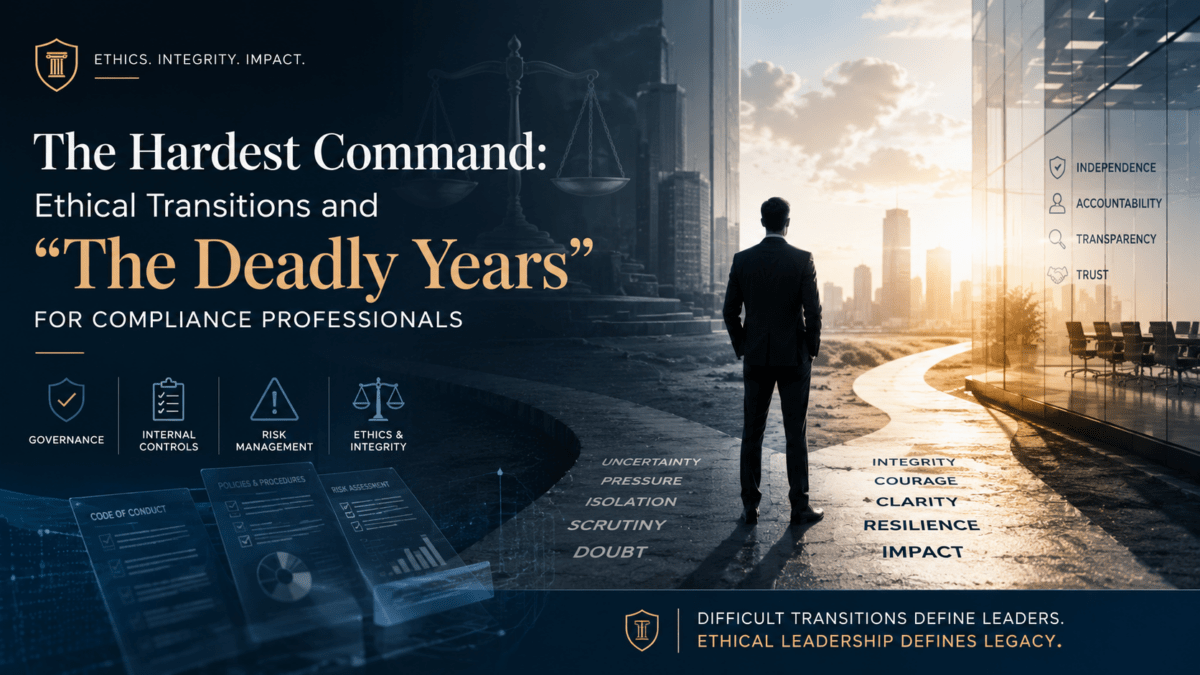
The Hardest Command: Ethical Transitions and “The Deadly Years”

Suppose you have spent any time in leadership, especially in compliance or corporate governance. In that case, you know that one of the most gut-wrenching duties is addressing a colleague who can no longer fulfill their responsibilities. Loyalty, empathy, and organizational needs collide in these moments. Few pop culture stories tackle this theme with more clarity and drama than Star Trek: The Original Series episode “The Deadly Years.” Here, the Enterprise crew confronts rapid aging, physical decline, and, most significantly, the consequences when a leader cannot perform.

Today, we step onto the bridge and examine five ethical lessons for compliance professionals faced with these hard but necessary transitions. Each lesson is illustrated by a specific scene from “The Deadly Years.”

Lesson 1: Recognize the Signs—Objectivity Must Trump Sentiment

Illustrated by: Early in the episode, the landing party is exposed to a form of radiation that accelerates aging. Captain Kirk, Spock, Scotty, and others quickly show signs of physical and cognitive decline. Kirk, in particular, becomes forgetful and indecisive, missing important details and even failing to recall security procedures.

Compliance Lessons: The first ethical responsibility is to recognize, without sentiment or denial, when a colleague can no longer perform. Whether due to age, health, burnout, or changing business demands, the signs must be identified early, not ignored out of deference to history or personal loyalty.

Implement regular, objective performance reviews and peer assessments. Train managers to look for early indicators of declining performance, especially in high-stress or high-responsibility roles, and provide pathways for safe, supportive reporting.

Lesson 2: Prioritize Mission and Stakeholders—Not Individual Status

Illustrated by: As Kirk’s abilities deteriorate, the safety of the Enterprise is jeopardized. He hesitates during a Romulan encounter and issues conflicting orders, putting the crew at risk. Spock and Dr. McCoy discuss his decline, acknowledging their concern for their friend but focusing on the danger to the mission.

Compliance Lesson: An organization’s purpose, stakeholders, and people must come before individual egos or career legacies. Ethical leadership means putting the mission first, even when that requires difficult conversations or unpopular actions. This is especially critical in compliance, where risks can have enterprise-wide impacts.

Make mission-driven decision-making a core value in your compliance program. Regularly communicate that the enterprise’s integrity takes precedence over personal status. Ensure that all leaders, from the C-suite to middle management, understand that their primary obligation is to the organization and its stakeholders.

Lesson 3: Fair, Transparent Processes Protect All Involved

Illustrated by: When the decline in Kirk’s performance can no longer be denied, Spock and Dr. McCoy convene a competency hearing. The tribunal includes multiple voices and follows Starfleet protocol, providing Kirk with a chance to respond and present evidence on his behalf.

Compliance Lesson: No transition or removal, no matter how justified, should be handled arbitrarily or in secret. Transparent, fair, and standardized processes ensure that all parties are treated with dignity and the organization’s decisions are defensible. Above all is dignity. This approach also protects against accusations of favoritism, discrimination, or retaliation.

Document and publish clear protocols for performance-related transitions. Involve impartial parties in any review. Make sure employees understand their rights, the procedures, and the grounds on which decisions are made.

Lesson 4: Compassion Matters—Even When Delivering Hard News

Illustrated by: After the tribunal, Kirk is relieved of command. The process is formal, but the crew treats Kirk with respect and compassion, recognizing his service and the pain of the moment. No one revels in the transition or diminishes Kirk’s contributions.

Compliance Lesson: Delivering tough messages, especially about the need to move on, can be done with empathy and grace. Recognizing the individual’s service, offering support, and helping with a dignified transition isn’t just “nice”; rather, it should be seen as ethically necessary. How you handle these moments sets the tone for your organization’s values and can even inspire long-term loyalty and goodwill.

Train managers and HR in compassionate communication. Offer support such as career counseling, retirement planning, or mental health resources to those transitioning. Celebrate achievements and acknowledge contributions, even as you move forward.

Lesson 5: The Right Transition Can Save the Mission

Illustrated by: With Kirk relieved, Commodore Stocker takes command but quickly demonstrates a lack of field experience, putting the ship in further jeopardy. Meanwhile, Dr. McCoy and Spock race against time to find a cure for the aging disease. Once Kirk is restored to health, he returns to command, draws on his experience and instincts, and saves the Enterprise from destruction.

Compliance Lesson: Transitioning a colleague should never be punitive or personal; it’s about restoring the organization to its highest level of functioning. Sometimes, this means temporarily moving a leader aside until they can return, or helping someone find a better fit for their abilities. The right person in the proper role at the right time is critical to compliance and organizational health.

Build flexibility into your transition policies. Consider temporary reassignments, sabbaticals, or other options before a final separation. Always keep the focus on what’s best for the mission, the team, and the individual.

Final ComplianceLog Reflections

No compliance professional relishes the moment when a valued colleague must be asked to step aside. But “The Deadly Years” reminds us that the greatest danger lies not in transition but in denial, sentimentality, or failure to act. As Kirk, Spock, and McCoy demonstrate, the hard path, handled with fairness, transparency, dignity, and compassion, is always the ethical path.

For compliance professionals, this means being vigilant for declining performance, putting mission first, insisting on fair and transparent processes, and consistently delivering hard news with empathy. It also means recognizing that transition is sometimes temporary and, with the proper support, colleagues can return, renewed and ready for new challenges.

As organizations face the “deadly years” of rapid change, new risks, and mounting expectations, may we all steer our ships with courage, wisdom, and integrity, ensuring that the right people are at the helm for the good of all.

Resources:

Excruciatingly Detailed Plot Summary by Eric W. Weisstein

MissionLogPodcast.com

Memory Alpha

Categories
Trekking Through Compliance

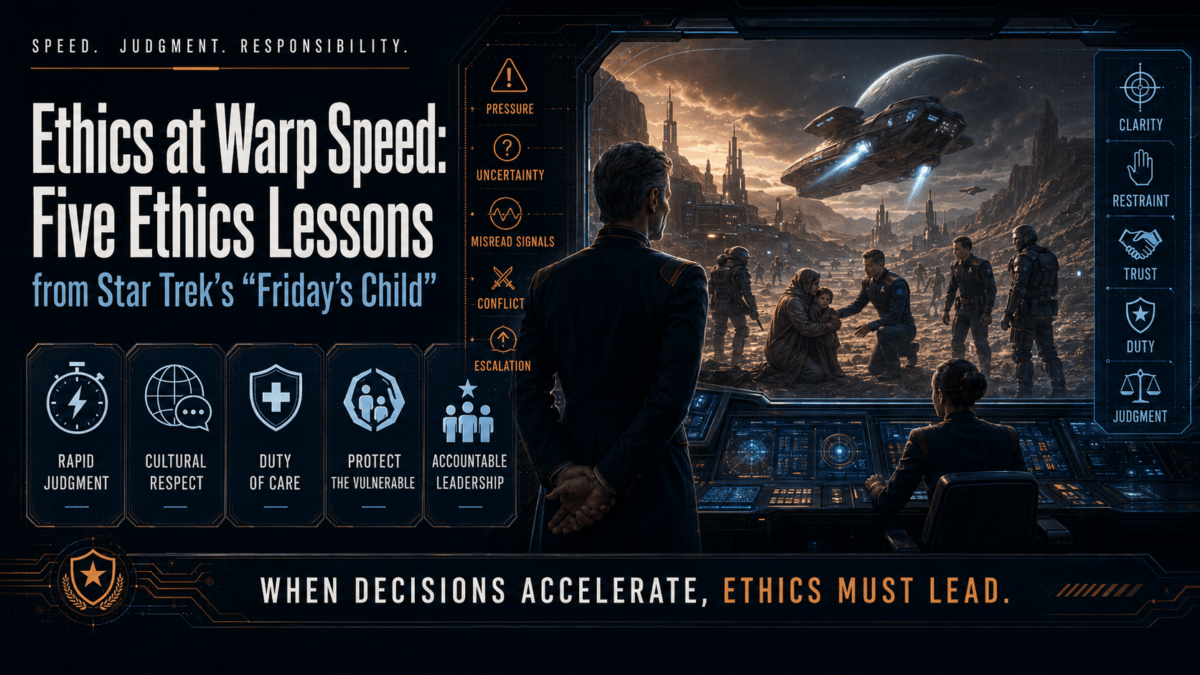
Trekking Through Compliance: Episode 40 – Negotiating Ethics at Warp Speed: Five Ethics Lessons from Star Trek’s “Friday’s Child”

Star Trek has always been about more than adventure. It often serves as a mirror of our own ethical challenges, especially for those tasked with steering organizations through the tricky terrain of corporate compliance. The original series episode “Friday’s Child” offers a compelling look at negotiation, trust, and ethics under fire. While set on the distant planet Capella IV, the dilemmas faced by Captain Kirk and his crew echo those in today’s boardrooms and compliance departments. Today, we set our phasers to “learn” and beam down five ethical lessons for compliance professionals, each tied to a defining scene from this classic episode.

Lesson 1: Respect Local Customs—Even When They Conflict With Your Own Values

Illustrated by: The Capellans’ customs, particularly their views on leadership and the role of women, are in stark contrast to those of the Federation. Kirk and Dr. McCoy are forced to tread carefully, knowing that any misstep could lead to violence or destroy negotiations.

Compliance Lesson: Compliance professionals must develop cultural intelligence and adapt without compromising core ethical standards.

Lesson 2: Integrity in Negotiation Is Non-Negotiable

Illustrated by: As the Federation seeks mining rights on Capella IV, the Klingons arrive to negotiate with the Capellans, bringing duplicity and manipulation.

Compliance Lesson: While competitors may take shortcuts or resort to unethical tactics, a compliance-driven organization must prioritize integrity.

Lesson 3: Protect the Vulnerable—Even When It’s Not Easy

Illustrated by: After the assassination of Akaar, the Capellan leader, his pregnant widow Eleen becomes the target of violence. Federation protocol would have Kirk and his team withdraw, but McCoy and Kirk insist on protecting Eleen and her unborn child, risking their own safety and the mission.

Compliance Lesson: Organizations have a duty to safeguard those in vulnerable positions, including whistleblowers, employees facing retaliation, and communities affected by business decisions.

Lesson 4: Ethical Courage Means Making Unpopular Decisions

Illustrated by: When Eleen, following Capellan law, insists that she does not want her child, McCoy faces a stark ethical dilemma.

Compliance Lesson: There are moments when ethical behavior demands standing alone, challenging consensus, or confronting deeply ingrained practices.

Lesson 5: Transparency and Communication Build Trust in Crisis

Illustrated by: As Kirk, Spock, McCoy, and Eleen flee from the Capellans and Klingons, success depends on clear, honest communication.

Compliance Lesson: During crises, be it a compliance investigation, regulatory challenge, or public scandal, transparency and timely communication are critical.

Final ComplianceLog Reflections

“Friday’s Child” may be set on a planet of warriors, but its ethical lessons are universal. For compliance professionals, the episode is a case study in what it means to lead ethically when the stakes are high, the rules are unclear, and the path is fraught with danger.

From respecting local customs to standing up for the vulnerable, the crew of the Enterprise demonstrates that ethics is not a luxury but the core of mission success, even at great personal or professional cost. The compliance officer’s role is not unlike Kirk’s: to navigate complexity, negotiate with integrity, protect those at risk, summon courage in the face of unpopularity, and build trust through transparency.

Resources:

Excruciatingly Detailed Plot Summary by Eric W. Weisstein

MissionLogPodcast.com

Memory Alpha

Timothy and Fiona are AI-generated voices.
Categories
Blog

Ethics at Warp Speed: Five Ethics Lessons from Star Trek’s “Friday’s Child”

Star Trek has always been about more than adventure. It often serves as a mirror of our own ethical challenges, especially for those tasked with steering organizations through the tricky terrain of corporate compliance. The original series episode “Friday’s Child” offers a compelling look at negotiation, trust, and ethics under fire. While set on the distant planet Capella IV, the dilemmas faced by Captain Kirk and his crew echo those in today’s boardrooms and compliance departments. Today, we set our phasers to “learn” and beam down five ethical lessons for compliance professionals, each tied to a defining scene from this classic episode.

Lesson 1: Respect Local Customs—Even When They Conflict With Your Own Values

Illustrated by: The Capellans’ customs, particularly their views on leadership and the role of women, are in stark contrast to those of the Federation. Kirk and Dr. McCoy are forced to tread carefully, knowing that any misstep could lead to violence or destroy negotiations.

Compliance Lesson: Compliance professionals must develop cultural intelligence and adapt without compromising core ethical standards.

Lesson 2: Integrity in Negotiation Is Non-Negotiable

Illustrated by: As the Federation seeks mining rights on Capella IV, the Klingons arrive to negotiate with the Capellans, bringing duplicity and manipulation.

Compliance Lesson: While competitors may take shortcuts or resort to unethical tactics, a compliance-driven organization must prioritize integrity.

Lesson 3: Protect the Vulnerable—Even When It’s Not Easy

Illustrated by: After the assassination of Akaar, the Capellan leader, his pregnant widow, Eleen, becomes the target of violence. Federation protocol would have Kirk and his team withdraw, but McCoy and Kirk insist on protecting Eleen and her unborn child, risking their own safety and the mission.

Compliance Lesson: Organizations have a duty to safeguard those in vulnerable positions, including whistleblowers, employees facing retaliation, and communities affected by business decisions.

Lesson 4: Ethical Courage Means Making Unpopular Decisions

Illustrated by: When Eleen, following Capellan law, insists that she does not want her child, McCoy faces a stark ethical dilemma.

Compliance Lesson: There are moments when ethical behavior demands standing alone, challenging consensus, or confronting deeply ingrained practices.

Lesson 5: Transparency and Communication Build Trust in Crisis

Illustrated by: As Kirk, Spock, McCoy, and Eleen flee from the Capellans and Klingons, success depends on clear, honest communication.

Compliance Lesson: During crises, be it a compliance investigation, regulatory challenge, or public scandal, transparency and timely communication are critical.

Final ComplianceLog Reflections

“Friday’s Child” may be set on a planet of warriors, but its ethical lessons are universal. For compliance professionals, the episode is a case study in what it means to lead ethically when the stakes are high, the rules are unclear, and the path is fraught with danger.

From respecting local customs to standing up for the vulnerable, the crew of the Enterprise demonstrates that ethics is not a luxury but the core of mission success, even at great personal or professional cost. The compliance officer’s role is not unlike Kirk’s: to navigate complexity, negotiate with integrity, protect those at risk, summon courage in the face of unpopularity, and build trust through transparency.

Resources:

Excruciatingly Detailed Plot Summary by Eric W. Weisstein

MissionLogPodcast.com

Memory Alpha

Categories
Trekking Through Compliance

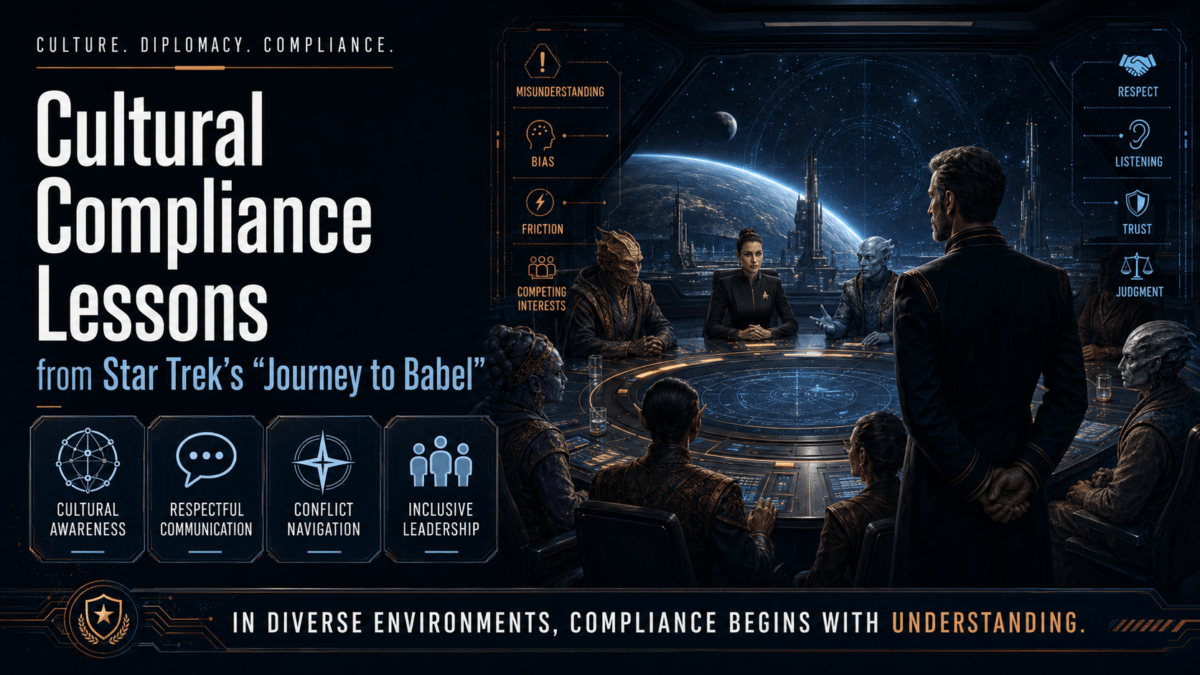
Trekking Through Compliance: Episode 39 – Federation Fundamentals: What “Journey to Babel” Teaches Us About Global Compliance

In the ever-expanding universe of corporate compliance, the question of how to bridge cultural divides is as critical as it is complex. Navigating global operations, integrating diverse teams, and balancing conflicting interests. These challenges would be familiar to Captain Kirk and the crew of the Enterprise, particularly in the classic Star Trek: The Original Series episode “Journey to Babel.”

Today, we explore five essential cross-cultural compliance lessons, each grounded in a scene from “Journey to Babel.” These insights are not simply for the Starship Enterprise. Instead, they are vital for every compliance professional in today’s globalized business world.

Lesson 1: Cultural Awareness is the Foundation of Trust

Illustrated by: At a diplomatic reception. Ambassadors Sarek (Vulcan) and Gav (Andorian) nearly come to blows over the proposed admission of Coridan to the Federation.

Compliance Lesson: Cultural awareness is the bedrock of ethical business practice. As compliance professionals, we must recognize that every culture brings its perspectives, values, and sensitivities to the table.

Lesson 2: Personal Bias Must Never Trump Professional Duty

Illustrated by: Kirk discovers that Spock’s parents, Sarek and Amanda, are aboard.

Compliance Lesson: Compliance professionals must create policies and foster cultures that prioritize professional integrity above personal interest, even (or especially) when emotions run high.

Lesson 3: Open Communication is Critical in Preventing Escalation

Illustrated by: Tensions flare after Ambassador Gav’s murder.

Compliance Lesson: Silence or closed-door decisions breed mistrust and can quickly escalate a manageable issue into a full-blown crisis.

Lesson 4: Ethical Leadership Means Making the Hard Call

Illustrated by: Kirk, gravely wounded during an assassination attempt, insists on returning to the bridge rather than receiving treatment so that Spock can perform surgery on Sarek.

Compliance Lesson: Effective compliance leaders are those who lead by example, making tough decisions that may be unpopular or personally costly but which uphold the organization’s mission and values.

Lesson 5: Unity Through Diversity Drives Mission Success

Illustrated by: Despite assassination attempts, sabotage, and political intrigue, the Enterprise ultimately succeeds in its mission.

Compliance Lesson: When managed ethically, cross-cultural teams produce better solutions, more robust risk assessments, and more effective compliance outcomes.

Final ComplianceLog Reflections

Journey to Babel” reminds us that successful missions, whether in interstellar diplomacy or global business, depend on more than technical expertise or strategic positioning. They require cultural competence, ethical leadership, and a willingness to prioritize the mission over personal interests.

For the compliance professional, the lessons are clear: invest in cultural awareness, build transparency, foster ethical leadership, and leverage diversity as a driver of success. In today’s interconnected world, the road to Babel is one we all travel. It is your job as a compliance professional to ensure we do so ethically, collaboratively, and boldly.

Resources:

Excruciatingly Detailed Plot Summary by Eric W. Weisstein

MissionLogPodcast.com

Memory Alpha

Timothy and Fiona are AI-generated voices

Categories
Blog

Boldly Going Together: Cross – Cultural Compliance Lessons from Star Trek’s “Journey to Babel”

In the ever-expanding universe of corporate compliance, the question of how to bridge cultural divides is as critical as it is complex. Navigating global operations, integrating diverse teams, and balancing conflicting interests. These challenges would be familiar to Captain Kirk and the crew of the Enterprise, particularly in the classic Star Trek: The Original Series episode “Journey to Babel.”

In this episode, the Enterprise is tasked with transporting 114 ambassadors from across the Federation to a pivotal diplomatic conference. The plot thickens as old enmities, conflicting interests, and even attempted murder threaten the mission’s success. At the heart of the episode lies a powerful message: cross-cultural competence is not just an HR catchphrase. It is a critical compliance and ethical imperative.

Today, we explore five essential cross-cultural compliance lessons, each grounded in a scene from “Journey to Babel.” These insights are not simply for the Starship Enterprise. Instead, they are vital for every compliance professional in today’s globalized business world.

Lesson 1: Cultural Awareness is the Foundation of Trust

Illustrated by: The Enterprise hosts a diplomatic reception. Ambassadors Sarek (Vulcan) and Gav (Andorian) nearly come to blows over the proposed admission of Coridan to the Federation.

The opening scenes aboard the Enterprise are a masterclass in cultural complexity. The ambassadors, each representing worlds with deep-seated histories and conflicting interests, demonstrate how easily cultural misunderstandings and political baggage can undermine trust.

Compliance Lesson: Cultural awareness is the bedrock of ethical business practice. As compliance professionals, we must recognize that every culture brings its perspectives, values, and sensitivities to the table. Failure to understand these nuances can breed suspicion and derail collaboration, just as the Vulcan and Andorian ambassadors struggle to find common ground.

Prioritize cultural training as part of compliance education. Ensure that codes of conduct are not only translated but also contextually adapted and that your team is prepared to identify and address cultural gaps before they become compliance risks.

Lesson 2: Personal Bias Must Never Trump Professional Duty

Illustrated by Kirk discovers that Spock’s parents, Sarek and Amanda, are aboard. Despite personal tensions—especially between Spock and his father—Spock insists on performing his duties during the crisis, even when Sarek’s life is at stake.

This episode famously reveals Spock’s human mother and Vulcan father, bringing family dynamics into the mix. Yet, when Sarek is gravely injured and a heart operation is required, Spock refuses to leave the bridge while the ship is in danger. His professional commitment outweighs personal emotion.

Compliance Lesson: In cross-cultural or high-pressure environments, personal biases and relationships can threaten objective decision-making. Compliance professionals must create policies and foster cultures that prioritize professional integrity above personal interest, even (or especially) when emotions run high.

Implement clear conflict-of-interest policies and foster an environment where recusal and transparency are not just encouraged but expected—train staff to recognize when personal loyalties or cultural allegiances might compromise objective action.

Lesson 3: Open Communication is Critical in Preventing Escalation

Illustrated by: Tensions flare after Ambassador Gav’s murder. Accusations fly, especially toward Sarek, who had argued publicly with Gav just before his death. The crew’s refusal to jump to conclusions, coupled with ongoing dialogue among all parties, helps keep the situation from spiraling.

The murder mystery at the heart of “Journey to Babel” is propelled by suspicion and distrust. Yet Kirk, Spock, and Dr. McCoy consistently push for fact-based investigation, communication, and transparency, resisting pressure to act on rumor or assumption.

Compliance Lesson: When dealing with culturally diverse teams or stakeholders, open and transparent communication is your most effective defense against misunderstanding, rumor, and escalation. Silence or closed-door decisions breed mistrust and can quickly escalate a manageable issue into a full-blown crisis.

Establish robust reporting, investigation, and escalation protocols that emphasize transparency and communication. Utilize regular cross-cultural dialogues and forums to identify concerns before they become compliance issues.

Lesson 4: Ethical Leadership Means Making the Hard Call

Illustrated by: Kirk, gravely wounded during an assassination attempt, insists on returning to the bridge rather than receiving treatment so that Spock can perform surgery on Sarek. Both men make personal sacrifices for the greater good and the mission’s safety.

At the height of the crisis, leadership is defined not by rank but by the ethical choices made. Kirk’s and Spock’s willingness to sacrifice for the mission—Kirk risking his life, Spock postponing surgery on his father—demonstrates that ethical leadership means prioritizing the collective’s welfare over personal comfort or interest.

Compliance Lesson: Effective compliance leaders are those who lead by example, making tough decisions that may be unpopular or personally costly but which uphold the organization’s mission and values. This is especially true in global environments, where decisions often have cross-cultural ripple effects.

Cultivate leadership at all levels that models ethical decision-making. Recognize and reward those who act in the organization’s best interests, even when it is personally inconvenient. Build ethics into leadership development and performance evaluations.

Lesson 5: Unity Through Diversity Drives Mission Success

Illustrated by: Despite assassination attempts, sabotage, and political intrigue, the Enterprise ultimately succeeds in its mission. Thanks in large part to the combined talents and perspectives of its diverse crew and the ambassadors aboard.

In the final act, the ship faces a Romulan attack, and only through the unique expertise of its multicultural crew does the Enterprise survive. The message is clear: unity does not require uniformity. Diversity of culture, thought, and background can be a superpower when harnessed ethically and collaboratively.

Compliance Lesson: In global organizations, diversity is not a problem to be managed but an asset to be leveraged. Cross-cultural teams, when managed ethically, produce better solutions, more robust risk assessments, and more effective compliance outcomes. But this only works if compliance programs move beyond lip service to real inclusion and empowerment.

Ensure your compliance program explicitly values diversity, not just demographically but also in ideas and problem-solving approaches. Involve diverse voices in policy creation, risk assessments, and investigations. Use cultural differences as a resource, not a barrier.

Final ComplianceLog Reflections

Journey to Babel” reminds us that successful missions, whether in interstellar diplomacy or global business, depend on more than technical expertise or strategic positioning. They require cultural competence, ethical leadership, and a willingness to prioritize the mission over personal interests.

For the compliance professional, the lessons are clear: invest in cultural awareness, build transparency, foster ethical leadership, and leverage diversity as a driver of success. In today’s interconnected world, the road to Babel is one we all travel. It is your job as a compliance professional to ensure we do so ethically, collaboratively, and boldly.

Resources:

Excruciatingly Detailed Plot Summary by Eric W. Weisstein

MissionLogPodcast.com

Memory Alpha

Categories
Trekking Through Compliance

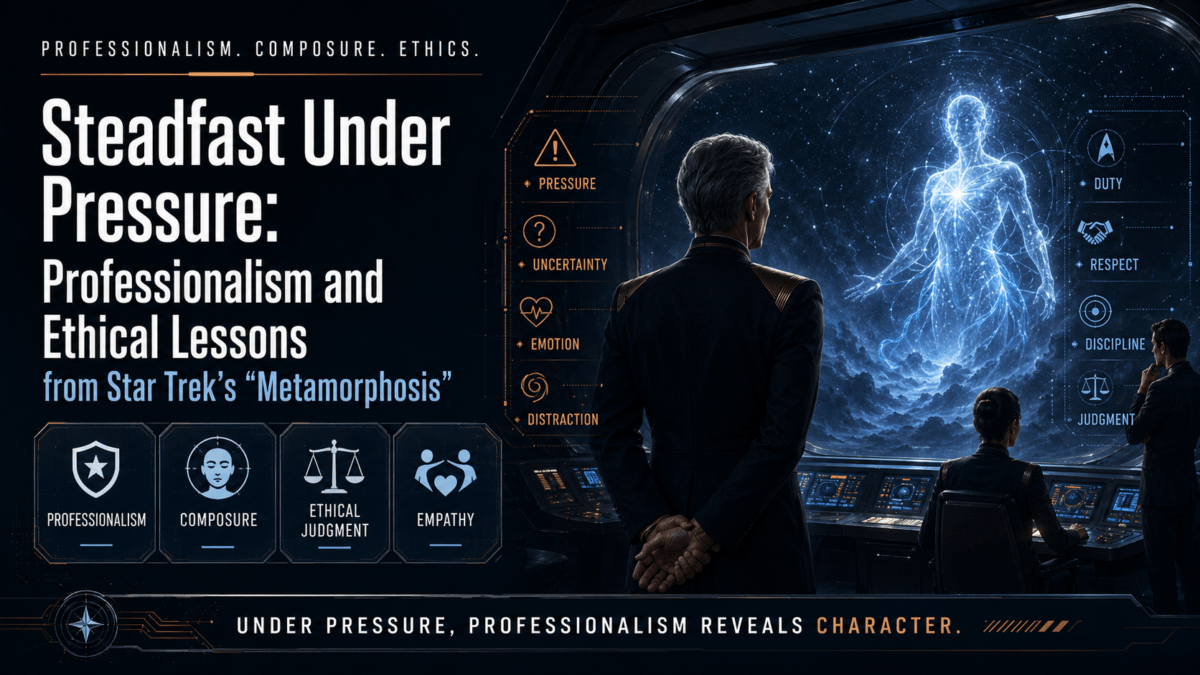
Trekking Through Compliance: Episode 38 – Professionalism in the Unknown: Compliance Leadership Lessons from “Metamorphosis”

In the universe of corporate compliance, pressure is a constant. Whether facing a sudden investigation, navigating a crisis, or mediating high-stakes negotiations, the capacity to remain professional and ethically grounded is what separates a merely good compliance officer from a great one. Few pop culture references embody this principle more vividly than the classic Star Trek: The Original Series episode, “Metamorphosis.” Today, we dive into critical lessons for compliance professionals, each illustrated by a pivotal scene from “Metamorphosis.”

Lesson 1: Maintain Calm Objectivity—Even When You’re Under Fire

Illustrated by: Upon realizing that the Companion has hijacked their shuttle and they’re trapped on the planetoid, tensions run high.

Compliance Lesson: Professionalism in such situations demands composure and objectivity. A compliance officer’s ability to remain unflappable, not just for their own sake but to reassure and stabilize others, is essential for effective problem-solving and ethical decision-making.

Lesson 2: Empathy and Respect Are Critical—Even for Those You Don’t Understand

Illustrated by: The crew quickly learns the Companion is an alien being beyond their understanding, communicating in ways that defy their usual protocols.

Compliance Lesson:

Professionalism requires empathy, respect, and a genuine effort to understand all perspectives, not just those that align with our own.

Lesson 3: Uphold Procedural Fairness—Even When Expediency Tempts You

Illustrated by: Desperate to return Commissioner Hedford to the Enterprise for urgent medical care, Kirk considers using force against the Companion.

Compliance Lesson: Professionalism in compliance means adhering to investigative protocols and ensuring fairness for all parties, even if it slows the process or complicates matters.

Lesson 4: Ethical Decision-Making Requires Teamwork and Diverse Perspectives

Illustrated by: When initial attempts to reason with the Companion fail, Kirk doesn’t go it alone. Solution: merging Hedford’s consciousness with the Companion, thereby saving her life and resolving the impasse.

Compliance Lesson: Compliance professionalism is reinforced by seeking out diverse viewpoints, including legal, operational, cultural, and human.

Lesson 5: Never Lose Sight of Humanity—The “Why” Behind Compliance

Illustrated by: As the Companion merges with Commissioner Hedford, she is given a second chance at life but must remain on the planetoid.

Compliance Lesson: True professionalism and ethical compliance leadership means never losing sight of the human element. The best compliance professionals serve not just the organization but also the individuals whose lives are impacted by their actions.

Final ComplianceLog Reflections

“Metamorphosis” stands as one of Star Trek’s most poignant explorations of transformation, not just of an alien being, but of the attitudes and perspectives of everyone involved. For compliance professionals, it serves as a powerful reminder: professionalism is not merely a matter of following procedures but of embodying our best values under pressure.

Maintaining objectivity, empathy, fairness, teamwork, and humanity, even in the face of the unknown, are the true hallmarks of ethical leadership in compliance. Every investigation, every high-stress moment, is an opportunity to transform not only the situation but also ourselves and our organizations.

Resources:

Excruciatingly Detailed Plot Summary by Eric W. Weisstein

MissionLogPodcast.com

Memory Alpha

Timothy and Fiona are AI-generated voices

Categories
Blog

Steadfast Under Pressure: Professionalism and Ethical Lessons from Star Trek’s “Metamorphosis”

In the universe of corporate compliance, pressure is a constant. Whether facing a sudden investigation, navigating a crisis, or mediating high-stakes negotiations, the capacity to remain professional and ethically grounded is what separates a merely good compliance officer from a great one. Few pop culture references embody this principle more vividly than the classic Star Trek: The Original Series episode, “Metamorphosis.”

Set against the backdrop of a forced landing on a remote asteroid, “Metamorphosis” finds Captain Kirk, Spock, Dr. McCoy, and Commissioner Nancy Hedford stranded by an enigmatic alien entity known as the Companion. Their struggle to survive and mediate a clash of perspectives. It provides a near-perfect parallel to the professional and ethical challenges compliance professionals routinely face during investigations and other stressful situations. Today, we dive into critical lessons for compliance professionals, each illustrated by a pivotal scene from “Metamorphosis.”

Lesson 1: Maintain Calm Objectivity—Even When You’re Under Fire

Illustrated by: Upon realizing that the Companion has hijacked their shuttle and they’re trapped on the planetoid, tensions run high. Commissioner Hedford, suffering from a life-threatening illness and a rapidly fading hope for rescue, becomes increasingly distraught. Yet Kirk and Spock methodically assess their environment and resources, refusing to let panic cloud their decision-making.

Compliance Lesson:

Investigations and crises often produce high-stress, high-stakes environments where anxiety and emotion run rampant. Professionalism in such situations demands composure and objectivity. A compliance officer’s ability to remain unflappable, not just for their own sake but to reassure and stabilize others, is essential for effective problem-solving and ethical decision-making.

Train teams in stress management and crisis communication. Develop checklists and playbooks for investigative response to minimize decision-making under duress—model calm behavior to set the tone for the entire team.

Lesson 2: Empathy and Respect Are Critical—Even for Those You Don’t Understand

Illustrated by: The crew quickly learns the Companion is an alien being beyond their understanding, communicating in ways that defy their usual protocols. Instead of responding with hostility or frustration, Kirk and Spock seek to understand the Companion’s motives, with Spock even attempting a technological “translation” to bridge the communication gap.

Compliance Lesson: During investigations or stressful encounters, it’s easy to become impatient with those who seem uncooperative or “different,” whether they’re interview subjects, whistleblowers, or business partners from unfamiliar cultures. Professionalism requires empathy, respect, and a genuine effort to understand all perspectives, not just those that align with our own.

Integrate empathy training into your compliance curriculum. Remind investigators and managers that cultural, emotional, and even technological barriers are not obstacles to ignore but invitations to connect.

Lesson 3: Uphold Procedural Fairness—Even When Expediency Tempts You

Illustrated by: Desperate to return Commissioner Hedford to the Enterprise for urgent medical care, Kirk considers using force against the Companion. However, both Spock and McCoy caution against a hasty, confrontational approach. The crew ultimately respects due process, attempting diplomacy and dialogue before resorting to more drastic measures.

Compliance Lesson: Under pressure, shortcuts can seem tempting, such as skipping interviews, overlooking evidence, or rushing conclusions for the sake of expediency. However, professionalism in compliance means adhering to investigative protocols and ensuring fairness for all parties, even if it slows the process or complicates matters.

Institute clear, step-by-step protocols for investigations, and hold teams accountable for following them. Empower compliance personnel to speak up when they see due process being sidestepped.

Lesson 4: Ethical Decision-Making Requires Teamwork and Diverse Perspectives

Illustrated by: When initial attempts to reason with the Companion fail, Kirk doesn’t go it alone. He gathers input from Spock, McCoy, and even Commissioner Hedford, blending logic, medicine, diplomacy, and personal perspective. This collective approach yields a creative solution: merging Hedford’s consciousness with the Companion, which saves her life and resolves the impasse.

Compliance Lesson: Complex investigations rarely have easy answers. Ethical professionalism is reinforced by seeking out diverse viewpoints—legal, operational, cultural, and human—ensuring a comprehensive understanding of the issues at hand. The best compliance outcomes emerge from teams that respect each member’s expertise and encourage candid dialogue.

Promote cross-functional collaboration in every investigation. Debrief as a team after each case to capture different perspectives and lessons learned for future improvement.

Lesson 5: Never Lose Sight of Humanity—The “Why” Behind Compliance

Illustrated by: As the Companion merges with Commissioner Hedford, she is given a second chance at life but must remain on the planetoid. Kirk and his crew, despite their desire to return to the Enterprise, recognize the profound importance of personal dignity and happiness in their resolution. They leave Hedford/Companion with Cochrane, honoring the choice made for love and fulfillment.

Compliance Lesson: In the rush to resolve crises or complete investigations, it’s easy to focus on policy, rules, and process at the expense of people. But true professionalism and ethical compliance leadership mean never losing sight of the human element. The best compliance professionals serve not just the organization but also the individuals whose lives are impacted by their actions.

Balance every investigative and crisis response protocol with compassion. Regularly revisit the organization’s values and “why” behind the compliance program. Use stories and real-life examples to remind teams of the human cost and benefit of ethical professionalism.

Final ComplianceLog Reflections

“Metamorphosis” stands as one of Star Trek’s most poignant explorations of transformation, not just of an alien being, but of the attitudes and perspectives of everyone involved. For compliance professionals, it serves as a powerful reminder: professionalism is not merely a matter of following procedures but of embodying our best values under pressure.

Maintaining objectivity, empathy, fairness, teamwork, and humanity, even in the face of the unknown, are the true hallmarks of ethical leadership in compliance. Every investigation, every high-stress moment, is an opportunity to transform not only the situation but also ourselves and our organizations.

As you lead your team through the next compliance challenge, remember the example set by Kirk, Spock, and McCoy. Stay calm. Seek to understand. Uphold fairness. Embrace teamwork. And above all, never forget the people at the heart of every compliance story.

Resources:

Excruciatingly Detailed Plot Summary by Eric W. Weisstein

MissionLogPodcast.com

Memory Alpha