Categories
Compliance Tip of the Day

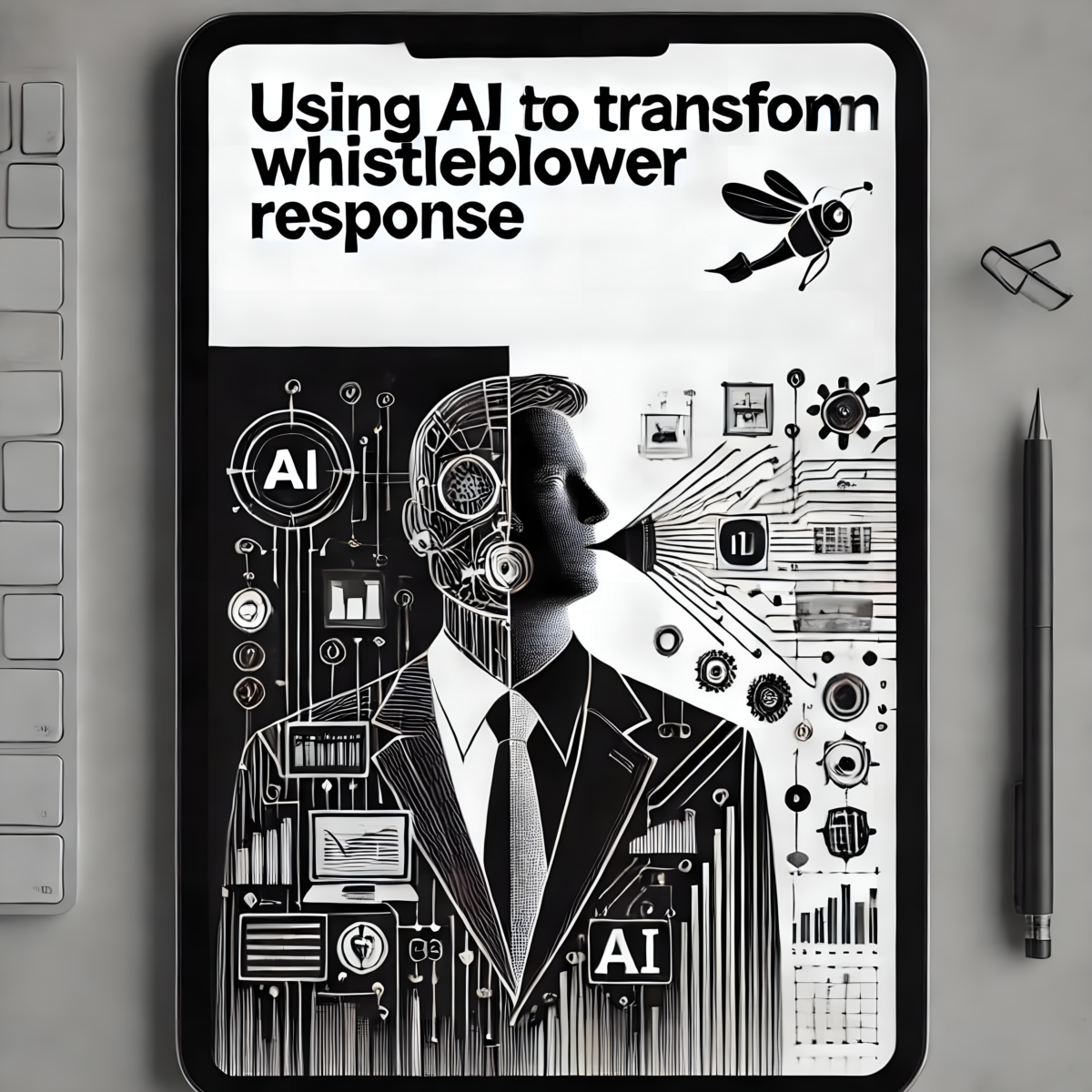
Compliance Tip Of the Day – Using AI to Transform Whistleblower Response

Welcome to “Compliance Tip of the Day,” the podcast where we bring you daily insights and practical advice on navigating the ever-evolving landscape of compliance and regulatory requirements. Whether you’re a seasoned compliance professional or just starting your journey, we aim to provide bite-sized, actionable tips to help you stay on top of your compliance game. Join us as we explore the latest industry trends, share best practices, and demystify complex compliance issues to keep your organization on the right side of the law. Tune in daily for your dose of compliance wisdom, and let’s make compliance a little less daunting, one tip at a time.

Today, we consider how you can use AI to improve your whistleblower response and your culture of speaking up.

For more on embedded compliance, check out my new book, Upping Your Game: How Compliance and Risk Management Move to 2030 and Beyond, available from Amazon.com.

Categories
Blog

Using AI to Transform Whistleblower Response

When it comes to internal reporting programs, the days of the lonely 1-800 hotline are over. Today’s compliance landscape demands real-time action, smarter triage, greater protections for whistleblowers, and trust. Fortunately, we now have the tools to meet that demand. Artificial Intelligence (AI) and predictive analytics transform whistleblower programs from sluggish, reactive systems into powerful, proactive compliance assets.

This shift could not be timelier. Regulators like the DOJ and SEC have clarified that robust, responsive whistleblower programs are not just a “nice to have” but mandatory. Companies that fail to get this right risk regulatory penalties and devastating hits to their reputation and employee trust. AI offers the compliance community a tremendous opportunity to enhance whistleblower protection, build credibility, and drive a true culture of compliance. Today, I want to summarize key lessons compliance professionals can draw from this evolving space.

Lesson 1: AI as a Guardian of Whistleblower Anonymity

Historically, fear of retaliation has been the Achilles’ heel of internal reporting programs. Employees hesitate to come forward when they don’t trust the system to protect them.

AI changes that. Using sophisticated Natural Language Processing (NLP), AI systems can automatically strip away identifiers, names, job titles, and department names from reports while preserving the critical context needed for an investigation. This is not simply a technical improvement. Instead, it should be seen as a trust builder. Compliance officers must lean into these anonymization technologies and communicate their existence to employees. If employees know the system genuinely protects their identities, the likelihood of them speaking up and doing so internally increases dramatically.

The bottom line: anonymity protections powered by AI are no longer optional; they’re essential.

Lesson 2: Real-Time Prioritization Through Machine Learning

Another game-changer AI brings is the ability to sort and prioritize whistleblower reports in real-time. In the old world, investigators had to slog through hundreds or thousands of cases manually, often missing the truly high-risk ones. Machine learning algorithms today can review incoming reports, categorize them by urgency, and identify patterns that would otherwise go unnoticed.

This means faster action on serious allegations and earlier intervention to mitigate legal and reputational risks. Compliance professionals should build KPIs around AI-driven triage: How quickly are high-risk reports escalated? How often are machine-prioritized cases substantiated? What’s the employee satisfaction rate with the process?

AI-powered triage means your whistleblower system can evolve from a passive intake mechanism to a real-time risk management engine.

Lesson 3: Meet Employees Where (and How) They Communicate

Here is a hard truth in compliance: if your speak-up program is still just a hotline, you are losing the next generation of reporters. Vince Walden puts it best: different generations communicate differently. Millennials, Gen Z, and certainly Gen Alpha are far more comfortable with digital chat-based systems than voice calls. In fact, in one major telecom company, the top question employees asked the compliance chatbot was, “Is this a conflict of interest?” Thus, proving how valuable and revealing these interactions can be.

The lesson is clear: You need chatbots, mobile-first platforms, and AI-driven systems that not only receive reports but also interact, guiding users through the reporting process, clarifying ambiguous issues, and capturing better data upfront. Modernizing your intake channels is not just about technology; it’s about inclusivity and building a true culture of compliance that meets employees where they are.

Lesson 4: Expansion of the Grievance Mechanism Use Case

Compliance isn’t just about FCPA violations and insider trading anymore.

New regulatory frameworks like Europe’s Corporate Sustainability Due Diligence Directive (CSDDD) require grievance mechanisms that extend to supply chain employees and local communities affected by a company’s operations. Your AI-enhanced grievance mechanisms must be flexible enough to receive and triage various issues, such as code of conduct violations, human rights complaints, community grievances, and more.

Andrew McBride has noted that AI-driven intake systems can immediately ask follow-up questions when an initial report is unclear, vastly improving the quality of the information collected. That front-end improvement makes triage, investigation, and resolution much more efficient.

Lesson learned: Build a grievance mechanism that isn’t one-size-fits-all. Flexibility is the new mandate.

Lesson 5: AI for Smarter, Scalable Triage

Finally, Matt Galvin has pointed out the richest opportunity: using AI to automate and scale the triage process fully. Imagine a system trained on thousands of past investigations that can predict the most likely next steps for each new report, whether a simple follow-up, a deep-dive investigation, or escalation to senior leadership.

AI models developed from 5,000 annual complaints identified predictable investigative paths at one company, making triage faster, smarter, and far more cost-effective. Of course, Galvin wisely cautioned that you need a robust and affordable solution to make this practical, especially if you’re operating across high-cost jurisdictions. But the payoff is immense: more efficient investigations, lower operating costs, and a stronger, data-driven compliance posture.

Lesson: The future of whistleblower response is not simply about responding; rather, it is about predicting, prioritizing, and preempting risk.

Final Thoughts

The future of whistleblower programs is not about adding more hotlines or printing more posters. It is about embedding AI and predictive analytics into every layer of your reporting system, from intake to triage to resolution. AI helps compliance teams protect anonymity, prioritize real risk, meet employees where they are, expand the use cases for grievance mechanisms, and scale triage operations without scaling costs.

AI doesn’t replace the demands of human judgment compliance—it amplifies them. The compliance officers who understand this shift, embrace these tools, and lead their organizations through the transition will not just improve whistleblower response. They will make compliance a strategic asset that drives transparency, trust, and sustainable growth.

In short, the future of whistleblower programs is here—and it’s intelligent.

The above is from my latest book, Upping Your Game: How Compliance and Risk Management Move to 2030 and Beyond, available from Amazon.com.

Categories
Compliance Tip of the Day

Compliance Tip of the Day – The Future of Continuous Monitoring

Welcome to “Compliance Tip of the Day,” the podcast where we bring you daily insights and practical advice on navigating the ever-evolving landscape of compliance and regulatory requirements. Whether you’re a seasoned compliance professional or just starting your journey, we aim to provide bite-sized, actionable tips to help you stay on top of your compliance game. Join us as we explore the latest industry trends, share best practices, and demystify complex compliance issues to keep your organization on the right side of the law. Tune in daily for your dose of compliance wisdom, and let’s make compliance a little less daunting, one tip at a time.

Today, we consider why continuous monitoring is here to stay and how to use it in your compliance program.

For more on embedded compliance, check out my new book, Upping Your Game: How Compliance and Risk Management Move to 2030 and Beyond, available from Amazon.com.

Categories
Compliance and AI

Compliance and AI: Transforming Compliance Through AI with Marcelo Erthal

What is the role of Artificial Intelligence in compliance? What about Machine Learning? Are you using ChatGPT? These questions are but three of the many we will explore in this cutting-edge podcast series, Compliance and AI, hosted by Tom Fox, the award-winning Voice of Compliance. In this episode, Tom is joined by Marcelo Erthal, CEO of ClickCompliance, to discuss the transformative role of AI in driving compliance.

Marcelo shares his professional background in computer science and the journey that led to the founding of ClickCompliance. He highlights the unique challenges faced by the compliance industry in Brazil and how AI can be leveraged to address these issues effectively. Marcelo delves into the innovative applications of AI by ClickCompliance, including their AI-powered whistleblower channel, and emphasizes the importance of integrating technology with human decision-making to enhance ethical practices and compliance culture within organizations. Tune in to gain insights into the future of compliance and how AI shapes the industry.

Key highlights:

  • AI’s Impact on Compliance in Brazil
  • The AI-Powered Whistleblower Channel
  • The Future of AI in Compliance
  • User Experience and Ethical Considerations

Resources:

Marcelo Erthal on Linkedin

ClickCompliance

Email Marcelo – marcelo.erthal@clickcompliance.com

 Tom Fox

Instagram

Facebook

YouTube

Twitter

LinkedIn

Check out my latest book, Upping Your Game: How Compliance and Risk Management Move to 2030 and Beyond, available from Amazon.com.

Categories
Fox on Podcasting

For on Podcasting – Exploring AI in Podcasting with Robert Riggs

Join Tom Fox as he explores the world of podcasting, and get ready to be inspired to start your podcast. In this episode, Tom welcomes Robert Riggs, a true crime podcaster who uses AI in his entire podcast production process.

Originally from Paris, Texas, Robert Riggs embarked on his professional journey with aspirations in architecture, studying at Texas A&M University. However, his career trajectory took a transformative turn after his experience with a congressional committee, where the exposure to the power and impact of journalism ignited a new passion within him. Encouraged by notable figures such as CBS correspondent Bob Schieffer, Riggs shifted his focus to television journalism, where he spent over 30 successful years uncovering and sharing crucial stories with the public. Despite his initial pursuit of architecture, Riggs’s experiences in politics and media unveiled his true calling in journalism, leading to a distinguished career that combined his creative talents with a commitment to investigative reporting.

Key highlights:

  • Architectural Studies Sparked Journalism Career Success
  • Crime Podcast: Pandemic Sparked Transition to Sensational Stories
  • AI-Powered Creativity: Enhancing Writing and Insights
  • AI Technology’s Impact on Law Enforcement Security

Resources:

Texas Crime Stories on Amazon.com

Freed To Kill (YouTube)

True Crime Reporter Podcast

 Connect with Robert Riggs

True Crime Reporter on Facebook

Robert Riggs on LinkedIn

True Crime Reporter on Instagram

Artwork

Elaine Capers

Art by Elaine

 Tom

Instagram

Facebook

YouTube

Twitter

LinkedIn

Categories
Blog

The Future of Continuous Monitoring: AI-Driven Compliance is Here to Stay

The compliance function has officially crossed the Rubicon. Artificial intelligence is no longer an experimental technology on the compliance periphery; it is at the center of forward-thinking compliance programs. We are witnessing a seismic shift in managing risk, detecting misconduct, and maintaining corporate integrity. AI enables real-time monitoring, uncovering subtle anomalies, and delivering the kind of automated oversight previously confined to PowerPoint dreams. As we enter 2025, the question is not whether your compliance function should adopt AI but how quickly you can make it central to your operations.

This blog post explores how compliance professionals can use AI to power a future-ready, continuously monitored compliance program. Today, we will explore five powerful lessons supported by real-world case examples and framed within current regulatory expectations. As Andrew McBride described, we are entering the “Holy Grail” era of compliance, where due diligence, internal and external data, and communications can be monitored holistically through AI agents trained to detect abnormalities and investigate unethical behavior.

Lesson 1: AI Enhances Risk Detection

AI doesn’t just speed up compliance; it sharpens it. Traditional compliance teams have long struggled to keep up with massive amounts of structured and unstructured data. From financial transactions to email threads, vendor records, and chat logs, there are risk indicators that no human team could feasibly monitor in real-time. Enter AI and machine learning.

With natural language processing (NLP), AI systems can read between the lines. They detect shifts in sentiment, keyword patterns, and coded language that may indicate bribery, fraud, or circumvented controls. Matt Galvan emphasizes this as a game-changer, especially when GenAI tools synthesize background due diligence with transactional anomalies to flag red flags early before misconduct manifests.

Better still, AI eliminates the “needle in a haystack” problem. It builds outliers into profiles, detects slush fund behavior, and creates actionable summaries with supporting documentation. You are not simply faster, and you are smarter. But here’s the kicker: the quality of AI outputs depends on the quality of your inputs—poor data = poor detection. AI must be trained on clean, complete, and bias-aware datasets. And AI should never operate in a vacuum. Human judgment remains essential to interpret findings and assess the business context.

The bottom line is that AI transforms compliance from reactive to proactive. It is no longer about catching up; it is about staying ahead.

Lesson 2: Regulators Expect AI-Driven Compliance

If you need a business case for AI, start with the Department of Justice (DOJ) and its 2024 Evaluation of Corporate Compliance Programs (2024 ECCP). The DOJ has moved beyond encouragement and now expects companies to adopt real-time, AI-powered compliance monitoring. Failing to implement these tools could soon be seen as a failure to meet basic compliance standards.

This isn’t just about the DOJ. The SEC, FinCEN, OCC, Federal Reserve Board, and the Financial Action Task Force (FATF) are pushing toward a future where real-time compliance tools are a baseline requirement, not a nice-to-have. What’s more, regulators are now asking companies to explain their AI. What data powers your algorithms? How are decisions made? Can you justify why one transaction was flagged and another was not? Transparency and audibility are no longer optional; they are regulatory imperatives.

Regulators understand that AI can reduce legal risk and enhance oversight. They expect you to understand it, too.

Lesson 3: AI Identifies Emerging Geopolitical Risks

Welcome to the volatility vortex of 2025. What was a low-risk jurisdiction on Friday can be a sanctioned country by Monday. Supply chains bend and sometimes break under the weight of sanctions, tariffs, and political upheaval.

Traditional compliance programs cannot react fast enough. This is where AI earns its keep. AI flags emerging geopolitical risks before they bite by ingesting thousands of data points from news, regulatory alerts, trade databases, and internal procurement systems. Andrew McBride’s example of a virtual bill of materials is especially prescient: imagine knowing exactly where a conflict mineral is buried in your supply chain and being alerted when a regulatory status changes.

AI makes it possible. Galvan pointed out that the same data sets used to optimize supply chains can be re-leveraged for compliance risk analysis. In other words, compliance teams should not operate with less information than procurement or logistics. If you are waiting for geopolitical risk to reach your front door, sadly, you are already behind. AI enables a proactive posture to protect your business from international surprises.

Lesson 4: Automating Compliance Reduces Costs and Increases Efficiency

Efficiency is often an underappreciated outcome of effective compliance. But let’s be clear: automation isn’t just about doing things faster; it is about doing them better and cheaper. AI automates transaction monitoring, scans for real-time anomalies, and triages cases for deeper review. No more relying on random audits or static checklists. AI helps compliance programs scale, especially for global companies managing thousands of vendors and counterparties.

Consider regulatory reporting: AI can automate data collection and reporting preparation, ensuring timely submissions and reducing the burden on internal teams. These efficiencies translate directly into cost savings while improving quality.

McBride’s point about AI-driven NLP catching potential bribery schemes in real-time is a glimpse into what’s already possible. Emails, Teams messages, and Slack conversations are goldmines of risk insight when monitored responsibly and legally. Just-in-time risk flags make compliance not only real-time but also real-impact.

AI is your accelerator if you want a leaner, faster, and smarter compliance function.

Lesson 5: Early Adoption of AI Is a Competitive and Ethical Advantage

Finally, we come to the business case. Early adopters of AI-driven compliance are already reaping the rewards. Not just in regulatory peace of mind but in market leadership.

AI enables transparency, consistency, and accountability. It allows organizations to demonstrate good governance, not just say they care about it. That builds trust with investors, customers, and regulators alike. It also helps embed a culture of integrity. By quickly catching issues and addressing them, AI empowers ethics to be lived, not laminated on a wall. And companies that bake ethics into their business model outperform over the long term.

The inverse is also true: those who delay AI adoption will soon find themselves scrambling to catch up, facing increased regulatory scrutiny and higher costs. The future of compliance is not five years away. It’s now. Organizations that embrace AI today will be tomorrow’s industry leaders in ethics, governance, and profitability.

AI is not simply a tool; rather, it is transformational. It allows compliance professionals to do more, do it faster, and do it better. But success requires more than just buying technology. It requires thoughtful integration, rigorous oversight, and a strategic mindset. Continuous monitoring is the future, and the future has arrived. Together, let us build compliance programs that are not only compliant but also resilient, efficient, and ethical.

The above is from my latest book, Upping Your Game: How Compliance and Risk Management Move to 2030 and Beyond, available from Amazon.com.

Categories
Compliance Tip of the Day

Compliance Tip of the Day – Leveraging AI for Real-Time Third-Party Risk Management

Welcome to “Compliance Tip of the Day,” the podcast where we bring you daily insights and practical advice on navigating the ever-evolving landscape of compliance and regulatory requirements. Whether you’re a seasoned compliance professional or just starting your journey, we aim to provide bite-sized, actionable tips to help you stay on top of your compliance game. Join us as we explore the latest industry trends, share best practices, and demystify complex compliance issues to keep your organization on the right side of the law. Tune in daily for your dose of compliance wisdom, and let’s make compliance a little less daunting, one tip at a time.

Today, Tom Fox considers the advantages of using AI for third-party risk management.

For more on embedded compliance, check out my new book, Upping Your Game: How Compliance and Risk Management Move to 2030 and Beyond, available from Amazon.com


Categories
Blog

Predictive. Proactive. Protected: Leveraging AI for Real-Time Third-Party Risk Management

Even in 2025, third-party risk management remains one of the thorniest challenges for compliance professionals. Whether you oversee distributors in the Middle East, suppliers in Southeast Asia, or data processors in Eastern Europe, the risks, including bribery, sanctions violations, labor abuses, and fraud, remain ever-present. Traditionally, compliance teams fought these battles using static tools: onboarding questionnaires, annual reviews, and spreadsheet trackers. But those blunt instruments are no longer enough in today’s real-time risk environment.

Enter AI, specifically Generative AI (GenAI), predictive analytics, and blockchain, which is revolutionizing third-party oversight and giving compliance professionals the power to act proactively, not reactively. As Jag Lamba, CEO of Certa, astutely notes, GenAI brings three significant value buckets: reduced risk, commercial ROI, and reduced legal costs. Today, I will unpack what that means for compliance and how we can move from the “check-the-box” era to one of integrated, continuous monitoring and risk mitigation.

Compliance in Real Time: The Shift to Predictive Tools

Historically, the compliance approach to third-party risk was episodic. We conducted due diligence at onboarding, maybe revisited it every few years, and crossed our fingers in between. However, the gaps between assessments were dangerous blind spots, exposing companies to risks that regulators like the DOJ and SFO are increasingly unwilling to tolerate.

That’s where predictive analytics steps in. To forecast potential violations, these systems analyze structured and unstructured data, from financial records to adverse media to geopolitical trends. AI flags early risk indicators, such as an unusual payment pattern or a politically exposed person. That allows compliance to intervene before a deal closes, a bribe is paid, and reputational damage is done.

Machine learning (ML) models also allow dynamic anomaly detection. This is especially useful in sifting through transactional data and flagging high-risk behavior patterns like duplicate invoices, mismatched documentation, or sudden changes in third-party ownership.

Blockchain brings an additional layer of trust. Immutable audit trails secure contracts, payments, and due diligence documentation, ensuring the record is tamper-proof and regulator-ready. Smart contracts can enforce compliance obligations automatically, stopping payments, triggering alerts, or suspending activity when a vendor falls out of bounds.

Three Buckets of Value: What GenAI Delivers

Jag Lamba, CEO of Certa, outlined three distinct areas where GenAI delivers:

  1. Risk Reduction Compliance risk, data privacy risk, ESG risk, reputational risk—the list goes on. AI helps companies avoid working with third parties that introduce these risks into the business ecosystem. This is more than good practice; it is a lifeline for organizations operating under Deferred Prosecution Agreements (DPAs) or with heightened scrutiny from regulators.
  2. Commercial Value Faster onboarding of sales agents, vendors, or channel partners means faster revenue. Reducing a six-week onboarding timeline to two days can translate into hundreds of millions in new revenue, especially in fast-moving sectors.
  3. Legal Savings Avoiding regulatory missteps means avoiding costly enforcement actions. In today’s aggressive enforcement climate, those savings are not simply theoretical; they are very real and very substantial.

Compliance should not be a handbrake on business; it should be a business enabler. By embedding GenAI into core operations, organizations create less friction and fewer dual processes, improving business agility without sacrificing oversight.

Five Takeaways for Compliance Professionals

  • Predictive Compliance Is the New Norm

The days of “wait and see” are over. AI lets us anticipate risk, not just react to it. Predictive tools shift compliance from being an internal auditor to a strategic partner in risk mitigation. Companies like Certa use automated third-party master data enrichment to reduce false positives and streamline screening, creating cleaner data for faster, smarter decisions.

  • AI Supercharges Due Diligence

Natural language processing (NLP) and machine learning enable deep due diligence at scale. To flag red flags, AI can scan global watchlists, sanctions databases, court records, and newsfeeds. It can uncover hidden connections, shell entities, familial relationships, and obscure affiliates that human reviewers often miss.

Even better, AI does not sleep. It continually updates third-party risk profiles in real time, offering dynamic monitoring that aligns with today’s fast-changing regulatory landscape.

  • Real-Time Supply Chain Monitoring Is a Must

Supply chains are now under a microscope. From human rights to trade sanctions, regulators demand evidence that companies are proactively managing supply chain risks. AI tools monitor supplier behaviors and flag real-time ESG risks, such as forced labor or environmental non-compliance.

Blockchain ensures that supply chain data remains unaltered and provides traceability across multiple tiers of suppliers. With AI-integrated blockchain systems, compliance professionals can quickly identify issues, trace them to their source, and take corrective action.

  • AI + Blockchain = Fraud and Corruption Prevention

Fraud detection meant following static rules, like transaction thresholds or vendor location mismatches. AI adds nuance. It can detect bribery patterns or fraudulent shell entities by learning from thousands of real-world cases. Meanwhile, blockchain creates an unchangeable record of each transaction, making it harder for corrupt actors to falsify invoices or backdate payments. This two-pronged approach, predictive analytics plus immutable records, offers a potent defense against FCPA and UKBA violations.

  • Third-Party Risk Must Be Continuous, Not Episodic

Third-party due diligence cannot be a one-and-done exercise. Predictive analytics enables a live risk-scoring environment where third parties are constantly evaluated. AI can even detect patterns that suggest “compliance-sensitive” activity, like vendors interacting with government officials or operating in high-risk jurisdictions, flagging them for further review.

One multinational recently implemented a no-code solution that monitors purchase requisitions for signs of regulatory engagement, triggering automated validation questions. This kind of innovation is only possible when compliance works in tandem with IT, legal, and procurement.

Compliance at a Crossroads: Innovate or Fall Behind

After the Trump Administration’s Executive Order suspending FCPA investigation and enforcement, compliance professionals face a fundamental choice: evolve or be eclipsed. But in 2025, manual reviews and siloed spreadsheets. Business leaders expect real-time monitoring, cross-functional integration, and data-backed decision-making to create greater business value. That means compliance must step into a new leadership role that embraces technology, champions cross-department collaboration, and drives value across the enterprise.

It is time for compliance teams to stop seeing AI as a future concept and start seeing it as a present-day imperative. The organizations that embrace this shift will thrive in the next wave of regulatory scrutiny and be best equipped to meet the moment.

As the saying goes, “The best way to predict the future is to invent it.” For compliance professionals, that future is AI-driven, real-time, and risk-resilient.

This article was based on my new book, Upping Your Game. You can purchase a copy of the book on Amazon.com.


Categories
Compliance Tip of the Day

Compliance Tip of the Day – AI and Predictive Analytics

Welcome to “Compliance Tip of the Day,” the podcast where we bring you daily insights and practical advice on navigating the ever-evolving landscape of compliance and regulatory requirements. Whether you’re a seasoned compliance professional or just starting your journey, we aim to provide bite-sized, actionable tips to help you stay on top of your compliance game. Join us as we explore the latest industry trends, share best practices, and demystify complex compliance issues to keep your organization on the right side of the law. Tune in daily for your dose of compliance wisdom, and let’s make compliance a little less daunting, one tip at a time.

What are the primary advantages and key lessons compliance professionals must internalize to effectively deploy AI for predictive analytics?

For more on embedded compliance, check out my new book, Upping Your Game: How Compliance and Risk Management Move to 2030 and Beyond, available from Amazon.com.

Categories
Daily Compliance News

Daily Compliance News: April 23, 2025, The R-E-S-P-E-C-T Edition

Welcome to the Daily Compliance News. Each day, Tom Fox, the Voice of Compliance, brings you compliance-related stories to start your day. Sit back, enjoy morning coffee, and listen to the Daily Compliance News. All, from the Compliance Podcast Network. Each day, we consider four stories from the business world: compliance, ethics, risk management, leadership, or general interest for the compliance professional. Yesterday, Trump rolled back almost all tariffs he had imposed 48 hours earlier. We look at four stories on that issue from the compliance angle.

Top stories include:

  • Show some respect in meetings. (FT)
  • What is the Administration’s Anti-Trust policy? (WSJ)
  • 3 Adams prosecutors resign rather than lie. (NYT)
  • In UAE, AI writes the laws. (CIO)