Categories
Compliance Into the Weeds

Compliance into the Weeds: Compliance – Who Are We?

The award-winning Compliance into the Weeds is the only weekly podcast that takes a deep dive into a compliance-related topic, literally going into the weeds to explore a subject more fully. Looking for some hard-hitting insights on compliance? Look no further than Compliance into the Weeds! In this Compliance into the Weeds episode, Tom Fox and Matt Kelly discuss a recent conference Matt attended that delved into compliance and the compliance profession in the Age of Trump II.

Their discussion highlighted insights from a recent compliance panel hosted by Suffolk University Law School, featuring experts from large tech companies, a multi-state credit union, and a partner from a private law firm. The consensus among these experts is that despite the change in administration, the fundamental responsibilities and importance of compliance remain largely unchanged for organizations. Compliance is now deeply embedded in business operations, key in managing vendor risk, ensuring data protection, and upholding ethical standards.

Matt emphasizes that compliance capabilities are vital when dealing with other companies, whether they are customers or vendors. The conversation explores the convergence of vendor risk management and ethics & compliance programs and examines how organizations can sustain their integrity and manage emerging risks. Matt and Tom touch on the potential impact of new regulations, the importance of internal stakeholders in the compliance process, and the necessity of maintaining a robust risk management framework in an ever-changing regulatory environment. This episode provides valuable insights for compliance officers navigating the complexities of the modern corporate landscape.


Key highlights:

  • Compliance in the Trump Administration
  • Vendor Risk Management
  • Impact of Tariffs on Compliance
  • Who Are We as a Company?
  • Managing Regulatory Uncertainty

Resources:

Matt in Radical Compliance

Tom

Instagram

Facebook

YouTube

Twitter

LinkedIn

Compliance into the Weeds was recently honored as one of the Top 25 Regulatory Compliance Podcast.

Categories
Blog

AI Game-Changing Compliance: Part 4, AI Can Improve Whistleblower Response

Whistleblower programs have long been a cornerstone of corporate compliance, providing employees and stakeholders with a crucial mechanism to report misconduct, fraud, and ethical violations. However, whistleblower response programs in many organizations remain burdened by slow triage processes, an overwhelming volume of reports, and inconsistent follow-ups. The result? Potentially high-risk cases get lost in the shuffle, and employees lose confidence in the system, sometimes opting to go straight to regulators instead of utilizing internal reporting channels. AI-powered tools allow compliance teams to cut through the noise, identify patterns of misconduct, and proactively address risks before they escalate into regulatory or reputational disasters.

Lessons Learned for Compliance Professionals

Integrating cutting-edge technology with traditional investigative methods has ushered in a new era of efficiency and precision in addressing internal concerns. By harnessing advanced analytics, organizations can speed up case prioritization while maintaining essential human oversight. The following five lessons provide strategic insights into how AI can be optimally deployed to enhance whistleblower response times and streamline investigations.

1. Leveraging AI to Augment Strategic Decision-Making Capabilities

When discussing AI in whistleblower response and investigations, it’s imperative to understand that these advanced tools are a force multiplier for human expertise. AI systems can rapidly sift through vast volumes of data and flag anomalies and surface patterns that might otherwise go unnoticed. However, as any seasoned compliance professional will attest, context is king. While highly valuable, AI-generated alerts must be interpreted within the nuances of organizational culture, legal frameworks, and human behavior. This is where human judgment becomes indispensable.

Consider a scenario in which an AI system identifies a cluster of complaints that could suggest systemic misconduct. The tool might rank these cases by urgency, yet the final decision on how to proceed rests on experienced eyes that can assess subtle cues and contextual factors. This hybrid approach ensures that the investigative process is both swift and accurate. Human oversight can identify when an AI might be overzealous or missing context-specific insights, thus better calibrating the technology to suit the organization’s compliance needs.

2. Expedited, Transparent, and Data-Driven Whistleblower Response Frameworks

Various laws and regulatory requirements mandate that organizations react swiftly to whistleblower reports. With AI-driven systems, compliance teams can dramatically reduce the lag between submitting a report and initiating an investigation. Traditional manual processes might delay the evaluation, leading to enhanced regulatory scrutiny, fines, or significant reputational harm. AI-powered platforms can immediately triage the report, cross-reference it with existing data, and prioritize cases based on risk and historical patterns. This level of responsiveness not only meets the high expectations of regulators but also reinforces internal trust in the organization’s commitment to ethical conduct.

Transparency is another key facet. AI systems can log every step of the investigative process, creating an audit trail that is accessible for internal reviews and regulatory inspections alike. Such transparency is invaluable, demonstrating that the organization is serious about addressing compliance concerns in real-time. When employees see that their reports are acted upon swiftly and openly, it cultivates an environment of trust and accountability.

3. Leveraging Diverse Data Sets  

One of the most critical lessons for compliance professionals leveraging AI in whistleblower investigations is the need for diversity in the data used to train these systems. AI is only as unbiased as the information it learns from. When processing sensitive whistleblower reports, any embedded bias can lead to unfair prioritization, potentially skewing investigations and undermining trust in the system.

Your AI tool should be continuously refined with diverse datasets representing various employee backgrounds, complaint types, and contextual factors. This practice ensures that the algorithms can handle the varied nature of whistleblower reports without favoring or penalizing any group or type of complaint. Compliance professionals should work closely with data scientists to conduct regular audits of AI outputs, ensuring the system’s decisions remain equitable and legally sound.

4. Fortifying Employee Confidence Within the Whistleblower Ecosystem

Building a robust and responsive whistleblower system is not about the technology. Rather, it is about fostering trust among employees. AI-driven systems can significantly enhance transparency and timeliness, but without employee buy-in, even the most sophisticated platform will fall short. When employees trust their concerns will be addressed promptly and fairly, they’re more likely to report issues internally rather than taking their concerns to external regulators, which can be more damaging to the organization’s reputation and finances.

AI’s role in this equation is pivotal. By automating the initial stages of case triage and providing real-time updates on the status of investigations, AI ensures that whistleblower reports are not lost in bureaucratic limbo. This immediacy reinforces the message that the organization is committed to addressing issues as they arise. The transparency AI systems offer—through comprehensive audit trails and clear reporting metrics—provides employees with tangible evidence that their voices are heard.

5. Elevating Stakeholder Confidence 

While the initial investment in AI-driven whistleblower systems may seem steep, the long-term benefits, especially cost savings, are substantial. One of the key lessons for compliance professionals is that the deployment of AI is not merely a technological upgrade; it is a strategic decision that can transform the financial landscape of compliance operations. AI streamlines the investigative process by reducing the time to sift through and prioritize whistleblower reports, cutting down on labor-intensive tasks that often drive up costs.

By automating routine processes, organizations can reallocate human resources to more complex issues that require nuanced judgment. This speeds up the response time and minimizes the risk of costly errors or oversights that could lead to regulatory fines and legal liabilities. The efficiency gains from AI-driven investigations often translate into fewer disruptions and lower operational costs. For example, when a potential compliance issue is flagged and resolved promptly, the organization avoids the cascading expenses associated with prolonged investigations, legal battles, and reputational damage.

In addition, the transparency and accuracy provided by AI systems can serve as a form of risk mitigation. Detailed audit trails and systematic data analysis ensure that every step of the investigative process is documented, providing a solid defense in the event of regulatory scrutiny. This comprehensive documentation can be a lifesaver during audits, saving time and legal fees. Ultimately, while the upfront costs of AI implementation should be weighed, the return on investment is clear: faster, more efficient investigations lead to lower compliance costs, a stronger legal standing, and a healthier corporate reputation. In today’s high-stakes regulatory environment, AI is not just a tool—it’s a long-term financial strategy that benefits the organization’s bottom line and integrity.

The Future is Here: How AI Enhances Whistleblower Response and Investigations

In “Artificial Intelligence and Whistleblowing: Can A.I. be Useful for Whistleblowing Processes?” Kalliopi Zouvia detailed the evolving relationship between whistleblower protection and artificial intelligence. She reviews the emerging role of AI in strengthening mechanisms for detecting, reporting, and investigating unethical practices, making it a vital read for corporate compliance professionals seeking to harness technology in upholding ethical standards.

She reviews key milestones, including Council of Europe recommendations and, more recently, the EU’s Whistleblower Directive (Directive 2019/1937), which sets a standardized baseline for protecting individuals across the EU. For corporate compliance officers, understanding these regulatory benchmarks is essential for designing internal policies that comply with legal mandates and foster a culture of transparency and accountability. Central to the discussion is the three-tier reporting model outlined by the Directive, which offers multiple channels for whistleblowers to report concerns—internally, externally, to competent authorities, or, ultimately, publicly via the media. Confidentiality and, where possible, anonymity remain crucial elements, ensuring that the identity of the reporting individual is safeguarded against unnecessary disclosure. While providing flexibility, this model also imposes significant operational challenges on organizations tasked with responding swiftly and effectively to such reports.

A major focus of the article is the potential of artificial intelligence to enhance each stage of the whistleblowing process. AI-driven reporting systems, such as chatbots, are highlighted as powerful tools that can guide individuals through the reporting process, reducing the likelihood of incomplete submissions and providing simple instructions about reporting requirements. Real-time translation services powered by AI can break down language barriers, broadening access to reporting channels across diverse cultural and ethnic groups, a critical factor for multinational corporations committed to global ethical standards.

Beyond the initial report submission, AI shows promise in streamlining the vetting and investigative processes. Automated data extraction and advanced analytics can sift through vast amounts of information to isolate relevant details, significantly reducing the manual burden on compliance teams. This technology speeds up the preliminary review of allegations and helps identify patterns or red flags that may show deeper systemic issues. Such efficiencies are valuable considering increasing report volumes, as evidenced by European and American whistleblowing statistics trends.

AI-driven whistleblower response programs are no longer futuristic concepts but essential tools for modern compliance teams. By integrating AI into whistleblower programs, companies can prioritize high-risk cases, accelerate investigations, enhance transparency, and protect whistleblowers from retaliation. As regulatory bodies continue emphasizing whistleblower protections, organizations that fail to modernize their response programs risk falling behind in compliance maturity and exposing themselves to legal and reputational risks.

The call to action for compliance professionals is clear: Embrace AI-driven whistleblower programs now or risk facing regulatory scrutiny later. The technology is available, the benefits are measurable, and the time to act is now.

Categories
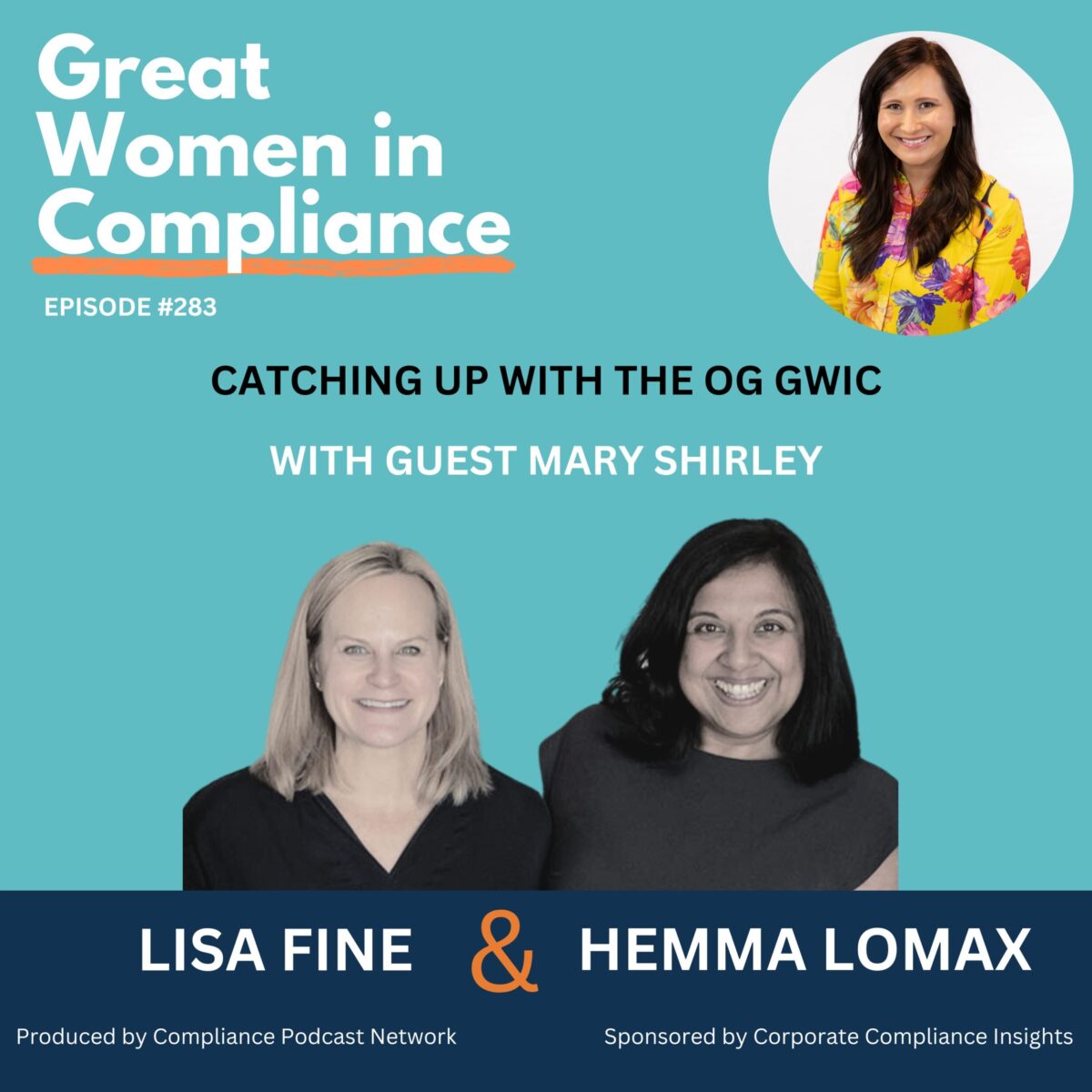
Great Women in Compliance

Great Women in Compliance – Insight from a Great Gentleman in Compliance with Andrew McBride

In today’s episode, Lisa speaks with a Great Gentleman in Compliance, Andrew McBride, the CEO and founder of Integrity Bridge.

Andrew shares his journey in compliance, from private practice to becoming Chief Compliance Officer at Albemarle to starting Integrity Bridge.

At Albemarle, Andrew built a new ethics and compliance program against the backdrop of an FCPA investigation. The work of Andrew and his team and their cooperation with the US Department of Justice led to a 45% penalty reduction decrease. The program was also awarded Compliance Week’s “Program of the Year” award.

He highlights the importance of having a multifunctional approach to building compliance programs, working closely with various departments such as sales, procurement, and finance. He also emphasizes how ethics and compliance teams are best positioned to succeed if they have different backgrounds and skill sets.

Andrew shares his experience building Integrity Bridge, a consultancy focused on helping companies design and implement holistic compliance programs to proactively use technology and address constantly evolving risks.

Categories
Blog

AI Game-Changing Compliance: Part 3 – Decentralized Compliance with Blockchain Technology

Last week, I looked at five things a Chief Compliance Officer (CCO) or compliance professional could do at little or no cost to ‘Up Their (Compliance) Game.’ I want to continue this theme this week but want to tackle it differently. I will look at five innovations for compliance professionals around Artificial Intelligence (AI). AI has moved from an emerging trend to a fundamental component of modern corporate compliance programs. Today, I want to examine how blockchain can be a game-changer for compliance.

Today, organizations leverage blockchain to enhance transparency, ensure data integrity, and strengthen regulatory adherence. While compliance professionals have historically relied on centralized data repositories and traditional audit methods, blockchain offers a decentralized, tamper-proof alternative that reshapes compliance monitoring. This innovation is crucial in industries where data security, fraud prevention, and ethical sourcing are non-negotiable.

Regulators are increasingly scrutinizing how businesses manage their compliance data, with expectations rising for real-time reporting, immutable record keeping, and enhanced due diligence. Blockchain provides a solution by creating an unalterable digital ledger, enabling compliance teams to verify transactions, track supply chains, and show adherence to environmental, social, and governance (ESG) standards with unprecedented accuracy. Below, we explore how companies across industries utilize blockchain for decentralized compliance, lessons learned for compliance professionals, and important points for corporate leadership.

How Blockchain Enhances Compliance

One of blockchain’s most compelling benefits is its ability to create immutable audit trails. This immutability makes blockchain so revolutionary for compliance. It is not a technological novelty; it has profound implications for all manner of financial reporting, regulatory compliance, and corporate governance. Corporate leaders and compliance professionals must recognize that the traditional data management methods and audit trails are no longer sufficient in an era where every error, manipulation, or fraudulent activity can have dramatic financial and reputational consequences.

The immutable nature of blockchain means that every transaction or piece of data recorded on the chain is permanently etched into the ledger. Unlike traditional databases, which can be subject to human error or deliberate tampering, blockchain uses cryptographic principles to ensure that records remain unchanged once verified. This creates an audit trail that is transparent and verifiable in real-time. For compliance officers, this is a game changer. It fundamentally changes from periodic, retrospective audits to continuous, real-time oversight—a fundamental transformation in how businesses manage risk and adhere to regulatory standards.

The implications are enormous for industries subject to stringent compliance requirements, such as finance, healthcare, and manufacturing. Regulations like the Sarbanes-Oxley Act (SOX), the General Data Protection Regulation (GDPR), and various anti-money laundering (AML) directives demand precise, accurate record-keeping and transparent reporting. Blockchain tamper-proof ledger directly addresses these demands. By integrating blockchain into their compliance frameworks, companies can automatically enforce rules and ensure that all required records are accurate, complete, and accessible to auditors and regulators. This level of reliability reduces the risk of non-compliance and streamlines the entire audit process, saving time and reducing costs.

The decentralization inherent in blockchain technology provides additional layers of security and transparency. A central database may be vulnerable to cyber-attacks or internal manipulation in traditional systems. Blockchain distributes data across a network of nodes. Each node holds a copy of the ledger, meaning tampering with one record would require altering the entire network—a near-impossible feat with current technology. This distributed nature reinforces trust among stakeholders, ensuring that every participant—from internal auditors to external regulatory bodies—can rely on the integrity of the data. For compliance professionals, this translates to a robust, reliable system that minimizes human error and operational risk.

Another significant advantage of blockchain is its capacity to support continuous compliance monitoring. Instead of waiting for end-of-quarter reviews or annual audits, companies can now access real-time data. Regulators, for example, could be granted access to a live, immutable ledger that provides instantaneous insights into financial transactions, supply chain movements, or any other regulated activity. This proactive approach means potential issues can be identified and addressed before they escalate into full-blown compliance breaches. The result is a more agile, responsive compliance system that can adapt to changes in the regulatory landscape almost as soon as they occur.

Blockchain also facilitates automated compliance through smart contracts and self-executing digital agreements where the contract terms are written into code. These contracts can be programmed to enforce compliance rules automatically. For example, a smart contract might automatically trigger a compliance review if a transaction exceeds a predetermined threshold, or it could enforce that certain conditions are met before a transaction is finalized. This automation reduces the administrative burden on compliance teams and ensures that rules are applied consistently without the variability introduced by manual processes. For corporate leaders, this means fewer errors, faster processing times, and a more secure regulatory environment.

The Future is Now in AI-Blockchain as a Compliance Imperative

A prime example of blockchain’s efficacy in this arena is illustrated by the World Bank’s Blockchain-Based Financial Transparency Initiative. This initiative leverages blockchain to fortify transparency in government contracts and aid disbursements. Utilizing blockchain’s inherent qualities, the World Bank can ensure that funds are allocated and tracked in real-time, significantly reducing the risk of mismanagement. Every disbursement, every contractual change, and every transaction is logged on the blockchain, creating a tamper-proof audit trail that meets stringent anti-corruption and financial accountability standards. For organizations engaged in high-stakes financial operations, mainly those subject to intense regulatory scrutiny, such an initiative serves as both a preventive measure against corruption and a robust tool for regulatory compliance.

Using blockchain in anti-corruption strategies extends far beyond the realm of government aid. In regions where corruption is endemic, companies can employ blockchain to monitor financial flows and contractual obligations with unprecedented precision. The technology is a powerful deterrent against illicit behavior because it leaves no room for the discreet manipulation of records. The decentralized ledger enhances internal controls and fosters a culture of transparency that is difficult to subvert. With blockchain, every stakeholder—from auditors and compliance officers to regulators and investors—can access a clear, real-time snapshot of all transactions. This visibility is crucial for building trust and ensuring that every participant in the financial ecosystem adheres to ethical and legal standards.

For compliance teams, blockchain’s real-time monitoring capability is a game changer. Instead of relying on periodic audits that may only uncover discrepancies after the fact, organizations can continuously track financial activities as they occur. This proactive monitoring helps identify suspicious activities almost instantly, enabling swift remedial action before potential violations escalate. By automating routine compliance processes through smart contracts, blockchain minimizes human intervention, reducing the risks associated with manual errors or intentional tampering.

In summary, blockchain’s ability to improve anti-corruption and fraud prevention significantly advances corporate compliance. Its decentralized nature ensures that every transaction is transparent, verifiable, and resistant to tampering—a feature especially valuable in high-risk environments. The World Bank’s initiative is a compelling example of how blockchain can be harnessed to enforce rigorous financial transparency and accountability standards. For companies worldwide, embracing blockchain technology is not merely an option but an essential step toward fostering a secure, compliant, and ethical operational framework in an increasingly complex regulatory environment.

The benefits of blockchain also extend to fostering greater trust between companies and their regulators. By providing a transparent, real-time audit trail, blockchain diminishes the adversarial nature of regulatory inspections. Instead of a scenario where regulators must rely on a company’s internal reports, they have direct access to an independent, tamper-proof ledger. This shared transparency builds confidence in the integrity of the data and encourages a more collaborative relationship between businesses and regulatory authorities. In today’s highly scrutinized regulatory environment, such trust is invaluable.

Blockchain technology is revolutionizing corporate compliance by providing a secure, immutable record-keeping system that directly addresses many of the challenges associated with traditional audit and reporting practices. Its decentralized, tamper-proof ledger ensures data integrity and supports continuous, real-time monitoring and automated compliance through smart contracts. These capabilities help reduce fraud, human error, and the overall cost of compliance while enhancing transparency and trust among stakeholders.

The message for compliance professionals and corporate leaders is clear: embracing blockchain is no longer optional but a strategic imperative. As regulatory frameworks become more demanding and the risks associated with non-compliance increase, blockchain offers a powerful tool to meet and exceed these challenges. It empowers organizations to move away from outdated manual processes and toward a more efficient, proactive compliance model. In doing so, companies safeguard their operations and build a foundation of trust and reliability that can drive long-term success in an increasingly complex regulatory landscape.

Categories
FCPA Compliance Report

FCPA Compliance Report – The Role of Internal Audit in Export Controls

Welcome to the award-winning FCPA Compliance Report, the longest-running compliance podcast. In this episode, Tom welcomes Jonathan Marks, who discusses the role of internal audit in export control compliance.

Jonathan starts by defining export controls and their significance: regulations governing the export, re-export, and transfer of goods, technology, and services across borders to protect national security and enforce foreign policy. As a Compliance Profession, you should recognize the severe impacts of operational disruptions, supply chain issues, and national security risks resulting from non-compliance, emphasizing the need for comprehensive compliance frameworks. Internal audit responsibilities are expanded, stressing the necessity of robust policies, clear responsibilities, consistent employee training, and thorough risk assessments.

Jonathan discusses practical internal audit strategies, including evaluating high-risk transactions, identifying compliance gaps, and regularly monitoring and testing compliance controls through transaction testing, data analytics, third-party due diligence, and incident response mechanisms. Jonathan underscores the importance of collaboration between internal audit, legal, compliance, and supply chain teams to ensure an integrated and proactive compliance approach, thereby mitigating risks and strengthening corporate governance.

Key highlights:

  • Understanding Export Controls and Compliance
  • Role of Internal Audit in Export Controls
  • Key Areas for Internal Audit Focus
  • Testing and Monitoring Controls

Resources:

Jonathan Marks on LinkedIn

Tom Fox

Instagram

Facebook

YouTube

Twitter

LinkedIn

For more information on the Ethico Toolkit for Middle Managers, available at no charge, click here.

Categories
Compliance Tip of the Day

Compliance Tip of the Day – A Roadmap for Compliance

Welcome to “Compliance Tip of the Day,” the podcast where we bring you daily insights and practical advice on navigating the ever-evolving landscape of compliance and regulatory requirements. Whether you’re a seasoned compliance professional or just starting your journey, we aim to provide bite-sized, actionable tips to help you stay on top of your compliance game. Join us as we explore the latest industry trends, share best practices, and demystify complex compliance issues to keep your organization on the right side of the law. Tune in daily for your dose of compliance wisdom, and let’s make compliance a little less daunting, one tip at a time.

Today, we discuss creating a roadmap for improving your compliance program.

For more information on the Ethico Toolkit for Middle Managers, available at no charge, click here.

Categories
Creativity and Compliance

Creativity and Compliance – Upping Your Compliance Game

Where does creativity fit into compliance? In more places than you think. Problem-solving, accountability, communication, and connection—they all take creativity. Join Tom Fox and Ronnie Feldman on Creativity and Compliance, part of the award-winning Compliance Podcast Network.

Ronnie’s company, Learnings and Entertainment, utilizes the entertainment devices people use to consume information in their everyday, non-work lives and apply it to important topics around compliance and ethics. It is not only about being funny. It is about changing the tone of your compliance communications and messaging to make your compliance program, policies, and resources more accessible. In this episode of Creativity and Compliance, Tom Fox and Ronnie Feldman take up the challenge handed down by Hui Chen in light of the administration’s suspension of FCPA enforcement to up their compliance game.

Ronnie begins by advocating for a transformation in compliance training, suggesting a shift from traditional e-learning methods to engaging communication campaigns emphasizing a Speak Up Culture and seamlessly integrating compliance into daily business operations. He believes that by using short, entertaining formats and training leaders to present content playfully, compliance can become more interesting and effective, positioning compliance professionals as valuable assets through proactive engagement and collaboration. Tom underscores the importance of compliance professionals being approachable and communicative, serving as problem solvers who collaborate with business units to achieve unexpected, beneficial outcomes. Both experts agree that by humanizing the compliance function and focusing on values and behaviors, compliance professionals can enhance their programs and contribute significantly to organizational success.

Key highlights:

  • Engaging Communication Campaigns for Compliance Training
  • Strategic Communication for Compliance Professionals
  • Cultivating Proactive Compliance Culture through Training Programs
  • Strategic Engagement for Compliance Professionals

Resources:

Ronnie

  • Learnings & Entertainments (Website)
  • Compliance Confessions – inspired by “Mean Tweets” these 90-second commercials address misconceptions and excuses to promote speak up culture and the E&C team as positive and helpful.
  • E&C Training Jams – a soulful singer banters with ethics & compliance explaining policies, sharing examples and debunking excuses. 
  • Tales from the Hotline – Real speak up-themed stories about workplace behavior gone wrong.
  • Workplace Tonight Show! – E&C meets SNL Weekend Update explaining corporate risk topics and why employees should care.
  • 60-Second Communication & Awareness Shorts – A variety of short, customizable, music and multimedia, quick-hitter “commercials” promoting integrity, compliance, speaking up and the E&C team as helpful advisors and coaches.
  • Custom Live & Digital Programing – Custom creative programming that balances the seriousness of the subject matter with a more engaging delivery. After all, you can’t bore people into learning.

Tom

Instagram

Facebook

YouTube

Twitter

LinkedIn

For more information on the Ethico ROI Calculator and a free White Paper on the ROI of Compliance, click here.

Creativity and Compliance was recently honored as one of the Top 35 Podcasts on Creativity by Feedspot.

Categories
Blog

Upping Your Compliance Game, Part 4 – Compliance and Building Corporate Resiliency

The Trump Administration has suspended FCPA enforcement for the foreseeable future. What does that mean for compliance professionals? Hui Chen has suggested that this is an opportunity for compliance, but to do so, “It’s time to up your game . . . Instead of selling insurance for FCPA enforcement, become leaders that help your organizations perform.” Based on this challenge by perhaps the most imminent compliance commentator, I am devoting this week’s blog posts to ways compliance professionals can indeed up their collective game. Today, we explore how effective compliance can help lead to greater business resiliency.

Resilience must be a core feature of every corporate compliance program. The reason is simple: compliance programs will inevitably face crises in today’s volatile and uncertain world. It could be from the Trump Administration’s suspension of Foreign Corrupt Practices Act (FCPA) enforcement, a natural disaster disrupting operations, the discovery of human rights abuses within the supply chain, activist shareholders pushing for corporate change, or new competitors leveraging technology to upend an industry. Recent history has shown us that global pandemics and social justice movements can also emerge to reshape the business landscape overnight.

In their article “6 Types of Resilience Companies Need Today,” Paul Polman and Andrew Winston explore how multinational corporations like Unilever have built resilience through both traditional and innovative strategies. Their insights offer valuable lessons for Chief Compliance Officers (CCOs) and compliance professionals seeking to fortify their organizations against future challenges.

Traditional Foundations of Corporate Resiliency

Polman and Winston highlight three traditional building blocks of corporate resiliency: financial flexibility, portfolio diversity, and organizational agility. These elements are critical in preparing companies for sudden shocks and long-term crises.

For compliance professionals, this means ensuring that the business remains functional during disruptions by embedding compliance within these foundational areas:

  • Financial Flexibility: Compliance contributes to financial stability by preventing costly legal issues, regulatory fines, and reputational damage. Strong compliance programs also help organizations maintain favorable relationships with investors, regulators, and business partners.
  • Portfolio Diversity: Just as businesses diversify revenue streams, compliance must diversify its approach to third-party risk management. This includes thoroughly vetting sales agents, distributors, and supply chain vendors to mitigate exposure to compliance failures.
  • Organizational Agility: Compliance agility allows teams to respond rapidly to emerging risks. By fostering real-time feedback from regional offices, compliance professionals can identify potential problems before they escalate into crises.

A resilient compliance function helps businesses survive crises but positions them to recover more effectively.

The Net-Positive Approach to Resilience

The authors emphasize that true corporate resilience goes beyond surviving crises. It involves creating a long-term, crisis-resistant organization that benefits all stakeholders. They advocate for a “net-positive” company model that seeks to improve the well-being of everyone it touches through its operations, value chain, products, services, and influence. This concept aligns closely with the goals of corporate compliance programs.

Purpose-Driven Compliance

Companies that understand their purpose and integrate it into their operations are more resilient in times of crisis. Purpose-driven organizations don’t see compliance as a regulatory obligation but as a strategic advantage. Compliance professionals reinforce this purpose by embedding ethical business practices into corporate strategy.

The Business Roundtable’s Statement on the Purpose of a Corporation emphasizes stakeholder engagement beyond shareholders. Compliance can advance this vision by aligning business operations with ethical principles, incorporating feedback from employees, customers, and suppliers, and reinforcing a corporate culture of integrity.

Aligning compliance controls with the COSO 2013 Framework for Internal Controls helps build a strong ethical foundation, ensuring compliance is woven into the company’s operational backbone rather than treated as an afterthought.

Trust: The Cornerstone of Compliance

Trust is an absolute necessity for any compliance program. Internally, trust is built through institutional fairness, due process, and a commitment to ethical leadership. However, compliance must also extend trust-building beyond the organization, fostering transparent relationships with external stakeholders.

Modern compliance programs must embrace a level of transparency that many organizations have historically resisted. This includes proactively disclosing compliance efforts, engaging in open dialogue with regulators, and embracing external scrutiny. Polman and Winston note, “Transparency is a great tool to ensure consistency and engender trust. Rather than rebelling against tough questions and pressure, business leaders should embrace and use them to build a stronger organization.”

By fostering a culture of transparency and accountability, compliance teams can help their organizations navigate crises with credibility and resilience.

Engaging All Stakeholders in Compliance

Compliance is traditionally seen as a back-office function, primarily engaging with internal departments and regulators. However, leading companies are increasingly expanding compliance’s role to include broader stakeholder engagement.

Polman and Winston argue that “net-positive companies build better connections with stakeholders besides employees.” Compliance functions can drive this by engaging customers, investors, supply chain partners, and local communities. This shift aligns with compliance’s growing role in third-party risk management and due diligence processes.

For example, companies that conduct rigorous due diligence on supply chain partners mitigate risk and foster stronger, trust-based relationships with ethical suppliers. Compliance’s role in these engagements ensures that ethical business practices extend beyond corporate walls, creating a network of partners who support the company’s long-term resilience.

The Compliance Function as a Driver of Resilience

When major crises strike, whether compliance-related or otherwise, organizations with resilient compliance programs can respond swiftly and effectively. Polman and Winston conclude, “No company can prepare for every outcome, but these six forms of resilience, put together, can provide a serious buffer. They also allow organizations to work in larger coalitions on the biggest issues, such as climate change and income inequality.”

Compliance functions are uniquely positioned to help businesses anticipate and prevent crises rather than merely reacting. By integrating compliance into the core fabric of corporate resilience strategies, organizations can:

  1. Prevent crises through proactive compliance risk management
  2. Build a strong ethical culture that fosters long-term stability
  3. Enhance stakeholder trust and engagement
  4. Ensure business continuity in the face of regulatory changes
  5. Support innovation by creating ethical frameworks for emerging technologies

These strategies are not just compliance best practices but essential components of building a company that thrives in times of change and uncertainty.

The best compliance programs do more than mitigate risk; they build corporate resilience. By aligning compliance with financial stability, organizational agility, and a broader net-positive vision, companies can prepare for the challenges of an unpredictable world.

Compliance professionals should seize the opportunity to lead this transformation, ensuring that their organizations endure crises and emerge stronger from them. In doing so, compliance becomes a function of risk avoidance and a strategic driver of long-term business success.

Categories
Blog

Upping Your Compliance Game, Part 3 – Engaging Leadership

We continue exploring what the Trump Administration’s suspension of FCPA enforcement means for the compliance professional. Hui Chen has suggested that this is an opportunity for compliance, but to do so, “It’s time to up your game . . . Instead of selling insurance for FCPA enforcement, become leaders that help your organizations perform.” Based upon this prompting from her, I am writing this week on issues that compliance professionals can use to ‘up their [compliance] game so that when the questions come from your senior executives or Board of Directors come down about your compliance program, you will be able to point to clear business advantages to doing business ethically and in compliance.

Today, we consider how a chief compliance officer (CCO) or compliance professional can personally up their leadership game and move their compliance program to a more collaborative and integrated business function. The shift is driven by changes in corporate power dynamics, new values that prioritize transparency and collaboration, and an increasing emphasis on engagement with business units. In their Harvard Business Review article, Understanding “New Power,” Jeremy Heimans and Henry Timms explore how leadership models change. I have adapted their insights for Chief Compliance Officers (CCOs) and compliance practitioners who seek to enhance their function’s role within an organization.

The Shift from Old Power to New Power

Heimans and Timms describe the transition from “old power” to “new power” as a shift in the models used to exercise power and the values organizations embrace. Traditional compliance programs often operated under old power models, centralized, top-down structures that relied on authority and rigid governance. In contrast, new power models emphasize distributed, collaborative, and participatory leadership.

  1. Sharing and Shaping. In this new era under Trump, companies increasingly engage stakeholders, including employees and supply chain partners, in shaping compliance strategies. This shift recognizes that compliance is not just about adherence to regulations but about embedding ethical considerations into everyday decision-making. Companies that actively solicit input from their workforce and external partners create stronger, more effective compliance cultures.
  2. Organizations are using creative financial structures to embed compliance into business operations rather than treating it as a standalone cost center. Instead of viewing compliance as an overhead expense, forward-thinking businesses integrate compliance into investment decisions, allocate resources for proactive risk management, and leverage compliance to drive operational efficiencies and innovation.
  3. Employees and third-party stakeholders actively contribute to compliance initiatives rather than passively following directives. This participatory approach ensures that compliance is not merely a function of the legal or risk department but is embraced across the organization. Companies encourage employees to report issues, contribute to compliance improvements, and take ownership of ethical behavior.
  4. Co-Ownership. Compliance is decentralized, empowering employees at all levels to take ownership of ethical behavior. When employees and third parties feel personally responsible for compliance, adherence to ethical standards becomes more organic. Businesses that create opportunities for co-ownership in compliance initiatives through peer-led training, employee-driven reporting mechanisms, and cross-functional ethics committees build a more resilient ethical culture.

This shift makes compliance less about enforcing rules and more about embedding ethical business practices into the corporate culture. Organizations that embrace new power structures are better positioned to handle complex regulatory environments, foster innovation, and build trust among employees, customers, and stakeholders.

New Compliance Values: A Guide for Leadership

Beyond structural changes, Heimans and Timms identify new values that organizations must embrace to remain effective. These values directly apply to compliance professionals, who must ensure compliance is embedded within the organization’s broader culture and governance structures.

  • Decision-making is becoming more informal and network-driven, requiring compliance professionals to work across functions. Instead of a strict top-down enforcement model, modern compliance programs emphasize collaboration across departments, ensuring compliance is seamlessly integrated into everyday business activities.
  • Compliance programs must reward those who share best practices and improve existing compliance structures. Organizations that foster a collaborative compliance culture encourage employees to speak up about risks, participate in ethics initiatives, and help improve compliance processes.
  • Do It Ourselves (DIO). Employees expect to participate in ethical decision-making rather than be dictated to by top leadership. Empowering employees to take initiative in compliance—whether through peer-led training, ethics committees, or compliance ambassadors—creates a more engaged workforce and a stronger culture of accountability.
  • Organizations must foster open communication about compliance issues, internally and externally. A transparent compliance program builds trust with employees, investors, and customers. Companies that proactively disclose compliance efforts, encourage whistleblowing, and provide clear guidelines for ethical decision-making strengthen their credibility and resilience.
  • Younger employees are less likely to maintain long-term relationships with institutions, making an agile and adaptive compliance function essential. Compliance teams must develop dynamic and engaging strategies to connect with employees, including leveraging technology, social media, and innovative training programs to maintain engagement and adherence to ethical standards.

To succeed in this environment, compliance leaders must embrace these principles and adapt their approach accordingly. Compliance functions prioritized engagement, empowerment, and innovation will be better equipped to navigate the complexities of modern business environments.

Three Steps for Engaging Compliance Leadership

To fully integrate compliance into business strategy, CCOs and compliance practitioners should consider three key actions:

1. Assess Your Role in a Changing Power Environment

A compliance risk assessment has traditionally focused on external threats, but today’s CCOs must also assess their function internally. Where does your compliance program stand on the power spectrum, and where do you want it to be in five years?

  • Conduct an internal assessment to evaluate how compliance is perceived across departments.
  • Benchmark against industry leaders and best practices to identify areas for growth.
  • Engage in strategic conversations with executives and employees to understand their compliance expectations and challenges.
  • Develop a vision for the future of compliance in the organization, ensuring alignment with business objectives.

Organizations can proactively identify gaps and opportunities to enhance their compliance function by assessing compliance through a broader lens.

2. Incorporate Business Unit Interests (The UX)

To be effective, compliance should not operate in a silo or, as Carsten Tams continually reminds us, “It’s all about the UX.” Business units should have a voice in shaping compliance policies. This means:

  • Conduct honest conversations with employees and leadership about compliance’s impact on business operations.
  • Soliciting feedback from business units before imposing compliance requirements.
  • Recognizing compliance as a business enabler, not just a risk mitigation function.
  • Encouraging cross-departmental collaboration on compliance initiatives.

As Heimans and Timms note, introspection and engagement must precede any investment in compliance initiatives. Organizations that fail to engage business units in compliance discussions risk resistance, non-compliance, and inefficiencies.

3. Mobilize Compliance Capacity Across the Organization

Compliance leaders must proactively engage third parties and business ventures, such as joint ventures and supply chain partners, to extend compliance influence beyond internal teams.

  • Establish compliance training programs tailored to third-party vendors and supply chain partners.
  • Implement robust third-party due diligence processes to ensure compliance throughout the supply chain.
  • Develop reporting mechanisms that allow external partners to flag compliance concerns.
  • Build alliances with industry groups and regulators to stay ahead of evolving compliance trends.

For example, compliance expert Mary Jones, former Director of Compliance at Global Industries Ltd., emphasized the importance of training third parties. She traveled to supplier locations to conduct in-person compliance training, fostering stronger relationships and enhancing compliance effectiveness. This proactive approach strengthened Global Industries’ compliance function and positioned their suppliers as allies in the compliance journey.

A successful compliance function does more than enforce rules; it builds a network of ethical partners who actively support compliance objectives.

Categories
Adventures in Compliance

Adventures in Compliance – Institutional Justice and Institutional Fairness Lessons from The Adventure of the Veiled Lodger

In this new season of Adventures in Compliance, host Tom Fox takes a deep dive into Arthur Conan Doyle’s Sherlock Holmes collection, The Case-Book of Sherlock Holmes. It is the final set of twelve Sherlock Holmes short stories, first published in the Strand Magazine between October 1921 and April 1927. In this episode, we consider the story The Adventure of the Veiled Lodger.

Tom emphasizes the importance of fairness and transparency in compliance investigations, accountability without retaliation, encouraging whistleblowers, and addressing systemic failures. The episode also highlights how ethics and compliance must be ingrained in corporate culture, reflecting principles from the Department of Justice’s 2020 and 2024 updates to the Evaluation of Corporate Compliance Programs. Through Holmes’ empathetic approach, compliance professionals can learn the importance of contextual investigations and the pursuit of institutional justice. Tom invites Sherlock Holmes enthusiasts to engage in discussions about the stories and underscores the role of compliance in fostering a fair and ethical workplace.

Highlights include:

  • The Story of the Veiled Lodger
  • Lessons on Institutional Justice and Fairness
  • Lessons for CCOs

Resources:

The New Annotated Sherlock Holmes

Sherlock Holmes FAQ by Dave Thompson

For more information on the Ethico Toolkit for Middle Managers, available at no charge, click here.

 Connect with Tom Fox

Instagram

Facebook

YouTube

Twitter

LinkedIn