Categories
Adventures in Compliance

Adventures in Compliance: The Sign of Four – Holmes Revealed: Communication and Training Insights

In this new season of Adventures in Compliance, we take a deep dive into the Sherlock Holmes novels. Today, we conclude our four-part exploration of the novel The Sign of Four with a deep dive into communication and training lessons for the compliance professional. Timothy and Fiona dissect Holmes’ meticulous methods of deduction, uncovering essential strategies for clear, effective, and engaging communication. Key topics include forensic clarity, varied reinforcement, tailored messaging, the importance of transparency, setting clear expectations, interactive training techniques, and crisis communication preparedness. Learn how these principles can enhance your professional interactions and build a more resilient, informed culture within your organization.

Highlights include:

  • Exploring Sherlock Holmes’ Communication Lessons
  • Forensic Clarity in Communication
  • The Power of Repetition and Reinforcement
  • Tailoring Messages for Different Audiences
  • Building Trust Through Transparency
  • Setting Clear Expectations

Resources:

The New Annotated Sherlock Holmes

Sherlock Holmes FAQ by Dave Thompson

Connect with Tom Fox

Instagram

Facebook

YouTube

Twitter

LinkedIn

Categories
Creativity and Compliance

Creativity and Compliance – Overcoming Conservatism in Compliance Education with Creativity

Where does creativity fit into compliance? In more places than you think. Problem-solving, accountability, communication, and connection – they all take creativity. Join Tom Fox and Ronnie Feldman on Creativity and Compliance, part of the award-winning Compliance Podcast Network.

Ronnie’s company, Learnings and Entertainment, utilizes the entertainment devices people use to consume information in their everyday, non-work lives and applies it to important topics around compliance and ethics. It is not only about being funny. It is about changing the tone of your compliance communications and messaging to make your compliance program, policies, and resources more accessible.

In this episode of Creativity and Compliance, Tom Fox and Ronnie Feldman tackle the challenge of integrating creative, engaging methods into compliance training within conservative institutions. Drawing examples from financial giants, they discuss how these organizations have successfully implemented entertaining and effective training strategies. Addressing common concerns such as risk aversion, cost, and effectiveness, the hosts advocate for shorter, more frequent, and varied training formats. They highlight that creativity in compliance training not only captures attention but also enhances engagement and memory retention. The episode concludes with a call to action for compliance professionals to consider what they have to lose by trying new approaches.

Key highlights:

  • Overcoming Conservatism in Creative Compliance
  • Addressing Risk-Averse Concerns
  • Short, Fun, and Frequent Training
  • Variety in Compliance Training
  • User Experience and Engagement

Resources: 

Ronnie

  • Compliance Confessionsinspired by “Mean Tweets,” these 90-second commercials address misconceptions and excuses to promote speak-up culture and the E&C team as positive and helpful.
  • E&C Training Jams – a soulful singer banters about ethics & compliance, explaining policies, sharing examples, and debunking excuses. 
  • Tales from the Hotline – Real speak-up-themed stories about workplace behavior gone wrong.
  • Workplace Tonight Show! E&C meets SNL Weekend Update to explain corporate risk topics and why employees should care.
  • 60-Second Communication & Awareness Shorts – A variety of short, customizable, music and multimedia, quick-hitter “commercials” promoting integrity, compliance, speaking up, and the E&C team as helpful advisors and coaches.
  • Custom Live & Digital Programing – Custom creative programming that balances the seriousness of the subject matter with a more engaging delivery. After all, you can’t bore people into learning.

 Tom

Instagram

Facebook

YouTube

Twitter

LinkedIn

Creativity and Compliance was recently honored as one of the Top 35 Podcasts on Creativity by Feedspot.

Categories
Compliance Tip of the Day

Compliance Tip of the Day – Measuring Compliance Training Effectiveness

Welcome to “Compliance Tip of the Day,” the podcast where we bring you daily insights and practical advice on navigating the ever-evolving landscape of compliance and regulatory requirements. Whether you’re a seasoned compliance professional or just starting your journey, we aim to provide bite-sized, actionable tips to help you stay on top of your compliance game. Join us as we explore the latest industry trends, share best practices, and demystify complex compliance issues to keep your organization on the right side of the law. Tune in daily for your dose of compliance wisdom, and let’s make compliance a little less daunting, one tip at a time.

How do we meet the DOJ mandate for effective training?

For more on this topic, check out The Compliance Handbook, a Guide to Operationalizing Your Compliance Program, 6th Edition, which LexisNexis recently released. It is available here.

Categories
Compliance Tip of the Day

Compliance Tip of the Day – Compliance Training Frequency

Welcome to “Compliance Tip of the Day,” the podcast where we bring you daily insights and practical advice on navigating the ever-evolving landscape of compliance and regulatory requirements. Whether you’re a seasoned compliance professional or just starting your journey, we aim to provide bite-sized, actionable tips to help you stay on top of your compliance game. Join us as we explore the latest industry trends, share best practices, and demystify complex compliance issues to keep your organization on the right side of the law. Tune in daily for your dose of compliance wisdom, and let’s make compliance a little less daunting, one tip at a time.

Does compliance training always have to be conducted annually?

For more on this topic, check out The Compliance Handbook, a Guide to Operationalizing Your Compliance Program, 6th Edition, which LexisNexis recently released. It is available here.

Categories
Compliance Tip of the Day

Compliance Tip of the Day – Design Objectives for Compliance Training

Welcome to “Compliance Tip of the Day,” the podcast where we bring you daily insights and practical advice on navigating the ever-evolving landscape of compliance and regulatory requirements. Whether you’re a seasoned compliance professional or just starting your journey, we aim to provide bite-sized, actionable tips to help you stay on top of your compliance game. Join us as we explore the latest industry trends, share best practices, and demystify complex compliance issues to keep your organization on the right side of the law. Tune in daily for your dose of compliance wisdom, and let’s make compliance a little less daunting, one tip at a time.

What are the design objectives for your compliance training program?

For more on this topic, check out The Compliance Handbook, a Guide to Operationalizing Your Compliance Program, 6th Edition, which was recently released by LexisNexis and is available here.

Categories
Innovation in Compliance

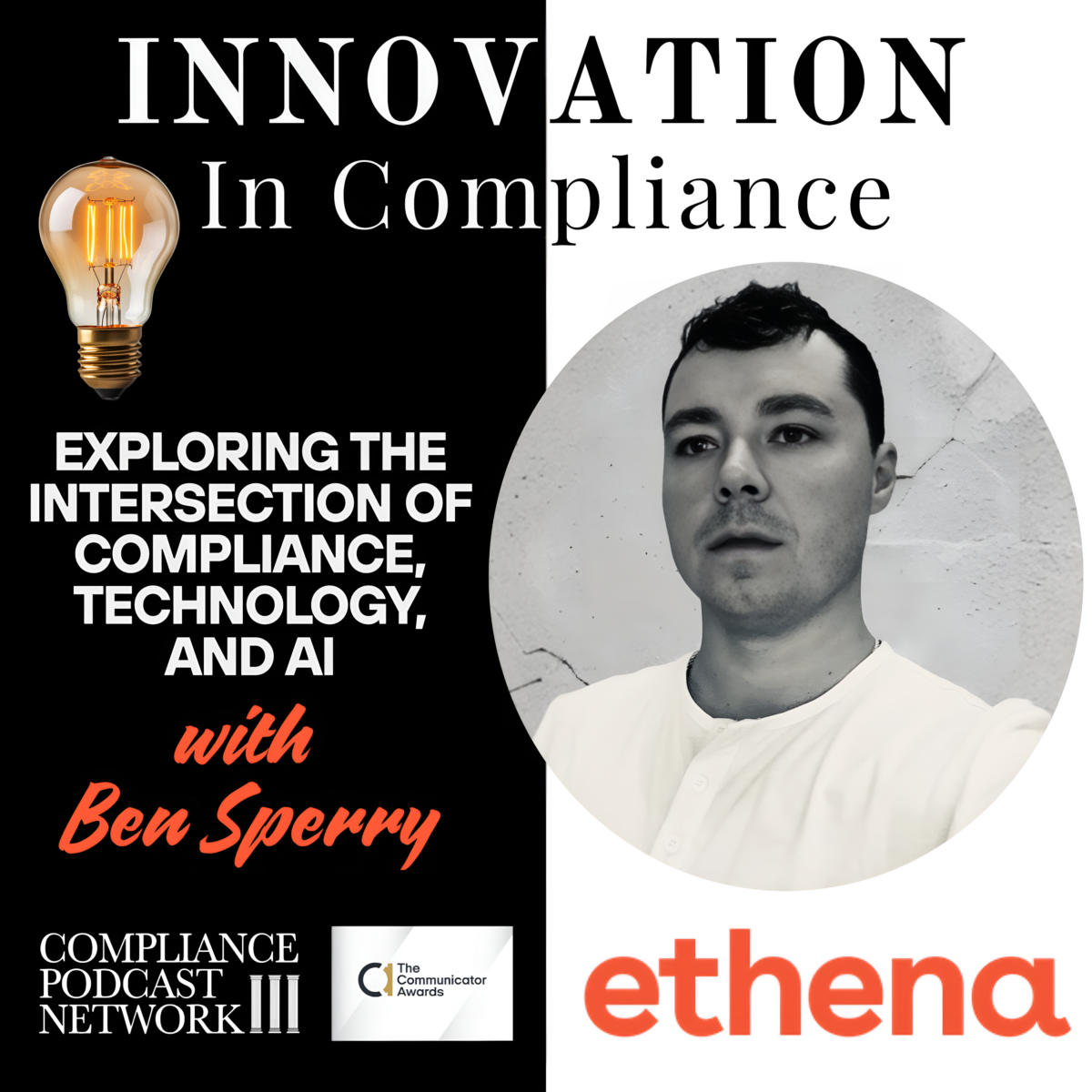
Innovation in Compliance: Exploring the Intersection of Compliance, Technology, and AI with Ben Sperry

Innovation comes in many areas, and compliance professionals need to be ready for it and embrace it. Join Tom Fox, the Voice of Compliance, as he visits with top innovative minds, thinkers, and creators in the award-winning Innovation in Compliance podcast. This series is introduced by Tom Fox and hosted by Roxeanne Petraeus. Ethena sponsors this special five-part series on Innovation in Compliance.

In this episode, Roxanne Petraeus explores the intersection of compliance, technology, and AI with Ben Sperry, Deputy Chief Compliance Officer at Bestow. Sperry is a tech-driven life insurance provider that shares its journey from political science and legislative analysis to its current compliance role. The discussion delves into Bestow’s innovative approach to making life insurance accessible through technology and the challenges and strategies of implementing effective compliance training programs. Sperry highlights the importance of employee engagement and specific training tailored to different roles and departments. He also discusses the increasing significance of AI in the compliance landscape, both in terms of governance and practical application, and shares insights on using AI to enhance training effectiveness. The episode discusses the value of close vendor support and technical integration to streamline compliance processes.

Key highlights:

  • Bestow’s Unique Approach to Life Insurance
  • Challenges and Strategies in Compliance Training
  • Leveraging AI in Compliance
  • Future Trends and Final Thoughts

Resources:

Ben Sperry on LinkedIn

Bestow on LinkedIn

Bestow Website

Ethena Website

Roxanne Petraeus on LinkedIn

Ethena on LinkedIn

 Tom Fox

Instagram

Facebook

YouTube

Twitter

LinkedIn

Categories
Innovation in Compliance

Innovation in Compliance: Training Synergy: Insights from Compliance and HR Integration with Lori Stahl

Innovation comes in many areas, and compliance professionals must be ready for and embrace it. Join Tom Fox, the Voice of Compliance, as he visits with top innovative minds, thinkers, and creators in the award-winning Innovation in Compliance podcast. This series is introduced by Tom Fox and hosted by Roxanne Petraeus.  The sponsor of this special five-part series on Innovation in Compliance is Ethena.

In this episode, Roxanne Petraeus visits with Lori Stahl, Chief People Officer at Synaptics Incorporated. Stahl discusses the intersection of HR and compliance training and covers the importance of a seamless, non-siloed approach to training; the challenges of staying current with compliance laws; and the benefits of using an external platform like Ethena for consistency and ease. Stahl also highlights the value of tailored, role-specific training and real-time microlearning to enhance employee engagement and effectiveness. The conversation concludes with a discussion on future innovations, including the potential of AI and adaptive learning in compliance training.

Key highlights:

  • HR and Compliance Training Overlaps
  • Challenges of Siloed Training
  • Effective Compliance Strategy
  • Choosing Athena for Compliance Training
  • The Importance of Customer Success
  • Future of Compliance Training

Resources:

Lori Stahl on LinkedIn

Synaptics Incorporated on LinkedIn

Synaptics Incorporated Website

Ethena Website

Roxanne Petraeus on LinkedIn

Ethena on LinkedIn

Tom Fox

Instagram

Facebook

YouTube

Twitter

LinkedIn

Categories
Innovation in Compliance

Innovation in Compliance: Design-Centric Compliance Training with Karen Oddo

Innovation comes in many areas, and compliance professionals must be ready for and embrace it. Join Tom Fox, the Voice of Compliance, as he visits with top innovative minds, thinkers, and creators in the award-winning Innovation in Compliance podcast. This series is introduced by Tom Fox and hosted by Roxanne Petraeus. Ethena sponsors this special five-part series on Innovation in Compliance.

In this episode, Roxanne Petraeus welcomes Karen Oddo, Senior Managing Counsel and Legal Compliance at Unity Technologies. Karen shares insights on Unity’s software platform, which is predominantly known for video game development, and its expansive global footprint. The discussion dives into best practices for compliance training, emphasizing the importance of user experience and personalized content to engage employees effectively. Karen highlights the significance of targeted risk-based training and the benefits of leveraging advanced analytics to improve compliance programs. With anecdotes from her experience and her value in working with Ethena’s customizable and responsive platform, Karen offers practical advice for compliance leaders looking to enhance their training efforts.

Key highlights:

  • Compliance Training Best Practices
  • The Importance of User Experience in Compliance Training
  • Customizing Compliance Training with Ethena
  • Leveraging Analytics for Targeted Training
  • The Value of Strong Vendor Support

Resources:

Karen Oddo on LinkedIn

Unity Technologies on LinkedIn

Unity Technologies 

Ethena 

Roxanne Petraeus on LinkedIn

Ethena on LinkedIn

Tom Fox

Instagram

Facebook

YouTube

Twitter

LinkedIn

Categories
Compliance Tip of the Day

Compliance Tip of the Day – AI and The Future of Compliance Education

Welcome to “Compliance Tip of the Day,” the podcast where we bring you daily insights and practical advice on navigating the ever-evolving landscape of compliance and regulatory requirements. Whether you’re a seasoned compliance professional or just starting your journey, we aim to provide bite-sized, actionable tips to help you stay on top of your compliance game. Join us as we explore the latest industry trends, share best practices, and demystify complex compliance issues to keep your organization on the right side of the law. Tune in daily for your dose of compliance wisdom, and let’s make compliance a little less daunting, one tip at a time.

Today, we look at how AI can deliver the right compliance knowledge at the right time, when employees need it, to prevent violations before they occur.

For more information on the Ethico Toolkit for Middle Managers, available at no charge, click here.

Categories
Blog

AI Game-Changing Compliance: Part 5, The Future of Compliance Education

Compliance training has traditionally been a one-size-fits-all, check-the-box exercise; from a yearly seminar and a PowerPoint presentation to an e-learning module employees rush through to meet requirements, it is dead. In 2025, compliance training is undergoing a radical transformation. Organizations are embedding compliance learning into daily workflows, leveraging microlearning, gamification, and AI-driven personalized training to make ethics and regulatory education more engaging, relevant, and effective.

The future of compliance training is no longer about forcing employees to sit through lengthy, irrelevant courses. Instead, it is about delivering the right compliance knowledge at the right time, when employees need it, to prevent violations before they occur. In Part 5 of our series on how AI is changing the game in compliance, we look at how companies use AI-powered embedded compliance training and gamification to revolutionize learning, improve retention, and strengthen corporate ethics.

Lessons for Compliance Professionals

1. Traditional Training is Outdated—AI and Gamification Are the Future  

As compliance professionals, we must acknowledge that yesterday’s models are ill-equipped to meet the challenges of a fast-evolving regulatory environment. Employees expect engaging, interactive, and immediately relevant training in their roles. AI-powered platforms offer a transformative solution by tailoring content to individual learning patterns and real-time challenges. Instead of passively absorbing information, employees can now take part in scenario-based simulations and interactive modules that mimic real-life compliance dilemmas.

This level of immersion reinforces critical policies and procedures and builds muscle memory for ethical decision-making under pressure. Integrating gamification into the learning process adds an element of friendly competition and reward, encouraging consistent engagement and deeper retention of complex regulatory frameworks. Advanced analytics further allows compliance teams to monitor engagement levels and adjust content on the fly, ensuring that every training session is as effective as it is innovative. Organizations can create a proactive culture of compliance by abandoning outdated methods in favor of AI-driven, gamified learning experiences.

2. One-Size-Fits Doesn’t Work—Customization is Key  

In the diverse landscape of modern organizations, a generic approach to compliance training will not suffice. Employees across various departments and job functions encounter unique compliance risks that demand tailored learning experiences. AI-driven personalized training platforms address this challenge head-on by analyzing individual roles, past performance, and learning styles to deliver customized content that hits home. Rather than sifting through lengthy, irrelevant training sessions, employees receive targeted lessons that directly relate to the specific scenarios they face on the job. This customization not only boosts engagement by reducing training fatigue but also empowers employees to understand better and manage the distinct regulatory risks associated with their functions.

A personalized approach creates a more efficient learning environment where employees can progress at their own pace, reinforcing best practices that directly apply to their daily tasks. Customized training ensures that resources are allocated wisely, strengthening areas of high risk and providing additional support where needed. As compliance professionals, embracing a tailored training approach means we can more effectively safeguard our organizations against potential violations and foster an environment where continuous improvement in regulatory adherence is the norm.

3. Real-Time Compliance Training Is Proactive  

Proactive, real-time compliance training is emerging as the most effective way to mitigate risk before it escalates into a full-blown problem. With advancements in AI, compliance platforms can now provide instant, context-sensitive alerts to employees as they encounter decision points in their daily work. Imagine an employee receiving an immediate prompt that clarifies a regulatory nuance or warns against a potential conflict of interest while processing a transaction. This just-in-time training approach not only reinforces the correct behaviors but also minimizes the window of exposure to non-compliant practices.

The predictive capabilities of AI enable these systems to learn from past incidents, fine-tuning alerts to ensure that they are both timely and relevant. This preemptive measure is far more effective than post-violation training, which often comes too late to prevent reputational and financial damage. Real-time guidance helps create an environment where compliance becomes integral to every decision, embedding ethical considerations into the workflow. For compliance professionals, this means having the tools to continuously monitor and support employees, reducing the incidence of violations, and fostering a culture of accountability. By shifting our focus to preventive measures, we can create a safer, more responsive workplace prioritizing ethical conduct over-reactive corrections.

4. Gamification and Microlearning Increase Knowledge Retention  

The traditional classroom-style approach to compliance training, characterized by lengthy sessions and dense material, often falls short in capturing and keeping employee attention. In contrast, gamification and microlearning techniques offer an engaging alternative that transforms the learning process into an interactive experience. By breaking down complex compliance concepts into bite-sized, digestible modules, microlearning allows employees to absorb information at a manageable pace without feeling overwhelmed. When these modules incorporate gamified elements—such as point systems, leaderboards, and interactive challenges—learning becomes a dynamic process that stimulates healthy competition and reinforces knowledge through repetition.

This method makes the training more enjoyable and significantly boosts retention rates, as employees are more likely to remember lessons that are presented in a fun and engaging format. Gamification creates a narrative around compliance, turning what was once seen as a chore into a stimulating journey of discovery and mastery. Frequent, short bursts of training to ensure that the material stays fresh in employees’ minds, helping them recall essential information when needed. For compliance professionals, these innovative training methods provide a dual benefit: they ensure that the workforce is well-versed in compliance matters and foster a proactive attitude towards ongoing learning. The result is a culture where compliance is not just a set of rules to follow but a series of continuous learning opportunities that build a foundation of ethical behavior and risk awareness. Embracing gamification and microlearning ultimately leads to more effective training outcomes, a more engaged workforce, and a lower likelihood of compliance breaches.

5. What AI Brings to Training Effectiveness  

Integrating AI and advanced data analytics into compliance training programs is a game changer. Modern compliance platforms now harness the power of artificial intelligence to meticulously track employee progress, pinpoint knowledge gaps, and even predict potential high-risk areas before they materialize into violations. This technology enables compliance professionals to move beyond a reactive stance and adopt a proactive strategy, where training is continuously refined based on real-time performance data.

If analytics reveal that certain departments consistently struggle with understanding new regulatory changes, targeted remedial training can be deployed immediately. The insights gained from AI analytics allow compliance teams to measure the effectiveness of their training initiatives with unprecedented precision, enabling continuous improvement. The feedback loop created by these insights is invaluable. It informs the development of new training modules, ensures content remains relevant to emerging risks, and supports a culture of accountability and excellence. For the corporate compliance audience, this means a significant leap forward in mitigating risks, reducing the incidence of costly breaches, and ultimately protecting the organization’s reputation.

The Future is Now: Gamification and Compliance Training 

Imagine an employee stepping into a fully interactive digital world where ethical challenges, ranging from workplace harassment to safety violations and fraud, are simulated with remarkable accuracy. In this setting, every decision the employee makes is tracked by AI, which adapts the simulation to reflect the potential consequences of their choices. This dynamic feedback loop creates a compelling training scenario where the risks of non-compliance are not merely explained in a classroom but are experienced firsthand. As a result, employees gain practical insights into the ramifications of unethical behavior without ever facing real-world penalties, thereby reducing the likelihood of future violations.

Walmart’s VR Ethics and Compliance Training program is a prime example of this innovative training method. Walmart has harnessed the power of VR to create training modules that place employees in various challenging scenarios, such as encountering workplace harassment or facing safety violations. In these simulated environments, employees must make split-second ethical decisions, mirroring the pressure and uncertainty of real-life situations. The immersive nature of VR means that participants are not passive recipients of information but active problem solvers who must engage critically with the content. This method has proven remarkably effective, as evidenced by Walmart’s reported 30% decrease in policy violations following implementing their VR-based training program.

For compliance professionals, the implications of such technology are profound. First, it represents a shift from traditional, lecture-based training to an interactive, experiential learning model that drives engagement and retention. Employees are more likely to remember and apply what they learn when they have “lived” the experience instead of merely reading about it. The adaptability of AI ensures that training content can be continuously updated and customized to reflect the latest regulatory changes and emerging risks. This agility is crucial in today’s fast-paced regulatory environment, where compliance standards strengthen rapidly, and companies must be prepared to adapt.

AI-driven simulations provide valuable data analytics that allow compliance teams to measure training effectiveness with unprecedented precision. Organizations can identify knowledge gaps by analyzing how employees interact with simulated scenarios and adjust their training strategies accordingly. This enhances the overall effectiveness of compliance programs and reinforces a proactive approach to risk management.

Integrating AI-powered compliance simulations and VR technology significantly evolves compliance training. It offers a realistic, engaging, and data-informed approach to preparing employees for ethical decision-making, ultimately reducing policy violations and fostering a culture of proactive compliance. As the corporate world continues to navigate an increasingly complex regulatory landscape, embracing these innovative training methods is essential for any organization committed to maintaining the highest standards of integrity and accountability.

Conclusion

The future of compliance training is undeniably interactive, embedded, and powered by AI. By harnessing the potential of AI-driven personalization, gamification, real-time guidance, micro-learning, and immersive simulations, organizations can elevate compliance education from a mundane obligation to a dynamic, engaging experience. This transformation makes training more enjoyable and aligns it with today’s fast-paced, risk-aware corporate landscape. Such innovative methods ensure that learning is directly tied to real-world challenges, fostering a culture of continuous improvement and ethical decision-making that resonates with every employee.

For compliance professionals, the message is unmistakable. Embracing AI and gamification in compliance training is no longer optional but essential. Organizations that modernize their compliance education strategies can significantly mitigate policy violations, boost employee engagement, and reduce the likelihood of regulatory scrutiny. By investing in cutting-edge training methodologies, companies build a resilient framework that supports ethical conduct and proactive risk management. In doing so, they safeguard their operations against potential breaches and reinforce their reputation as forward-thinking leaders in a complex regulatory environment.