Categories
Blog

The Bre-X Mining Scandal: Part 5 – A Guide for the 2024 Compliance Professional (Part 1)

As we close out this series on the Bre-X mining scandal, the lessons from this notorious case continue to resonate, especially for today’s compliance professionals. The fraud that led to the downfall of Bre-X and the ensuing financial catastrophe for countless investors serves as a stark reminder of the pivotal role compliance plays in maintaining the integrity of any business. This two-part conclusion will explore the critical takeaways for compliance professionals in 2024. In Part 1, I focus on due diligence, transparency, corporate governance, conflict of interest, and regulatory compliance.

The Importance of Rigorous Due Diligence

If Bre-X taught us anything, it is the value of relentless due diligence. In today’s fast-paced business environment, where misinformation can spread like wildfire and trust is fragile, compliance professionals must maintain an unwavering commitment to fact-checking and independent verification.

Verification of Claims. Compliance officers are the gatekeepers of corporate integrity. The Bre-X scandal is a textbook case of what happens when claims are accepted at face value without proper scrutiny. In 2024, ensuring that all claims—whether they pertain to financial projections, resource estimates, or technological capabilities—are rigorously verified by qualified third parties is more crucial than ever. This due diligence must extend beyond simple paper trails; it requires thorough, boots-on-the-ground verification.

Third-Party Validation. One of the core failures in the Bre-X case was the reliance on internal data, which went unchecked. Today’s compliance landscape demands an external layer of assurance. Relying solely on the company’s self-reported information can be perilous. Independent third-party audits, validation, and assessments are no longer optional; they prevent corporate fraud. External experts often see red flags insiders miss due to oversight or willful blindness.

Transparency and Accurate Reporting

Transparency is the lifeblood of compliance, and the Bre-X scandal illustrates what happens when companies stray from this fundamental principle. The fine line between optimism and misleading information can be blurry, but compliance officers must ensure this line is never crossed.

Clear and Honest Disclosure. Today’s compliance professionals must act as the arbiter of clear and accurate corporate disclosure. More is needed to provide minimal information that technically complies with regulations; companies must fully disclose material facts related to their performance, risks, and operational realities. Bre-X misled investors with rosy projections based on fraudulent data. Modern compliance teams must guard against the temptation to oversell the company’s prospects or downplay significant risks.

Avoiding Misleading Information. The Bre-X debacle warns about the dangers of making exaggerated or false claims to investors and stakeholders. In 2024, compliance professionals must adopt a zero-tolerance stance toward misleading information. This requires close collaboration with all departments, ensuring financial reports, press releases, and investor communications are fact-checked, realistic, and grounded in verifiable data. The role of compliance in safeguarding against exaggeration or outright deception cannot be overstated.

Strengthening Corporate Governance

One of the critical failures in the Bre-X case was weak corporate governance. As companies grow in complexity, ensuring robust oversight from the boardroom down is essential.

Effective Oversight. Boards of directors must not only be present; they must be actively engaged in the business. The Bre-X scandal exposed how passive oversight can contribute to unchecked fraud. Compliance professionals should ensure that board members, especially independent ones, are empowered to ask tough questions and hold management accountable. In 2024, compliance officers should push for regular, thorough reviews of corporate governance practices, ensuring that the board remains active in safeguarding the company’s integrity.

Separation of Duties. Another key lesson from Bre-X is the need for a clear separation of duties. The concentration of power in a few individuals, especially in processes like reporting geological results, led to unchecked manipulation. Modern compliance frameworks must ensure no single person holds too much sway over critical processes. In areas such as financial reporting or resource assessments, compliance professionals must establish checks and balances that prevent conflicts of interest and reduce the risk of fraud.

Understanding and Mitigating Conflict of Interest

Bre-X was rife with conflicts of interest that, had they been addressed, might have mitigated the extent of the damage. In 2024, compliance professionals must be vigilant in identifying and managing potential conflicts at all levels of the organization.

Identifying Conflicts. Conflicts of interest can undermine the integrity of any organization through personal financial gain, favoritism, or unaddressed personal relationships. Compliance officers must develop robust mechanisms for identifying and addressing conflicts before they escalate. In the Bre-X case, certain individuals stood to personally gain from inflated stock prices directly conflicting with their fiduciary duties. Modern-day compliance professionals must establish clear conflict-of-interest policies and ensure these are consistently enforced.

Establishing Clear Policies. It is not enough to identify conflicts; companies must have clear policies and procedures to manage them. This includes mandatory disclosures, regular audits, and a strong ethical culture encouraging employees to report potential conflicts. Employees should be trained to recognize conflicts of interest and be empowered to raise concerns without fear of retaliation. The Bre-X scandal reminds us that an unaddressed conflict of interest can lead to catastrophic outcomes for all stakeholders.

Enhanced Focus on Regulatory Compliance

Finally, the Bre-X scandal illustrates the importance of adhering to industry standards and anticipating regulatory changes. In the wake of Bre-X, Canada introduced NI 43-101, a set of strict guidelines for reporting mineral resources. The lesson here is that compliance professionals must stay current with regulations and be proactive in their approach.

Adhering to Industry Standards. In 2024, industry standards are constantly evolving. Whether environmental regulations, data privacy laws, or sector-specific standards like NI 43-101, compliance professionals must ensure that their organizations are always fully compliant. This requires staying informed about changes in the regulatory landscape and ensuring that the company’s internal practices are aligned with the latest requirements.

Proactive Compliance. Compliance officers should take a proactive approach rather than waiting for regulations to change. This includes monitoring industry trends, participating in industry working groups, and maintaining open lines of communication with regulators. Proactive compliance can prevent costly legal battles and protect the company’s reputation.

The Bre-X mining scandal remains a cautionary tale for compliance professionals, and the lessons learned from this case are more relevant than ever in 2024. By emphasizing rigorous due diligence, transparency, corporate governance, conflict of interest management, and proactive regulatory compliance, compliance officers can help safeguard their organizations against fraud and mismanagement that led to Bre-X’s downfall.

In Part 2 of this series, we will conclude this blog post by diving deeper into the evolving role of technology and how it has transformed the compliance landscape, offering new tools and challenges for today’s compliance professionals. Join us tomorrow.

Categories
Compliance and AI

Compliance and AI: How Saifr is Revolutionizing Financial Services Compliance – A Conversation with Vall Herard

What is the role of Artificial Intelligence in compliance? What about Machine Learning? Are you using ChatGPT? These questions are but three of the many questions we will explore in this cutting-edge podcast series, Compliance and AI, hosted by Tom Fox, the award-winning Voice of Compliance.

In this episode, Tom visits with Vall Herard, CEO of Saifr.ai, which is aimed at transforming compliance in the financial services industry.

Saifr.ai is an AI company aimed at transforming compliance in the financial services industry. Herard shares his professional background, the founding and objectives of Saifr, and the company’s innovative AI solutions, including marketing communications compliance, electronic communications compliance, and AML/KYC capabilities. We cover how Saifr.ai uses AI to help compliance officers by providing tools that streamline their work and embed compliance checks in everyday processes. Herard also touches upon AI ethics, adaptive risk management, and the future of AI in compliance. He hints at upcoming innovations, including the compliant adaptation of large language models like ChatGPT for financial services.

Key Highlights:

  • Saifr AI’s Core Capabilities
  • KYC and AML Innovations
  • Creating a Culture of Compliance
  • AI Ethics in Compliance
  • Adaptive Risk Management
  • Future of AI in Compliance

Resources

Vall Herard on LinkedIn

Saifr.ai

 Tom Fox

Instagram

Facebook

YouTube

Twitter

LinkedIn

Categories
Compliance Tip of the Day

Compliance Tip of the Day: Compliance Training Design Objectives – Part 3

Welcome to “Compliance Tip of the Day,” the podcast where we bring you daily insights and practical advice on navigating the ever-evolving landscape of compliance and regulatory requirements.

Whether you’re a seasoned compliance professional or just starting your journey, our aim is to provide you with bite-sized, actionable tips to help you stay on top of your compliance game.

Join us as we explore the latest industry trends, share best practices, and demystify complex compliance issues to keep your organization on the right side of the law.

Tune in daily for your dose of compliance wisdom, and let’s make compliance a little less daunting, one tip at a time.

In this episode, we conclude our look at the top 10 design objectives for any compliance training program.


For more information on the Ethico Toolkit for Middle Managers, available at no charge, click here.

To check out The Compliance Handbook, 5th edition, click here.

Categories
Compliance Tip of the Day

Compliance Tip of the Day: Compliance Training Design Objectives – Part 2

Welcome to “Compliance Tip of the Day,” the podcast where we bring you daily insights and practical advice on navigating the ever-evolving landscape of compliance and regulatory requirements.

Whether you’re a seasoned compliance professional or just starting your journey, our aim is to provide you with bite-sized, actionable tips to help you stay on top of your compliance game.

Join us as we explore the latest industry trends, share best practices, and demystify complex compliance issues to keep your organization on the right side of the law.

Tune in daily for your dose of compliance wisdom, and let’s make compliance a little less daunting, one tip at a time.

In this episode, we continue our exploration of the top 10 design objectives for any compliance training program.

For more information on the Ethico Toolkit for Middle Managers, available at no charge, click here.

To check out The Compliance Handbook, 5th edition, click here.

Categories
Compliance Tip of the Day

Compliance Tip of the Day: Compliance Training Design Objectives – Part 1

Welcome to “Compliance Tip of the Day,” the podcast where we bring you daily insights and practical advice on navigating the ever-evolving landscape of compliance and regulatory requirements.

Whether you’re a seasoned compliance professional or just starting your journey, our aim is to provide you with bite-sized, actionable tips to help you stay on top of your compliance game.

Join us as we explore the latest industry trends, share best practices, and demystify complex compliance issues to keep your organization on the right side of the law.

Tune in daily for your dose of compliance wisdom, and let’s make compliance a little less daunting, one tip at a time.

In this episode, we begin our consideration of the top 10 design objectives for any compliance training program.


For more information on the Ethico Toolkit for Middle Managers, available at no charge, click here.

To check out The Compliance Handbook, 5th edition, click here.

Categories
Great Women in Compliance

Great Women in Compliance: Roxanne Petraeus and Susan Divers on Building a Listen Up Culture

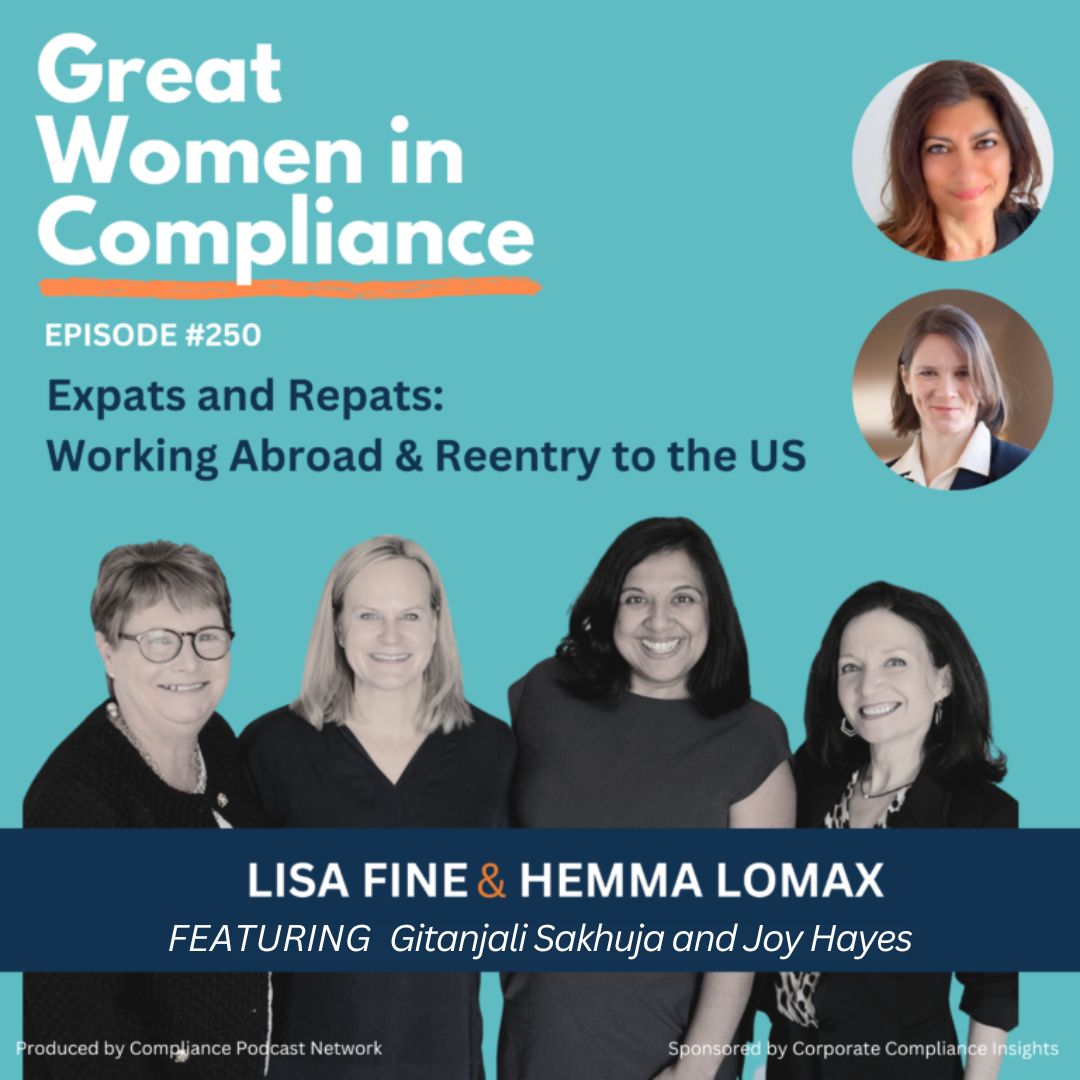
In this episode of Great Women in Compliance, Hemma and Sarah visit with Roxanne Petraeus and Susan Frank Divers to talk about intentionally building a “Listen Up” culture. Tune in to hear the powerful origin stories of two great women in compliance who have been moved to drive significant impact in this space, from enterprising business solutions, to innovative learning and development strategies, to thoughtful approaches to measuring culture and employee sentiment as a measure of success.

Highlights include the ways in which listening builds trust, how to measure impact, not activity, how to achieve integrated risk management, how to design your employee training with employee experience and employee sentiment in mind, and despite our aspirational claims to be building a strong speak up culture, how our employees will always be the actual arbiter of our success.

You can learn more about Roxanne and Susan’s work at www.ethena.com.

Biographies:

Roxanne Petraeus is the CEO and Co-Founder of Ethena, a compliance training platform startup with intuitive and powerful admin tools that make required training easy, engaging, and effective.

Roxanne previously consulted for McKinsey, and before that, she was an officer in the US Army. She found that no matter the setting, whether consulting or in the military, there remained an opportunity to make compliance training better. She started Ethena in 2019 with Co-Founder Anne Solmssen.

Ethena enjoys incredibly positive word of mouth within the HR community, and is trusted by thousands of companies like Figma, Notion, Noom, Pinterest, and Carta to provide actionable training. And the employees love it: Ethena has a 93% positive rating, and over 2M positive reviews. Roxanne is a natural leader, and her eagerness to question and reinvent old paradigms is at the heart of Ethena’s ascendance.

Susan Frank Divers serves as an advisor to Ethena, Inc., an all-in-one compliance training platform that helps companies create more ethical and inclusive work cultures. Prior to joining Ethena, she was the director of thought leadership and best practices for LRN Corporation for seven years.

She has 30+ years’ accomplishments and experience in the ethics and compliance arena. This expertise includes building state-of-the-art compliance and training programs, designing user-friendly means of engaging and informing employees, fostering an embedded culture of compliance, and sharing substantial subject matter expertise in anti-corruption, export controls, sanctions, and other key areas of compliance.

Prior to joining LRN, Ms. Divers served as AECOM’s Assistant General for Global Ethics & Compliance and Chief Ethics & Compliance Officer. Under her leadership, AECOM’s ethics and compliance program garnered six external awards in recognition of its effectiveness and Ms. Divers’ thought leadership in the ethics field. In 2011, Ms. Divers received the AECOM CEO Award of Excellence, which recognized her work in advancing the company’s ethics and compliance program.

#GWIC is proud to announce that it has been nominated for the WomenInPodcastAwards.  This is a people’s choice award and whether you vote for #GWIC or other nominees, we ask that you send the elevator back down by voting. Voting opens August 1, 2024, and details can be found on the #GWIC LinkedIn page at http://www.linkedin.com/groups/12156164

Resources:

Join the Great Women in Compliance community on LinkedIn here.

Categories
Compliance Tip of the Day

Compliance Tip of the Day: Compliance Training Design Objects – Overview

Welcome to “Compliance Tip of the Day,” the podcast where we bring you daily insights and practical advice on navigating the ever-evolving landscape of compliance and regulatory requirements.

Whether you’re a seasoned compliance professional or just starting your journey, our aim is to provide you with bite-sized, actionable tips to help you stay on top of your compliance game.

Join us as we explore the latest industry trends, share best practices, and demystify complex compliance issues to keep your organization on the right side of the law.

Tune in daily for your dose of compliance wisdom, and let’s make compliance a little less daunting, one tip at a time.

In this episode, we consider why every compliance function should have design objectives for any compliance training program.


For more information on the Ethico Toolkit for Middle Managers, available at no charge by clicking here.

To check out The Compliance Handbook, 5th edition, click here.

Categories
Blog

Leveraging Machine Learning with the Right Internal Audit Solution

Visitors face an ever-expanding landscape of challenges and opportunities in today’s world. Machine learning (ML) represents a transformative force, offering new ways to enhance audit quality, efficiency, and insight. But how can internal auditors effectively integrate this technology into their workflows? The key lies in choosing the right internal audit solution that seamlessly incorporates ML capabilities, ensuring auditors are equipped to tackle today’s complexities while preparing for tomorrow’s challenges.

Machine learning (ML) is a subset of artificial intelligence that focuses on developing systems that can learn from and make decisions based on data. In internal auditing, ML can automate repetitive tasks, identify patterns in large datasets, and even predict future trends. This not only speeds up the audit process but also enhances the accuracy and depth of audit insights.

Key Applications of Machine Learning in Internal Audits:

  • Risk Assessment: ML algorithms can analyze vast amounts of data to identify risk patterns and anomalies, helping auditors focus on areas with the highest risk.
  • Control Testing: Automated ML tools can test controls more frequently and thoroughly than manual processes, increasing the likelihood of detecting control failures.
  • Fraud Detection: ML can help predict and identify fraudulent activities based on historical audit data, thereby reducing potential losses.
  • Predictive Analytics: ML can forecast potential non-compliances or areas where controls might fail, allowing auditors to be proactive rather than reactive.

Selecting the right software solution is crucial when integrating ML into internal auditing. There are some critical factors to consider. The ML-powered audit solution must seamlessly integrate with IT infrastructure and data systems. This integration ensures auditors can leverage ML capabilities without disrupting existing workflows or data integrity. As organizations grow and data volumes increase, the ML solution should be able to scale accordingly. This includes handling more extensive datasets and adapting to new audits and compliance requirements.

ML can be complex, but the user interface of the audit solution should be different. A user-friendly interface that simplifies complex processes allows auditors to utilize ML features effectively without needing specialized training. Your chosen solution should offer advanced data analytics features, including data visualization tools, which help auditors make sense of the patterns and anomalies detected by ML algorithms. These tools are crucial for translating ML insights into actionable audit decisions. Any ML solution must comply with relevant data protection regulations, such as GDPR in the European Union or HIPAA in the United States. Additionally, the solution should have robust security measures to protect sensitive audit data from unauthorized access or breaches.

If there is one overlap between ML and traditional internal audit, it is that solutions for internal audit are not static, and ML is no different. ML continuously learns from new data and auditing experiences. This capability ensures that the system evolves and improves its accuracy and effectiveness. Finally, tech support is critical, especially when deploying complex technologies like ML. The right solution provider should offer comprehensive support and training, helping audit teams fully understand and leverage ML capabilities.

Successfully implementing an ML-powered audit solution involves more than just selecting the right software; you should have a planned strategy for an effective implementation. Some strategies for effective implementation include engaging relevant stakeholders early in the process, including IT, compliance, and executive teams, to ensure alignment and address any concerns. Test before implementation so that pilot tests of the ML solution can be conducted in specific audit areas before a full rollout. This helps identify any issues and refine the system for better performance. Training on any new system is critical, especially with an advanced ML solution. You should provide extensive training and support to audit staff to help them adapt to the latest tools and processes.  But as with any new rollout, it does not stop with implementation, as there should be continuous monitoring and continuous improvement as warranted.  Change management practices can facilitate a smoother transition and higher adoption rates.

As the complexity of business environments and regulations continues to grow, the role of internal audit becomes increasingly critical. Leveraging machine learning within audit solutions offers a path forward to keep pace with these changes and stay ahead of them. By choosing the right ML-powered internal audit solution and implementing it thoughtfully, audit departments can transform operations, delivering more value and stronger organizational compliance. The future of internal auditing is not just about adapting to changes—it’s about leading the charge with innovation and insight.

Categories
Innovation in Compliance

Innovation in Compliance: The Evolution of Compliance and Technology: An Interview with Stuart Breslow

Innovation comes in many areas and compliance professionals need to not only be ready for it but embrace it. Join Tom Fox, the Voice of Compliance, as he visits with top innovative minds, thinkers, and creators in the award-winning Innovation in Compliance podcast.

In this episode, Tom welcomes Stuart Breslow, a member of the Board of Directors at StarCompliance., who takes a deep dive into the evolution of tech solutions for compliance.

Breslow has had extensive journey in compliance, including professional roles at Morgan Stanley, Credit Suisse, McKinsey, and Google Cloud. He was the CCO at Morgan Stanley. Our conversation takes a deep dive into the transformation of compliance through technological solutions, the evolution of Codes of Conduct, and the impact of digital tools on compliance efficiency.

Breslow advocates for the use of technology to scale compliance efforts, address evolving challenges, and integrate compliance more seamlessly with business operations. Emphasizing data analysis and proactive risk identification, Breslow believes that modern compliance tools not only enhance efficiency and effectiveness but also contribute significantly to business profitability. Breslow also explores the future role of generative AI and how StarCompliance is poised to leverage advanced data management to enhance compliance functions.

Key Highlights:

  • Evolution of Compliance Technology
  • The Role of Codes of Conduct in Compliance
  • Digital Transformation in Compliance
  • Future of Compliance with Generative AI

Resources:
StarCompliance

Tom Fox

Instagram

Facebook

YouTube

Twitter

LinkedIn

Categories
Sunday Book Review

Sunday Book Review: September 1, 2024, Books on Continuous Monitoring Edition

In the Sunday Book Review, Tom Fox considers books that would interest the compliance professional, the business executive, or anyone who might be curious. It could be books about business, compliance, history, leadership, current events, or anything else that might interest me.

In today’s edition of the Sunday Book Review, we look at four books on continuous monitoring for the compliance professional.

  • Continuous Monitoring A Complete Guide – 2024 Edition by Geradus Blokdyk
  • Monitoring Continuous Phenomena: Background, Methods and Solutions by Peter Lorkowski
  • Implement Continuous Monitoring a Complete Guide by Geradus Blokdyk
  • DevOps Continuous Monitoring by Bart de Best (Author), Louis van Hemmen (Editor)

Grab the Middle Managers Tool Kit, available free from Ethico by clicking here.