Categories
All Things Investigations

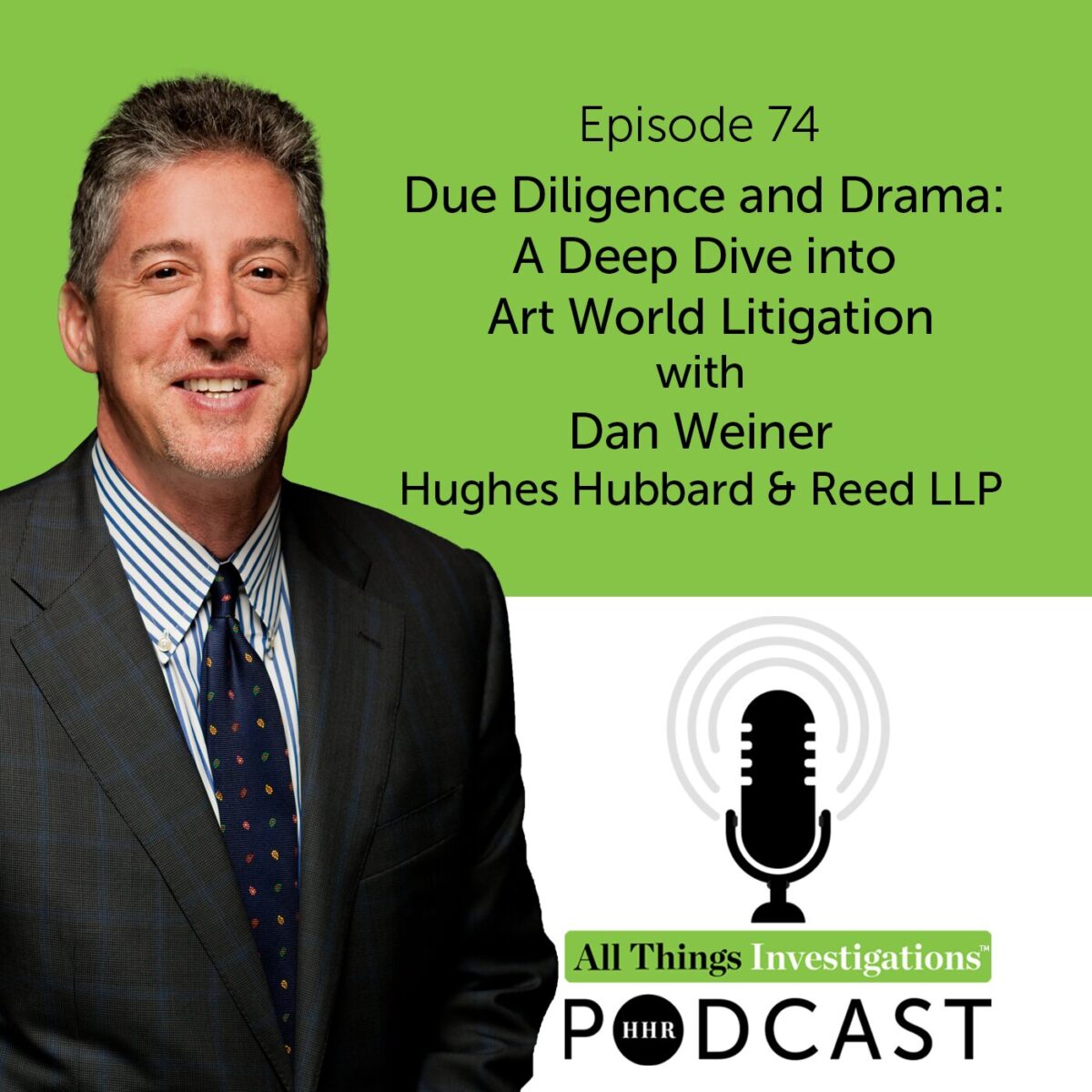
All Things Investigation – Due Diligence and Drama: A Deep Dive into Art World with Daniel Weiner

Welcome to the Hughes Hubbard Anti-Corruption & Internal Investigations Practice Group’s podcast, All Things Investigation. In this podcast, host Tom Fox is joined by Daniel Weiner to discuss a complex legal case involving a valuable Picasso painting.

Weiner is the Chair of Hughes Hubbard & Reed’s Litigation Department, Chair of the Complex Business Disputes practice, and a partner in the International & Domestic Arbitration and Intellectual Property Disputes groups. Daniel and Tom take a deep dive into the intricate details of how a series of fraudulent transactions led to a multimillion-dollar dispute over Picasso’s ‘Le Peintre. The podcast highlights the importance of thorough due diligence in the art world and examines the legal complexities involved in resolving such cases. As they unravel the story, they highlight the crucial role of investigations in preventing art fraud and safeguarding ownership rights.

Key highlights:

  • The Fascinating Picasso Case
  • The Fraud Unveiled
  • Legal Issues and Investigations
  • Discovery Disputes and Court Proceedings
  • Consulting and Due Diligence in Art Law

Resources:

Daniel Weiner

Hughes Hubbard & Reed website

HHR Client Alert: Firm Obtains Discovery Win in Dispute Over Sale of Pablo Picasso Painting

Categories
FCPA Compliance Report

Amanda Carty on a Due Diligence and Risk Management

In this episode of the Diligent Compliance Week 2025 Speaker Preview Podcasts series, Amanda Carty discusses her presentation at Compliance Week 2025, “Going Beyond Due Diligence in Risk Management.”

Some of the issues she will discuss:

  • Demonstrate measurable and quantifiable ROI
  • Build psychological safety that drives ethical decision-making and engagement.
  • Navigate matrix environments to expand the influence.
  • Use data to tell compelling compliance success stories
  • Partner with the C-suite to help them navigate disruptive changes, including deregulation and major economic geopolitical shifts.

I hope you can join us at Compliance Week’s 20th Anniversary National Conference. This year’s event will be held April 28-30 at The Mayflower Hotel, Autograph Collection, Washington, D.C. The lineup is first-rate, with some top ethics and compliance practitioners around.

Drop by the Diligent booth for some Compliance Podcast Network coffee to gain insights and make connections at the industry’s premier cross-industry national compliance event, offering knowledge-packed, accredited sessions and take-home advice from the most influential leaders in the compliance community. Back for its 20th year, compliance, ethics, legal, and audit professionals will gather safely face-to-face to benchmark best practices and gain the latest tactics and strategies to enhance their compliance programs.

Categories
31 Days to More Effective Compliance Programs

31 Days to a More Effective Compliance Program: Day 22 – Levels of Due Diligence

Welcome to a special podcast series on the Compliance Podcast Network, 31 Days to a More Effective Compliance Program. Over these 31 days of the series in January 2025, Tom Fox will post a key part of a best practices compliance program daily. By the end of January, you will have enough information to create, design, or enhance a compliance program. Each podcast will be short, at 6-8 minutes, and will include three key takeaways you can implement at little or no cost to help update your compliance program. I hope you will join us each day in January for this exploration of best practices in compliance.

On Day 22, we consider the levels of due diligence you should use when investigating third parties. Tom outlines the three due diligence levels necessary to manage corruption risk effectively. With insights from Candice Tal, founder and CEO of Infortal, Tom breaks down each level in detail, from initial screenings in level one to comprehensive, on-the-ground investigations in level three. He emphasizes the need for tailored approaches based on the risks associated with different business transactions and the importance of thorough documentation throughout the process.

Key highlights:

  • What are the levels of Due Diligence?
  • When is each level appropriate?
  • Key Takeaways

Resources:

Click here to receive a 20% discount on The Compliance Handbook, 5th edition, for listeners to this podcast.

Categories
Sunday Book Review

Sunday Book Review: November 17, 2024 – The Books on Due Diligence Edition

In the Sunday Book Review, Tom Fox considers books that interest the compliance professional, the business executive, or anyone curious. These could be books about business, compliance, history, leadership, current events, or anything else that might interest Tom. In today’s Sunday Book Review edition, Tom Fox looks at four top books on due diligence for the compliance professional in November 2024.

  1. OSINT: The Authoritative Guide to Due Diligence by Cynthia Hetherington
  2. Due Diligence and Corporate Governance by Linda Spedding
  3. Business Due Diligence Strategies
  4. The Art of M&A Due Diligence, Second Edition: Navigating Critical Steps and Uncovering Crucial Data by Alexandra Lajoux & Charles Elson


Resources:

For more information on the Ethico Toolkit for Middle Managers, available at no charge, click here.

For more information on the first Annual Compliance Podcast Network Agora Awards for Excellent in Podcasting and to register, click here. There is no charge for this event.

Categories
FCPA Compliance Report

FCPA Compliance Report: Navigating Global Compliance and Risk – Lessons from The Pager Attacks

Welcome to the award-winning FCPA Compliance Report, the longest running podcast in compliance. In this edition of the FCPA Compliance Report, Tom Fox visits with Dr. Ian Oxnevad and Chris Mason from Infortal Worldwide about the Israeli attack on Hezbollah through its pagers and explores what all of this means for the compliance professional.

The podcast explores the compliance and supply chain ramifications stemming from pagers licensed by a Taiwanese company to a Hungarian firm which were subsequently used to disrupt Hezbollah’s operations. This incident serves as a springboard for discussing the broader implications for global businesses, emphasizing the essential role of due diligence in complex supply chains. The episode offers insightful commentary on how Hezbollah’s lack of scrutiny over their suppliers led to vulnerabilities that were exploited by Israel, acting as a cautionary tale for organizations everywhere. Key topics include the unexpected ways legitimate companies can be compromised, the pervasive nature of risk management, and the importance of vetting and verifying partners across all industries to maintain business integrity and reputation.

Highlights in this Episode:

  • Attack on Hezbollah
  • Compliance and Supply Chain Issues
  • Payment Anomalies and Red Flags
  • Lessons Learned and Risk Management
  • The Importance of Knowing Your Risk Profile
  • Unintended Consequences and Risk Management
  • Final Thoughts on Supply Chain Vulnerabilities

Resources:

Infortal Worldwide

Dr. Ian Oxnevad on LinkedIn

Chris Mason on LinkedIn

Tom Fox

Instagram

Facebook

YouTube

Twitter

Categories
Blog

The Bre-X Mining Scandal: Part 5 – A Guide for the 2024 Compliance Professional (Part 1)

As we close out this series on the Bre-X mining scandal, the lessons from this notorious case continue to resonate, especially for today’s compliance professionals. The fraud that led to the downfall of Bre-X and the ensuing financial catastrophe for countless investors serves as a stark reminder of the pivotal role compliance plays in maintaining the integrity of any business. This two-part conclusion will explore the critical takeaways for compliance professionals in 2024. In Part 1, I focus on due diligence, transparency, corporate governance, conflict of interest, and regulatory compliance.

The Importance of Rigorous Due Diligence

If Bre-X taught us anything, it is the value of relentless due diligence. In today’s fast-paced business environment, where misinformation can spread like wildfire and trust is fragile, compliance professionals must maintain an unwavering commitment to fact-checking and independent verification.

Verification of Claims. Compliance officers are the gatekeepers of corporate integrity. The Bre-X scandal is a textbook case of what happens when claims are accepted at face value without proper scrutiny. In 2024, ensuring that all claims—whether they pertain to financial projections, resource estimates, or technological capabilities—are rigorously verified by qualified third parties is more crucial than ever. This due diligence must extend beyond simple paper trails; it requires thorough, boots-on-the-ground verification.

Third-Party Validation. One of the core failures in the Bre-X case was the reliance on internal data, which went unchecked. Today’s compliance landscape demands an external layer of assurance. Relying solely on the company’s self-reported information can be perilous. Independent third-party audits, validation, and assessments are no longer optional; they prevent corporate fraud. External experts often see red flags insiders miss due to oversight or willful blindness.

Transparency and Accurate Reporting

Transparency is the lifeblood of compliance, and the Bre-X scandal illustrates what happens when companies stray from this fundamental principle. The fine line between optimism and misleading information can be blurry, but compliance officers must ensure this line is never crossed.

Clear and Honest Disclosure. Today’s compliance professionals must act as the arbiter of clear and accurate corporate disclosure. More is needed to provide minimal information that technically complies with regulations; companies must fully disclose material facts related to their performance, risks, and operational realities. Bre-X misled investors with rosy projections based on fraudulent data. Modern compliance teams must guard against the temptation to oversell the company’s prospects or downplay significant risks.

Avoiding Misleading Information. The Bre-X debacle warns about the dangers of making exaggerated or false claims to investors and stakeholders. In 2024, compliance professionals must adopt a zero-tolerance stance toward misleading information. This requires close collaboration with all departments, ensuring financial reports, press releases, and investor communications are fact-checked, realistic, and grounded in verifiable data. The role of compliance in safeguarding against exaggeration or outright deception cannot be overstated.

Strengthening Corporate Governance

One of the critical failures in the Bre-X case was weak corporate governance. As companies grow in complexity, ensuring robust oversight from the boardroom down is essential.

Effective Oversight. Boards of directors must not only be present; they must be actively engaged in the business. The Bre-X scandal exposed how passive oversight can contribute to unchecked fraud. Compliance professionals should ensure that board members, especially independent ones, are empowered to ask tough questions and hold management accountable. In 2024, compliance officers should push for regular, thorough reviews of corporate governance practices, ensuring that the board remains active in safeguarding the company’s integrity.

Separation of Duties. Another key lesson from Bre-X is the need for a clear separation of duties. The concentration of power in a few individuals, especially in processes like reporting geological results, led to unchecked manipulation. Modern compliance frameworks must ensure no single person holds too much sway over critical processes. In areas such as financial reporting or resource assessments, compliance professionals must establish checks and balances that prevent conflicts of interest and reduce the risk of fraud.

Understanding and Mitigating Conflict of Interest

Bre-X was rife with conflicts of interest that, had they been addressed, might have mitigated the extent of the damage. In 2024, compliance professionals must be vigilant in identifying and managing potential conflicts at all levels of the organization.

Identifying Conflicts. Conflicts of interest can undermine the integrity of any organization through personal financial gain, favoritism, or unaddressed personal relationships. Compliance officers must develop robust mechanisms for identifying and addressing conflicts before they escalate. In the Bre-X case, certain individuals stood to personally gain from inflated stock prices directly conflicting with their fiduciary duties. Modern-day compliance professionals must establish clear conflict-of-interest policies and ensure these are consistently enforced.

Establishing Clear Policies. It is not enough to identify conflicts; companies must have clear policies and procedures to manage them. This includes mandatory disclosures, regular audits, and a strong ethical culture encouraging employees to report potential conflicts. Employees should be trained to recognize conflicts of interest and be empowered to raise concerns without fear of retaliation. The Bre-X scandal reminds us that an unaddressed conflict of interest can lead to catastrophic outcomes for all stakeholders.

Enhanced Focus on Regulatory Compliance

Finally, the Bre-X scandal illustrates the importance of adhering to industry standards and anticipating regulatory changes. In the wake of Bre-X, Canada introduced NI 43-101, a set of strict guidelines for reporting mineral resources. The lesson here is that compliance professionals must stay current with regulations and be proactive in their approach.

Adhering to Industry Standards. In 2024, industry standards are constantly evolving. Whether environmental regulations, data privacy laws, or sector-specific standards like NI 43-101, compliance professionals must ensure that their organizations are always fully compliant. This requires staying informed about changes in the regulatory landscape and ensuring that the company’s internal practices are aligned with the latest requirements.

Proactive Compliance. Compliance officers should take a proactive approach rather than waiting for regulations to change. This includes monitoring industry trends, participating in industry working groups, and maintaining open lines of communication with regulators. Proactive compliance can prevent costly legal battles and protect the company’s reputation.

The Bre-X mining scandal remains a cautionary tale for compliance professionals, and the lessons learned from this case are more relevant than ever in 2024. By emphasizing rigorous due diligence, transparency, corporate governance, conflict of interest management, and proactive regulatory compliance, compliance officers can help safeguard their organizations against fraud and mismanagement that led to Bre-X’s downfall.

In Part 2 of this series, we will conclude this blog post by diving deeper into the evolving role of technology and how it has transformed the compliance landscape, offering new tools and challenges for today’s compliance professionals. Join us tomorrow.


Categories
Adventures in Compliance

Adventures in Compliance: The Last Bow Stories – Due Diligence Lessons from The Adventure of The Red Circle

Welcome to a review of all the Sherlock Holmes stories which are collected in the work, “The Last Bow“. It is a collection of eight detective stories written by Sir Arthur Conan Doyle, from 1908 to 1917. The collection spans some of the most intriguing cases and mysteries that Holmes and his loyal friend Dr. John Watson tackle.

Today we take up The Adventure of the Red Circle, which appeared in Strand Magazine in December 1911, as we consider investigative lessons for compliance professionals from The Adventure of the Red Circle.

In this story, we connect the narrative to important compliance lessons such as identifying hidden connections, understanding network dynamics, uncovering deception, building compelling cases for action, recognizing the power of influence, emphasizing collaboration, and the value of critical thinking. He also discusses the historical context of the story and its publication.

Key Highlights:

  • Warren’s Mysterious Lodger
  • Holmes’ Investigation and Discoveries
  • The Red Circle Crime Gang
  • Due Diligence Lessons for Compliance Professionals

Resources:

The New Annotated Sherlock Holmes

Sherlock Holmes FAQ

Connect with Tom Fox

Instagram

Facebook

YouTube

Twitter

LinkedIn

For more information on Ethico and a free White Paper on top compliance issues in 2024, click here.

Categories
Regulatory Ramblings

Regulatory Ramblings: Episode 46 – Investigative Due Diligence and Why It Matters with Daniel Greenberg

Daniel Greenberg is the founder, president, and lead investigator of Greenberg Corporate Intelligence, a Washington, DC-based boutique investigations firm that commenced operations in March 2023. The firm offers research and intelligence services for private-sector clients such as support attorneys, private equity firms, hedge funds, and compliance teams.

Dan has worked in the due diligence and corporate investigations field since 2010. Most recently, he was a managing director at Forward Risk, having previously worked at Kroll, Exiger, and TD International.

Beginning in 2018, Dan helped grow Forward Risk from a small, newly established company with a handful of employees to a premier firm with over 25 full-time investigators. Forward Risk was acquired in November 2022, and after a transition period, Dan left to establish his independent firm – GCI.

He has a track record of uncovering hard-to-find facts, overcoming difficult challenges, and providing responsive service. His experience has mainly centered on investigative due diligence, shareholder activism support, litigation support, and competitive intelligence.

Dan holds a B.A. in International Affairs from George Washington University and an M.A. in Middle Eastern History from Tel Aviv University. Dan is also a Certified Fraud Examiner (CFE #: 869765). Dan is licensed as a Private Detective in the District of Columbia.

The term due diligence is so often overused that in the present colloquial vernacular, it is used as a quick, easy, and usually lazy shorthand way of describing various background checks – varying from basic, perfunctory desk research to complete blown investigations.

To tackle such misconceptions, Daniel chats with Regulatory Ramblings host Ajay Shamdasani to clarify what “due diligence” entails while describing his own path as an entrepreneur.

Daniel shares his recollections about going to college in the US capital and later pursuing further graduate study – delving into the past of a long-troubled region in Israel.

The conversation goes on to delineate why investigative due diligence is (or should be) of paramount concern to the world’s largest banking and financial institutions and multinational corporations, as well as whether traditional backgrounds such as law enforcement, military service, or intelligence work are necessarily the best ways to get into such work in an age when many corporate investigators are ex-journalists or researchers.

Daniel stresses that his firm’s approach to such work is focused on using open sources, public records, and interviews to identify and understand fraudulent behavior and other risk issues.

The discussion concludes with a reflection on the tragic events following Hamas’ incursion into Israel on October 7, 2023, and Daniel shares his expertise on how, with all the intelligence and technology Israel had at its disposal, even it was taken by surprise.

Podcast Discussion:

3:09 From International Affairs to Due Diligence: Professional Journey

18:27 Mastering Google and AI in Investigative Due Diligence

26:46 The Role of Open Source and Public Records in Investigative Due Diligence

31:42 Defining Due Diligence: Beyond Background Checks to Comprehensive Accountability

39:01 Contextualizing Risks: Distinguishing Red Flags in Due Diligence Investigations

56:41 Challenges and Rewards of Starting a Firm in the Investigative Field

1:06:46 The Challenges of Intelligence: Israel-Hamas Conflict

Connect with RR Podcast at:

LinkedIn: https://hk.linkedin.com/company/hkufintech 
Facebook: https://www.facebook.com/hkufintech.fb/
Instagram: https://www.instagram.com/hkufintech/ 
Twitter: https://twitter.com/HKUFinTech 
Threads: https://www.threads.net/@hkufintech
Website: https://www.hkufintech.com/regulatoryramblings 

Connect with the Compliance Podcast Network at:

LinkedIn: https://www.linkedin.com/company/compliance-podcast-network/
Facebook: https://www.facebook.com/compliancepodcastnetwork/
YouTube: https://www.youtube.com/@CompliancePodcastNetwork
Twitter: https://twitter.com/tfoxlaw
Instagram: https://www.instagram.com/voiceofcompliance/
Website: https://compliancepodcastnetwork.net/

Categories
2 Gurus Talk Compliance

2 Gurus Talk Compliance – Episode 23 — The Sustainability Edition

What happens when two top compliance commentators get together? They talk about compliance, of course. Join Tom Fox and Kristy Grant-Hart in 2 Gurus Talk Compliance as they discuss the latest compliance issues in this week’s episode! In this episode, Tom and Kristy take on a wide variety of compliance related topics.

In the ever-evolving world of regulatory compliance and risk management, challenges are constant, and strategies must be dynamic. Tom highlights the focus on the Tesla Board, celebrates the OECD at 25, bemoans New Zealand’s drop in the TI-CPI, reviews the HP acquisition of Autonomy and looks at the differences in Binance and FTX enforcement.  Kristy highlights the slave labor allegations, EU sustainability law, the ease of whistleblower restrictions, the EU and AI, and checks in on Florida Woman. Join Tom Fox and Kristy Grant-Hart as they delve deeper into these issues in this episode of the 2 Gurus Talk Compliance podcast.

Topics Discussed:

1.     Chinese Slave Labor Allegations Hold Up VW’s Audi, Porsche, and Bentley Vehicles in U.S. Ports (MotorTrend)

2.     EU Corporate Sustainability Due Diligence Law Most Likely Dead, For Now (Forbes)

3.     US Supreme Court’s UBS case makes it easier for whistleblowers to win suits (Reuters)

4.     How EU AI Act May Accelerate Compliance Regime for U.S. Enterprises (WSJ)

5.     The Tesla Board Chair is under scrutiny for oversight of the company.  (NYT)

6.     A tale of 2 corps: Binance and FTX. (Reuters)

7.     OECD at 25.  (The Hill)

8.     No DD, no problem as HP seeks $4bn from Mike Lynch.  (Bloomberg)

9.     New Zealand drops to No. 3 on TI-CPI. (The Conversation)

10.  Woman swipes $1.5 million and splurges on flights, Carnival cruises, Florida cops say (Yahoo)

Resources 

Kristy Grant-Hart on LinkedIn

Spark Consulting

Tom 

Instagram

Facebook

YouTube

Twitter

LinkedIn

Categories
Adventures in Compliance

The Return of Sherlock Holmes – Compliance Lessons from The Norwood Builder

Welcome to a review of all the Sherlock Holmes stories that are collected in the work “The Return of Sherlock Holmes.“. It is a collection of thirteen detective stories written by Sir Arthur Conan Doyle, marking the reappearance of the brilliant detective Sherlock Holmes after his apparent death in “The Final Problem.” The collection spans various intriguing cases and mysteries that Holmes and his loyal friend Dr. John Watson tackle. Today we take up The Adventure of the Norwood Builder and mine it for compliance lessons for the CCO and compliance professionals.

The intriguing world of Sherlock Holmes’ investigative methods offers a wealth of lessons for compliance professionals. In The Adventure of the Norwood Builder, Holmes’ meticulous approach to a murder case, emphasizing thorough due diligence, attention to detail, verification of information, critical thinking, data-based decision-making, and ethical conduct, mirrors the approach that compliance officers should adopt. Tom Fox, a seasoned compliance expert, underscores the importance of these principles in navigating the complex landscape of corporate compliance. Fox’s perspective is shaped by his extensive experience in the field, and he advocates for a proactive, data-based approach, prioritizing integrity, attention to detail, trust but verify, critical thinking, database decision-making, ethics, risk assessment, and documentation. He encourages compliance professionals to embrace continuous learning and persistence, much like Sherlock Holmes. Join Tom Fox in this episode of the Adventures in Compliance podcast as he delves deeper into these fascinating parallels between the world’s greatest detective and the demanding field of compliance.


Key Compliance Lessons Learned

  1. Due Diligence.
  2. Risk Management.
  3. Document Document Document.
  4. Data-driven compliance.
  5. Trust but verify.
  6. Attention to detail.
  7. Ethical conduct by compliance professionals
  8. Institutional Justice and Institutional Fairness

Resources:

The New Annotated Sherlock Holmes

Sherlock Holmes FAQ

Connect with Tom Fox

Instagram

Facebook

YouTube