Categories
Blog

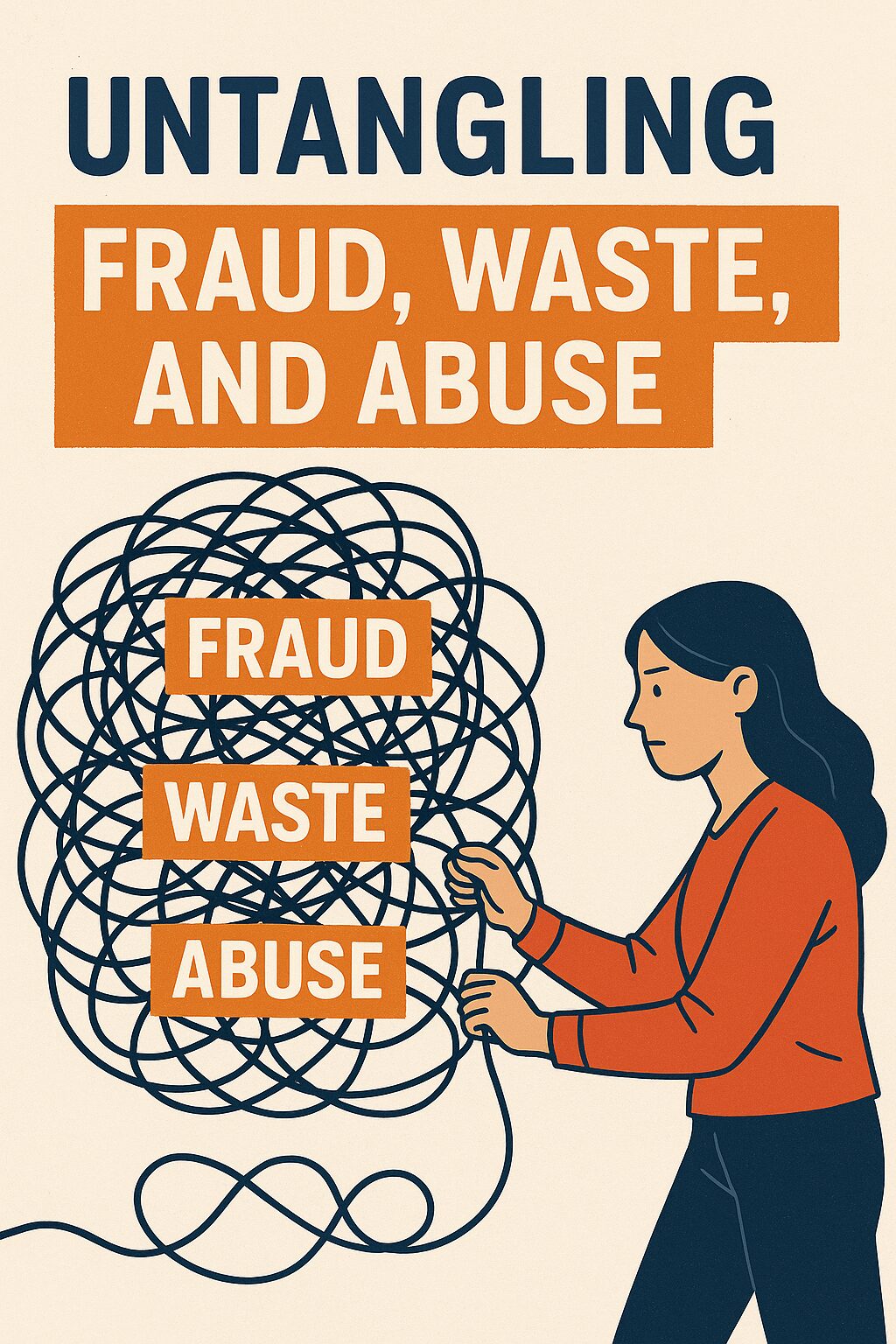
Untangling Fraud, Waste, and Abuse: A Primer for the Compliance Professional

In the world of compliance, few phrases are tossed around with as much frequency and often as little precision as “fraud, waste, and abuse.” In the government sector, this triad is well-defined. Federal and state agencies spend billions each year tracking, auditing, and enforcing rules to combat it. But in the private sector, the phrase is no less relevant. Whether you are managing a global compliance program, overseeing internal controls, or leading an ethics initiative, fraud, Waste, and abuse can quietly erode corporate value, undermine trust, and invite unwanted scrutiny from regulators, auditors, and stakeholders.

Yet too many compliance professionals lump these terms together, failing to appreciate the important differences between them. Fraud, Waste, and abuse may sometimes overlap in practice, but they require distinct prevention strategies, tailored controls, and cultural messaging. Today, we begin a multipart blog post series to unpack what each of these terms means for the private sector and explore how your organization can fight against their scourge.

Fraud: The Deliberate Deception

Fraud is the most familiar of the three. It is intentional deception or misrepresentation made with the knowledge that it will result in an unauthorized benefit. In the corporate world, fraud is not limited to elaborate Ponzi schemes or headline-grabbing accounting scandals; it often hides in plain sight.

Examples from the private sector include:

  • Financial statement fraud. Inflating revenue or concealing liabilities to present a healthier picture of the business. Enron, WorldCom, and Wirecard are stark reminders.
  • Procurement fraud. Kickbacks from suppliers, false invoices, or bid-rigging. A procurement officer who colludes with a vendor to inflate prices is not just wasting company money; they are stealing it.
  • Expense reimbursement fraud. Employees are submitting falsified receipts or double-billing travel expenses. What starts as “a little padding” quickly snowballs into a systemic problem.

Fraud is deliberate, targeted, and harmful by design. It requires intent to deceive. For this reason, fraud often falls under the purview of regulators and prosecutors, resulting in criminal charges, civil penalties, and severe reputational damage.

Waste: The Silent Erosion of Value

Waste, by contrast, is rarely intentional. It refers to the careless or unnecessary use of resources, leading to inefficiency and loss of value. Waste does not always involve dishonesty; usually, it is more often a byproduct of poor management, weak oversight, or cultural indifference.

Examples from the private sector include:

  • Operational inefficiencies. A manufacturing line that continues to use outdated machinery, consuming more energy than modern alternatives. However, it can also encompass basic corporate functions, such as failing to timely service vehicles and other large pieces of equipment until they break down.
  • Bloated corporate travel. Business units booked last-minute flights in premium class when lower-cost options were available with better planning.
  • Technology sprawl. Companies are paying for redundant software licenses because IT and business units fail to coordinate their procurement.

Waste drains profitability. Unlike fraud, it may not land your employees in court, but over time, it corrodes competitiveness, frustrates shareholders, and damages morale. For the compliance professional, Waste is tricky. Because it often lacks intent, it falls into a gray zone between compliance, internal audit, and operations. But leaving Waste unchecked is an abdication of governance responsibility. And of course, it can be very costly.

Abuse: The Exploitation of Loopholes

Abuse sits somewhere between fraud and Waste. It involves the improper or excessive use of resources or authority, but without a clear intent to defraud. Abuse may not violate the letter of company policy, but it often violates its spirit.

Examples from the private sector include:

  • Excessive executive perks. A senior leader insists on flying private, despite company policy allowing business class.
  • Overtime gaming. Employees schedule themselves in ways that maximize overtime pay, even when workloads do not justify it.
  • Supplier favoritism. A manager repeatedly awards contracts to a personal acquaintance without competitive bidding, even if the price is technically “market.”

Abuse thrives in cultures of entitlement and weak oversight. It often signals to employees that procurement rules are flexible or merely suggestions, undermining trust in leadership. Regulators may not always prosecute abuse, but investors, boards, and employees will notice.

Five Key Takeaways for the Compliance Professional

1. Know the Difference

Fraud, Waste, and abuse are often lumped together, but they are distinct risks with different causes and remedies. Fraud is intentional deception designed to enrich the perpetrator at the company’s expense. Waste is careless or inefficient use of resources, often unintentional but just as costly. Abuse sits in the middle ground, exploiting loopholes, gray areas, or authority for personal gain. If you treat these three risks as interchangeable, your controls will be blunt instruments. The savvy compliance professional tailors training, monitoring, and cultural messaging to each risk, ensuring prevention efforts are both precise and effective.

2. Fraud Is Not the Only Threat

Compliance programs often emphasize fraud because it creates legal exposure, attracts regulatory scrutiny, and can lead to criminal liability. Yet fraud is not the only drain on corporate value. Waste can hollow out profitability year after year through inefficiency and mismanagement. Abuse corrodes employee trust, culture, and morale, even when it does not cross a legal line. Boards and shareholders increasingly look beyond compliance “check the box” fraud controls. They demand stewardship, efficiency, and accountability across the enterprise. Expanding your program’s scope to tackle Waste and abuse demonstrates leadership, adds measurable business value, and positions compliance as a strategic partner.

3. Culture Is the Battleground for Abuse

You can design airtight policies and sophisticated controls to prevent fraud or reduce Waste, but abuse is more insidious. It thrives in cultures of entitlement, favoritism, and “wink-and-nod” exceptions to the rules. Abuse may not always break laws or policies, but it violates fairness and damages trust. That is why culture is the key battleground. Compliance leaders must set clear expectations, train managers to model ethical behavior, and empower employees to speak up when necessary. When entitlement and corner-cutting are tolerated, abuse spreads. When accountability, transparency, and stewardship are celebrated, abuse withers. Culture, not checklists, is the ultimate safeguard.

4. Data Is Your Ally

The complexity of modern business means fraud, Waste, and abuse can hide in plain sight. Data analytics provides compliance professionals with the tools to detect risks early. Anomalies in travel expenses may uncover not only fraudulent reimbursement but also systemic Waste in last-minute bookings or abusive upgrades. Procurement analytics can expose inflated invoices, duplicate payments, or favoritism in the vendor selection process. The key is not just gathering data but integrating it across compliance, audit, and finance systems. With proper dashboards and regular reviews, data becomes a proactive ally, identifying red flags before they metastasize into scandals that damage reputation and value.

5. Build Cross-Functional Coalitions

Fraud, Waste, and abuse do not respect organizational silos. They intersect with compliance, audit, HR, procurement, finance, and operations. If each function fights its own battles in isolation, risks will inevitably slip through the cracks. The compliance professional is uniquely positioned to serve as the connector, building coalitions that share data, align incentives, and coordinate responses. For example, a fraud indicator spotted by finance may also highlight Waste tracked by operations. HR may uncover abusive practices that compliance can remediate with policy changes. When functions collaborate, blind spots shrink, accountability rises, and the entire organization becomes more resilient.

Stewardship as Compliance

Fraud, Waste, and abuse may manifest differently, but together they represent a continuum of risks that can erode profitability, corrode culture, and undermine trust in leadership. For the compliance professional, the way forward lies in anchoring your program on five core pillars.

First, you need to understand the difference. Fraud, Waste, and abuse require distinct approaches, and treating them as interchangeable dulls your controls. Second, remember that fraud is not the only threat. Waste and abuse, while less visible, can be just as damaging to shareholders and boards who care about stewardship as much as compliance. Third, recognize that culture is the battleground for abuse. Without accountability and transparency embedded in daily operations, policies and controls are powerless against entitlement and favoritism. Fourth, leverage the fact that data is your ally. Analytics reveal patterns across all three categories, allowing you to act before small issues metastasize. Finally, build cross-functional coalitions. Fraud, Waste, and abuse cut across silos, and only through collaboration can you close the gaps.

Taken together, these five strategies form more than a compliance toolkit; they create a holistic framework for corporate stewardship. By clearly distinguishing risks, broadening your scope, reinforcing your culture, embracing data, and building coalitions, you elevate compliance from a defensive shield to a proactive value driver.

The organizations that thrive in today’s demanding environment will be those that go beyond chasing fraud and instead build resilient, data-driven, and culture-anchored programs to fight fraud, Waste, and abuse in all their forms. That is the mandate for the modern compliance professional.

Join us tomorrow as we explore how your anti-corruption compliance program can help your company combat fraud, Waste, and abuse.


Categories
Daily Compliance News

Daily Compliance News: August 21, 2025, The Fabricated Evidence Edition

Welcome to the Daily Compliance News. Each day, Tom Fox, the Voice of Compliance, brings you compliance-related stories to start your day. Sit back, enjoy a cup of morning coffee, and listen in to the Daily Compliance News. All, from the Compliance Podcast Network. Each day, we consider four stories from the business world, compliance, ethics, risk management, leadership, or general interest for the compliance professional.

Top stories include:

  • Trump fabricates evidence against the Fed Governor, and they say he will fire her. (WSJ)
  • More NYC Mayor associates to face corruption charges. (NYT)
  • CVS ordered to pay $290MM in whistleblower suit. (Reuters)
  • Quantas hit with record fine. (BBC)

You can donate to flood relief for victims of the Kerr County flooding by going to the Hill Country Flood Relief here.

Categories
Data Driven Compliance

Data Driven Compliance – Understanding the ECCTA and Its Impact with Jonathan Armstrong

Welcome to Season 2 of the award-winning Data Driven Compliance. In this new season, we will look at the new Failure to Prevent Fraud offense. Join host Tom Fox as we explore this new law and how to comply with it through the lens of data-driven compliance. This podcast is sponsored by konaAI. In this episode of Season 2, Tom Fox is joined by Jonathan Armstrong.

Tom and Jonathan explore the historical context of fraud laws in the UK, the specifics and implications of the new legislation, the role of the Serious Fraud Office under the new rules, and its impact on corporations, especially those with international operations. Jonathan also outlines necessary steps corporations need to take to comply with the Act and prevent fraud within their organizations, including the importance of thorough risk assessments, top-level commitment, and effective communication and training programs.

Key highlights:

  • Key Legal Points of the New Law
  • Jurisdiction and Global Impact
  • Fraud Risk Assessment and Prevention
  • Technological and ESG Fraud

Resources:

Jonathan Armstrong on LinkedIn

konaAI, a Covasant company

Click here for konaAI White Paper Rethinking Compliance: Practical Steps for Adapting to the UK’s New Fraud Legislation

Connect with Tom Fox on LinkedIn

Categories
Blog

Cross-Atlantic Fraud & Corruption Enforcement: Intersections and Divergences

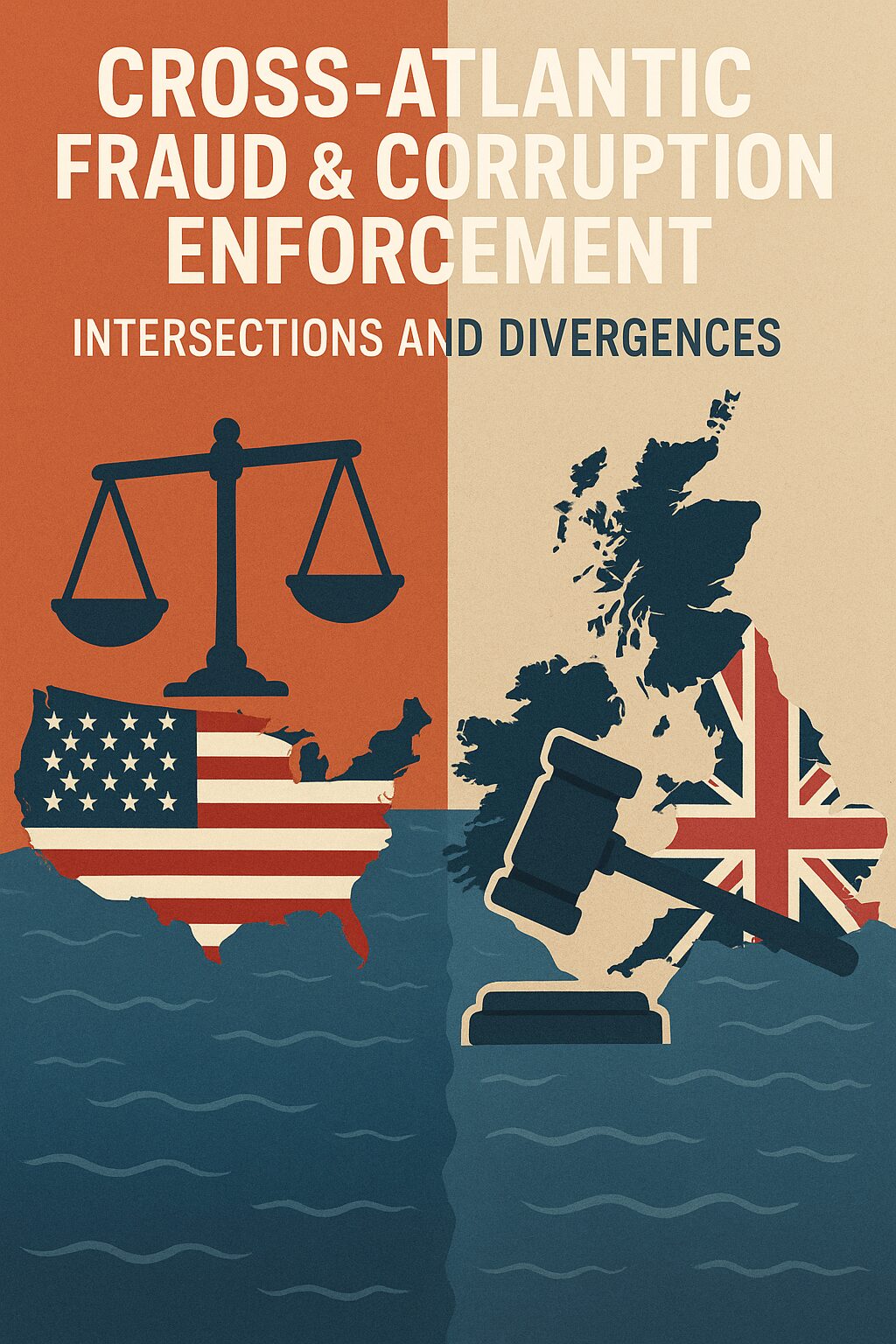
In today’s dynamic compliance landscape, navigating the complexities of international corporate wrongdoing requires vigilance, foresight, and strategic action, as highlighted in A recent article entitled “Cross-Atlantic Impact: DOJ and SFO Self-Reporting and Enforcement Priorities,” by lawyers from McDermott, Will & Schulte. The article is an excellent review of areas where the fight against fraud and corruption aligns between the two countries and areas where they diverge. Today, I will review the article and consider what it means for the US company doing business in the UK or with UK companies.

The Serious Fraud Office (SFO) in the United Kingdom has made clear its expectations regarding self-reporting corporate misconduct, mainly aligning in philosophy, if not always in exact details, with its U.S. counterpart, the Department of Justice (DOJ). American companies must understand these nuances and adapt their compliance programs accordingly. Here are five critical reasons why U.S. businesses must closely monitor and adhere to the UK’s evolving fraud and bribery enforcement regime.

Prompt Self-Reporting Weighs Heavily in Favor of DPAs

The SFO guidance unequivocally states that companies demonstrating prompt self-reporting of corporate wrongdoing significantly increase their chances of obtaining a Deferred Prosecution Agreement (DPA). Conversely, any delay in self-reporting suspected wrongdoing “within a reasonable time of it coming to light” adversely impacts the company’s standing with the SFO.

Much like the DOJ, the SFO does not insist on complete internal investigations before self-reporting. Indeed, in many ways, both sets of prosecutors want companies to step forward as soon as possible. The degree of the inquiry expected depends on the clarity and strength of evidence. Where evidence indicates wrongdoing, companies are expected to self-report swiftly. Ambiguities may permit a more extensive preliminary investigation, but American companies should note that delays can risk losing the advantages offered by early disclosure.

Jurisdictional Triggers Demand Simultaneous Reporting

For American companies dealing with potential misconduct spanning jurisdictions, awareness and agility become paramount. According to SFO guidance, companies reporting suspected misconduct to another agency, such as the DOJ, should also inform the SFO simultaneously or immediately thereafter. Failure to do so negates any potential credit for self-reporting.

Consider a scenario where a company seeks a declination from the DOJ through prompt self-disclosure. Identifying a UK jurisdictional nexus, such as conduct occurring partly in the UK or financial impact felt within the UK, is crucial. The UK’s “failure to prevent bribery” and new “failure to prevent fraud” offenses can impose liability based on international conduct linked to a business presence or financial repercussions in the UK. Understanding and navigating these jurisdictional nuances quickly is imperative to safeguard against regulatory pitfalls and secure favorable treatment.

Increasingly Aggressive Fraud Enforcement

Fraud has emerged as a prominent enforcement priority for both the DOJ and SFO. American companies should pay particular attention to the UK’s new “failure to prevent fraud” (FTPF) offense, effective from September 1, 2025. This robust enforcement tool targets UK and non-UK entities whose associates engage in fraudulent conduct impacting UK interests.

American companies operating internationally must proactively establish “reasonable fraud prevention procedures” to counteract potential liability under this legislation. The urgency conveyed by the SFO, highlighted by senior officials expressing eagerness to utilize these new powers aggressively, cannot be overstated. Companies that neglect preparation risk being among the first prosecuted examples of this powerful legislation.

Coordination Between DOJ and SFO Enhances Risk Exposure

With the DOJ emphasizing fraud in areas affecting U.S. interests, ranging from healthcare and procurement fraud to investment scams, there is considerable overlap with misconduct addressed by the UK’s FTP fraud offense. The authors note that the US Supreme Court held in Kousisis v. United States that a defendant may be convicted of wire fraud for inducing a victim to enter a contract under material pretenses, even if there was no economic loss to the victim. This ruling may allow US prosecutors to pursue a broader range of fraud cases.”

A cross-jurisdictional approach is therefore essential. American companies uncovering fraud that victimizes both U.S. and UK entities or markets must carefully assess reporting obligations to both jurisdictions. The simultaneous or nearly simultaneous reporting requirements heighten the stakes and complexity, demanding robust internal mechanisms for rapid assessment and disclosure.

Continuing Vigorous Anti-Bribery Efforts Globally

Despite temporary uncertainties in the DOJ’s stance toward anti-bribery enforcement, global initiatives indicate relentless international focus. The SFO has intensified anti-bribery efforts through initiatives like the International Anti-Corruption Prosecutorial Taskforce, collaborating closely with French and Swiss authorities. The SFO’s involvement in the International Anti-Corruption Coordination Centre (IACCC) further underscores its commitment. The authors report that “the IACCC aims to facilitate international cooperation on ‘grand corruption’ investigations, including concerning intelligence and evidence gathering.”

In addition to the IACCC, “In March 2025, the SFO established an ‘International Anti-Corruption Prosecutorial Taskforce’ with the French Parquet National Financier (PNF) and the Office of the Attorney General of Switzerland (OAG) (Taskforce). Through the Taskforce, the SFO, PNF, and OAG commit to strengthening their existing cooperation and collaborating to deploy their wide-reaching anti-bribery legislation to prosecute overseas conduct.”

The DOJ’s recent reaffirmation of anti-bribery efforts through its White-Collar Enforcement Plan, highlighting bribery and money laundering harming U.S. interests, may complement these international initiatives. American companies must remain vigilant regarding potential liabilities under both the FCPA and the UK Bribery Act, carefully calibrating their compliance programs to meet rigorous enforcement expectations across jurisdictions.

Practical Steps for American Companies

Given these compelling reasons to pay close attention to the SFO guidance and evolving UK legislation, American companies must take proactive steps to fortify their compliance efforts:

  • Enhance Internal Controls: Companies must quickly develop comprehensive “reasonable fraud prevention procedures,” supported by thorough risk assessments and regularly updated policies.
  • Cross-Jurisdictional Risk Assessments: Implement rigorous processes for promptly assessing jurisdictional ties when misconduct emerges, allowing immediate and coordinated reporting where necessary.
  • Integrated Compliance Training: Ensure global compliance teams, legal counsel, and executive management understand SFO and DOJ expectations clearly, fostering prompt, informed responses.
  • Monitoring International Developments: Maintain continuous awareness of evolving enforcement policies and initiatives, particularly regarding fraud and bribery, to swiftly adapt compliance programs accordingly.
  • Preparedness and Responsiveness: Establish clear protocols for internal investigations and self-reporting decisions, emphasizing speed and comprehensiveness to maximize potential cooperation credit.

Conclusion

Navigating the intricate and often intersecting expectations of the SFO and DOJ presents ongoing challenges for American companies. However, understanding the strategic implications of prompt self-reporting, jurisdictional coordination, aggressive fraud enforcement, international collaboration, and robust anti-bribery efforts is vital.

Proactive compliance management, aligned closely with evolving international regulatory landscapes, is not merely advisable but something that every multinational needs to put in place. American corporations should approach compliance with the understanding that today’s oversight environment demands swift and strategic decision-making to mitigate risks effectively and position themselves favorably in the face of potential regulatory scrutiny.

Categories
FCPA Compliance Report

FCPA Compliance Report – Fraud Risk Management: Insights and Experiences with Peter Schablik

Welcome to the award-winning FCPA Compliance Report, the longest-running podcast in compliance. Today, Tom Fox welcomes Peter Schablik, a seasoned professional in risk consulting and fraud detection. Peter shares his extensive background, including his transitions from consulting to audit and his experiences across various industries. The discussion explores the significance of fraud detection, critical thinking, and strategic fraud mitigation. Key topics include the role of management in fraud prevention, common misconceptions about fraud controls, technological and management overrides, and industry-specific fraud patterns. Peter also emphasizes the importance of basic controls, such as the segregation of duties, the need for a clear tone at the top, the effective use of hotlines, and thorough third-party risk assessments. Peter emphasizes the value of instinctual and behavioral analysis in fraud investigations, providing actionable advice for strengthening an organization’s fraud prevention program.

Key highlights:

  • The Importance of Fraud Detection and Mitigation
  • Common Misconceptions About Fraud
  • Patterns of Fraud Across Industries
  • Segregation of Duties and Basic Controls
  • Investigative Strategies and Behavioral Cues
  • Strengthening Fraud Prevention Programs

Resources:

Peter Schablik on LinkedIn

Want to Catch a Fraudster? Think Like a Cop

Tom Fox

Instagram

Facebook

YouTube

Twitter

LinkedIn

For more information on the use of AI in Compliance programs, see my new book, Upping Your Game. You can purchase a copy of the book on Amazon.com

Categories
FCPA Compliance Report

FCPA Compliance Report – The Role of Culture and Data in Fraud Risk Management: A Conversation with Vincent Walden

Welcome to the award-winning FCPA Compliance Report, the longest-running podcast in compliance. This is a very special episode. Today, Tom Fox cross-posts an episode from the BCG Podcast. In it, host Hanjo Siebert visits with konaAI CEO Vince Walden. They discuss the critical role of data and culture in achieving effective compliance, exploring the importance of interdepartmental collaboration, the evolving compliance landscape, and real-world examples of fraud detection. Walden emphasizes that while strategy is important, a strong organizational culture is essential for successful execution. He explains how data serves as a transparency agent and outlines the need for a collective approach to managing fraud risk. Listen in to gain insights into the challenges and best practices in modern compliance.

Key highlights:

  • The Importance of Transaction Monitoring
  • Challenges in Fraud Risk Management
  • Collaborative Approaches to Compliance
  • konaAI Role in Modern Compliance
  • Real-World Fraud Cases and Lessons Learned
  • The Impact of Business Culture on Fraud Prevention
  • Fostering a Culture of Transparency

Resources:

Vince Walden on LinkedIn

konaAI

Original Podcast Recording

Tom Fox

Instagram

Facebook

YouTube

Twitter

LinkedIn

For more information on the use of AI in Compliance programs, see my new book, Upping Your Game. You can purchase a copy of the book on Amazon.com.

Categories
Daily Compliance News

Daily Compliance News: February 21, 2025, The No KFC in Kentucky Edition

Welcome to the Daily Compliance News. Each day, Tom Fox, the Voice of Compliance, brings you compliance-related stories to start your day. Sit back, enjoy a cup of morning coffee, and listen in to the Daily Compliance News—all from the Compliance Podcast Network. Each day, we consider four stories from the business world: compliance, ethics, risk management, leadership, or general interest for the compliance professional.

Top stories include:

  • You can take the KFC out of Kentucky. (NYT)
  • Grand jury investigating Synapse fraud. (WSJ)
  • Patel and Shein. (WSJ)
  • CTA back on. (WSJ)

For more information on the Ethico Toolkit for Middle Managers, available at no charge, click here.

Check out the FCPA Survival Guide on Amazon.com.

Categories
Daily Compliance News

Daily Compliance News: January 9, 2025 – The Tribute to Jimmy Carter Edition

Welcome to the Daily Compliance News. Each day, Tom Fox, the Voice of Compliance, brings you compliance-related stories to start your day. Sit back, enjoy a cup of morning coffee, and listen in to the Daily Compliance News—all from the Compliance Podcast Network. Each day, we consider four stories from the business world: compliance, ethics, risk management, leadership, or general interest for the compliance professional.

Top stories include:

  • Tribute to Jimmy Carter in the fight against corruption. (FT)
  • Former MoviePass CEO pleads guilty to fraud. (NYT)
  • OIG issues Nursing Home compliance guidance. (National Review)
  • China will deepen the corruption fight in areas such as finance and energy. (Bloomberg)

For more information on the Ethico Toolkit for Middle Managers, available at no charge, click here.

Check out The FCPA Survival Guide on Amazon.com.

Categories
Everything Compliance

Everything Compliance: Episode 146, The Holiday Season Edition

Welcome to this Special Edition of Everything Compliance. In this episode, Matt Kelly, Jonathan Marks, Karen Woody, and Karen Moore examine various issues for compliance professionals under the incoming administration.

  1. Jonathan Marks discusses how deepfake videos facilitate fraud and how companies can combat this scourge. He shouts out to Miriam Chamani and her Voodoo Spiritual Temple.
  2. Karen Moore takes a deep dive into sustainability requirements in the EU and what these obligations mean for US companies under the second Trump administration. She shouts out to all the delivery folks this holiday season.
  3. Matt Kelly examines the DOGE initiative and its potential impact on compliance. He rants about the Pete Hegseth nomination and praises the South Korean people who opposed the presidential coup.
  4. Karen Woody examines what the new Trump administration may mean for the SEC in the future and rants about Time Magazine naming Donald Trump its Man of the Year.
  5. Tom Fox shouts out to the Shuffle Mamas.

The members of the Everything Compliance are:

The host and producer, rantor (and sometime panelist) of Everything Compliance is Tom Fox, the Voice of Compliance. He can be reached at tfox@tfoxlaw.com. Everything Compliance is a part of the award-winning Compliance Podcast Network.

For more information on the Ethico Toolkit for Middle Managers, available at no charge by clicking here.

Check out the full 3-book series, The Compliance Kids on Amazon.com.

Categories
Blog

The McKinsey $650 Million Settlement: Compliance Lessons from the Opioid Crisis

Last week, McKinsey & Company resolved civil and criminal matters with the Department of Justice (DOJ). This settlement represents a seismic shift in corporate accountability. For the first time, a management consulting firm has been held criminally liable for advice that contributed to a client’s commission of a crime. This $650 million resolution with the DOJ offers profound lessons for industry compliance professionals. This should be coupled with the previous Foreign Corrupt Practices Act (FCPA) resolution for $122 million with the DOJ over the company’s bribery and corruption in South Africa. From failures in risk management to the imperative of ethical decision-making, McKinsey’s cases are a masterclass in how compliance missteps can lead to devastating consequences.

A Timeline of Ethical Erosion  

Between 2004 and 2019, McKinsey worked on 75 engagements with Purdue Pharma, a key player in the opioid epidemic. In 2013, McKinsey spearheaded a project to “turbocharge” OxyContin sales despite growing awareness of the drug’s role in the crisis. This “Evolve to Excellence” initiative targeted high-prescribing physicians, some already under scrutiny for unsafe practices. Despite Purdue’s 2007 guilty plea for misbranding OxyContin, McKinsey continued advising the company, prioritizing profits over public health.

The fallout included a criminal charge for obstruction of justice against a former senior partner, allegations of advising on fraudulent claims to federal healthcare programs, and revelations of conflicts of interest in dealings with the FDA. The penalties include a $231 million fine, $93 million in forfeitures, and $323 million under the False Claims Act. McKinsey also agreed to a Deferred Prosecution Agreement (DPA), mandating significant compliance reforms.

Key Compliance Takeaways  

1. Risk Assessment and Client Selection: The First Line of Defense

McKinsey’s failure to assess its work’s reputational and legal risks with Purdue underscores the importance of robust risk evaluation processes. Like any organization, consulting firms must consider client histories and engagement scopes. Purdue’s 2007 plea and ongoing controversies should have triggered heightened scrutiny, yet McKinsey continued its relationship unabated. One key lesson is to establish a formalized client diligence framework. Identify high-risk clients and engagements, factoring in legal histories, industry regulations, and reputational implications.

2. The Ethical Perils of Aggressive Strategy

The directive to “turbocharge” OxyContin sales illustrates the ethical blind spots that arise when profit-driven goals overshadow public welfare. McKinsey’s PowerPoint presentations and marketing strategies directly influenced Purdue’s ability to sustain OxyContin sales, exacerbating the opioid crisis. Every organization must build ethics into strategic decision-making. Compliance officers should collaborate with business units to ensure strategies align with ethical standards and regulatory requirements.

3. Document Retention and the Dangers of Obstruction

The case against former senior partner Martin Elling reveals how internal actions can escalate legal risks. Elling’s directive to “eliminate all our documents and emails” and his subsequent obstruction charge illustrates the severe consequences of tampering with evidence during investigations. Every company must develop and enforce strict document retention policies. Provide training to employees on legal holds and the dangers of obstructing investigations.

4. Conflict of Interest Management

McKinsey’s simultaneous work with Purdue and the FDA highlights a blatant disregard for conflict-of-interest policies. Misleading the FDA undermined trust and compounded McKinsey’s liability. Your organization must institute robust conflict-of-interest protocols. Regularly audit engagements to identify overlapping or competing interests and disclose conflicts proactively.

5. Deferred Prosecution Agreements: A Path to Reform

As part of the DPA, McKinsey committed to implementing significant compliance reforms, including a risk evaluation process, quality review programs, and new document retention procedures. These measures are designed to prevent a repeat of past mistakes. Indeed, no company wants to be under a DPA, but the conduct of McKinsey, both in this case and in its FCPA matter in South Africa, were both so egregious that the company should view its DPA as an opportunity for transformation. Compliance leaders should use such agreements to rebuild trust, enhance internal controls, and foster a culture of accountability.

Culture as a Compliance Imperative  

The most striking lesson from the McKinsey case is the absence of a culture of accountability. McKinsey’s actions were not the result of one rogue employee; they reflected systemic failings within the organization. From top executives to client teams, the firm consistently prioritized financial gain over ethical responsibility.

Building an ethical culture requires multiple steps. It all begins with Tone from the Top—a commitment from top leadership to demonstrate an unwavering commitment to compliance and ethics. A company must empower its corporate compliance functions with the authority and resources to challenge decisions that pose ethical risks. Through training, communication, and employee awareness, there must be awareness throughout the organization of this commitment to business ethically and in compliance. Organizations must regularly train employees on ethical decision-making, risk identification, and reporting mechanisms.

Looking Ahead: The Compliance Professional’s Role  

The McKinsey settlements are a wake-up call for compliance professionals. They challenge us to rethink our roles as rule enforcers and stewards of ethical integrity. This case underscores the importance of proactive measures to identify risks, implement controls, and foster a culture where doing the right thing is non-negotiable.

The DOJ’s message is clear: no entity is above the law. Consulting firms, financial advisors, and other service providers must now grapple with the reality that their advice carries legal and ethical implications. For compliance officers, this means doubling down on preventive measures, promoting transparency, and ensuring accountability at every level.