Categories
Blog

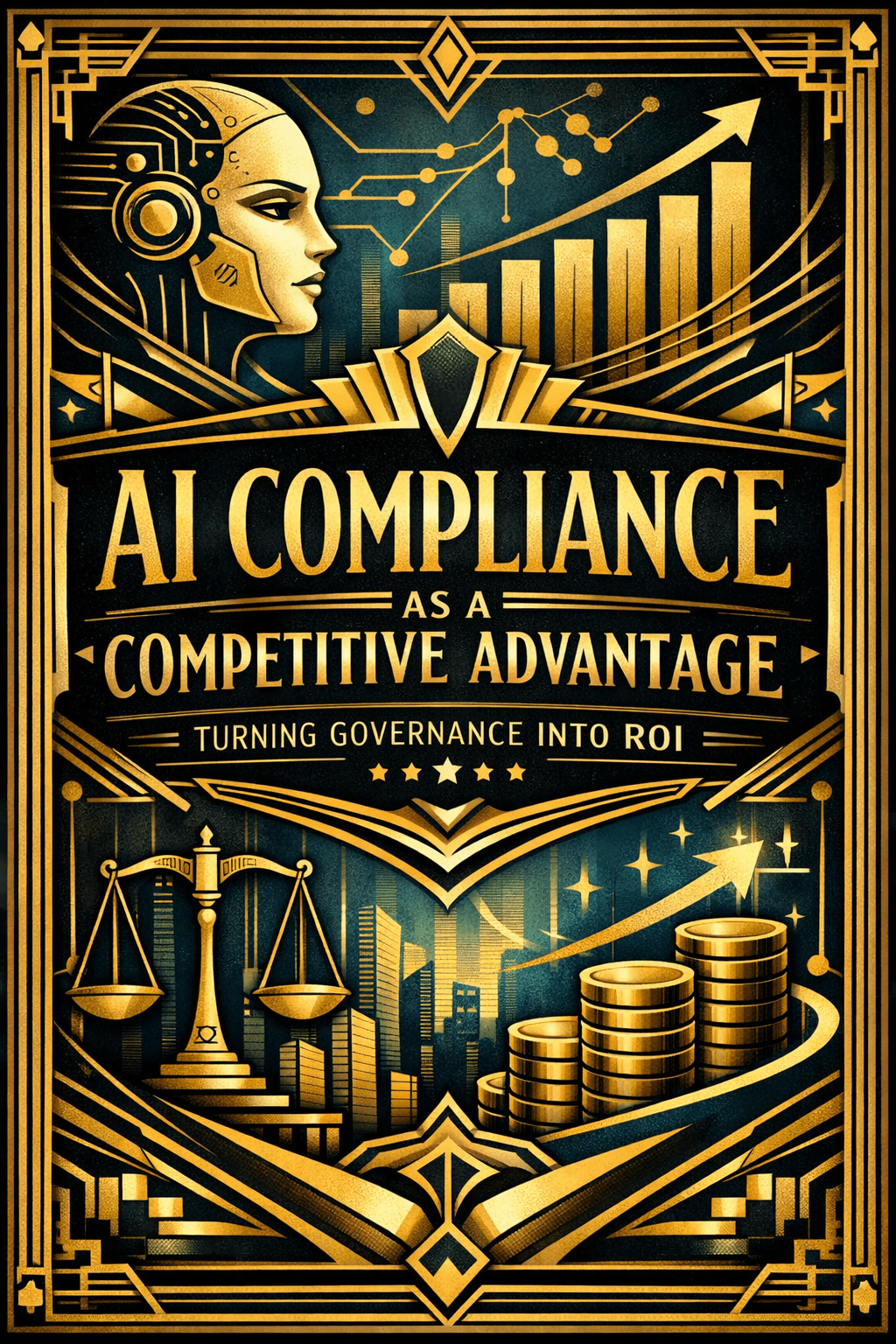
AI Compliance as a Competitive Advantage: Turning Governance Into ROI

In too many organizations, “AI compliance” is treated like a speed bump. Something to route around, manage after launch, or outsource to a vendor deck and a policy that nobody reads. That mindset is not only outdated but also expensive. In 2026, mature AI governance is becoming a commercial differentiator because customers, regulators, employees, and business partners increasingly ask the same question: Can you prove your system is trustworthy?

The most underappreciated truth is that AI risk is not “an AI team problem.” It is a business-process problem, expressed through data, decisions, third parties, and change control. The Department of Justice Evaluation of Corporate Compliance Programs (ECCP) has never been about perfect paperwork; it has been about whether a program is designed, implemented, resourced, tested, and improved. If you can translate that posture into AI, you can convert “compliance cost” into “credibility capital.”

A cautionary backdrop shows why. The EEOC’s 2023 settlement with iTutorGroup serves as a cautionary tale: automated hiring screening that disadvantages older workers can lead to legal exposure, remediation costs, and reputational damage. The details matter less than the pattern; when algorithmic decisions are not governed, the business eventually pays the bill. The compliance professional should see the pivot clearly; governance is the mechanism that lets you move fast without becoming reckless.

From a build-from-scratch, low-to-medium maturity posture, the win is not sophistication. The win is repeatability. If you build an AI governance framework aligned to NIST AI RMF (govern, map, measure, manage), structured through ISO/IEC 42001’s management-system discipline, and cognizant of EU AI Act risk tiering, you get something the business loves: a predictable path from idea to deployment. Today, I will explore five ways mature AI compliance can become a competitive advantage, each with a practical view of how a compliance-focused GenAI assistant can support business processes.

1) Sales and Customer Trust

Trust is a sales feature now, even when marketing refuses to call it that. Customers increasingly ask about data use, model behavior, security controls, and human oversight, and they are doing it in procurement questionnaires and contract negotiations. A mature governance framework lets you answer quickly, consistently, and with evidence, thereby shortening sales cycles and reducing late-stage deal friction. A compliance GenAI can support this by drafting standardized responses from approved trust artifacts such as policies, model cards, DPIAs, and audit summaries; flagging gaps, and routing exceptions to Legal and Compliance before the business overpromises.

For compliance professionals, this lesson is even more stark, as the ‘customers’ of a corporate compliance program are your employees. Some key KPIs you can track are average time to complete AI security and compliance questionnaires; percentage of deals requiring AI-related contractual concessions; number of customer-facing AI disclosures issued with approved templates; and percentage of AI systems with current model documentation and ownership attestations.

2) Regulatory Credibility

Regulators are not impressed by ambition; controls persuade them. NIST AI RMF provides a common language to demonstrate that you mapped use cases, measured risks, and managed them over time, while ISO/IEC 42001 imposes discipline on accountability, documentation, and continual improvement. The EU AI Act’s risk-based approach adds an organizing principle: classify systems, apply controls proportionate to risk, and prove that you did it. A compliance GenAI can help by maintaining a living inventory, prompting owners to complete quarterly attestations, drafting control narratives aligned with the frameworks, and assembling regulator-ready “evidence packs” that demonstrate governance in operation rather than on paper.

For compliance professionals, this lesson is about your gap analysis. You have not aligned your current internal controls with GenAI, governance, or other controls. You should do so. Some key KPIs you can track are percentage of AI systems risk-tiered and documented; time to produce an evidence pack for a high-impact system; number of material control exceptions and time-to-remediation; and frequency of risk reviews for high-impact systems.

3) Faster Product Approvals and Safer Deployment

Speed comes from clarity, not from cutting corners. When decision rights, review thresholds, and required artifacts are defined up front, product teams stop guessing what Compliance will require at the end. That is the management-system advantage: ISO/IEC 42001 treats AI governance like a repeatable operational process with gates, owners, and records, rather than a series of one-off debates. A compliance GenAI can support the workflow by pre-screening new use-case intake forms, recommending the correct risk tier under EU AI Act concepts, suggesting required testing (bias, privacy, safety), and generating the first draft of a launch checklist that the product team can execute.

For compliance professionals, this lesson is that you must run compliance at the speed of your business operations. Some key KPIs you can track are: cycle time from AI intake to approval; percent of launches that pass on first review; number of post-launch “surprise” issues tied to missing pre-launch controls; and percentage of models with human-in-the-loop controls when required.

4) Talent, Recruiting, and Internal Confidence

Top performers do not want to work in a company that treats AI like a toy and compliance like a nuisance. Mature governance creates psychological safety inside the organization: employees know what is permitted, what is prohibited, and how to raise concerns. It also improves recruiting because candidates, especially in technical roles, ask about responsible AI practices, data governance, and ethical guardrails. A compliance GenAI can support internal confidence by serving as the first-line “policy concierge,” answering questions with approved guidance, directing employees to the correct procedures, and logging common questions so Compliance can improve training and communications.

For compliance professionals, this fits squarely within the DOJ mandate for compliance to lead efforts in institutional justice and fairness. Some key KPIs you can track include training completion and comprehension metrics for AI use; the number of AI-related helpline inquiries and their resolution times; employee survey results on comfort raising AI concerns; and the percentage of AI use cases with documented business-owner accountability.

5) Lower Cost of Incidents and More Resilient Operations

AI incidents are rarely just “bad outputs.” They are process failures: poor data lineage, uncontrolled model changes, vendor opacity, missing logs, weak access controls, or no escalation path when harm appears. NIST AI RMF’s “measure” and “manage” functions emphasize monitoring, drift detection, incident response, and continuous improvement, which is precisely how you reduce the frequency and severity of failures. A compliance GenAI can support incident resilience by guiding teams through an AI incident response playbook, helping triage severity, ensuring evidence is preserved (audit logs, prompts, outputs, approvals), and generating lessons-learned reports that connect root cause to control enhancements.

For compliance professionals, this lesson is even more stark, as the ‘customers’ of a corporate compliance program are your employees. Some key KPIs you can track include the number of AI incidents by severity tier; mean time to detect and mean time to remediate; the percentage of high-impact models with drift-monitoring and alert thresholds; and the percentage of third-party AI providers subject to change-control notification requirements.

What “Mature Governance” Looks Like When You Are Building From Scratch

Do not start with a 60-page policy. Start with a few non-negotiables that scale:

  • Inventory and classification: Create a single inventory of GenAI assistants, ML models, and automated decision systems. Classify them by impact using EU AI Act concepts (high-impact versus low-impact) and your own business context.
  • Accountability and decision rights: Assign an owner for each system and require periodic attestations for the highest-risk categories.
  • Standard artifacts: Use lightweight model documentation, data lineage notes, and disclosure templates. If it is not documented, it does not exist for governance.
  • Human oversight and logging: Define when human-in-the-loop is mandatory and ensure logs capture who approved what, when, and why.
  • Third-party AI controls: Contract for transparency, audit support, change notification, and security requirements. Vendor opacity is not a strategy.

This is where ECCP thinking helps. The question is not whether you have a policy. The question is whether the policy is operationalized, tested, and improved. That is the bridge from compliance to competitive advantage.

If you want AI compliance to be a competitive advantage, treat it like a management system that produces evidence, not like a policy library that produces comfort. When governance becomes repeatable, the business can move faster, regulators become more confident, and customers see the difference. That is not a cost center. That is credibility you can take to the bank.


Categories
AI Today in 5

AI Today in 5: February 12, 2026, The AI to the Moon Edition

Welcome to AI Today in 5, the newest addition to the Compliance Podcast Network. Each day, Tom Fox will bring you 5 stories about AI to start your day. Sit back, enjoy a cup of morning coffee, and listen in to the AI Today In 5. All, from the Compliance Podcast Network. Each day, we consider five stories from the business world, compliance, ethics, risk management, leadership, or general interest about AI.

Top AI stories include:

  1. Putting AI into your compliance workflow. (Valley Courier)
  2. GenAI and compliance. (FinTechGlobal)
  3. Musk wants to put an AI factory on the Moon. (NYT)
  4. OpenAI disbands safety teams. (TechCrunch)
  5. Is the US ready for what AI will do for jobs? (The Atlantic)

For more information on the use of AI in Compliance programs, my new book, Upping Your Game, is available. You can purchase a copy of the book on Amazon.com.

Categories
AI Today in 5

AI Today in 5: January 14, 2026, The Apple Folds Edition

Welcome to AI Today in 5, the newest addition to the Compliance Podcast Network. Each day, Tom Fox will bring you 5 stories about AI to start your day. Sit back, enjoy a cup of morning coffee, and listen in to the AI Today In 5. All, from the Compliance Podcast Network. Each day, we consider five stories from the business world, compliance, ethics, risk management, leadership, or general interest about AI.

Top AI stories include:

  1. Apple admits defeat on AI, will use Google to power Siri. (BBC)
  2. Cross-border AI risk. (AI News)
  3. First AI-Native Compliance Platform. (PR Newswire)
  4. How will GenAI secure the trust of compliance? (FinTechGlobal)
  5. Will AI data centers eat up consumers’ electricity? (WSJ)

For more information on the use of AI in Compliance programs, my new book, Upping Your Game, is available. You can purchase a copy of the book on Amazon.com.

Categories
AI Today in 5

AI Today in 5: November 19, 2025, The Turning No into Flow Edition

Welcome to AI Today in 5, the newest edition to the Compliance Podcast Network. Each day, Tom Fox will bring you 5 stories about AI to start your day. Sit back, enjoy a cup of morning coffee, and listen in to the AI Today In 5. All, from the Compliance Podcast Network. Each day, we consider four stories from the business world, compliance, ethics, risk management, leadership, or general interest about AI.

Top AI stories include:

  1. Of APIs and AI. (Forbes)
  2. Will 2026 redefine GenAI and compliance risk? (PR Newswire)
  3. Energy is key for AI’s next chapter. (Trading View)
  4. New report on the CEO’s Guide to AI Transformation. (AINews)
  5. Teaching students to shape AI. (BusinessInsiderAfrica)

For more information on the use of AI in Compliance programs, see my new book, Upping Your Game. You can purchase a copy of the book on Amazon.com

Categories
Compliance and AI

Compliance and AI: Future-Proofing Compliance with AI: Strategies for 2026 and Beyond

What is the role of Artificial Intelligence in compliance? What about Machine Learning? Are you using ChatGPT? These questions are just three of the many we will explore in this cutting-edge podcast series, Compliance and AI, hosted by Tom Fox, the award-winning Voice of Compliance. Vince Walden, founder and CEO of KonaAI and Dr. Hemma Lomax, Head of Business Integrity at Docusign discuss the evolving landscape of compliance and the increasing role of AI and automation.

They highlight the need to modernize due diligence processes, reducing large, repetitive tasks down to streamlined operations using AI. A key focus is the innovative use of AI agents proposed by Hemma, likening them to digital employees, with personalized job descriptions and onboarding plans aimed at enhancing efficiency and unleashing human talent. Vince shares practical examples of how AI can transform compliance functions by leveraging data insights from various sources like investigations, third-party risks, and employee surveys. The episode encourages compliance professionals to dream big about the future, embrace AI-driven innovation, and crowdsource intelligence to bridge the gap towards more efficient and intelligent compliance practices.

Key highlights:

  • Introduction to Modern Due Diligence
  • The Role of AI in Compliance
  • Creating and Managing AI Agents
  • Empowering Teams with AI
  • Real-World Applications and Examples

Resources:

konaAI

Vince Walden on LinkedIn

Dr. Hemma Lomax on LinkedIn

Tom Fox

Instagram

Facebook

YouTube

Twitter

LinkedIn

Categories
AI Today in 5

AI Today in 5: September 29, 2025, The AI and Blue Collar Jobs Edition

Welcome to AI Today in 5, the newest edition to the Compliance Podcast Network. Each day, Tom Fox will bring you 5 stories about AI, so start your day, sit back, enjoy a cup of morning coffee, and listen in to the AI Today In 5, all from the Compliance Podcast Network. Each day, we consider four stories from the business world, compliance, ethics, risk management, leadership, or general interest related to AI.

Top AI stories include:

For more information on the use of AI in Compliance programs, my new book, Upping Your Game. You can purchase a copy of the book on Amazon.com.

Categories
AI Today in 5

AI Today in 5: September 16, 2025, The No Robo Bosses Episode

Welcome to AI Today in 5, the newest edition to the Compliance Podcast Network. Each day, Tom Fox will bring you 5 stories about AI, so start your day, sit back, enjoy a cup of morning coffee, and listen in to the AI Today In 5, all from the Compliance Podcast Network. Each day, we consider four stories from the business world, compliance, ethics, risk management, leadership, or general interest related to AI.

Top AI stories include:

For more information on the use of AI in Compliance programs, my new book, Upping Your Game. You can purchase a copy of the book on Amazon.com.

Categories
Compliance Tip of the Day

Compliance Tip of the Day – Using AI to Embed Your Compliance Program

Welcome to “Compliance Tip of the Day,” the podcast where we bring you daily insights and practical advice on navigating the ever-evolving landscape of compliance and regulatory requirements. Whether you’re a seasoned compliance professional or just starting your journey, we aim to provide you with bite-sized, actionable tips to help you stay on top of your compliance game. Join us as we explore the latest industry trends, share best practices, and demystify complex compliance issues to keep your organization on the right side of the law. Tune in daily for your dose of compliance wisdom, and let’s make compliance a little less daunting, one tip at a time.

Today, we conclude our 5-part series on using compliance in a best practices compliance program by considering how to embed compliance into your business operations with the help of AI.

For more on this topic, check out The Compliance Handbook, a Guide to Operationalizing your Compliance Program, 6th edition, which LexisNexis recently released. It is available here.

Categories
Blog

Using AI to Embed Compliance into Business Operations

Ed. Note: This week, we present a week-long series on the use of GenAI in a best practices compliance program. Additionally, for each blog post, I have created a one-page checklist for each article that you can use in presentations or for easier reference. Email my EA Jaja at jaja@compliancepodcastnetwork.net for a complimentary copy.

Compliance programs have long wrestled with a central challenge: how to move from “bolt-on” to “built-in.” Too often, compliance has been perceived as an overlay, a set of policies and reviews that operate parallel to business activity. The Department of Justice has repeatedly emphasized that compliance should be integrated directly into operations, not treated as an afterthought.

Generative AI offers compliance professionals a new tool to achieve this, as Elisa Farri and Gabriele Rosani argue in an HBR article How AI Can Help Managers Think Through Problems, that AI is not just a productivity enhancer but a thought partner. Instead, it is capable of helping leaders frame problems, test assumptions, and engage in structured dialogues that improve decision-making.

I aim to utilize their article to support compliance officers in leveraging AI to enhance our ability to embed compliance into business processes more effectively. Today, I conclude my five-part blog post series on using GenAI in compliance to explore how AI can assist in building compliance into the business and what it means for the future of compliance programs. I also provide five key takeaways for compliance professionals on how to do so.

1. AI as a Co-Thinking Partner for Embedding Compliance into Workflows

One of the article’s most powerful insights is the concept of “co-thinking”; AI as a partner in structured dialogue rather than just a tool for quick answers. For compliance, this is transformative. Imagine using AI not simply to draft a policy, but to help you think through how that policy should be embedded in day-to-day operations.

For instance, when designing a gifts-and-entertainment approval process, AI can walk compliance through stakeholder perspectives: What does sales need? What would regulators expect? What friction will finance raise? By simulating these perspectives, AI helps compliance professionals design workflows that are practical and embedded, rather than abstract and detached.

This approach also makes compliance more proactive. Instead of reacting to risks after violations occur, AI-enabled co-thinking allows compliance to anticipate where policies may clash with business objectives and design operational solutions upfront. The compliance lesson is to treat AI as a structured dialogue partner to design compliance that lives inside the workflow, policies, and processes that are not just documented but operationalized.

2. Enhancing Stakeholder Engagement Through AI Simulations

Embedding compliance into business operations requires more than rules; it requires buy-in. The article highlights how AI can role-play different stakeholders, challenging managers to anticipate reactions. Compliance can use this capability to stress-test initiatives before rollout.

Suppose compliance is introducing a new due diligence system for third-party onboarding. AI can simulate how procurement might respond (“slows down vendor onboarding”), how business development might object (“hurts competitiveness”), and how regulators might evaluate (“strong demonstration of risk-based management”). This multi-stakeholder dialogue allows compliance teams to refine both process design and messaging before rollout.

The implication for compliance programs is clear: embedding compliance requires deep cultural alignment. AI makes it possible to test and rehearse that alignment at scale, reducing resistance and building smoother adoption. The compliance lesson is to use AI simulations to bring stakeholder voices into the design process, ensuring compliance is not bolted on but built with empathy for business realities.

3. AI-Assisted Root Cause Analysis Strengthens Business Integration

Compliance programs are expected to conduct root cause analysis after misconduct, but too often these reviews remain siloed. AI-enabled co-thinking helps expand root cause analysis into an exercise that strengthens business operations.

For example, when analyzing repeated travel and expense violations, AI can guide compliance through structured questions: Were training gaps to blame? Were approval workflows too weak? Were sales incentives misaligned? Then, critically, AI can help map remediation back into operations—tightening finance approvals, adjusting incentive structures, and embedding compliance flags directly into expense systems.

This is not about AI making the decision. It is about AI helping compliance think through operational integration of lessons learned. Instead of merely complying with regulations by writing a report that sits on a shelf, the outcome becomes operational adjustments inside business processes. The compliance lesson (or rather, perhaps implication) is that the DOJ expects compliance programs to prevent recurrence through systemic fixes. AI co-thinking can ensure those fixes are operational, not theoretical.

4. Scaling Compliance Culture and Mindset Shifts Across the Organization

The article notes how AI can be used to coach managers through mindset shifts, helping them reflect on new behaviors and practices. Compliance can use the same approach to embed cultural expectations directly into business teams. For example, AI can be configured as a compliance coach embedded in daily tools, guiding managers through ethical dilemmas, prompting reflection during approval requests, or reinforcing company values during project planning. Instead of compliance being external and episodic, it becomes internal and continuous.

This democratizes compliance development. A frontline manager in Asia can interact with AI that reinforces compliance culture in real time, rather than waiting for annual training or sporadic compliance visits. It also gives compliance leaders data on where employees are struggling, revealing cultural gaps that can be addressed systemically.

The implication is that embedding compliance is not just about systems but about mindset. AI can make culture-building a daily, distributed activity rather than a centralized, one-time effort.

5. Ensuring Human Judgment Remains Central in AI-Enabled Compliance

Finally, while AI can enhance problem-solving and integration, the article underscores that co-thinking only works when humans stay actively engaged. Compliance cannot abdicate responsibility to machines. This has profound implications for compliance programs. AI can help frame problems, simulate stakeholders, and propose operational fixes, but it cannot weigh reputational risk, interpret regulatory expectations, or balance competing global obligations. Those decisions require human judgment.

The key is balance: AI accelerates and deepens thinking, but compliance leaders must build governance frameworks to ensure outputs are reviewed, validated, and contextualized. Embedding compliance into business operations does not mean letting AI run the show; it means letting AI augment human reasoning so that compliance becomes more practical, strategic, and defensible.

The compliance lesson, based on both the DOJ’s FCPA Resource Guide and the 2024 ECCP, is clear that compliance must be risk-based, well-resourced, and continuously improved. AI helps compliance think through integration, but humans remain accountable for ensuring it meets regulatory standards and ethical expectations.

AI as a Pathway to Embedded Compliance

The future of compliance is embedded, not bolted on. DOJ expects it. Boards demand it. Employees need it. The challenge is figuring out how to make it real. AI offers compliance professionals a powerful new tool: not as an oracle, but as a co-thinker. By helping compliance frame problems, simulate stakeholders, strengthen root cause analysis, scale cultural coaching, and reinforce human judgment, AI can accelerate the shift from compliance as oversight to compliance as an integrated business practice.

The call to action is simple: use AI not just to make compliance faster, but to make compliance inseparable from business. That is how compliance earns trust, drives culture, and meets regulatory expectations in the age of AI.

Categories
AI Today in 5

AI Today in 5: August 21, 2025, The AI Psychosis Episode

Welcome to AI Today in 5, the newest addition to the Compliance Podcast Network. Each day, Tom Fox will bring you 5 stories about AI to start your day. Sit back, enjoy a cup of morning coffee, and listen in to the AI Today In 5. All, from the Compliance Podcast Network. Each day, we consider four stories from the business world, compliance, ethics, risk management, leadership, or general interest about AI.

Top stories include:

  • 95% of GenAI is failing. (Fortune)
  • MIT report on AI spooks investors. (IBD)
  • Is AI psychosis real? (BBC)
  • Lutnick insults the Chinese. Chinese stop buying Nvidia chips. (FT)
  • Should quants use AI? (Bloomberg)