Categories
Data Driven Compliance

Data Driven Compliance – Understanding the UK’s New Failure to Prevent Fraud Offense with Sam Tate

Welcome to Season 2 of the award-winning Data Driven Compliance. In this new season, we will look at the new Failure to Prevent Fraud offense. Join host Tom Fox as we explore this new law and how to comply with it through the lens of data driven compliance. This podcast is sponsored by Kona AI. In this first episode of Season 2, Tom is joined by Sam Tate, Global Head of Regulatory and Investigations at the international law firm Clyde & Co.

Tate to discuss the significant changes brought about by the latest UK law on the Failure to Prevent Fraud offense, which was introduced as part of the Economic Crime and Corporate Transparency Act of 2023 and took effect on September 1, 2025. He also highlights the challenges of prosecuting large corporations for fraud. Tom and Sam examine the new compliance requirements under the law, their impact on multinational companies, and the extended jurisdiction that covers actions affecting the UK. Practical steps for companies to take in response to the new law are also discussed, emphasizing the need for a thorough risk assessment and robust compliance programs.

Key highlights:

  • Overview of the New Fraud Law
  • Implications for US Companies
  • Market Response and Compliance Challenges
  • Prosecutors’ Perspective and Enforcement
  • Corporate Response and Compliance Strategies
  • Impact on International and Regulated Entities

Resources:

Clyde & Co

Sam Tate at Clyde & Co

ECCTA’s Failure to Prevent Fraud Offense—Is your Organisation ready?

Check out KonaAI

Click here for KonaAI White Paper Rethinking Compliance: Practical Steps for Adapting to the UK’s New Fraud Legislation.

Connect with Tom Fox on LinkedIn

Categories
#RiskNYC Speaker Series

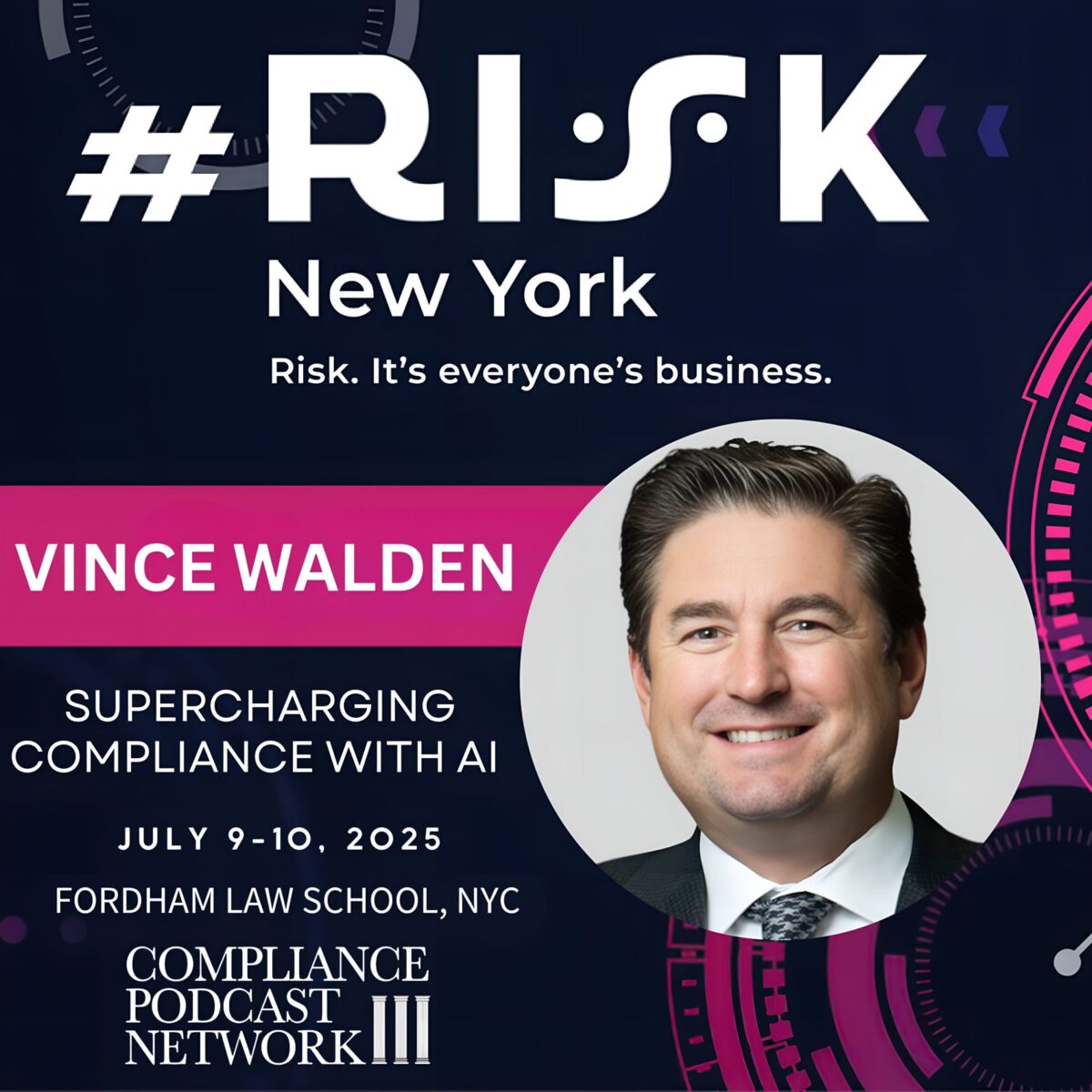
#Risk New York Speaker Series – Supercharging Compliance with AI with Vince Walden

Join Tom Fox and hundreds of other GRC professionals in the city that never sleeps, New York City, on July 9 & 10 for one of the top conferences around, #Risk New York. The current US landscape, shaped by evolving policies, rapid advancements in AI, and shifting global dynamics, demands adaptive strategies and cross-functional collaboration.

At #RISK New York, you will master the New Regulatory Reality by getting ahead of US regulatory shifts and their impact. Conquer AI and Tech Risk by Safeguarding Your Organization in an AI-Driven World and Understanding the Implications of Major Tech Investments. Navigate Financial and Crypto Volatility by Protecting Your Assets and Exploring Solutions in a Dynamic Market. Strengthen Your GRC Framework by Leveraging Governance, Risk, and Compliance for Strategic Advantage. Protect Digital Trust by addressing challenges in cybersecurity and data privacy, and combating misinformation. All while meeting with the country’s top #Risk management professionals.

In this episode of the Risk GRC speaker series, Tom Fox talks with Vince Walden, CEO of Kona AI, about his career in compliance, fraud, and risk management. Vince discusses his passion for data analytics and details the development of a new Compliance and Transaction Monitoring platform. They explore the use of AI, particularly predictive modeling and compliance language models, to enhance risk management. Vince also shares his excitement about the recent acquisition of his company by Covasant and the future of AI-driven compliance technology. The discussion ends with anticipation for the upcoming Risk NYC conference, where Vince looks forward to networking and exchanging insights on current risk challenges.

Resources:

#Risk Conference Series

#RiskNYC—Tickets and Information

Vince Walden on LinkedIn

Categories
Innovation in Compliance

Innovation in Compliance: Real-Time Fraud Prevention Strategies for Financial Loss Prevention with Vince Walden

Innovation is present in many areas, and compliance professionals must not only be prepared for it but also actively embrace it. Join Tom Fox, the Voice of Compliance, as he visits with top innovative minds, thinkers, and creators in the award-winning Innovation in Compliance podcast. In this episode, Tom Fox cross-posts an episode from the BCG Podcast, where host Hanjo Siebert visits with KonaAI CEO Vince Walden.

Walden is a prominent advocate for interdepartmental collaboration, particularly in the realm of compliance and fraud risk management. With his company specializing in AI-driven compliance solutions across diverse industries, Walden emphasizes the importance of breaking down data silos to promote transparency and improve communication among internal auditors, compliance teams, and IT departments. He views collaboration as a strategic imperative driven by data and governance, emphasizing that data should be the ultimate equalizer, thereby promoting a culture of collaboration that effectively achieves organizational goals. By leveraging shared data sources and advanced technology, Walden believes organizations can enhance their oversight, detect potential fraud, and address data privacy issues, ultimately improving their ability to prevent financial losses and maintain regulatory compliance.

Key highlights:

  • Breaking Down Data Silos for Collaboration
  • Enhancing Collaboration Through Data Transparency and Technology
  • Unified Data Approach for Enhanced Fraud Prevention
  • Advanced Fraud Detection with Machine Learning
  • Proactive Monitoring for Financial Security

Resources:

Vince Walden on LinkedIn

KonaAI

Original Podcast Recording

Tom Fox

Instagram

Facebook

YouTube

Twitter

LinkedIn

 Innovation in Compliance was recently honored as the number 4 podcast in Risk Management by 1,000,000 Podcasts.

Categories
FCPA Compliance Report

FCPA Compliance Report – The Role of Culture and Data in Fraud Risk Management: A Conversation with Vincent Walden

Welcome to the award-winning FCPA Compliance Report, the longest-running podcast in compliance. This is a very special episode. Today, Tom Fox cross-posts an episode from the BCG Podcast. In it, host Hanjo Siebert visits with konaAI CEO Vince Walden. They discuss the critical role of data and culture in achieving effective compliance, exploring the importance of interdepartmental collaboration, the evolving compliance landscape, and real-world examples of fraud detection. Walden emphasizes that while strategy is important, a strong organizational culture is essential for successful execution. He explains how data serves as a transparency agent and outlines the need for a collective approach to managing fraud risk. Listen in to gain insights into the challenges and best practices in modern compliance.

Key highlights:

  • The Importance of Transaction Monitoring
  • Challenges in Fraud Risk Management
  • Collaborative Approaches to Compliance
  • konaAI Role in Modern Compliance
  • Real-World Fraud Cases and Lessons Learned
  • The Impact of Business Culture on Fraud Prevention
  • Fostering a Culture of Transparency

Resources:

Vince Walden on LinkedIn

konaAI

Original Podcast Recording

Tom Fox

Instagram

Facebook

YouTube

Twitter

LinkedIn

For more information on the use of AI in Compliance programs, see my new book, Upping Your Game. You can purchase a copy of the book on Amazon.com.

Categories
Blog

AI and Predictive Analytics: The Future of Compliance and Risk Management

In recent years, the evolution of compliance has transcended its traditional reactive boundaries, entering a dynamic age driven by predictive analytics and artificial intelligence (AI). This transformation marks a significant shift, turning compliance programs from backward-looking functions into forward-thinking engines capable of preempting regulatory breaches before they arise. As compliance professionals navigate an increasingly complex regulatory environment, predictive analytics and AI have emerged as vital tools, leveraging historical data, real-time monitoring, and statistical modeling to enhance organizational foresight and fortify compliance programs.

Regulators worldwide, including heavyweights such as the Department of Justice (DOJ), the Securities and Exchange Commission (SEC), and the UK’s Financial Conduct Authority (FCA), have underscored the importance of data-driven compliance practices. Recent DOJ guidelines explicitly advocate for proactive monitoring, predictive risk assessments, and AI-powered tools, making it clear that advanced analytics is no longer optional; it is now essential. Organizations failing to harness predictive analytics face heightened vulnerability to compliance failures, financial penalties, and significant reputational harm.

Introduction

To better understand how predictive analytics reshapes compliance, today, I will review the primary advantages and key lessons that compliance professionals must internalize to deploy these tools effectively.

Enhanced Risk Management and Strategic Decision-Making

Traditionally, compliance management relied on monitoring controls, periodic audits, and investigations triggered by discovered incidents. Predictive analytics fundamentally changes this paradigm; analyzing historical data patterns and leveraging machine learning algorithms identifies potential compliance risks in their infancy. This enables compliance teams to detect threats like bribery, corruption, fraud schemes, cybersecurity vulnerabilities, or regulatory breaches early enough to prevent damage altogether.

This predictive capability also significantly improves strategic decision-making. Instead of allocating resources broadly, compliance professionals can use predictive insights to pinpoint exactly where to prioritize monitoring, enhance internal controls, and target employee training. The result is a more effective and budget-efficient compliance operation guided by data rather than intuition.

Creating a Culture of Proactivity

Predictive analytics enhance operational effectiveness and reshape the compliance culture. Transitioning from reactive firefighting to proactive prevention, analytics-driven compliance fosters greater vigilance and awareness across the organization. Employees learn to spot potential compliance issues early and understand their responsibility in maintaining regulatory integrity. This proactive culture strengthens overall compliance and mitigates the organizational risks tied to complacency or ignorance.

Lessons for Compliance Professionals

Compliance professionals ready to harness predictive analytics effectively must adopt new skills, processes, and mindsets. Here are five essential lessons to navigate this transition:

Lesson 1: Embrace Data Literacy

The new compliance landscape demands that professionals move beyond traditional legal and investigative skills. Competence in data literacy, understanding statistical principles, interpreting predictive models, and effectively communicating data-driven insights have become critical. Compliance officers must become comfortable questioning data assumptions, recognizing biases, and ensuring insights’ reliability and accuracy.

Organizations should invest in ongoing training, certifications, and educational partnerships to ensure compliance teams remain fluent in data analytics. Enhanced data literacy boosts individual professional effectiveness and ensures organizational resilience against emerging threats.

Lesson 2: Integrate Analytics into Compliance Operations

Predictive analytics provide value when fully integrated into compliance operations, not isolated as standalone tools. Compliance leaders must embed predictive insights directly into workflows, ensuring outputs translate seamlessly into operational actions. For instance, platforms like konaAI identify unusual payment patterns, such as urgent or same-day payments, which are common indicators of potential misconduct or fraud. When integrated operationally, such insights guide immediate investigation or preventive action.

By translating complex analytics into actionable, easily understood recommendations, compliance teams can better align analytics outputs with daily operations, achieving tangible compliance enhancements.

Lesson 3: Foster Collaboration with Data Teams

Predictive analytics success hinges on strong collaboration between compliance professionals and data experts. Compliance teams need robust partnerships with IT and data science departments to ensure reliable data collection, processing, and model validation. Cross-functional communication is essential, with compliance clearly defining regulatory priorities and risk identification criteria while data experts translate these into effective analytical solutions.

Eric Sydell emphasizes this collaboration, especially with the rise of generative AI. Advanced language models now analyze large-scale unstructured data, emails, images, and videos at unprecedented speed and depth. Interdisciplinary collaboration thus becomes crucial in fully exploiting these new capabilities, maximizing analytics effectiveness for compliance.

Lesson 4: Ensure Transparency and Explainability of Models

Complex analytics models can appear obscure, leading stakeholders to mistrust or misunderstand their outputs. Compliance teams must prioritize transparency, documenting clearly how predictive models function, their data sources, and underlying assumptions. Transparency ensures stakeholder trust, fosters confident adoption, and supports internal and external audits.

Furthermore, regulators increasingly demand clear documentation of analytical methods underpinning compliance programs. Transparent predictive models, therefore, facilitate regulatory reporting, demonstrate proactive risk management, and strengthen relationships with oversight bodies, bolstering overall compliance credibility and effectiveness.

Lesson 5: Regularly Assess and Update Predictive Models

Predictive analytics must evolve alongside changing business practices, emerging risks, and regulatory shifts. Compliance professionals should systematically validate and recalibrate predictive models to maintain accuracy and relevance. Regular assessments comparing model predictions to actual outcomes can identify discrepancies or emerging data trends, signaling necessary adjustments.

The use of generative AI exemplifies the agility required in this process. Compliance audits traditionally involve manual analysis across complex document sets, absorbing hundreds of auditor hours. Generative AI radically streamlines these processes, swiftly identifying relevant insights across vast unstructured data sources. Continuous model evaluation and enhancement ensure these powerful analytical tools remain precise, relevant, and optimally aligned with the latest compliance challenges.

Predictive analytics represents a new frontier for compliance professionals, a critical intersection between technological innovation and regulatory stewardship. As regulators place increasing importance on predictive, data-driven compliance approaches, compliance functions must adapt quickly, embracing new competencies, integrating analytics seamlessly into operations, and cultivating a culture of proactivity.

The journey to predictive analytics mastery involves a clear understanding of data literacy, effective operational integration, collaborative data team partnerships, transparent modeling, and ongoing predictive model assessment. Companies embracing this transformation will ensure robust compliance frameworks and cultivate strategic foresight, positioning themselves advantageously in an increasingly complex regulatory landscape.

Ultimately, predictive analytics empower compliance professionals to safeguard organizational integrity proactively, ensuring risks are managed not in hindsight but with clear foresight, making compliance more efficient, effective, and impactful than ever before.

This is taken from the new book Upping Your Game: How Compliance and Risk Management Move to 2030 and Beyond, which is available from Amazon.com.


Categories
FCPA Compliance Report

FCPA Compliance Report: Vince Walden on Leveraging Data Analytics for Effective Compliance Monitoring

Welcome to the award-winning FCPA Compliance Report, the longest running podcast in compliance.

In this edition of the FCPA Compliance Report, Tom Fox welcomes back Vince Walden, founder of KonaAI. Vince reports on the 2024 Update to the Evaluation of Corporate Compliance Programs. (Today’s episode is a cross-posting from Data Driven Compliance.)

Walden, a distinguished expert in compliance data analytics, actively participates in industry forums such as the Society of Corporate Compliance and Ethics annual summit in Grapevine, Texas. He advocates for compliance professionals to have ample access to relevant data sources, enabling them to monitor and test policies, controls, and transactions effectively. Walden stresses the importance of AI developers being vigilant about potential biases and public harm, aligning with the Department of Justice’s stance on accountability. He advises compliance practitioners to collaborate with internal audit and finance teams to ensure they have the necessary transactional data for comprehensive risk assessments, highlighting successful, cost-effective implementations like those at Albemarle as models for gradual, data-driven compliance program adoption.

Highlights in this Episode

  • Data-Driven Compliance for Cost Savings
  • Enhancing Compliance through Advanced Data Analysis
  • Identifying High-Risk Areas for Data Analytics
  • Proactive Risk Mitigation through Real-Time Monitoring
  • ROI-driven Compliance Programs with Data Analytics

Resources

Vince Walden on LinkedIn

KonaAI

Tom Fox

Instagram

Facebook

YouTube

Twitter

LinkedIn

For more information on the Ethico Toolkit for Middle Managers, available at no charge by clicking here.

Categories
Data Driven Compliance

Data-Driven Compliance: The DOJ Mandate on Transforming Compliance Through Data Analytics and AI with Vince Walden

Are you struggling to keep up with the ever-changing compliance programs in your business? Look no further than the award-winning Data Driven Compliance podcast, hosted by Tom Fox, is a podcast featuring an in-depth conversation around the uses of data and data analytics in compliance programs. Data Driven Compliance is back with another exciting episode. Today, Vince Walden, founder of KonaAI, the sponsor of this podcast, returns to talk about the recent speech by Nicole Argentieri and the release of the 2024 Update to the Evaluation of Corporate Compliance Programs (ECCP).

Walden shares insights from the Nicole Argentieri’s keynote and ECCP update, emphasizing the DOJ’s focus on data access in compliance. We explore the importance of utilizing both compliance and business data for effective fraud and risk management. Walden underscores the necessity for compliance professionals to collaborate with internal audit and finance departments, advocating for a risk-based approach to data analytics and continuous controls monitoring. The discussion also delves into leveraging AI and machine learning to improve compliance efficacy and overall business operations, arguing for the proportional allocation of resources to match the company’s sophistication level.

Key Highlights:

  • DOJ’s Focus on Data Access
  • Understanding Compliance Data Analytics
  • Training Compliance Officers on Data
  • Implementing Continuous Controls Monitoring
  • Cost Savings and ROI in Compliance
  • Proportionate Resource Allocation
  • Documentation and Transparency

Resources:

Vince Walden on LinkedIn

KonaAI

Tom Fox 

Connect with me on the following sites:

Instagram

Facebook

YouTube

Twitter

LinkedIn

Categories
Data Driven Compliance

Data Driven Compliance: Sherlock Holmes on Pattern Recognition in Data-Driven Compliance

Are you struggling to keep up with the ever-changing compliance programs in your business? Look no further than the award-winning Data-Driven Compliance podcast, hosted by Tom Fox. This podcast features an in-depth conversation around the uses of data and data analytics in compliance programs. Data-Driven Compliance is back with another exciting episode. Today, I take a solo turn to talk about data analytics and pattern recognition for the compliance professional in the context of the Sherlock Holmes short story, The Adventures of the Dancing Men. For a deep dive into the story, check out the episode on my Sherlock Holmes pod, Adventures in Compliance.

In this story, Holmes decodes stick figures to solve the mystery. One of the tools he uses is pattern recognition, which plays a pivotal role in data-driven compliance programs, serving as a tool to identify anomalies and potential compliance issues. It involves the systematic observation of data to identify recurring elements or trends, even in seemingly random data, and interpreting these patterns within the appropriate context to provide meaningful insights. The importance of this process for the compliance professional cannot be overstated.

Pattern recognition requires both creativity and flexibility, and it can help predict future outcomes, optimize processes, and inform decision-making in compliance programs. I also discuss the significance of an iterative approach, which involves continuous improvement based on new information and collaboration with others to enhance analytic capabilities and gain deeper insights. Check out this most unique and interesting episode of the Data-Driven Compliance podcast, where Sherlock Holmes instructs the modern compliance professional on Data-Driven Compliance.

 Resources:

The New Annotated Sherlock Holmes

Sherlock Holmes FAQ

 Tom Fox 

Connect with me on the following sites:

Instagram

Facebook

YouTube

Twitter

LinkedIn

Categories
Data Driven Compliance

Data Driven Compliance: The Journeys of Albemarle and ABB to Data-Driven Compliance, Part 2

Are you struggling to keep up with the ever-changing compliance programs in your business? Look no further than the award-winning Data-Driven Compliance podcast, hosted by Tom Fox. This podcast features an in-depth conversation around the uses of data and data analytics in compliance programs. Data-Driven Compliance is back with another exciting episode. In this special second part of a two-part podcast, I co-host with Vince Walden, CEO of KonaAI, to visit with our guests Andrew McBride, Chief Risk Officer at Albemarle, and Tapan Debnath, Head of Integrity, Regulatory Affairs, and Data Privacy—Process Automation at ABB, on their respective companies’ journeys to data-driven compliance.

Debnath’s perspective on the challenges and strategies in compliance data analytics is centered on the need for clear goals, defined processes, and the importance of early planning and resource allocation. He sees compliance data analytics as a journey rather than a project, encouraging organizations to start with imperfect data and refine their processes over time. On the other hand, McBride’s perspective is focused on prioritization, resource allocation, and audience-driven decision-making. He emphasizes the iterative nature of data analytics projects and believes that a successful ethics and compliance program does not necessarily require a large data analytics team, but rather the right roles and support from the IT function. Join Tom Fox and Vince Walden as they delve deeper into these insights with Tapan Debnath and Andrew McBride on this episode of Data-Driven Compliance.

Key Highlights:

  • Navigating Data Privacy Laws Across Jurisdictions
  • Strategic Steps in Ethics and Compliance Analytics
  • Unlocking AI’s Potential in Compliance Analytics
  • Actionable Insights from Data Analytics
  • Leveraging Documentation for Enhanced Compliance and Risk Mitigation

Resources:

Vince Walden on LinkedIn

KonaAI

Tom Fox 

Connect with me on the following sites:

Instagram

Facebook

YouTube

Twitter

Categories
31 Days to More Effective Compliance Programs

One Month to a More Effective Compliance Program: Day 18-Strategic Considerations for Implementing AI in Compliance

What are the key factors that impact these strategic considerations for implementing AI in compliance, exploring the tradeoffs, challenges, and importance of considering the impact on decision-making.

Key Considerations

1.     Understand the impact of AI on the company.

2.     Maintain an inventory of all tools used.

3.     Understand the tools for cost efficiency and risk avoidance.

4.     Involve all business sectors in AI discussions.

5.     Utilize AI for better data usage in compliance.

While implementing AI in compliance brings numerous benefits, there are tradeoffs and challenges to consider. One tradeoff is the need to balance exploration and innovation with rules and regulations. Another challenge is the selection of AI tools.

Implementing AI in compliance requires strategic considerations and decision-making. Understanding the impact of AI, maintaining an inventory of tools, considering cost efficiency and risk avoidance, involving all business sectors, and utilizing AI for better data usage are key factors to consider. Balancing exploration and rules, as well as selecting the right AI tools, are challenges that need to be addressed. By carefully navigating these considerations and challenges, companies can leverage AI to enhance their compliance programs and stay ahead in an ever-evolving regulatory landscape.

Three key takeaways:

1. What are the key factors that impact these strategic considerations for implementing AI in compliance?

2. Compliance professionals need to stay updated with the latest AI developments and trends, which requires continuous learning and keeping abreast of industry news and insights.

3. Understanding the impact of AI, maintaining an inventory of tools, considering cost efficiency and risk avoidance, involving all business sectors, and utilizing AI for better data usage are key factors to consider.

For More information on KonaAI, click here.