Recently, I had the opportunity to visit with John Byrne, the CEO at Corlytics. You can listen to the podcast here. One of the more interesting topics we discussed is that compliance professionals find themselves at the intriguing crossroads between groundbreaking technological innovation and the timeless, foundational principles of compliance, notably trust and integrity. Nowhere is this more evident than in the banking sector, where the stakes around trust are extraordinarily high. Now, with the Trump Administration actively promoting cryptocurrency to both the US banking industry and the American public, that foundational principle is even more critical.
Historically, banking, with over two and a half centuries of operational legacy, has always relied fundamentally on customer trust. Indeed, long before modern regulatory structures emerged, banks implemented internal policies and compliance-like practices designed explicitly to instill and maintain confidence. Yet despite advancements in regulation and technology, the principle remains unchanged: trust is the lifeblood of banking, and when it falters, the consequences can be catastrophic.
Nothing illustrates this more starkly than the old-fashioned bank run, perhaps the ultimate demonstration of breached trust. In a bank run, customers simultaneously lose faith in the institution’s ability to safeguard their assets, rushing en masse to withdraw funds. This panic-driven action rapidly transforms initial doubt into widespread fear, creating an accelerating cascade effect that can swiftly collapse even seemingly robust institutions.
The recent 2023 examples of Silicon Valley Bank, Signature Bank, and First Republic Bank, all headquartered in California, underscore this timeless truth. Despite occurring in a digitally connected world with instantaneous communication, the root cause was identical to that of traditional bank runs, famously depicted in classic movies like Mary Poppins and It’s a Wonderful Life: a fundamental failure of trust. For today’s compliance professionals, the lesson remains clear and resonant. Even as they harness modern tools like artificial intelligence to enhance compliance processes, they must remain ever-vigilant custodians of trust, recognizing that without it, all technological advances and regulatory structures are ultimately insufficient to protect a bank, and indeed any business, from the devastating impact of lost confidence.
Lesson 1: Trust is the Foundation of Compliance
The essence of compliance has always been rooted in trust. Banking, as a sector with over 250 years of history, exemplifies this principle vividly. Long before the regulatory frameworks we recognize today, banks operated with internal policies designed to cultivate and maintain trust with their customers. Compliance, in its earliest incarnation, was about establishing clear standards and rules internally, ensuring customer confidence and institutional stability.
Today, despite the extensive web of external regulations, trust remains a central concern. The collapse of trust can trigger catastrophic outcomes, vividly illustrated by historical bank runs such as those portrayed in classic films like Mary Poppins and It’s a Wonderful Life. Even as recently as 2023, the failure of Silicon Valley Bank in California, a modern-day bank run accelerated by technology, reminds us starkly how fragile trust can be and how critical it remains for compliance professionals to safeguard it diligently.
Lesson 2: Compliance is Good Business
The notion of compliance as a hindrance to business, often unfairly labeled as the “business prevention unit,” is shifting dramatically. A sound compliance program aligns closely with strong business outcomes —a principle that has been repeatedly emphasized in recent years. Banks and businesses are increasingly recognizing compliance not as an obstacle but as an integral part of strategic business operations.
Good compliance facilitates a trustworthy reputation, ensures customer satisfaction, and establishes long-term business stability. Firms that embody compliance as a core business strategy consistently demonstrate resilience and sustainability. Compliance isn’t merely a regulatory necessity; it is fundamentally good business.
Lesson 3: Regulation Should Complement, Not Replace, Internal Standards
Historically, banks created their internal compliance measures to protect their institutions long before external regulation mandated such frameworks. Over time, regulatory developments have supplemented and formalized these practices, creating a structured external governance model. However, prudent banks continue to adhere to high internal standards irrespective of regulatory mandates.
Effective compliance frameworks seamlessly integrate internal ethical guidelines and external regulatory requirements, ensuring a unified approach to governance. Organizations shouldn’t solely rely on external regulations to dictate their ethical and operational standards. Instead, compliance professionals should encourage internal benchmarks of ethical behavior and trustworthiness, aligning company culture closely with compliance objectives to achieve sustainable business excellence.
Lesson 4: Technology as an Enabler of Efficient Compliance
One common complaint about compliance is its perceived inefficiency, which businesses argue slows down operations. Here, advanced technology, especially AI, presents transformative possibilities. AI-driven tools can significantly streamline compliance processes, enhancing speed, efficiency, and accuracy.
AI technologies allow compliance teams to swiftly identify risks, maintain comprehensive documentation, provide clear audit trails, and escalate issues rapidly and accurately. Rather than viewing technology as complicating compliance, companies should embrace it as an essential tool enabling compliance professionals to focus on strategic, high-value tasks rather than routine manual processes. This technological enablement does not replace skilled compliance professionals. It enhances their capabilities, ensuring more effective outcomes for the business as a whole.
Lesson 5: Compliance Should Be Proactive, Not Reactive
Compliance practices should always be forward-looking and proactive, anticipating potential issues and acting accordingly. Banks and businesses that are successful in managing risk and maintaining trust have learned not to wait for regulators to dictate ethical standards. They proactively implement robust compliance and governance frameworks because they recognize that doing the right thing is inherently good for business.
Proactive compliance fosters customer trust, internal coherence, and institutional resilience. It positions companies to avoid reputational and financial harm, reducing the likelihood of regulatory actions or scandals. Compliance professionals must champion a proactive approach, integrating ethics and integrity at every organizational level, ensuring firms remain compliant and trustworthy, irrespective of whether regulatory bodies explicitly require it.
Conclusion: A Sustainable Business Model Through Good Compliance
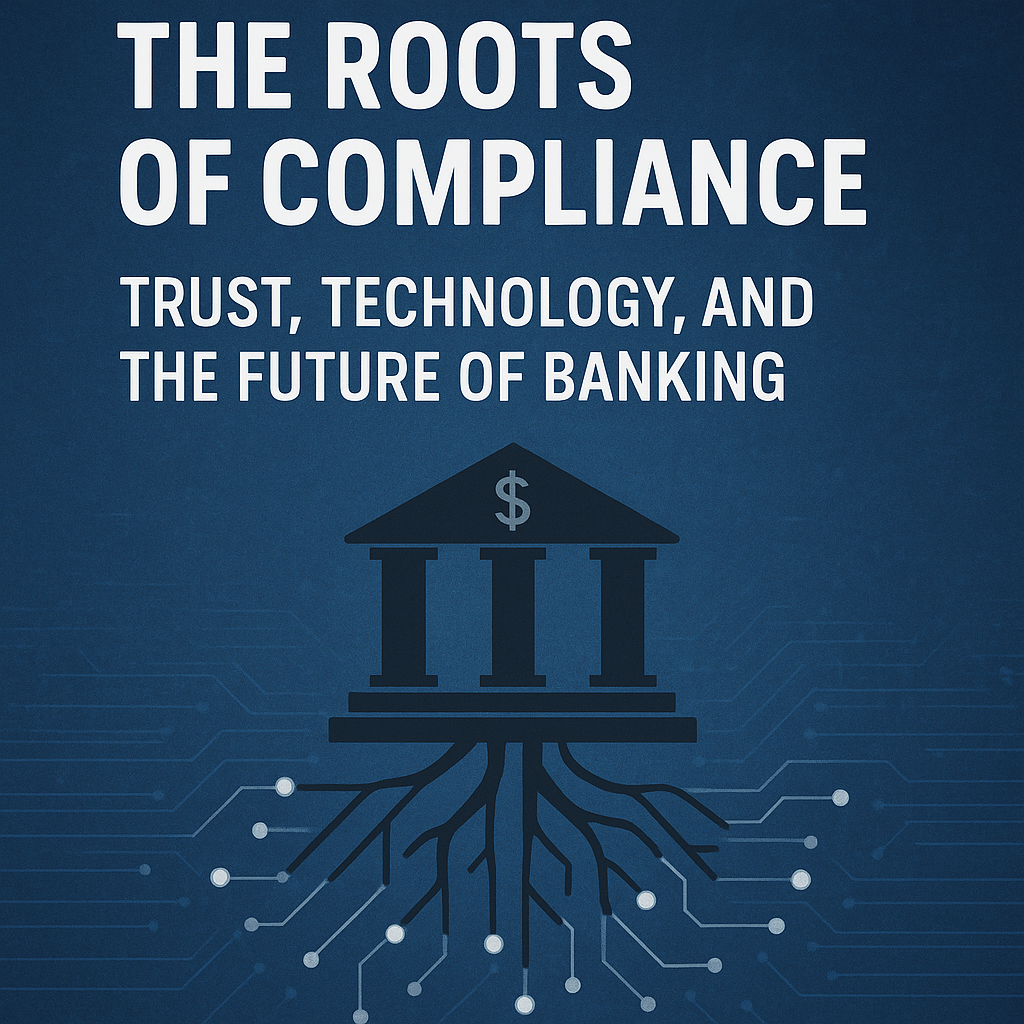
The future of compliance in banking, and indeed all industries, rests at the intersection of timeless principles and modern technology. Trust, always the cornerstone of compliance, remains a foundational element. Technology, particularly artificial intelligence (AI), offers powerful new tools to reinforce and streamline compliance functions, enabling more efficient, accurate, and effective oversight.
Compliance professionals stand at the threshold of an exciting era where they can leverage advanced technologies to reinforce and extend the timeless principle of trust. By returning to the roots of compliance, embedding trust deeply into corporate culture, and embracing technology as a powerful enabler, businesses will not only fulfill regulatory requirements but also establish a resilient, customer-centric, and sustainably profitable business model. Compliance, done right, transcends its role as merely regulatory adherence. It becomes a fundamental pillar of sound business practice.