Categories
Blog

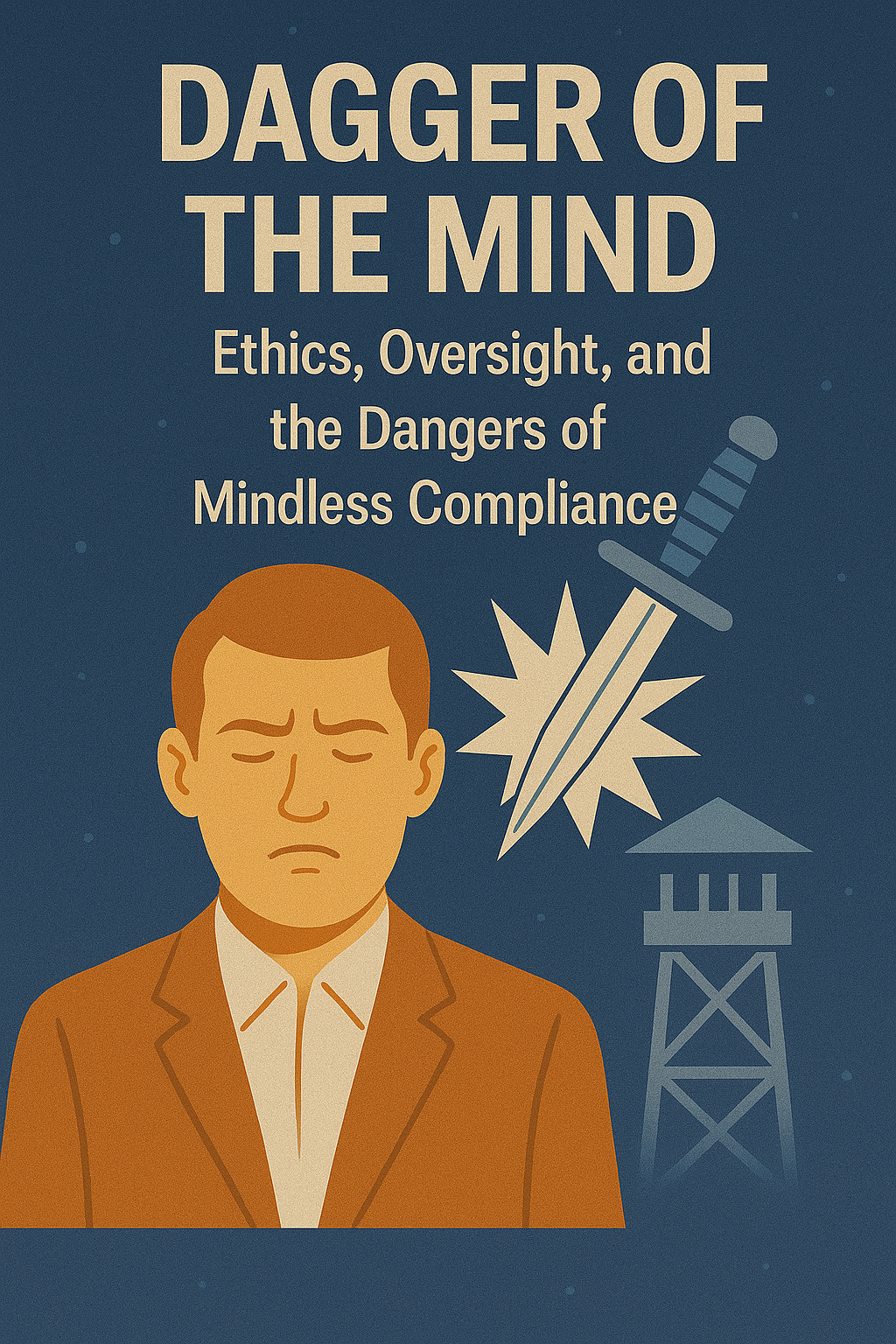
Dagger of the Mind: Ethics, Oversight, and the Dangers of Mindless Compliance

Show Summary

Today, we journey to Tantalus V, home to a facility for the criminally insane, where a celebrated doctor, a controversial device, and a desperate escapee converge into a chilling tale of manipulation, unethical experimentation, and failed oversight. Dagger of the Mind is more than a story about a rogue psychiatrist. It serves as a cautionary tale for every compliance professional navigating the complexities of ethics, whistleblower protections, and corporate accountability.

We unpack six key lessons for today’s compliance landscape, using this Star Trek episode to explore the human rights implications of innovation, the importance of informed consent, and the non-negotiable need for robust oversight mechanisms.

Key Highlights and Compliance Case Illustrations

1. Whistleblower Protection—Listen When Someone Escapes the Box

Illustrated by: Simon van Gelder, smuggling himself aboard the Enterprise to escape the abuse at Tantalus V.

Van Gelder risks everything to report misconduct, yet he’s initially treated as a threat—not a truth-teller. His trauma and desperation illustrate what happens when whistleblowers are ignored or presumed unstable. Compliance officers must establish safe and credible pathways for internal reporting, and leaders must be trained to respond with empathy, not disbelief.

2. Oversight and Accountability—Who Guards the Guardians?

Illustrated by: Dr. Tristan Adams using the neural neutralizer to control and silence dissent.

Adams is a textbook example of what happens when powerful individuals operate without meaningful oversight. His esteemed reputation masks his abuse of power. Every organization must implement regular audits, anonymous feedback loops, and third-party evaluations to ensure that even the “untouchables” remain accountable.

3. Human Rights and Ethical Treatment—Compliance Begins with Humanity

Illustrated by: The neural neutralizer erasing minds and reducing patients to emotional voids.

The weaponization of mental health treatment in this episode is a stark warning about the technology used without ethical restraint. Whether it’s surveillance, AI, or employee monitoring tools, companies must evaluate the human impact of every system. Dignity and consent are the foundation of all ethical compliance frameworks.

4. Informed Consent—Misuse of Technology Without Disclosure

Illustrated by: Kirk unknowingly subjected to memory manipulation through the neural neutralizer.

Kirk’s experience under the device demonstrates the risk of deploying tools without informed consent. In modern terms, this equates to unethical data collection, misleading contractual clauses, or hidden surveillance programs. Compliance programs must ensure transparency and fairness in every tech-enabled interaction.

5. Due Process and Fair Trials—Don’t Assume Guilt Without Review 

Illustrated by: Van Gelder’s deteriorated condition and absence of any formal grievance process.

Once van Gelder begins to unravel, no formal process is in place to evaluate his claims or provide medical advocacy. In today’s corporate environment, this underscores the importance of adhering to due process during internal investigations, including access to counsel, neutral adjudication, and accommodations for mental health when necessary.

6. Corporate Social Responsibility—Reputation is No Substitute for Integrity 

Illustrated by: Dr. Adams’ public image as a reformer, masking his private abuses.

Adams is held up as a pioneer, but beneath the surface lies a profound history of misconduct. This serves as a reminder that a shiny ESG report or CSR campaign cannot substitute for real operational integrity. Compliance officers must look beyond external branding and delve into actual practices and their impact.

Final ComplianceLog Reflections

Dagger of the Mind is not just a metaphor for the dangers of unethical control; it is a metaphor for the risks of unethical control. It is a manual for why compliance must protect the vulnerable, investigate the credible, and challenge authority when necessary. Dr. Adams built a system that silenced his critics. Compliance must create systems that amplify them.

Resources:
Excruciatingly Detailed Plot Summary by Eric W. Weisstein

MissionLogPodcast.com

Memory Alpha

Categories
Compliance Tip of the Day

Compliance Tip of the Day – Internal Controls for GTE

Welcome to “Compliance Tip of the Day,” the podcast that brings you daily insights and practical advice on navigating the ever-evolving landscape of compliance and regulatory requirements. Whether you’re a seasoned compliance professional or just starting your journey, our goal is to provide you with bite-sized, actionable tips to help you stay ahead in your compliance efforts. Join us as we explore the latest industry trends, share best practices, and demystify complex compliance issues to keep your organization on the right side of the law. Tune in daily for your dose of compliance wisdom, and let’s make compliance a little less daunting, one tip at a time.

What are the key internal controls for gifts, travel, and entertainment?

For more information on this topic, refer to The Compliance Handbook: A Guide to Operationalizing Your Compliance Program, 6th edition, recently released by LexisNexis. It is available here.

Categories
Upping Your Game

Upping Your Game – Continuous Monitoring with AI

In February, the Trump Administration suspended investigations under and enforcement of the FCPA. Many compliance professionals have since wondered what this will mean for corporate compliance programs going forward. Hui Chen challenged compliance professionals with the message, “It’s time to up your game.”

This podcast series, sponsored by Ethico and co-hosted with Ethico co-CEO Nick Gallo, hopes to meet Hui Chen’s challenge. We will discuss how compliance professionals can ‘Up Their Game’ by utilizing currently existing Generative AI (GenAI) tools to significantly enhance their compliance programs. As compliance professionals, it is critical to recognize that this moment is not merely about incremental improvements but about elevating our profession to an entirely new level of effectiveness, efficiency, and organizational value.

In this episode, hosts Tom Fox and Nick Gallo dive into the revolutionary potential of AI in continuous monitoring within compliance programs. They discuss how AI can provide real-time data insights, facilitate course corrections, and meet regulatory expectations.

The conversation explores the practical applications of AI tools, the importance of a proactive and open mindset, and the game-changing impact these technologies can have across various business functions, including mergers and acquisitions (M&A) and internal control reviews. They also highlight valuable case studies, such as Citibank’s anti-money laundering tool and Budweiser’s pre-pandemic data analytics program, underscoring the broad utility and transformative power of AI in modern business practices.

Key highlights:

  • The Promise of AI in Continuous Monitoring
  • Regulatory Expectations and AI
  • Practical Applications of AI in Compliance
  • Case Studies: AI in Action
  • AI Governance and Best Practices

Resources:

Upping Your Game- How Compliance and Risk Management Move to 2030 and Beyond on Amazon.com

Nick Gallo on LinkedIn

Ethico

For an Ethico White Paper on this topic, click here.

Tom Fox

Instagram

Facebook

YouTube

Twitter

Categories
Innovation in Compliance

Innovation in Compliance: The Critical Importance of Mobile Application Security: Insights from Subho Halder

Innovation comes in many areas, and compliance professionals need to not only be ready for it but also embrace it. Join Tom Fox, the Voice of Compliance, as he visits with top innovative minds, thinkers, and creators in the award-winning Innovation in Compliance podcast. In this episode, host Tom Fox visits Subho Halder, the CEO & Co-Founder of Appknox, to discuss the often-overlooked yet crucial topic of mobile application security in the corporate compliance world.

Halder shares his extensive background in mobile app security, including developing the first mobile malware and presenting at prestigious conferences like Black Hat and DEF CON. The conversation covers the evolving market need for specialized mobile app security tools, the unique challenges faced by mobile applications compared to web applications, and the critical importance of integrating security early in the development lifecycle—a concept known as the ‘left shift’ approach. Halder also explores AI-powered cyberattacks and how Appknox is utilizing AI to develop defensive strategies. The discussion highlights regulatory blind spots in the US regarding mobile security, the challenges of managing mobile app security in large multinational corporations, and best practices for ensuring robust mobile app security.

Key highlights:

  • Market Need and Opportunity for AppKnox
  • Appknox Security Assessment of Perplexity’s Android App
  • Regulatory Blind Spots in US Cybersecurity Frameworks
  • Engaging with Large Multinational Companies
  • AI-Powered Cyber Attacks and Defensive Strategies
  • Importance of the Left Shift Approach in Mobile App Security

Resources:

Subho Halder on LinkedIn

Appknox

Appknox Resources Page

Appknox Blog: Is Perplexity AI Safe to Use? Security Flaws in the Android App

Tom Fox

Instagram

Facebook

YouTube

Twitter

LinkedIn

Categories
Everything Compliance - Shout Outs and Rants

Shout Outs and Rants: Episode 155, To Tesla and Beyond

Welcome to this edition of Everything Compliance, Shout-Outs, and Rants. In this episode, we have the quintet of Matt Kelly, Jonathan Armstrong, Jonathan Marks, and Special Guest Panelist Hemma Lomax, all hosted by Tom Fox.

  1. Hemma Lomax shouts out to AI for podcasters.
  2. Matt Kelly both shouts out and rants about Marjorie Taylor Greene and her reading list.
  3. Jonathan Marks highlights the quiet compliance professionals who do the day-to-day work of compliance.
  4. Jonathan Armstrong delves into the finances of Tesla, examining its profitability. He shouts out to Operation Spider’s Web.
  5. Tom Fox highlights Wells Fargo’s compliance remediation, the Fed’s asset cap placed on Wells Fargo, and its subsequent removal.

The members of Everything Compliance are:

Tom Fox, the Voice of Compliance, is the host, producer, and sometimes panelist of Everything Compliance. He can be reached at tfox@tfoxlaw.com. The award-winning Everything Compliance is part of the Compliance Podcast Network.

Categories
Daily Compliance News

Daily Compliance News: June 10, 2025, The Ruinous Burdens Edition

Welcome to the Daily Compliance News. Each day, Tom Fox, the Voice of Compliance, brings you compliance-related stories to start your day. Sit back, enjoy a cup of morning coffee, and listen in to the Daily Compliance News. All from the Compliance Podcast Network. Each day, we consider four stories from the business world: compliance, ethics, risk management, leadership, and general interest, all relevant to the compliance professional.

Top stories include:

  • Russian crypto charged with AML and sanctions violations. (FT)
  • Trump Administration killing off border businesses with regulations. (NYT)
  • Google takes a big gamble and goes to trial. (Reuters)
  • FINRA defeats legal challenge. (Forbes)
Categories
Blog

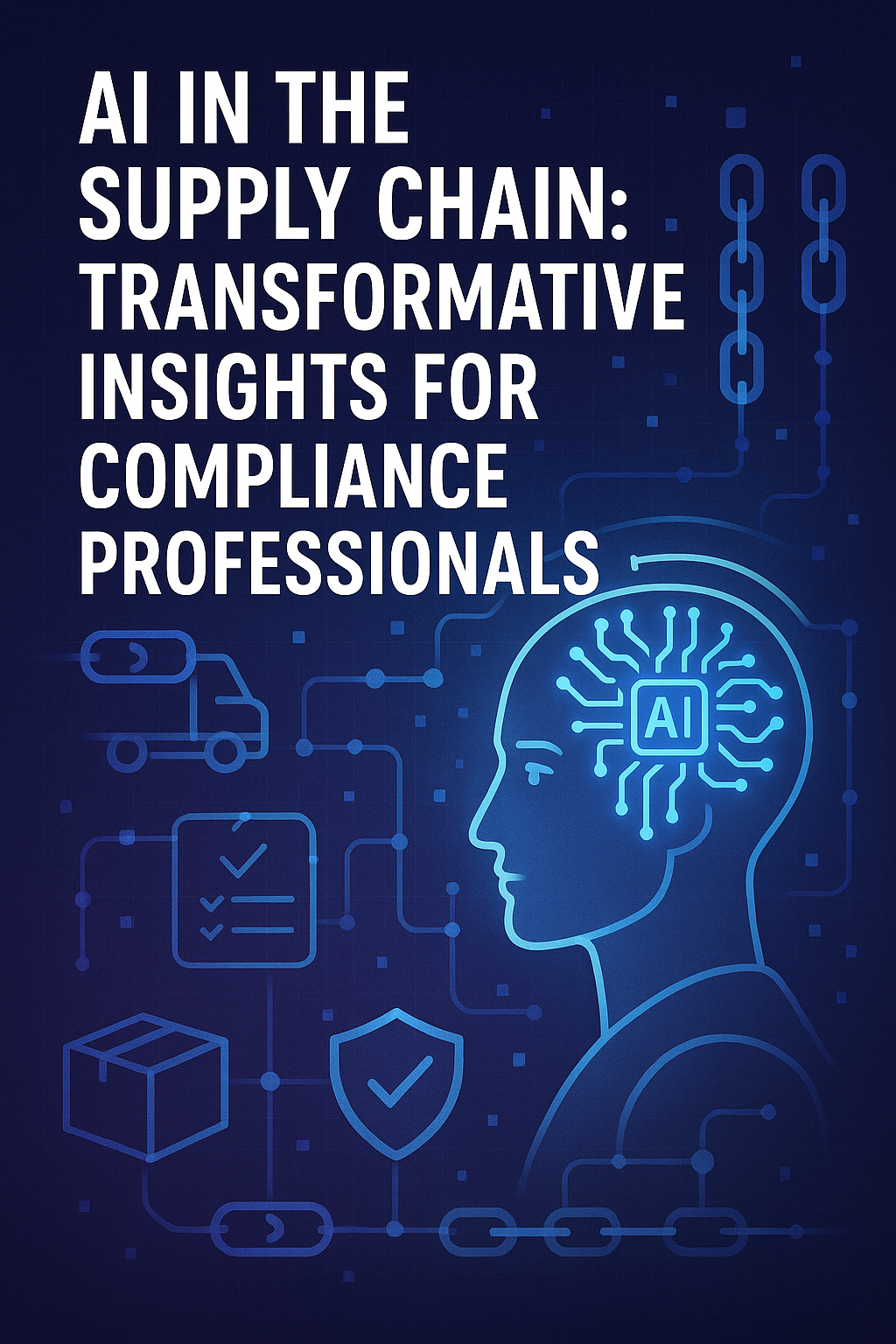
AI in the Supply Chain: Transformative Insights for Compliance Professionals

Compliance professionals responsible for managing risk, regulatory adherence, and organizational integrity must understand how AI technologies are being integrated into supply chains to effectively manage compliance obligations and leverage these advancements for optimal business outcomes. The integration of AI technologies within supply chain operations provides organizations with substantial advantages, including enhanced efficiency, reduced costs, and improved decision-making. From demand forecasting and supplier risk management to customs clearance and sustainability, AI is transforming every facet of the supply chain. Compliance professionals must navigate this technological evolution with careful understanding and deliberate strategy. In an article in Reuters, László Serester explored these issues. I have adapted his article for a corporate compliance audience.

Enhanced Demand Forecasting

Accurate demand forecasting is crucial for maintaining optimal inventory levels and preventing costly stockouts or overstocking situations. The use of machine learning algorithms enables businesses like Walmart and Amazon to analyze vast datasets, including historical sales data, market trends, seasonal patterns, and economic indicators. This granular analysis allows organizations to predict product demand with unprecedented accuracy.

For instance, companies such as Unilever and Pfizer utilize AI-driven forecasts to proactively adjust production schedules and ensure the continuous availability of raw materials. The introduction of autonomous agentic AI systems capable of independently adjusting production schedules without human approval signifies a leap towards greater operational autonomy, demanding vigilant compliance oversight to ensure appropriate checks and balances remain robustly in place.

Proactive Supplier Risk Management

Procurement processes are inherently complex, with multiple suppliers contributing to a single supply chain. AI systems, like SAP Ariba’s machine learning solutions, streamline supplier risk management by providing real-time insights into supplier performance. This capability enables quicker and more informed procurement decisions, significantly mitigating the risks associated with unreliable suppliers.

During crises, rapid vendor selection and thorough due diligence are paramount. AI-driven software, utilized by corporations like Unilever and Siemens, automates the identification and evaluation of potential new suppliers by analyzing diverse data sources, including financial health, sustainability practices, and compliance history. This systematic evaluation not only enhances operational resilience but also ensures adherence to ethical sourcing standards and regulatory requirements.

Manufacturing and Quality Assurance

AI’s contribution extends deeply into manufacturing processes, improving operational efficiency from design through commercialization. Companies like Siemens, GE, and Bosch harness big data analytics and IoT technologies for real-time monitoring, predictive maintenance, and automation. These innovations reduce downtime, extend equipment lifespan, and minimize operational risks.

AI’s role in quality control, particularly through advanced computer vision, enables companies to inspect products for defects with greater accuracy and speed, thereby significantly enhancing compliance with stringent quality standards. For example, electronics manufacturers utilize AI-driven inspections to detect circuit board defects, directly contributing to higher compliance standards and reduced regulatory risk.

Inventory and Warehousing Optimization

AI-powered inventory management solutions dramatically enhance warehouse operations. Predictive analytics, based on sales history, market trends, and real-time inventory data, enables companies to manage stock replenishment precisely. Organizations like Gather AI have deployed drone technology integrated with AI to perform inventory audits rapidly and accurately, drastically reducing human error and associated compliance risks.

Automation within warehouses, exemplified by Ocado’s autonomous mobile robots and Amazon Robotics’ warehouse solutions, optimizes storage efficiency, minimizes manual labor, and reduces the incidence of workplace injuries. The integration of deep-learning algorithms for recommending suitable alternatives when products are out of stock further illustrates AI’s profound impact on operational compliance and customer satisfaction.

Transportation and Logistics Efficiency

In logistics, AI-driven predictive analytics optimize transportation routes by analyzing traffic patterns, weather conditions, and real-time scheduling data to enhance efficiency. Companies like Maersk and UPS deploy AI systems to significantly enhance delivery efficiency, reduce costs, and improve environmental sustainability through optimized fuel usage.

AI’s capacity to manage freight matching and load optimization minimizes empty truck miles, directly contributing to sustainability goals and compliance with environmental regulations. Autonomous trucking initiatives, such as those from startups like Gatik, demonstrate AI’s transformative potential in the logistics sector, necessitating rigorous compliance oversight to address emerging safety and regulatory concerns.

Streamlined Customs Clearance and Regulatory Compliance

Compliance with customs regulations is greatly enhanced through AI technologies that automate document processing, accurately classify goods, and predict duties and taxes. Systems like ClearMetal’s predictive logistics and Descartes Systems Group’s AI solutions expedite customs declarations, significantly reducing errors and delays.

Moreover, AI-driven cargo screening technologies employed by U.S. Customs and Border Protection officials enhance inspection efficiency, focusing resources on high-risk shipments. Such applications underscore the essential role AI plays in maintaining robust regulatory compliance in international trade.

AI in Legal and Compliance Support

Legal departments supporting supply chain functions can utilize AI to streamline processes ranging from document review to contract management. Solutions like Thomson Reuters’ HighQ and Westlaw Edge facilitate efficient document analysis and rapid identification of potential compliance risks or contract deviations.

AI-enhanced legal research and drafting tools further empower legal professionals by automating repetitive tasks, allowing them to focus on strategic compliance advisory roles that require nuanced judgment and business acumen. This integration highlights the utility of AI in enhancing legal and compliance capabilities, ensuring the precise and efficient management of compliance obligations.

Promoting Sustainability through AI

Finally, sustainability practices benefit significantly from AI technologies that enable comprehensive evaluation and monitoring of supplier sustainability credentials. Platforms like EcoVadis and SupplyShift utilize AI-driven data analytics to rate suppliers on ESG criteria, empowering organizations to uphold rigorous sustainability standards and meet regulatory expectations.

The widespread integration of AI into supply chain operations presents both opportunities and obligations for compliance professionals. Mastery of AI tools and methodologies enables enhanced risk management, regulatory adherence, and organizational resilience. As supply chain operations continue to advance technologically, compliance teams must remain vigilant and adaptive, leveraging AI’s capabilities responsibly to protect organizational integrity and promote sustainable, compliant business practices.

Embracing AI strategically positions compliance professionals not only as guardians of regulatory adherence but also as key facilitators of organizational innovation and sustainability. The thoughtful application of AI within the supply chain thus becomes a cornerstone of a robust compliance strategy, essential for thriving in an increasingly complex regulatory environment.

Categories
Red Flags Rising

Red Flags Rising: S01 E15 – Tom Blass of WorldECR Magazine & Dow Jones on Bridging the Law/Geopolitics Divide and Building Communities

Mike and Brent welcome Tom Blass, Editorial Director of World Export Controls Review (WorldECR) Magazine that is now part of Dow Jones. Mike and Brent discuss with Tom how he and Mark Cusick started WorldECR more than a decade ago to help bridge the gap between law and geopolitics in sanctions and export controls (00:36), the recent acquisition of WorldECR by Dow Jones (04:43), some of the particular challenges Tom and Mark faced in getting WorldECR off the ground (06:30), their realization that they were creating a community (07:12), what Tom has observed in terms of geopolitics and how geopolitics have driven regulatory and enforcement activity (10:13), what Tom looks for in submissions for publication, especially in terms of balancing depth and accessibility (12:57), upcoming WorldECR events in Brussels, London, Washington, and Silicon Valley (16:19), and the direction the sanctions and export control profession is heading (21:05). Then back by popular demand is Brent Carlson’s “Managing Up” segment (24:07).

Resources:

WorldECR

WorldECR Events Information & Registration

About Tom Blass and Mark Cusick

Tom on LinkedIn

Mark on LinkedIn

Brent LinkedIn

Mike LinkedIn

Mike & Brent’s “Fresh Looks” Series

Categories
Trekking Through Compliance

Trekking Through Compliance: Episode 9 – Dagger of the Mind

In this episode of Trekking Through Compliance, we consider the episode Dagger of the Mind, which aired on November 3, 1966, with a Star Date of 2715.1.

In this episode, we journey to Tantalus V, home to a facility for the criminally insane, where a celebrated doctor, a controversial device, and a desperate escapee converge into a chilling tale of manipulation, unethical experimentation, and failed oversight. Dagger of the Mind is more than a story about a rogue psychiatrist; it’s a cautionary tale for every compliance professional navigating the complexities of ethics, whistleblower protections, and corporate accountability. We unpack the key lessons for today’s compliance landscape, using this Star Trek episode to explore the human rights implications of innovation, the importance of informed consent, and the non-negotiable need for robust oversight mechanisms.

Story

The Enterprise makes a supply run to planet Tantalus V, a colony where the criminally insane are confined for treatment. The facility’s director is Dr. Tristan Adams, a psychiatrist famous for advocating more humane treatment of such patients. After the Enterprise delivers supplies and receives cargo from Tantalus, a man emerges from the container taken aboard and assaults a technician. Reaching the bridge, the intruder demands asylum, but Spock subdues him with a Vulcan nerve pinch. In Sickbay, the intruder identifies himself as Simon van Gelder, and a computer check reveals that he is not a patient but Dr. Adams’ assistant.

Gelder becomes increasingly frantic on the Enterprise van, warning that the landing party is in danger. Spock learns that the neural neutralizer can empty a mind of thoughts, leaving only an unbearable feeling of loneliness, and that Adams has been using it on inmates and staff to regain control of their minds.

Kirk tests the neutralizer on himself, with Noel as the control. Adams appears, overpowers Noel, seizes the controls, increases the neutralizer’s intensity, and convinces Kirk that he has been madly in love with Noel for years. Adams inadvertently reactivates the neural neutralizer, emptying his mind and killing him. On the Enterprise, Kirk is informed that van Gelder has destroyed the neural neutralizer. McCoy is surprised that loneliness could be lethal, but Kirk, after his experience, is not.

Key highlights:

1. Whistleblower Protection—Listen When Someone Escapes the Box

🖖Illustrated by: Simon van Gelder, smuggling himself aboard the Enterprise to escape the abuse at Tantalus V.

Van Gelder risks everything to report misconduct, yet he’s initially treated as a threat, not a truth-teller. His trauma and desperation illustrate what happens when whistleblowers are ignored or presumed unstable. Compliance officers must establish safe and credible pathways for internal reporting, and leaders must be trained to respond with empathy, not disbelief.

2. Oversight and Accountability—Who Guards the Guardians?

🖖Illustrated by: Dr. Tristan Adams using the neural neutralizer to control and silence dissent.

Adams is a textbook example of what happens when powerful individuals operate without meaningful oversight. His esteemed reputation masks his abuse of power. Every organization must implement regular audits, anonymous feedback loops, and third-party evaluations to ensure that even the “untouchables” remain accountable.

3. Human Rights and Ethical Treatment—Compliance Begins with Humanity

🖖Illustrated by: The neural neutralizer erasing minds and reducing patients to emotional voids.

The weaponization of mental health treatment in this episode is a stark warning about the technology used without ethical restraint. Whether it’s surveillance, AI, or employee monitoring tools, companies must evaluate the human impact of every system. Dignity and consent are the foundation of all ethical compliance frameworks.

4. Informed Consent—Misuse of Technology Without Disclosure

🖖Illustrated by: Kirk unknowingly subjected to memory manipulation through the neural neutralizer.

Kirk’s experience under the device demonstrates the risk of deploying tools without informed consent. In modern terms, this equates to unethical data collection, misleading contractual clauses, or hidden surveillance programs. Compliance programs must ensure transparency and fairness in every tech-enabled interaction.

5. Due Process and Fair Trials—Don’t Assume Guilt Without Review

🖖Illustrated by: Van Gelder’s deteriorated condition and absence of any formal grievance process.

Once van Gelder begins to unravel, no formal process is in place to evaluate his claims or provide medical advocacy. In today’s corporate environment, this underscores the importance of due process during internal investigations, including access to counsel, neutral adjudication, and mental health accommodations when necessary.

6. Corporate Social Responsibility—Reputation is No Substitute for Integrity

🖖Illustrated by: Dr. Adams’ public image as a reformer, masking his private abuses.

Adams is held up as a pioneer, but beneath the surface lies a profound history of misconduct. This serves as a reminder that a shiny ESG report or CSR campaign cannot substitute for real operational integrity. Compliance officers must look beyond external branding and delve into actual practices and their impact.

Final Starlog Reflections

Dagger of the Mind is not just a metaphor for the dangers of unethical control—it’s a manual for why compliance must protect the vulnerable, investigate the credible, and challenge authority when necessary. Dr. Adams built a system that silenced his critics. Compliance must create systems that amplify them.

Resources:

Excruciatingly Detailed Plot Summary by Eric W. Weisstein

MissionLogPodcast.com

Memory Alpha