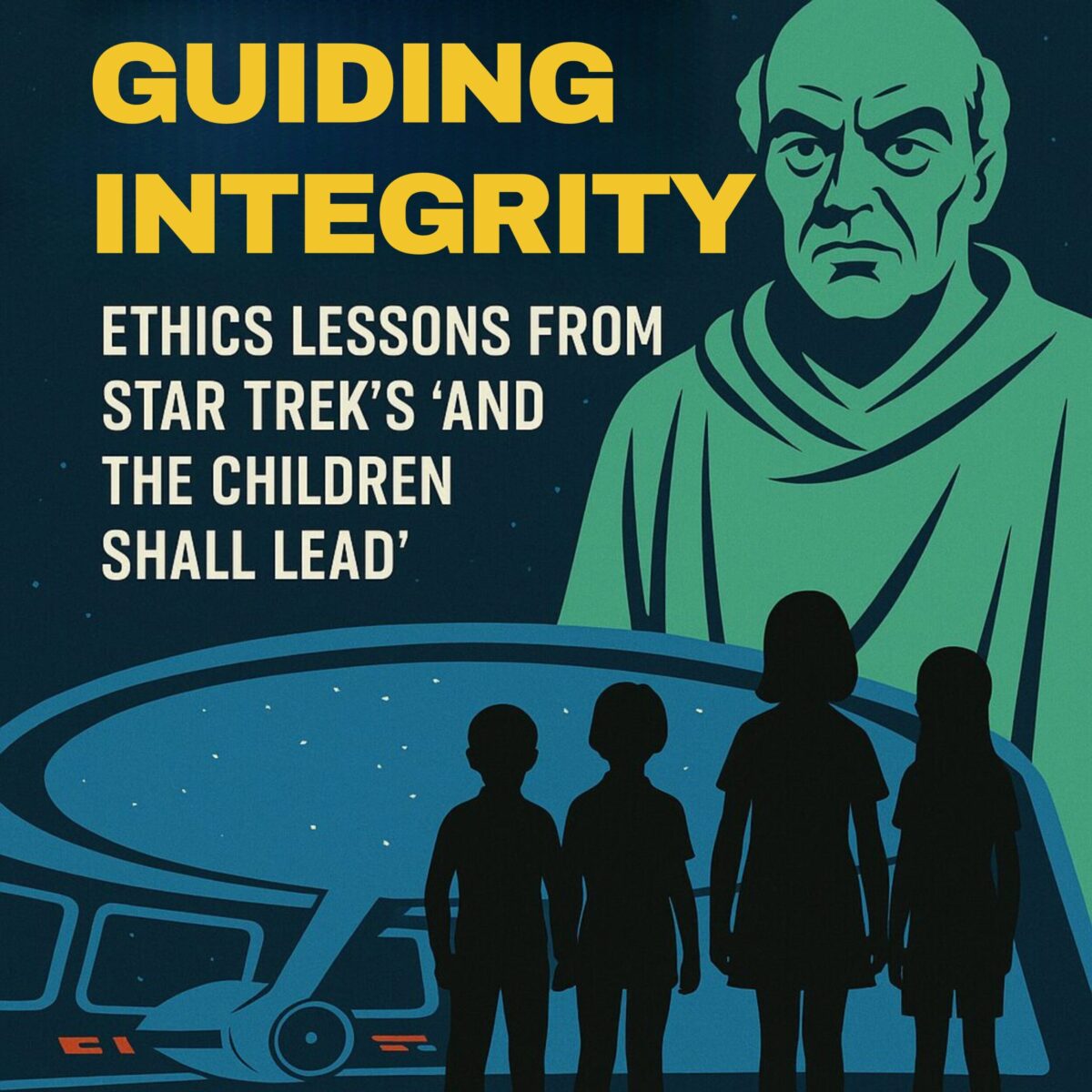
My winner for the worst of Star Trek: The Original Series is the episode, “And the Children Shall Lead”. Yet there are clear ethics lessons as the episode itself stands out for its disturbing exploration of power, manipulation, and ethical responsibility. Compliance professionals tasked with safeguarding their organizations from ethical lapses can draw powerful insights from this intriguing narrative. Today, we explore five key ethical lessons every compliance leader should internalize from this episode.
Lesson 1: Influence and Ethical Leadership
Illustrated By: The children aboard the Enterprise, manipulated by an alien entity known as Gorgan, exercise dangerous control over the crew, compelling them to abandon rational judgment.
Compliance Lesson: Leadership wields tremendous influence. Ethical leaders must recognize their power and consciously deploy it to uphold ethical standards, not undermine them. A misuse of influence can erode trust and corrupt organizational culture. Ethical leadership requires self-awareness and a steadfast commitment to organizational values. Leaders who misuse their influence often set negative precedents, creating an environment where unethical behavior becomes normalized. Conversely, leaders who consistently demonstrate ethical decision-making inspire similar behavior in their teams, fostering a culture of integrity.
What can you do now? Ensure your leaders understand the impact of their actions. Implement regular leadership training that focuses on ethical decision-making and raises awareness of how leaders’ actions impact company behavior and culture.
Lesson 2: Recognizing and Addressing Manipulation
Illustrated By: Kirk and Spock realize that the children’s unnatural behavior stems from external manipulation by Gorgan, who exploits their innocence and vulnerability for his gain.
Compliance Lesson: Organizations must be vigilant against manipulative practices. Ethical compliance involves recognizing manipulation, whether internal or external, and actively counteracting it to protect the organization’s integrity. Manipulation can manifest subtly through coercion, exploitation of vulnerabilities, or abuse of power dynamics. Compliance leaders must educate employees on the nuances of manipulation and how it undermines ethical practices, ultimately compromising organizational integrity. Early detection and proactive intervention are key to safeguarding the organization.
What can you do now? Develop training programs designed to empower employees to recognize and report manipulative behavior. Establish clear communication channels for raising ethical concerns safely and anonymously.
Lesson 3: Ethical Courage in Speaking Truth to Power
Illustrated By: Nurse Chapel and Captain Kirk courageously confront the children with the harsh truths about their manipulated behavior and its devastating consequences.
Compliance Lesson: Speaking truth to power, especially in ethical matters, requires considerable courage. Compliance leaders must foster environments where employees feel empowered to speak openly, even against popular opinion or powerful interests. It is crucial to establish a corporate culture that not only permits but actively encourages transparency and honesty. Compliance officers play a pivotal role in creating platforms where ethical concerns can be voiced without fear of retaliation. The ability to challenge unethical practices openly is essential for maintaining organizational integrity.
What can you do now? Create a robust whistleblower program, emphasizing protection and support for those who courageously voice ethical concerns. Celebrate instances where employees have demonstrated bravery in upholding ethical standards.
Lesson 4: Awareness of Ethical Blind Spots
Illustrated By: Initially, the Enterprise crew underestimates the threat posed by the children, blinded by assumptions of innocence and vulnerability.
Compliance Lesson: Ethical blind spots often emerge from assumptions and biases. Organizations must cultivate awareness and self-reflection, understanding that ethical risks can arise unexpectedly from overlooked or underestimated sources. Blind spots can be particularly dangerous because they often remain invisible until significant damage occurs. Compliance teams must foster an environment of continual vigilance, where assumptions are routinely challenged, and biases openly discussed and addressed. Training programs should incorporate scenario-based exercises to reveal hidden ethical vulnerabilities.
What can you do now? Conduct regular ethics risk assessments to uncover hidden vulnerabilities. Encourage ongoing discussions and training sessions about implicit biases, assumptions, and overlooked ethical threats within the organization.
Lesson 5: Responsibility and Accountability in Ethics
Illustrated By: After breaking Gorgan’s hold, Kirk ensures that the children confront and understand the severity of their actions, instilling a crucial sense of accountability.
Compliance Lesson: Ethical accountability must permeate all organizational levels. Leaders and employees alike should clearly understand their responsibilities and the consequences of unethical behavior. Accountability ensures that ethical standards are upheld consistently and that violations are addressed promptly and appropriately. Leaders must communicate clearly that ethical breaches will have real and proportionate consequences, reinforcing the importance of personal and organizational integrity. Accountability measures help maintain trust within and outside the organization.
What can you do now? Establish transparent accountability systems, reinforcing individual and collective responsibility for ethical behavior. Regularly communicate the importance of ethical accountability and the organizational commitment to enforce ethical standards uniformly.
You Must Lead With Ethics
“And The Children Shall Lead” reminds compliance professionals that ethical vigilance and leadership are essential for organizational health. Through ethical influence, courageous confrontation of manipulation, awareness of blind spots, and unwavering accountability, organizations can protect their integrity and thrive.
Compliance professionals must continuously embody these lessons, creating robust ethical cultures resilient against manipulation, corruption, and ethical lapses. Let the lessons of the Enterprise crew guide us, fostering environments where integrity leads and compliance thrives.
Resources:
Excruciatingly Detailed Plot Summary by Eric W. Weisstein