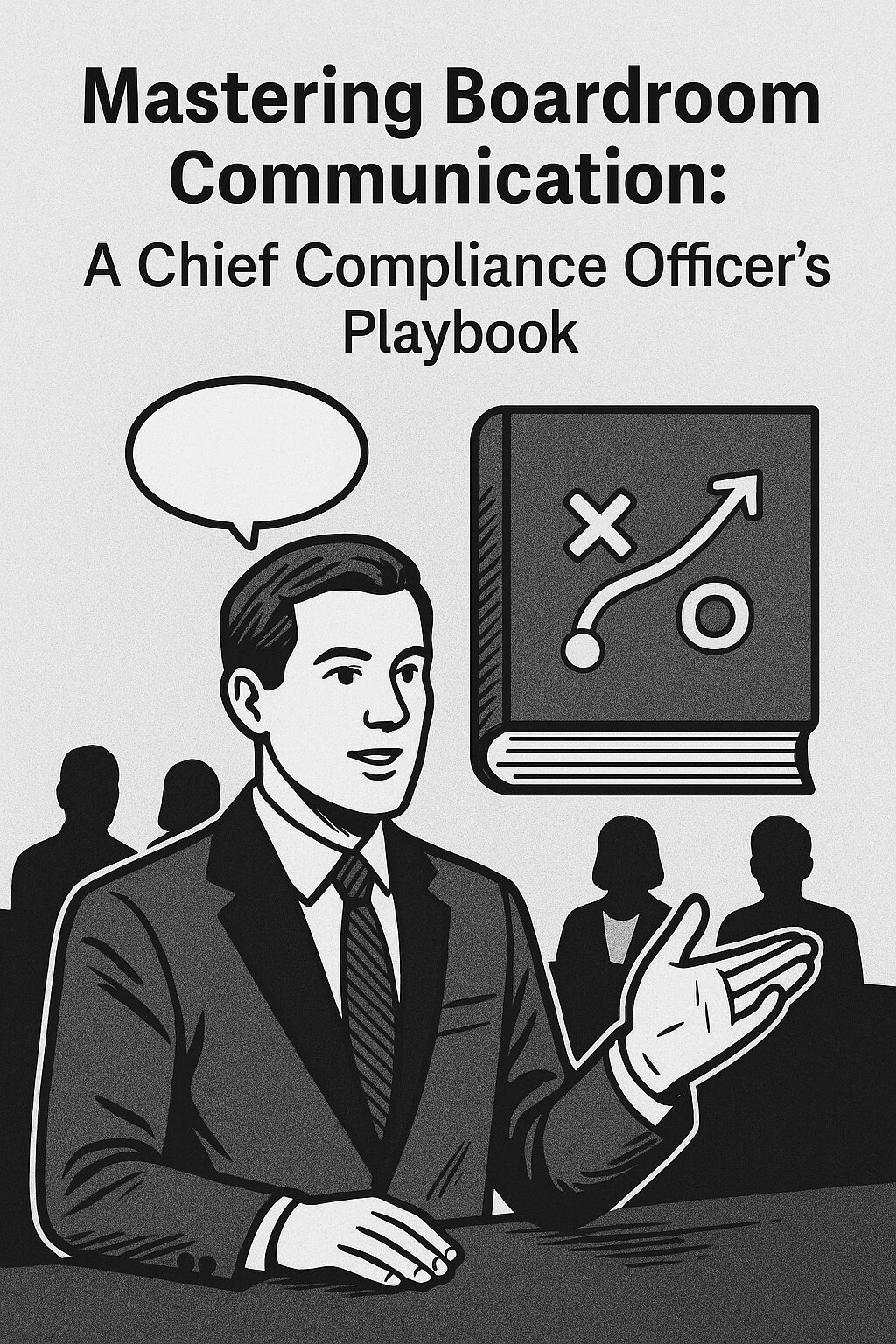
Boardroom communication is not just a matter of style; it is a skill much needed for every Chief Compliance Officer (CCO). In today’s environment of heightened regulatory scrutiny, geopolitical disruption, and rapid technological change, a CCO sits squarely at the intersection of risk, ethics, and strategy. How a CCO communicates with the board can shape director confidence, influence resource allocation, and ultimately determine whether compliance is viewed as a strategic partner or a cost center.
A recent Harvard Law School Forum on Corporate Governance article outlined five essentials for executives engaging with their boards. For CCOs, these essentials carry even more weight. Compliance is often the messenger of uncomfortable truths: misconduct uncovered, regulatory inquiries, or cultural red flags that leadership may prefer to avoid. Delivering these messages effectively requires preparation, precision, and presence. In this blog post, we will explore how CCOs can adapt these five essentials to elevate their boardroom communication.
1. Invest in Relationships: Building Trust Before the Crisis
For CCOs, credibility with the board is currency. Relationships cannot be built during a crisis; they must be established well in advance of one arriving. Intentional relationship-building with directors pays dividends. CCOs should regularly meet with audit and compliance committee chairs outside of formal sessions. These pre-meeting touchpoints allow you to test messaging, gauge concerns, and set expectations. They also build the trust needed when delivering difficult news, such as a whistleblower report implicating senior leadership or an FCPA investigation.
Equally important, CCOs must present a united front with fellow executives. Fragmented messaging from the CCO versus the CFO or General Counsel undermines board confidence. Directors want assurance that compliance is embedded across all functions, not confined to silos. Demonstrating cross-functional collaboration signals maturity and readiness. You can provide directors with candid “heads-up” updates on emerging risks. If the Department of Justice signals a shift in compliance program evaluation (as it did with the 2024 ECCP Update), brief your directors in advance. Early transparency fosters credibility.
2. Know Your Audience: Translating Compliance into Board Priorities
Directors are a distinct audience; they are seasoned leaders with broad but varied expertise. The article emphasizes the importance of tailoring messages to individuals’ backgrounds and perspectives. For CCOs, this means translating compliance risks into business-relevant language. For example, when discussing data privacy, it is best to avoid using technical jargon. Instead, connect privacy risks to reputational harm, customer trust, and market access. When discussing sanctions enforcement, frame it in terms of geopolitical instability and supply chain resilience.
CCOs must also bridge perspective gaps between management and the board. Senior executives often want boards to add expertise in emerging areas, such as AI, but directors are slower to prioritize it. The CCO’s role is to highlight how these gaps translate into real risk exposure. If the board does not see the value of AI oversight on its agenda, provide evidence, such as regulator speeches, enforcement trends, and peer actions. Do your homework: know which directors come from legal, financial, or technology backgrounds. A director with former regulatory experience will expect different details than one with private equity experience. Anticipating these perspectives ensures that your compliance story resonates.
3. Prepare What You Will Share: Making Compliance Digestible
The board’s time is scarce. As the article notes, directors want strategy, not operations. That makes the pre-read and presentation materials critical tools for the CCO. Your pre-read should strike a balance: concise enough to be digestible, but substantive enough to demonstrate rigor. A best practice is a one-to-two-page executive summary highlighting:
- Key compliance risks and emerging issues.
- Required board actions (e.g., policy approval, risk appetite setting).
- High-level metrics (e.g., hotline trends, third-party due diligence outcomes).
Supporting dashboards or appendices can provide depth for directors who want to dive in. Use visuals such as heat maps, trend charts, and red/yellow/green risk indicators to cut through dense text. During the meeting, avoid repeating the pre-read. Instead, highlight the “so what”: why a risk matters now, how it aligns with strategy, and what action is needed. For example: “We are seeing a 40% increase in third-party red flags in Latin America. This aligns with the DOJ’s recent statements on third-party risk. We recommend enhanced monitoring of intermediaries before the next audit committee meeting.”
End with a clear ask: whether you need endorsement, resources, or merely board awareness. Ambiguity is the enemy of effective compliance communication.
4. Manage the Meeting: Maximizing Scarce Minutes
Most CCOs are allocated just 15–20 minutes on a crowded board agenda. This means every minute counts. Enter with a game plan: two or three key messages, delivered crisply. Speak for no more than half the time; reserve the rest for questions and answers. Board members’ questions are where trust is built and oversight is demonstrated.
If the meeting drifts into operational details, such as the specifics of a particular investigation, steer the conversation back to the strategic view: patterns, controls, and lessons learned. Capture follow-up items and commit to deliver them post-meeting. This demonstrates respect for the board’s time while ensuring no issue is left unresolved. Align with the corporate secretary to understand time allocations and broader agenda flow. If your presentation follows the CFO’s, anticipate financial framing; if it precedes the General Counsel’s, coordinate on legal versus compliance perspectives. Seamless alignment avoids director confusion and reinforces management cohesion.
Above all, project confidence. If you appear tentative when discussing risks, directors may question the maturity of your program. Credibility is as much about presence as it is about content.
5. Continue the Conversation: Compliance as a Constant Dialogue
Boardroom communication does not end when the gavel falls. You should reach out to board members to cultivate ongoing engagement. For CCOs, this is mission-critical. Complex topics, such as sanctions, cybersecurity, or ESG reporting, cannot be fully explored in a single board session. Utilize committee meetings or off-cycle workshops for in-depth discussions and analysis. For example, a compliance officer might host a session with the audit committee on DOJ expectations for root cause analysis, tying it to the company’s investigation protocols.
Follow up after meetings with concise updates. If a regulator issues new guidance relevant to a recent board discussion, send a one-page summary highlighting its implications. Demonstrating responsiveness keeps compliance at the forefront and positions you as a trusted advisor. Finally, monitor evolving board concerns. Directors’ focus shifts with the environment—activist campaigns, regulatory changes, or high-profile enforcement actions. Staying attuned allows you to tailor communications to what keeps your directors up at night.
The CCO and the 3 ‘T’s”
Boardroom communication is not about dazzling directors with slides or overwhelming them with data. For the Chief Compliance Officer, it is about trust, translation, and truth. (1) Trust, because relationships established before crises determine how your messages are received in a storm. (2) Translation, because directors need compliance framed in terms of strategy, value, and risk, not technical minutiae. (3) Truth, because your role is to surface uncomfortable realities. This means discussing topics such as cultural weaknesses, compliance failures, and regulatory gaps that others may prefer to avoid.
Board time is limited and precious. For CCOs, mastering the art of concise, transparent, and strategic communication is not optional. It is the difference between compliance being perceived as a watchdog or as a partner in building resilient, ethical, and sustainable business practices.
The boardroom is your stage. Prepare, practice, and perform with clarity. The future of your compliance program and your credibility as its leader may depend on it.