Categories
The Hill Country Podcast

The Hill Country Podcast – Lorena Guillen on the July 4th Flood: Part 1 – The Flood

Welcome to the award-winning The Hill Country Podcast. The Texas Hill Country is one of the most beautiful places on earth. In this podcast, Hill Country resident Tom Fox visits with the people and organizations that make this one of the most unique areas of Texas. Today, I begin a two-part series with Lorena Guillen, owner of Howdy’s Restaurant and Blue Oak RV Park. The July 4th flood completely inundated her RV Park. In Part 1, Guillen discusses the events of the morning of July 4. In Part 2, she will discuss the events of that tragedy through today.

She begins with the beauty of July 3rd and goes to bed early on July 4. Guillen relates being awakened by flashing lights of a swift water rescue team, putting into the river. She recounts the devastating flood event where a second wave of water caused severe damage and displacement. She describes the rapid onset of the flood, the destruction of RVs, and the harrowing survival of her husband, who was swept 30-45 feet down a river but managed to climb to safety. She relates the surreal sensation of feeling electricity in the water and the loss of animals they were trying to rescue. The fire department eventually evacuated everyone from a nearby restaurant as the water levels continued to rise.

Other Hill Country Focused Podcasts

Hill Country Authors Podcast

Hill Country Artists Podcast

Texas Hill Country Podcast Network

Cover Art

Nancy Huffman

Categories
Great Women in Compliance

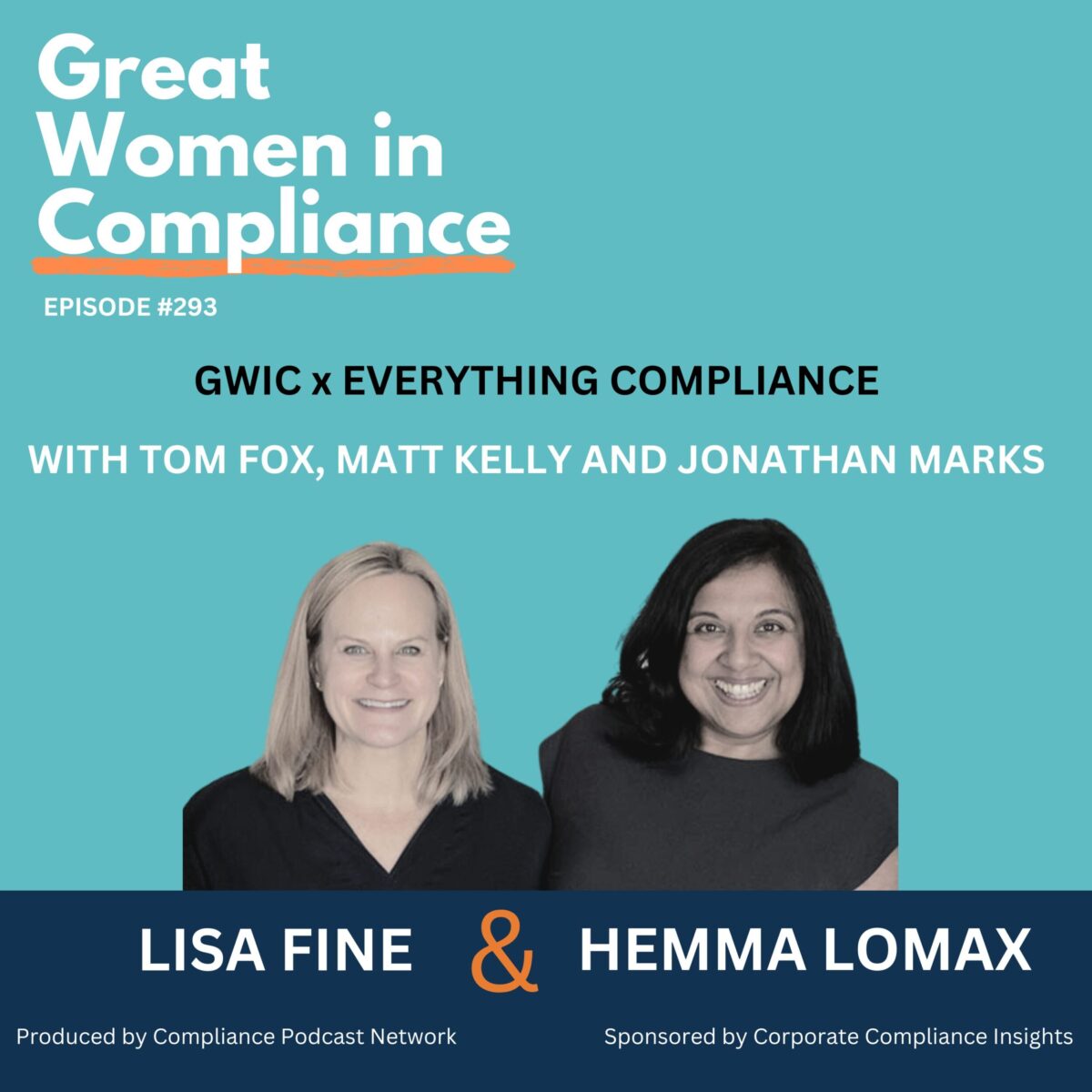
Great Women in Compliance – GWIC Joins Everything Compliance

Today, we have a special joint episode of GWIC and Everything Compliance. Lisa Fine and Hemma Lomax recently joined Matt Kelly and Jonathan Marks for an episode of Everything Compliance (Episode 162—the Numbers Numbers Numbers edition), which will post on Thursday, December 4. We are cross-posting the episode here on Great Women in Compliance.

Lisa Fine, Hemma Lomax, Matt Kelly, and Jonathan Marks each bring a unique perspective to the discussion of corporate corruption and the intersection with drug cartels, as exemplified by the Millicom Cellular case. Lisa highlights the need to understand the risks associated with smaller markets and the complexities of joint ventures, advocating for enhanced compliance education and vigilance to mitigate cartel-related corruption. Hemma underscores the importance of integrating proactive compliance measures and automation, promoting “everyday integrity as a service” to preempt issues like bribery and data leakage. Meanwhile, Matt and Jonathan focus on the structural vulnerabilities in governance and the critical need for transparency and robust monitoring systems to prevent the entanglement of corporate operations with cartel activities, cautioning against underestimating the risks in seemingly low-revenue markets.

 Highlights include:

  • Millicom Cellular: Corporate Corruption and Cartel Connections
  • Enhancing Compliance through Systematic Involvement Strategies”
  • AI-Driven Real-Time Risk Detection in Compliance
  • Enhancing Governance to Prevent Sports Betting Scandals
  • Regulatory Changes in the Global Compliance Environment
  • AI-Enhanced Policy Clarity and Management Techniques
  • Raves and Rants
Categories
Compliance Tip of the Day

Compliance Tip of the Day – M&A-Pre-Acquisition: Evaluating Compliance Program and Culture

Welcome to “Compliance Tip of the Day,” the podcast that brings you daily insights and practical advice for navigating the ever-evolving landscape of compliance and regulatory requirements. Whether you’re a seasoned compliance professional or just starting your journey, we aim to provide you with bite-sized, actionable tips to help you stay on top of your compliance game. Join us as we explore the latest industry trends, share best practices, and demystify complex compliance issues to keep your organization on the right side of the law. Tune in daily for your dose of compliance wisdom, and let’s make compliance a little less daunting, one tip at a time.

We continue our look at the role of compliance in the pre-acquisition phase of a merger and acquisition. Today, we consider why and how to evaluate a target’s program and culture.

For more on this topic, check out The Compliance Handbook: A Guide to Operationalizing your Compliance Program, 6th edition, which LexisNexis recently released. It is available here.

Categories
AI Today in 5

AI Today in 5: December 3, 2025, The Code Red Edition

Welcome to AI Today in 5, the newest edition of the Compliance Podcast Network. Each day, Tom Fox will bring you 5 stories about AI to start your day. Sit back, enjoy a cup of morning coffee, and listen in to AI Today In 5. All, from the Compliance Podcast Network. Each day, we consider four stories from the business world, compliance, ethics, risk management, leadership, or general interest about AI.

Top AI stories include:

  1. OpenAI declares Code Red. (WSJ)
  2. How compliance can drive AI innovation. (AboveTheLaw)
  3. How Amazon is embracing the AI chaos. (Bloomberg)
  4. AI and the economic singularity. (FT)
  5. Major banks are incorporating AI into their operations. (FinTechMagazine)

For more information on the use of AI in Compliance programs, my new book, Upping Your Game, is available. You can purchase a copy of the book on Amazon.com.

Categories
Compliance Into the Weeds

Compliance into the Weeds: Understanding SFO Guidance and Compliance Program Assessments

The award-winning Compliance into the Weeds is the only weekly podcast that takes a deep dive into a compliance-related topic, literally going into the weeds to explore it more fully. Looking for some hard-hitting insights on compliance? Look no further than Compliance into the Weeds! In this episode of Compliance into the Weeds, Tom Fox and Matt Kelly discuss the recently released Serious Fraud Office (SFO) guidance on compliance programs.

Tom and Matt highlight the SFO’s lack of specific directives and contrast them with more detailed guidance from the United States. The conversation focuses on the ambiguity organizations face in understanding what the SFO looks for in assessing compliance programs and underscores the need for a more holistic, tailored approach to individual circumstances.

Key highlights:

  • Introduction to SFO Guidance
  • Comparing SFO Guidance with US Standards
  • Uncertainty in SFO’s Expectations
  • Holistic Assessment by SFO

Resources:

Matt in Radical Compliance

Tom in the FCPA Compliance and Ethics Blog

A multi-award-winning podcast, Compliance into the Weeds was most recently honored as one of the Top 25 Regulatory Compliance Podcasts, a Top 10 Business Law Podcast, and a Top 12 Risk Management Podcast. Compliance into the Weeds has been conferred a Davey, a Communicator Award, and a W3 Award, all for podcast excellence.

Categories
Daily Compliance News

Daily Compliance News: December 3, 2025, The COI Comes to Football Edition

Welcome to the Daily Compliance News. Each day, Tom Fox, the Voice of Compliance, brings you compliance-related stories to start your day. Sit back, enjoy a cup of morning coffee, and listen in to the Daily Compliance News. All, from the Compliance Podcast Network. Each day, we consider four stories from the business world, compliance, ethics, risk management, leadership, or general interest for the compliance professional.

Top stories include:

  • Lane Kiffin should be nowhere near Ole Miss football. (WSJ)
  • Police detain former EU top diplomat. (FT)
  • SEC Chair gives another swop to businesses over investors. (Reuters)
  • Prophecy fraud and classified information. (Bloomberg)

The Daily Compliance News has been honored as No. 2 in the Best Regulatory Compliance Podcasts category.

Categories
Blog

Millicom Cellular Part 1: Bribery by Helicopter – Unpacking the Full Extent of the FCPA Violations

The Millicom Cellular enforcement action stands out as one of the most interesting Foreign Corrupt Practices Act (FCPA) cases in recent memory. It sits at the intersection of telecom, political corruption, joint-venture governance failures, and international criminal cartels. For compliance professionals, this matter is not simply about bribery. It is about understanding how criminal ecosystems infiltrate legitimate business chains, how corporate governance can be weaponized, and how cash-based bribery systems can bypass formal controls entirely. It also demonstrates the Trump Administration’s clear enforcement priorities for FCPA enforcement going forward.

In Part 1, we will consider the facts: what the Department of Justice uncovered, how the bribery schemes operated, and why cartel money ended up in a major telecom enterprise. In Part 2, we will focus on the lessons learned for the compliance professional.

The Scheme: Bribery at Scale to Influence National Legislation

According to the Statement of Facts, between at least 2012 and 2018, Comunicaciones Celulares S.A. (TIGO Guatemala) engaged in a widespread and prolonged bribery scheme to influence Guatemalan legislators and secure favorable laws, regulatory decisions, and business advantages for the company. The scheme was orchestrated by:

  • TIGO Guatemala Executive 1;
  • Former Chief Corporate Affairs Officer Acisclo Valladares;
  • Shareholder 1, owner of the Panama-based joint-venture partner; and
  • Numerous intermediaries and employees who facilitated cash movements and interactions with government officials

The benefits sought were substantial. TIGO Guatemala paid bribes to secure support for the renewal of valuable radiofrequency usufruct titles for a twenty-year term. The company also paid bribes to secure passage of “Ley TIGO,” a telecommunications law that disproportionately benefited the company by giving it preferential infrastructure authorization rights at the national, rather than municipal, level. The company earned at least USD 58 million in profits from these schemes.

In short, these were not sporadic acts of misconduct. They were deliberate, sustained, and intended to shape the legal and commercial landscape of an entire national industry.

The Mechanics: How the Bribes Were Paid

The bribery system relied almost entirely on cash. That fact alone created multiple operational and legal vulnerabilities. But the methods used to generate, transport, and disguise that cash reveal the depth of the misconduct.

1. Helicopter Deliveries of Cash

Early in the scheme, cash was transported in duffel bags flown by helicopter to the TIGO Guatemala helipad, where Valladares retrieved it and stored it in his office (page A-6). Government officials or their security teams visited the TIGO offices in person to collect payments. This unusual method came to an abrupt stop when one helicopter made an emergency landing at a military base. Cash-filled duffel bags were discovered by the base commander, triggering inquiries.

2. Millicom’s Put-Call Agreement Fee Used as a Bribery Slush Fund

In late 2013, Shareholder 1 informed a Millicom executive that part of the USD 15 million “execution fee” for a put-call agreement would be used to pay bribes and fund political campaigns. Although Millicom did not control TIGO Guatemala at the time and objected to the practice, the fee was used to reimburse bribes previously paid and to create additional liquidity for further corrupt payments.

3. Inflated and Backdated Contracts

In 2014, TIGO Guatemala Executive 1 executed a grossly inflated USD 12 million contract with an entity associated with Shareholder 1 to generate a slush fund. Shell companies then backdated invoices to create the appearance of legitimate legal or consulting services. Funds were funneled to Valladares, including into his personal bank account in the United States.

4. Cartel-Linked Cash Through a Money-Laundering Banker

The most alarming element involved the use of narcotrafficking proceeds. Beginning in 2014, banker Álvaro Estuardo Cobar Bustamante laundered cash for drug traffickers and funneled that cash to Valladares for TIGO Guatemala’s bribe payments (pages A-8 to A-10). In one instance, Cobar laundered USD 1 million for a narcotics trafficker, then delivered the cash to be used for bribes. In 2017, Valladares wired USD 350,000 from his U.S. account to one of Cobar’s accounts as part of a cross-border laundering operation that served both TIGO’s bribery needs and cartel objectives.

The fact that cartel money entered the corporate bloodstream of a multinational telecom enterprise is extraordinary. It transforms this case from a classic FCPA scenario into one that also implicates money laundering, organized crime, and regional security threats.

Millicom’s Partial Self-Disclosure and Its Limitations

Millicom, the parent company and majority owner since 2015, self-disclosed concerns in 2015. But Millicom did not have operational control over the joint venture and was blocked from accessing key information. As a result:

  • Millicom received partial self-disclosure credit.
  • The DOJ closed the first phase of the investigation in 2018.
  • The investigation was later reopened in 2020 after independent evidence emerged that the scheme had continued, including cartel-linked cash flows.

These dynamics highlight the vulnerabilities of joint ventures, in which a local partner holds operational control and may intentionally obstruct visibility into corruption risks.

The Resolution

Under the deferred prosecution agreement, TIGO Guatemala agreed to:

  • Pay a USD 60 million criminal penalty;
  • Forfeit USD 58,198,343;
  • Implement extensive remediation and compliance enhancements; and
  • Cooperate in ongoing investigations.

The DOJ credited Millicom Cellular for extensive remediation after acquiring full operational control in 2021, including overhauling compliance resources, enhancing third-party monitoring, building data analytics systems, and significantly increasing compliance staffing.

Conclusion

The Millicom Cellular enforcement action reveals a corporate ecosystem in which political corruption, weak joint venture governance, and cartel money combined to create a perfect storm of FCPA risk. Join us tomorrow for Part 2, where I will examine what this means for compliance professionals, including the emerging expectation that compliance programs incorporate cartel-risk mapping and cross-border illicit finance detection.