Categories
Regulatory Ramblings

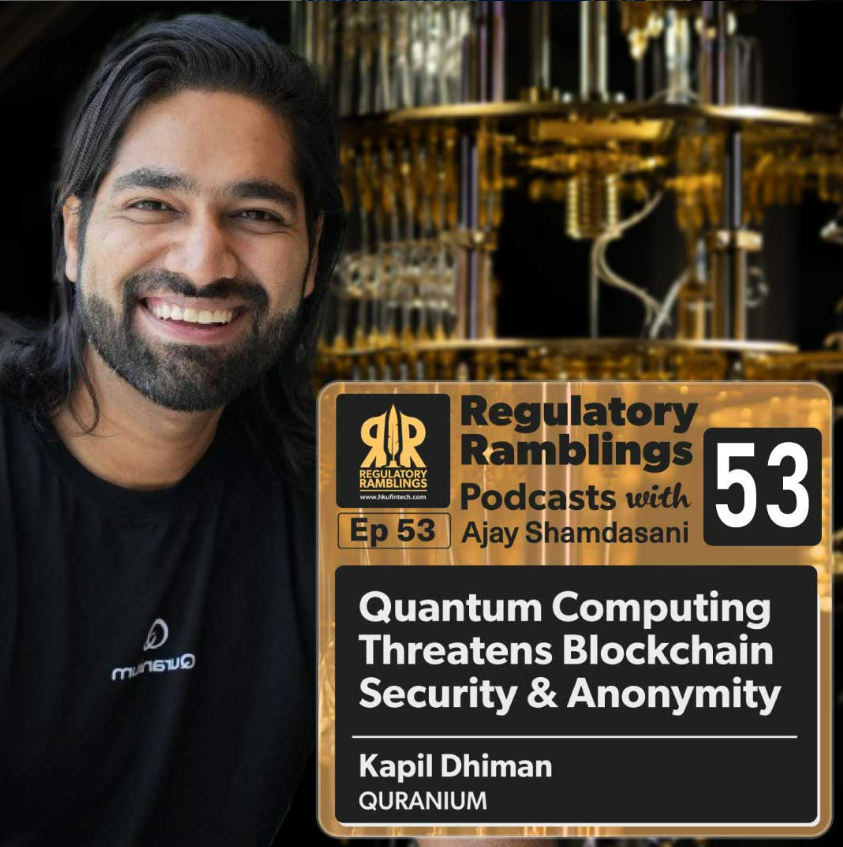
Regulatory Ramblings: Episode 53 – Advanced Quantum Computing Threatens Blockchain Transactional Security and Anonymity with Kapil Dhiman (Quranium)

Mumbai-based Kapil Dhiman is the co-founder and CEO of Quranium. An entrepreneur to his core with a creative and artistic side—coupled with a passion for problem-solving—Kapil is a seasoned leader with 12 years of diverse international consulting experience in dealing with enterprises, startups, and funds.

He is also a former Web 3.0 leader at PwC India and an award-winning CEO who crafted the Metaverse Startup of the Year 2023 from scratch. Kapil, a distinguished global speaker and author, has helped over 20 startups in the Web3 ecosystem with their go-to-market (GTM) and product strategies.

In this episode of Regulatory Ramblings, Kapil chats with host Ajay Shamdasani on how advances in quantum computing can compromise Blockchain transactional security and anonymity.

Much has been said about quantum computing and how it will revolutionize the world—and part of that is reflected in the new Cold War between the US and China. Beijing is constantly eager to tout its advances in the field, and the American and European mainstream press clamor about how the collective West is falling behind—in a manner almost reminiscent of the US response to the USSR’s 1957 Sputnik launch.

Some, such as Kapil, contend that quantum computing can breach the security of cryptocurrency transactions, notwithstanding the much touted ‘National Security Agency (NSA)-level encryption’ that Polish virtual asset advocates say exists when using a Blockchain.

Kapil shares a bit about his background and the challenges of growing up in a military family with a father he was very temperamentally different from. He recounts the difficulties of starting his firm, the joys and hurts of following an entrepreneurial path, and what he envisages for Quranium.

The discussion defines quantum computing, whether it should be regulated globally, and whether each industry using such computers should devise its own rules. Kapil concludes that each country must decide for itself—in the same way artificial intelligence is regulated globally.

Kapil also shares his thoughts on the notion that AI will come alive once quantum computing reaches a mature state. He addresses the issue of whether there is a mismatch between computing power and the ability to use AI to its fullest potential.

A lingering concern is that AI in its current state is not ‘ real AI’ and that the purest version of AI will require more advanced quantum computing.

The conversation concludes with Kapil commenting on what Web 3.0 means on a practical level. He dispels the cliché that creative and artistic types like himself are not practical and business-savvy, stating that such things can be learned if one is diligent and motivated enough.

We are bringing you the Regulatory Ramblings podcasts with assistance from the HKU Faculty of Law, the University of Hong Kong’s Reg/Tech Lab, HKU-SCF Fintech Academy, Asia Global Institute, and HKU-edX Professional Certificate in Fintech.

Useful links in this episode:

You might also be interested in:

Connect with RR Podcast at:

LinkedIn: https://hk.linkedin.com/company/hkufintech 
Facebook: https://www.facebook.com/hkufintech.fb/
Instagram: https://www.instagram.com/hkufintech/ 
Twitter: https://twitter.com/HKUFinTech 
Threads: https://www.threads.net/@hkufintech
Website: https://www.hkufintech.com/regulatoryramblings 

Connect with the Compliance Podcast Network at:

LinkedIn: https://www.linkedin.com/company/compliance-podcast-network/
Facebook: https://www.facebook.com/compliancepodcastnetwork/
YouTube: https://www.youtube.com/@CompliancePodcastNetwork
Twitter: https://twitter.com/tfoxlaw
Instagram: https://www.instagram.com/voiceofcompliance/
Website: https://compliancepodcastnetwork.net/

Categories
Blog

Addressing Pre-taliation

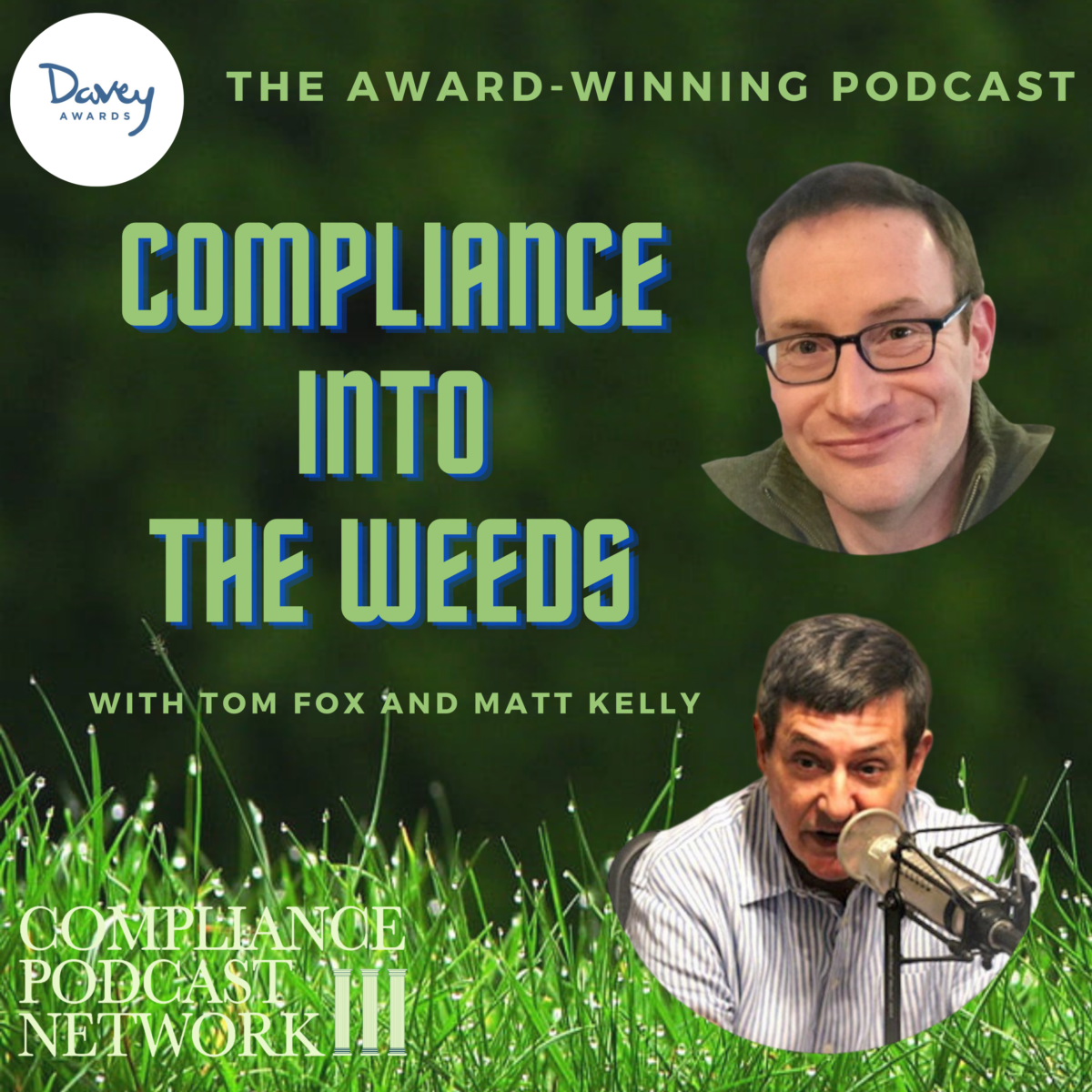
One of the most talked about subjects in corporate compliance is the issue of pre-taliation—an increasingly common enforcement target by the U.S. Securities and Exchange Commission (SEC). Matt Kelly and I did a recent podcast on the topic, and you can check out the recent episode of Compliance Into the Weeds for an audio discussion of the topic. Matt has blogged on the topic of Radical Compliance. This post will deeply dive into this issue and show why pre-taliation clauses in contracts, which inhibit whistleblowers from claiming financial rewards, are illegal and how compliance officers can effectively address this recurring problem.

What Is Pre-Taliation?

Pre-taliation refers to contract provisions that prevent or discourage employees from reporting potential misconduct to regulators. Typically, these clauses claim an employee forfeits the right to financial rewards associated with whistleblowing. While companies cannot directly prohibit employees from reporting wrongdoing, they attempt to introduce barriers that dissuade individuals from taking the financial risk of blowing the whistle. These clauses have a “chilling effect” on potential whistleblowers and are, quite simply, illegal under SEC rules.

The SEC’s recent enforcement actions against several corporations show that despite being a known violation, many businesses continue to use these clauses in their employment contracts. The fines may be relatively small, but the impact of these enforcement actions is clear: companies must remove pre-taliation language from all contracts, or they will face the consequences.

Recent SEC Enforcement Actions on Pre-Taliation

Last week, the SEC sanctioned seven companies for including pre-taliation language in their employment contracts. One major violator, Acadia Healthcare Corporation, was fined $1.4 million, while others, including TransUnion and IDEX Corporation, paid penalties ranging from $19,000 to $690,000. While these fines may seem minor compared to other enforcement actions, the real issue lies in the recurring use of these illegal clauses.

For the compliance professional, the key is that these contracts stated that employees were free to report potential violations to regulators. Still, they included an additional clause that employees had to forfeit any right to claim whistleblower rewards. This approach violates SEC whistleblower provisions designed to incentivize whistleblowers with financial rewards for bringing misconduct to light.

Why Do Companies Use Pre-Taliation Clauses?

Companies continue to use such clauses to prevent them from going to the SEC or other regulators. Including pre-taliation language is an intentional tactic designed to scare employees into silence. These clauses are legally dubious, but they can effectively discourage employees from whistleblowing if they are unaware of their legal rights. The logic is simple: why risk your career and financial livelihood to report misconduct without potential financial reward?

In some cases, these companies may also be testing the boundaries of the law if regulators do not prioritize enforcement. However, as the SEC’s actions have shown, this is a serious miscalculation, as it is clear that using such clauses is intentionally trying to prevent employees from exercising their federal rights.

Addressing Pre-Taliation: A Compliance Officer’s Roadmap

How can compliance officers avoid falling into the same trap as Acadia Healthcare and others? Here’s a practical roadmap for compliance professionals tasked with eliminating pre-taliation clauses from their companies’ contracts:

  • Conduct a Contract Review

The first step is to conduct a comprehensive review of all employment contracts, both current and historical. This is easier said than done, particularly for large organizations with decentralized operations. As Matt Kelly pointed out, the challenge lies in the sheer volume of contracts and the number of people involved in drafting and approving them. Contracts may come from various teams—HR, legal, commercial, and even procurement—so identifying all instances of pre-taliation language requires a coordinated effort across multiple departments.

  • Establish Clear Contract Policies

The next step is establishing clear and enforceable policies about what can and cannot be included in contracts. This policy should be enterprise-wide and include specific language that prohibits the inclusion of pre-taliation clauses. Not only does this create a standard for new contracts, but it also sets a clear precedent for remediating older contracts that may still contain illegal language.

This policy should also include specific guidelines for all contracts, not just employment agreements, as pre-taliation clauses can sometimes slip into customer contracts, vendor agreements, and third-party relationships. For instance, earlier this year,  J.P. Morgan was penalized for including pre-taliation language in its customer contracts, which stipulated that customers had to notify the company before reporting misconduct to regulators.

  • Collaborate with Legal and HR Teams

A cross-functional approach is critical to solving this issue. Compliance officers must work closely with the legal and HR teams to implement contract policies correctly. HR plays a key role in drafting employment contracts, while the legal department ensures the language complies with regulatory standards. Without close collaboration, tracking down all the contracts that need to be updated or ensuring that future contracts are compliant will be nearly impossible. The idea that there is a magical person in the company who can fix this problem is a myth. Addressing pre-taliation requires a team effort involving multiple functions and a strong commitment to enterprise-wide remediation.

  • Provide Employee Education

Another important step is to educate employees about their rights under whistleblower laws. Pre-taliation language works best when employees do not understand that these clauses are illegal. By informing employees of their rights, compliance officers can undermine the chilling effect these clauses are designed to create. Employees should know they are legally entitled to report misconduct to regulators and cannot be penalized.

  • Establish a Remediation Plan for Older Contracts

Once all pre-taliation clauses have been identified, the next step is to establish a remediation plan. This may involve contacting former employees who signed contracts with illegal language and current employees who must be informed that their contracts have been updated. While this can be a complex process, it is essential for maintaining the integrity of the company’s compliance program.

  • Monitor for Future Violations

Finally, compliance officers should establish ongoing monitoring to ensure that pre-taliation language doesn’t slip into future contracts. This can be done by including contract reviews as part of regular compliance audits or by implementing automated tools to flag problematic language. By proactively monitoring contract language, compliance officers can prevent future violations and ensure that their company complies with SEC regulations.

A Simple Fix but a Complex Process

Addressing pre-taliation clauses may seem straightforward, but as Matt Kelly pointed out, it can be highly complex. With multiple stakeholders involved and various contracts to review, it truly takes a coordinated, enterprise-wide effort to eliminate these illegal provisions.

For compliance officers, the message is clear: do not wait for the SEC to come knocking. Review contracts, establish clear policies, and educate employees about their rights. By taking these steps, compliance officers can ensure that their companies are compliant and foster a culture where whistleblowers feel empowered to come forward. With the new DOJ Whistleblower Financial Incentive Program, it is only a matter of time before the DOJ comes knocking.

Categories
Compliance Tip of the Day

Compliance Tip of the Day: Podcasting for Compliance Training

Welcome to “Compliance Tip of the Day,” the podcast where we bring you daily insights and practical advice on navigating the ever-evolving landscape of compliance and regulatory requirements.

Whether you’re a seasoned compliance professional or just starting your journey, our aim is to provide you with bite-sized, actionable tips to help you stay on top of your compliance game.

Join us as we explore the latest industry trends, share best practices, and demystify complex compliance issues to keep your organization on the right side of the law.

Tune in daily for your dose of compliance wisdom, and let’s make compliance a little less daunting, one tip at a time.

In this episode, we explore how you can use the audio podcast format to facilitate your compliance training regime.

For more information on the Ethico Toolkit for Middle Managers, available at no charge, click here.

Check out the full 3-book series, The Compliance Kids on Amazon.com.

Categories
Business Integrity Innovations

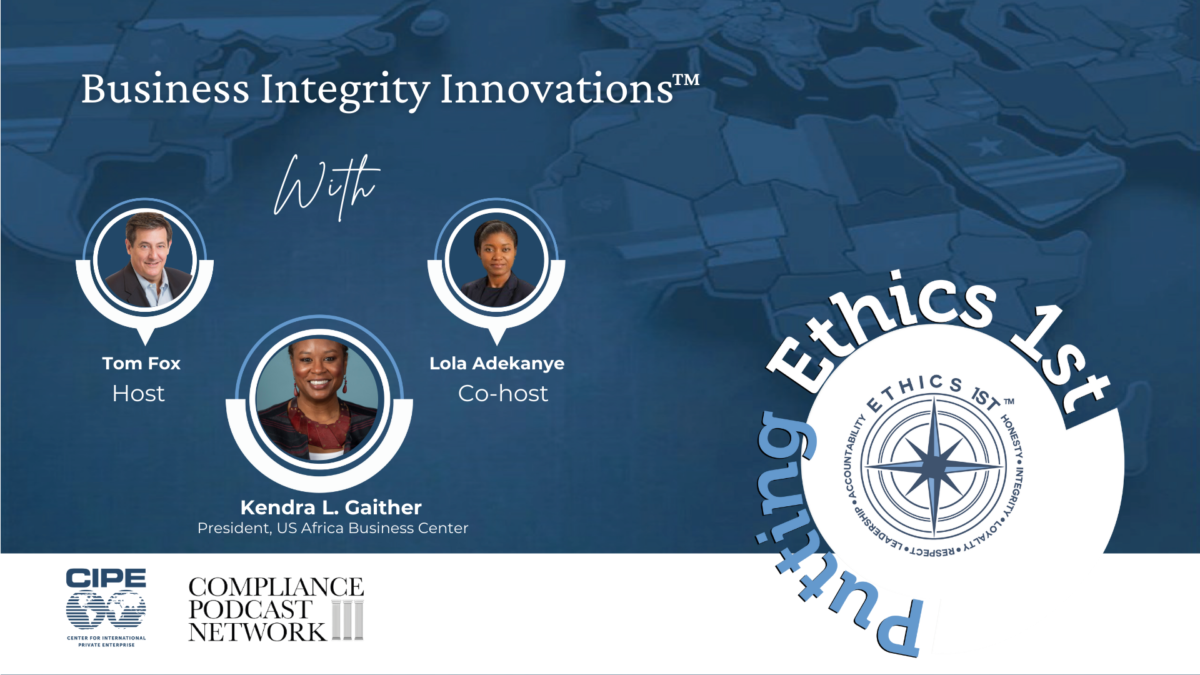
Business Integrity Innovations: Partners of Trust: Building U.S. – Africa Business Relations with Kendra Gaither

The Compliance Podcast Network (CPN) and the Center for International Private Enterprise (CIPE) bring you Business Integrity Innovations. This podcast is inspired by Ethics 1st, a multi-stakeholder initiative led by CIPE that creates pathways for accountable and sustainable investment in Africa. Companies can use Ethics 1st to standardize their business practices, develop sound corporate governance systems, and demonstrate their commitment to compliance and business ethics.

The U.S. Africa Business Center’s president, Kendra Gaither, joins Tom Fox and Lola Adekanye in this episode. Kendra shares her extensive experience working with international markets, from her tenure as a diplomat with the U.S. Department of State to her current role. The discussion delves into the mission and impact of the U.S. Africa Business Center, which aims to strengthen trade and investment ties between U.S. and African companies. Key topics include the importance of regulatory environments, collective action through the American Chambers of Commerce, and ethical business practices and compliance in fostering trust and certainty in global markets. The episode highlights the significance of the rule of law and integrity in boosting business opportunities and creating sustainable partnerships.

Key Highlights:

  • Overview of the U.S. Africa Business Center
  • Key Issues and Solutions in Emerging Markets
  • The Importance of Ethics and Integrity in Business
  • The Role of Trust and Certainty in Business Relationships

Resources:

CIPE

US Chamber of Commerce

Kendra Gaither on Linkedin

Categories
Daily Compliance News

Daily Compliance News: September 12, 2024 – The Leaving the Dirty Money List Edition

Welcome to the Daily Compliance News. Each day, Tom Fox, the Voice of Compliance, brings you compliance-related stories to start your day. Sit back, enjoy a cup of morning coffee, and listen to the Daily Compliance News. All from the Compliance Podcast Network.

Each day, we consider four stories from the business world: compliance, ethics, risk management, leadership, or general interest for the compliance professional.

In today’s edition of Daily Compliance News:

  • Will South Africa leave the FATF dirty money list in 2025? (Bloomberg)
  • How corruption fuels inequality in China. (Foreignaffairs)
  • Chinese bank told to wire money after CEO disappeared. (FT)
  • Google was out to crush competition. (Reuters)

For more information on the Ethico Toolkit for Middle Managers, available at no charge, click here.

Check out the full 3-book series, The Compliance Kids on Amazon.com.

Categories
Hill Country Artists Podcast

Texas Hill Country Artists Podcast: The Artistic Journey of Matthew Fielder – From Film to Pastels

Delve into the heart of the Texas Hill Country with award winning “Hill Country Artists Podcast,” which illustrates and illuminates the vibrant tapestry of art rooted in this iconic region. From the sun-drenched limestone cliffs to the serene Guadalupe River, the Hill Country has been a muse for countless artists, providing a unique backdrop for creativity to flourish. In each episode, we uncover the stories behind the area’s most captivating artworks, converse with local artists about their inspirations, and explore the fusion of Texan traditions with contemporary artistic expressions.

In this episode of the award-winning Hill Country Artist podcast, host Tom Fox sits down with local artist Matthew Fielder to discuss his evolution as an artist. Matthew shares his initial passion for film, his deep-rooted interest in Star Wars and its influence on his artistic aspirations, and his segue into fine art. He details his early inspirations, the transition from narrative-driven art to creating evocative, visually stimulating pieces, and his current focus on pastels and landscapes. Matthew also provides insight into his educational experience at the Hill Country Atelier and his creative process. This engaging conversation highlights his ongoing artistic endeavors and future aspirations, including participation in art shows and exploring sci-fi landscapes in his work.

Key Highlights:

  • Early Career and Artistic Beginnings
  • Transition to Film and Artistic Evolution
  • Current Artistic Style and Techniques
  • Experiences at the Hill Country Atelier
  • Future Plans and Upcoming Shows

Matthew Fielder on Instagram

Categories
Everything Compliance

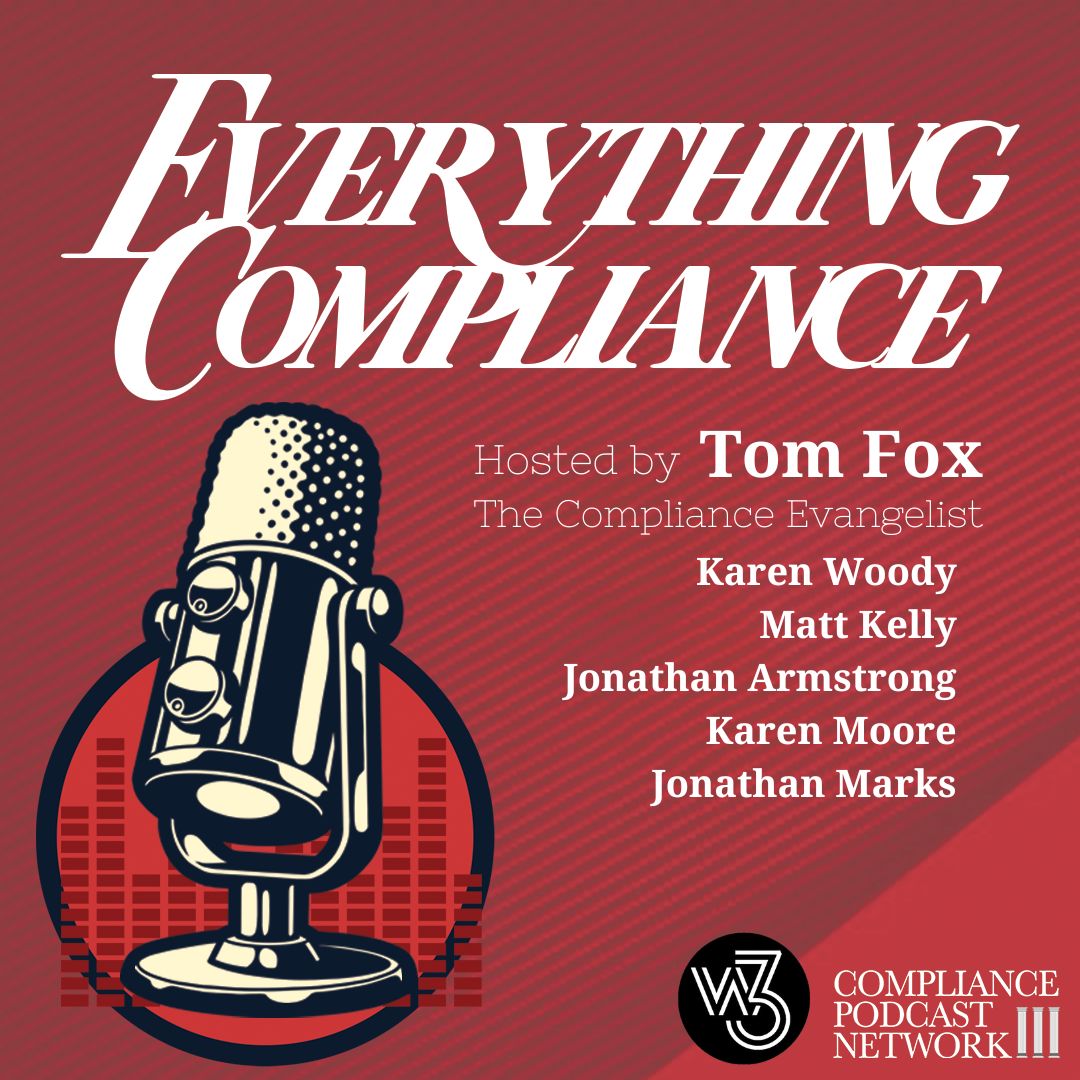
Everything Compliance: Episode 140, The Fall is in The Air Episode

Welcome to the only roundtable podcast in compliance as we celebrate our second century of shows.

In this episode, we take up a potpourri of topics. We have the quartet of Matt Kelly Jonathan Armstrong, Jonathan Marks, and Karen Moore; all hosted by Tom Fox.

1. Matt Kelly looks at the RTX enforcement action by the State Department. He shouts out to the Brazilian judiciary for standing up the bullying tactics of Elon Musk in their legal dispute.

2. Karen Moore considers the Boston Consulting Group FCPA Declination. She shouts out to the Victorian Lyric Opera Company.

3. Jonathan Armstrong looks at HP and their decision to continue proceedings against the Estate of Mike Lynch after his death. He rants about Claude Wehrle and the Grenfell Tower disaster.

4. Jonathan Marks considers the role of the Audit Committee on a Board. He rants about his beloved Philadelphia Eagles and the NFL having their home opening on a Friday night in Brazil.

5. Tom Fox shouts out to Professor Stephen Bainbridge and his dismantling of the DExit fallacy.

The members of the Everything Compliance are:

Karen Woody – Is one of the top academic experts on the SEC. Woody can be reached at kwoody@wlu.edu

•  Matt Kelly – Founder and CEO of Radical Compliance. Kelly can be reached at mkelly@radicalcompliance.com

Jonathan Armstrong –is our UK colleague and an experienced data privacy/data protection lawyer in London. He can be reached at his new law firm Jonathan.Armstrong@puntersouthall.law

Jonathan Marks can be reached at jtmarks@gmail.com

Karen Moore can be reached at Kmoore51@fordham.edu

The host and producer, rantor (and sometime panelist) of Everything Compliance is Tom Fox the Voice of Compliance. He can be reached at tfox@tfoxlaw.com. Everything Compliance is a part of the award-winning Compliance Podcast Network.

For more information on the Ethico Toolkit for Middle Managers, available at no charge, click here.

Check out the full 3-book series, The Compliance Kids on Amazon.com.

Categories
It's art

It’s art, let’s talk about it: The Evolution of an Art Collector: A Conversation with Tim Newton

The Museum of Western Art is dedicated to excellence in the collection, preservation, and promotion of Western Heritage and the education and cultural enrichment of our diverse audiences. The Museum serves as a bridge between the past and the present, ensuring that the legacy of the American West will be preserved for the future. Western Art is as engaging and important as ever.

In this award-winning podcast series, Museum Executive Director Darrell Beauchamp welcomes Tim Newton, publisher emeritus of Western Art and Architecture magazine.

Join host Darrell Beauchamp as he interviews Tim Newton about his journey from a kitchen remodeler to a significant figure in the Western art world. They discuss Tim’s deep connections with top artists like Scott Christensen and Quang Ho, his experiences curating prestigious art shows, and his passion for collecting art. Tim reveals insights into collecting and curating art, shares stories of his involvement with the Salmagundi Club, and previews his upcoming role curating ‘Night of the Artist’ for the Briscoe Museum. This podcast offers a rich blend of art history, personal anecdotes, and expert advice for aspiring collectors and artists.

Highlights Include:

  • Tim’s Background and Journey into Art
  • The Value of Art: Investment and Passion
  • Current Hot Artists in the Western Art Market
  • Scott Christensen and Quang Ho: Masters of Diversity
  • The Blockbuster Show: A Summer Highlight
  • Advice for Young Collectors

Resources:

Museum of Western Art

Darrell Beauchamp on LinkedIn

Tim Newton on LinkedIn

Briscoe Museum

Categories
Blog

The Case for Automation: Why Compliance Professionals Must Embrace the Future

In 2024, compliance is no longer just a check-the-box function but a vital component of risk management, corporate governance, and business strategy. As companies scale and regulations become more complex, the traditional methods of managing compliance—using spreadsheets, SharePoint, and manual processes—are proving inadequate. In a recent episode of the Innovation in Compliance podcast, Travis Howerton, Co-Founder and CEO of RegScale, emphasized the importance of automation in compliance, mainly through the lens of cybersecurity, digital transformation, and the growing regulatory burden. Their conversation sheds light on why compliance professionals need to embrace automation now more than ever.

Compliance and Digital Transformation: A Necessary Partnership

Compliance is often seen as the enemy of innovation, a cost center, and a roadblock to business development. Howerton recalls a time when cyber and compliance were usually viewed as the “no” force in an organization, blocking new initiatives due to concerns over risk. But times have changed. Compliance is no longer a hindrance to business growth but an enabler, especially when integrated into a company’s digital transformation efforts.

Howerton strongly advocates for compliance professionals to rethink their approach and adopt a more proactive stance. Rather than being the department that says no, compliance can empower businesses to move faster and innovate more effectively—provided they have the right systems in place.

Automation is key to this transformation. RegScale aims to digitize regulatory requirements into code, moving away from cumbersome and static processes like filling out spreadsheets and chasing paper trails. Automation makes compliance a “free outcome” of operational excellence, enabling businesses to focus on innovation without sacrificing their risk posture.

Why Continuous Monitoring Matters

The importance of continuous compliance monitoring is evident as regulatory frameworks become increasingly complex. Regulations evolve, not just in scope but also in speed, and a one-time audit or annual review is no longer sufficient. Continuous monitoring ensures compliance is not reactive but an ongoing activity that adapts as risks emerge and regulatory requirements change.

Manual processes have problems, and Howerton was quite candid about their limitations. Relying on spreadsheets, while familiar and easy to set up, often results in outdated or incomplete data. Compliance professionals who still rely on these methods work in a reactive mode, responding to issues only after they become serious. Worse, the inefficiencies of manual tracking can lead to missed deadlines, incomplete audits, and a false sense of security.

With automation, companies can continuously monitor compliance, ensuring they meet today’s standards and are prepared for tomorrow’s changes. Automated tools also reduce the risk of human error and can flag issues in real time, allowing compliance teams to address risks before they escalate.

How Automation Enhances Cybersecurity Compliance

Automation is not simply a nice-to-have for highly regulated industries like finance, healthcare, and national security; it is essential to doing business. Compliance in these sectors is about meeting external regulatory requirements and protecting the business’s core assets—its data, infrastructure, and, ultimately, reputation.

Howerton noted that cybersecurity has become a board-level concern for organizations across industries. No matter which party is in power or how political landscapes shift, cybersecurity will continue to be a top priority for businesses. A breach can lead to massive financial losses, reputational damage, and legal liabilities. Yet, cybersecurity compliance is notoriously difficult to manage, especially when relying on manual processes.

Automated compliance solutions can integrate cybersecurity frameworks into operational processes. Instead of requiring constant manual updates and reviews, these systems can continuously monitor for threats and ensure the necessary protections are in place.

Moreover, compliance officers can shift from reactive to proactive by digitizing regulations and automating reporting. They can focus on managing actual risks rather than spending time maintaining paperwork. This approach transforms compliance from a burdensome process into a critical driver of business value.

Overcoming Resistance to Automation

Despite the clear benefits, there is still resistance to automation in many compliance departments. Howerton acknowledges that much of this resistance is cultural. The introduction of automation may threaten some professionals, especially those with legal or non-technical backgrounds who worry that it will eliminate their roles. Others may believe that their current manual systems are “good enough.”

However, as Howerton explains, the pace of regulatory change and the speed at which new risks emerge mean manual processes are no longer sustainable. “Software is eating the world,” he says, and compliance is no exception. The complexity of managing compliance in a digital world will overwhelm businesses that need to adapt.

How can compliance professionals overcome this reluctance? By reframing the conversation. Automation doesn’t eliminate jobs; it enhances them. By taking over the repetitive, time-consuming tasks that no one enjoys—like chasing down documentation or managing endless spreadsheets—automation allows compliance professionals to focus on the higher-level strategic work that truly matters: managing risk, advising the business, and ensuring long-term compliance.

The Cost of Inaction

The most compelling reason to embrace automation is the cost of inaction. Compliance breaches can be devastating, both financially and reputationally. A breach or failed audit does not simply result in fines; it can lead to a loss of trust among customers, investors, and stakeholders.

In the long term, the organizations that thrive will have seamless, scalable, and sustainable integrated compliance into their business processes. Manual processes may have worked in the past, but as we approach 2030 and beyond, they will not be enough to keep up with the pace of change.

Howerton closes the discussion with a powerful analogy: “You don’t have brakes on a car to slow down; you have brakes so you can drive fast.” Compliance allows businesses to move faster, innovate more, and confidently explore new opportunities when done right. By embedding automation into their compliance programs, companies can protect themselves from risk while driving forward into new markets and opportunities.

The Future of Compliance is Automated

As we look to the future, one thing is clear: automation is no longer optional for compliance professionals. The growing complexity of regulations, the need for real-time monitoring, and the increasing importance of cybersecurity make it only possible for companies to rely on manual processes. Continuous monitoring, powered by automation, will be the key to managing these challenges effectively.

For compliance professionals, the time to embrace automation is now. The future is coming faster than ever, and those who fail to adapt risk being left behind.

Categories
Compliance Into the Weeds

Compliance into the Weeds: Pre – taliation Illegality- from Employment Contracts to All Contracts

The award winning, Compliance into the Weeds is the only weekly podcast which takes a deep dive into a compliance related topic, literally going into the weeds to more fully explore a subject. Looking for some hard-hitting insights on compliance? Look no further than Compliance into the Weeds!

In this episode, Tom Fox and Matt Kelly take a deep dive into the recent SEC enforcement actions against several companies for pre-taliation clauses and related illegal intent.

Our conversation discusses recent enforcement actions by the SEC sanctioned against seven companies for a total of $3 million in civil penalties. The main issue was that these contracts required employees to forfeit any right to whistleblower awards if they reported misconduct to regulators. The conversation explores the legality of these contract clauses and the chilling effect they have on potential whistleblowers. Tom and Matt also discuss the challenges of remediation and the need for a comprehensive approach to address retaliatory clauses in all types of contracts.

Key Highlights:

  • SEC Enforcement Actions on Pre-Retaliation Language
  • The Illegality of Pre-Retaliation Clauses
  • Addressing Pre-Retaliation Clauses: Remediation Challenges
  • Expanding the Focus: From Employment Contracts to All Contracts

Resources:

Matt in Radical Compliance

Tom 

Instagram

Facebook

YouTube

Twitter

LinkedIn

Check out the full 3-book series, The Compliance Kids on Amazon.com.