Categories
The Hill Country Podcast

The Hill Country Podcast – Exploring Media Studies and Communication with Dr. Adolfo Mora

Welcome to the award-winning The Hill Country Podcast. The Texas Hill Country is one of the most beautiful places on earth. In this podcast, Hill Country resident Tom Fox visits with the people and organizations that make this the most unique area of Texas. This week, Tom welcomes Dr. Adolfo Mora, an Associate Professor of Communication at Schreiner University.

Dr. Mora shares insights into his academic journey, from high school media projects to his PhD. He discusses his research on colorblindness and ethnic representation in media and details his teaching philosophy and method at Schreiner University. The conversation delves into the practical and theoretical aspects of communication studies, the evolution of media, and the digital divide influenced by geographic, socioeconomic, and generational factors. Dr. Mora also reflects on the differences between teaching at a large university like UT Austin and a smaller institution like Schreiner, emphasizing the importance of personalized education and student engagement.

Key highlights:

  • Dr. Mora’s Academic Journey
  • Exploring Colorblindness in Media
  • Media and Communication Classes
  • Generational Media Experiences
  • Digital Divide and Media Studies

Resources:

De. Adolfo Mora

Nancy Huffman Fine Art

Other Hill Country-Focused Podcasts

Hill Country Authors Podcast

Hill Country Artists Podcast

Texas Hill Country Podcast Network

Categories
Compliance Tip of the Day

Compliance Tip of the Day – Corporate Leaks and Compliance

Welcome to “Compliance Tip of the Day,” the podcast where we bring you daily insights and practical advice on navigating the ever-evolving landscape of compliance and regulatory requirements. Whether you’re a seasoned compliance professional or just starting your journey, we aim to provide you with bite-sized, actionable tips to help you stay on top of your compliance game. Join us as we explore the latest industry trends, share best practices, and demystify complex compliance issues to keep your organization on the right side of the law. Tune in daily for your dose of compliance wisdom, and let’s make compliance a little less daunting, one tip at a time.

Today, we look at the implications of corporate leaks for a company’s culture and the role of a compliance function if they occur.

Categories
Blog

Compliance Leadership: The Art of Adaptation and Style Selection

Leadership in compliance isn’t merely about having expertise in regulatory frameworks or policies. It’s about effectively guiding a team through complex challenges, continuously evolving regulatory landscapes, and an ever-shifting corporate environment. Effective compliance leadership demands a nuanced understanding of leadership styles and the agility to adapt these styles to the demands of specific situations. Today, I dive into six distinct leadership styles first identified by Daniel Goleman and then written about by Rebecca Knight in her HBR article, “6 Common Leadership Styles — and How to Decide Which to Use When,” I use Knight’s article to explore how compliance professionals can integrate these styles to strengthen compliance cultures and organizational resilience.

Understanding Leadership Through a Compliance Lens

Goleman’s seminal research presented six leadership styles: coercive, authoritative, pacesetting, affiliative, democratic, and coaching​. While some of these styles naturally align with compliance efforts, others may initially seem counterintuitive or even detrimental. However, compliance professionals must appreciate and strategically deploy each style to address varying compliance scenarios effectively.

The Coercive Style: Compliance’s Necessary Evil?

Coercive leadership, characterized by a top-down, directive approach, demands immediate compliance. On its surface, this style seems antithetical to the principles of modern compliance, which emphasize collaboration, open dialogue, and transparency. Yet, consider a scenario such as managing an immediate compliance crisis—a data breach, sanctions violation, or serious misconduct allegation. In such instances, swift, decisive action with clear directions can be invaluable to mitigate harm and establish immediate corrective measures.

However, compliance leaders must exercise caution; coercive leadership has significant drawbacks, notably diminished morale, reduced engagement, and potential loss of trust. As Knight rightly notes, frequent reliance on coercive leadership can create a corrosive environment, undermining long-term compliance program effectiveness​. Hence, it’s crucial to limit this approach strictly to emergencies.

The Authoritative Style: Compliance Visionaries at Work

Contrasting starkly with coercive leadership, authoritative leadership excels in mobilizing individuals toward a shared compliance vision. Compliance leaders adopting this style clearly articulate how compliance contributes to overall organizational integrity, sustainability, and success. Whether introducing new compliance technologies, policies, or procedural adjustments, an authoritative leader demonstrates how each action aligns with the broader organizational objectives and regulatory requirements.

This approach helps embed compliance into the fabric of corporate culture by clearly demonstrating compliance’s strategic value. It fosters employee engagement and makes compliance not just a set of rules but a meaningful part of everyday operations.

The Pace-setting Style: High Standards, High Risks

Pace-setting leadership involves establishing and maintaining high standards of performance. Compliance professionals are typically meticulous, driven, and committed to excellence, making the pace-setting style a natural fit. Nonetheless, Rebecca Knight provides an essential cautionary note: the relentless pursuit of perfection, characteristic of this style, can lead to employee burnout and disengagement​.

Compliance officers must carefully manage their use of pace-setting leadership. It’s particularly effective in specialized compliance tasks where precision is paramount, such as preparing for external audits or implementing new regulatory protocols. However, balancing this intensity with other leadership styles can safeguard employee well-being and maintain sustainable compliance standards.

The Affiliative Style: Building the Compliance Community

The affiliative leader prioritizes relationship-building, emotional connections, and fostering a supportive compliance environment. In today’s corporate climate, where teams increasingly grapple with remote work or hybrid arrangements, affiliative leadership offers an essential anchor. It helps compliance professionals feel valued, connected, and integral to the team, significantly enhancing morale and commitment to compliance initiatives.

However, relying solely on affiliative leadership can leave critical feedback unaddressed. Therefore, Knight recommends coupling affiliative strategies with more directive styles, ensuring a healthy balance of encouragement and accountability in compliance teams​.

Democratic Leadership: Harnessing Collective Wisdom

The democratic leader believes in shared decision-making and soliciting diverse viewpoints. This inclusive approach can yield innovative compliance solutions, particularly beneficial when compliance teams confront unprecedented challenges or must develop novel strategies to meet new regulatory demands.

Yet democratic leadership requires time and extensive dialogue. This style may falter during a compliance emergency or when swift decision-making is critical. Thus, compliance professionals must discern wisely when inclusive discussions enhance compliance efforts or when they may lead to paralysis by analysis.

Coaching Leadership: The Long Game of Compliance

Finally, coaching leadership prioritizes team members’ personal and professional growth. This style aligns seamlessly with compliance’s foundational continuous improvement and training objectives. Coaching leaders consistently ask their teams how they can support them in achieving their compliance goals, fostering a culture of learning and development.

Compliance officers employing this style nurture a proactive, engaged compliance team eager to enhance their knowledge, skills, and abilities. The long-term payoff is substantial: sustained compliance effectiveness and a robust compliance culture resilient to ethical and regulatory challenges.

Adaptive Leadership in Compliance: The Ultimate Strategic Advantage

Goleman’s most critical insight is that effective leadership is not rigidly adhering to a single style but fluidly adapting based on circumstances. Compliance leadership, therefore, is inherently situational. Effective compliance officers deftly transition between leadership styles—authoritative when clarifying a compliance vision, democratic when developing new procedures collaboratively, coercive when addressing urgent compliance crises, affiliative when morale is flagging, pace-setting when precision is crucial, and coaching when fostering team growth.

Achieving this level of leadership agility requires developing emotional intelligence—understanding your team’s dynamics, motivations, and emotional states and adapting your leadership accordingly. Leaders can enhance emotional intelligence through self-reflection, feedback, coaching, and practice.

Compliance Leadership as a Dynamic Practice

Compliance leadership cannot afford stagnation. As compliance professionals, we operate in an ever-evolving regulatory and business landscape that continually challenges our assumptions and demands our adaptability. Mastering and appropriately deploying these six leadership styles—coercive, authoritative, pace-setting, affiliative, democratic, and coaching—positions compliance leaders to meet these challenges proactively.

By honing our adaptive leadership skills and embracing the full spectrum of leadership styles detailed by Knight, we strengthen our compliance programs and foster healthier organizational cultures. As compliance professionals, we can turn regulatory compliance from a perceived burdensome obligation into an integral, vibrant component of organizational success.

The call to compliance leadership is clear—let’s embrace its complexities, adapt effectively, and lead purposefully, understanding that flexibility is our greatest strength in the nuanced world of compliance.


Categories
Word of the Week

Word of the Week with Kenneth O’Neal – Shamrock: The Significance of St. Patrick’s Day

Each week, Kenneth O’Neal discusses a word that describes a principle or value of the Qualities of Success. We suggest you use the Word of the Week in your thoughts, deeds, and actions. You might possess the quality and desire to develop it to a higher level. You could replace a bad habit with a good habit. Write an action step and use it daily to develop the quality of your life. In this episode, Kenneth discusses the word – Shamrock.

Kenneth explores St. Patrick’s Day’s historical and cultural significance. He discusses the origins of St. Patrick, including his capture by Irish raiders and his subsequent mission to convert Ireland to Christianity. Highlighting the key symbols of the celebration, Kenneth delves into the legend of the shamrock, explaining its association with the Holy Trinity and its use in driving out pagan beliefs. The conversation also touches upon various traditions related to St. Patrick’s Day, such as the significance of wearing green, the legend of St. Patrick banishing snakes from Ireland, and cultural festivities in cities like New York and Boston. Finally, Kenneth encourages listeners to find personal connections to their faith and share these experiences with others, fostering deeper reflection and understanding.

Key highlights:

  • Patrick’s Day and Irish Heritage
  • The Legend of the Shamrock
  • Patrick’s Life and Mission
  • Patrick’s Day Celebrations
  • Reflections on Faith and Personal Stories

Resources:

KRONEAL Consulting

Categories
Daily Compliance News

Daily Compliance News: March 18, 2025, The Slack Channel Edition

Welcome to the Daily Compliance News. Each day, Tom Fox, the Voice of Compliance, brings you compliance-related stories to start your day. Sit back, enjoy a cup of morning coffee, and listen to the Daily Compliance News—all from the Compliance Podcast Network. Each day, we consider four stories from the business world: compliance, ethics, risk management, leadership, or general interest for the compliance professional.

Top stories include:

  • Who is watching your Slack channel? (NYT)
  • McDonald’s UK warns all stores about sexual harassment. (BBC)
  • FCA will ban Crispin Odey from financial services. (FT)
  • Novo was reinstated in the UK. (Bloomberg)
Categories
Innovation in Compliance

Innovation in Compliance – Nikki Rausch on Harnessing Relationships for Sales and Effective Compliance

Innovation comes in many areas, and compliance professionals need to be ready for it and embrace it. Join Tom Fox, the Voice of Compliance, as he visits with top innovative minds, thinkers, and creators in the award-winning Innovation in Compliance podcast. In this episode,  host Tom Fox welcomes Nikki Rausch, the Sales Maven, to visit her unique journey and expertise in neuro-linguistic programming (NLP) and sales coaching.

Nikki shares her professional background and foray into NLP and how it transformed her communication skills, leading her to start her own business, Sales Maven. We cover key insights on simplifying the sales process using strategic conversations and frameworks like the ‘Selling Staircase’ and debunking common misconceptions about sales. Nikki emphasizes the importance of building rapport and permission-based selling, making the process more collaborative and less daunting for sellers and buyers.

Tom and Nikki also touch upon the importance of storytelling in making content memorable and techniques for scaling businesses by training teams to recognize buying signals and create curiosity. Whether in the corporate world of compliance or an entrepreneur looking to scale your business, this episode offers valuable strategies that can be applied across various fields. Don’t miss Nikki’s gift—a free training course on asking the right questions in sales calls, available through her website.

Highlights include:

  • Exploring NLP and Sales Techniques
  • The Selling Staircase Framework
  • Building Relationships in Sales
  • Positioning Yourself as a Solution Provider

Resources:

Nikkie Rausch on LinkedIn

Your Sales Maven

Free Training called Seal The Deal

Your Sales Maven Podcast

The Selling Staircase: Mastering the Art of Relationship Selling

Your Sales Maven Facebook & Instagram

Tom Fox

Instagram

Facebook

YouTube

Twitter

LinkedIn

Categories
Red Flags Rising

Red Flags Rising: S01 E01 – DeepSeek’s Deep Impact on Export Controls

In the launch of Red Flags Rising, Mike and Brent explain the concept and purpose of the pod (00:00), a recent report by Gregory C. Allen of the Center for Strategic and International Studies on “DeepSeek, Huawei, Export Controls, and the Future of the U.S.-China AI Race” (linked below) (01:43), the report’s emphasis on backing strong regulations with strong enforcement (04:49) and the recently rediscovered “high probability” knowledge standard under the U.S. Export Administration Regulations (06:50), whether and how the Commerce Department’s enforcement capability is impacted by recent policy and personnel decisions (11:00), parallels to the U.S. Foreign Corrupt Practices Act (13:54), and conclude with the first-ever “Brent Carlson on Managing Up” segment, providing practical tips on what trade compliance professionals can do to explain to stakeholders, the c-suite, and boards the value proposition of export controls compliance today (19:43).

Resources:

Gregory C. Allen’s Report

Mike & Brent’s “Fresh Looks” Series

Brent LinkedIn

Mike LinkedIn

Categories
All Things Investigations

All Things Investigations – Terrorism Designations of Mexican Cartels Fundamentally Enhances Risk for All Companies

Welcome to the Hughes Hubbard Anti-Corruption & Internal Investigations Practice Group’s podcast, All Things Investigation. In this podcast, host Tom Fox is joined by Jeremy Paner and Diego Durán de la Vega to discuss the designation of cartels and other actors in Mexico as foreign terrorist organizations and what this means for US businesses.

This episode considers the significant compliance regulation changes affecting US domestic and Mexican companies. The focal point is the recent designation of cartels and their members as Foreign Terrorist Organizations (FTO) and/or Specially Designated Global Terrorists (SDGT). Unlike in the past, where counter-narcotics sanctions had a limited impact on day-to-day business operations, these new rules introduced a different risk landscape. The spotlight is not simply on the widely-publicized foreign terrorist organizations but rather on the lesser-known yet impactful, specially designated global terrorist (SDGT) actions. These SDGT designations empower the US Treasury’s terrorist finance tracking program, effectively increasing surveillance on Mexican payments, thus posing new challenges and risks for domestic companies.

Key highlights:

  • Introduction to New Rules Impacting US Companies
  • Impact on Domestic Mexican Companies
  • Terrorism Designations and Their Implications
  • Treasury’s Terrorist Finance Tracking Program

Resources:

Jeremy Paner

Diego Durán de la Vega

Hughes Hubbard & Reed website

Designation of Criminal Cartels as Foreign Terrorist Organizations Increases Compliance Risks for Companies (US or Not) Operating in Mexico and Greater Latin America

Categories
Corruption, Crime and Compliance

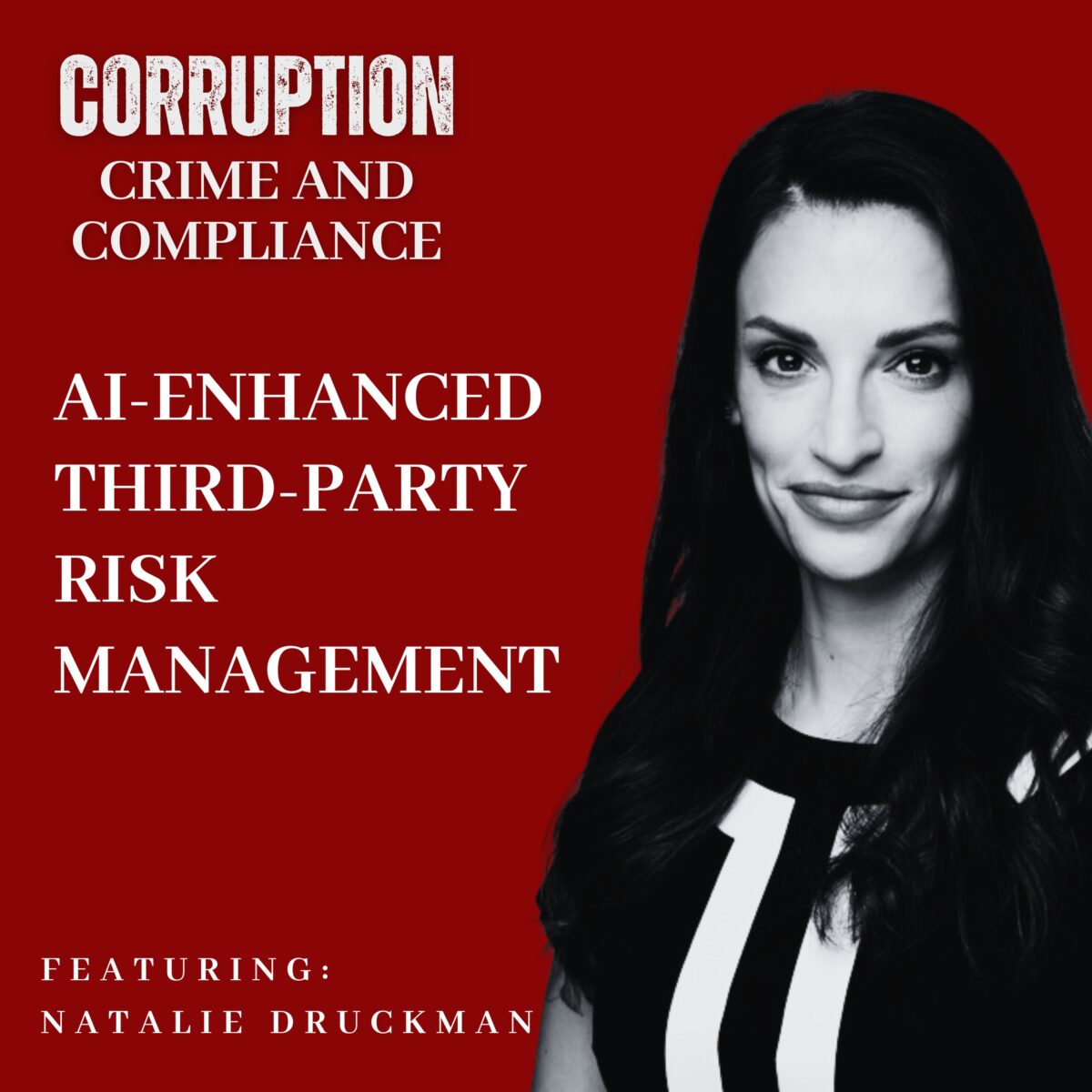
[Replay] Natalie Druckman from Certa on AI-Enhanced Third-Party Risk Management

How do you manage risk when the vulnerabilities outside your organization aren’t in your hands? In this episode of Corruption, Crime, and Compliance, we delve into third-party risk management with our guest, Natalie Druckman, from Certa. As we discuss the regulatory landscape in EMEA and the US, Natalie highlights the higher regulatory burden faced by companies in EMEA and how Certa uses AI to streamline workflows, provide intuitive data visualization, and enhance risk forecasting capabilities. AI is the future of third-party risk management, now and in the future.

  • Cybersecurity has become one of the top concerns for organizations. In 2012, Target worked with a third-party vendor and, as a result, suffered an attack that exposed their customers’ credit data. Since then, compliance departments have started working closely with IT to prevent such vulnerabilities. 
  • Unlike the US, EU companies don’t benefit from gaps created between state and federal regulations. EMEA faces a mandatory and substantial regulatory burden, particularly in areas like ESG and compliance. A forced labor scandal can sink a company, so ESG’s importance is on par with cyber security.
  • Global companies increasingly recognize the importance of addressing ESG topics alongside cybersecurity and financial risks. ESG considerations, such as diversity, modern slavery, and gender pay gaps, have significant reputational and revenue impacts.
  • AI is changing the world in many ways, including compliance. Certa aims to provide a comprehensive solution for third-party risk management, compliance, and operational risks by streamlining processes and incorporating AI capabilities to enhance efficiency and effectiveness.
  • Certa utilizes various AI capabilities, including design AI, which allows users to create workflows using plain language. They don’t need to know anything about tech; they can dictate the process, and AI generates the necessary code and infrastructure. This allows the company to remain flexible and quickly adapt to change.
  • Insights AI is another capability that collects and analyzes data, making it far more accessible and efficient in managing up-to-the-minute risks and developments. This technology also uses design AI, allowing plain language inputs to create actionable, detailed reports immediately.
  • Recall AI allows companies to guarantee rapid and consistent responses from suppliers and customers by recalling past interactions to create surveys, forms, workflows, and processes. This removes the back-and-forth burden on all parties while retaining the human touch.
  • Smaller and midsize companies should prioritize risk management processes and consider automated solutions like Certa. Regardless of their industry or size, these companies can benefit from the efficiency and effectiveness of an automated platform.

Resources:

Michael Volkov on LinkedIn | Twitter

The Volkov Law Group

Natalie Druckman on LinkedIn

Certa

Email Natalie: nat@certa.ai

Categories
Compliance Tip of the Day

Compliance Tip of the Day – AI for Whistleblower Anonymity

Welcome to “Compliance Tip of the Day,” the podcast where we bring you daily insights and practical advice on navigating the ever-evolving landscape of compliance and regulatory requirements. Whether you’re a seasoned compliance professional or just starting your journey, we aim to provide bite-sized, actionable tips to help you stay on top of your compliance game. Join us as we explore the latest industry trends, share best practices, and demystify complex compliance issues to keep your organization on the right side of the law. Tune in daily for your dose of compliance wisdom, and let’s make compliance a little less daunting, one tip at a time.

Today, we look at how to harness AI for whistleblower anonymity and incident management.