Categories
Culture Crafters

Culture Crafters – Listening Up to Build a Speak Up Culture

It is always interesting when the regulators catch up to the business world. That is what has happened around corporate culture. The Department of Justice is now assessing corporate culture for any company under investigation. Yet, more than simply complying with this mandate, companies should strive to foster the best culture that they can achieve. The reason is deceptively simple—the better the culture, the better the company. However, many business executives and even compliance professionals do not know how to craft a culture that allows your employees and your organization to implement such strategies. How can you unlock the power of a thriving workplace culture?

In this podcast series, Sam Silverstein, the most trusted voice in America on accountability, and Tom Fox, the Voice of Compliance, look at ways companies can elevate their culture to new heights. In this episode, Tom and Sam continue their three-part series on the increased importance of compliance after Trump’s Executive Order suspending FCPA enforcement. In part 2, we discuss the importance of speaking up and listening up for corporate culture.

Key insights:

  • Proactive Listening Strategies for Leaders
  • The Importance of a Listening Strategy
  • The Disconnect in Perception of Company Culture
  • The Impact of Communication on Culture
  • Addressing the Disconnect with Data
  • The Importance of Perspective Seeking

 Resources:

 Sam Silverstein

Sam Silverstein on LinkedIn

Sam Silverstein

The Culture Audit™

Tom Fox

Instagram

Facebook

YouTube

Twitter

LinkedIn

Categories
Regulatory Ramblings

Regulatory Ramblings: Episode 64 – Building Inclusion Through Sustainable Leadership / The EU Omnibus Proposal with Janet Ledger and Dr. Inna Amesheva

The overarching theme of today’s episode is Environment, Social, and Governance (ESG) initiatives. In our initial spotlight segment, we speak with Dr. Inna Amesheva of ESG Book in Frankfurt about the growing calls to simplify Europe’s ESG rules.

Following that, we chatted with Janet Ledger, chief executive officer of Community Business, a Hong Kong-based non-governmental organization (NGO), about how ESG can advance the goals of diversity, equity, and inclusion.

Dr. Inna Amesheva is the director and head of ESG Regulatory Solutions at ESG Book in Frankfurt, Germany. In that capacity, she leads the group’s regulatory solutions offerings, focusing on implementing the EU’s Sustainable Finance Action Plan (including regulations such as SFDR and the EU Taxonomy), following SEC Climate recommendations, and following major international developments in the field of sustainability regulation.

She oversees the maintenance of a comprehensive database of global ESG regulatory developments and is also co-chair of the company’s Thought Leadership Committee.

ESG Book was incubated by Arabesque in 2018. It combines cutting-edge technology and proprietary research. ESG Book’s wide range of cloud-based sustainability products and solutions is used by many of the world’s leading financial organizations, which collectively manage over $120 trillion.

The company has offices in London, Frankfurt, Boston, Singapore, Delhi, and Tokyo and serves clients worldwide from offices in Asia, Europe, and North America.

Inna is also an HKU alumnus, having attained her PhD in law from our Faculty of Law.


Janet Ledger is the CEO of Community Business, a renowned and active Hong Kong-based NGO specializing in DE&I in Asia.

With over four decades of work experience, she has built a successful career as a senior leader in multiple fields. A native of Brisbane, Australia, Janet came to Hong Kong in 2015 and joined Community Business as its chief operating officer in 2019. Before that, she specialized in strategic business planning, program management, corporate governance, change management, organizational effectiveness, and talent development.

Her true talents, however, lie in strategic leadership, organizational development, and fostering inclusive environments. She leads Community Business in its mission to promote diversity, equity, and inclusion across Asia. She works with teams to open communication channels, develop talent, and create inclusive environments that drive organizational success.

Janet holds a Bachelor of Psychological Sciences from Swinburne University of Technology and an Advanced Diploma in Program and Project Management. She is a member of the Australian Institute of Company Directors, an alumnus of The Women’s Foundation Mentoring Programme of Hong Kong, and a member of the 30% Club of Hong Kong Steering Committee.

Discussion: A recent article from Bloomberg (linked below) stated that a growing European chorus is seeking more simplified ESG rules. To that end, a group called the Platform on Sustainable Finance advises the European Commission to change its taxonomy. The concern is that current ESG rules are complicated and of limited use.

The episode commences with a brief conversation between Dr. Inna Amesheva and Regulatory Ramblings host Ajay Shamdasani about the Platform on Sustainable Finance, which is seeking substantial changes to rules for corporate reporting of sustainable business activities. Specifically, it wants the European Union’s Taxonomy Regulation to be revised to make it easier for companies to decide which metrics are material to report.

Inna shares her thoughts on the regulation, which was adopted in 2020 and has been characterized by some companies as overly complicated and of limited use.

They go on to discuss the platform’s position that the changes would reduce the reporting burden for non-financial companies by roughly 33% and lead to a significant simplification for financial institutions. Of course, the devil is in the details, and it remains to be seen if such claims are hyperbole or would, in fact, make it easier for EU corporations to comply.

Inna also explains the platform’s contention that corporate reporting burdens could be eased by making some data voluntary and simplifying disclosure templates. Yet, at a time when many stress the importance of greater transparency, making some data voluntary might lead to less disclosure.

The conversation concludes with whether the recommended changes for calculating the so-called green-asset ratio—which measures banks’ investments in sustainable businesses—will dilute standards. It is worth adding that many public interest groups in Europe object to lower ESG standards. ​

Following that, in our longer segment, we speak with Janet Ledger, CEO of Community Business, a Hong Kong-based NGO that is one of the city’s most renowned and active, on how ESG can drive forward the goals of diversity, equity, and inclusion, better known by the acronym DEI.

Janet tells us a little bit about herself, her background, upbringing, education, and professional path. She recounts that she was blessed with a forward-thinking father who empowered and encouraged her at an early age and was not affected by the biases of his generation, which sometimes led to an unfair division of labor based on gender.

She also describes what brought her to community business and when she became interested in ESG and DEI. Janet strongly believes ESG can be used to achieve DEI’s goals and stresses that there are deep links between the two and synergies to be had.

The conversation wraps up with Janet sharing her thoughts on the backlash against DEI in recent years, particularly in Corporate America.

Regulatory Ramblings podcasts is brought to you by The University of Hong Kong – Reg/Tech Lab, HKU-SCF Fintech Academy, Asia Global Institute, and HKU-edX Professional Certificate in Fintech, with support from the HKU Faculty of Law.

Useful links in this episode:

You might also be interested in:

Connect with RR Podcast at:

LinkedIn: https://hk.linkedin.com/company/hkufintech 
Facebook: https://www.facebook.com/hkufintech.fb/
Instagram: https://www.instagram.com/hkufintech/ 
Twitter: https://twitter.com/HKUFinTech 
Threads: https://www.threads.net/@hkufintech
Website: https://www.hkufintech.com/regulatoryramblings 

Connect with the Compliance Podcast Network at:

LinkedIn: https://www.linkedin.com/company/compliance-podcast-network/
Facebook: https://www.facebook.com/compliancepodcastnetwork/
YouTube: https://www.youtube.com/@CompliancePodcastNetwork
Twitter: https://twitter.com/tfoxlaw
Instagram: https://www.instagram.com/voiceofcompliance/
Website: https://compliancepodcastnetwork.net

Categories
Blog

Embracing AI-Driven Behavioral Analytics in Compliance

Traditional compliance tools, like annual surveys and periodic audits, are no longer sufficient to safeguard ethical culture. Instead, organizations are increasingly turning to AI-driven behavioral analytics to capture the dynamic pulse of their workforce in real-time. This cutting-edge approach, detailed in the attached article on behavioral analytics for culture assessment, enables proactive risk management and redefines how compliance professionals support and safeguard corporate integrity. In this post, I will share five essential lessons for compliance professionals and a detailed case study on how Starling (Starling Trust Sciences) is leveraging these technologies to revolutionize culture assessment and ethical oversight.

Key Lessons for Compliance

1. Leverage Continuous, Data-Driven Insights

One of the most compelling advantages of AI-driven behavioral analytics is its ability to deliver continuous, real-time insights into organizational culture. Traditional compliance methods, relying on infrequent surveys or sporadic focus groups, capture only snapshots of employee sentiment. In contrast, modern AI tools sift through vast amounts of employee data, including internal communications, collaboration patterns, and HR metrics, to detect trends and anomalies before they escalate into compliance crises.

By integrating continuous monitoring into your compliance program, you can identify red flags such as unusual communication patterns, increased negative sentiment, or emerging silos in employee interactions. This real-time data enables you to proactively address areas of concern, such as potential ethical lapses, rising stress levels, or breakdowns in the speak-up culture, thereby preventing minor issues from snowballing into major scandals.

Moreover, continuous monitoring empowers compliance professionals to shift their focus from reactive investigations to strategic interventions. When your dashboard is always up to date with actionable insights, you can pinpoint when a potential risk emerges and respond swiftly with targeted training, leadership coaching, or even process redesign. Integrating these analytics with existing risk management and incident response protocols is key to ensuring no warning signal goes unheeded.

2. Foster a Culture of Transparency and Trust

The successful implementation of AI-driven behavioral analytics hinges on transparency. Employees need to know that these tools aim not to spy on every conversation but to foster an environment of trust and accountability. Clear communication about what data is being collected, how it is used, and the safeguards to protect individual privacy is paramount.

Transparency builds trust, both internally and with regulators. When employees understand that the analytics are used solely to detect systemic issues (rather than to target individuals), they are more likely to embrace the technology. A well-communicated program that explains its benefits, such as early detection of ethical red flags and the potential for swift intervention, can turn skeptics into advocates. Employees who feel that their voice matters and that their company is genuinely invested in their well-being will likely contribute more positively to the corporate culture.

Fostering a culture of transparency involves a commitment to open dialogue. Regular training sessions, Q&A forums, and accessible dashboards help demystify the technology and make it a collaborative effort rather than a top-down surveillance tool. When the compliance function is seen as a partner rather than a policing arm, the overall ethical culture of the organization is strengthened.

3. Integrate AI with Human Expertise

Always remember the human in the loop. No matter how sophisticated an AI system becomes, it cannot, and should not, replace human judgment. AI-driven behavioral analytics is a powerful tool, but its effectiveness is maximized when paired with the expertise and intuition of seasoned compliance professionals. Human oversight is crucial for interpreting nuanced signals that an algorithm might otherwise misinterpret.

When AI flags a potential risk, it should be a starting point for further investigation rather than an automatic disciplinary trigger. Compliance teams must review flagged incidents in context, considering factors such as organizational changes, departmental dynamics, or external pressures that might influence employee behavior. This human-in-the-loop approach ensures that decisions are both data-informed and contextually grounded.

The bottom line is that AI should empower, not replace, compliance professionals’ critical thinking and ethical judgment. Combining the speed of machine learning with the discernment of human experts creates a compliance function that is both proactive and prudent.

4. Prioritize Data Quality and Integration

The effectiveness of AI-driven behavioral analytics is only as strong as the data it processes. For compliance professionals, ensuring high-quality, integrated data across the organization is a non-negotiable prerequisite for successful culture assessment. Fragmented, inconsistent, or siloed data can lead to inaccurate insights and misdirected interventions.

To maximize AI’s power, organizations must invest in robust data governance practices. These include standardizing data sources, cleaning and normalizing data, and integrating information from various channels, such as emails, chat logs, HR metrics, and employee surveys, into a unified platform. A centralized data repository streamlines analytics and provides a single source of truth supporting compliance and broader business decision-making.

Investing in data quality also means working closely with IT and data management teams. Compliance professionals should advocate for the necessary resources to build and maintain data pipelines that support continuous monitoring. This collaboration is essential for ensuring that the AI system receives timely, accurate, and relevant data that reflects the true state of your company’s culture.

5. Act on Insights with Strategic Interventions

Data-driven insights are only as valuable as the actions they inspire. The final and arguably most critical lesson for compliance professionals is ensuring that every insight gleaned from AI-driven behavioral analytics translates into strategic, timely interventions. The goal is not to monitor culture but to actively shape and improve it.

When analytics reveal emerging trends—such as increased negativity in internal communications or signs of disengagement within a particular team—it is imperative to move quickly. This means having a well-defined response plan in place: whether it’s targeted training sessions, leadership coaching, or structural adjustments within the affected department, the response should be proportional to the risk identified. Timely interventions can prevent small issues from snowballing into systemic cultural weaknesses that compromise compliance and organizational integrity.

By turning data into decisive action, compliance professionals can prevent misconduct and reinforce a culture where ethical behavior is recognized, nurtured, and rewarded. In doing so, the compliance function becomes a true strategic partner that drives sustainable growth and long-term trust within the organization.

The Future is Now: Starling Trust Sciences

Starling Trust Sciences is a pioneer in predictive analytics for culture assessment. It has redefined how organizations monitor and enhance their ethical culture. Starling’s platform analyzes digital traces, specifically metadata from employee communications, without intruding on the content. This innovative approach preserves employee privacy while providing invaluable insights into behavioral patterns and culture.

At its core, Starling leverages AI to map out organizational communication networks. By examining factors such as frequency, timing, and the structural patterns of interactions, the platform generates quantifiable indicators of engagement, trust, and even potential misconduct risk. For instance, if a team begins exhibiting unusually siloed communication or informal channels become overly dominant, Starling’s system flags these as early warning signs that something may be amiss.

One large financial institution, for example, integrated Starling’s analytics into its compliance program to monitor high-risk departments. The platform identified areas where communication breakdowns occurred—a common precursor to ethical lapses and regulatory breaches. Managers were alerted to these trends well before any formal complaint or misconduct report was filed. This proactive approach allowed the institution to implement targeted interventions, such as team-building workshops and leadership coaching, ultimately strengthening the organization’s ethical culture.

Moreover, Starling’s emphasis on predictive analytics meant that the platform wasn’t just reacting to historical data but actively forecasting potential risks. Starling’s AI model provided a risk score for different teams by correlating communication patterns with past misconduct incidents. Compliance professionals used these scores to prioritize investigations and focus their resources on the areas with the highest likelihood of non-compliance. The result was a dramatic improvement in early detection and reduced compliance incidents across the board.

Starling’s case exemplifies how advanced analytics can serve as both an early warning system and a strategic tool. By blending technological precision with human judgment, organizations can create a compliance function that is agile, proactive, and deeply integrated into the fabric of the company’s culture. Starling’s approach underscores the future of compliance: one where data-driven insights pave the way for continuous improvement, ethical leadership, and, ultimately, a more resilient organization.

AI-driven behavioral analytics is not merely a technological upgrade. Instead, it is a paradigm shift for compliance professionals. By leveraging continuous insights, fostering transparency, integrating human expertise, ensuring data quality, and acting decisively on data, compliance teams can transform their roles from reactive enforcers to strategic partners in building an ethical, resilient culture. Starling’s success story is just one example of how these advanced tools can empower organizations to stay ahead of emerging risks and cultivate a culture embodying compliance excellence.


Categories
Compliance Tip of the Day

Compliance Tip of the Day – Embracing AI-Driven Behavioral Analytics in Compliance

Welcome to “Compliance Tip of the Day,” the podcast where we bring you daily insights and practical advice on navigating the ever-evolving landscape of compliance and regulatory requirements. Whether you’re a seasoned compliance professional or just starting your journey, we aim to provide bite-sized, actionable tips to help you stay on top of your compliance game. Join us as we explore the latest industry trends, share best practices, and demystify complex compliance issues to keep your organization on the right side of the law. Tune in daily for your dose of compliance wisdom, and let’s make compliance a little less daunting, one tip at a time.

Today, we leverage GenAI to revolutionize culture assessment and ethical oversight.

For more information on the Ethico Toolkit for Middle Managers, available at no charge, click here.

Categories
Daily Compliance News

Daily Compliance News: March 5, 2025, The EY Not Guilty Edition

Welcome to the Daily Compliance News. Each day, Tom Fox, the Voice of Compliance, brings you compliance-related stories to start your day. Sit back, enjoy a cup of morning coffee, and listen in to the Daily Compliance News—all from the Compliance Podcast Network. Each day, we consider four stories from the business world: compliance, ethics, risk management, leadership, or general interest for the compliance professional.

Top stories include:

  • EY not guliable in Wirecard fraud. (Reuters)
  • DOJ asks for delay of Cognizant trial. (WSJ)
  • Gaming out tariff moves. (NYT)
  • Deloitte will evaluate office attendance as part of the bonus. (FT)

For more information on the Ethico Toolkit for Middle Managers, available at no charge, click here.

Check out the FCPA Survival Guide on Amazon.com.

Categories
Great Women in Compliance

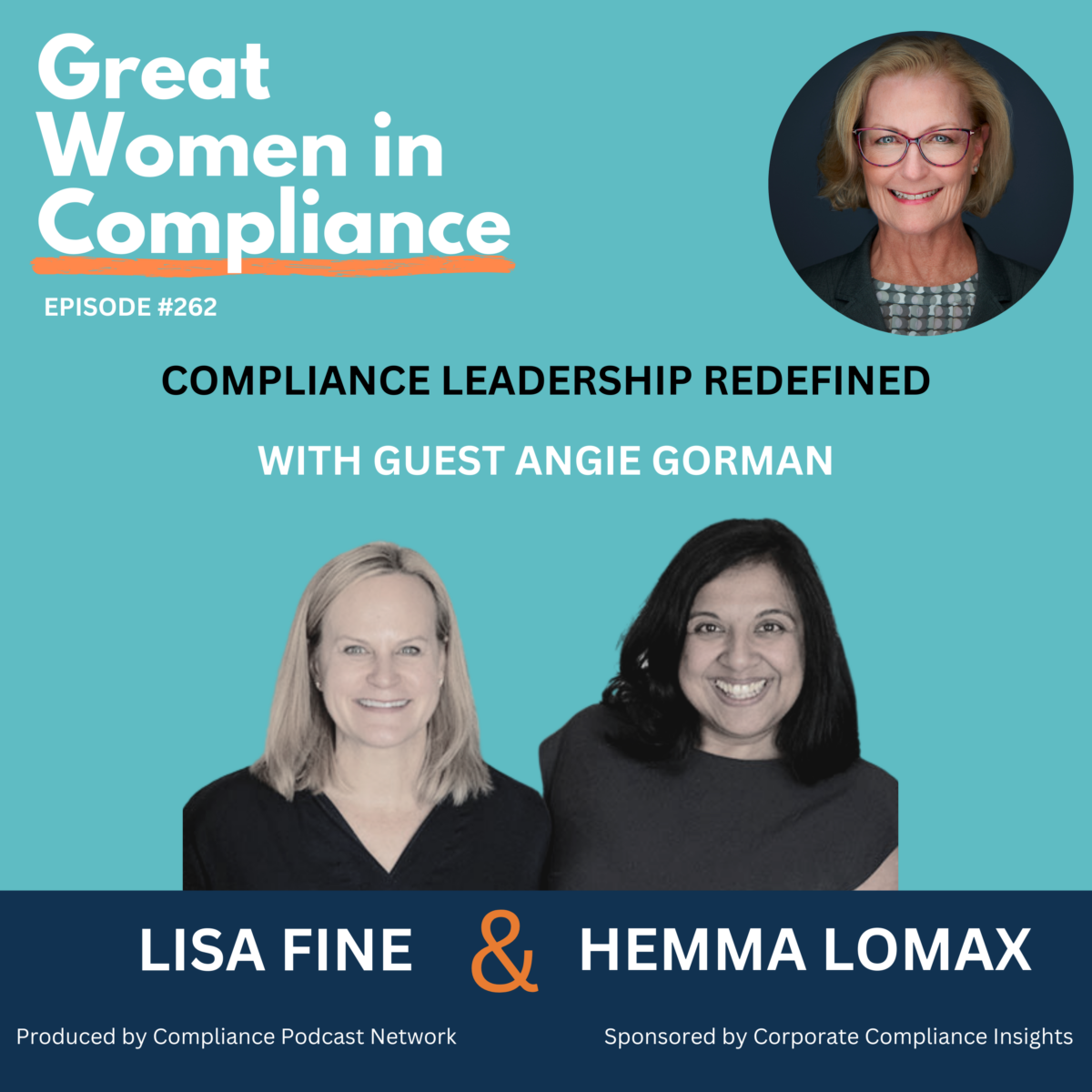
Great Women in Compliance – Compliance Leadership Redefined with Angie Gorman

In this episode of the Great Women in Compliance podcast, Lisa speaks with Angie Gorman, a Managing Director at FTI Consulting. Angie is an expert in communications and change management, and she discusses her work in communications and how this evolved into her work in ethics and compliance.

Angie highlights some key elements for building an effective communications strategy for building a culture of compliance. These include integrating compliance into the organization’s larger culture, connecting it to the company’s purpose, values, and business strategy, and consistently communicating a positive and supportive message at all levels of an organization.

Angie shares insights from the recently released FTI Ethico Compliance Leadership Redefined Survey. She discusses some of the report’s key findings, which explore today’s challenges and opportunities for chief compliance officers. It is a very timely report about the state of our profession.

Categories
Compliance Into the Weeds

Compliance into the Weeds: Compliance – Who Are We?

The award-winning Compliance into the Weeds is the only weekly podcast that takes a deep dive into a compliance-related topic, literally going into the weeds to explore a subject more fully. Looking for some hard-hitting insights on compliance? Look no further than Compliance into the Weeds! In this Compliance into the Weeds episode, Tom Fox and Matt Kelly discuss a recent conference Matt attended that delved into compliance and the compliance profession in the Age of Trump II.

Their discussion highlighted insights from a recent compliance panel hosted by Suffolk University Law School, featuring experts from large tech companies, a multi-state credit union, and a partner from a private law firm. The consensus among these experts is that despite the change in administration, the fundamental responsibilities and importance of compliance remain largely unchanged for organizations. Compliance is now deeply embedded in business operations, key in managing vendor risk, ensuring data protection, and upholding ethical standards.

Matt emphasizes that compliance capabilities are vital when dealing with other companies, whether they are customers or vendors. The conversation explores the convergence of vendor risk management and ethics & compliance programs and examines how organizations can sustain their integrity and manage emerging risks. Matt and Tom touch on the potential impact of new regulations, the importance of internal stakeholders in the compliance process, and the necessity of maintaining a robust risk management framework in an ever-changing regulatory environment. This episode provides valuable insights for compliance officers navigating the complexities of the modern corporate landscape.


Key highlights:

  • Compliance in the Trump Administration
  • Vendor Risk Management
  • Impact of Tariffs on Compliance
  • Who Are We as a Company?
  • Managing Regulatory Uncertainty

Resources:

Matt in Radical Compliance

Tom

Instagram

Facebook

YouTube

Twitter

LinkedIn

Compliance into the Weeds was recently honored as one of the Top 25 Regulatory Compliance Podcast.

Categories
Compliance Tip of the Day

Compliance Tip of the Day – Embedded Compliance

Welcome to “Compliance Tip of the Day,” the podcast where we bring you daily insights and practical advice on navigating the ever-evolving landscape of compliance and regulatory requirements. Whether you’re a seasoned compliance professional or just starting your journey, we aim to provide bite-sized, actionable tips to help you stay on top of your compliance game. Join us as we explore the latest industry trends, share best practices, and demystify complex compliance issues to keep your organization on the right side of the law. Tune in daily for your dose of compliance wisdom, and let’s make compliance a little less daunting, one tip at a time.

Today, we look at how AI can help deliver a more robust compliance regime directly to business operations through embedded compliance.

For more information on the Ethico Toolkit for Middle Managers, available at no charge, click here.

Categories
Blog

Embedded Compliance in Business Processes: Integrating Compliance into the Workflow

We continue explaining how compliance professionals can ‘up their game’ in this new environment under the Trump Administration. Today, I want to consider “embedded compliance,” which integrates compliance checks and controls directly into business processes rather than treating compliance as a separate, after-the-fact function. Embedded compliance means compliance is built into everyday workflows, providing instant, in-process guidance on regulatory requirements.

Rather than retrofitting compliance controls onto existing systems and processes as an afterthought, organizations should proactively integrate compliance measures into the initial design phase of their operational structures. This approach ensures that compliance is inherently woven into the fabric of everyday operations, significantly reducing the risk of regulatory breaches and costly remediation efforts. For instance, when developing new customer onboarding processes, embedding compliance checks such as Know Your Customer (KYC), consent capture, and identity verification into each operational step can prevent compliance gaps that could lead to significant issues later.

Successful compliance by design necessitates close collaboration among compliance officers and teams from IT, product development, and operations. Forming cross-functional working groups where compliance requirements are translated into technical specifications or user stories ensures compliance is integral from the outset. This proactive collaboration creates robust compliance frameworks and establishes a culture where compliance is seen as a fundamental operational requirement rather than an obstacle.

The Role of API-Driven Solutions in Compliance

In addition to proactive integration, organizations should leverage modern technologies like Application Programming Interfaces (APIs) and automation to enhance compliance processes. Traditional manual compliance procedures, which often involve repetitive and time-consuming tasks such as cross-referencing data entries, spreadsheet maintenance, and generating reports, are inefficient and prone to error. By identifying routine compliance activities that consume significant human resources, organizations can implement automation solutions or APIs to streamline these processes, significantly improving efficiency and accuracy. For example, automating the review of employee travel requests against company policy can flag exceptions for human review, freeing up compliance teams to focus on more strategic initiatives. Compliance professionals should thus cultivate an understanding of these tools and collaborate closely with IT departments to ensure effective integration and optimal utilization of automation technologies.

Quality of Data

The effectiveness of embedded compliance heavily depends on the quality and consistency of the data feeding these systems. Ensuring data accuracy and breaking down data silos is critical to the success of compliance initiatives. AI-driven compliance systems are sensitive to data quality, as inaccuracies or inconsistencies can lead to significant compliance oversights or many false positives, undermining trust in these systems. Compliance professionals must champion data integrity by working closely with data management teams to identify and rectify any data gaps or inconsistencies. Efforts should be directed towards establishing a centralized repository of compliance data—a single source of truth that integrates data from various systems such as CRM, ERP, and trading platforms. This merged approach enhances data quality, facilitates comprehensive compliance monitoring, and ensures robust oversight.

Risk-Based 

When implementing embedded compliance, particularly those AI-driven solutions, organizations should adopt a risk-based approach, initially targeting high-risk areas. Not all processes within an organization carry the same level of compliance risk, making it prudent to prioritize areas with the greatest potential impact or likelihood of regulatory violations. For example, financial reporting or transactions with significant regulatory oversight might warrant immediate and thorough automation of compliance checks. Focusing first on clear, rule-based automation within high-risk domains allows organizations to achieve quick, demonstrable successes. These early wins build organizational confidence in embedded compliance solutions and help secure stakeholder buy-in for broader compliance initiatives. Once effectiveness is established in critical areas, the organization can gradually expand embedded compliance measures to include other processes, potentially incorporating more sophisticated AI models.

Transparency

Transparency and explainability are other essential aspects of embedding compliance, especially when using AI and automated systems. Regulators and stakeholders increasingly require clear explanations of compliance-related decisions, particularly for significant regulatory or financial decisions. Organizations must choose or design compliance systems that offer clear, understandable rationales for their decisions. Favoring rule-based compliance engines or explainable AI models ensures organizations can easily document and justify their compliance processes to regulatory authorities. Maintaining comprehensive documentation on these systems’ logic, rules, thresholds, and periodic performance reviews is critical to building trust and ensuring accountability. Treating automated compliance systems with the same scrutiny as human compliance staff ensures robust oversight and early detection of systematic issues, such as unintended biases or data anomalies.

Embedding compliance into business processes from the outset, leveraging APIs and automation, ensuring data quality, adopting a risk-based approach, and prioritizing transparency and explainability are fundamental strategies for enhancing organizational compliance capabilities. By proactively integrating compliance measures into operational frameworks, organizations can significantly mitigate regulatory risks, streamline operations, and foster a compliance-driven organizational culture. Compliance professionals, therefore, play a pivotal role in orchestrating these initiatives, ensuring continuous improvement and adaptability in an ever-evolving regulatory landscape.

Key Lessons for Compliance Professionals

1. Embed Compliance Proactively into Processes

Compliance should never be an afterthought. Pfizer’s proactive model teaches us the value of embedding compliance from the ground up. Companies can prevent compliance breaches at their source by incorporating compliance checkpoints directly within operational processes—such as patient feedback analysis and adverse event tracking. This proactive stance mitigates risk and streamlines operations by addressing potential issues in real time rather than post-event. Compliance professionals must advocate for integration at the earliest stage of business process design, underscoring that compliance by design significantly reduces risks and enhances operational integrity.

2. Leverage AI and Predictive Analytics

The Pfizer model underscores the importance of utilizing AI and predictive analytics to anticipate compliance issues before they materialize. AI-driven systems enable compliance teams to quickly sift through vast datasets, identifying patterns or anomalies that could signal emerging risks. Compliance officers must familiarize themselves with emerging technologies, ensuring they can effectively collaborate with IT and analytics teams to fine-tune predictive models, thus maximizing compliance effectiveness while efficiently managing resource allocation.

3. Continuous, Real-Time Monitoring

Real-time compliance monitoring is no longer optional; it is a necessity. Pfizer’s continuous monitoring systems allow immediate visibility into compliance status, empowering proactive risk mitigation. Compliance professionals must advocate for adopting real-time systems within their organizations, positioning continuous compliance as essential to operational health. By moving beyond periodic audits toward continuous assurance, compliance teams can maintain a dynamic risk posture, adapting swiftly to regulatory changes and business evolution.

4. Foster a Data-Driven Compliance Culture

Data is foundational to embedded compliance, as Pfizer effectively shows. Ensuring data integrity, eliminating silos, and fostering a culture of data-driven decision-making are crucial. Compliance officers should prioritize creating centralized data repositories and robust governance structures, emphasizing high-quality, accurate data as the backbone of compliance monitoring. Promoting a data-literate culture within the organization ensures that all employees understand their role in maintaining compliance and proactively engaging with compliance measures embedded in their daily tasks.

5. Prepare for Regulatory Collaboration

Pfizer’s proactive approach facilitates transparent and efficient communication with regulators, demonstrating the effectiveness of embedded compliance. Regulatory relationships are shifting toward collaboration and real-time interaction, moving beyond traditional periodic reporting. Compliance professionals should expect this shift and prepare their organizations for real-time data sharing and transparency. Developing standardized reporting mechanisms and maintaining continuous readiness positions organizations to navigate the evolving regulatory landscape effectively, fostering trust and confidence with regulatory bodies.

The Future is Now: Pfizer and Pharmacovigilance

Pfizer, a pharmaceutical giant, faces stringent regulatory requirements for drug safety, quality assurance, and pharmacovigilance governed by entities such as the FDA and EMA. To meet these challenges, Pfizer leverages advanced artificial intelligence (AI) and predictive analytics, integrating compliance into every drug development and monitoring stage. Through predictive models, Pfizer proactively identifies potential compliance risks by analyzing diverse data streams, including clinical trial outcomes, patient feedback, and adverse event reports. This early identification allows Pfizer to intervene proactively, addressing potential safety concerns or regulatory issues before they escalate into significant problems. The embedded compliance approach has enabled Pfizer to achieve a real-time, continuous monitoring system that safeguards patient health and enhances operational efficiency and regulatory adherence. By systematically embedding these AI-driven analytics into their core operational frameworks, Pfizer shows a robust commitment to compliance, excellence, and regulatory transparency.

The Pfizer case study provides a roadmap for embedding compliance into business processes. Compliance professionals who adopt these lessons will enhance their organizations’ regulatory standing and contribute significantly to operational efficiency and strategic business outcomes.

Embedding compliance into business processes from the outset, leveraging APIs and automation, ensuring data quality, adopting a risk-based approach, and prioritizing transparency and explainability are fundamental strategies for enhancing organizational compliance capabilities. By proactively integrating compliance measures into operational frameworks, organizations can significantly mitigate regulatory risks, streamline operations, and foster a compliance-driven organizational culture. Compliance professionals, therefore, play a pivotal role in orchestrating these initiatives, ensuring continuous improvement and adaptability in an ever-evolving regulatory landscape.

By adopting these strategic approaches exemplified by Pfizer’s proactive and predictive compliance practices, organizations can effectively navigate complex regulatory environments, safeguard operational integrity, and achieve sustained business success.

Categories
Daily Compliance News

Daily Compliance News: March 4, 2025, The So It Begins Edition

Welcome to the Daily Compliance News. Each day, Tom Fox, the Voice of Compliance, brings you compliance-related stories to start your day. Sit back, enjoy a cup of morning coffee, and listen in to the Daily Compliance News—all from the Compliance Podcast Network. Each day, we consider four stories from the business world: compliance, ethics, risk management, leadership, or general interest for the compliance professional.

Top stories include:

  • Trump eviscerates CTA. (WSJ)
  • Kroger CEO resigns after Board investigation. (NYT)
  • Students must learn to be the human in the loop. (FT)
  • Trump levies tariffs on Mexico, Canada, and China. Canada and China retaliate. (BBC)

For more information on the Ethico Toolkit for Middle Managers, available at no charge, click here.

Check out the FCPA Survival Guide on Amazon.com.