Categories
Blog

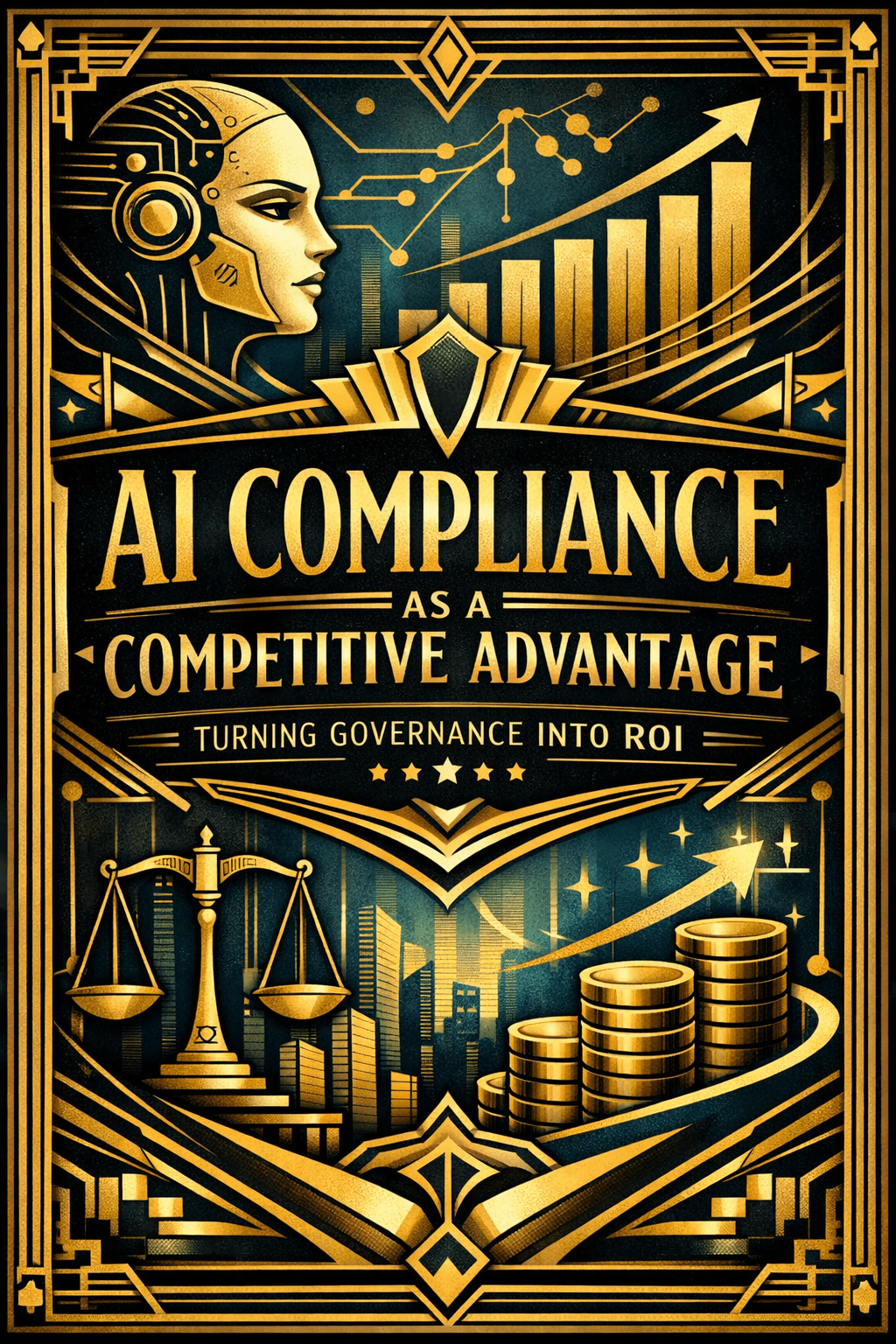
AI Compliance as a Competitive Advantage: Turning Governance Into ROI

In too many organizations, “AI compliance” is treated like a speed bump. Something to route around, manage after launch, or outsource to a vendor deck and a policy that nobody reads. That mindset is not only outdated but also expensive. In 2026, mature AI governance is becoming a commercial differentiator because customers, regulators, employees, and business partners increasingly ask the same question: Can you prove your system is trustworthy?

The most underappreciated truth is that AI risk is not “an AI team problem.” It is a business-process problem, expressed through data, decisions, third parties, and change control. The Department of Justice Evaluation of Corporate Compliance Programs (ECCP) has never been about perfect paperwork; it has been about whether a program is designed, implemented, resourced, tested, and improved. If you can translate that posture into AI, you can convert “compliance cost” into “credibility capital.”

A cautionary backdrop shows why. The EEOC’s 2023 settlement with iTutorGroup serves as a cautionary tale: automated hiring screening that disadvantages older workers can lead to legal exposure, remediation costs, and reputational damage. The details matter less than the pattern; when algorithmic decisions are not governed, the business eventually pays the bill. The compliance professional should see the pivot clearly; governance is the mechanism that lets you move fast without becoming reckless.

From a build-from-scratch, low-to-medium maturity posture, the win is not sophistication. The win is repeatability. If you build an AI governance framework aligned to NIST AI RMF (govern, map, measure, manage), structured through ISO/IEC 42001’s management-system discipline, and cognizant of EU AI Act risk tiering, you get something the business loves: a predictable path from idea to deployment. Today, I will explore five ways mature AI compliance can become a competitive advantage, each with a practical view of how a compliance-focused GenAI assistant can support business processes.

1) Sales and Customer Trust

Trust is a sales feature now, even when marketing refuses to call it that. Customers increasingly ask about data use, model behavior, security controls, and human oversight, and they are doing it in procurement questionnaires and contract negotiations. A mature governance framework lets you answer quickly, consistently, and with evidence, thereby shortening sales cycles and reducing late-stage deal friction. A compliance GenAI can support this by drafting standardized responses from approved trust artifacts such as policies, model cards, DPIAs, and audit summaries; flagging gaps, and routing exceptions to Legal and Compliance before the business overpromises.

For compliance professionals, this lesson is even more stark, as the ‘customers’ of a corporate compliance program are your employees. Some key KPIs you can track are average time to complete AI security and compliance questionnaires; percentage of deals requiring AI-related contractual concessions; number of customer-facing AI disclosures issued with approved templates; and percentage of AI systems with current model documentation and ownership attestations.

2) Regulatory Credibility

Regulators are not impressed by ambition; controls persuade them. NIST AI RMF provides a common language to demonstrate that you mapped use cases, measured risks, and managed them over time, while ISO/IEC 42001 imposes discipline on accountability, documentation, and continual improvement. The EU AI Act’s risk-based approach adds an organizing principle: classify systems, apply controls proportionate to risk, and prove that you did it. A compliance GenAI can help by maintaining a living inventory, prompting owners to complete quarterly attestations, drafting control narratives aligned with the frameworks, and assembling regulator-ready “evidence packs” that demonstrate governance in operation rather than on paper.

For compliance professionals, this lesson is about your gap analysis. You have not aligned your current internal controls with GenAI, governance, or other controls. You should do so. Some key KPIs you can track are percentage of AI systems risk-tiered and documented; time to produce an evidence pack for a high-impact system; number of material control exceptions and time-to-remediation; and frequency of risk reviews for high-impact systems.

3) Faster Product Approvals and Safer Deployment

Speed comes from clarity, not from cutting corners. When decision rights, review thresholds, and required artifacts are defined up front, product teams stop guessing what Compliance will require at the end. That is the management-system advantage: ISO/IEC 42001 treats AI governance like a repeatable operational process with gates, owners, and records, rather than a series of one-off debates. A compliance GenAI can support the workflow by pre-screening new use-case intake forms, recommending the correct risk tier under EU AI Act concepts, suggesting required testing (bias, privacy, safety), and generating the first draft of a launch checklist that the product team can execute.

For compliance professionals, this lesson is that you must run compliance at the speed of your business operations. Some key KPIs you can track are: cycle time from AI intake to approval; percent of launches that pass on first review; number of post-launch “surprise” issues tied to missing pre-launch controls; and percentage of models with human-in-the-loop controls when required.

4) Talent, Recruiting, and Internal Confidence

Top performers do not want to work in a company that treats AI like a toy and compliance like a nuisance. Mature governance creates psychological safety inside the organization: employees know what is permitted, what is prohibited, and how to raise concerns. It also improves recruiting because candidates, especially in technical roles, ask about responsible AI practices, data governance, and ethical guardrails. A compliance GenAI can support internal confidence by serving as the first-line “policy concierge,” answering questions with approved guidance, directing employees to the correct procedures, and logging common questions so Compliance can improve training and communications.

For compliance professionals, this fits squarely within the DOJ mandate for compliance to lead efforts in institutional justice and fairness. Some key KPIs you can track include training completion and comprehension metrics for AI use; the number of AI-related helpline inquiries and their resolution times; employee survey results on comfort raising AI concerns; and the percentage of AI use cases with documented business-owner accountability.

5) Lower Cost of Incidents and More Resilient Operations

AI incidents are rarely just “bad outputs.” They are process failures: poor data lineage, uncontrolled model changes, vendor opacity, missing logs, weak access controls, or no escalation path when harm appears. NIST AI RMF’s “measure” and “manage” functions emphasize monitoring, drift detection, incident response, and continuous improvement, which is precisely how you reduce the frequency and severity of failures. A compliance GenAI can support incident resilience by guiding teams through an AI incident response playbook, helping triage severity, ensuring evidence is preserved (audit logs, prompts, outputs, approvals), and generating lessons-learned reports that connect root cause to control enhancements.

For compliance professionals, this lesson is even more stark, as the ‘customers’ of a corporate compliance program are your employees. Some key KPIs you can track include the number of AI incidents by severity tier; mean time to detect and mean time to remediate; the percentage of high-impact models with drift-monitoring and alert thresholds; and the percentage of third-party AI providers subject to change-control notification requirements.

What “Mature Governance” Looks Like When You Are Building From Scratch

Do not start with a 60-page policy. Start with a few non-negotiables that scale:

  • Inventory and classification: Create a single inventory of GenAI assistants, ML models, and automated decision systems. Classify them by impact using EU AI Act concepts (high-impact versus low-impact) and your own business context.
  • Accountability and decision rights: Assign an owner for each system and require periodic attestations for the highest-risk categories.
  • Standard artifacts: Use lightweight model documentation, data lineage notes, and disclosure templates. If it is not documented, it does not exist for governance.
  • Human oversight and logging: Define when human-in-the-loop is mandatory and ensure logs capture who approved what, when, and why.
  • Third-party AI controls: Contract for transparency, audit support, change notification, and security requirements. Vendor opacity is not a strategy.

This is where ECCP thinking helps. The question is not whether you have a policy. The question is whether the policy is operationalized, tested, and improved. That is the bridge from compliance to competitive advantage.

If you want AI compliance to be a competitive advantage, treat it like a management system that produces evidence, not like a policy library that produces comfort. When governance becomes repeatable, the business can move faster, regulators become more confident, and customers see the difference. That is not a cost center. That is credibility you can take to the bank.


Categories
AI Today in 5

AI Today in 5: March 5, 2026, The AI ‘s Biggest Test Edition

Welcome to AI Today in 5, the newest addition to the Compliance Podcast Network. Each day, Tom Fox will bring you 5 stories about AI to start your day. Sit back, enjoy a cup of morning coffee, and listen in to the AI Today In 5. All, from the Compliance Podcast Network. Each day, we consider five stories from the business world, compliance, ethics, risk management, leadership, or general interest about AI.

Top AI stories include:

  1. Ending compliance bottlenecks with AI. (FinTechGlobal)
  2. AI surge will reshape compliance. (FinTechGlobal)
  3. Compliance first AI. (Cyberscoop)
  4. Trump, AI Data Centers, and the midterms. (CNBC)
  5. Healthcare is AI’s biggest test. (Time)

For more information on the use of AI in Compliance programs, my new book, Upping Your Game, is available. You can purchase a copy of the book on Amazon.com.

Categories
Daily Compliance News

Daily Compliance News: March 5, 2026, The DOJ and State Bars Edition

Welcome to the Daily Compliance News. Each day, Tom Fox, the Voice of Compliance, brings you compliance-related stories to start your day. Sit back, enjoy a cup of morning coffee, and listen in to the Daily Compliance News. All, from the Compliance Podcast Network. Each day, we consider four stories from the business world, compliance, ethics, risk management, leadership, or general interest for the compliance professional.

Top stories include:

  • Regulators need to catch up on private credit risk. (WSJ)
  • DOJ wants authority over state bar discipline. (NYT)
  • Head of UK police union arrested for corruption. (TheGuardian)
  • When part of compliance moves to protection. (FT)
Categories
Red Flags Rising

Red Flags Rising: S01 E38: “Fallen Chips” – GIR’s Estelle Atkinson on her Three-Part Report

Mike Huneke and Brent Carlson welcome Estelle Atkinson, a reporter with Global Investigations Review (GIR), to speak about her recent three-part series, “Fallen Chips,” published on January 26, 27, and 28, 2026 (linked in the show notes). They discuss how Estelle learned of the U.S. government investigation of Zenith Semiconductor in Chandler, Arizona (01:14); that company’s background (06:03); when employees started to realize that things were not quite right at the company and how that led to employees going to the FBI (08:19); how Estelle got to know the employees and why they were willing to help her with her story (10:30); how her experience illustrates more broadly the challenge companies have in responding to whistleblower reports or allegations (11:48); how diversion starts close to home, and is not always in some exotic “offshore” location (15:31); how U.S. administration policies to promote the export of the U.S. AI “stack” are not without controls or national security considerations (15:58); why success under America’s AI Action Plan and the American AI Export initiative will depend on effective, risk-based export controls compliance programs (16:21); the role of media in American life (19:14); why the standard PR or IR “playbook” of asserting “full compliance with the law” creates risks if companies aren’t expressly incorporating the full definition of “knowledge,” to include “an awareness of a high probability,” into export controls compliance (20:14); and what GIR readers can expect to see (or read) next from Estelle (20:49). Mike and Brent conclude with yet another installment of Brent Carlson’s “Managing Up” (22:39).

Resources:

GIR 

Fallen Chips Part I: Inside the FBI Raid that Rocked an Arizona Chip Start-Up (Jan. 26, 2026)

Fallen Chips Part II: Silicon Secrets and the Risks Hiding in Plain Sight (Jan. 27, 2026)

Fallen Chips Part III: The Fault Lines of the US-China Tech War (Jan. 28, 2026)

More about:

Estelle: https://globalinvestigationsreview.com/authors/estelle-atkinson

Contact Estelle: estelle.atkinson@globalinvestigationsreview.com

Contact Brent: brent@redflagsrising.com

Contact Mike: michael.huneke@morganlewis.com

Categories
Daily Compliance News

Daily Compliance News: March 4, 2026, The Knickers in a Twist Edition

Welcome to the Daily Compliance News. Each day, Tom Fox, the Voice of Compliance, brings you compliance-related stories to start your day. Sit back, enjoy a cup of morning coffee, and listen in to the Daily Compliance News. All, from the Compliance Podcast Network. Each day, we consider four stories from the business world, compliance, ethics, risk management, leadership, or general interest for the compliance professional.

Top stories include:

  • The Trump Administration reverses itself on law firm attacks. (WSJ)
  • Top aides to the Secretary of Labor were forced out amid misconduct allegations. (NYT)
  • Fintech sanctions compliance and Iran. (AmericanBanker)
  • The Live Nation Anti-Trust trial. (Reuters)
Categories
AI Today in 5

AI Today in 5: March 4, 2026, The AI Content Explosion Edition

Welcome to AI Today in 5, the newest addition to the Compliance Podcast Network. Each day, Tom Fox will bring you 5 stories about AI to start your day. Sit back, enjoy a cup of morning coffee, and listen in to the AI Today In 5. All, from the Compliance Podcast Network. Each day, we consider five stories from the business world, compliance, ethics, risk management, leadership, or general interest about AI.

Top AI stories include:

  1. Symphony AI is helping Spanish banks with sanctions screening. (FinTechGlobal)
  2. Agentic AI for reg compliance. (Yahoo!Finance)
  3. Chatbots and Influence. (YaleNews)
  4. Managing your AI content explosion. (PlanAdviser)
  5. AI for data protection. (Bloomberg)

For more information on the use of AI in Compliance programs, my new book, Upping Your Game, is available. You can purchase a copy of the book on Amazon.com.

Categories
Compliance Into the Weeds

Compliance into the Weeds: SDNY’s New Declination Policy: Crime Categories, Cooperation, and Compliance Implications

The award-winning Compliance into the Weeds is the only weekly podcast that takes a deep dive into a compliance-related topic, literally going into the weeds to explore it more fully. Looking for some hard-hitting insights on compliance? Look no further than Compliance into the Weeds! In this episode of Compliance into the Weeds, Tom Fox and Matt Kelly look at the recently announced new Southern District of New York standard for Declinations.

They look at SDNY U.S. Attorney Jay Clayton’s newly released self-disclosure/cooperation/declination policy and its implications for corporate compliance. While the core elements, prompt voluntary disclosure, cooperation, remediation, and restitution, mirror existing DOJ expectations, they highlight a significant change: SDNY now treats “aggravated circumstances” as certain categories of crimes that are categorically ineligible for declinations, including foreign corruption/FCPA, sanctions evasion, terrorism, sex trafficking with minors, smuggling, drug cartels, and forced labor, rather than focusing on offense traits such as senior management involvement or recidivism. They note potential inconsistencies with DOJ’s corporate enforcement approach, uncertainty about disclosure timing despite references to promptness and pre-investigation disclosure, broad discretion in enforcement, and the risk of forum shopping.

Key highlights:

  • Why SDNY Declinations Matter
  • Clayton Policy Key Changes
  • Aggravated Circumstances Redefined
  • FCPA Carve Out Confusion
  • Timing and Disclosure Pressure
  • Cooperation Restitution Disgorgement

Resources:

Matt in Radical Compliance

Tom in the FCPA Compliance and Ethics Blog

Tom

Instagram

Facebook

YouTube

Twitter

LinkedIn

A multi-award-winning podcast, Compliance into the Weeds was most recently honored as one of the Top 25 Regulatory Compliance Podcasts, a Top 10 Business Law Podcast, and a Top 12 Risk Management Podcast. Compliance into the Weeds has been conferred a Davey, a Communicator Award, and a W3 Award, all for podcast excellence.

Categories
Blog

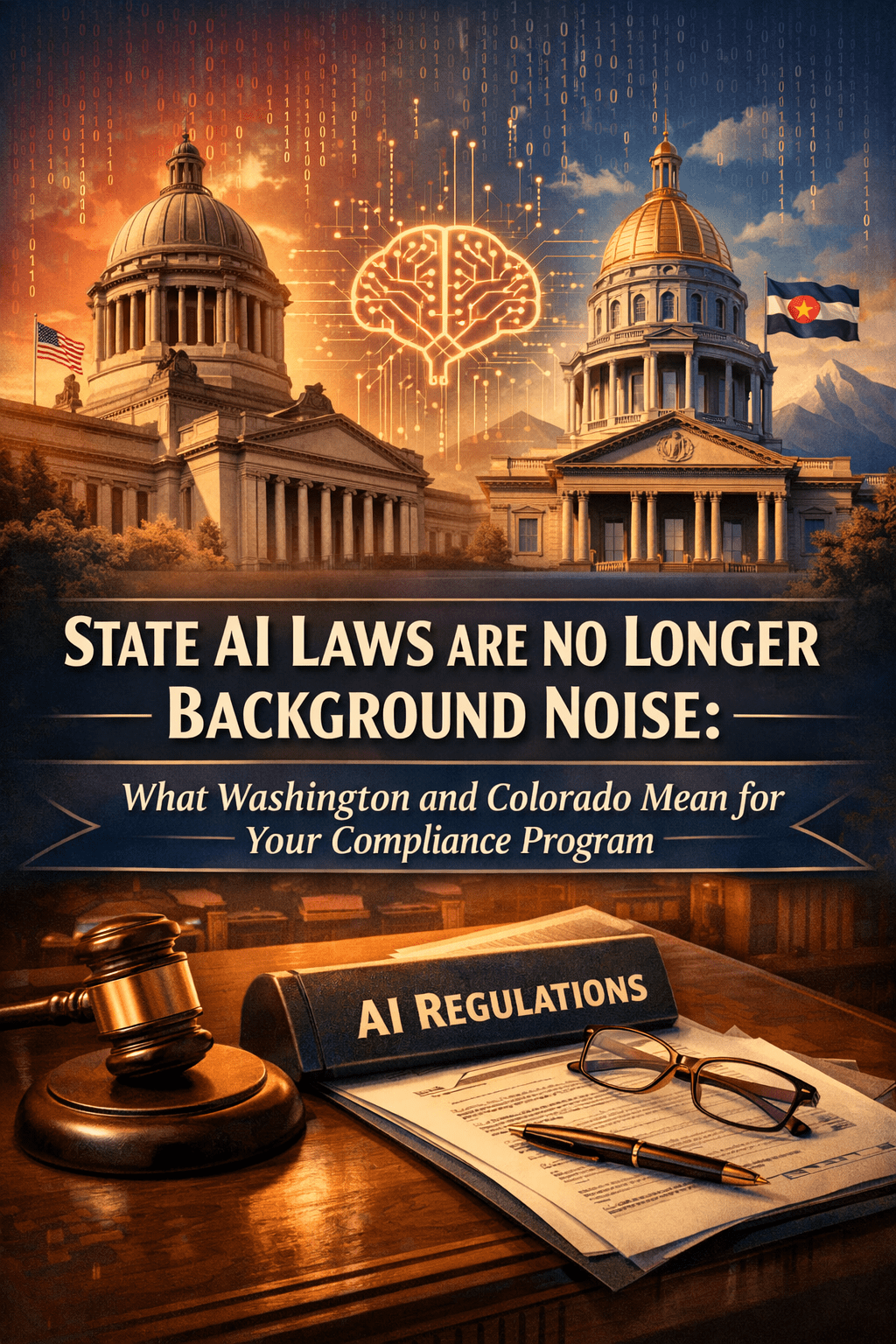
State AI Laws Are No Longer Background Noise: What Washington and Colorado Mean for Your Compliance Program

If you run a compliance program in 2026, you have a new operational reality: state legislatures are no longer waiting on federal agencies to define the rules of the road for artificial intelligence. They are writing the rules themselves, and they are doing so in ways that address the day-to-day mechanics of product design, customer communications, safety operations, and third-party governance. Two developments illustrate the direction of travel.

First, the state of Washington has been advancing legislation aimed at “companion” style conversational AI, meaning systems designed to sustain ongoing dialogue with users in a way that resembles a relationship rather than a single transaction. These proposals generally focus on transparency, user protection, and special safeguards for minors, including restrictions around sexual content and stronger expectations for detecting and responding to self-harm signals.

Second, Colorado has enacted a broad AI governance framework focused on preventing algorithmic discrimination in high-impact use cases. The details matter, but the theme matters more: organizations that develop or deploy certain AI systems will be expected to show their work through risk management, impact assessments, notices, and documentation that can withstand regulatory scrutiny.

For compliance professionals, the key point is this: these are not “AI policy” conversations. These are operational controls conversations. They will change what your teams build, how they monitor, and how they document decisions.

1. Washington

Companion chatbots move from UX decision to regulated interaction.

Washington’s companion-chatbot approach targets the behavioral reality of these systems. A chatbot that answers a question is one thing. Another is a chatbot designed to keep a user engaged, build intimacy, and act as a persistent presence. When a system is positioned as a “partner” in any form, the risk profile shifts from information quality to user safety, manipulation, dependency, and minors’ exposure. From a compliance standpoint, this is where you should focus:

1. Identity and disclosure are now control requirements, not marketing choices.

If your product presents as conversational, personable, or relationship-like, you should treat “clear disclosure that the user is interacting with AI” as a baseline control. Do not bury it in terms and conditions. Put it in the flow where the user forms expectations.

2. Minor protections move into engineering and content governance.

If you have minor users, or you cannot reliably exclude them, you need controls designed for minors by default. That means age gating where appropriate, content filters tuned for sexual content and grooming patterns, and escalation playbooks for self-harm indicators. It also means you should think about what “engagement optimization” looks like in a relationship-shaped interface. Features that are acceptable in a shopping cart can be unacceptable in a companion dynamic.

3. Self-harm response is an operational readiness question.

If your system can detect self-harm language, you must decide what you will do when you detect it. You need a triage policy, documentation of thresholds, and a human-in-the-loop escalation route when risk is elevated. The compliance failure here is not a false positive. The failure is having no plan, no logging, and no accountable owner when the system raises a signal.

What to do now: create a “companion AI” product classification and require enhanced safeguards if the product meets that definition. That classification step is a compliance control because it forces consistent governance. It prevents the slow drift from “helpful assistant” to “companion” without any risk re-assessment.

2. Colorado

Anti-discrimination AI controls that appear to be a compliance program.

Colorado’s AI governance approach is a preview of what many states may do next: treat AI as a source of civil rights risk and require organizations to demonstrate reasonable care. The thrust is simple: if you use AI in a high-impact context, you should be able to explain how you prevent discriminatory outcomes and monitor for them. Even if you do not operate in Colorado, this framework is a gift to compliance professionals because it translates AI risk into familiar compliance artifacts. Here is how to map it into your program:

1. Define “high-impact” use cases the way you define “high-risk” third parties.

High-impact areas usually include employment, housing, credit, insurance, education, and other contexts where decisions materially affect individuals. Build an inventory. You cannot govern what you do not list. Make the business identify which systems are used for screening, ranking, eligibility, pricing, or access.

2. Require an impact assessment that reads like a control memo.

Your impact assessment should not be a philosophical essay. It should answer concrete questions:

  • What decision does the system influence?
  • What data does it use, and what data does it not use?
  • What bias testing was performed and how often?
  • What performance drift indicators are monitored?
  • What human review exists, and when does it trigger?
  • What is the consumer notice process and the appeal or correction route?

Treat this like any other compliance documentation: consistent format, accountable owner, version control, and retention.

1. Put vendors inside your governance perimeter.

If a vendor supplies the model, you still own the outcome when you deploy it. Require contractual commitments around testing, documentation, model changes, incident notification, and audit rights. If the vendor refuses basic transparency, your risk posture should treat that as a red flag, not a procurement inconvenience.

2. Align to enforcement reality.

In many regulatory regimes, enforcement is driven by documentation and reasonableness. Your program should be able to show a regulator what you did before an incident, not only what you did after a complaint.

III.      The Shared Lesson: AI Governance is Becoming User-Safety Governance

Washington and Colorado might look different, but the compliance lesson is the same: regulators are moving toward protecting individuals from AI-enabled harm, whether that harm is discrimination in consequential decisions or manipulation and exposure risks in relationship-shaped systems. This means your program needs three capabilities:

Capability 1: Inventory with purpose.

Create a single inventory that captures system type, purpose, user population, training, and input data sources, and whether the system affects rights, access, or safety. Assign an owner for each system. An owner is not a team. It is a named person.

Capability 2: Controls embedded in product and operations.

Disclosure is a product control. Age gating is a product control. Self-harm escalation is an operations control. Bias testing is a model governance control. Logging is a forensic control. Compliance must stop treating these as “engineering decisions” and start treating them as “regulatory controls.”

Capability 3: Incident readiness built for AI.

You need a playbook for AI incidents: model drift, unsafe exposure to content, discriminatory outcomes, vendor model changes, prompt injection leading to harmful outputs, and data leakage through conversational interfaces. The playbook should include detection, triage, communications, remediation, and documentation.

A practical checklist you can implement next week

  1. Classify systems into: informational assistant, transactional assistant, companion-style conversational system, and high-impact decision support.
  2. Assign owners and require quarterly attestations for high-impact and companion categories.
  3. Standardize disclosures with a template approved by legal, compliance, and product.
  4. Implement minor safeguards as a default where age cannot be verified with confidence.
  5. Create a self-harm escalation protocol with thresholds, human review steps, and logging requirements.
  6. Bias testing on high-impact systems, document results, and set drift triggers.
  7. Update vendor contracts to require transparency, change-control notifications, and audit support.
  8. Build an AI incident response runbook and conduct a tabletop exercise with product, legal, and customer support teams.

Closing thought

Compliance professionals have been waiting for the “AI rulebook.” The states are writing it in real time. The most effective response is not to wait for perfect clarity. It is to install governance that can scale inventory, document assessments, embed controls, and ensure incident readiness. If you do those four things well, Washington and Colorado will not feel like surprise mandates. They will feel like confirmation that you built the right program early.

Categories
Great Women in Compliance

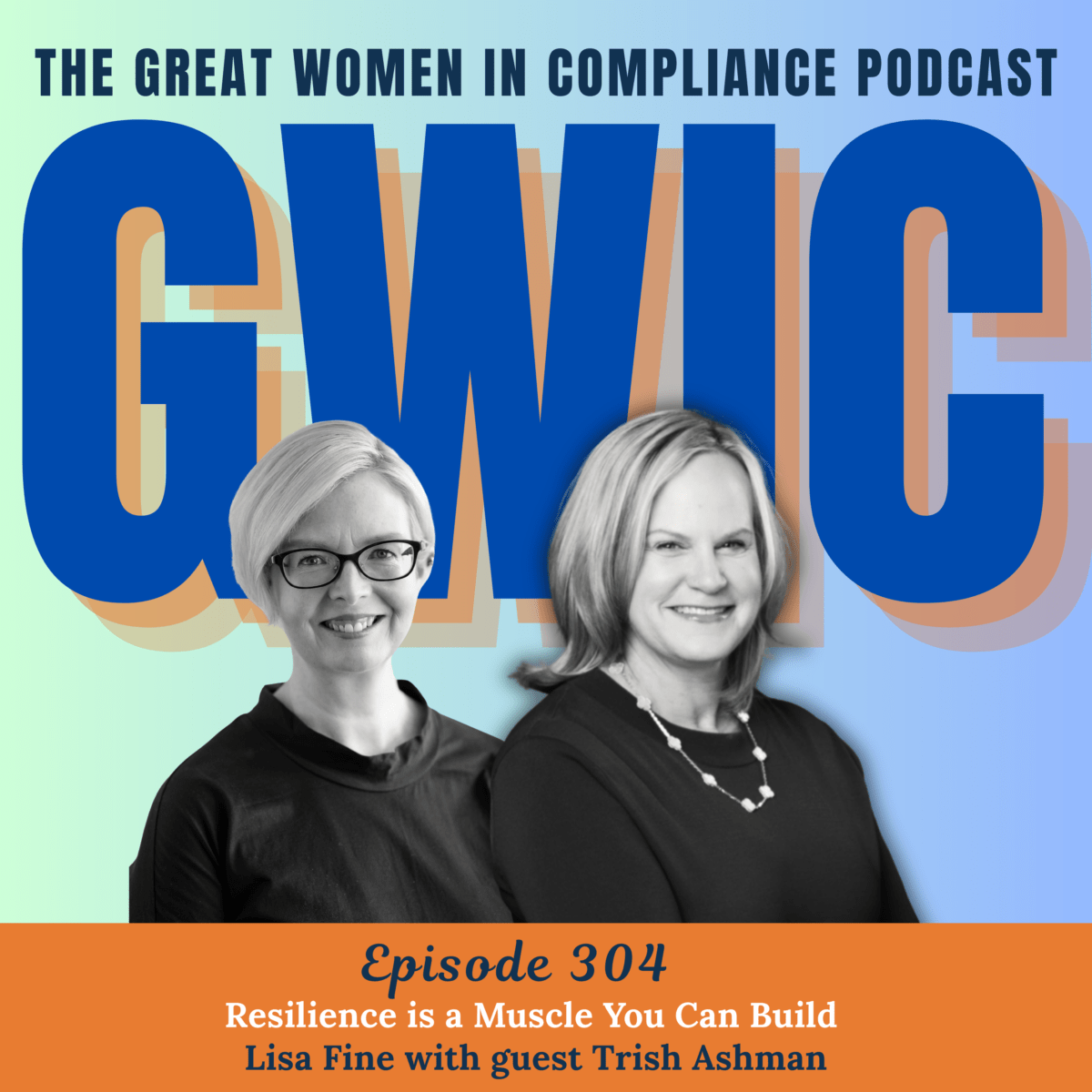
Great Women in Compliance: Resilience is a Muscle You Can Build

In this episode of Great Women in Compliance, Lisa Fine talks with Trish Ashman, Senior Director of Ethics & Compliance (AMEA & APAC) at Cushman & Wakefield, about resilience, integrity, and knowing when it’s time to move on.

Trish shares her journey from private practice in London to Singapore and into the Ethics and Compliance space. Trish was at Wirecard and then at Twitter, both of which had her working through two major corporate crises – the fraud at Wirecard and the ownership change at Twitter. Trish candidly shares her experiences and lessons learned from both of those roles.

At Wirecard, she stayed to support employees during the collapse, focused on fairness and doing what she could to make a difference. At Twitter, after the acquisition dramatically reshaped the company and its compliance function, she considered whether she could still meaningfully influence ethical decision-making and if this role aligned with her values.

This episode is an honest conversation about ethics and compliance as a calling, resilience as a muscle, and how these experiences shaped Trish and helped her become resilient and find a role where she would thrive.

Categories
AI Today in 5

AI Today in 5: March 3, 2026, The First AI Agent Payment Edition

Welcome to AI Today in 5, the newest addition to the Compliance Podcast Network. Each day, Tom Fox will bring you 5 stories about AI to start your day. Sit back, enjoy a cup of morning coffee, and listen in to the AI Today In 5. All, from the Compliance Podcast Network. Each day, we consider five stories from the business world, compliance, ethics, risk management, leadership, or general interest about AI.

Top AI stories include:

  1. Rethinking the financial crime stack through AI. (FinTechGlobal)
  2. CA AG opposes Trump Administration attempts to gut AI law. (CA DOJ)
  3. First AI agent payment. (FinTechMagazine)
  4. Automating reg compliance with AI. (Bits&Chips)
  5. FCA review of AI in the UK financial sector. (GlobalComplianceNews)

For more information on the use of AI in Compliance programs, my new book, Upping Your Game, is available. You can purchase a copy of the book on Amazon.com.