Get ready for an exciting new season of Because That’s What Heroes Do. In this season, they take a deep dive into their favorite 15 episodes of Deep Space 9. In this exploration, they are joined by DS9 maven, Alex Murphy, (Murphy) from Montreal, who is a local historian, cinema, and TV fan with a love for weird foreign films, all things horror, and obscure media. He has been watching Trek since he was a tiny punk, and it’s been a lifelong love.
Today we take a deep dive into the first of a 2-episode series, Home Front. Next week we conclude with Paradise Lost.
The thematic crux of the episodes, as Megan noted, revolves around the Federation’s response to internal security threats. The conversations between Sisko, his father, and various Starfleet officials mirror contemporary debates about the balance between security and personal freedom. Tom drew parallels to real-world political shifts, likening the Federation’s complacency to historical and modern-day societal shifts.
Murphy’s observations highlighted a broader concern about Earth’s apparent insularity and naivety. Despite the dramatic actions taken by Admiral Layton and the ethical dilemmas posed by Sisko’s temporary promotion, the broader questions about how the Federation can protect itself without losing its core values remain at the forefront of the discussion.
Welcome to the Kerrville Weekly News Roundup. Each week, veteran podcaster Tom Fox and his colleagues Andrew Gay and Gilbert Paiz get together to go over a couple of their favorite stories from the past week from Kerrville and the greater Hill Country.
Sit back, enjoy a cup of morning coffee and listen in to get a wrap up of the Kerrville Weekly News. We each consider two of our favorite stories and talk about the upcoming weekend’s events, which will enjoy or participate in this weekend.
In this episode, Tom, Andrew, and Gilbert are back to look at some of the things that caught their attention over the past week.
Stories Include:
New Kerr County Commissioners Court votes against lithium battery storage facility.
Schreiner University breaks ground on new sports compliance.
Welcome to 10 For 10, the podcast that brings you the week’s Top 10 compliance stories in one podcast each week. Tom Fox, the Voice of Compliance, brings to you, the compliance professional, the compliance stories you need to be aware of to end your busy week. Sit back, and in 10 minutes, hear about the stories every compliance professional should be aware of from the prior week.
Every Saturday, 10 For 10 highlights the most important news, insights, and analysis for the compliance professional, all curated by the Voice of Compliance, Tom Fox. Get your weekly filling of compliance stories with 10 for 10, a podcast produced by the Compliance Podcast Network.
Treasury loosens AML requirements for financial advisors, real estate agents. (WSJ)
Top Chilean lawyer indicted on corruption charges. (FT)
Criminal convictions in Switzerland for 1MDB scandal. (Reuters)
More Boeing whistleblowers claim fraud by the company. (BBC)
Italy opens criminal investigation into yacht sinking. (FT)
In a recent development that has garnered significant attention in the compliance community, the U.S. Department of Justice (DOJ) declined prosecution of Boston Consulting Group, Inc. (BCG) for violations of the Foreign Corrupt Practices Act (FCPA). Despite evidence of bribery involving BCG’s operations in Angola, the decision to forgo prosecution serves as a powerful reminder of the critical role that timely self-disclosure, cooperation, andeffective remediation play in navigating the complexities of corporate compliance and, most significantly, clawbacks play in a decision to decline to prosecute. The decision was made public via a letter from the DOJ to BCG.
Between 2011 and 2017, BCG’s Lisbon, Portugal office engaged in a scheme to secure business contracts with Angolan government agencies, including the Ministry of Economy (MINEC) and the National Bank of Angola (BNA). BCG funneled approximately $4.3 million in commissions to an agent with close ties to Angolan government officials. These payments, made through offshore entities, helped BCG secure twelve contracts, resulting in revenues of $22.5 million and profits of $14.424 million.
The misconduct was serious: BCG employees in Portugal were aware of the agent’s ties to government officials and took deliberate steps to conceal the true nature of the agent’s work. This included backdating contracts and falsifying documents to cover up the corrupt activities. Such actions violated the FCPA, which prohibits U.S. companies from engaging in bribery of foreign officials to secure business advantages.
The money shot in this Declination was in the area of clawbacks. In the Wall Street Journal (WSJ), Dylan Tokar wrote, “The consulting group’s disciplinary actions come amid pressure on companies by Justice Department officials to clawback compensation from employees involved in wrongdoing. Officials have said they want to shift the burden of penalties for corporate misconduct to those most responsible.” Mary Shirley, quoted by Tokar in the same article, noted, “That’s a strong message. While they’re not stated, the actual figures involved for individuals could be quite high.”
In his Radical Compliance piece on the Declination, Matt Kelly emphasized Shirley’s point: “That final point on surrendering equity — wow. That’s a punitive measure with real bite. Not only has BCG damaged the offenders’ future employment prospects by firing them and leaving a black mark on their records, butthe loss of equity is a wallop to all their past employment with the firm. I have no idea how much that equity might have been worth, but BCG is a giant and prosperous business, so it’s entirely possible those offenders just lost millions of dollars.”
Given the severity of the misconduct, the DOJ’s decision to decline prosecution may seem surprising at first glance. However, more conduct was conducted by BSG after discovering the illegal conduct, which led to this superior result. The decline reveals that BCG’s response to finding the potential FCPA violation was exemplary, and equally importantly, it aligned with the DOJ’s Corporate Enforcement and Voluntary Self-Disclosure Policy. These factors included:
Timely and Voluntary Self-Disclosure: In a 2014 email, BCG uncovered evidence of the potential FCPA violation and promptly disclosed the misconduct to the DOJ. This proactive step is crucial in the DOJ’s assessment of whether to pursue prosecution, as it demonstrates the company’s commitment to transparency and accountability.
Full and Proactive Cooperation: BCG did not merely disclose the misconduct; the company fully cooperated with the DOJ’s investigation. This included providing all relevant facts, including information about the individuals involved in the bribery scheme. Cooperation of this magnitude significantly mitigates the risk of prosecution, as it aids the government in its investigation and potential prosecutions of individuals responsible for the wrongdoing.
Comprehensive Remediation: BCG’s response to the misconduct was swift and decisive. The company terminated the personnel involved, imposed compensation-based penalties, and required implicated partners to forfeit their equity in the company. BCG also denied these individuals the financial transitions typically accorded to departing employees, underscoring the seriousness of the misconduct.
Significant Compliance Improvements: Beyond addressing the immediate issue, BCG substantially enhanced its compliance program and internal controls. These improvements included formalized employee training, vendor and client screening protocols, and the establishment of local and global risk committees. Such measures demonstrate BCG’s commitment to preventing future misconduct and fostering a culture of compliance.
Absence of Aggravating Factors: The DOJ’s decision was also influenced by the absence of certain aggravating factors, such as executive management’s involvement in the misconduct, significant profit relative to the company’s size, or a history of criminal recidivism. These factors often weigh heavily in the decision to prosecute, but in BCG’s case, their absence worked in the company’s favor.
Disgorgement of Ill-Gotten Gains: BCG agreed to disgorge $14.424 million, representing the profits from the contracts secured through the corrupt scheme. This financial penalty further reinforced BCG’s commitment to addressing the consequences of its actions and aligning with legal and ethical standards.
The BCG case offers several critical lessons for compliance professionals. First and foremost, the importance of timely and voluntary self-disclosure cannot be overstated. When a company discovers potential misconduct, promptly bringing it to the authorities’ attention can significantly influence the outcome, potentially leading to a declination of prosecution.
Full cooperation with government investigations is essential. Compliance teams must be prepared to provide all relevant information, facilitate interviews, and support the investigation process. This cooperation demonstrates the company’s commitment to addressing the issue and helps build a collaborative relationship with the authorities.
Remediation is another crucial aspect. Companies must swiftly and meaningfully address the root causes of misconduct, including holding individuals accountable and implementing robust compliance measures to prevent future violations. A strong compliance program, reinforced by ongoing training and risk assessment, is vital in demonstrating a company’s commitment to ethical business practices.
Finally, the BCG case underscores the importance of avoiding aggravating factors. Companies should strive to cultivate a culture of integrity from the top down, ensuring compliance is embedded in every aspect of the organization. By doing so, they can reduce the likelihood of misconduct occurring in the first place and mitigate the impact if it does.
The DOJ’s decision to decline BCG’s prosecution is a powerful reminder of the value of self-disclosure, cooperation, and remediation in corporate compliance. For compliance professionals, the BCG case highlights the critical role they play in guiding their organizations through complex legal and ethical challenges. By fostering a culture of compliance, responding proactively to potential issues, and working closely with authorities, companies can navigate the difficult terrain of regulatory enforcement while upholding their commitment to ethical business practices.
Welcome to “Compliance Tip of the Day,” the podcast where we bring you daily insights and practical advice on navigating the ever-evolving landscape of compliance and regulatory requirements.
Whether you’re a seasoned compliance professional or just starting your journey, our aim is to provide you with bite-sized, actionable tips to help you stay on top of your compliance game.
Join us as we explore the latest industry trends, share best practices, and demystify complex compliance issues to keep your organization on the right side of the law.
Tune in daily for your dose of compliance wisdom, and let’s make compliance a little less daunting, one tip at a time.
In this episode, we explore how to envision your compliance training through a set of Training Principles.
For more information on the Ethico ROI Calculator and a free White Paper on the ROI of Compliance, click here.
To check out The Compliance Handbook, 5th edition, click here.
What is the role of Artificial Intelligence in compliance? What about Machine Learning? Are you using ChatGPT? These are but three questions we will explore in this cutting-edge podcast series, Compliance and AI, hosted by Tom Fox, the award-winning Voice of Compliance.
In this episode, Tom visits with Art Mueller, a thought leader in using AI to help fight financial crime.
Art Mueller, a seasoned expert with over 20 years in compliance programs and anti-financial crime initiatives, offers a transformative perspective on the role of AI and machine learning in financial crime programs. As the current lead at WorkFusion, he emphasizes the critical shift from manual processes to AI and automated solutions, enhancing efficiency and significantly reducing false positives. Mueller champions using AI to provide valuable insights into client risks and transactions, thereby improving job satisfaction for analysts and decreasing turnover rates. Drawing on his extensive field experience, he highlights the substantial advancements and benefits these technologies bring to risk management and mitigation in the financial sector through AI.
Key Highlights:
Financial Crime Prevention Solutions with AI Technology
AI-enhanced Adverse Media Screening for Compliance
Enhancing Risk Management Through Anomaly Detection with AI
Welcome to the Daily Compliance News. Each day, Tom Fox, the Voice of Compliance, brings you compliance-related stories to start your day. Sit back, enjoy a cup of morning coffee, and listen to the Daily Compliance News. All from the Compliance Podcast Network.
Each day, we consider four stories from the business world: compliance, ethics, risk management, leadership, or general interest for the compliance professional.
In today’s edition of Daily Compliance News:
The Brazilian Supreme Court threatens to ban X. (WSJ)
Russia arrests Deputy Defense Minister for corruption. (Reuters)
Boston Consulting receives declination for FCPA violations. (Law360)
France lays out initial charges against Pavel Durov. (FT)
For more information on the Ethico Toolkit for Middle Managers, available at no charge, click here.
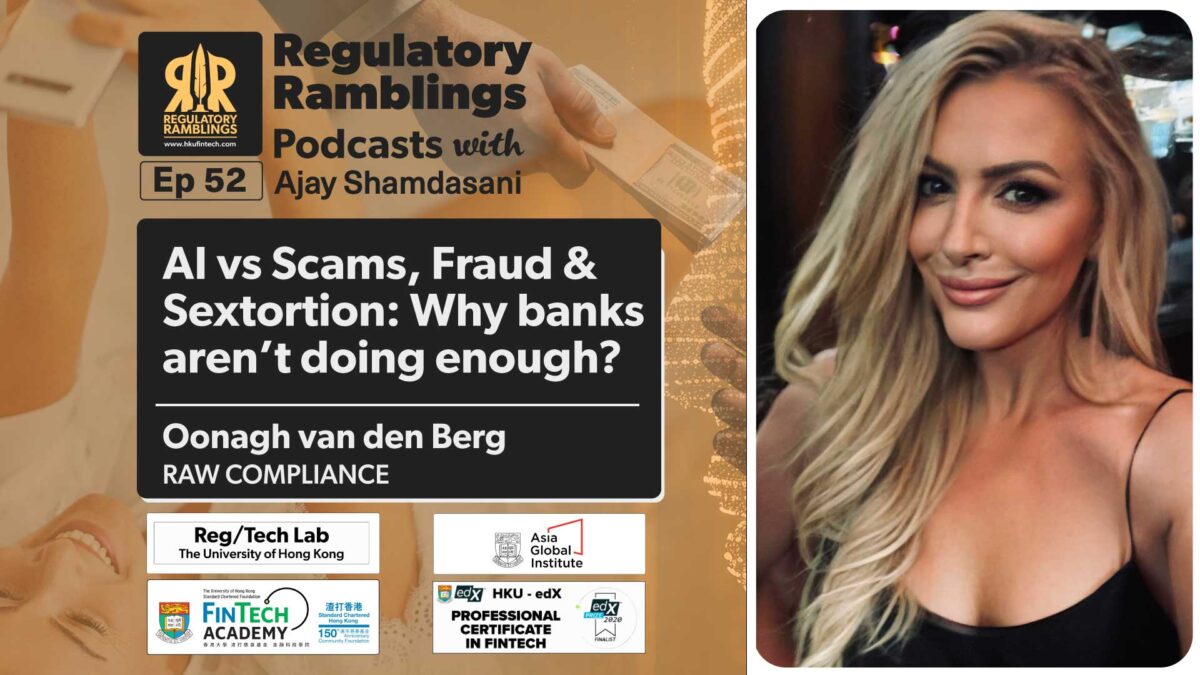
A lawyer by training and an entrepreneur by vocation, Oonagh van den Berg founded the compliance consultancy and training firm RAW Compliance. She is a highly regarded international compliance professional with two decades of experience in London, Hong Kong, and Singapore.
Growing up in Northern Ireland against the violent backdrop of “The Troubles” during the tumultuous 1980s, she’s a veteran at weathering the sharp, harsh curveballs that life sometimes throws us. She went on to become a lawyer, compliance officer, recruiter, and later, a consultant and educator despite the hardships she encountered as a young girl, such as the Irish Republican Army shooting her police officer father.
This episode of Regulatory Ramblings is topical, timely, and deeply poignant. Oonagh talks to our host, Ajay Shamdasani, about the need for artificial intelligence (AI), mainly by international banking and financial institutions and multinational corporations more generally, to combat financial scams, deep fakes, and sextortion:
It is an issue that hit close to home earlier this summer as Oonagh while working to raise awareness of the matter, learned that her 13-year-old daughter and a few of her school friends became the victims of blackmail because of some innocent photos shared on Snapchat. Raising awareness, Oonagh says, can help prevent others from experiencing the same thing. She shares that RAW Compliance has been working on important awareness videos about social media scams and sextortion targeting pre-teens, teenagers, and young adults.
A recent poll by Europol revealed that cybercriminals are increasingly exploiting new technologies to commit complex and dangerous crimes – and, in many instances, using AI to commit vile acts of violation against the unwitting. For example, malicious large language models (LLM) are used to develop scripts, phishing emails, and online fraud advertisements and to overcome language barriers that allow sex offenders to groom victims in any language and impersonate peers.
Then there is the threat of generative AI because AI-altered and fully artificial child sexual abuse materials are now so realistic and used in sextortion cases that it has resulted in the blackmail and subsequent suicide of some victims.
Additionally, AI deepfakes are becoming more sophisticated and accessible. Such technologies make it vexatious for law enforcement to identify victims and find the appropriate legal framework to charge criminals. Yet, law enforcement has grown more tech-savvy and started using more advanced detection tools. It is still an uphill battle, however, as the authorities are all too often playing catch-up.
Oonagh also discusses her firm’s groundbreaking collaboration to support victims of financial scams and help recover their assets. Together with Nick Leeson, the infamous former 90s-era Barrings trader, the pair combine their expertise to make a tangible difference in the fight against financial fraud. (Links below)
Oonagh says it matters because “Financial scams leave lasting impacts and destroy lives, with little to no help available. Recovery can feel overwhelming. By joining forces, we aim to turn the tide and provide the help and guidance victims need to reclaim their financial futures.”
In her view, banks are not doing enough to help victims of financial scams, mainly due to shortcomings in their technology and fraud detection systems. In the UK, for example, financial crime is a growing issue, with over 3.5 million people affected by scams annually, leading to losses exceeding £1.2 billion.
The problem is equally severe in continental Europe, with countries like Ireland and the Netherlands reporting significant increases in scam-related incidents, resulting in hundreds of millions of euros in losses.
Similarly, in the US, financial scams cost consumers over $3.3 billion annually.
The conversation continues with Oonagh fleshing out how financial institutions can navigate evolving regulations and effectively monitor child sexual abuse materials (CSAM). She also discusses the challenges and strategies for investigating CSAM and human trafficking in traditional and decentralized financial systems. She emphasizes the hurdles of global technology in combating such crimes and estimates the value of suspected CSAM transactions using fiat versus cryptocurrency.
The discussion concludes with Oonagh pointing out that the financial sector has often shirked its responsibility when it comes to anti-money laundering, ‘pig butchering,” human trafficking, and financial scams. The sad truth is that many victims will never truly be made whole.
She stresses that when it comes to law enforcement and investigators, the biggest takeaway for traditional financial crime compliance professionals and blockchain investigators is understanding suspicious red flags and other typologies supporting investigations.
We are bringing you the Regulatory Ramblings podcasts with assistance from the HKU Faculty of Law, the University of Hong Kong’s Reg/Tech Lab, HKU-SCF Fintech Academy, Asia Global Institute, and HKU-edX Professional Certificate in Fintech.
Oonagh van den Berg with Nick Leeson, through FundsRehab.com, offers support and solutions for those impacted by financial scams, guiding them through asset recovery. Assistance is available for those in need. FundsRehab.com is dedicated to combating financial fraud and driving change, with updates on their efforts on the website.
Compliance professionals constantly seek to understand how systemic issues within corporate hierarchies can lead to severe consequences. The recent revelations about Bank of America’s (BoA) persistent workplace culture problems are a powerful reminder of compliance’s critical role in safeguarding employees and the organization.
This week, I have explored the BoA failure around workplace culture from various perspectives articulated by the Everything Compliance gang, including Karen Woody, Jonathan Armstrong, Matt Kelly, Karen Moore, and Jonathan Marks. This exploration included the failure of internal controls, failures by the Board and senior management, culture failures around highly driven, self-selecting employees, and the cultural miasma that is BoA from a perspective from across the pond. You can check out the full Everything Compliance episode here. We conclude our series with a summary of lessons learned for compliance and how compliance can use those lessons going forward.
The scandal at BoA involving the excessive hours worked by junior employees highlights a profound crisis in corporate culture that has significant implications for compliance professionals. Despite previous promises of reform following similar incidents, BoA’s failure to address these issues effectively reveals systemic problems that transcend mere policy implementation. The tragedy of junior banker Leo Lukenas, who died after working over 100 hours a week for multiple weeks in a row, underscores the urgent need for stronger internal controls, better communication between management levels, and a culture that genuinely prioritizes employee well-being.
This situation at BoA serves as a critical case study for compliance professionals, illustrating the dangers of a disconnect between senior management’s intentions and the actions of middle management. While senior executives may set policies to limit overwork, middle managers often circumvent these rules, perpetuating a toxic work environment. BoA’s manual control system’s failure, ineffective internal audits, and HR oversight further exacerbate the problem. Compliance professionals must ensure that internal controls are implemented, actively monitored, and enforced to prevent similar issues in their organizations.
A key lesson from the BoA crisis is the importance of addressing the role of incentive structures. In high-stakes environments like investment banking, where bonuses and career advancement are tied to deal closures, there is a significant risk of overwork becoming normalized. Compliance officers must advocate for realigning incentives to balance business goals with ethical standards and employee well-being. This involves addressing the symptoms of such crises and tackling the root causes, such as toxic corporate culture and misaligned incentives.
The BoA scandal highlights the critical role of internal controls in maintaining a healthy and sustainable corporate culture. Relying on self-reporting as a key control mechanism in this high-risk environment proved ineffective, as employees were pressured to underreport their hours. Compliance professionals must recognize that self-reporting should be supplemented with independent verification methods, such as automated time tracking and regular audits, to ensure accurate data collected and controls are effective.
A holistic approach to risk management and compliance must be considered. Internal controls must be integrated into a broader framework, including solid ethical leadership, ongoing employee education, and clear channels for reporting concerns. The failure of BoA’s control environment, monitoring, and remediation efforts allowed a culture of overwork to persist, ultimately leading to repeated tragedies. For compliance professionals, this underscores the need for continuous improvement and active management of internal controls.
The role of the board of directors in overseeing corporate culture is crucial. The BoA crisis demonstrates that board members must go beyond surface-level management reports and engage directly with employees to understand workplace challenges. A proactive approach, including regular reports on employee well-being metrics and internal audits focused on workplace culture, can help prevent such crises. Moreover, creating a culture where employees feel safe to voice concerns is essential for identifying and addressing risks before they escalate.
The Bank of America scandal is a stark reminder of the human cost of a toxic work culture and the vital role that compliance professionals play in safeguarding both employees and organizations. The lessons from this tragedy should guide efforts to create healthier, more sustainable work environments. Compliance is not just about preventing legal and regulatory risks but also about fostering a corporate culture that values integrity, transparency, and the well-being of all employees. By aligning business metrics with these values, companies can achieve sustainable success that benefits their bottom line and people.
Welcome to “Compliance Tip of the Day,” the podcast where we bring you daily insights and practical advice on navigating the ever-evolving landscape of compliance and regulatory requirements.
Whether you’re a seasoned compliance professional or just starting your journey, our aim is to provide you with bite-sized, actionable tips to help you stay on top of your compliance game.
Join us as we explore the latest industry trends, share best practices, and demystify complex compliance issues to keep your organization on the right side of the law.
Tune in daily for your dose of compliance wisdom, and let’s make compliance a little less daunting, one tip at a time.
In this episode, we explore how external stakeholders, such as your supply chain, can enhance your compliance communications.
For more information on the Ethico ROI Calculator and a free White Paper on the ROI of Compliance, click here.
To check out The Compliance Handbook, 5th edition, click here.