Categories
FCPA Compliance Report

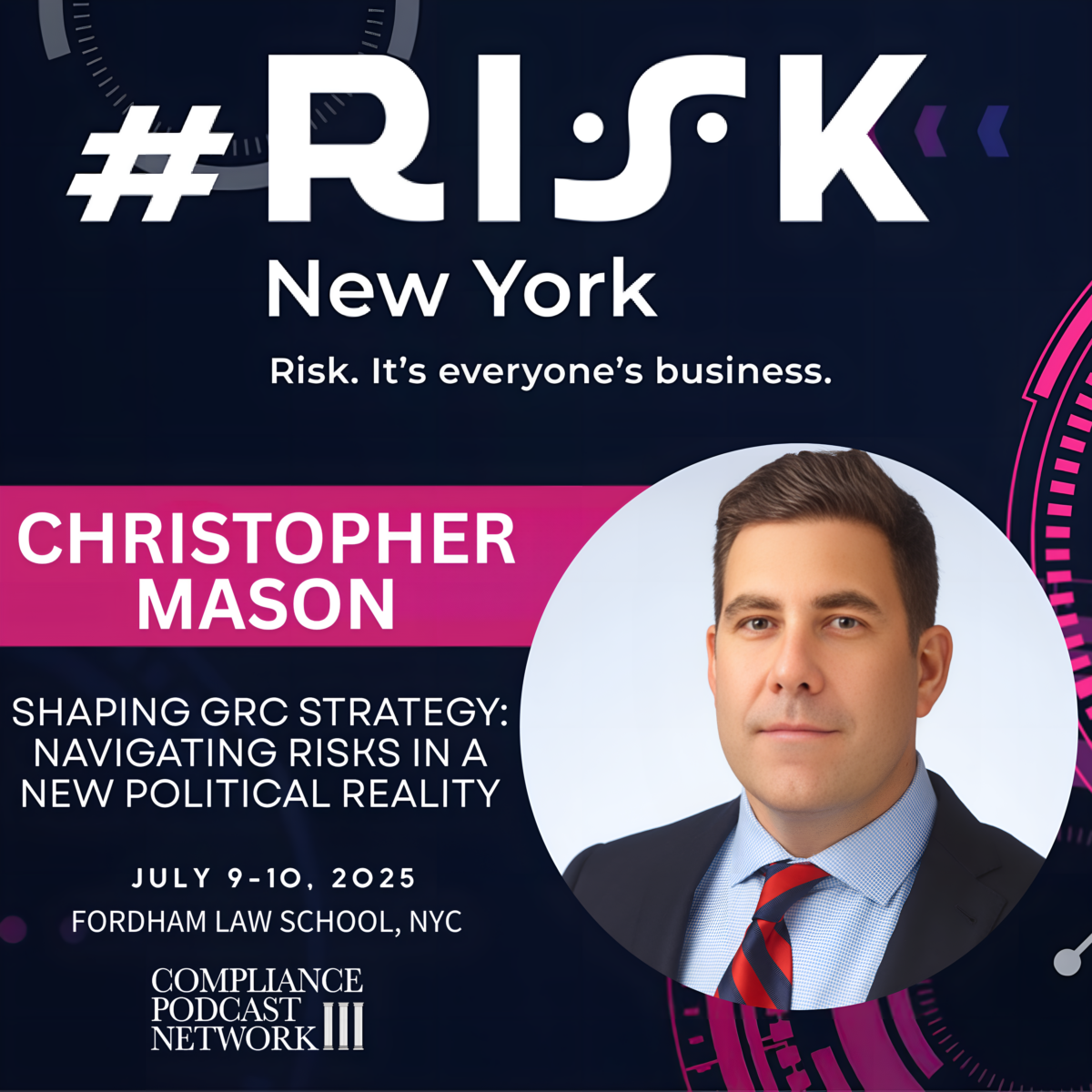
#Risk New York Speaker Series – AI Investments and Political Uncertainty with Chris Mason

Join Tom Fox and hundreds of other GRC professionals in the city that never sleeps, New York City, on July 9 & 10 for one of the top conferences around, #Risk New York. The current US landscape, shaped by evolving policies, rapid advancements in AI, and shifting global dynamics, demands adaptive strategies and cross-functional collaboration.

At #RISK New York, you will master the New Regulatory Reality by getting ahead of US regulatory shifts and their impact. Conquer AI and Tech Risk by Safeguarding Your Organization in an AI-Driven World and Understanding the Implications of Major Tech Investments. Navigate Financial and Crypto Volatility by Protecting Your Assets and Exploring Solutions in a Dynamic Market. Strengthen Your GRC Framework by Leveraging Governance, Risk, and Compliance for Strategic Advantage. Protect Digital Trust by addressing challenges in cybersecurity and data privacy and combating misinformation. All while meeting with the country’s top #Risk management professionals.

In this episode, Tom Fox talks with Chris Mason, who recently launched his risk advisory practice, Woodhorn Global, focusing on due diligence investigations. Chris shares insights about his upcoming presentations at the #RiskGRC conference in July, focusing on AI investments and the impact of political uncertainty on the GRC (Governance, Risk, and Compliance) community. They discuss the significance of AI in the field and the importance of adapting to political changes. Chris also emphasizes the value of in-person events in understanding best practices and navigating the evolving risk landscape.

Resources:

#Risk Conference Series

#RiskNYC—Tickets and Information

Chris Mason on LinkedIn

Categories
FCPA Compliance Report

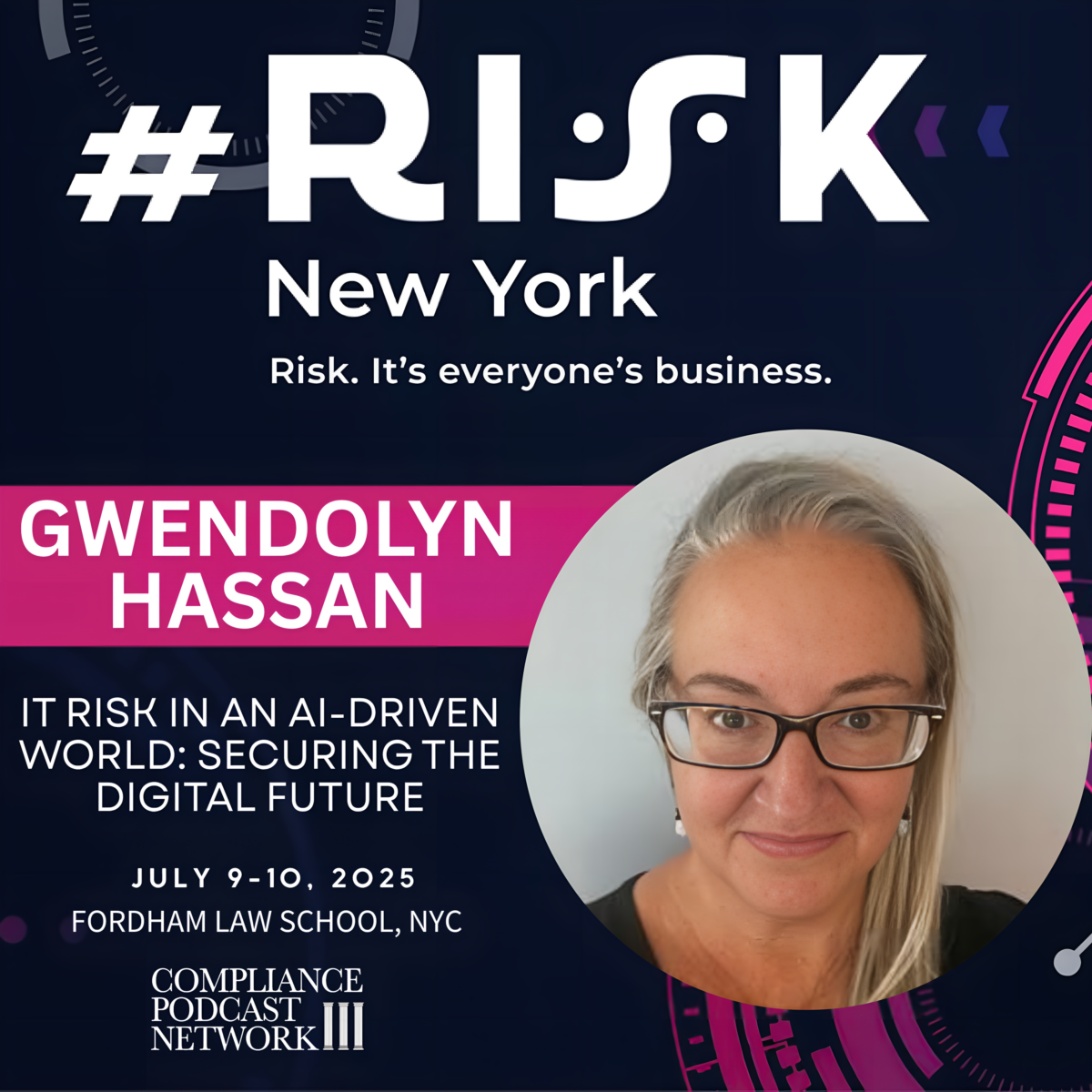
#Risk New York Speaker Series – Exploring AI Risks in Compliance with Gwen Hassan

Join Tom Fox and hundreds of other GRC professionals in the city that never sleeps, New York City, on July 9 & 10 for one of the top conferences around, #Risk New York. The current US landscape, shaped by evolving policies, rapid advancements in AI, and shifting global dynamics, demands adaptive strategies and cross-functional collaboration.

At #RISK New York, you will master the New Regulatory Reality by getting ahead of US regulatory shifts and their impact. Conquer AI and Tech Risk by Safeguarding Your Organization in an AI-Driven World and Understanding the Implications of Major Tech Investments. Navigate Financial and Crypto Volatility by Protecting Your Assets and Exploring Solutions in a Dynamic Market. Strengthen Your GRC Framework by Leveraging Governance, Risk, and Compliance for Strategic Advantage. Protect Digital Trust by addressing challenges in cybersecurity and data privacy, and combating misinformation. All while meeting with the country’s top #Risk management professionals.

In this episode, Tom Fox talks with Gwen Hassan, the Chief Compliance Officer for Unisys Corporation, about her role and the upcoming #RiskNYC conference. Gwen shares insights into Unisys’ operations, including the various technologies and services they provide, and highlights her responsibilities in managing global ethics, compliance, and trade compliance risks. She also gives a teaser about her panel presentation on the compliance and ethics risks associated with artificial intelligence, stressing the importance of understanding AI’s impact on company culture and regulatory compliance. Gwen expresses her excitement about the conference, emphasizing the value of engaging with fellow risk management experts.

Resources:

#Risk Conference Series

#RiskNYC—Tickets and Information

Gwen Hassan on LinkedIn

Categories
Everything Compliance

Everything Compliance: Episode 155, To Tesla and Beyond Edition

Welcome to this edition of the award-winning Everything Compliance. In this episode, we have the quartet of Matt Kelly, Jonathan Marks, Jonathan Armstrong, and special guest panelist Hemma Lomax, all hosted by Tom Fox, the Compliance Evangelist.

  1. Hemma Lomax examines the customers of a compliance program and introduces us to the terms EX and CX. She shouts out to AI for podcasters.
  2. Matt Kelly delves into Google’s compliance spending announcement and asks why the company does not have a Chief Compliance Officer. He both shouts out and rants about Marjorie Taylor Greene and her reading list.
  3. Jonathan Marks gives us a primer on corporate governance. He shouts out the quiet compliance professionals who do the day-to-day spadework of compliance.
  4. Jonathan Armstrong takes a deep dive into the finances of Tesla and its profitability. He shouts out to Operation Spider’s Web.
  5. Tom Fox highlights Wells Fargo’s compliance remediation, the Fed’s asset cap placed on Wells Fargo, and its subsequent removal.

The members of Everything Compliance are:

Tom Fox, the Voice of Compliance, is the host, producer, and sometimes panelist of Everything Compliance. He can be reached at tfox@tfoxlaw.com. The award-winning Everything Compliance is part of the Compliance Podcast Network.

Categories
FCPA Compliance Report

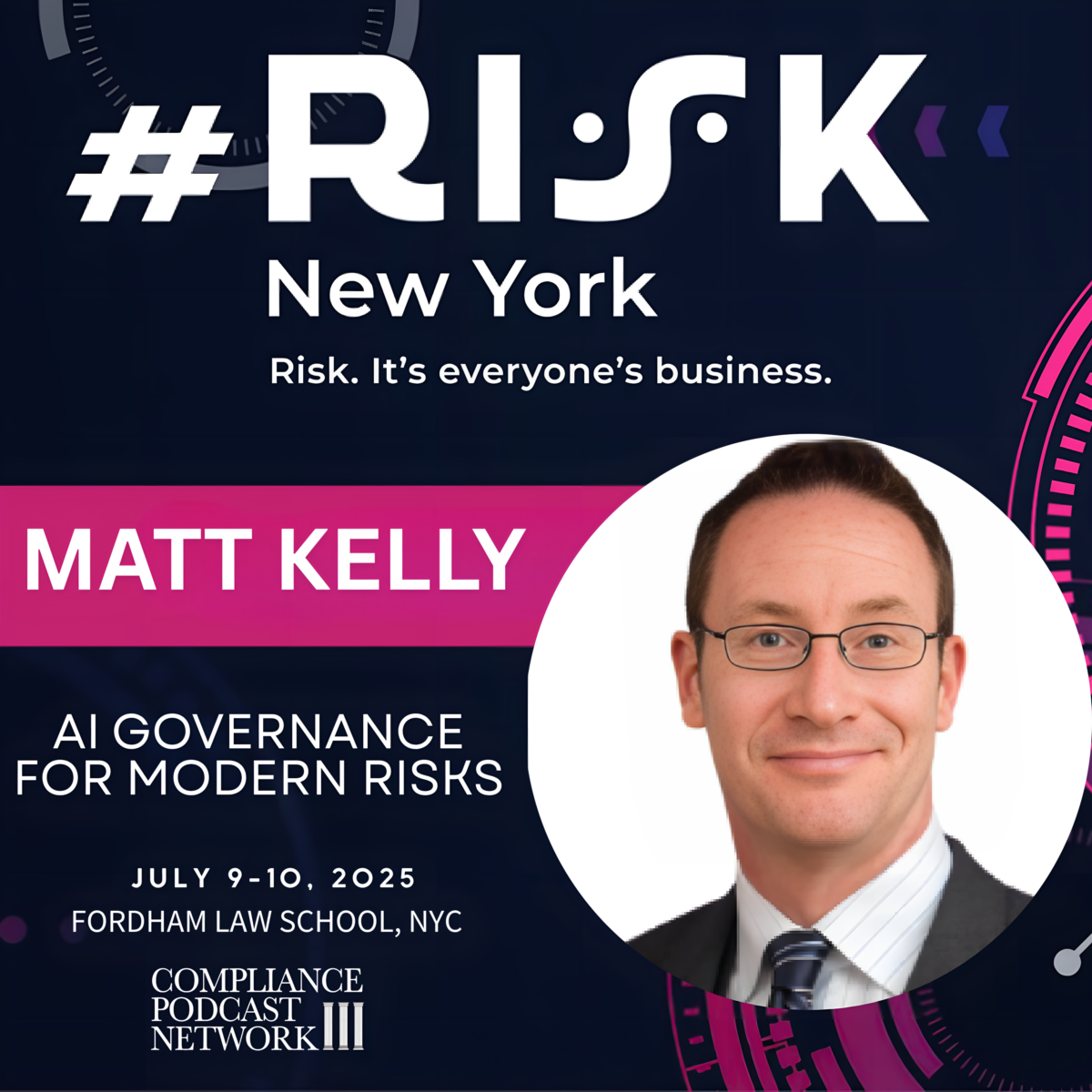
#Risk New York Speaker Series – The Future of AI Governance in GRC with Matt Kelly

Join Tom Fox and hundreds of other GRC professionals in the city that never sleeps, New York City, on July 9 & 10 for one of the top conferences around, #Risk New York. The current US landscape, shaped by evolving policies, rapid advancements in AI, and shifting global dynamics, demands adaptive strategies and cross-functional collaboration.

At #RISK New York, you will master the New Regulatory Reality by getting ahead of US regulatory shifts and their impact. Conquer AI and Tech Risk by Safeguarding Your Organization in an AI-Driven World and Understanding the Implications of Major Tech Investments. Navigate Financial and Crypto Volatility by Protecting Your Assets and Exploring Solutions in a Dynamic Market. Strengthen Your GRC Framework by Leveraging Governance, Risk, and Compliance for Strategic Advantage. Protect Digital Trust by addressing challenges in cybersecurity and data privacy, and combating misinformation. All while meeting with the country’s top #Risk management professionals.

In this episode, Tom Fox talks with Matt Kelly about his presentation on the importance of understanding how AI can be productively adopted within enterprises, as well as the ethical challenges it presents, including discrimination and data validity. Matt also discusses the importance of AI governance and offers a preview of his upcoming presentation on this topic. Matt expresses his eagerness to engage with other GRC professionals at the forthcoming conference to exchange ideas and discuss emerging risks in third-party and vendor risk management.

Resources:

#Risk Conference Series

#RiskNYC—Tickets and Information

Matt Kelly on LinkedIn

Categories
Upping Your Game

Upping Your Game – Continuous Monitoring with AI

In February, the Trump Administration suspended investigations under and enforcement of the FCPA. Many compliance professionals have since wondered what this will mean for corporate compliance programs going forward. Hui Chen challenged compliance professionals with the message, “It’s time to up your game.”

This podcast series, sponsored by Ethico and co-hosted with Ethico co-CEO Nick Gallo, hopes to meet Hui Chen’s challenge. We will discuss how compliance professionals can ‘Up Their Game’ by utilizing currently existing Generative AI (GenAI) tools to significantly enhance their compliance programs. As compliance professionals, it is critical to recognize that this moment is not merely about incremental improvements but about elevating our profession to an entirely new level of effectiveness, efficiency, and organizational value.

In this episode, hosts Tom Fox and Nick Gallo dive into the revolutionary potential of AI in continuous monitoring within compliance programs. They discuss how AI can provide real-time data insights, facilitate course corrections, and meet regulatory expectations.

The conversation explores the practical applications of AI tools, the importance of a proactive and open mindset, and the game-changing impact these technologies can have across various business functions, including mergers and acquisitions (M&A) and internal control reviews. They also highlight valuable case studies, such as Citibank’s anti-money laundering tool and Budweiser’s pre-pandemic data analytics program, underscoring the broad utility and transformative power of AI in modern business practices.

Key highlights:

  • The Promise of AI in Continuous Monitoring
  • Regulatory Expectations and AI
  • Practical Applications of AI in Compliance
  • Case Studies: AI in Action
  • AI Governance and Best Practices

Resources:

Upping Your Game- How Compliance and Risk Management Move to 2030 and Beyond on Amazon.com

Nick Gallo on LinkedIn

Ethico

For an Ethico White Paper on this topic, click here.

Tom Fox

Instagram

Facebook

YouTube

Twitter

Categories
Everything Compliance - Shout Outs and Rants

Shout Outs and Rants: Episode 155, To Tesla and Beyond

Welcome to this edition of Everything Compliance, Shout-Outs, and Rants. In this episode, we have the quintet of Matt Kelly, Jonathan Armstrong, Jonathan Marks, and Special Guest Panelist Hemma Lomax, all hosted by Tom Fox.

  1. Hemma Lomax shouts out to AI for podcasters.
  2. Matt Kelly both shouts out and rants about Marjorie Taylor Greene and her reading list.
  3. Jonathan Marks highlights the quiet compliance professionals who do the day-to-day work of compliance.
  4. Jonathan Armstrong delves into the finances of Tesla, examining its profitability. He shouts out to Operation Spider’s Web.
  5. Tom Fox highlights Wells Fargo’s compliance remediation, the Fed’s asset cap placed on Wells Fargo, and its subsequent removal.

The members of Everything Compliance are:

Tom Fox, the Voice of Compliance, is the host, producer, and sometimes panelist of Everything Compliance. He can be reached at tfox@tfoxlaw.com. The award-winning Everything Compliance is part of the Compliance Podcast Network.

Categories
Blog

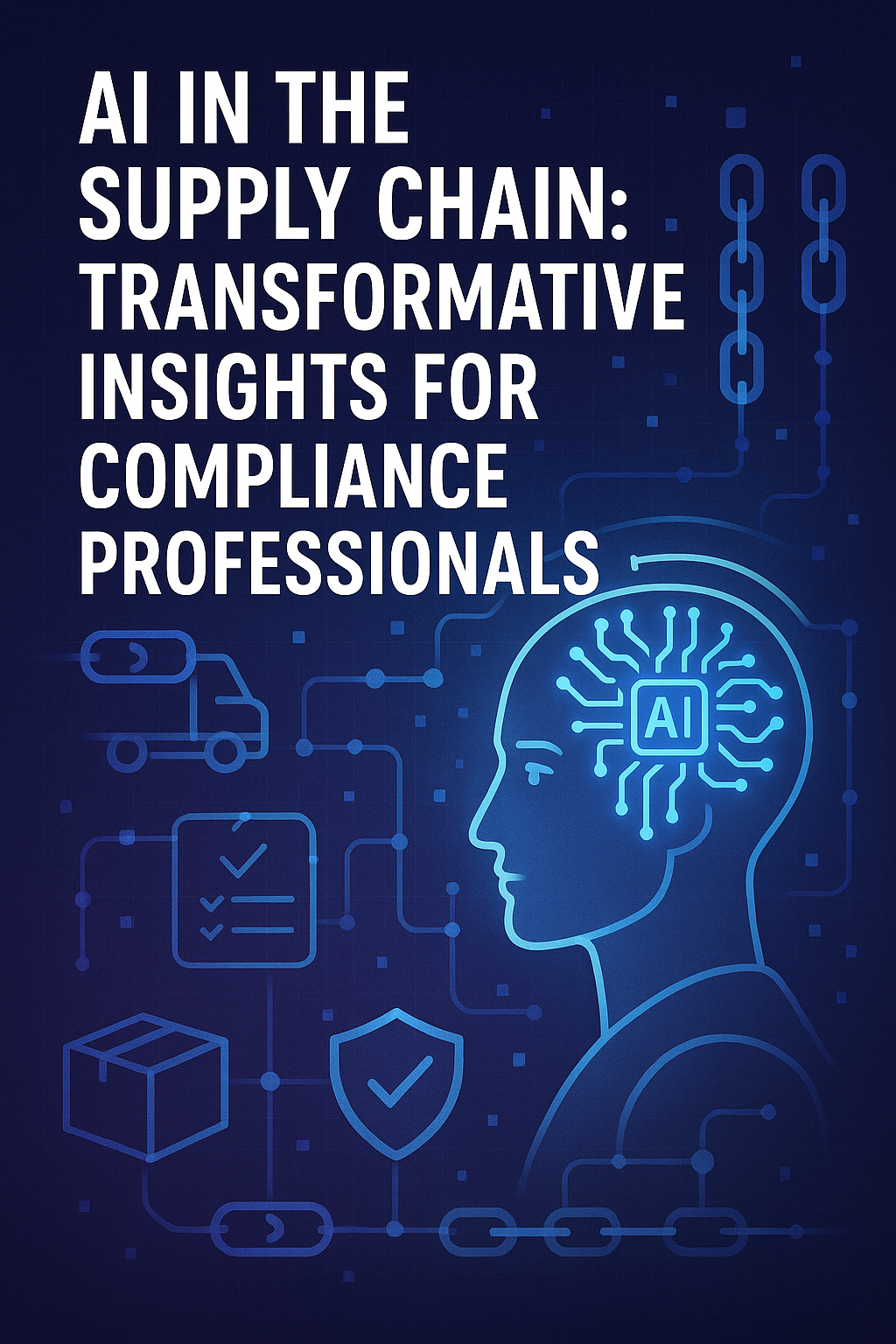
AI in the Supply Chain: Transformative Insights for Compliance Professionals

Compliance professionals responsible for managing risk, regulatory adherence, and organizational integrity must understand how AI technologies are being integrated into supply chains to effectively manage compliance obligations and leverage these advancements for optimal business outcomes. The integration of AI technologies within supply chain operations provides organizations with substantial advantages, including enhanced efficiency, reduced costs, and improved decision-making. From demand forecasting and supplier risk management to customs clearance and sustainability, AI is transforming every facet of the supply chain. Compliance professionals must navigate this technological evolution with careful understanding and deliberate strategy. In an article in Reuters, László Serester explored these issues. I have adapted his article for a corporate compliance audience.

Enhanced Demand Forecasting

Accurate demand forecasting is crucial for maintaining optimal inventory levels and preventing costly stockouts or overstocking situations. The use of machine learning algorithms enables businesses like Walmart and Amazon to analyze vast datasets, including historical sales data, market trends, seasonal patterns, and economic indicators. This granular analysis allows organizations to predict product demand with unprecedented accuracy.

For instance, companies such as Unilever and Pfizer utilize AI-driven forecasts to proactively adjust production schedules and ensure the continuous availability of raw materials. The introduction of autonomous agentic AI systems capable of independently adjusting production schedules without human approval signifies a leap towards greater operational autonomy, demanding vigilant compliance oversight to ensure appropriate checks and balances remain robustly in place.

Proactive Supplier Risk Management

Procurement processes are inherently complex, with multiple suppliers contributing to a single supply chain. AI systems, like SAP Ariba’s machine learning solutions, streamline supplier risk management by providing real-time insights into supplier performance. This capability enables quicker and more informed procurement decisions, significantly mitigating the risks associated with unreliable suppliers.

During crises, rapid vendor selection and thorough due diligence are paramount. AI-driven software, utilized by corporations like Unilever and Siemens, automates the identification and evaluation of potential new suppliers by analyzing diverse data sources, including financial health, sustainability practices, and compliance history. This systematic evaluation not only enhances operational resilience but also ensures adherence to ethical sourcing standards and regulatory requirements.

Manufacturing and Quality Assurance

AI’s contribution extends deeply into manufacturing processes, improving operational efficiency from design through commercialization. Companies like Siemens, GE, and Bosch harness big data analytics and IoT technologies for real-time monitoring, predictive maintenance, and automation. These innovations reduce downtime, extend equipment lifespan, and minimize operational risks.

AI’s role in quality control, particularly through advanced computer vision, enables companies to inspect products for defects with greater accuracy and speed, thereby significantly enhancing compliance with stringent quality standards. For example, electronics manufacturers utilize AI-driven inspections to detect circuit board defects, directly contributing to higher compliance standards and reduced regulatory risk.

Inventory and Warehousing Optimization

AI-powered inventory management solutions dramatically enhance warehouse operations. Predictive analytics, based on sales history, market trends, and real-time inventory data, enables companies to manage stock replenishment precisely. Organizations like Gather AI have deployed drone technology integrated with AI to perform inventory audits rapidly and accurately, drastically reducing human error and associated compliance risks.

Automation within warehouses, exemplified by Ocado’s autonomous mobile robots and Amazon Robotics’ warehouse solutions, optimizes storage efficiency, minimizes manual labor, and reduces the incidence of workplace injuries. The integration of deep-learning algorithms for recommending suitable alternatives when products are out of stock further illustrates AI’s profound impact on operational compliance and customer satisfaction.

Transportation and Logistics Efficiency

In logistics, AI-driven predictive analytics optimize transportation routes by analyzing traffic patterns, weather conditions, and real-time scheduling data to enhance efficiency. Companies like Maersk and UPS deploy AI systems to significantly enhance delivery efficiency, reduce costs, and improve environmental sustainability through optimized fuel usage.

AI’s capacity to manage freight matching and load optimization minimizes empty truck miles, directly contributing to sustainability goals and compliance with environmental regulations. Autonomous trucking initiatives, such as those from startups like Gatik, demonstrate AI’s transformative potential in the logistics sector, necessitating rigorous compliance oversight to address emerging safety and regulatory concerns.

Streamlined Customs Clearance and Regulatory Compliance

Compliance with customs regulations is greatly enhanced through AI technologies that automate document processing, accurately classify goods, and predict duties and taxes. Systems like ClearMetal’s predictive logistics and Descartes Systems Group’s AI solutions expedite customs declarations, significantly reducing errors and delays.

Moreover, AI-driven cargo screening technologies employed by U.S. Customs and Border Protection officials enhance inspection efficiency, focusing resources on high-risk shipments. Such applications underscore the essential role AI plays in maintaining robust regulatory compliance in international trade.

AI in Legal and Compliance Support

Legal departments supporting supply chain functions can utilize AI to streamline processes ranging from document review to contract management. Solutions like Thomson Reuters’ HighQ and Westlaw Edge facilitate efficient document analysis and rapid identification of potential compliance risks or contract deviations.

AI-enhanced legal research and drafting tools further empower legal professionals by automating repetitive tasks, allowing them to focus on strategic compliance advisory roles that require nuanced judgment and business acumen. This integration highlights the utility of AI in enhancing legal and compliance capabilities, ensuring the precise and efficient management of compliance obligations.

Promoting Sustainability through AI

Finally, sustainability practices benefit significantly from AI technologies that enable comprehensive evaluation and monitoring of supplier sustainability credentials. Platforms like EcoVadis and SupplyShift utilize AI-driven data analytics to rate suppliers on ESG criteria, empowering organizations to uphold rigorous sustainability standards and meet regulatory expectations.

The widespread integration of AI into supply chain operations presents both opportunities and obligations for compliance professionals. Mastery of AI tools and methodologies enables enhanced risk management, regulatory adherence, and organizational resilience. As supply chain operations continue to advance technologically, compliance teams must remain vigilant and adaptive, leveraging AI’s capabilities responsibly to protect organizational integrity and promote sustainable, compliant business practices.

Embracing AI strategically positions compliance professionals not only as guardians of regulatory adherence but also as key facilitators of organizational innovation and sustainability. The thoughtful application of AI within the supply chain thus becomes a cornerstone of a robust compliance strategy, essential for thriving in an increasingly complex regulatory environment.

Categories
Blog

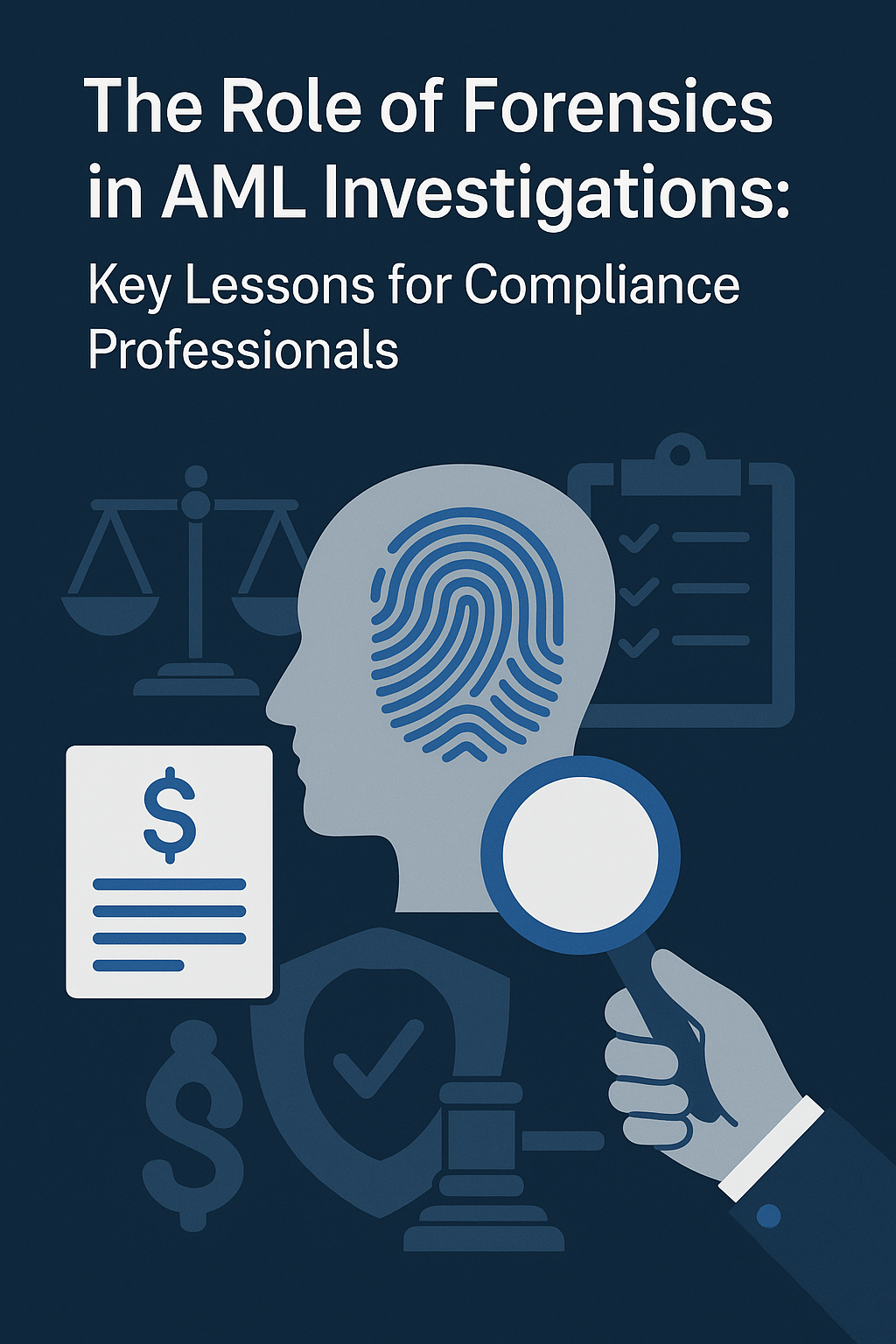
The Role of Forensics in AML Investigations: Key Lessons for Compliance Professionals

Effective anti-money laundering (AML) strategies rely heavily on forensic methodologies, which combine investigative expertise, advanced analytical technologies, and meticulous procedural rigor. Elaine Wood and Niall Murphy, from Charles River Associates, recently wrote an article that appeared in GIR, an extract from the third edition of The Guide to Anti-Money Laundering. Drawing insights from recent enforcement cases and best practices, their article outlined the five top lessons learned for compliance professionals regarding the role of forensic analysis in AML investigations. I have adapted it for the compliance professional.

1. The Power of Advanced Technology

Artificial intelligence (AI) and machine learning (ML) technologies have significantly enhanced the effectiveness of forensic analysis in anti-money laundering (AML) investigations. Leveraging these advanced technologies allows investigators to identify suspicious activities swiftly and accurately by recognizing anomalous behaviors through outlier detection and natural language processing. For instance, the U.S. Department of the Treasury’s successful recovery of over $1 billion from check fraud in fiscal year 2024 was primarily achieved through AI-driven solutions, representing a substantial increase compared to previous recoveries.

Compliance professionals should embrace AI and ML tools to strengthen their AML programs. Implementing these technologies can significantly enhance detection capabilities, streamline investigative processes, and mitigate risks more effectively.

2. Comprehensive Forensic Reviews

A comprehensive forensic review is critical when a company faces allegations of involvement in money laundering schemes. These forensic audits meticulously analyze transactional data across jurisdictions, mapping complex networks and pinpointing irregular activities. The case involving TD Bank, which resulted in a $3 billion penalty for AML failures, highlights the importance of thorough forensic reviews in uncovering long-term deficiencies and systemic lapses.

Compliance professionals must prioritize comprehensive forensic audits and continuously review their AML policies and controls. Robust and proactive forensic analyses help prevent substantial financial losses, severe penalties, and considerable reputational damage.

3. Rigorous Documentation and Record-Keeping

Proper documentation and record-keeping are essential in AML forensic investigations. These practices facilitate accurate transaction mapping, precise identification of irregular activities, and effective remediation strategies. During forensic examinations, each transaction alert, including how it was triggered, reviewed, escalated, and resolved or reported, must be meticulously recorded, along with assessments of existing AML controls.

In recent enforcement actions against financial institutions, regulatory agencies have highlighted deficiencies in documentation and record-keeping as contributing factors to compliance failures. Thus, compliance professionals must ensure that robust documentation protocols are in place and consistently adhered to, safeguarding against lapses and ensuring readiness for regulatory scrutiny.

4. Asset Tracing and Recovery Techniques

Forensic analysis extends beyond identifying irregular activities to include asset tracing and recovery, a crucial component of anti-money laundering (AML) investigations. Skilled forensic accountants and investigators track illicit funds across multiple jurisdictions and through various entities. An example of successful asset tracing is illustrated in the investigation of Central and South American drug cartels, where forensic techniques traced funds used to purchase illegally mined gold, highlighting complex laundering schemes involving international trade.

Compliance professionals should be adept at or closely collaborate with experts skilled in asset tracing and recovery. Understanding how to effectively track the flow of illicit funds through financial statements, transaction records, and ownership details significantly enhances the ability to reclaim assets and mitigate organizational exposure.

5. Calculating Economic Impact and Loss

Forensic specialists also play a pivotal role in determining the economic impact of money laundering, a complex task involving meticulous financial forensics. Calculating losses consists of assessing both the impact of the predicate crime and the economic damage resulting from subsequent laundering activities. Financial forensic analyses provide essential data for criminal forfeitures, civil judgments, and administrative penalties, offering precise quantifications of losses incurred.

In the Brink’s Global Services case, for instance, the assessment involved evaluating the company’s failure to adhere to AML regulations, resulting in a significant settlement. Compliance professionals must understand the methodologies and implications of calculating economic losses, as these calculations significantly impact legal outcomes and regulatory penalties.

Conclusion

Effective AML compliance demands integrating advanced forensic methodologies, technologies, and expertise into organizational frameworks. By learning from prominent cases and incorporating the above lessons, leveraging AI technology, conducting thorough forensic audits, maintaining rigorous documentation, mastering asset tracing techniques, and understanding economic impact calculations, compliance professionals can significantly enhance their AML capabilities.

A proactive and informed approach to forensic analysis not only aids in identifying and mitigating AML risks but also safeguards organizations from severe financial and reputational consequences. Compliance professionals equipped with robust forensic tools and methodologies are uniquely positioned to ensure organizational integrity, regulatory compliance, and resilience in the increasingly complex financial landscape.

Categories
2 Gurus Talk Compliance

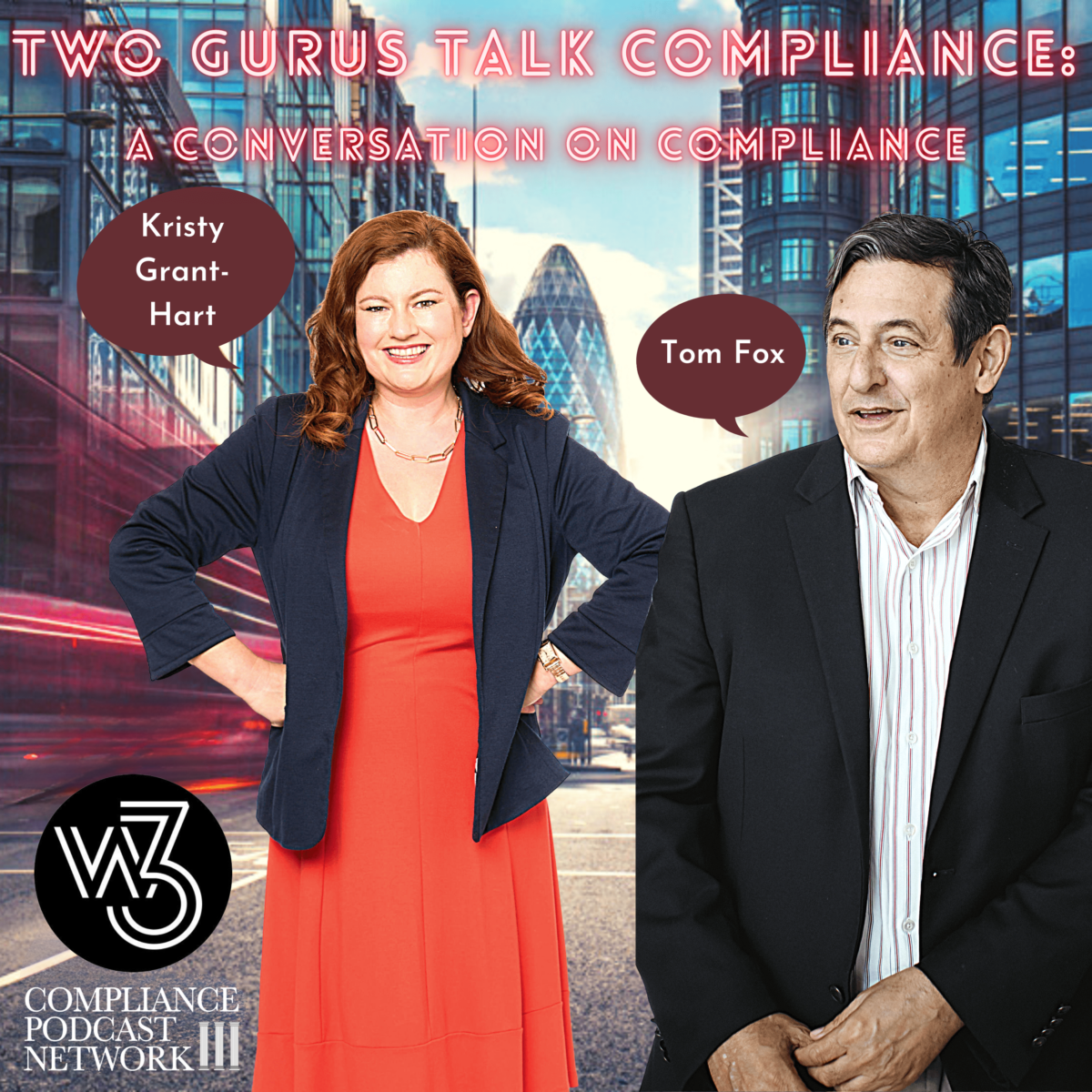
2 Gurus Talk Compliance: Episode 53 – The AI as a Whistleblower Edition

What happens when two top compliance commentators get together? They talk compliance, of course. Join Tom Fox and Kristy Grant-Hart in 2 Gurus Talk Compliance as they discuss the latest compliance issues in this week’s episode!

Stories this week include:

  • EY is negligent in missing $3bn fraud, court told. (Reuters)
  • Don’t tell the truth on your employee satisfaction survey. (Business Insider)
  • Trump pardons VA. Sheriff convicted of bribery.   (Bloomberg)
  • Tim Leissner sentenced.(Bloomberg)
  • Uyghurs are being moved around China. (NYT)
  • Boeing’s Internal Safety Plan: Make Problems Easier to Report – WSJ – HERE
  • Uh-Oh: AI’s New Whistleblower Impulses – Radical Compliance –HERE
  • Caught Between Conscience and Career: An E&C Leader’s Confession – Corporate Compliance Insights – HERE
  • How Is Remote Work Fueling Migration Trends? – Mortgage Point –HERE
  • You spray painted the wrong damn car’: Deputies mock teen who vandalized the wrong vehicle while trying to exact revenge on her ex – The Independent – HERE

 Resources:

Kristy Grant-Hart on LinkedIn

Prove Your Worth

Tom

Instagram

Facebook

YouTube

Twitter

LinkedIn

Categories
Blog

From Data Poisoning to Hallucinations – Navigating AI in Corporate Compliance

Recently, I had the opportunity to visit with John Byrne, the CEO at Corlytics. You can listen to the podcast here. One of our topics was how artificial intelligence (AI) has swiftly transitioned from a cutting-edge curiosity into an indispensable cornerstone of corporate operations. From simple text generation applications on our smartphones to sophisticated enterprise solutions hosted in the cloud, AI permeates nearly every aspect of modern business infrastructure. This ubiquity highlights AI’s substantial potential to improve organizational efficiency, competitive positioning, and decision-making processes.

Yet, the swift evolution and pervasive integration of AI technology have not come without substantial risks, prompting compliance professionals to carefully reconsider their roles and responsibilities. The core concern remains security, particularly as more firms migrate critical applications and sensitive data to cloud environments. Over the past decade, organizations have significantly matured their security protocols and best practices for cloud-hosted software, establishing clear guidelines that mitigate traditional cyber vulnerabilities.

However, AI introduces unique and heightened threats beyond conventional cybersecurity, including sophisticated tactics like data poisoning, intentional misinformation, and “hallucinations,” where AI systems convincingly generate inaccurate or misleading outputs. As AI becomes mission-critical to business operations, these vulnerabilities can have severe, far-reaching consequences, posing significant challenges to compliance officers tasked with protecting their organizations. Navigating these emerging risks requires compliance teams to adopt rigorous, proactive measures. This involves implementing robust security protocols designed explicitly for AI-driven environments, continually updating risk assessment strategies, and incorporating comprehensive oversight frameworks that effectively monitor and manage AI’s evolving threats.

In this context, compliance professionals must fully embrace their expanding roles, safeguarding organizations against evolving risks, ensuring regulatory adherence, and fostering ethical practices around AI deployment. By understanding these challenges and proactively addressing them, compliance teams can ensure their organizations reap the substantial benefits AI offers without compromising security, trust, or compliance standards.

Lesson 1: Robust Security Practices Are Non-Negotiable

The foundational concern with AI integration, particularly cloud-hosted AI applications, is security. A decade of deploying software to the cloud has taught us valuable lessons that compliance professionals must rigorously apply. Robust security frameworks, stringent testing protocols, continuous monitoring, and rapid response strategies form the core pillars of effective security. Compliance officers must enforce strict dos and don’ts, ensuring not only compliance with regulatory expectations but also fortifying the company’s resilience against breaches.

The key takeaway is that rigorous cloud security standards, developed over the years, must now explicitly encompass AI applications. Firms must extend established compliance checklists, adding layers specific to AI security challenges, to ensure the integrity, availability, and confidentiality of AI-driven data remain uncompromised.

Lesson 2: Proactively Address Risks from Malicious Actors

History teaches that groundbreaking technologies, while primarily beneficial, inevitably attract malicious actors. AI is no exception. Cyber threats leveraging AI can escalate rapidly into sophisticated attacks, such as data poisoning, where attackers intentionally feed misleading information into algorithms, thereby corrupting their output. This subversion poses profound implications for the accuracy of decision-making and organizational trust.

Compliance professionals must educate themselves and their teams about evolving threats and strengthen internal controls accordingly. By embedding risk identification processes into standard compliance workflows, organizations can proactively anticipate and mitigate threats. Regularly updated training programs, AI-aware cyber defense strategies, and robust audits are crucial in preventing and managing these risks.

Lesson 3: Guard Against AI-Specific Vulnerabilities

AI technologies, while transformative, are inherently susceptible to certain unique vulnerabilities, such as “hallucinations,” where generative AI outputs erroneous or fabricated information that is convincingly presented. These errors can lead to significant operational and reputational damage. Compliance officers must recognize these vulnerabilities and mandate rigorous validation protocols.

Implementing stringent AI testing regimes, cross-verification procedures, and continuous model validation helps mitigate these risks. Maturity in AI compliance necessitates adopting specialized disciplines, notably Machine Learning Operations (ML Ops). ML Ops offers a systematic and disciplined approach for operationalizing AI models, tracking performance, and addressing vulnerabilities promptly and effectively.

Lesson 4: ML Ops—Operationalizing AI Compliance

One notable best practice is embracing MLOps, a structured discipline focused on the operations of machine learning engineering. ML Ops mirrors established IT operational practices explicitly tailored to AI applications. Compliance professionals must understand and advocate for MLOps to systematically embed governance and controls, ensuring the effective implementation of these practices.

ML Ops operationalizes model deployment through rigorous validation, structured versioning, continuous monitoring, and disciplined updates —core activities that compliance teams must oversee. Compliance leaders should champion this discipline, advocating for dedicated AI governance roles, well-defined processes, and accountability frameworks to ensure that AI operations consistently align with compliance requirements and risk management strategies.

Lesson 5: Continuous Monitoring and Validation are Essential

Continuous monitoring, validation, and improvement are critical to sustainable AI governance. Unlike traditional software, AI models evolve continuously, adapting to new data, patterns, and feedback loops. This dynamic nature mandates perpetual oversight from compliance functions. It is insufficient merely to test AI models upon deployment; organizations must maintain ongoing validation processes that adapt to emerging data and evolving threats.

Compliance teams must collaborate closely with technical and business units to ensure the integration of compliance checkpoints within the AI lifecycle. Regular performance audits, comprehensive incident response strategies, and adaptive risk assessment frameworks must be institutionalized. By proactively identifying and correcting deviations, compliance professionals will significantly mitigate operational and compliance risks associated with AI.

Conclusion

AI presents unparalleled opportunities for enhanced business performance, predictive insights, and competitive advantages. Yet, its integration demands vigilant compliance oversight, rigorous governance practices, and continuous monitoring. By applying the lessons learned from cloud security experiences, anticipating malicious misuse, mitigating AI-specific vulnerabilities, operationalizing AI through ML Ops, and maintaining rigorous, ongoing validation practices, compliance professionals can effectively manage AI-driven risks.

Corporate compliance teams must embrace their critical role as stewards of responsible AI governance. It is an opportunity to reinforce the value proposition of compliance within organizations as strategic advisors, proactive risk mitigators, and champions of ethical innovation. Ultimately, a robust compliance framework ensures that the transformative power of AI drives sustainable growth without compromising security, integrity, or regulatory compliance.