Categories
Compliance Tip of the Day

Compliance Tip of the Day – Leveraging AI to Navigate Emerging Risks

Welcome to “Compliance Tip of the Day,” the podcast where we bring you daily insights and practical advice on navigating the ever-evolving landscape of compliance and regulatory requirements. Whether you’re a seasoned compliance professional or just starting your journey, we aim to provide bite-sized, actionable tips to help you stay on top of your compliance game. Join us as we explore the latest industry trends, share best practices, and demystify complex compliance issues to keep your organization on the right side of the law. Tune in daily for your dose of compliance wisdom, and let’s make compliance a little less daunting, one tip at a time.

Today, we consider how AI allows compliance to take a proactive, data-driven approach to emerging risk analytics.

For more information on the Ethico Toolkit for Middle Managers, available at no charge, click here.

Check out the entire 3-book series, The Compliance Kids, on Amazon.com.

Categories
Blog

AI and Compliance Week: Part 4, Leveraging AI to Navigate Emerging Risks in Compliance 

We continue our exploration of the use of AI in Compliance by considering using AI to manage evolving risks. Geopolitical instability, shifting regulations, and the proliferation of disruptive technologies can quickly reshape the risk environment. For compliance professionals, anticipating and managing these emerging risks is essential to maintaining the integrity and sustainability of their organizations.

Risk assessments have traditionally been periodic and reactive, leaving compliance teams playing catch-up. But with the advent of Artificial Intelligence (AI), organizations now have the tools to take a proactive, data-driven approach to emerging risk analytics. By leveraging AI models trained on global datasets, compliance teams can identify trends, predict vulnerabilities, and adapt their programs in real-time.

This post will explore AI’s role in managing emerging risks, how compliance teams can effectively implement these tools, and how AI can help meet the DOJ’s 2024 Evaluation of Corporate Compliance Programs (ECCP) expectations.

The Challenge of Emerging Risks

Emerging risks are, by definition, hard to anticipate. They often arise from complex, interconnected factors and can come from many directions. Geopolitical shifts can mean new or additional sanctions, trade wars, and regional conflicts can disrupt supply chains, create regulatory uncertainty, or introduce reputational risks. Regulatory changes will continue to be robust as rapid laws and regulations update. Even under a Trump Administration, there will still be updated regulations in the EU, especially in areas like data privacy, environmental standards, or anti-corruption—which can catch organizations off guard.

Technological advancements will only increase in scope, size, and speed. Innovations like blockchain, cryptocurrencies, and AI bring new opportunities and uncharted compliance challenges.  Failing to anticipate these risks can result in significant financial, legal, and reputational damage. This is where AI can make a meaningful difference.

How AI Enhances Emerging Risk Analytics 

AI excels at processing large volumes of data from diverse sources, identifying patterns, and delivering actionable insights. For emerging risks, AI presents opportunities in such varied areas as trend analysis, where AI models can monitor global news, regulatory updates, and industry developments in real-time, identifying trends that may signal new risks. Through predictive insights, machine learning algorithms can assess historical data to predict how current events might evolve into compliance challenges. Through dynamic risk mapping, AI can create heat maps that visualize potential risk hotspots based on geopolitical, regulatory, or technological factors. Finally, AI simulations can model “what-if” scenarios in scenario planning, helping organizations prepare for various potential outcomes. These capabilities allow compliance teams to move from a reactive stance to a proactive one, addressing risks before they materialize.

AI Applications in Emerging Risk Management 

  1. Geopolitical Risk Monitoring. In this area, AI tools can analyze global data—news outlets, trade data, social media, and government reports—to identify geopolitical developments that might affect compliance. For example, an AI system might detect escalating tensions in a region where your suppliers operate, signaling a potential disruption or sanctions risk. Compliance teams can use this insight to review supplier relationships, adjust procurement strategies, or engage alternative vendors.
  2. Regulatory Change Detection. Staying ahead of regulatory updates is critical, whether in regulated or non-regulated industries, but most especially in industries with complex compliance requirements. AI can be a powerful tool in this area by tracking legislative developments worldwide and flagging pending bills or new regulations that could impact operations. This tracking and flagging allow compliance teams to prepare in advance, updating policies, training, and systems to align with new requirements.
  3. Supply Chain Risk Analysis

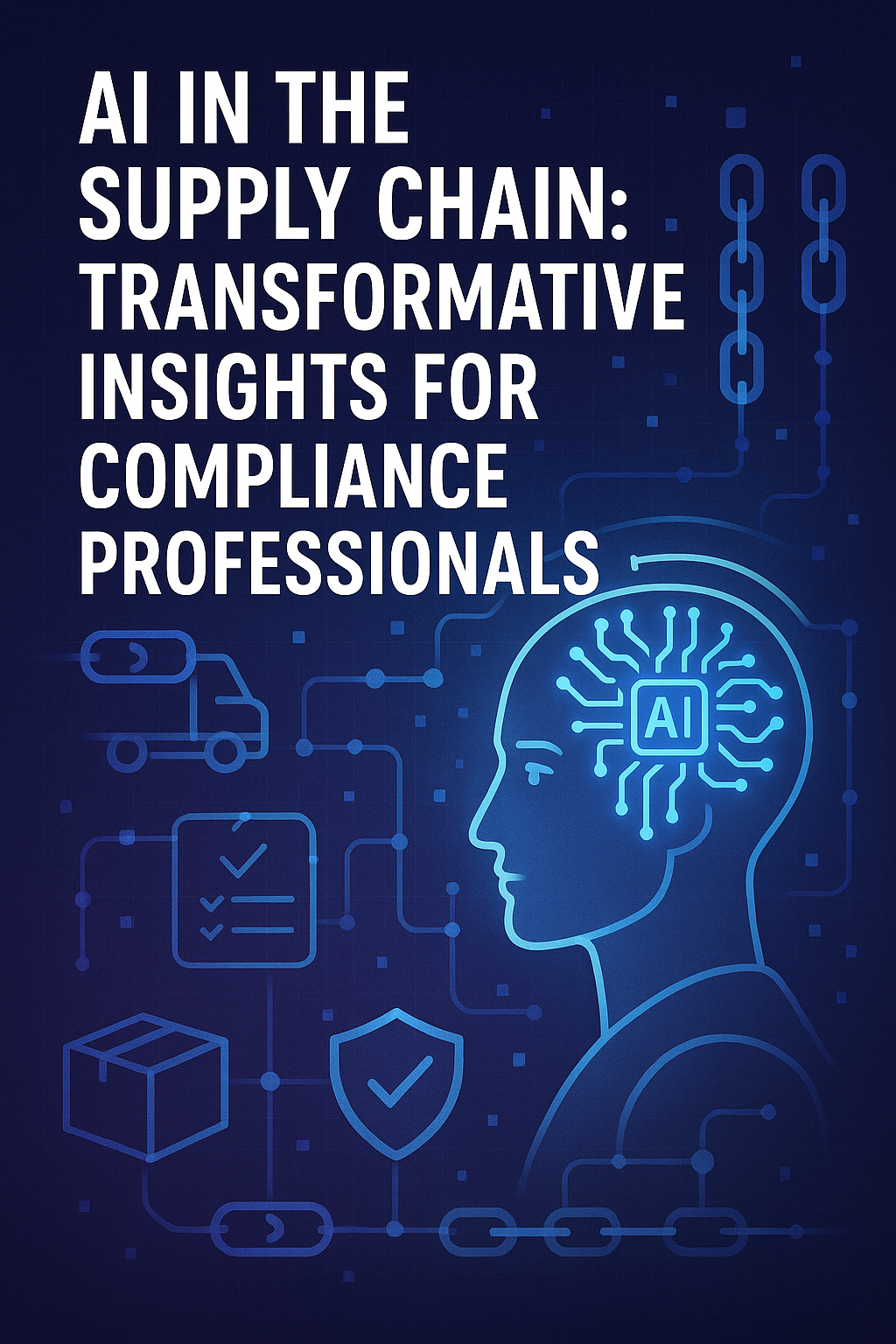
The supply chain has become increasingly critical in every business, not simply for product and raw material inputs but also from a regulatory and trade sanction perspective. AI-powered supply chain monitoring tools can identify vulnerabilities related to sanctions, trade restrictions, or human rights concerns. An AI tool could analyze shipping patterns and detect potential violations of new trade restrictions. With this information, your company can use this insight to ensure that its supply chain partners remain compliant and adapt logistics strategies.

  • Technological Risk Assessment

AI can also assess risks associated with adopting new technologies like blockchain or artificial intelligence. An AI tool might flag compliance challenges tied to data storage requirements for blockchain transactions. This could allow your corporate compliance function to address these issues proactively by engaging with IT and legal departments to develop compliant workflows.

Best Practices for Implementing AI

Compliance teams must approach its implementation strategically to realize AI’s benefits in emerging risk management. It all begins with building a robust data infrastructure, as AI’s effectiveness depends on the quality of the data it processes. Invest in data governance frameworks to ensure data accuracy, consistency, and accessibility. This ties directly into the requirement from the DOJ in the 2020 ECCP, which, for the first time, mandated that compliance professionals have access across all corporate data lakes. Access across all data lakes is only the starting point for compliance, as it must collaborate across various corporate functions, as emerging risks often span multiple areas of the business. Compliance must work closely with legal, IT, supply chain, and other departments to ensure a comprehensive approach to risk management.

Choosing the right AI tool is critical. Start from the presumption that not all AI tools are created equal. You should evaluate solutions based on their ability to analyze the specific risks your organization faces, their scalability, and their ease of integration with existing systems. You must also continuously monitor and improve emerging risks, which are, by nature, dynamic. Regularly review and refine AI models to ensure they remain relevant and effective as new data becomes available. Documentation and accountability are critical, and AI models should be transparent and interpretable, especially in compliance, where accountability is paramount. Choose tools that allow you to understand how decisions are made and provide clear, actionable outputs.

Aligning AI with DOJ Expectations 

One of the extra benefits of this approach is that it aligns with DOJ requirements, which were laid out in the 2024 ECCP and some of its predecessors. These include continuous improvement of compliance programs. They must evolve to address new risks. AI’s ability to adapt and learn from new data supports this requirement. In the 2023 ECCP, we knew the importance of data and data-driven compliance programs. The same is true in the area of data-driven risk assessments. The DOJ expects companies to leverage data analytics to identify and mitigate risks. AI provides the tools to meet this expectation effectively. The DOJ is moving towards a proactive risk management approach for compliance programs. AI allows compliance teams to address risks before they result in violations, aligning with the DOJ’s focus on prevention. To demonstrate alignment with DOJ guidelines, compliance teams should document how AI tools are used, the insights generated, and the actions taken based on those insights.

AI as a Strategic Partner in Compliance

Emerging risks will always challenge compliance programs, but AI provides the tools to navigate these uncertainties confidently. By leveraging AI for trend analysis, predictive insights, and dynamic risk mapping, compliance teams can stay ahead of the curve, ensuring their programs remain resilient and effective.

As compliance professionals, our role is to guide our organizations through the complexities of the modern risk environment. AI does not and will not replace our expertise. It can, however, amplify it, providing the data and insights we need to make informed decisions. Just as risk never sleeps, neither should your compliance program. With AI, we can ensure our programs are reactive, proactive, resilient, and ready for whatever comes next.

Categories
Compliance Tip of the Day

Compliance Tip of the Day – Using AI for Employee Behavioral Analytics

Welcome to “Compliance Tip of the Day,” the podcast where we bring you daily insights and practical advice on navigating the ever-evolving landscape of compliance and regulatory requirements. Whether you’re a seasoned compliance professional or just starting your journey, we aim to provide bite-sized, actionable tips to help you stay on top of your compliance game. Join us as we explore the latest industry trends, share best practices, and demystify complex compliance issues to keep your organization on the right side of the law. Tune in daily for your dose of compliance wisdom, and let’s make compliance a little less daunting, one tip at a time.

Today, we consider how AI and NLP can review a broader data set to determine possible employee anomalies.

For more information on the Ethico Toolkit for Middle Managers, available at no charge, click here.

Check out the entire 3-book series, The Compliance Kids, on Amazon.com.

Categories
Blog

AI in Compliance: Part 3, Leveraging AI for Employee Behavioral Analytics in Corporate Compliance

We continue our 5-part exploration of using AI in compliance by considering how employee behavioral analytics can be used to prevent employee misconduct. Whether intentional or inadvertent, employee misconduct can present significant risks to corporate integrity, financial stability, and reputation. From conflicts of interest and fraudulent activity to harassment and toxic workplace cultures, identifying and mitigating these risks is a cornerstone of an effective compliance program.

However, traditional monitoring methods often miss subtle warning signs or are applied inconsistently. Enter artificial intelligence (AI) employs behavioral analytics powered by natural language processing (NLP). By analyzing communication patterns, sentiment, and tone in employee emails, chats, and other digital interactions, AI provides a proactive, scalable approach to identifying indicators of unethical behavior before they escalate.

However, deploying AI in this sensitive area, especially privacy and trust, comes with challenges. In Part 3, we explore the best practices for using AI to enhance compliance through employee behavioral analytics while navigating the ethical and legal complexities of such monitoring.

The Promise of AI in Employee Behavioral Analytics

AI’s strength lies in its ability to sift through large volumes of unstructured data—emails, instant messages, chat logs—and identify patterns or anomalies that might signal risk. For compliance, this translates into:

  1. Early Detection of Red Flags. AI can flag terms or phrases commonly associated with misconduct, such as “special arrangement,” “off the books, or “don’t tell. These signals can point to potential fraud, bribery, or other violations. For instance, if an analysis detects a pattern of discussions about unauthorized “side deals, it might prompt a closer look at contract negotiations or procurement activities to ensure compliance with anti-corruption policies.
  2. Sentiment Analysis. NLP tools can analyze the tone of communications to detect hostility, coercion, or undue pressure, which are common markers in harassment or toxic workplace cases.
  3. Proactive Risk Mitigation. AI allows compliance teams to intervene early, whether through targeted training, process reviews, or investigations, by identifying behavioral trends or hotspots.

Real-World Applications of AI in Employee Monitoring

AI can help prevent fraud and financial misconduct. AI tools can scan communications for phrases or patterns indicative of fraudulent behavior, such as collusion between employees and vendors. An example might be an uptick in messages between a procurement manager and a vendor containing terms like “cash payment or “split invoice, which could warrant investigation. Early identification prevents financial loss and regulatory scrutiny.

Conflicts of Interest still present a real set of risks. AI can identify potential conflicts of interest by cross-referencing communications with external datasets, such as LinkedIn profiles or corporate registries. For example, an employee who regularly communicates with a third party in which they hold a financial interest might be flagged for further review. Addressing these conflicts helps maintain transparency and trust.

Workplace harassment is still an ongoing issue in many organizations. Sentiment analysis tools can detect signs of harassment, such as bullying or discriminatory language, even when explicit complaints have not been filed. For example, a pattern of negative sentiment in internal chat groups tied to a specific team or manager could indicate a problematic workplace culture. Such proactive intervention protects employees and fosters a positive organizational culture.

Insider threats can occur in a variety of situations. AI can identify employees at risk of engaging in unethical behavior by analyzing communication patterns, tone, or frequency changes. An example might be where a sudden shift in tone or reduced communication volume might signal employee disengagement or dissatisfaction, common precursors to misconduct. Addressing underlying issues reduces the likelihood of insider threats.

Balancing Privacy with Compliance

This is an area where compliance professionals should tread carefully, as deploying AI in employee monitoring is a double-edged sword. While it enhances compliance capabilities, it can also raise concerns about privacy and trust. Employees may feel surveilled or micromanaged, leading to reduced morale and potential legal challenges if monitoring practices need to be more transparent and lawful. Compliance professionals should work towards several key goals to strike the right balance.

You should be transparent and communicate openly about using AI tools for monitoring. The compliance function should communicate these tools’ purpose, scope, and benefits, emphasizing their role in promoting ethical behavior and a safe workplace. Data collection should be limited to only relevant communications, avoiding personal channels or non-business-related interactions. You must set clear boundaries on what is analyzed and ensure monitoring aligns with applicable data privacy laws, such as GDPR or CCPA.

Cross-collaboration in this area is critical. Your compliance function should collaborate with legal and HR departments to ensure AI deployment complies with labor laws, privacy regulations, and organizational policies. Using this approach focuses on anomalies, not individuals. Design AI systems to flag patterns or trends rather than targeting individual employees unless clear indicators of misconduct emerge. At all costs, you must avoid “guilt by algorithm by ensuring human oversight in reviewing AI-generated alerts. Finally, work to audit AI systems regularly. You continuously review and refine AI tools to ensure they remain unbiased, effective, and compliant with developing laws and regulations.

Building Trust: An Ethical Framework for AI Monitoring 

Trust is the cornerstone of any compliance program, extending to AI monitoring tools. By embedding ethical considerations into AI deployment, compliance teams can build credibility while minimizing pushback from employees.

  1. Fairness. Ensure that AI models are free from biases that might disproportionately flag certain groups or individuals. For example, NLP tools should be tested to avoid language biases tied to gender, race, or cultural differences.
  2. Accountability. Establish clear lines of accountability for AI-generated insights. If an alert leads to an investigation, document how the decision was made and what steps were taken to ensure fairness.
  3. Proportionality. Use AI tools proportionately, focusing on high-risk areas rather than engaging in blanket surveillance. Tailored monitoring reduces privacy concerns and demonstrates good faith.
  4. Employee Education. Provide training sessions to help employees understand how AI monitoring works and benefits them by creating a safer, more ethical workplace.

Meeting DOJ Expectations with AI 

The DOJ’s 2024 Evaluation of Corporate Compliance Programs highlights data analytics’s importance in assessing behavioral risks. AI-powered employee monitoring aligns with these guidelines by enabling continuous monitoring, targeted interventions, and data-driven decision-making. AI provides real-time insights into employee behavior, ensuring that risks are identified and addressed promptly. AI helps compliance teams allocate resources effectively by focusing on specific risk areas. AI tools offer objective, actionable data to support compliance investigations and risk assessments. These are now standard DOJ expectations, and compliance teams should document their use of AI tools, including the rationale, implementation process, and outcomes. Regular reviews ensure these tools remain effective and compliant with legal standards.

AI as an Enabler, not a Replacement

AI’s potential to enhance compliance through employee behavioral analytics is immense, but always remember the human in the loop. AI allows organizations to detect risks proactively, respond swiftly to emerging issues, and foster a culture of accountability and integrity. However, AI is not a substitute for human judgment. It is a tool that supports, rather than replaces, the expertise of compliance professionals. By deploying AI thoughtfully and balancing innovation with ethical considerations, organizations can create a safer, more ethical workplace while meeting regulatory expectations. Compliance is not simply about rules but about building a culture where employees feel supported and empowered to do the right thing. AI can help us achieve this goal only if we use it responsibly.

Categories
Compliance Tip of the Day

Compliance Tip of the Day – Leveraging AI for 3rd Party Risk Management

Welcome to “Compliance Tip of the Day,” the podcast where we bring you daily insights and practical advice on navigating the ever-evolving landscape of compliance and regulatory requirements. Whether you’re a seasoned compliance professional or just starting your journey, we aim to provide bite-sized, actionable tips to help you stay on top of your compliance game. Join us as we explore the latest industry trends, share best practices, and demystify complex compliance issues to keep your organization on the right side of the law. Tune in daily for your dose of compliance wisdom, and let’s make compliance a little less daunting, one tip at a time.

Today, we consider how AI can greatly increase the speed and efficiency of your 3rd party risk management program.

For more information on the Ethico Toolkit for Middle Managers, available at no charge, click here.

Check out the entire 3-book series, The Compliance Kids, on Amazon.com.

Categories
Blog

AI in Compliance: Part 2, Leveraging AI for Third-Party Risk Management

We continue our week-long look at the use of AI in compliance. Today, we consider third parties. Third-party relationships remain one of the most significant areas of risk for corporate compliance programs. From supply chain partners to distributors and everything in between, third parties act as the face of your organization in many jurisdictions, making their actions, and any misconduct, your problem. To mitigate these risks, companies traditionally relied on periodic due diligence and reactive responses. But in today’s fast-moving and increasingly interconnected world, such approaches fall short.

This is where artificial intelligence (AI) can revolutionize third-party risk management. With AI tools, compliance teams can shift from static, checklist-driven processes to dynamic, continuous monitoring systems. In this post, we’ll explore how AI enhances third-party risk management by screening, monitoring, and evaluating third parties in real time and how it helps meet the DOJ’s 2024 Evaluation of Corporate Compliance Programs (2024 ECCP) expectations for robust, data-driven compliance practices.

The DOJ’s 2024 ECCP places a strong emphasis on using data analytics and continuous monitoring to strengthen compliance programs. These expectations are included with the requirements of a proactive risk management and data-driven compliance. AI allows compliance teams to manage a large volume of third-party relationships efficiently and effectively. To fully align with DOJ expectations, companies should document their use of AI tools, including how they support risk assessments and monitoring activities. Regular audits of AI systems can ensure they remain effective and compliant with legal standards.

AI: The Compliance Professional’s New Ally

The compliance risks tied to third parties are well-documented:  bribery and corruption, reputational damage, and legal and regulatory violations. AI excels at handling exactly the complexity of third-party management entails. It can process vast amounts of data from multiple sources, identify patterns, and provide actionable insights in real-time. Let’s break down how AI can be used at each stage of the third-party lifecycle.

  • Initial Screening.

Traditional screening processes rely on questionnaires and public database checks—important but limited in scope. AI-powered tools enhance this step in a variety of ways. By aggregating diverse data sources, AI systems can pull information from public records, news outlets, litigation databases, social media platforms, and proprietary sources. Through the use of natural language processing (NLP) algorithms, you can detect hidden risks through the analysis of news articles, blogs, or social media posts to uncover potential red flags, such as allegations of fraud, regulatory violations, or ethical misconduct. Finally, with scored risk profiles, AI models assess the likelihood of misconduct based on factors such as geographic risk, industry norms, and historical behavior. This risk scoring allows compliance teams to prioritize their efforts.

  • Onboarding Due Diligence

The onboarding phase is critical for setting the tone of the relationship and understanding the potential risks. AI can assist you in a variety of ways. With automated document review, AI tools can process contracts, certifications, and policies submitted by third parties, flagging inconsistencies or missing information. One area that continues to bedevil due diligence is the identification of Beneficial Ownership. By cross-referencing corporate records, AI can reveal ultimate beneficial owners, including individuals who might otherwise remain hidden. Machine learning (ML) models trained on historical compliance data can predict the likelihood of future misconduct, enabling proactive risk mitigation strategies through predictive insights. The bottom line is that by ensuring a thorough onboarding process, AI helps organizations comply with DOJ guidance, which emphasizes the importance of understanding third-party relationships.

  • Continuous Monitoring

A one-time due diligence exercise is no longer sufficient. The 2024 ECCP made clear the need for ongoing monitoring to ensure that third-party relationships remain compliant. AI facilitates this mandate by offering real-time alerts, where AI-driven systems can monitor news feeds, regulatory databases, and other sources 24/7, sending alerts when a third party is implicated in a legal issue, sanctions violation, or reputational scandal. One of the more challenging areas for compliance professionals has in around transaction monitoring. Here, AI can analyze financial transactions involving third parties, flagging anomalies that might indicate fraud or corruption. Finally, in the area of behavioral analytics, AI tools can track changes in a third party’s behavior, such as a sudden increase in high-risk transactions or shifts in geographic focus. These patterns often signal emerging risks. The bottom line is that with continuous monitoring, companies can address potential problems before they escalate into full-blown compliance failures.

  • Periodic Risk Re-Evaluation

AI ensures that risk assessments are dynamic, reflecting changes in the external environment and the third party’s circumstances. As far back as 2020, the DOJ told compliance professionals that risk assessments should be performed with your organization’s risk change, so a periodic risk re-evaluation directly aligns with the DOJ’s expectations. Key AI capabilities in this area include geopolitical risk analysis, using AI to evaluate the impact of geopolitical events, such as sanctions, trade disputes, or political instability, on third-party relationships. Your industry trends are something the DOJ has been talking about for at least 10 years, and AI systems can monitor regulatory developments and industry trends, helping organizations anticipate new compliance risks. Perhaps most excitedly are the customizable risk models you can create with AI. This would allow compliance teams to adjust risk assessment models based on evolving business needs, ensuring that evaluations remain relevant and actionable.

Overcoming Challenges in AI Implementation

While the benefits of AI are clear, implementing these tools effectively requires careful planning and preparation in several areas. First is your data quality. The old adage of GIGO (Garbage In, Garbage Out) has been replaced by BIBO (Best Input, Best Output). Here, AI is only as effective as the data it analyzes. Organizations must invest in robust data governance practices to ensure accuracy, completeness, and consistency.

Transparency is a key issue for compliance in using AI, and it was directly addressed in the 2024 ECCP. The black-box nature of AI decision-making can be a concern. Compliance teams should work with internal teams and vendors to ensure algorithms are interpretable and results are explainable. AI tools must integrate seamlessly with existing compliance systems to avoid creating silos or inefficiencies. While the US is far behind the rest of the world in data privacy laws, GDPR and others still apply to any internationally facing organization. This means companies must deploy AI responsibly, respecting privacy laws and ensuring that monitoring does not cross ethical boundaries.

The Future of Third-Party Compliance

AI is transforming third-party risk management from a reactive, one-size-fits-all process into a dynamic, data-driven discipline. By leveraging AI tools for screening, onboarding, monitoring, and reassessment, compliance professionals can manage third-party risks with unprecedented precision and agility. However, as with any powerful tool, AI must be used thoughtfully. By focusing on data quality, transparency, and ethical considerations, organizations can harness the full potential of AI while maintaining trust and accountability.  At the end of the day, a best practices compliance program is not simply about checking the box; rather, it is about creating a system that evolves with the risks it manages. AI is that system’s next evolution.

Categories
Punter Southall Law Head to Head

Head to Head: Judge Seo Yoon Lee on AI & Human Rights

In this edition of Punter Southall Law, Head to Head Jonathan Armstrong talks to Judge Seo Yoon Lee of the District Court of Korea.

Judge Lee has been a judge in Korea since 2012. She is a member of the Korean courts’ AI group. She was educated in Korea and Canada and spent some time at the International Criminal Court in The Hague.

Judge Lee’s research mainly focuses on the interaction of AI & human rights. In this film, Jonathan and Judge Lee talk about:

  • the issues with training data
  • the implications for privacy
  • the role of the gig economy in training AI
  • the increasing digital divide
  • ESG & AI
  • the environmental aspects of AI
  • the use of chatbots for bad purposes

Judge Lee discusses regulatory investigations in Korea involving ChatGPT and Iruda.

You can read Punter Southall Law’s take on the EU AI Act here: https://puntersouthall.law/insights/the-eu-artificial-intelligence-act/. You can also find out more about Punter Southall Law here: https://puntersouthall.law/about-us/.

We’re grateful to Hyun Suk Choi of Choi & Park, LLC, for the initial introduction to Judge Lee.

Categories
Compliance Tip of the Day

Compliance Tip of the Day – AI in Compliance – The Next Frontier is Here

Welcome to “Compliance Tip of the Day,” the podcast where we bring you daily insights and practical advice on navigating the ever-evolving landscape of compliance and regulatory requirements. Whether you’re a seasoned compliance professional or just starting your journey, we aim to provide bite-sized, actionable tips to help you stay on top of your compliance game. Join us as we explore the latest industry trends, share best practices, and demystify complex compliance issues to keep your organization on the right side of the law. Tune in daily for your dose of compliance wisdom, and let’s make compliance a little less daunting, one tip at a time.

Over this week, we will take a deep dive into the use of AI in compliance programs. Today, we will introduce the use of AI in compliance.

For more information on the Ethico Toolkit for Middle Managers, available at no charge, click here.

Check out the entire 3-book series, The Compliance Kids, on Amazon.com.

Categories
Daily Compliance News

Daily Compliance News: December 9, 2024 – The TikTok for Sale Edition

Welcome to the Daily Compliance News. Each day, Tom Fox, the Voice of Compliance, brings you compliance-related stories to start your day. Sit back, enjoy a cup of morning coffee, and listen in to the Daily Compliance News—all from the Compliance Podcast Network. Each day, we consider four stories from the business world: compliance, ethics, risk management, leadership, or general interest for the compliance professional.

  • How to make your culture as toxic as possible. (FT)
  • Appeals Court upholds law requiring the sale of TikTok. (Reuters)
  • Methode discloses FCPA investigation. (MSN)
  • AI and the Human in the Loop.  (WSJ)

For more information on the Ethico Toolkit for Middle Managers, available at no charge, click here.

Check out the entire 3-book series, The Compliance Kids, on Amazon.com.

Categories
Blog

AI in Compliance: Part 1, Use in a Best Practices Compliance Program

Leveraging advanced technologies like artificial intelligence (AI) is no longer a luxury; it is quickly becoming necessary. For compliance professionals, AI offers a transformative tool to enhance program efficiency, improve risk detection, and create a more resilient corporate compliance framework. Over the course of this week, we will explore how AI can elevate a compliance program to meet the DOJ’s 2024 Evaluation of Corporate Compliance Programs (2024 ECCP) standards and provide actionable insights for compliance professionals to consider.

Why AI Matters for Compliance 

AI’s value proposition lies in its ability to process vast amounts of data at scale, identify patterns that may be imperceptible to human analysis, and deliver predictive insights that help companies stay ahead of potential issues. In compliance, these capabilities translate into multiple enhancements and improvements for your compliance program.

  • Enhanced Risk Assessment and Management

AI-driven tools can analyze diverse datasets, transaction records, third-party due diligence files, and communications logs to identify high-risk behaviors or potential red flags. Machine learning models can adapt to new data inputs, refining their predictive accuracy.

  • Improved Monitoring and Auditing

Real-time monitoring systems powered by AI can flag anomalies as they occur, significantly reducing the time between risk emergence and remediation. For instance, detecting a pattern of irregular vendor payments could preempt a Foreign Corrupt Practices Act (FCPA) violation.

  • Streamlined Processes

Automating repetitive compliance tasks such as document review, policy distribution, or training reminders frees compliance professionals to focus on more strategic, high-value activities.

  • Data-Driven Decision-Making

AI tools offer dashboards and visualizations that present compliance data in an actionable format, enabling leadership to make informed decisions based on trends and insights rather than intuition.

AI Applications in a Best Practices Compliance Program

There are several areas where AI can drive value in compliance programs. (We will examine each application in depth over the rest of this week.)

  • Third-Party Risk Management

Third-party relationships are the perennial area of compliance risk. AI tools can screen and monitor third parties in real time by aggregating data from public records, news outlets, social media, and proprietary databases. Advanced models can assess the likelihood of misconduct based on historical behavior or regional risk factors, ensuring continuous evaluation rather than a one-time due diligence exercise.

  • Employee Behavior Analytics

AI can analyze employee communications for indicators of unethical behavior, such as conflicts of interest, fraud, or harassment. Natural language processing (NLP) models can identify sentiment and tone in emails or chats, flagging potentially concerning exchanges for further review. For instance, an uptick in discussions about side deals or special arrangements might warrant investigating contract negotiations or sales processes. Notably, such tools must be deployed with privacy considerations in mind to avoid overreach.

  • Policy and Training Effectiveness

AI can evaluate the effectiveness of compliance training programs by analyzing completion rates, quiz results, and behavioral data. For example, if employees who completed anti-bribery training still show compliance gaps, AI can recommend targeted remedial training or adjustments to the curriculum. AI-powered chatbots can serve as on-demand compliance advisors, providing employees instant guidance on policies or reporting mechanisms.

  • Predictive Analytics for Emerging Risks

Emerging risks, such as those tied to geopolitical shifts, new regulations, or technological advancements, can be challenging to anticipate. AI models trained on global datasets can identify trends that signal new risk areas. Analyzing changes in supply chain patterns might reveal vulnerabilities to sanctions or trade compliance issues.

  • Continuous Monitoring and Reporting

AI enables continuous monitoring of financial transactions, procurement processes, and operational activities. By setting customized thresholds, companies can use AI to flag activities outside acceptable parameters, triggering alerts for potential violations.

For reporting, AI can automate the generation of compliance dashboards tailored to various stakeholders, whether it be a Board of Directors, regulators, internal auditors, shareholders, or the growing number of other stakeholders for every corporation. All of these offer transparency and accountability across the organization.

Addressing Challenges and Limitations 

While AI offers significant potential, it is not a panacea. Compliance professionals must consider several challenges when implementing AI in their programs. Moreover, always remember the human in the loop part of every AI equation.

  • Data Quality (GIGO)

AI is only as good as the data it processes. Inaccurate, incomplete, or biased data can lead to flawed outcomes. Organizations should invest in data governance frameworks to ensure the integrity and reliability of input data. GIGO (Garbage In, Garbage Out) is just as relevant in 2024 as when I took my first computer course in college.

  • Ethical Concerns

AI tools must be deployed to respect employee privacy and adhere to applicable data protection laws. Overzealous surveillance could erode trust in the compliance function and run afoul of regulations like the GDPR or CCPA. GIGO also touches on ethical concerns: If you input biased data, the output will be equally biased.

  • Black-Box Decision-Making

AI models often operate as “black boxes,” making decisions based on complex algorithms that are difficult to explain. Compliance teams should prioritize transparency by using interpretable AI models and documenting decision-making processes. Regulators are moving to this position; every compliance professional should be moving toward this.

  • Integration with Existing Systems

Integrating AI with legacy systems can be a technical and logistical challenge. A phased approach, starting with pilot programs, can help organizations assess feasibility and scalability before full deployment. Start small and test, then move on and up.

Ensuring Alignment with DOJ Expectations 

The 2024 ECCP emphasizes the importance of continuous improvement, data-driven risk assessment, and a culture of accountability. AI aligns well with these priorities by enabling dynamic, responsive, transparent compliance processes. Compliance teams should use a variety of tactics to meet DOJ expectations while leveraging AI. The first is almost a compliance by-word: Document Document Document. You should maintain detailed records of how AI tools are used in the compliance program, including the rationale for their implementation and the results achieved.

Ongoing monitoring and reviews are critical to determine the effectiveness of AI-driven tools to ensure they align with compliance goals and adapt to evolving risks. As noted above, the Human in the Loop must always be considered as AI should augment, not replace, human judgment. Compliance officers should use AI insights as a starting point for investigation and decision-making rather than as the final word. Finally, all corporate stakeholders should be engaged through collaboration with IT, legal, and data privacy teams to ensure AI implementation adheres to corporate policies and legal requirements.

Building the Compliance Program of Tomorrow

AI represents a powerful opportunity to elevate compliance programs to new heights. By integrating AI thoughtfully and strategically, companies can not only meet regulatory expectations but also create a proactive, agile compliance function that is well-equipped for future challenges.

As compliance professionals, our role is to guide this transition responsibly. By combining the strengths of human expertise with AI’s analytical capabilities, we can build programs that are reactive, predictive, efficient, and transformative. The bottom line is that compliance is a business process, and AI is the next frontier in making that process both effective and sustainable. Compliance professionals should embrace this frontier with the diligence, creativity, and ethical commitment that define our profession.