Categories
Principled Podcast

Principled Podcast: S11E6 | Ethics & Compliance Evolution in Singapore: Adapting to Global Risks

More than ever, the intensifying severity and frequency of new risks worldwide have heightened the focus of Ethics and Compliance (E&C) programs on risk mitigation efforts. LRN’s 2024 Ethics & Compliance Program Effectiveness Report presents comprehensive global data and insights from over 1,400 E&C professionals to underscore this trend. Our research emphasizes the effectiveness of values-based programs, which correlate strongly with reduced risk and improved business outcomes. Given this increasingly complex risk landscape, how are E&C programs in the Asia Pacific region, particularly in Singapore, adapting? Furthermore, what do these global best practices entail for programs in this region in their day-to-day operations?

In this episode of the Principled Podcast, Eric Morehead, LRN’s Director of Advisory Services Solutions, discusses the key insights from the Singapore edition of the 2024 Ethics & Compliance Program Effectiveness Report with Jarrod Baker, Partner at Deloitte Southeast Asia, exploring their implications for regional programs.

Guest: Jarrod Baker

Principled Podcasst - Season 11 Episode 6 featuring Jarrod Baker Deloitte - Episode Cover

Jarrod Baker is the Southeast Asia Leader for Forensic Investigations. Working across the globe, he has been instrumental in helping financial institutions and corporations with investigations into complex fraud, serious misconduct, and financial crime. Jarrod is experienced in working on high-profile matters involving regulators such as the United States Department of Justice, the Securities and Exchange Commission, the UK Financial Conduct Authority, and the Australian Securities and Investments Commission. This includes investigating breaches of anti-corruption legislation such as the FCPA, violations of trade sanctions, market misconduct, and financial misstatement. He is well-versed in helping corporations develop, implement, and monitor the effectiveness of their anti-corruption compliance frameworks.

Host: Eric Morehead

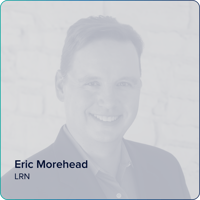
Headshot_Principled Podcast_Eric Morehead

Eric Morehead is a member of LRN’s Advisory Services team and has over 20 years of experience working with organizations seeking to address compliance issues and build effective compliance and ethics programs. He conducts program assessments and examines specific compliance risks, drafts compliance policies and codes of conduct, works with organizations to build and improve their compliance processes and tools, and provides live training for Boards of Directors, executives, managers, and employees.

Eric ran his consultancy for six years, advising clients on compliance program enhancements and assisting in creating effective compliance solutions.

Eric was formerly the Head of Advisory Services for NYSE Governance Services, a leading compliance training organization. In this position, he was responsible for all aspects of NYSE Governance Services’ compliance consulting arm.

Before joining NYSE, Eric was an Assistant General Counsel of the United States Sentencing Commission in Washington, DC. Eric was the policy team chair that amended the Organizational Sentencing Guidelines 2010.

Eric also spent nearly a decade as a litigation attorney in Houston, Texas, where he focused on white-collar and regulatory cases and represented clients at trial and before various agencies, including the SEC, OSHA, and CFTC.

Get a copy of the Singapore edition of LRN’s 2024 Ethics & Compliance Program Effectiveness Report.

Connect with the Compliance Podcast Network at:

LinkedIn: https://www.linkedin.com/company/compliance-podcast-network/
Facebook: https://www.facebook.com/compliancepodcastnetwork/
YouTube: https://www.youtube.com/@CompliancePodcastNetwork
Twitter: https://twitter.com/tfoxlaw
Instagram: https://www.instagram.com/voiceofcompliance/
Website: https://compliancepodcastnetwork.net/


Categories
Blog

Changing Sales Models

Over the past 12 months or so, there have been a series of Foreign Corrupt Practices Act (FCPA) enforcement actions in which the respondents have changed and/or modified their sales models to move away from external third parties and toward direct sales and business generation models. This portends a change in the way the Department of Justice (DOJ) may think about sales models, their inherent risk, and risk management going forward. These FCPA enforcement actions involved Albemarle, SAP, Gunvor, and Trafigura.

Albemarle

The Albemarle Non-Prosecution Agreement (NPA) cited several remedial actions by the company that helped Albemarle obtain a superior result in terms of the discounted fine and penalty. These steps were taken during the pendency of the DOJ investigation so that when the parties were ready to resolve the matter, Albemarle had built out and tested an effective compliance program. The company shifted to a direct sales business model.

This change was relatively new and undoubtedly noteworthy for FCPA enforcement actions, which were changes in a company’s approach to sales and their sales teams. Obviously, corrupt third-party agents brought the company to such FCPA grief. Many of the quotes in the NPA make it clear that Albemarle executives had an aversion to paying bribes but had greater moral flexibility when a third-party agent was involved. This led to the company moving away from third-party agents to a direct sales force.

SAP

While most of the remediation reported in this matter was standard, the one item that every compliance professional should consider is that SAP proactively discontinued using third-party agents for business origination. The point is perhaps the most significant, as the DOJ called out SAP for discontinuing their use of third-party agents. The DOJ information sets out the following: Change in sales models. On the external sales side, SAP eliminated its third-party sales commission model globally, prohibited all sales commissions for public sector contracts in high-risk markets, and enhanced compliance monitoring and audit programs, including creating a well-resourced team devoted to audits of third-party partners and suppliers.

Gunvor

As I noted in my review of the Albemarle and SAP enforcement actions, SAP eliminated its third-party sales commission model globally and prohibited all sales commissions for public sector contracts in high-risk markets. It also enhanced compliance monitoring and audit programs, including the creation of a well-resourced team devoted to audits of third-party partners and suppliers. Albemarle changed its approach to sales and its sales teams. Guvnor also moved away from third-party agents to a direct sales force.

Trafigura

Trafigura eliminated the use of third-party business origination agents. Matt Kelly noted in Radical Compliance, “This is the latest in a string of FCPA enforcement cases where we’ve seen a big, structural change to the sale function. Albemarle eliminated its use of third-party sales agents as part of its FCPA settlement last year; SAP eliminated its third-party sales commission model globally as part of its own FCPA settlement announced in January. Now we have a third global enterprise going that same route, reducing its FCPA risk in a deep, permanent way by restructuring its sales operations.” Here, Trafigura did away with third-party representatives for business generation.

In these four recent enforcement actions, the companies changed their approach to sales and their sales teams and did away with third parties generating new business. All of this points to these companies moving away from third-party agents to a direct sales force.

Moving to a direct sales force does have its risks, which must be managed, but those risks can certainly be managed with an appropriate risk management strategy, monitoring of the strategy, and improvement; those risks can be managed. Yet there is another reason, and more importantly, a significant business reason, to move towards a direct sales business model. Every time you have third-party agent or anyone else between you and your customer, you risk losing that customer because your organization does not have a direct relationship with the customer. A direct sales business model will give your organization more direct access to your customers.

The fact that the 2020 FCPA Resource Guide, 2nd edition, and the 2023 Evaluation of Corporate Compliance Programs do not outline this strategy is another intriguing aspect of how Albemarle, SAP, Gunvor, and Trafigura use it. These are all approaches developed by the companies based upon their own analysis and risk models. It may have come from a realization that the risk involved with third-party sales models was simply too significant, that the companies wanted more control over their sales or some other reason. Whatever the reason for the change, the DOJ took note of each organization and viewed it affirmatively.

Every compliance professional should understand that this is how new ideas are developed by the DOJ and in compliance. Companies assess their own risks and then move forward to manage or change their risk profiles. Expect to start seeing and hearing more about the direct sales model for the DOJ. This is where the DOJ’s comments on compensation incentives and consequence management will come into play.

Categories
Compliance Tip of the Day

Compliance Tip of the Day: Board Led Investigations

Welcome to “Compliance Tip of the Day,” the podcast where we bring you daily insights and practical advice on navigating the ever-evolving landscape of compliance and regulatory requirements.

Whether you’re a seasoned compliance professional or just starting your journey, our aim is to provide you with bite-sized, actionable tips to help you stay on top of your compliance game.

Join us as we explore the latest industry trends, share best practices, and demystify complex compliance issues to keep your organization on the right side of the law.

Tune in daily for your dose of compliance wisdom, and let’s make compliance a little less daunting, one tip at a time.

In this episode, we review how an organization should think through a Board of Directors-led investigation.

For more information on the Ethico ROI Calculator and a free White Paper on the ROI of Compliance, click here.

Categories
Creativity and Compliance

Creativity and Compliance: Innovative Leader Engagement through Creative Communication

Where does creativity fit into compliance? In more places than you think. Problem-solving, accountability, communication, and connection—they all take creativity.

Join Tom Fox and Ronnie Feldman on Creativity and Compliance, part of the award-winning Compliance Podcast Network.

Ronnie’s company, Learnings and Entertainment, utilizes the entertainment devices that people use to consume information in their everyday, non-work lives and applies them to important topics around compliance and ethics. It is not only about being funny. It is about changing the tone of your compliance communications and messaging to make your compliance program, policies, and resources more accessible.

Today, Ronnie and Tom consider the role of leadership in fostering a culture of compliance.

The pivotal role of leadership engagement in fostering a culture of compliance within an organization cannot be overstated. In this context, thought leaders like Tom Fox and Ronnie Feldman provide insightful perspectives on the importance of involving and engaging leadership in promoting ethical compliance.

Fox emphasizes the necessity of personalizing leaders to their employees through open communication, thereby improving corporate culture. He suggests that leaders should share their personal experiences, including ethical dilemmas and decisions they have made in the interest of ethics.

Feldman brings attention to the importance of leaders actively participating in compliance efforts, especially in large multinational companies. He stresses the need for leaders to be personable and relatable and for integrating ethical leadership training into existing leadership programs.

Both Fox and Feldman underscore the need for authentic, engaging, and impactful communication strategies to effectively drive the message of compliance and ethical behavior amongst leaders.

Key Highlights:

  • Ethical Message Engagement for Leadership Success
  • Innovative Leader Engagement through Creative Communication
  • Entertaining Brand-Driven Zoom Talk Shows

Resources:

Ronnie

Tom

Instagram

Facebook

YouTube

Twitter

LinkedIn

For more information on the Ethico ROI Calculator and a free White Paper on the ROI of Compliance, click here.

Categories
Compliance Tip of the Day

Compliance Tip of the Day: Tough Questions to Ask in an Investigation

Welcome to “Compliance Tip of the Day,” the podcast where we bring you daily insights and practical advice on navigating the ever-evolving landscape of compliance and regulatory requirements.

Whether you’re a seasoned compliance professional or just starting your journey, our aim is to provide you with bite-sized, actionable tips to help you stay on top of your compliance game.

Join us as we explore the latest industry trends, share best practices, and demystify complex compliance issues to keep your organization on the right side of the law.

Tune in daily for your dose of compliance wisdom, and let’s make compliance a little less daunting, one tip at a time.

In this episode, we review some tough questions you will face and need to ask during any internal investigation.


For more information on the Ethico ROI Calculator and a free White Paper on the ROI of Compliance, click here.

Categories
Compliance Tip of the Day

Compliance Tip of the Day: Who to Suspend and When to Suspend During an Investigation

Welcome to “Compliance Tip of the Day,” the podcast where we bring you daily insights and practical advice on navigating the ever-evolving landscape of compliance and regulatory requirements.

Whether you’re a seasoned compliance professional or just starting your journey, our aim is to provide you with bite-sized, actionable tips to help you stay on top of your compliance game.

Join us as we explore the latest industry trends, share best practices, and demystify complex compliance issues to keep your organization on the right side of the law.

Tune in daily for your dose of compliance wisdom, and let’s make compliance a little less daunting, one tip at a time.

In this episode, we consider the knotty question of who to suspend and when to suspend them during an internal investigation.

For more information on the Ethico ROI Calculator and a free White Paper on the ROI of Compliance, click here.a

Categories
Blog

The Trafigura FCPA Enforcement Action – Part 1 – Introduction

In March 2024, the Department of Justice (DOJ) announced the resolution of a Foreign Corrupt Practices Act (FCPA) enforcement action involving the Swiss trading firm G Trafigura Beheer B.V. (Trafigura), an international commodity trading company with its primary operations in Switzerland. The company pleaded guilty and will pay over $126 million to resolve an investigation stemming from the company’s corrupt scheme to pay bribes to Brazilian government officials to secure business with Brazil’s state-owned and state-controlled oil company, Petróleo Brasileiro S.A. Petrobras (Petrobras).

According to the DOJ Press Release, “Trafigura pleaded guilty to conspiracy to violate the anti-bribery provisions of the FCPA. Under the plea agreement, Trafigura will pay a criminal fine of $80,488,040 and forfeiture of $46,510,257. The department will credit up to $26,829,346 of the criminal fine against amounts Trafigura pays to resolve an investigation by law enforcement authorities in Brazil for related conduct.”

In the DOJ Press Release, Principal Deputy Assistant Attorney General Nicole M. Argentieri, head of the Justice Department’s Criminal Division, said, “For more than a decade, Trafigura bribed Brazilian officials to illegally obtain business and reap over $61 million in profits. Today’s guilty plea underscores that companies will face significant penalties when they pay bribes and undermine the rule of law. The department remains determined to combat foreign bribery and hold accountable those who violate the law.”

U.S. Attorney Markenzy Lapointe for the Southern District of Florida said, “Our office will continue to target anyone who uses the Southern District of Florida to further foreign corrupt practices and bribery schemes. We will continue working with our Criminal Division colleagues to identify and prosecute those responsible, including individuals and corporations.” Finally, Assistant Director Michael Nordwall of the FBI’s Criminal Investigative Division noted, “Trafigura’s corrupt practices violated the FCPA, and today’s resolution demonstrates that there are steep penalties for any company that tries to bribe government officials.

The information noted that between approximately 2003 and 2014, Trafigura and its co-conspirators paid bribes to Petrobras officials to obtain and retain business with Petrobras. Beginning in 2009, Trafigura and its co-conspirators, who met in Miami to discuss the bribery scheme, agreed to make bribe payments of up to 20 cents per barrel of oil products bought from or sold to Petrobras by Trafigura and to conceal the bribe payments through the use of shell companies, and by funneling payments through intermediaries who used offshore bank accounts to deliver cash to officials in Brazil. Trafigura profited approximately $61 million from the corrupt scheme.

Trafigura’s conduct during most of the investigation was undoubtedly less than sterling. The company did not self-disclose to the DOJ and had the Plea Agreement dryly noted, “However, the defendant, in particular during the early phase of the government’s investigation, failed to preserve and produce certain documents and evidence promptly and, at times, took positions that were inconsistent with full cooperation.” Additionally, Trafigura was slow to exercise disciplinary and remedial measures for certain employees whose conduct violated company policy. In other words, it was not a company that engendered itself with the DOJ during the investigation phase.

Perhaps because of its conduct during the investigation and an apparent lack of a culture of compliance at the firm, the company only received 10% off the middle range under the sentencing guidelines. Trafigura was a recidivist, with (1) a 2006 guilty plea for entry of goods using false statements, (2) Trafigura’s 2010 conviction of violating Netherlands exports, and (3) a violation of Côte d’Ivoire environmental laws in connection with the discharge of petroleum waste. Ultimately, Trafigura admitted that it had done something illegal during the investigation. However, the company’s initial stance in resolution talks caused a lot of delays, and the government had to spend a lot of time and money gathering more evidence that could be used in court before Trafigura could agree to a peaceful resolution. This led to a guilty plea and a criminal fine, reflecting a 10% reduction off the fifth percentile of the applicable guidelines acceptable range.

In this blog series, we will consider bribery schemes, resolutions, and lessons learned for compliance professionals.

Categories
Compliance Tip of the Day

Compliance Tip of the Day: Cross Border Investigations, Part 2

Welcome to “Compliance Tip of the Day,” the podcast where we bring you daily insights and practical advice on navigating the ever-evolving landscape of compliance and regulatory requirements.

Whether you’re a seasoned compliance professional or just starting your journey, our aim is to provide you with bite-sized, actionable tips to help you stay on top of your compliance game.

Join us as we explore the latest industry trends, share best practices, and demystify complex compliance issues to keep your organization on the right side of the law.

Tune in daily for your dose of compliance wisdom, and let’s make compliance a little less daunting, one tip at a time.

In this concluding Part 2 of this special two-part episode, we conclude our discussion of key issues in cross-border investigations.

For more information on the Ethico ROI Calculator and a free White Paper on the ROI of Compliance, click here.

Resources

Internal Investigations, How to Conduct an Anti-Corruption Investigation: Developing and Implementing the Investigation Plan by Mara Senn

Categories
SBR - Authors' Podcast

SBR – Author’s Podcast: Alison Taylor on Higher Ground

Welcome to the Sunday Book Review and the Authors Podcast! Don’t miss out on this episode of SBR-Author’s Podcast, where Tom sits down with well-known compliance maven Alison Taylor on her new book, Higher Ground.

Alison Taylor is an established professional with a wide-ranging background in editing, consulting, political risk, and corporate investigation. Her career has seen her dedicate twelve years to corporate investigation, where she honed her skills in FCPA, due diligence, and network analysis, even leading investigations across multiple continents.

After 2015, Taylor redirected her career towards sustainability and ESG, advising on climate change, human rights, and corporate responsibility for major multinational companies.

Alison’s diverse and extensive professional journey, including her current role as a faculty member at NYU and director of Ethical Systems, a think tank, coupled with her authorship of “Higher Ground,” has shaped her perspective on the interplay of compliance, ethics, sustainability, and corporate responsibility.

These experiences have enabled her to provide valuable clarity and insights for senior leaders navigating the complex landscape of business ethics.

Key highlights include:

  • Navigating Business Ethics in Sustainability Practices
  • Navigating the Emotional Roller Coaster of Writing
  • Leadership Alignment with Stated Ethical Values
  • Ethical Decision Making for Business Sustainability
  • Ethical Innovations in Compliance and Ethics

 Resources:

Alison Taylor on Linkedin

Higher Ground on Amazon.com

 Tom Fox

Instagram

Facebook

YouTube

Twitter

LinkedIn

Categories
Compliance Tip of the Day

Compliance Tip of the Day: Cross Border Investigations, Part 1

Welcome to “Compliance Tip of the Day,” the podcast where we bring you daily insights and practical advice on navigating the ever-evolving landscape of compliance and regulatory requirements.

Whether you’re a seasoned compliance professional or just starting your journey, our aim is to provide you with bite-sized, actionable tips to help you stay on top of your compliance game.

Join us as we explore the latest industry trends, share best practices, and demystify complex compliance issues to keep your organization on the right side of the law.

Tune in daily for your dose of compliance wisdom, and let’s make compliance a little less daunting, one tip at a time.

In this opening, Part 1 of this special two-part episode,
we begin our discussion of key issues in cross-border investigations.

For more information on the Ethico ROI Calculator and
a free White Paper on the ROI of Compliance, click here.

Resources:

Internal Investigations, How to Conduct an Anti-Corruption Investigation: Developing and Implementing the Investigation Plan by Mara Senn