Categories
Compliance and AI

Compliance and AI: Automate the Noise Away – The Future of Financial Crime Detection with Oracle’s Jason Somrak

What is the role of Artificial Intelligence in compliance? What about Machine Learning? Are you using ChatGPT? These questions are just three of the many we will explore in this cutting-edge podcast series, Compliance and AI, hosted by Tom Fox, the award-winning Voice of Compliance. In this insightful episode, Tom Fox interviews Jason Somrak, Chief of Product & Strategy – Financial Crime & Compliance at Oracle Financial Services Software Limited.

They delve into the evolving role of AI in combating financial crimes and the proactive potential of AI in compliance investigations. Highlighting the transformative power of AI, Jason explains its applications, ranging from detection to investigation, and its impact on regulatory practices. They also discuss future emerging challenges in risk management and the collaboration between humans and AI in enhancing financial crime detection and compliance.

Key highlights:

  • AI’s Role in Financial Crime Prevention
  • Proactive and Preventive Measures
  • AI in Investigations and Triage
  • Automating the Noise Away
  • Regulatory Interactions and Challenges
  • Emerging Challenges in Risk Management
  • Future of AI in Compliance
  • Corporate Culture and AI Adoption

Resources:

Jason Somrak on LinkedIn

Oracle Financial Services

Tom Fox

Instagram

Facebook

YouTube

Twitter

LinkedIn

Categories
Compliance Tip of the Day

Compliance Tip of the Day – Fostering a Compliance Brand

Welcome to “Compliance Tip of the Day,” the podcast that brings you daily insights and practical advice for navigating the ever-evolving landscape of compliance and regulatory requirements. Whether you’re a seasoned compliance professional or just starting your journey, we aim to provide you with bite-sized, actionable tips to help you stay on top of your compliance game. Join us as we explore the latest industry trends, share best practices, and demystify complex compliance issues to keep your organization on the right side of the law. Tune in daily for your dose of compliance wisdom, and let’s make compliance a little less daunting, one tip at a time.

Today, we discuss why your compliance brand should be as iconic as James Patterson or David Baldacci.

For more on this topic, check out The Compliance Handbook: A Guide to Operationalizing your Compliance Program, 6th edition, which LexisNexis recently released. It is available here.

Categories
Blog

It’s The Great Pumpkin Charlie Brown – Lessons in Process Validation Through Continuous Monitoring

Halloween is almost upon us, and we celebrate the greatest Halloween cartoon in the world’s history, “It’s the Great Pumpkin, Charlie Brown,” which premiered in 1966. As usual, the story revolves around the Peanuts gang, who are preparing for Halloween; Linus writes his annual letter to the Great Pumpkin, despite Charlie Brown’s disbelief, Snoopy’s laughter, Patty’s assurance that the Great Pumpkin is a fake, and even his sister Lucy’s violent threat to make her brother stop.

On Halloween night, the gang goes trick-or-treating. On the way, they stop at the pumpkin patch to ridicule Linus, missing the festivities as he has done every year. Undeterred, Linus is convinced that the Great Pumpkin will come, and he even persuades Charlie Brown’s little sister, Sally, to remain with him and wait. At 4:00 AM the following day, Lucy notices Linus is not in his bed. She finds her brother asleep in the pumpkin patch, shivering. She brings him home and puts him to bed. Later, Charlie Brown and Linus are at a rock wall, commiserating about the previous night’s disappointments. Although Charlie Brown attempts to console his friend, admitting he has also done stupid things, Linus angrily vows that the Great Pumpkin will come to the Pumpkin Patch next year.

In corporate compliance, much like in the world of It’s the Great Pumpkin, Charlie Brown, expectations must meet reality. In the compliance world, Linus’s actions might be likened to a company that sets up its processes without validating or continuously monitoring them. Year after year, Linus is let down because he needs to adjust his process or monitor his outcomes in real time. This is where the critical lesson in process validation through continuous monitoring becomes clear: Hope without validation is not a strategy. Let’s dive deeper into the compliance lessons from this Halloween favorite.

The Importance of Process Validation

Linus believes that his sincere faith in the Great Pumpkin will yield results. However, more than faith is needed to cut it in compliance. In the same way, companies may implement policies and procedures they believe will lead to effective compliance, but they need to validate these processes to ensure they are effective. Process validation is essential for ensuring that your compliance program operates as intended. From anti-bribery controls to third-party risk management, validating that processes work under real-world conditions ensures you aren’t waiting in a metaphorical pumpkin patch, hoping for good results.

As a compliance professional, you must validate that a process works after designing it, whether it is a transaction monitoring system or a third-party due diligence program. You must validate through testing, audits, and benchmarks to see if it’s achieving your desired outcomes.

The Role of Continuous Monitoring

Linus returns to the same pumpkin patch every year, never adjusting his approach and hoping that next time will be different. This is akin to organizations that implement processes without continuous monitoring—hoping things will change but never keeping a close eye on what’s happening in real-time. In the compliance space, continuous monitoring means maintaining oversight of key processes and using data-driven metrics to spot potential problems before they grow into major risks. Whether monitoring third-party interactions, employee transactions, or internal controls, compliance officers must ensure that data is continuously fed into the system. When a process is off course, continuous monitoring enables you to catch it early and correct it before it becomes a regulatory issue.

Every compliance professional should understand that continuous monitoring is essential for refining compliance processes. Regularly assess your systems, monitor anomalies, and make necessary adjustments. It’s about being proactive, not reactive.

Adjusting to Changing Realities

One of the more poignant lessons from It’s the Great Pumpkin, Charlie Brown, is that Linus doesn’t adjust his expectations despite repeated failures. He continues to sit in the pumpkin patch year after year. In compliance, ignoring evidence and sticking to outdated processes can lead to serious issues. Regulations change, risks evolve, and market conditions shift. A method that was valid last year may no longer be effective under new rules or circumstances. The only way to ensure your compliance program stays relevant is through ongoing adjustments based on continuous feedback.

As the corporate compliance expert, you must ensure that your compliance processes evolve with changing regulatory landscapes. Use continuous monitoring data to validate that your program remains robust in real-time conditions.

Clear Communication and Buy-In

Throughout It’s the Great Pumpkin, Charlie Brown, Linus is adamant about the arrival of the Great Pumpkin, but he fails to bring others along with him. His friends and even his sister don’t believe in his mission, leaving him alone in the pumpkin patch.

This illustrates the importance of communication and stakeholder buy-in in the compliance world. If compliance officers or departments communicate the value of continuous monitoring and validation, the rest of the organization will be engaged and supportive. Building an ethical culture requires alignment across all levels, from senior management to line employees. With it, your compliance efforts may be more cohesive than Linus’s pumpkin patch vigil.

Effective compliance depends on clear communication and organizational buy-in for the compliance professional. Ensure everyone understands the importance of continuous monitoring and how it safeguards the organization.

Linus’s faith in the Great Pumpkin may not pay off in It’s the Great Pumpkin, Charlie Brown, but for compliance professionals, validation and continuous monitoring can deliver real results. Compliance is about something other than waiting in the pumpkin patch, hoping things work out. It’s about ensuring your processes are tested, validated, and continuously monitored to catch risks early and compliance remains proactive rather than reactive.

Moreover, by watching the TV show, reading this blog, and, most importantly, applying these lessons, compliance officers can avoid Linus’s fate and ensure their processes are strong, dynamic, and capable of delivering the results they need to meet today’s regulatory demands. I hope you can watch It’s the Great Pumpkin, Charlie Brown again this year. I did. When you watch, think about the compliance implications. Will anyone ever set a ‘second set of eyes’ on the Great Pumpkin? If not, will it ever be validated? I hope you will be safe and dry if you are trick-or-treating tonight.

Doug Cornelius Responds:

Are you trying to say that the Great Pumpkin is not real?

Just wait ’til next year, Tom Fox. You’ll see!

Next year, at this same time, I’ll find a really sincere pumpkin patch! And I’ll sit in that pumpkin patch until the Great Pumpkin appears. He’ll rise out of that pumpkin patch and fly through the air with his bag of toys.

The Great Pumpkin will appear! And I’ll be waiting for him!

I’ll be there! I’ll sit in that pumpkin patch… and see the Great Pumpkin. Just wait and see, Tom Fox. I’ll see that Great Pumpkin.

I’ll SEE the Great Pumpkin!

You wait, Tom Fox.

Doug Cornelius Responds:

Are you trying to say that the Great Pumpkin is not real?

Just wait ’til next year, Tom Fox. You’ll see!

Next year, at this same time, I’ll find a real, sincere pumpkin patch! And I’ll sit in that pumpkin patch until the Great Pumpkin appears. He’ll rise out of that pumpkin patch and fly through the air with his bag of toys.

The Great Pumpkin will appear! And I’ll be waiting for him!

I’ll be there! I’ll sit in that pumpkin patch… and see the Great Pumpkin. Just wait and see, Tom Fox. I’ll see that Great Pumpkin.

I’ll see the Great Pumpkin!

Just wait, Tom Fox.

Categories
Blog

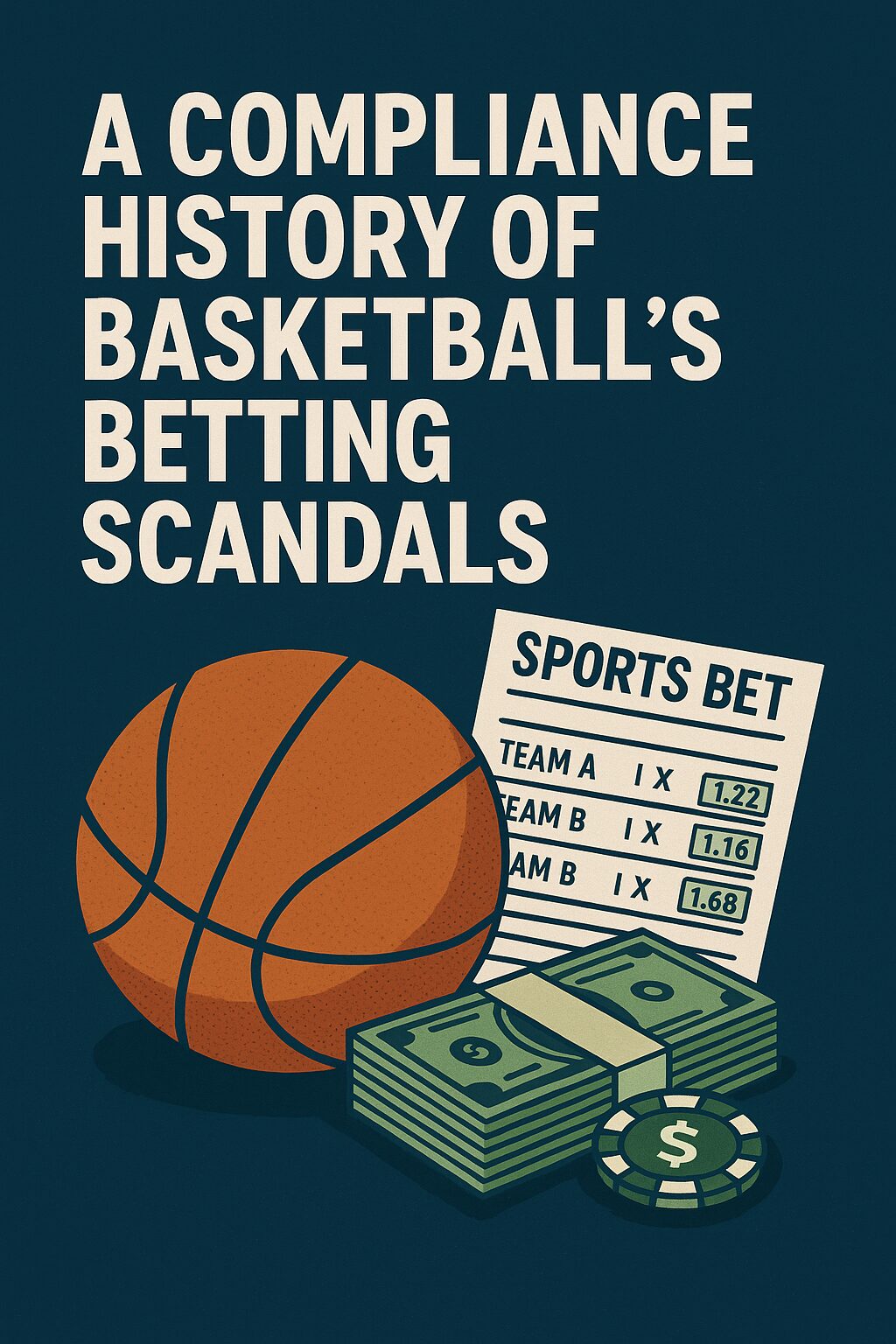
The NBA Betting Scandal: Part 3 – A Compliance History of Basketball’s Betting Scandals

In 1951, the New York City College of New York (CCNY) basketball team stood at the pinnacle of collegiate glory. The Beavers had just achieved the impossible: winning both the NCAA Tournament and the National Invitation Tournament (NIT) in the same season —an accomplishment never repeated.

But within months, that glory turned to infamy. According to ESPN, what began as whispers of “odd plays” and “missed shots” would explode into one of the largest betting scandals in American sports history and would establish a pattern of ethical failure that has haunted basketball ever since.

From CCNY to Boston College, from Tim Donaghy to Terry Rozier, the story is not just one of athletes gone astray. It is a case study in compliance breakdown. Indeed, a lesson in what happens when integrity becomes a negotiable asset.

The CCNY Point-Shaving Scandal: The Original Sin (1951)

In the early 1950s, college basketball was America’s premier sport. Madison Square Garden was its temple. Gambling was its shadow congregation. The scandal began when New York prosecutors uncovered that players from CCNY, along with several other schools, including Kentucky, Long Island University, and Bradley, were “shaving points” in exchange for bribes from gamblers. They weren’t losing games intentionally; they were merely making sure the final score stayed within the betting spread.

It was a subtle corruption, and that is what made it so insidious. Seventeen players were arrested, including CCNY star Ed Warner and Kentucky’s All-American Bill Spivey. The fallout was immediate and devastating: CCNY dropped out of major college basketball, the NCAA banned Kentucky for the 1952 season, and the sport’s image was tarnished for a generation.

Compliance lesson: The CCNY scandal revealed that corruption does not always come from losing; it comes from compromise. The players rationalized their behavior as “not really cheating,” echoing the same rationalizations heard in every modern scandal:  “just a little inside tip,” “it doesn’t affect the outcome,” “everyone does it.”

Boston College and the Mob: Organized Corruption Returns (1978–79)

Nearly thirty years later, another college basketball powerhouse found itself in the crosshairs of organized crime. Once again, as reported by ESPN, the 1978–79 Boston College point-shaving scandal was orchestrated by notorious mob associates Henry Hill and Jimmy Burke, names later immortalized in Martin Scorsese’s Goodfellas. Hill recruited players to manipulate game outcomes for a New York-based betting syndicate. The scheme involved “shaving” small margins, losing by just enough to beat the spread, not enough to draw suspicion. Three players were implicated, including Rick Kuhn, who served four years in prison for his role.

What made the Boston College scandal different was its sophistication. The mob did not just bribe; it strategized, using statistical analysis and betting volume tracking—the early version of compliance risk modeling—but turned it inside out.

Compliance lesson: The Boston College scandal marked the point at which gambling corruption shifted from individual temptation to organized manipulation. The oversight mechanisms (if any) were reactive rather than preventive. The NCAA had no integrity infrastructure. Compliance, as a concept, did not yet exist in sports.

Arizona State and the Spread: The Modern Betting Market (1994)

By the 1990s, college basketball was big business, and so was gambling. The 1994 Arizona State point-shaving scandal reflected this evolution from local bookies to national betting markets. Two Arizona State players, Stevin “Hedake” Smith and Isaac Burton, were paid thousands of dollars to fix games for Las Vegas gamblers. Smith, the team’s leading scorer, was told to “miss a few shots” and “keep the score close.” Over several games, the betting lines swung wildly enough to draw the attention of sportsbooks, which reported the unusual activity.

The FBI stepped in. Smith eventually pleaded guilty to conspiracy to commit sports bribery and served time in federal prison. What made this scandal a watershed moment was not just the players’ involvement but also the detection and analytics of the data. Sportsbooks’ internal monitoring systems flagged the irregular betting volume. For the first time, technology, not whistleblowers, uncovered corruption.

Compliance lesson: Transparency through data can be a safeguard, if used properly. The Arizona State case demonstrated that integrity monitoring, akin to anti-money laundering analytics, could identify misconduct patterns before they metastasize. But it also showed that without ethical culture, monitoring is just a safety net under a collapsing bridge.

The Tim Donaghy Scandal: Corruption Inside the Whistle (2007)

The next great basketball scandal was not about players; it was about the referees. In 2007, NBA referee Tim Donaghy pleaded guilty to two federal charges: conspiracy to engage in wire fraud and transmitting betting information. Donaghy had bet on NBA games he officiated, and worse, according to ESPN, he provided insider information to gamblers about player injuries, officiating crews, and game dynamics.

The scandal rocked the NBA to its core. Commissioner David Stern called it “the most serious breach of integrity in the history of the game.” Donaghy served 15 months in prison, but the real damage was to public trust. The case exposed a blind spot: the NBA had no independent integrity oversight system. Donaghy’s access to inside information was unmonitored. His betting activity went undetected for years because there was no compliance-grade audit trail.

Compliance lesson: Even the enforcers need enforcement. When compliance is limited to the playing field, insiders with access to privileged information can exploit the system unchecked. It is the same lesson corporations learned from rogue traders and insider dealers: if your monitors are not monitored, integrity collapses from within.

The NBA’s Modern Reckoning: From Jontay Porter to Terry Rozier (2024–2025)

Fast-forward to today, and the NBA finds itself once again mired in scandal. The indictments of players like Terry Rozier and coaches like Chauncey Billups show that technology has advanced, but human rationalization has not. Players allegedly used non-public injury information to enable friends and associates to place lucrative “prop bets”; that is, wagers that, as Nate Silver notes, are “inherently more subject to manipulation”.

The irony is painful. The NBA helped legalize the very betting structures that now threaten its credibility. ESPN and FanDuel run ads during live games; team apps link directly to sportsbooks. A regulated industry has now replaced the oversight that once kept the mob out of basketball with conflicted incentives.

Compliance lesson: When your regulators are your business partners, independence becomes an illusion. This is the same governance flaw that led to Enron’s collapse, where auditors were paid by the companies they were supposed to oversee. In the NBA’s case, integrity enforcement depends on data and diligence from entities financially invested in the betting volume itself.

A Seventy-Year Pattern: From Street Corners to Algorithms

From the smoky backrooms of 1950s New York to the AI-driven betting apps of 2025, the story has not changed; only the tools have. Each generation of basketball betting scandals follows the same pattern:

  1. Information advantage exploited for profit.
  2. Ethical rationalization (“It’s not really cheating”).
  3. Compliance lag — oversight catching up after the fact.

The players, the technology, and the money evolve, but the root cause endures. When systems fail to align incentives, ethics, and oversight, integrity becomes a casualty of innovation.

Final Thought: Integrity Is the Ultimate Competitive Advantage

For compliance professionals, the through line from CCNY to the modern NBA is crystal clear. Every industry, sports included, faces a moment when it must choose between performance and principle. Basketball’s history teaches that when you gamble with integrity, you might win for a season, but you lose for a generation.

The compliance professional’s mission, whether in a Fortune 500 boardroom or a basketball arena, is the same: to make sure the game stays honest, the system remains fair, and the culture never forgets what’s at stake when ethics take a timeout.

Join us for our next blog post on Monday, November 3, as we consider the role of compliance in sports leagues.


Categories
AI Today in 5

AI Today in 5: October 29, 2025, The Chief AI Compliance Officer Edition

Welcome to AI Today in 5, the newest edition to the Compliance Podcast Network. Each day, Tom Fox will bring you 5 stories about AI to start your day. Sit back, enjoy a cup of morning coffee, and listen in to the AI Today In 5. All, from the Compliance Podcast Network. Each day, we consider four stories from the business world, compliance, ethics, risk management, leadership, or general interest about AI.

Top AI stories include:

  1. AI is providing fall tech to help seniors. (NYT)
  2. CompliSolv eases financial compliance through AI. (MyChesCo)
  3. ABA provides info to OSTP re: regulatory reform. (AmericanBankersAssociation)
  4. Palantir and NVIDIA team up to operationalize AI. (Nvidia News)
  5. Chief AI Compliance Officer. (BloombergLaw)

For more information on the use of AI in Compliance programs, my new book, Upping Your Game, is available. You can purchase a copy of the book on Amazon.com.

Categories
Great Women in Compliance

Great Woman in Compliance – Compliance with Courage

In today’s episode, Lisa speaks with Danielle Herrick, VP of Risk, Compliance, and Ethics at Bloom Energy.  After being diagnosed with Stage 4 cancer, Danielle began sharing her journey through her “Compliance with Courage” posts on LinkedIn.  And her candor and openness, in turn, are inspiring the Ethics & Compliance community.

Danielle shares how her experience became a turning point – reshaping how she leads, works, and views life in compliance. She talks about finding balance after years as a self-proclaimed workaholic, learning to say no, and discovering strength in vulnerability.

They discuss how compassion belongs in compliance, what it means to truly “show up,” and how clear, human communication can be just as powerful as policies and procedures. Danielle also highlights the incredible support she’s received, including from her manager, Human Resources, and her professional community, and how that support has influenced her mission to “rewrite the rulebook with compassion.”

Categories
Compliance Tip of the Day

Compliance Tip of the Day – Using Comms to Drive Speak Up

Welcome to “Compliance Tip of the Day,” the podcast that brings you daily insights and practical advice for navigating the ever-evolving landscape of compliance and regulatory requirements. Whether you’re a seasoned compliance professional or just starting your journey, we aim to provide you with bite-sized, actionable tips to help you stay on top of your compliance game. Join us as we explore the latest industry trends, share best practices, and demystify complex compliance issues to keep your organization on the right side of the law. Tune in daily for your dose of compliance wisdom, and let’s make compliance a little less daunting, one tip at a time.

Today, we consider the role of communications in your reporting system.

For more on this topic, check out The Compliance Handbook: A Guide to Operationalizing your Compliance Program, 6th edition, which LexisNexis recently released. It is available here.

Categories
Compliance Into the Weeds

Compliance into the Weeds: The NBA Betting Scandal – Lessons for the Compliance Professional

The award-winning Compliance into the Weeds is the only weekly podcast that takes a deep dive into a compliance-related topic, literally going into the weeds to explore it more fully. Looking for some hard-hitting insights on compliance? Look no further than Compliance into the Weeds! In this episode of Compliance into the Weeds, Tom Fox and Matt Kelly discuss the unfolding NBA betting scandal and explore what it all might mean for the compliance professional. 

Their discussion covers the allegations and implications involving high-profile NBA figures, including Terry Rozier, Damon Jones, and Chauncey Billups. They explore the role of material non-public information, the importance of risk assessment, the effectiveness of current compliance measures, and the crucial role of data analytics in detecting fraudulent activities. Insights into sports betting, preventive controls, and the ethical challenges faced by professional athletes are also discussed, drawing parallels for corporate compliance professionals.


 Key highlights:

  • NBA Betting Scandal Overview
  • Historical Context and Data Analytics
  • Conflict of Interest and Risk Assessment
  • Investigation and Compliance Strategies

 Resources:

Tom is writing a multipart series on the scandal on the FCPA Compliance and Ethics blog.

Tom  

Instagram

Facebook

YouTube

Twitter

LinkedIn

A multi-award-winning podcast, Compliance into the Weeds was most recently honored as one of the ⁠Top 25 Regulatory Compliance Podcasts⁠ , a ⁠Top 10 Business Law Podcast⁠, and ⁠a Top 12 Risk Management Podcast⁠. Compliance into the Weeds has been conferred a Davey, a Communicator Award, and a W3 Award, all for podcast excellence. 

Categories
Innovation in Compliance

Innovation in Compliance – Adam Goslin on Navigating Security and Compliance in the Digital World

Innovation occurs across many areas, and compliance professionals need not only to be ready for it but also to embrace it. Join Tom Fox, the Voice of Compliance, as he visits with top innovative minds, thinkers, and creators in the award-winning Innovation in Compliance podcast. In this episode, host Tom Fox welcomes Adam Goslin, a seasoned IT professional who transitioned from developer to VP of IT and Infrastructure, and co-founded Total Compliance Tracking.

Adam and Tom address the complexities and challenges of security and compliance. Adam discusses how his journey into the compliance sector began with his efforts to achieve PCI compliance in his previous role, which illuminated a significant market gap for comprehensive compliance education and support. Driven by a passion to make compliance processes less burdensome, his vision for a comprehensive compliance-tracking company centers on delivering effective solutions that enable organizations to meet regulatory requirements with greater ease and efficiency. Through educational resources such as blogs and podcasts, Total Compliance Tracking demystifies the compliance process, helping organizations and individuals alike manage compliance responsibilities more effectively.

Key takeaways:

  • Evolution from Developer to Compliance Industry Leader
  • Revolutionizing Compliance Management with Bold Messaging
  • Comprehensive Solution for Data Control Challenges
  • Compliance Education Resources for Security and Compliance

Resources:

Connect with Adam Goslin

Connect with Total Compliance Tracking

Tom Fox

Instagram

Facebook

YouTube

Twitter

Categories
Compliance Tip of the Day

Compliance Tip of the Day – Sharing Information

Welcome to “Compliance Tip of the Day,” the podcast that brings you daily insights and practical advice for navigating the ever-evolving landscape of compliance and regulatory requirements. Whether you’re a seasoned compliance professional or just starting your journey, we aim to provide you with bite-sized, actionable tips to help you stay on top of your compliance game. Join us as we explore the latest industry trends, share best practices, and demystify complex compliance issues to keep your organization on the right side of the law. Tune in daily for your dose of compliance wisdom, and let’s make compliance a little less daunting, one tip at a time.

Today, we consider how you can get employees to share information.

For more on this topic, check out The Compliance Handbook: A Guide to Operationalizing your Compliance Program, 6th edition, which LexisNexis recently released. It is available here.