Categories
Compliance Tip of the Day

Compliance Tip of the Day – A Clash of Cultures

Welcome to “Compliance Tip of the Day,” the podcast that brings you daily insights and practical advice for navigating the ever-evolving landscape of compliance and regulatory requirements. Whether you’re a seasoned compliance professional or just starting your journey, we aim to provide you with bite-sized, actionable tips to help you stay on top of your compliance game. Join us as we explore the latest industry trends, share best practices, and demystify complex compliance issues to keep your organization on the right side of the law. Tune in daily for your dose of compliance wisdom, and let’s make compliance a little less daunting, one tip at a time.

This week, we consider communications in compliance. Today, we look at the merging of cultures as a merger or acquisition.

For more on this topic, check out The Compliance Handbook: A Guide to Operationalizing your Compliance Program, 6th edition, which LexisNexis recently released. It is available here.

Categories
Popcorn and Compliance

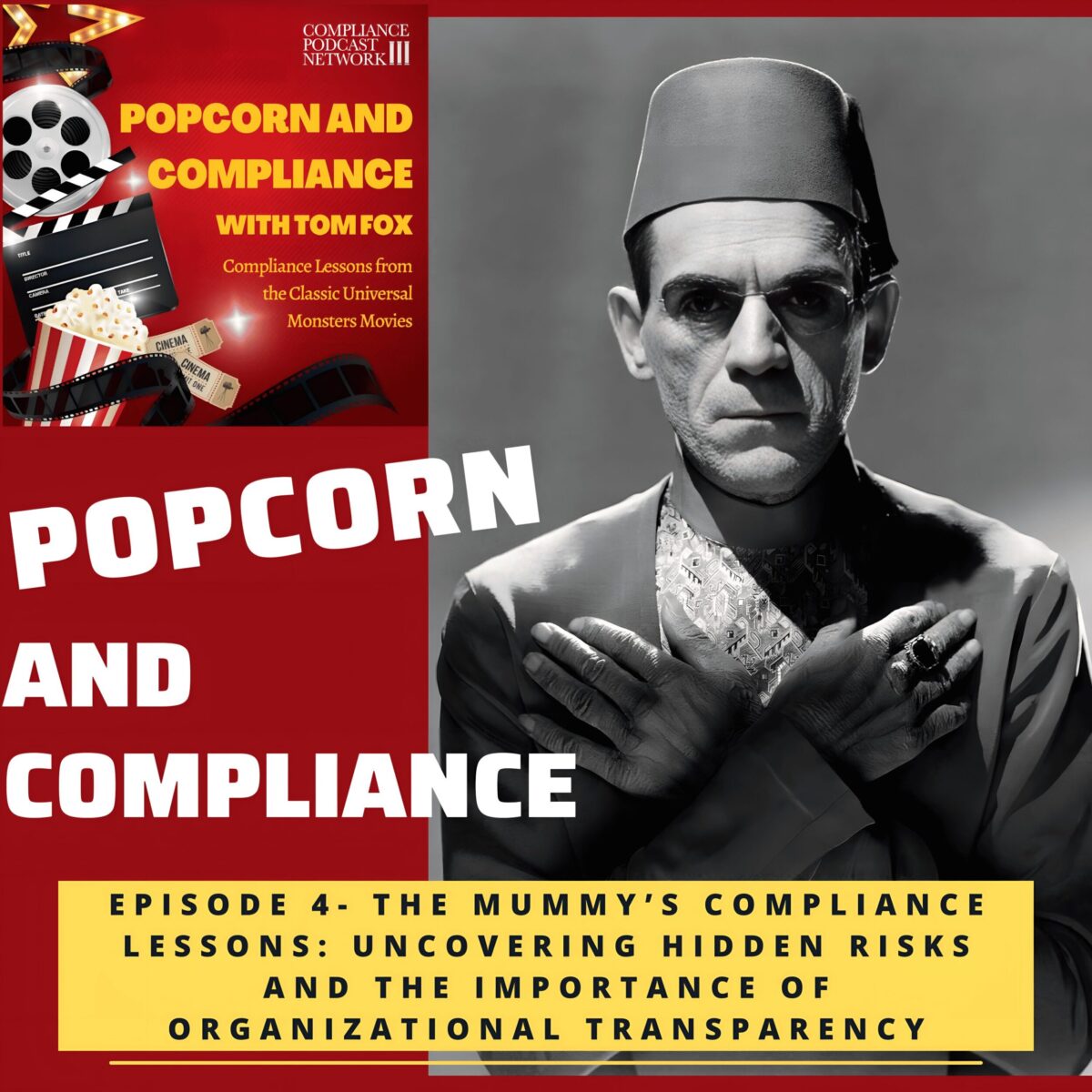
Popcorn and Compliance: Episode 4 – The Mummy’s Compliance Lessons: Uncovering Hidden Risks and the Importance of Organizational Transparency

Welcome to a special series of #PopcornandCompliance. In this series, we will look at the Classical Universal Monster Movies from the 30s and 40s and mine them for compliance lessons. (Yes, it really is an excuse to rewatch them all.) In this series, we will look at Frankenstein, Dracula, The Wolf Man, The Mummy, and end with The Invisible Man. In this episode, Tom explores critical compliance insights drawn from Boris Karloff’s portrayal of The Mummy.

Tom is once again joined by AI co-hosts Timothy and Fiona to explore The Mummy. Tom delves into the dangers of ignoring historical warnings, the necessity of radical transparency to prevent misconduct, and the critical role of organizational culture in compliance. The episode provides key insights into why compliance programs must learn from past mistakes, remain vigilant against emerging risks, and enforce boundaries to prevent catastrophic failures.

Key highlights:

  • Exploring The Mummy: A Deep Dive
  • Lesson 1: The Curse of Forgetting
  • Lesson 2: Radical Transparency
  • Lesson 3: Culture as the True Master
  • Lesson 4: The Mummified Mindset
  • Lesson 5: The Importance of Boundaries

Resources:

Compliance Lessons from Boris Karloff’s The Mummy on the FCPA Compliance and Ethics Blog

Tom Fox

Instagram

Facebook

YouTube

Twitter

LinkedIn

Categories
Blog

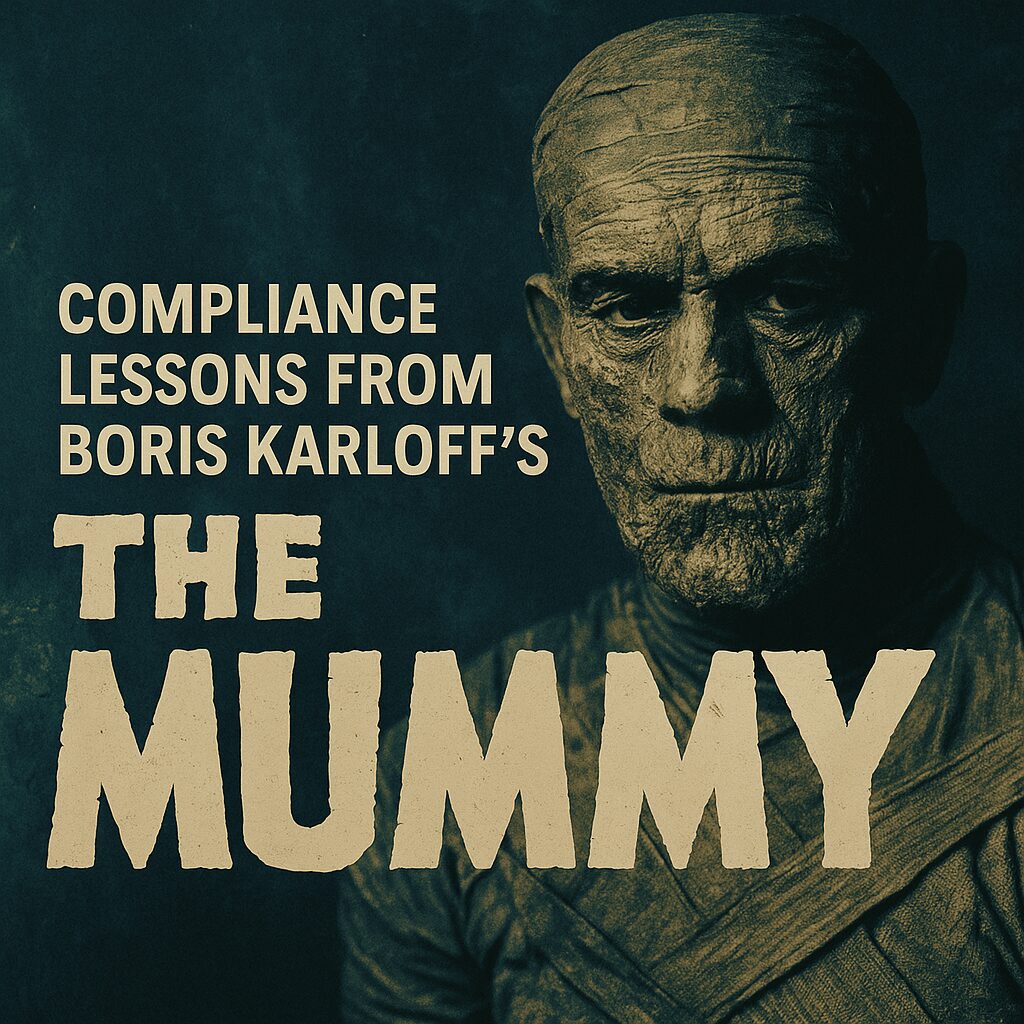
Compliance Lessons from Boris Karloff’s The Mummy

As many of my readers know, I am a huge fan of the Classic Universal Picture Movie Monsters, focusing on the period from 1931 to the mid-1950s. In October, I traditionally use our Halloween-ending month to look at the Classic Universal Movie Monsters, as well as others, such as Hammer Studio movies, Val Lewton productions, and Vincent Price movies.  This year, I wanted to go back to basics by looking at the Classic Universal Movie Monsters: Dracula (1931), Frankenstein (1931), The Invisible Man (1933), The Mummy (1936), and The Wolf Man (1940).

Over the next five weeks, I will look at each of these movies through the lens of compliance and mine them for compliance lessons. Today, I continue with the Classic Universal Movie Monster Boris Karloff’s version of The Mummy. If you want to take a deeper dive into this movie in the podcast format, check out the special series on the FCPA Compliance Report, hosted by my friends Fiona and Timothy. These podcasts will post contemporaneously with the blog post each Friday during October.

When Boris Karloff first appeared swathed in ancient wrappings as The Mummy in 1932, audiences were transfixed. The story of Imhotep, an ancient Egyptian priest condemned for forbidden acts and resurrected thousands of years later, was both eerie and tragic. Unlike Frankenstein’s Monster or Dracula, Karloff’s Imhotep was not simply a beast or predator. He was a figure burdened by history, secrecy, and the consequences of defying rules.

For corporate compliance professionals, The Mummy is not just a gothic horror tale; rather, it is a parable about hidden risks, the danger of ignoring history, and the importance of clear rules and controls. Karloff’s Mummy reminds us that the past is never truly buried; if ignored, it will resurface to haunt organizations.

We continue our look at Classic Universal Monsters by exploring five compliance lessons from the Karloff version of The Mummy.

Ignoring History Leads to Repeated Mistakes

The British archaeologists who uncover Imhotep’s tomb are warned not to disturb it. Hieroglyphs clearly state the dangers. Yet curiosity and a touch of hubris push them to ignore the warnings. The result? They unleash a centuries-old curse. This resonates strongly with compliance. Organizations that fail to study their own past missteps or the lessons learned from industry scandals are doomed to repeat them. How many times have we seen bribery scandals unfold in sectors where other companies had already been punished? How often do firms enter high-risk markets without learning from past enforcement actions?

Compliance takeaway: Compliance programs must institutionalize lessons learned. Post-mortems, root cause analyses, and case study training ensure that past failures are not forgotten. History is a teacher; ignoring it is an invitation for disaster.

Secrets Fester in the Dark

Imhotep survives for thousands of years because he is hidden, entombed, forgotten, and buried under the sands of secrecy. When he reemerges, he operates in shadows, manipulating others with half-truths and disguises. His power thrives because no one knows his true identity until it is too late. This is a powerful metaphor for compliance risks. Misconduct, whether corruption, fraud, or abuse, thrives in secrecy. When information is concealed, when transparency is absent, risks multiply. By the time issues surface, the damage is often catastrophic.

Compliance takeaway: Transparency is the enemy of misconduct. Compliance officers must insist on disclosure, whether through clear financial reporting, transparent third-party relationships, or open communication channels. Darkness enables misconduct; transparency shines light on hidden risks.

Culture Outlasts Controls

What is striking about The Mummy is that even after 3,700 years, Imhotep’s devotion to his forbidden love, Ankh-es-en-amon, drives his every action. The cultural imprint of his choices outlives laws, punishments, and time itself.

The same is true in corporate life: culture outlasts controls. Policies and procedures may be updated, training refreshed, and leadership reshuffled, but if a culture of secrecy, corruption, or retaliation exists, it will endure unless deliberately changed. Regulators such as the DOJ have repeatedly emphasized that culture, not paper programs, determines compliance success.

Compliance takeaway: Compliance professionals must focus on shaping culture. This requires tone from the top, modeling from the middle, and reinforcement at every level. Controls matter, but without cultural alignment, they are as fragile as papyrus.

Obsession with the Past Can Blind Us to the Present

Imhotep is consumed by his obsession with reviving his ancient love. He manipulates the modern world only to resurrect the past. This obsession blinds him to present realities and ultimately leads to his downfall. Organizations can fall into the same trap. Compliance programs that focus solely on past risks, outdated procedures, legacy markets, and historical problems without quickly adapting to new realities become obsolete. Think of the rapid rise of ESG compliance, AI governance, and supply chain transparency. Companies stuck in “last decade’s risks” are unable to address emerging threats.

Compliance takeaway: Compliance must balance history with forward-looking risk assessments. Yes, learn from the past, but don’t become captive to it. The 2024 Update to the Evaluation of Corporate Compliance Programs (2024 ECCP) stresses the need to assess new business models and emerging risks. Compliance must look ahead as much as it looks back.

Lack of Boundaries Leads to Unintended Consequences

The archaeologists who awaken Imhotep fail because they have no boundaries; they open what should remain closed, touch what should remain untouched, and ignore the warnings etched on the tomb. Their lack of restraint unleashes destruction. This is a classic compliance lesson: boundaries exist for a reason. In business, these boundaries are policies, internal controls, approval processes, and ethical standards. When ignored—even unintentionally—they create exposure. The global enforcement landscape is littered with companies that ignored boundaries in pursuit of profit.

Compliance takeaway: Reinforce boundaries. Build controls that prevent risky actions, monitor for boundary-crossing behavior, and emphasize in training why rules exist. Boundaries are not bureaucratic obstacles; they are protective structures that prevent organizations from unleashing their own “mummies.”

Conclusion: The Mummy as a Compliance Case Study

Karloff’s The Mummy endures because it is more than a horror story; rather, it is a meditation on history, secrecy, obsession, and consequence. For compliance professionals, it is also a parable about governance.

For compliance officers, the film offers a powerful reminder: the past is never truly buried. Misconduct, once unleashed, is hard to contain. Our role is to study history, insist on transparency, shape culture, anticipate new risks, and enforce boundaries.

Like Imhotep, compliance failures rarely emerge overnight. They are buried, hidden, and ignored until they rise again with destructive force. The Karloff Mummy teaches us that vigilance, transparency, and cultural strength are the only safeguards against being haunted by the past.

Join us next Friday, October 31, as we conclude our special series by looking at The Invisible Man.

Categories
Blog

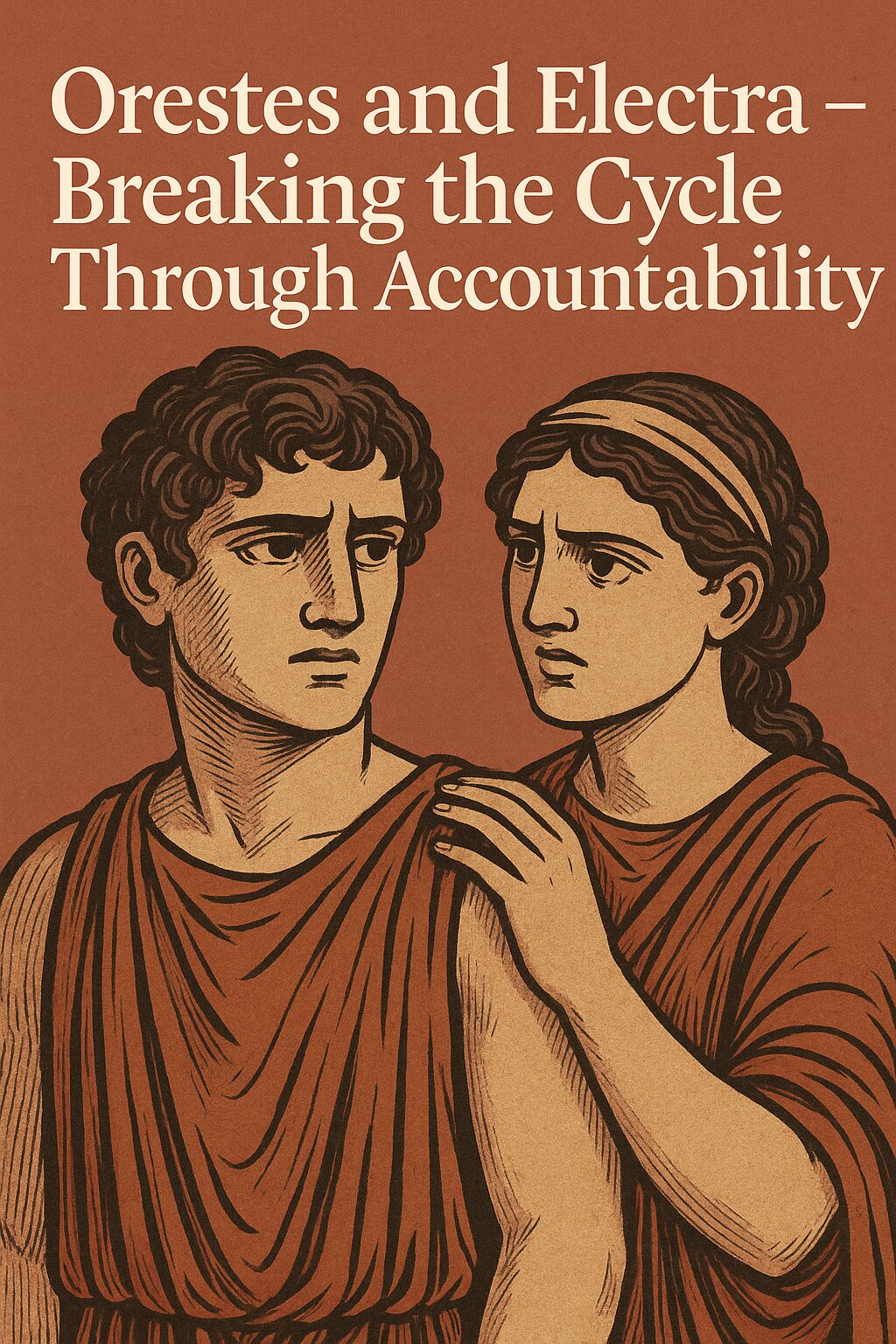
House of Atreus Week: Part 5 – Orestes and Electra – Breaking the Cycle Through Accountability

Every compliance journey must eventually reach its reckoning —the point at which wrongdoing, however deeply embedded, must give way to accountability. In Greek tragedy, that moment comes with Orestes and Electra, the final heirs of the cursed House of Atreus.

Their story marks a transformation, from vengeance to justice, from chaos to order, from curse to compliance. It’s not just the end of a tragic dynasty; it’s the beginning of governance. And for the modern compliance professional, Orestes’ journey mirrors the evolution every organization must undergo, moving from reactive crisis management to mature, transparent, and accountable systems of justice.

Today, we conclude our look at lessons from the House of Atreus for the 21st-century compliance profession through a review of my personal favorite, the tragedy of Orestes and Electra. Their tale was memorialized as the final play in Aeschylus’s trilogy The Oresteia, written in the 5th century BC. The Oresteia trilogy consists of three plays: Agamemnon, The Libation Bearers, and The Eumenides. They all discuss the murder of Agamemnon by Clytemnestra, the murder of Clytemnestra by Orestes, the trial of Orestes, the end of the curse on the House of Atreus, and the pacification of the Furies.

The tale of Orestes and Electra marks a transformation, from vengeance to justice, from chaos to order, from curse to compliance. It is not just the end of a tragic dynasty; it is the beginning of governance and compliance. And for the modern compliance professional, Orestes’ journey mirrors the evolution every organization must undergo —from reactive crisis management to mature, transparent, and accountable systems of justice.

In today’s Part 5, we discuss what every compliance practitioner and compliance regime must eventually face. Their journey reaches its reckoning,  the point where wrongdoing, however deeply embedded, must give way to accountability.

The Last Act of the Curse

After Clytemnestra murders Agamemnon, she takes power alongside her lover, Aegisthus. Their rule, built on deceit and blood, becomes yet another chapter in the family’s curse. Orestes and his sister Electra, exiled and grieving, grow up in a world where justice has been replaced by fear and silence.

Years later, Orestes returns to Mycenae with Electra’s encouragement. Together, they plot vengeance, the killing of their mother and her consort, to avenge their father’s murder. The act fulfills the family’s grim legacy: the son kills the mother as the mother killed the father. But Orestes doesn’t find peace. Instead, he’s haunted by the Furies, ancient goddesses who punish those who shed family blood. Tormented and desperate, he seeks sanctuary in Athens, where the goddess Athena establishes the first trial by jury. The Furies prosecute, Apollo defends, and Athena casts the deciding vote. The verdict is acquittal, but not because Orestes was blameless, but because justice must evolve from vengeance to law. And just like that, the curse ends,  not through violence, but through accountability.

From Retribution to Governance

What Athena did for Orestes is what modern compliance programs do for organizations: they replace personal retribution with institutional justice and institutional fairness. Before that trial, every wrong in the House of Atreus was met with revenge. Each generation avenged the last until there was no one left to save. Athena’s tribunal introduced a revolutionary idea: that justice must be impartial, procedural, and transparent.

That’s precisely the evolution every organization must undertake when it faces a scandal. At first, the instinct is vengeance: fire the bad actors, issue a statement, move on. But sustainable integrity requires something deeper: process, documentation, fairness, and continuous improvement. Orestes’ trial marks the shift from chaos to compliance.

Accountability: The End of the Curse

The word “accountability” is often misunderstood. It does not mean punishment. It means answerability, the willingness to stand before a system greater than oneself and be judged fairly. That is what Orestes did. He did not flee the Furies forever; he submitted to judgment. He participated in the process. And in doing so, he transformed justice from a personal to an institutional matter. For modern compliance officers, this is a powerful metaphor. Accountability is not about creating fear. It is about building trust. It ensures that wrongdoing is addressed through a fair, transparent process that restores, rather than destroys, culture.

The Furies as Internal Audit

The Furies are terrifying, but in the compliance world, they’re familiar. They represent the internal mechanisms of conscience and oversight, the investigations, audits, and regulators that chase wrongdoing wherever it hides. Like Orestes, many leaders try to outrun them, hoping the past won’t catch up. But true integrity doesn’t come from evasion; it comes from engagement. The companies that emerge strongest from scandal are those that face their Furies head-on, invite scrutiny, and cooperate transparently.

Think of how Siemens rebuilt its compliance function after its massive bribery scandal by embracing rigorous internal controls, external oversight, and a commitment to ethical reform. Indeed, we saw similar results based upon similar actions by both Wells Fargo and ABB. That was Orestes’ trial in corporate form, judgment accepted, redemption earned.

Electra: The Voice of Culture Renewal

Electra plays a quieter but equally vital role. She represents the voice of moral conscience, the employee who still believes in right and wrong even when everyone else has gone silent. She is the whistleblower who says, “This isn’t who we are.” The compliance champion who refuses to normalize misconduct. Without Electra’s courage, Orestes would never have acted.

Modern organizations need their Electras: employees empowered to speak, question, and persist. That’s why building a speak-up culture is the cornerstone of the 2024 DOJ Evaluation of Corporate Compliance Programs (ECCP). A company’s ability to surface issues early depends on whether it protects, informs, and celebrates those who come forward. If Orestes symbolizes accountability, Electra symbolizes cultural integrity, the belief that justice is worth pursuing even when it is dangerous.

The Birth of the Rule of Law

The trial of Orestes is one of the most significant moments in Western moral thought because it replaces vengeance with the rule of law. It is also the mythological birth of compliance, where emotion gives way to ethics, and chaos yields to process. Athena’s message is timeless: “No one person may decide justice alone. We must build systems that outlast individuals.”

That is the essence of compliance governance. Codes of conduct, reporting channels, disciplinary processes, and training all exist for one reason: to ensure that justice does not depend on personalities. Orestes’ acquittal didn’t erase his crime. It institutionalized accountability so the next generation wouldn’t repeat his curse. For corporate culture, that’s exactly what post-crisis reform does: it replaces vengeance with systems and outrage with order.

Compliance as Redemption

Orestes’ story ends not in punishment, but in purification. Athena orders the Furies to become the Eumenides,  “the Kindly Ones.” Their role shifts from persecutors to protectors, guarding the moral order they once avenged. That transformation is the perfect metaphor for what a compliance function can become after a crisis. At first, compliance feels punitive,  investigators, auditors, monitors. But over time, as systems mature and transparency grows, compliance evolves into something restorative: a protector of trust, reputation, and ethical resilience. The same forces that once punished now preserve. That is redemption for organizations and for people.

Lessons in Modern Compliance Transformation

What can compliance professionals learn from Orestes’ journey? The parallels are striking.

  1. Justice Must Be Systemic, Not Personal. Vengeance satisfies emotion but destroys culture. Justice through process restores legitimacy. For the compliance professional, the ECCP demands institutional fairness, which builds procedural fairness into investigations. Transparency and due process protect both the company and its people.
  2. Accountability Ends the Cycle. Denial perpetuates dysfunction. Facing wrongdoing directly, even publicly, is the first step to rebuilding credibility. You should conduct root cause analyses after every violation. Use findings to strengthen systems, not just assign blame.
  3. Protect the Electras. Ethical renewal begins with those who dare to speak truth.
  4. As a compliance professional, you must empower whistleblowers by providing visible protections, feedback loops, and cultural recognition.
  5. Embrace Your Furies. Auditors, regulators, and monitors are not enemies; instead, they should be seen as accountability partners. As counterintuitive as it may seem, you should treat oversight as an opportunity. Transparency with regulators builds long-term trust.
  6. Transform Enforcement into Ethics. The end goal of compliance is not punishment, it is not even detection; it is prevention. Every compliance professional should use disciplinary outcomes as learning opportunities. Celebrate integrity as publicly as you punish misconduct.

From Tragedy to Transformation

The House of Atreus began with arrogance, deception, and retaliation. It ended with something extraordinary, the birth of justice as a system. Each generation’s failure taught a lesson:

  • Tantalus showed that leadership without humility corrupts.
  • Pelops revealed the dangers of winning through corruption.
  • Atreus and Thyestes exposed the poison of internal retaliation.
  • Agamemnon and Clytemnestra warned of power without accountability.
  • Orestes and Electra finally demonstrated how accountability, due process, and transparency can cleanse even the deepest cultural stain.

That arc is the same one every mature compliance program follows from reaction to reflection, from punishment to prevention, from crisis to culture.

From Curse to Compliance

The story of Orestes is not about vengeance; rather, it is about evolution. He did not end the curse by denying it. He ended it by confronting it, submitting to judgment, and accepting that systems, not individuals, define justice. That is the ultimate compliance insight. You can’t train your way out of a cultural problem. You can’t manage ethics through charisma. You must build structures that embed accountability into every decision, every leader, and every process.

Orestes reminds us that compliance is not just about preventing misconduct; it is about healing organizations. It is about helping companies move from the chaos of reaction to the clarity of governance, from fear to fairness, from silence to transparency, from vengeance to virtue. Because in the end, every organization has its own House of Atreus somewhere in its history. The question is not whether the curse exists. The question is whether we, like Orestes, will have the courage to face it and the wisdom to replace it with justice that lasts.

Categories
AI Today in 5

AI Today in 5: October 23, 2025, The AI that Matters Edition

Welcome to AI Today in 5, the newest edition to the Compliance Podcast Network. Every day, Tom Fox will bring you 5 AI stories to start your day. Sit back, enjoy a cup of morning coffee, and listen in to the AI Today In 5. All, from the Compliance Podcast Network. Each day, we consider four stories from the business world, compliance, ethics, risk management, leadership, or general interest about AI.

Top AI stories include:

  1. Meta is cutting AI jobs to speed production. (Axios)
  2. AI assistants are making errors in the news. (Reuters)
  3. Creating AI that matters. (MIT)
  4. Italy enacts national AI law. (FisherPhillips)
  5. AI roadmap to boost compliance workflows. (FinTechGlobal)

For more information on the use of AI in Compliance programs, my new book, Upping Your Game, is available. You can purchase a copy of the book on Amazon.com.

Categories
Blog

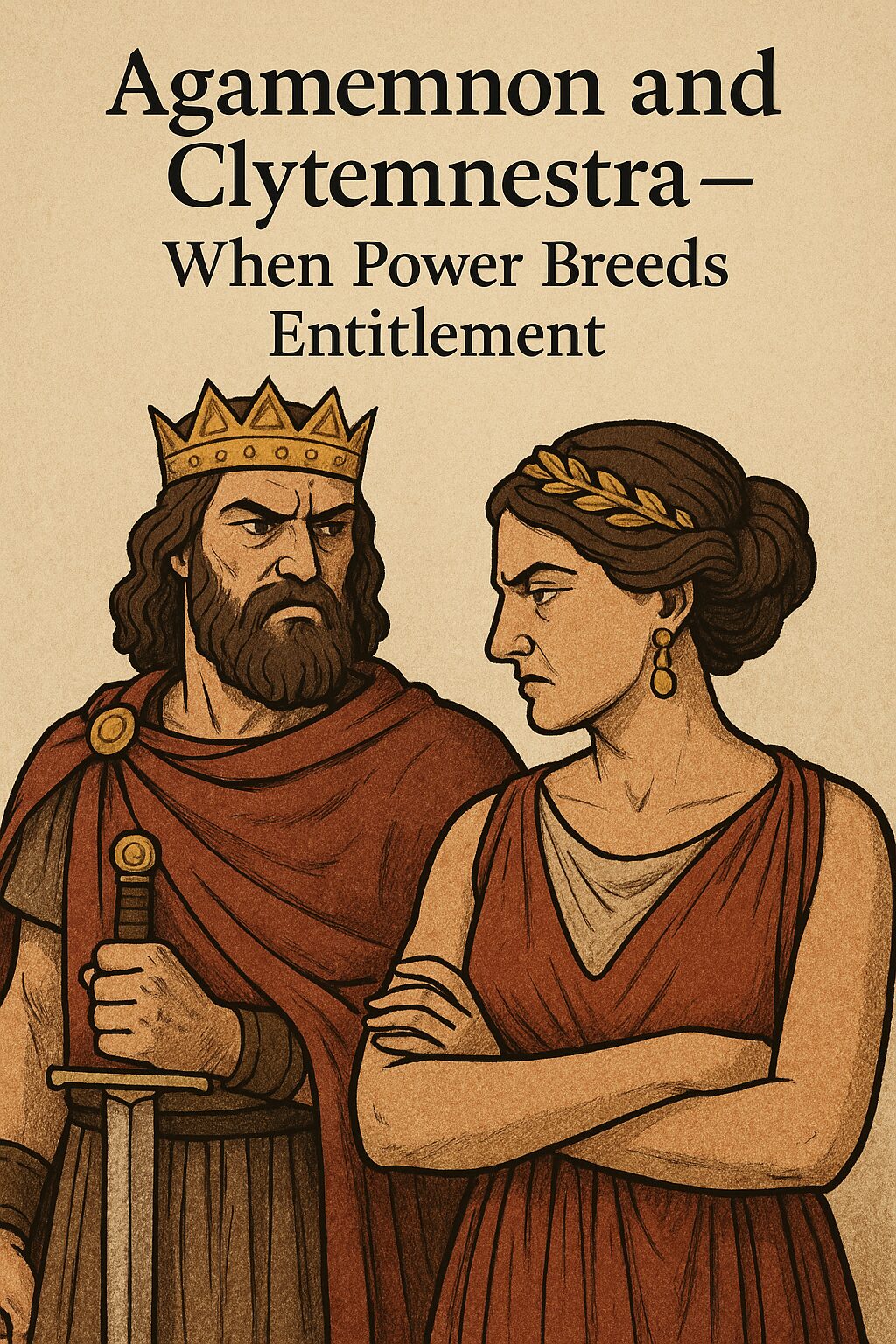
House of Atreus Week: Part 4 – Agamemnon and Clytemnestra – When Power Breeds Entitlement

We continue our look at lessons from the House of Atreus for the 21st-century compliance profession, focusing on key stories and mining them for compliance lessons. In today’s Part 4, we take up the Agamemnon Problem: a leader so focused on results, so convinced of their indispensability, that ethics become negotiable. It is the mindset that says, “We’ll fix the compliance later—after we win.”

In Greek tragedy, that rationalization cost Agamemnon his life. In corporate life, it costs organizations their culture, credibility, and sometimes their license to operate. The story of Agamemnon and Clytemnestra is not only one of betrayal and revenge, it is a powerful parable about what happens when leaders mistake power for permission and performance for purpose.

The King’s Fatal Trade-Off

As the legend goes, Agamemnon, king of Mycenae and commander of the Greek forces at Troy, faced a crisis before the war even began. The goddess Artemis, angered by his arrogance, becalmed the winds and trapped his fleet in port. The only way to appease her, a seer declared, was to sacrifice his daughter, Iphigenia.

Agamemnon’s dilemma was stark: abandon his military ambitions or sacrifice his own child. He chose the latter. The winds rose, the ships sailed, and the war began. Years later, when Agamemnon returned triumphant, his wife Clytemnestra murdered him in his bath as revenge for their daughter’s death. This was not just a family tragedy; it was a leadership failure of the highest order. Agamemnon traded ethics for expedience, and the cost was everything he loved.

The Corporate Iphigenia

Every organization has its Iphigenia(s); the values, people, or principles that get sacrificed for “strategic goals.” It may be:

  • Cutting compliance budgets to hit quarterly numbers.
  • Overriding safety protocols to meet production quotas.
  • Ignoring harassment complaints to keep a star performer happy.

Like Agamemnon, leaders rationalize these sacrifices as necessary or temporary. But every compromise chips away at the moral capital that sustains the enterprise. Once the organization learns that “winning” matters more than doing right, the line between ambition and arrogance disappears.

The Entitlement of Success

When Agamemnon returned from Troy, he arrived not as a humbled survivor but as an entitled conqueror. He paraded Cassandra, a captive prophetess, before his wife and walked proudly across a purple carpet, a gesture the Greeks saw as blasphemous arrogance. It’s the same pattern we see in modern compliance disasters: success breeding entitlement. Executives who deliver profits begin to believe they’ve earned the right to bend the rules. Performance metrics replace principles as the measure of worth.

Consider a few familiar examples:

  • The Wells Fargo sales scandal: Pressure to perform led employees to create millions of fake accounts. It also involved senior management lying to its own Board of Directors.
  • Volkswagen’s emissions fraud: Engineers rationalized deception as necessary to stay competitive. But this rationalization went all the way to the CEO.
  • Boeing’s safety crisis: Leadership prioritized schedules and cost over engineering integrity. Then they blamed the airline’s pilots for operational failures.

In each case, strong organizations were undone not by ignorance of ethics but by entitlement —the belief that achievement excused misconduct.

The Compliance Cost of Entitlement

Entitlement corrodes three pillars of compliance: accountability, transparency, and humility.

1. Accountability: When leaders feel untouchable, rules become optional. Internal controls are ignored, and ethical review is seen as bureaucracy rather than protection.

2. Transparency: Entitled leaders hoard information and discourage challenge. “Bad news doesn’t travel up” becomes the cultural norm.

3. Humility: Ethical reflection gives way to moral blindness. If success is proof of righteousness, who needs oversight?

Agamemnon’s decision to sacrifice Iphigenia was not just moral cowardice; it was a governance failure. He believed his power justified his actions, and no one around him could say otherwise. That is precisely how modern compliance collapses begin.

Clytemnestra: The Whistleblower Turned Avenger

Clytemnestra’s revenge may seem extreme, but, symbolically, she represents the voice of accountability that has been ignored for too long. She warned, questioned, and grieved, yet was silenced by hierarchy and hubris. When the system denied her justice, she took justice into her own hands.

Modern organizations often create their own Clytemnestras when they suppress legitimate dissent. Whistleblowers who feel unheard can become external leakers, litigants, or catalysts for regulatory scrutiny. Every retaliation case begins as an unheeded complaint. The DOJ’s 2024 ECCP emphasizes this point. Organizations must protect, inform, and empower those who speak up. When internal channels fail, external consequences follow, just as Clytemnestra’s knife followed Agamemnon’s silence.

Ethical Decision-Making Under Pressure

Agamemnon’s fateful choice came under immense pressure, a condition every executive recognizes. But pressure is where compliance either proves its worth or disappears. Strong organizations prepare for ethical stress tests long before a crisis strikes. They establish frameworks that turn moral instinct into a structured process:

1. Define Core Non-Negotiables – The “values that will not be sacrificed.” If integrity, safety, or human dignity are ever negotiable, they soon become expendable.

2. Create Decision Pathways – Require escalation when choices have ethical or reputational risk. Ethical red flags should automatically trigger review, not after-action regret.

3. Model Accountability at the Top – Leaders must demonstrate that difficult ethical decisions are shared, not borne alone. Agamemnon acted in isolation; modern governance demands collaboration.

The Tyranny of Performance Metrics

Much of Agamemnon’s arrogance stemmed from performance obsession, the need to deliver victory at any cost. That same tyranny drives unethical behavior in today’s boardrooms. Metrics matter, but when they become idols, they demand sacrifices. Compliance programs should therefore measure how results are achieved, not just whether they are achieved.

The 2024 Evaluation of Corporate Compliance Programs (ECCP) specifically instructs prosecutors to ask whether companies’ incentives reward ethical behavior. A compliant organization aligns compensation with conduct; an entitled one rewards outcomes regardless of means. A key question for leaders: Would I still consider this a “win” if it were public tomorrow?

From Power to Stewardship

The entitlement cure is stewardship, the recognition that power is not owned, but entrusted. Great leaders see themselves as guardians of values, not exploiters of privilege. This mindset shift transforms compliance from constraint to compass:

  • Stewards ask how their choices affect stakeholders beyond themselves.
  • Stewards invite transparency because they understand accountability strengthens credibility.
  • Stewards use compliance as a mirror, not a muzzle.

Agamemnon ruled as an owner; a steward would have ruled as a custodian. The difference is the difference between arrogance and integrity.

The Compliance Evangelist’s Reflection: The Scarlet Carpet of Arrogance

When Agamemnon strode across that purple carpet, he symbolically walked across the values he was sworn to protect. Every leader who dismisses compliance as “red tape” does the same. Each step says, “The rules are for others.” But history and enforcement teach a consistent lesson: when leaders trample ethics, the organization soon trips over the fabric they have soiled. Clytemnestra’s dagger was not random vengeance; it was the return of consequence. In today’s language, it was enforcement action, indeed a reckoning deferred until accountability could no longer be ignored.

Breaking the Cycle: From Arrogance to Accountability

The tragedy of Agamemnon and Clytemnestra is that both were right and both were wrong. He betrayed his values for ambition; she destroyed justice in the name of vengeance. Their story ends in blood because neither trusted process, transparency, or accountability. Modern organizations don’t have to share that fate. Compliance offers a third path: structured accountability through systems, not swords. It ensures that no one, no matter how powerful, stands above the moral order that sustains the enterprise.

When companies embrace that mindset, they turn tragedy into transformation. They move from the purple carpet of arrogance to the solid ground of integrity. Because, as every compliance professional knows, the true test of leadership is not what you achieve when you are powerful, it is what you refuse to sacrifice to stay that way.

I hope you will join us for our concluding Part 5 — Orestes and Electra: Breaking the Cycle Through Accountability. This is my favorite story from the House of Atreus. With this myth, we will see how justice, rule of law, and redemption finally end the curse of the House of Atreus and what that means for the modern compliance function striving to build ethical resilience and renewal.

Categories
Great Women in Compliance

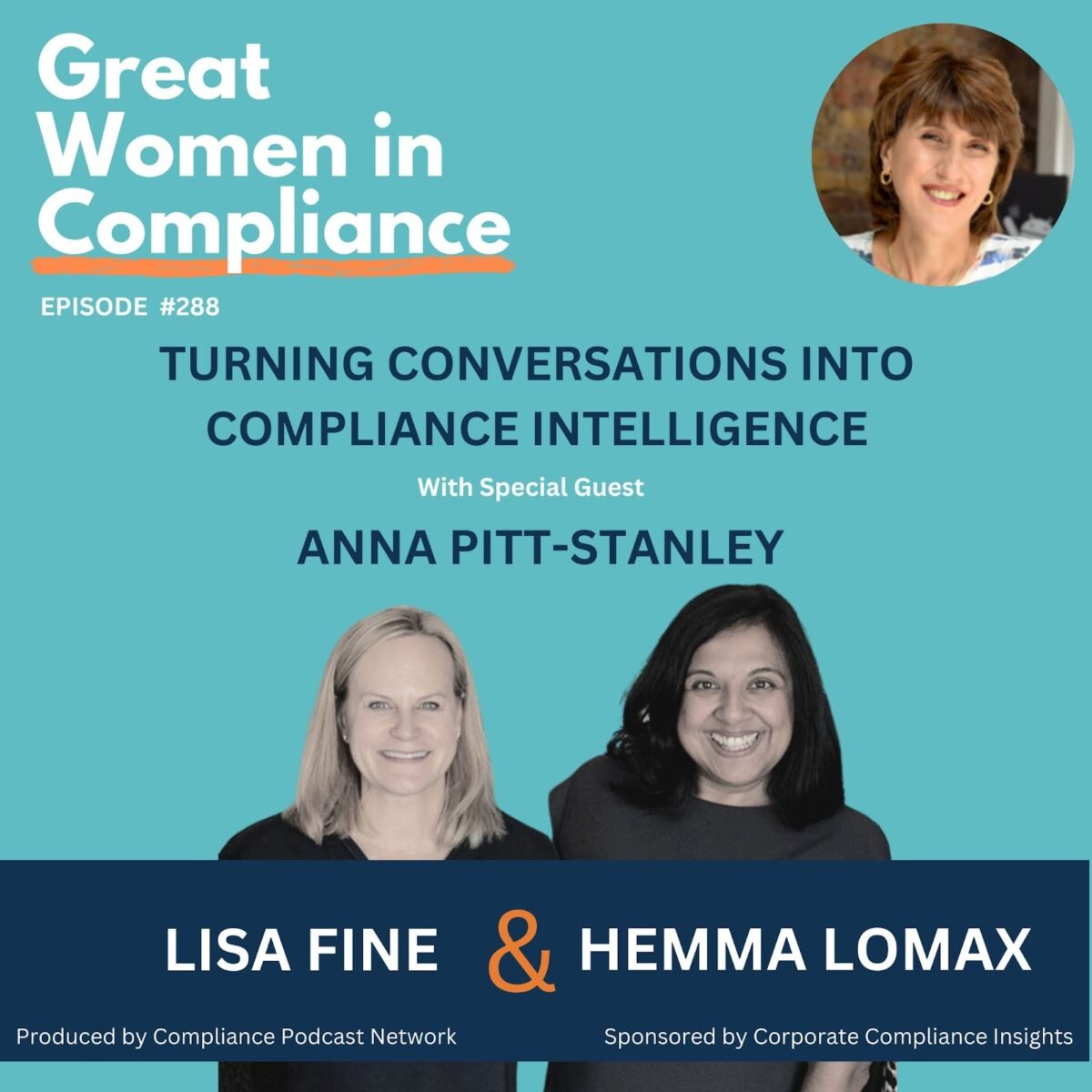
Great Women in Compliance – Turning Conversations into Compliance Intelligence with Anna Pitt-Stanley

In this episode of Great Women in Compliance, co-host Hemma Lomax sits down with Anna Pitt-Stanley, Co-Founder and COO of Umony, to explore how the next generation of compliance technology can transform how organizations listen to their people, their culture, and their risk signals.

From her early work in voice innovation to co-founding Umony, Anna’s journey is rooted in a simple but powerful idea: that the truth of human behavior lives in communication. She and her co-founder, Dean Elwood, were driven by the frustration of seeing compliance programs overwhelmed by data but starved for insight. Together, they set out to build a company that turns conversations into decision-useful intelligence, without losing the human heart at the center of it all.

Anna shares how she leads with empathy, builds trust through operational discipline, and models what it looks like to be a C-suite leader who truly cares. This episode blends technology, leadership, and compassion — and reminds us that compliance done well is less about control and more about connection.

Episode highlight:

  • What does “the truth of behavior lives in communication” mean for compliance and culture?
  • How to balance surveillance and stewardship in modern communications governance.
  • Building a culture of compliance and compassion inside a high-growth tech company.
  • Leadership lessons from scaling with integrity: operational empathy, psychological safety, and trust by design.
  • The future of decision-useful compliance and what human-centric technology looks like in practice.

Biography:

Anna Pitt-Stanley is Co-Founder and Chief Operating Officer of Umony, where she leads operational governance, talent, partnerships, and disciplined execution as the company scales.

Before Umony, Anna co-founded Voxygen, a voice and communications innovation company later acquired by Lebara Group, where she served on the leadership team and board. Over her career, she has built a reputation for bridging complex, regulated environments with practical, people-first execution, delivering programs that align compliance, operations, and culture.

Anna holds an LL.M. in Law from the London School of Economics and Political Science (LSE). She also serves as a Director of Umony Limited and Umony Holdings Limited.

She is known for her focus on operational empathy, governance excellence, and creating workplaces where compliance and compassion thrive side by side.

Resources & Mentions:

Categories
Blog

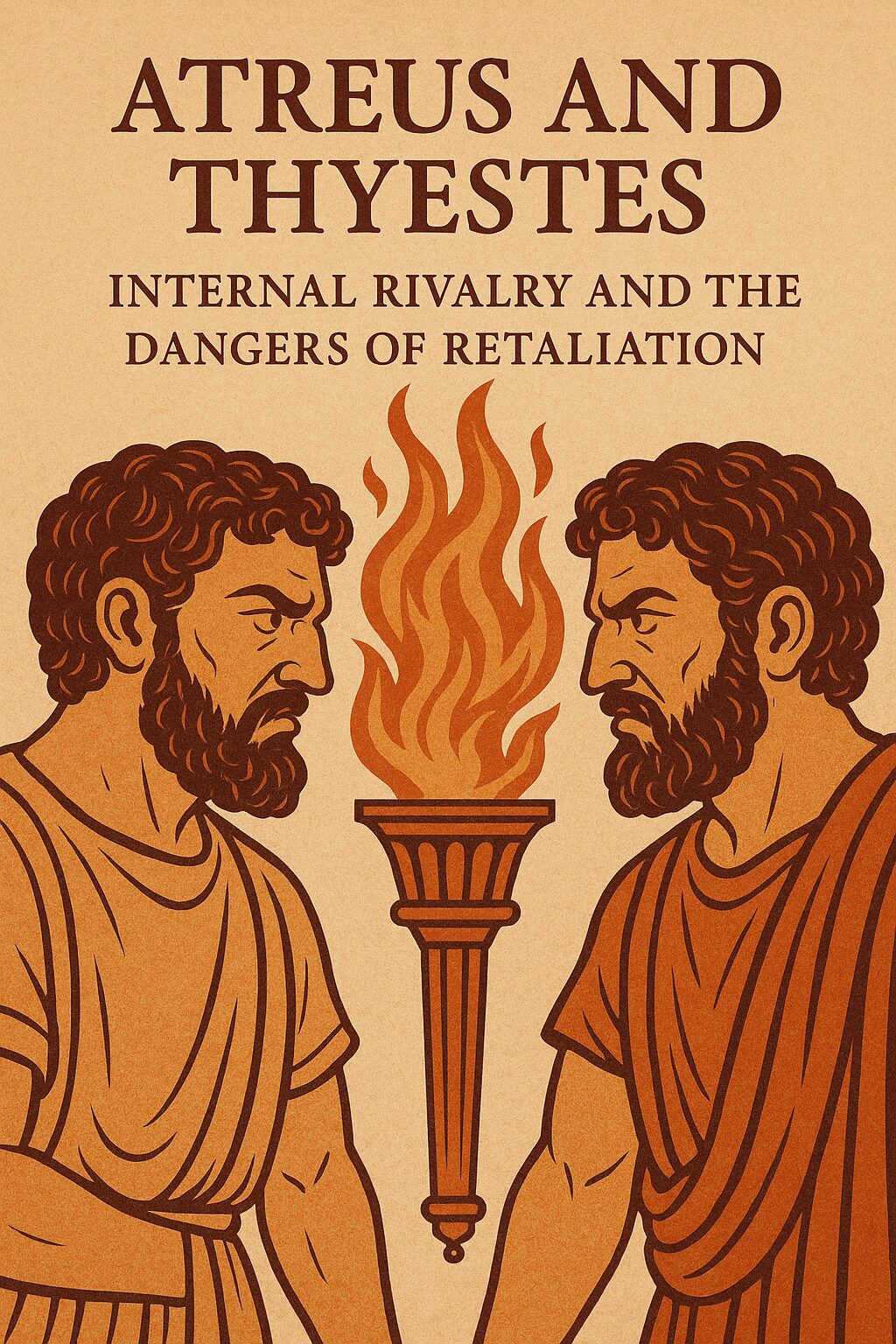
House of Atreus Week: Part 3 – Atreus and Thyestes – Internal Rivalry and the Dangers of Retaliation

We continue to look at the lessons from the House of Atreus for the 21st-century compliance profession, focusing on the key stories and mining them for insights. In today’s Part 3, we take up the feud between Atreus and Thyestes, sons of Pelops and heirs to his poisoned legacy. Their myth is not just about murder and betrayal; it is about what happens when leaders weaponize authority for vengeance rather than stewardship.

Every organization eventually faces conflict within its own ranks. Disagreements over power, vision, and credit are inevitable. But when rivalry turns to revenge, governance collapses, trust erodes, and compliance becomes collateral damage. Today, we take a deep dive into this issue from the 21st-century compliance perspective.

The Feast of Vengeance

After Pelops’ death, his sons Atreus and Thyestes fought over the throne of Mycenae. They began like many corporate siblings, ambitious, capable, and determined to lead. But soon ambition turned into envy. Thyestes seduced Atreus’ wife and stole a prized golden lamb that symbolized kingship.

Atreus, humiliated, plotted revenge. Pretending reconciliation, he invited Thyestes and his sons to a grand banquet. During the feast, Atreus served them a meal of Thyestes’s own children. (Shakespeare used this story much later.) When the truth was revealed, horror swept the hall. Thyestes cursed his brother, and the curse carried through the next generation, consuming Atreus’ son Agamemnon and his grandson Orestes. It is a horrifying tale, but beneath the gore lies a familiar truth: internal retaliation destroys organizations from the inside out.

When Leadership Turns on Itself

Atreus’ banquet is not simply a mythic horror story fit for my classic monster movie month; rather, it is a 21st-century metaphor for every leadership team that devours its own. In terms of compliance, Atreus and Thyestes represent toxic internal politics. They illustrate how leadership rivalries, unchecked ego, and personal vendettas can dismantle governance systems faster than any external scandal.

Modern organizations suffer the same fate when:

  • Executives undermine each other publicly.
  • Managers retaliate against whistleblowers or rivals.
  • Compliance officers are punished for doing their jobs.

When leaders use their authority to punish rather than protect, culture collapses into fear. Employees stop reporting misconduct, colleagues turn on one another, and the compliance function becomes an instrument of control instead of accountability. Atreus’ feast might look extreme, but we have all seen versions of it in the workplace.

The Corporate Equivalent of the Cannibal Feast

Let’s translate the myth into modern terms.

  • Atreus’ “banquet” = a retaliatory campaign designed to humiliate a rival or critic.
  • Thyestes’ seduction = internal manipulation, gossip, or theft of credit.
  • The curse = the lingering culture of distrust that infects every successor.

Retaliation rarely ends with the original act. Once one leader weaponizes power, everyone learns the same lesson: “You’re safe only when you’re silent.” That’s how once-strong organizations become silos of fear. Compliance reports decline not because misconduct has ended, but because employees no longer believe reporting is safe. Like the House of Atreus, the company devours itself while pretending to feast.

The Dangers of Internal Retaliation

From the compliance perspective, retaliation is one of the clearest indicators of cultural rot. It’s also one of the DOJ’s most serious red flags. The 2024 Evaluation of Corporate Compliance Programs (ECCP) explicitly asks prosecutors to evaluate:

  • Whether employees are protected from retaliation.
  • Whether complaints lead to timely investigations.
  • Whether leadership promotes a speak-up culture.

If your organization punishes dissent, even quietly, you may well find yourself already on the DOJ’s radar. Atreus’ actions were the ultimate act of retaliation: gruesome, personal, and destructive. But the underlying pattern is timeless, leadership vengeance disguised as discipline. The lesson is as modern as it is mythic: a compliance program without psychological safety is a compliance program in name only.

Case Study Parallels: When Modern Leaders Feast on Their Own

  • Uber (2017): Retaliation against employees who raised harassment claims led to executive resignations and a cultural overhaul.
  • Wells Fargo: Whistleblowers reported retaliation after flagging fraudulent account practices, compounding reputational damage.
  • Boeing (737 MAX): Internal dissent on safety concerns was suppressed, leading to tragedies that reshaped regulatory scrutiny.

Each of these companies faced its own version of Atreus’ banquet, consuming credibility and trust in the process.

The Role of Compliance in Preventing Organizational Cannibalism

The compliance function exists not just to catch misconduct, but to defend integrity against internal retaliation. A strong compliance culture ensures that ethical leadership trumps personal rivalry. Here’s how to do it:

1. Build governance that transcends personalities. Authority should rest on process, not proximity to power.

2. Separate investigative authority from reporting lines. Compliance officers must have autonomy to act without interference.

3. Educate leadership on the cost of retaliation. Retaliation isn’t just a legal risk — it’s a culture killer.

When leaders understand that internal war erodes value faster than external threats, they start behaving more like guardians than gladiators.

Creating a Culture of Trust After Betrayal

Atreus’ kingdom fell because no one could trust anyone. In business terms, that’s what happens when transparency dies. To rebuild trust, companies must do three things:

1. Acknowledge Harm. Pretending internal feuds never happened only deepens cynicism. Compliance leaders must publicly reinforce that retaliation and toxicity are violations of corporate values. Acknowledgment is the first step toward cultural repair.

2. Reinforce Transparency. Regular reporting on investigations, outcomes, and disciplinary measures builds credibility. Employees must see that misconduct is addressed fairly, not selectively.

3. Model Ethical Reconciliation. Where conflict exists, leaders must model resolution through dialogue, not vengeance. A modern compliance culture is one where accountability coexists with forgiveness, where mistakes are corrected, not avenged.

Leadership Ego and the Compliance Cost

The rivalry between Atreus and Thyestes began with ego, the same ego that drives many corporate meltdowns. Ego tells leaders that compliance is optional, that their moral compass is self-calibrated. It convinces them that retaliation is justified, that “he started it,” or that removing a critic will restore order.

But as every compliance professional knows, ego is expensive. It costs credibility, cooperation, and often millions in remediation and fines. The only sustainable leadership model values humility over hubris. In compliance terms: replace ego with ethics, and rivalry with responsibility.

The Compliance Evangelist’s Reflection: The Curse of the Retaliator

Atreus believed vengeance would bring closure. Instead, it ensured endless conflict. In organizations, retaliation operates the same way. It may silence the critic today, but it guarantees more fear and more silence tomorrow.

The DOJ, SEC, and whistleblower programs worldwide have made one thing clear: protecting those who speak up is not just the right thing to do; it is the smart business approach. The companies that thrive in the modern regulatory landscape are those that treat every internal voice as an asset, not a threat. Atreus’ downfall shows what happens when leaders fail to learn that lesson. His house became a case study in the cost of ignoring culture. For compliance professionals, that’s the real moral: you cannot achieve ethical stability through punishment alone.

From Retaliation to Redemption

The saga of Atreus and Thyestes teaches us that retaliation is never a solution; it is a multiplier of risk. The only way to end the cycle is through structural and cultural change: transparency, accountability, and empathy in leadership. For compliance professionals, that means moving from enforcement to enlightenment, helping leaders understand that the true power of compliance is not control, but trust. Because when leaders stop feeding on their own and start feeding their culture with integrity, the curse finally breaks.

I hope you will join me tomorrow for Part 4 — Agamemnon and Clytemnestra: When Power Breeds Entitlement. In it, we will explore how Agamemnon’s moral compromises and Clytemnestra’s revenge illuminate the modern dangers of performance pressure, ethical trade-offs, and the corruption of power at the top.

Categories
Innovation in Compliance

Innovation in Compliance – AI in Financial Crime and Compliance: A Deep Dive with Oracle’s Jason Somrak

Innovation comes in many areas, and compliance professionals need to be ready for it and embrace it. Join Tom Fox, the Voice of Compliance, as he visits with top innovative minds, thinkers, and creators in the award-winning Innovation in Compliance podcast. In this episode,  host Tom Fox welcomes Jason Somrak, the Chief of Product and Strategy for Financial Crime and Compliance at Oracle.

Jason elaborates on his professional background and his decade-long journey at Oracle. He delves into the transformative role of AI in combating financial crimes, exploring how AI has evolved from predicting false positives to using behavioral models and generative AI to enhance investigation processes. Their discussion touches on AI’s potential to shift from detection to prevention, the impact of real-time AML, and the significance of automating noise in compliance investigations. They also discuss the importance of regulatory relationships and the emerging challenges in risk management. The episode concludes with insights into the future skills needed in compliance roles and the critical role of corporate culture in implementing AI solutions.

Key highlights:

  • AI’s Role in Financial Crime Prevention
  • Proactive vs. Reactive Approaches
  • AI in Investigations and Triage
  • Emerging Challenges in Risk Management
  • Future of AI in Compliance
  • Skills for Next-Gen Compliance Officers

Resources:

Jason Somrak on LinkedIn

Oracle Financial Services

Tom Fox

Instagram

Facebook

YouTube

Twitter

LinkedIn

Categories
Blog

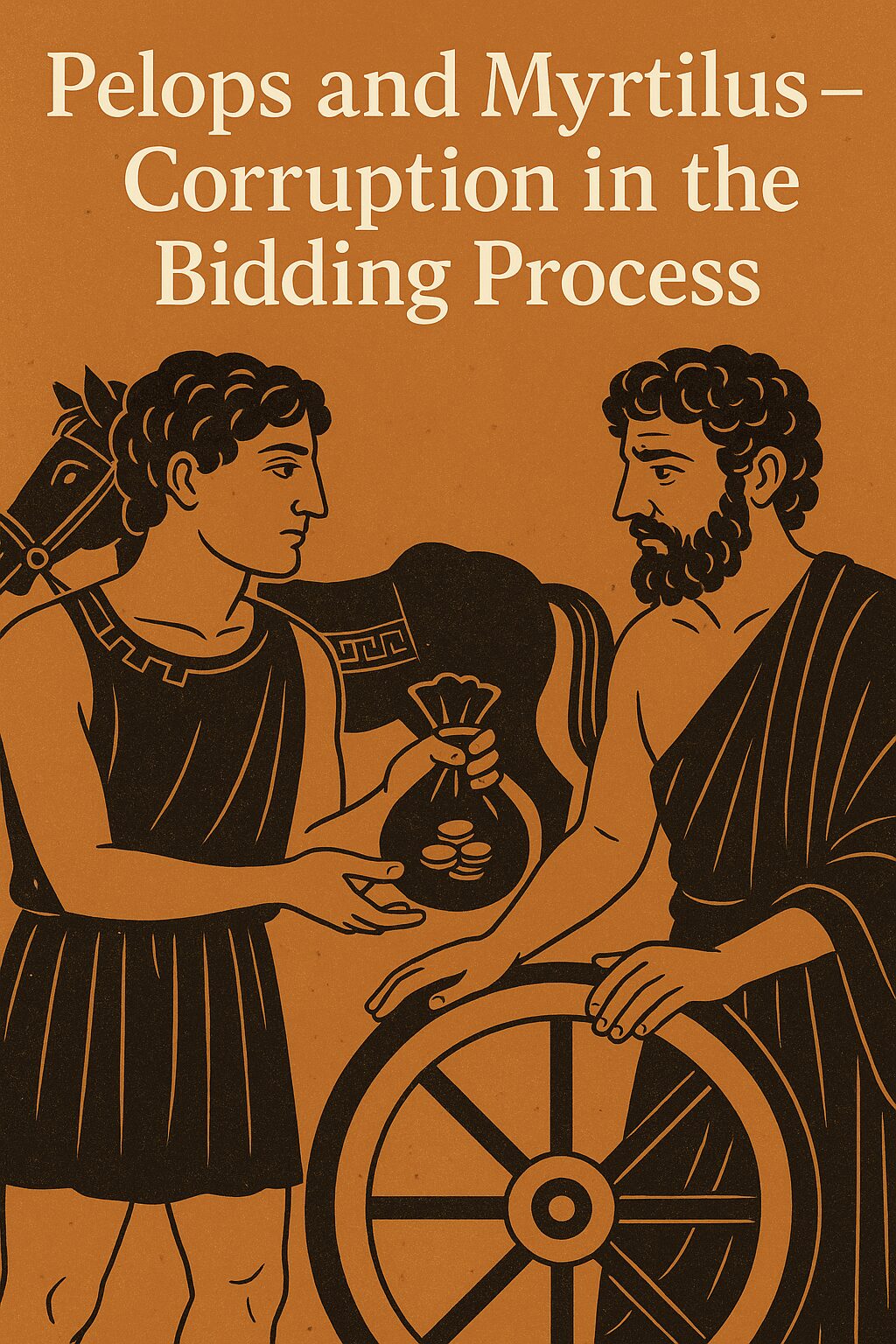
House of Atreus Week: Part 2 – Pelops and Myrtilus – Corruption in the Bidding Process

The curse of the House of Atreus did not begin and end with Tantalus. Like many toxic corporate cultures, it passed from one generation to the next a legacy of moral shortcuts disguised as clever strategy.

We continue our look at lessons from the House of Atreus for the 21st-century compliance profession, focusing on the key stories and mining them for valuable insights. In today’s Part 2, we consider the myth of Pelops and Myrtilus, an ancient fable about corruption, betrayal, and the fatal cost of winning the wrong way. In this story, we look at Pelops, who was Tantalus’s son. Having been literally restored to life by the gods, he had the chance to rebuild his house on a foundation of integrity. Instead, he reached for the easy win, and in doing so, repeated his father’s error: he traded ethics for expedience.

For modern compliance professionals, it is a reminder that bribery and ethical compromise never end where you think they will. They will always come back to haunt you.

The Chariot Race for a Kingdom

According to Greek legend, King Oenomaus of Pisa received a prophecy that he would die at the hands of his son-in-law. To prevent this, he devised a deadly test for any man seeking to marry his daughter, Hippodamia, a chariot race from Pisa to Corinth. If the suitor won, he gained Hippodamia’s hand. If he lost, he died. Pelops, ambitious and determined, entered the race. But he knew Oenomaus’ horses were divine and unbeatable. So he sought an advantage, not through skill or preparation, but through corruption.

He approached the king’s charioteer, Myrtilus, and offered a bribe: riches, favor, and a promise of reward. Myrtilus agreed to sabotage Oenomaus’ chariot by replacing the bronze linchpins with wax. During the race, the wax melted, the chariot crashed, and the king was killed.

But when Myrtilus came to claim his reward, Pelops betrayed him, either pushing him off a cliff or ordering his death. As he fell, Myrtilus cursed Pelops and his descendants, ensuring the family’s cycle of corruption and vengeance would continue.

The First Procurement Fraud

Strip away the mythic trappings, and Pelops’ race looks remarkably modern.

This was a procurement process, a competition for something of value (in this case, marriage and a kingdom), corrupted by bribery and fraud. Pelops did not win on merit; he won by manipulating a key insider in the process.

That’s the same dynamic at play in so many real-world scandals:

  • A contractor bribing a government official for an unfair advantage.
  • A vendor is rigging bids through inside information.
  • A company turning a blind eye to its agents’ actions abroad, so long as they deliver results.

In each case, the underlying temptation is the same as Pelops’: the belief that “winning is what matters.”

The Illusion of a “Victimless” Bribe

Pelops might have rationalized his actions. He could have told himself that everyone cheats in such races or that Oenomaus’ divine horses made the contest unfair to begin with, that the ends justified the means.

Modern compliance officers hear versions of this rationalization every day:

  • “It’s just a facilitation payment.”
  • “That’s how business is done in this region.”
  • “We’re not bribing; we’re just showing appreciation.”

But as Pelops learned, there is no such thing as a victimless bribe. His corruption did not end with a single race; unfortunately, it defined generations. Myrtilus’ curse became symbolic of the reputational and ethical taint that lingers long after the bribe is paid.

Third-Party Risk: Myrtilus as the First “Agent”

In compliance terms, Myrtilus represents the classic third-party intermediary, the local fixer, the consultant, the distributor. He was not a direct employee, but his actions became Pelops’ liability. When Pelops bribed Myrtilus, he created not just moral exposure, but third-party risk. Once you involve a third party in your scheme, you lose control over the outcome. Myrtilus could expose him, blackmail him, or turn witness.

Modern compliance programs have learned this lesson the hard way. Nearly every major FCPA enforcement action, from Siemens to Petrobras to Deere, involves third-party intermediaries. These individuals promise results, grease local wheels, and leave the company holding the bag when the investigation begins. Pelops thought he could control Myrtilus. He could not. No one ever can.

The Cost of Betrayal: When Corruption Destroys Trust

After the race, Pelops killed Myrtilus to eliminate a liability. But in doing so, he destroyed something even more valuable: trust.

Once an organization uses deception as a tool, it cannot sustain authentic relationships with employees, partners, regulators, or the public. Each act of concealment breeds another, until deception becomes standard operating procedure.

We’ve seen this pattern again and again:

  • A company that falsifies quality reports must falsify safety audits next.
  • A firm that manipulates bid data must suppress whistleblowers who question it.
  • A leader who lies externally must eventually lie internally.

In the end, Pelops did not just kill a man; he killed his organization’s capacity for integrity. That’s the same fate that awaits companies that treat compliance as expendable.

Culture Eats Compliance for Breakfast

The myth of Pelops is not about one race or one bribe; it is about the cultural rot that follows. Once Pelops normalized deceit, his descendants followed suit.

In corporate life, this manifests as a culture of winning at any cost, the most dangerous culture there is. It’s what drives salespeople to falsify data, procurement officers to overlook red flags, and executives to manipulate books.

Culture eats compliance for breakfast because if the unspoken rule of your organization is “get the deal,” no policy manual will save you. Pelops’ court would have had a Code of Ethics printed in gold, and it still wouldn’t have mattered. The only antidote is integrity built into incentives, recognition, and leadership behavior.

Lessons for Modern Compliance Professionals

What can we learn from Pelops’ fall? Quite a lot. His story offers five timeless lessons for those charged with safeguarding ethics and integrity in complex organizations.

1. Corruption Always Starts Small

The first step down the wrong path rarely looks like a scandal. It seems like a shortcut. A “favor.” A small gift. Pelops’ race was just one event, yet it came to define an entire dynasty. The concept of broken windows has demonstrated that you should treat every minor ethical compromise as a potential precedent. Small acts of misconduct become cultural habits faster than anyone realizes.

2. Third-Party Due Diligence Is Non-Negotiable

Myrtilus’ betrayal highlights why vetting, monitoring, and auditing third parties is critical. Companies must know who they’re partnering with and what incentives drive their actions. This means that compliance must have a robust third-party risk management process in place. You should require a business justification, a questionnaire, documented due diligence, risk-based screening, compliance terms and conditions in your contract, and ongoing monitoring for all third parties after the contract is signed.  Finally, transparency is not optional; it is mandatory.

3. Ethical Procurement Builds Long-Term Value

In the rush to “win” contracts, companies often forget that ethical procurement protects more than reputation; it protects relationships. A tainted bid can lead to debarment, litigation, and loss of trust from clients and governments alike. For the compliance professional, you must embed integrity in procurement policy. Make ethics a competitive advantage, not a compliance burden.

4. Retaliation Destroys Cultures

Pelops’ murder of Myrtilus was the ancient equivalent of whistleblower retaliation. Myrtilus knew too much, and instead of managing the risk ethically, Pelops eliminated the witness. The result? A curse or, in modern terms, a scandal that never dies. Every compliance professional must work diligently to protect those who speak up. Encourage reporting. Make it clear that retaliation is a firing offense, not a survival tactic.

5. Integrity Outlasts Every Shortcut

Pelops won his race but lost his legacy. The true measure of success for individuals and organizations alike is sustainability. Ethical wins last; corrupt ones collapse. This requires corporate cultures where ethical behavior and business success are aligned. When values drive results, not the other way around, compliance becomes self-sustaining.

The Curse of the Easy Win

Every compliance professional has faced their “Pelops moment”; that pressure to deliver results faster, cheaper, or more impressively than the rules allow. The temptation is powerful because it is wrapped in the language of success. But as Pelops shows, every unethical win carries a hidden invoice. The ancient Greeks would call it nemesis, the inescapable reckoning that follows hubris. We call it enforcement. Whether through regulators, prosecutors, or public outrage, the bill always comes due.

The challenge for modern compliance leaders is to help their organizations see beyond the race. Winning today is not worth cursing tomorrow.

Join us tomorrow for Part 3 — Atreus and Thyestes: Internal Rivalry and the Dangers of Retaliation. We will explore how infighting, revenge, and the weaponization of leadership destroyed the next generation and how modern organizations can prevent internal culture wars from becoming compliance catastrophes.